
Surface Hydrology A Precipitation B Runoff C Evaporation
Surface Hydrology • • A- Precipitation B- Runoff C- Evaporation D-Infiltration • A- Precipitation • Forms • - Drizzle -Rain -Glaze - Snow -forest • Rainfall Intensity, • Depth, Frequency, • Duration and • Areal extent -Ice (Ice flake) -Hail -Dew • -Measurement of Rainfall (Rain Gauge) • Isohyetal Method (Average Rainfall depth)
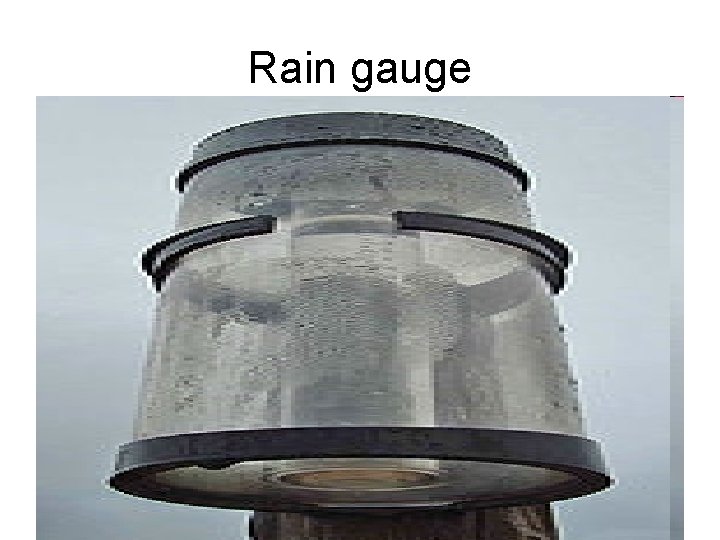
Rain gauge
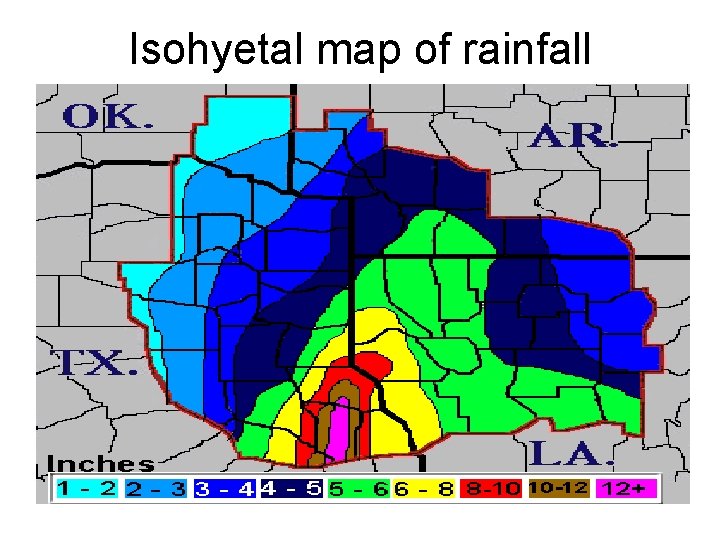
Isohyetal map of rainfall
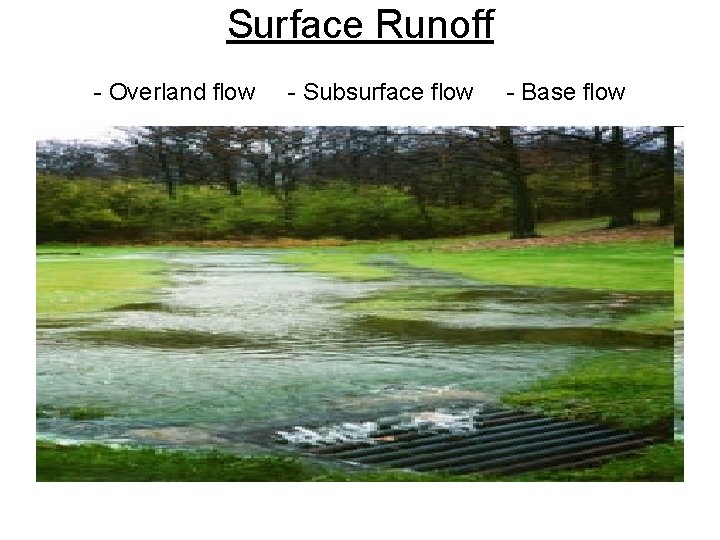
Surface Runoff - Overland flow - Subsurface flow - Base flow
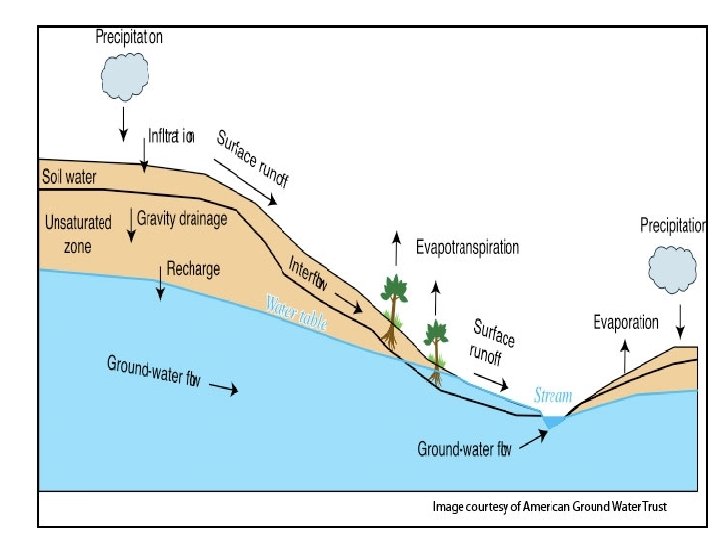

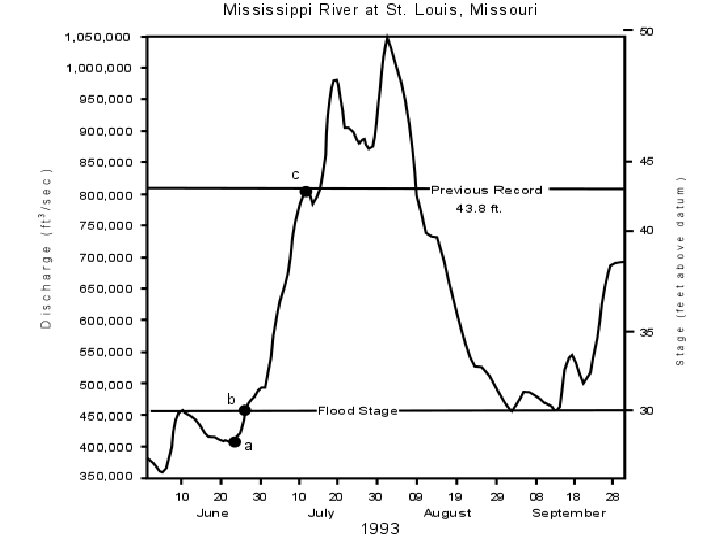
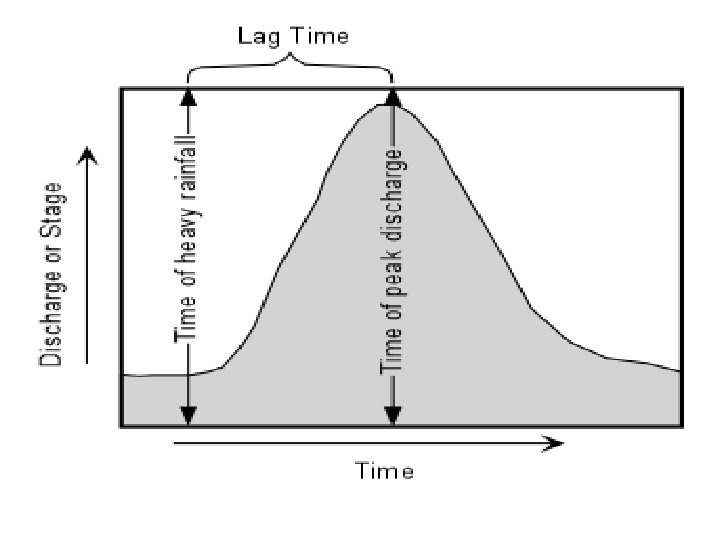
Run off
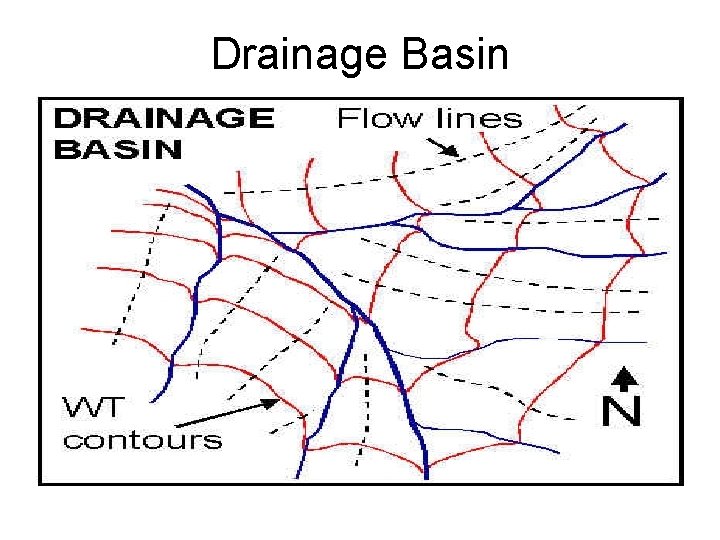
Drainage Basin
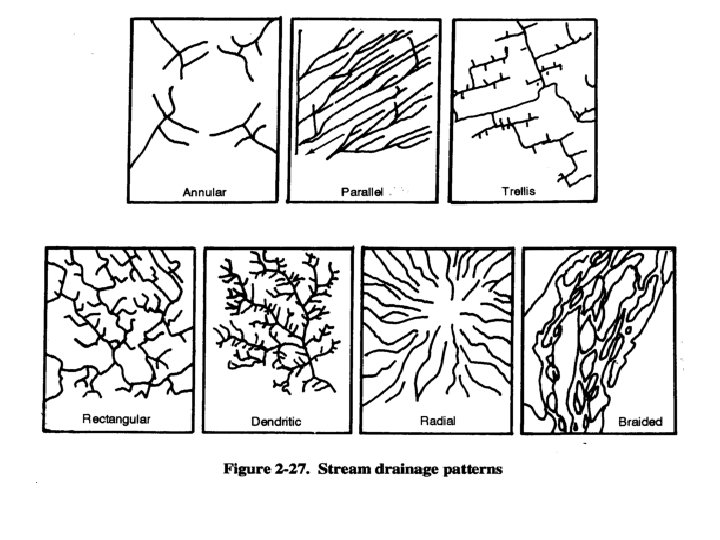
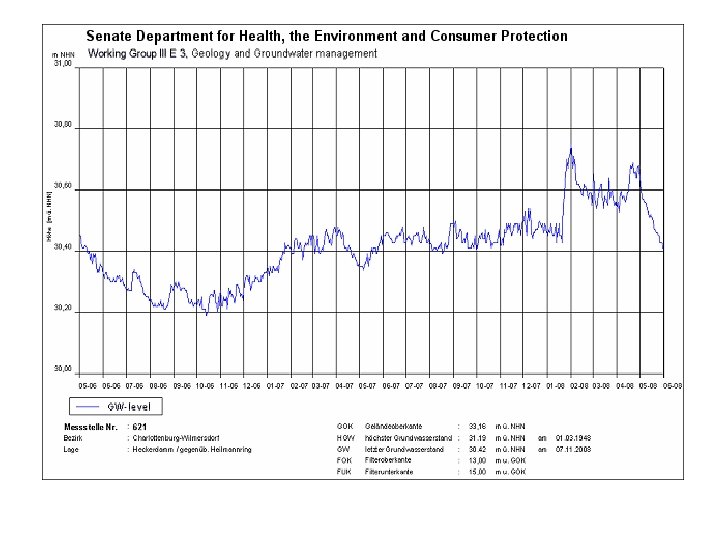
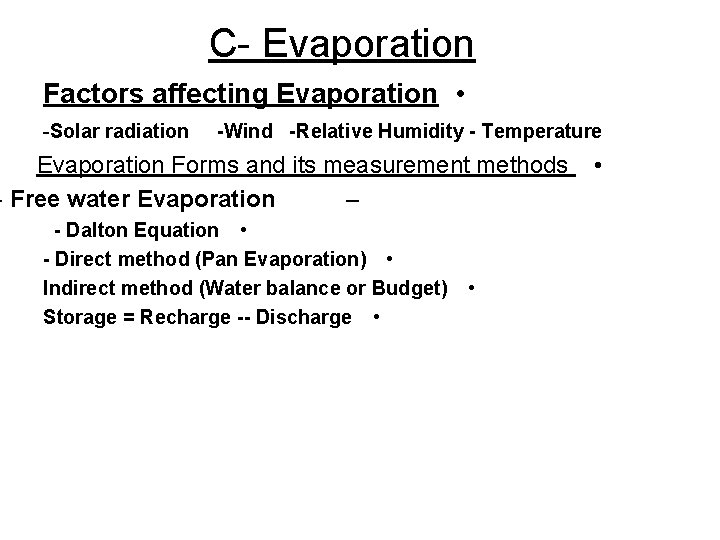
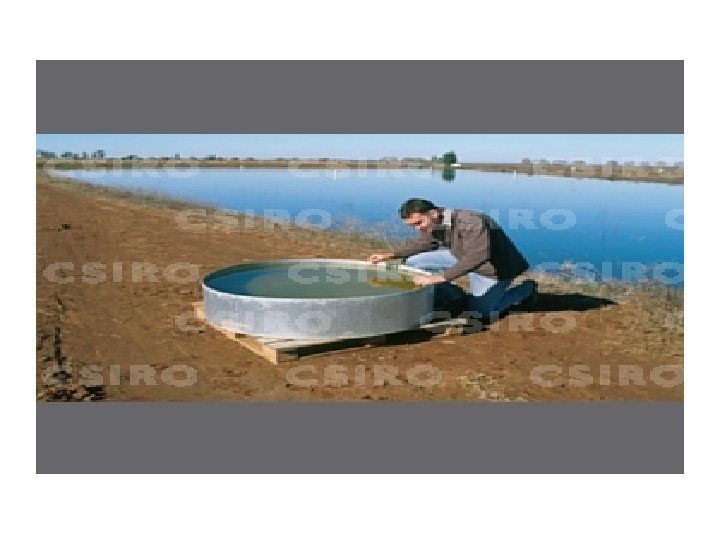
C- Evaporation Factors affecting Evaporation • -Solar radiation -Wind -Relative Humidity - Temperature Evaporation Forms and its measurement methods - Free water Evaporation – - Dalton Equation • - Direct method (Pan Evaporation) • Indirect method (Water balance or Budget) Storage = Recharge -- Discharge • • •
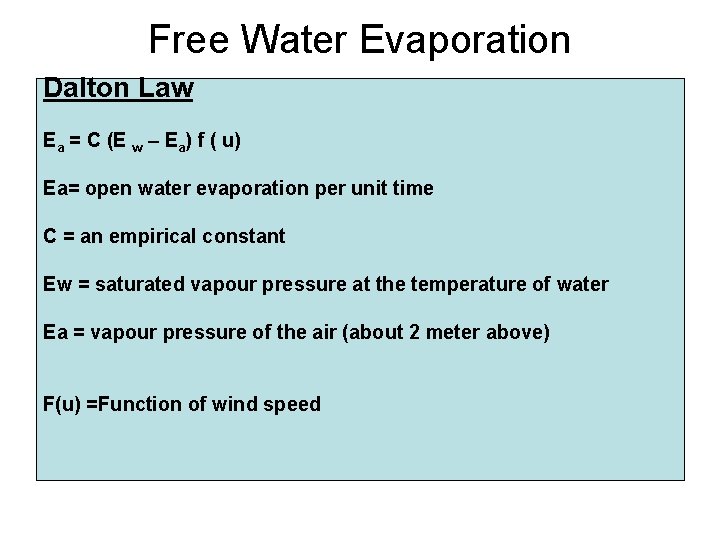
Free Water Evaporation Dalton Law Ea = C (E w – Ea) f ( u) Ea= open water evaporation per unit time C = an empirical constant Ew = saturated vapour pressure at the temperature of water Ea = vapour pressure of the air (about 2 meter above) F(u) =Function of wind speed
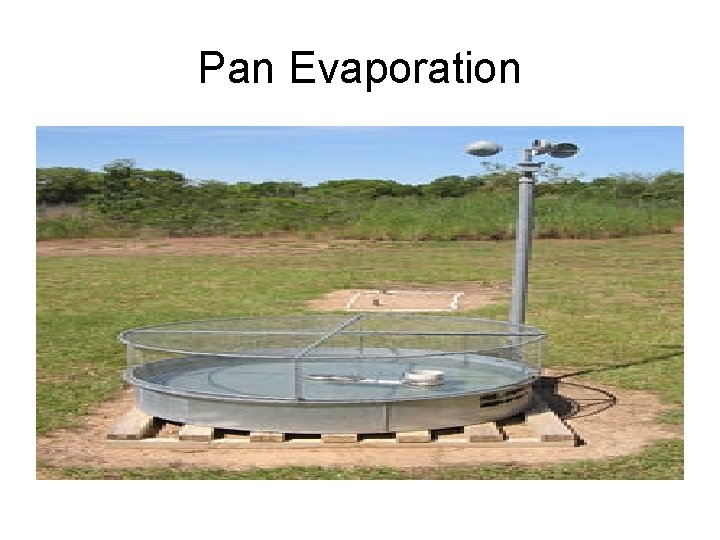
Pan Evaporation
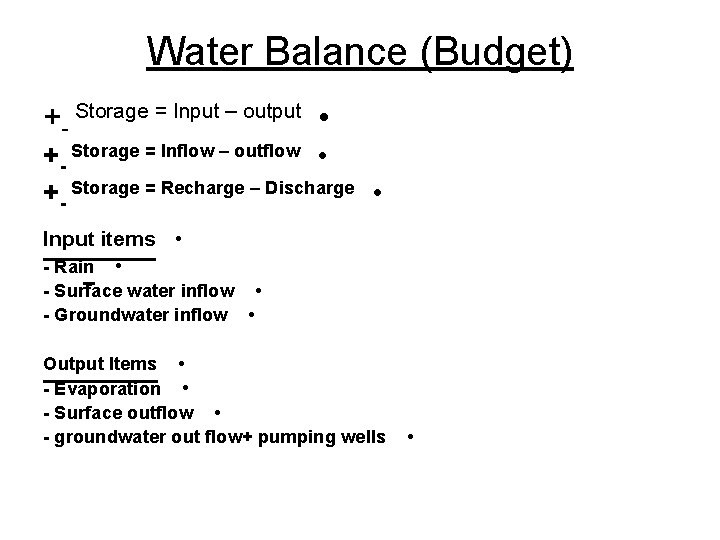
Water Balance (Budget) +- Storage = Input – output • +- Storage = Inflow – outflow • +- Storage = Recharge – Discharge • Input items • - Rain • - Surface water inflow • - Groundwater inflow • Output Items • - Evaporation • - Surface outflow • - groundwater out flow+ pumping wells •
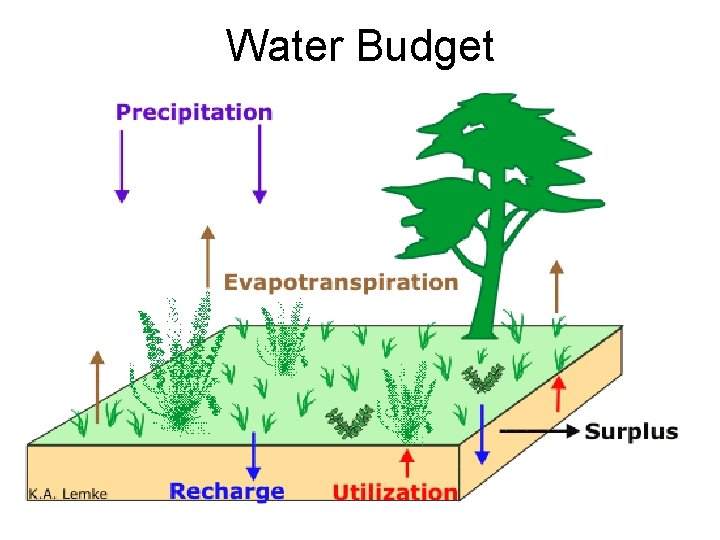
Water Budget
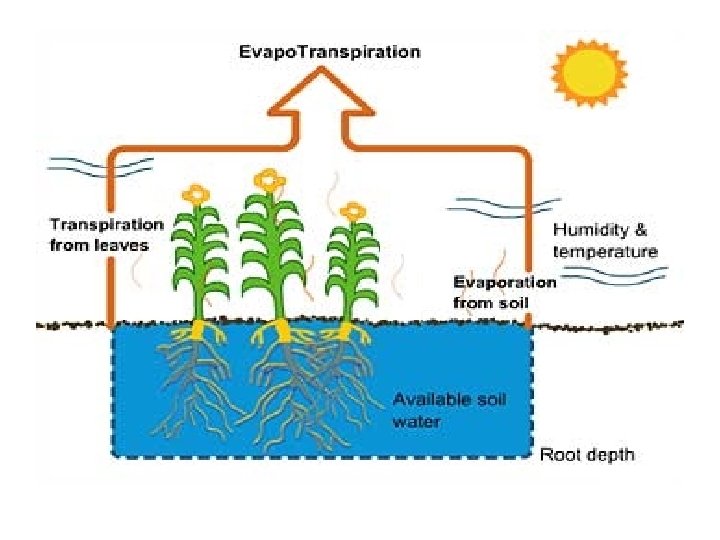
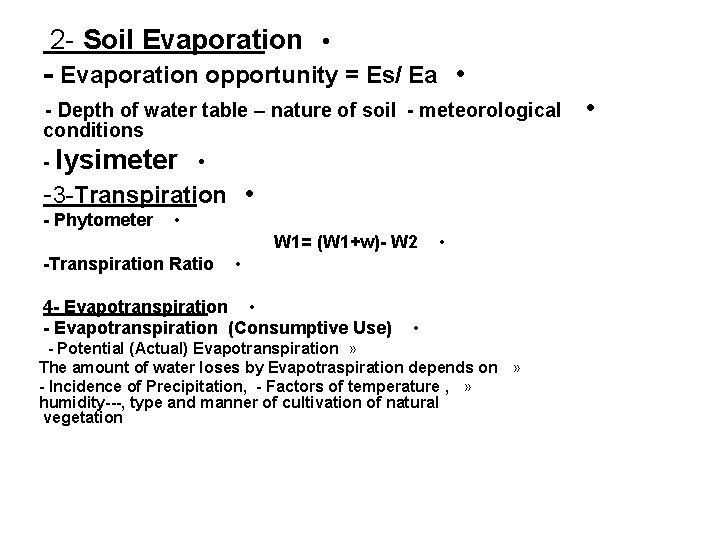
2 - Soil Evaporation • - Evaporation opportunity = Es/ Ea • - Depth of water table – nature of soil - meteorological conditions - Iysimeter • -3 -Transpiration • - Phytometer • W 1= (W 1+w)- W 2 -Transpiration Ratio • • 4 - Evapotranspiration • - Evapotranspiration (Consumptive Use) • - Potential (Actual) Evapotranspiration » The amount of water loses by Evapotraspiration depends on » - Incidence of Precipitation, - Factors of temperature , » humidity---, type and manner of cultivation of natural vegetation •
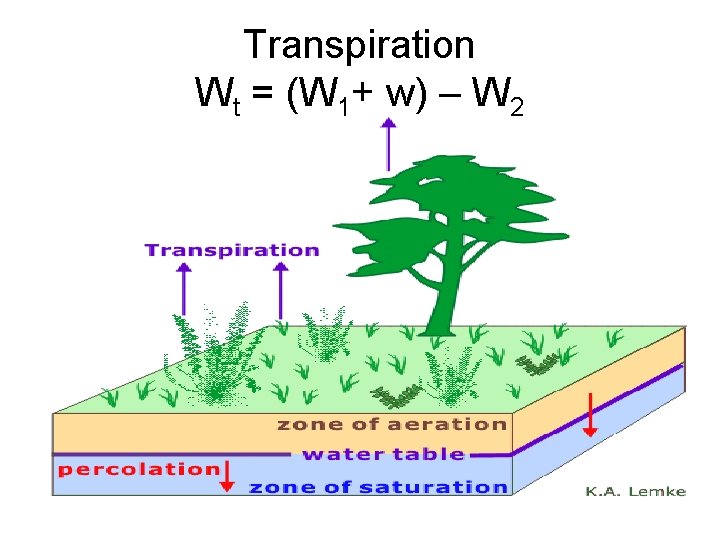
Transpiration Wt = (W 1+ w) – W 2
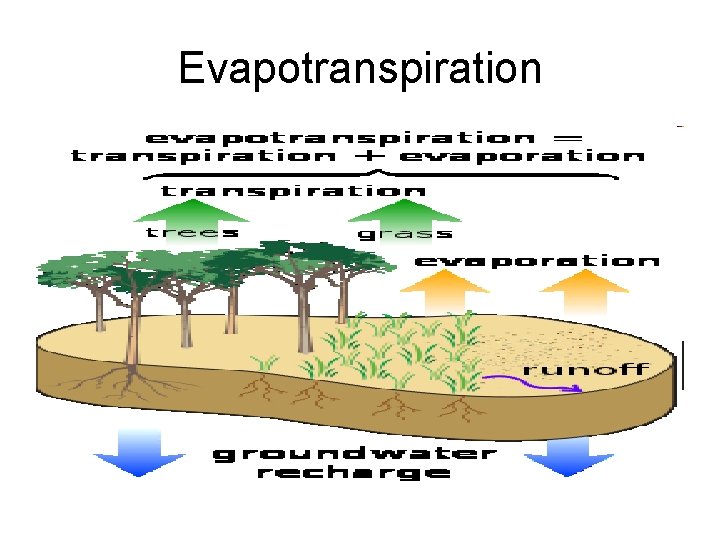
Evapotranspiration
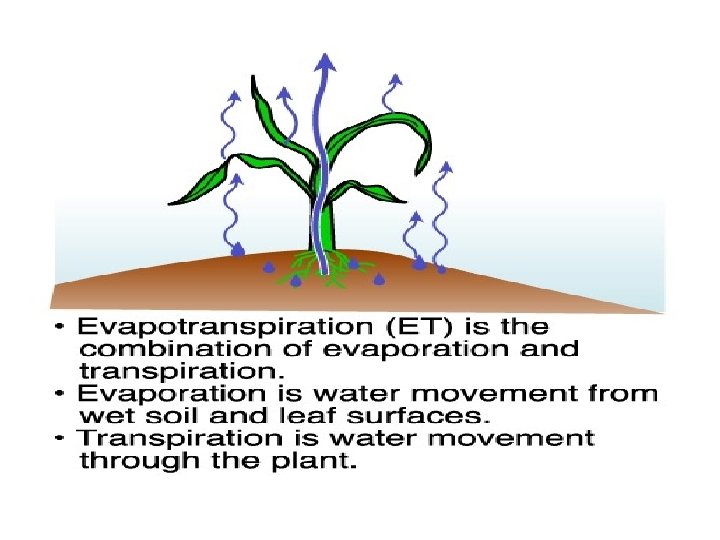
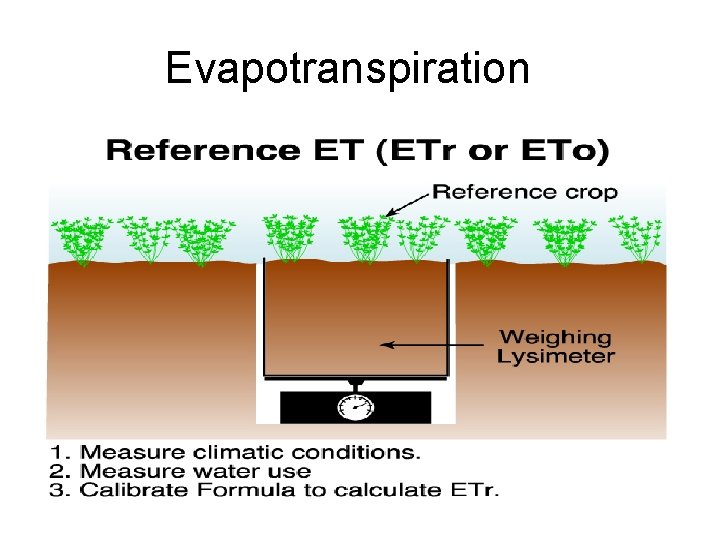
Evapotranspiration
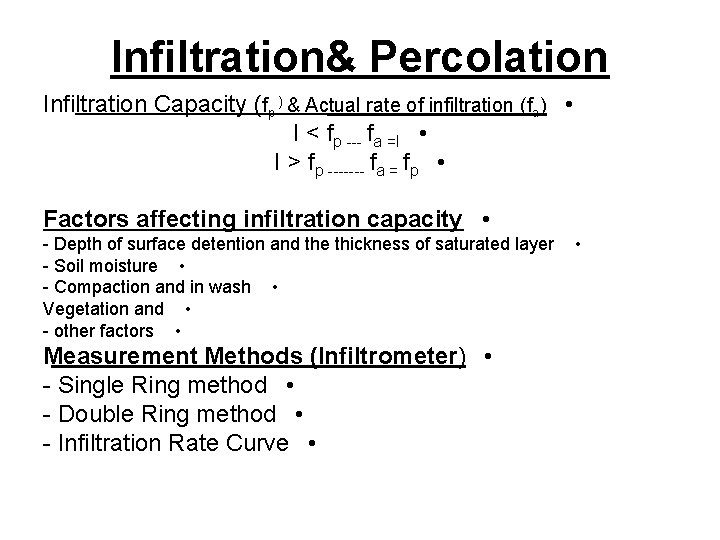
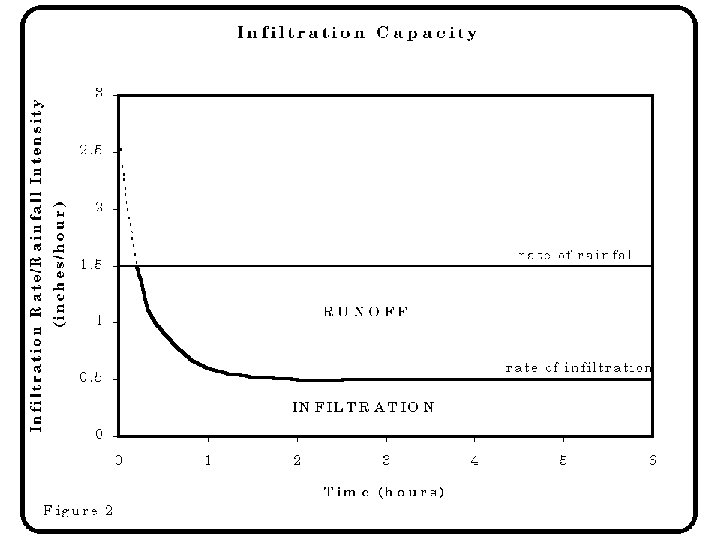
Infiltration& Percolation Infiltration Capacity (fp ) & Actual rate of infiltration (fa) • I < fp --- fa =I • I > fp ------- fa = fp • Factors affecting infiltration capacity • - Depth of surface detention and the thickness of saturated layer - Soil moisture • - Compaction and in wash • Vegetation and • - other factors • Measurement Methods (Infiltrometer) • - Single Ring method • - Double Ring method • - Infiltration Rate Curve • •
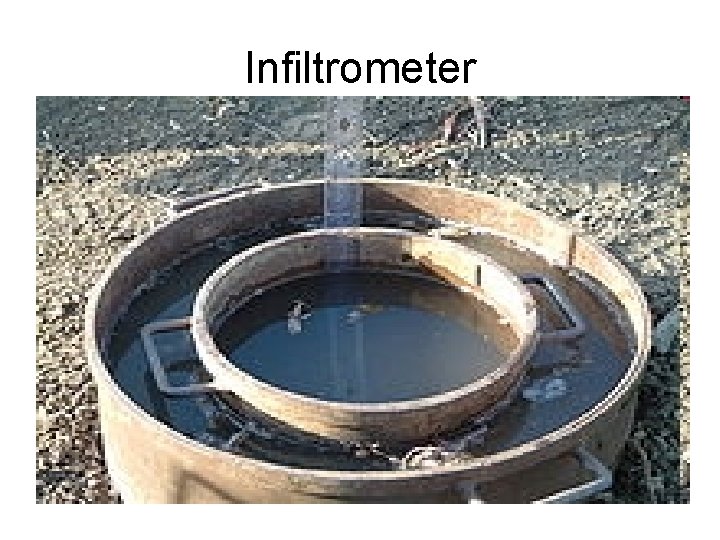
Infiltrometer
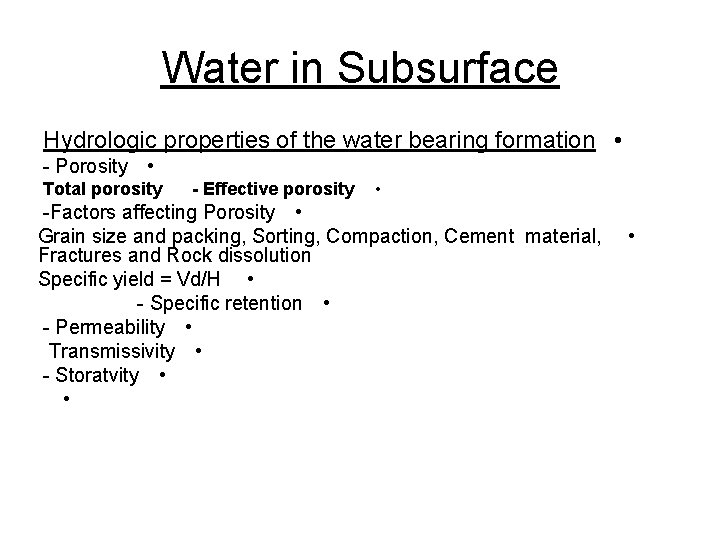
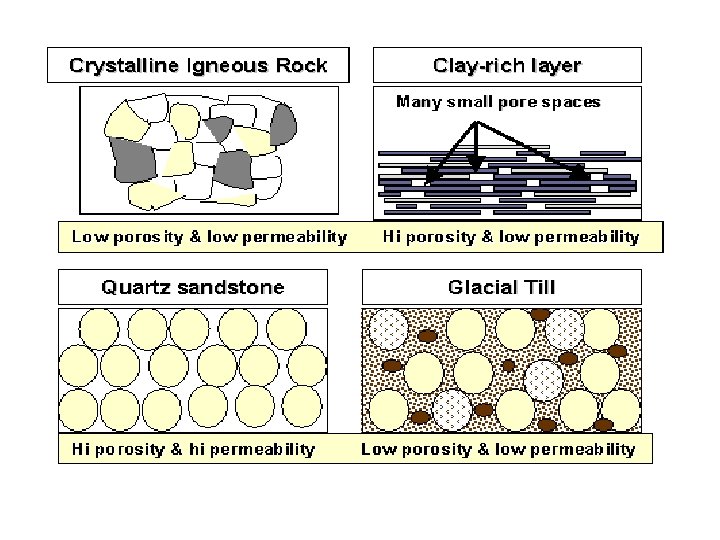
Water in Subsurface Hydrologic properties of the water bearing formation • - Porosity • Total porosity - Effective porosity • -Factors affecting Porosity • Grain size and packing, Sorting, Compaction, Cement material, Fractures and Rock dissolution Specific yield = Vd/H • - Specific retention • - Permeability • Transmissivity • - Storatvity • • •
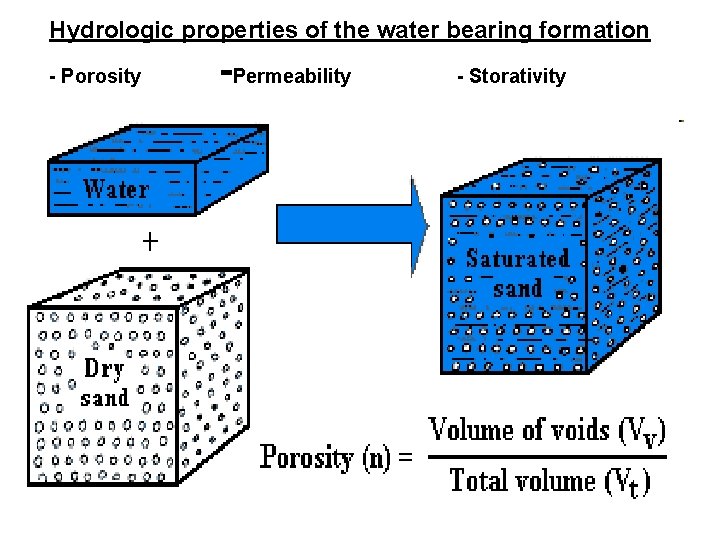
Hydrologic properties of the water bearing formation - Porosity -Permeability - Storativity
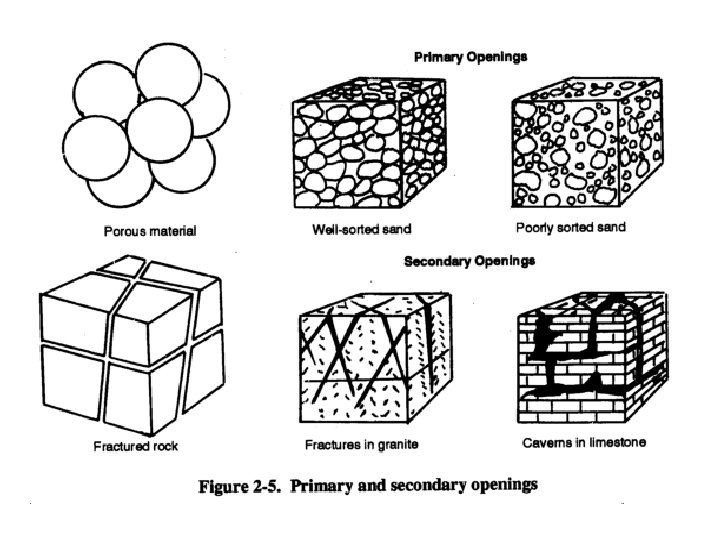
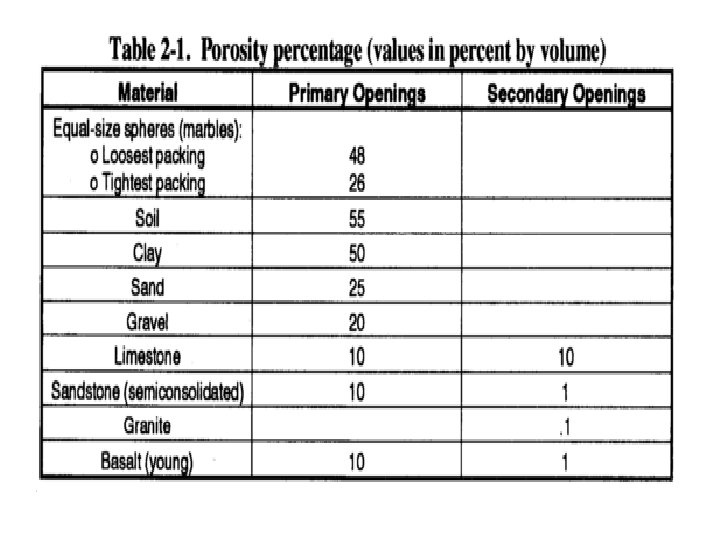
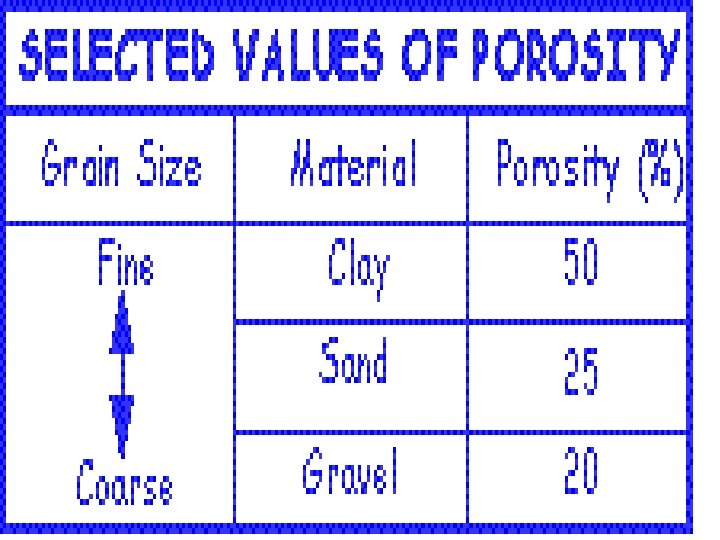
Porosity (Primary & Secondary) Factors affecting Porosity • Grain shape and packing, • Sorting, • Compaction, • Cement material, • Fractures and • Rock dissolution •
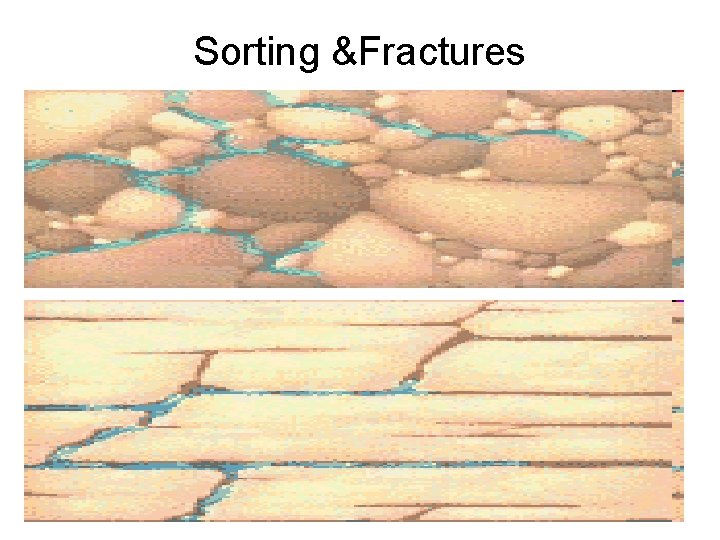
Sorting &Fractures
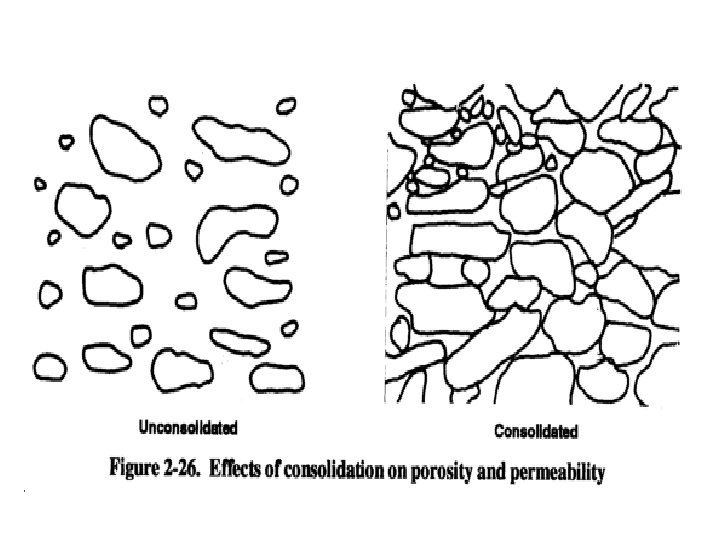
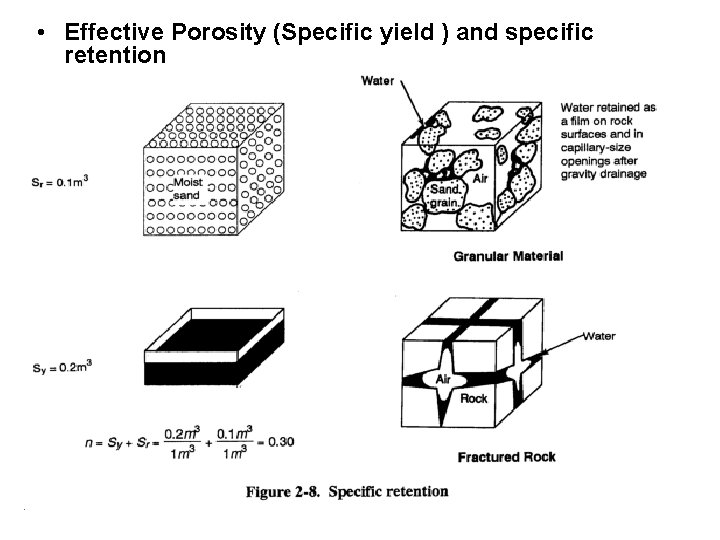
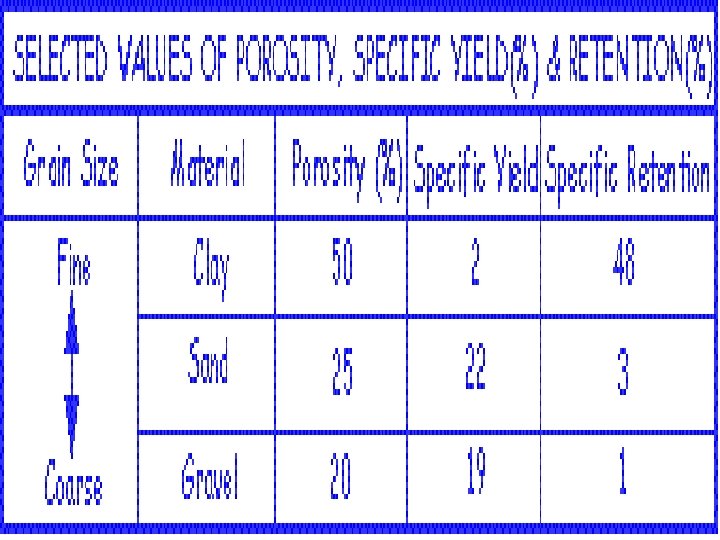
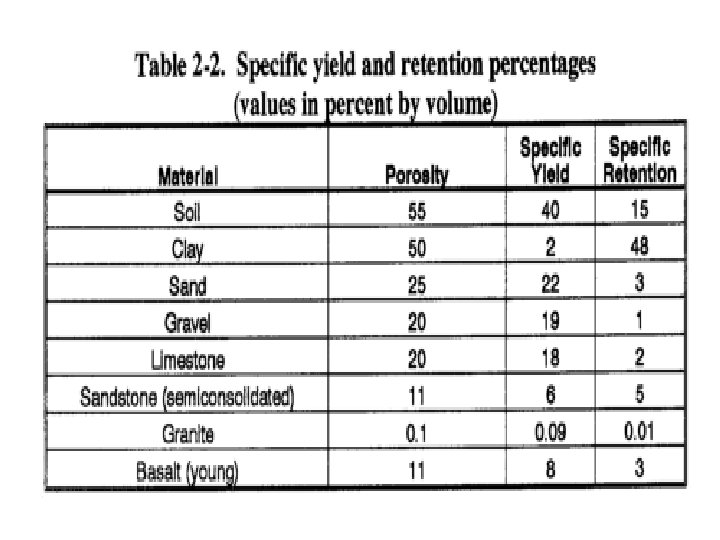
• Effective Porosity (Specific yield ) and specific retention
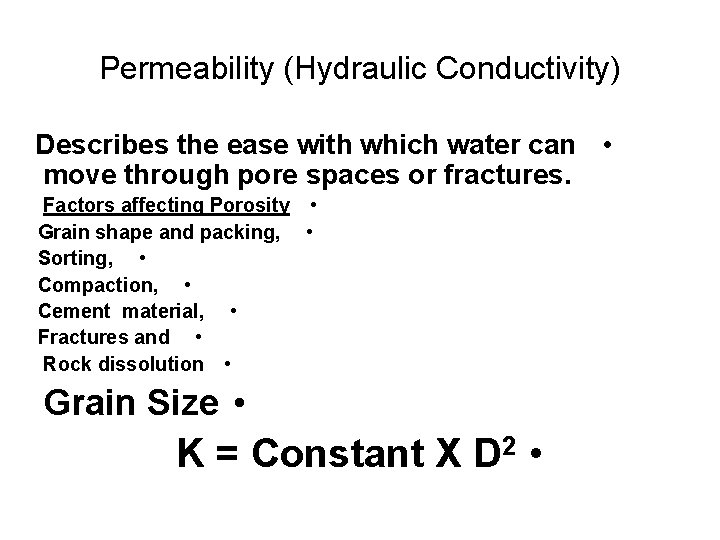
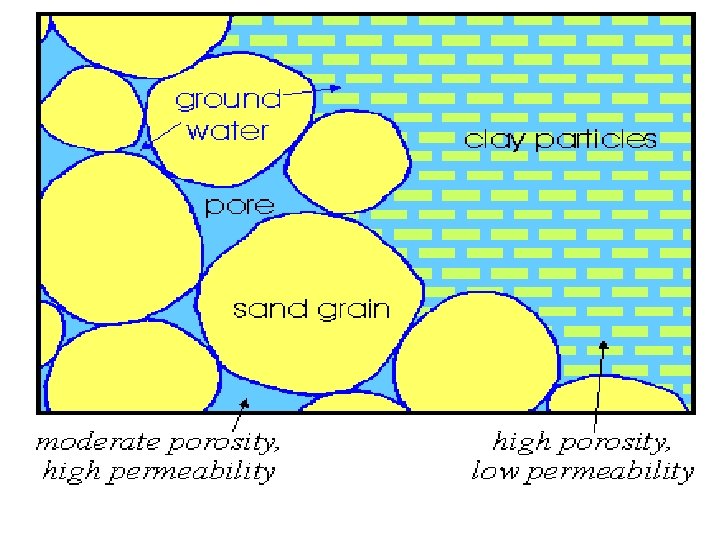
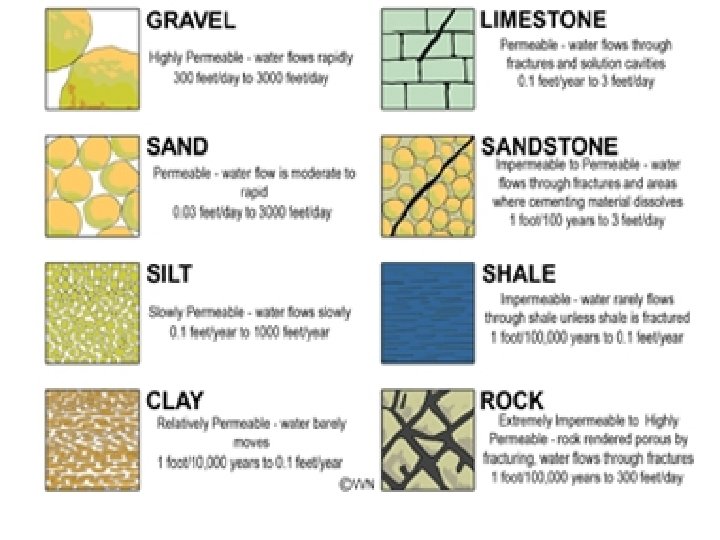
Permeability (Hydraulic Conductivity) Describes the ease with which water can • move through pore spaces or fractures. Factors affecting Porosity • Grain shape and packing, • Sorting, • Compaction, • Cement material, • Fractures and • Rock dissolution • Grain Size • K = Constant X D 2 •
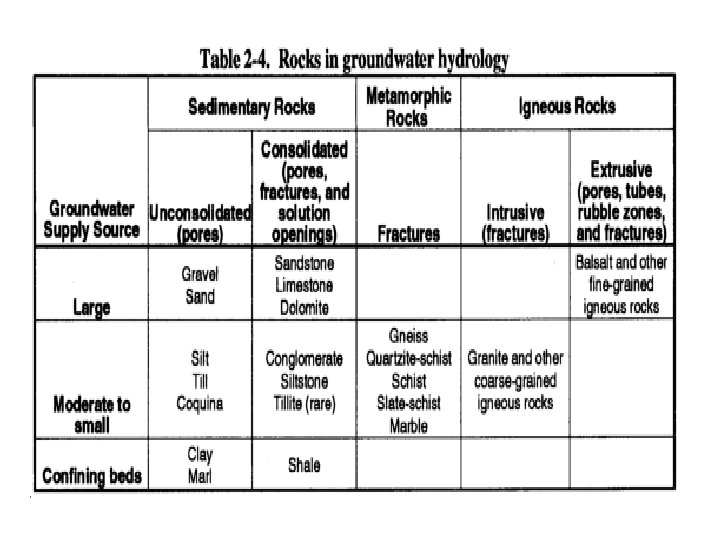
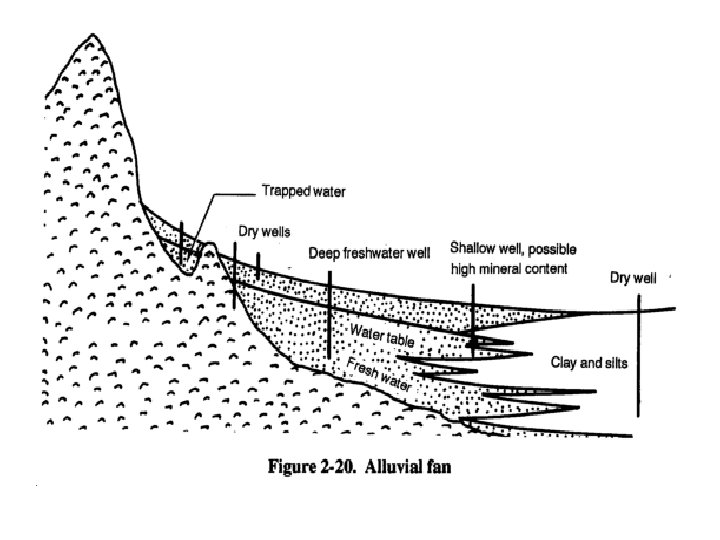
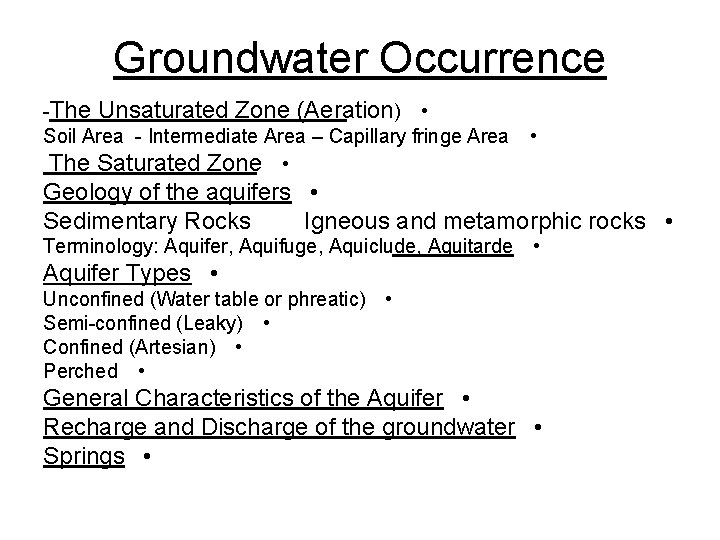
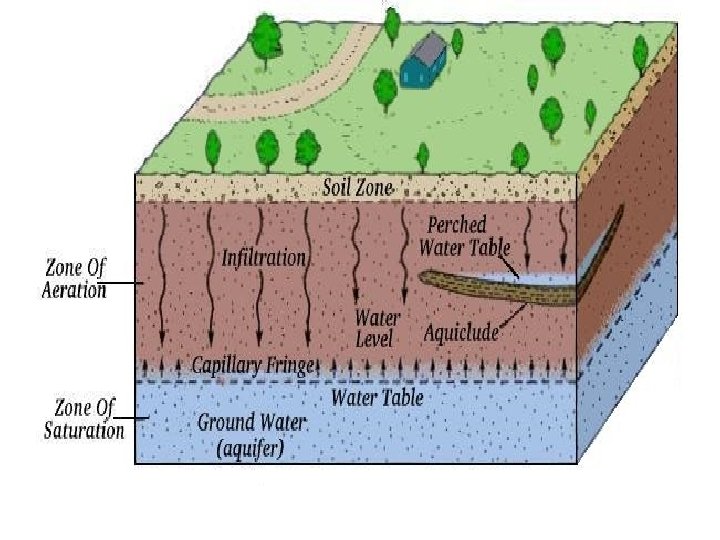
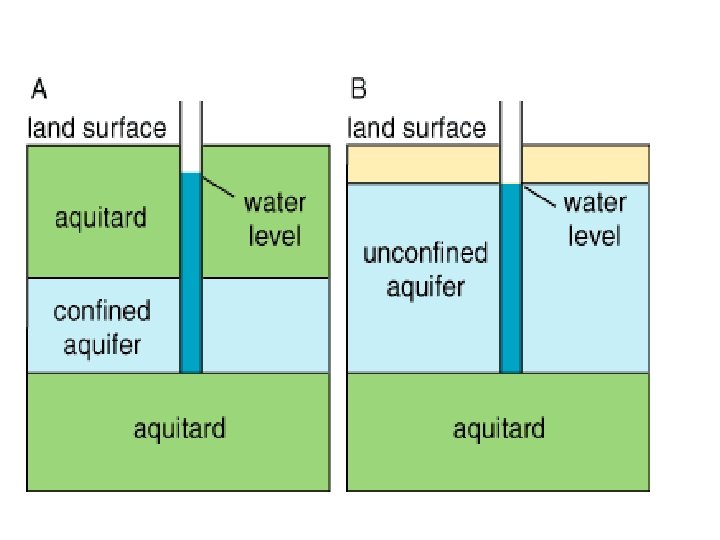
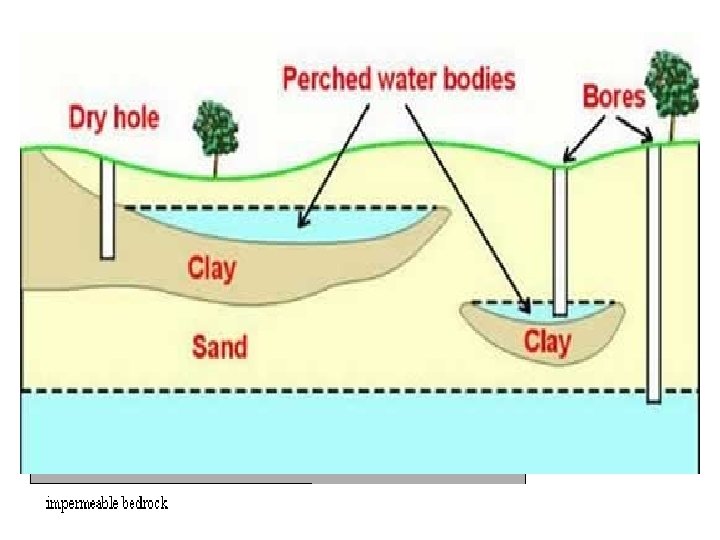
Groundwater Occurrence -The Unsaturated Zone (Aeration) • Soil Area - Intermediate Area – Capillary fringe Area The Saturated Zone • • Geology of the aquifers • Sedimentary Rocks Igneous and metamorphic rocks • Terminology: Aquifer, Aquifuge, Aquiclude, Aquitarde • Aquifer Types • Unconfined (Water table or phreatic) Semi-confined (Leaky) • Confined (Artesian) • Perched • • General Characteristics of the Aquifer • Recharge and Discharge of the groundwater • Springs •
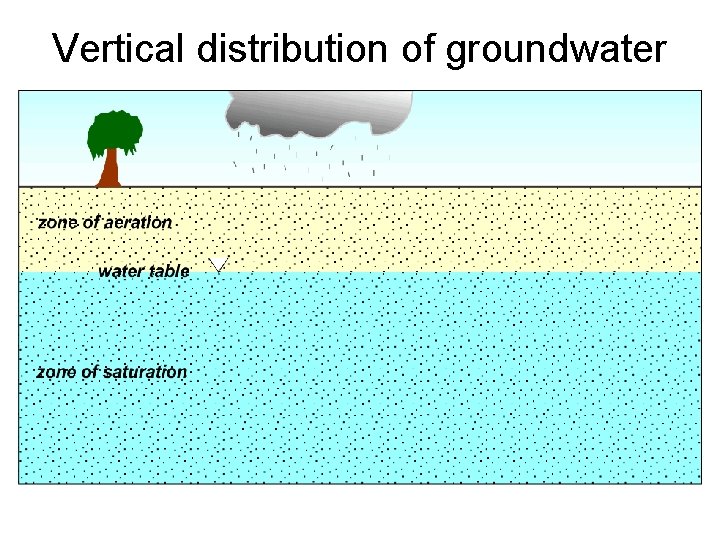
Vertical distribution of groundwater
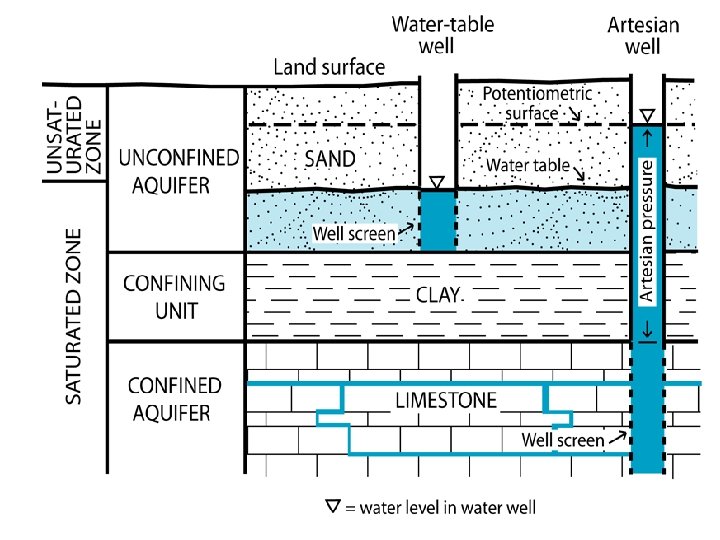
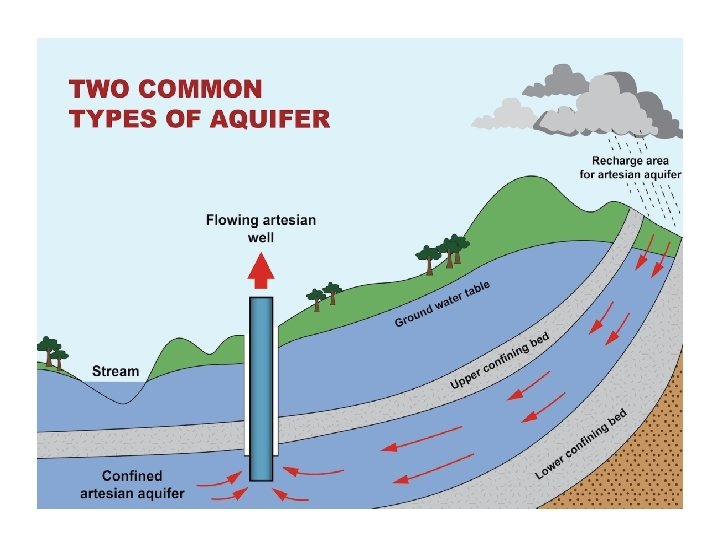
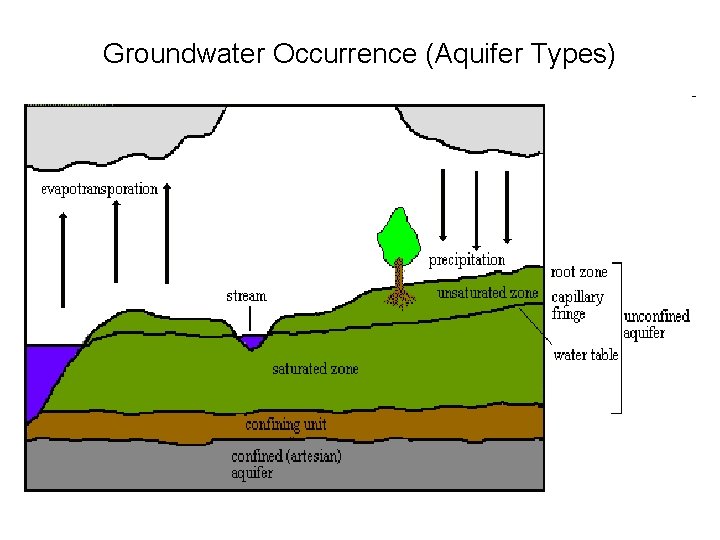
Groundwater Occurrence (Aquifer Types)
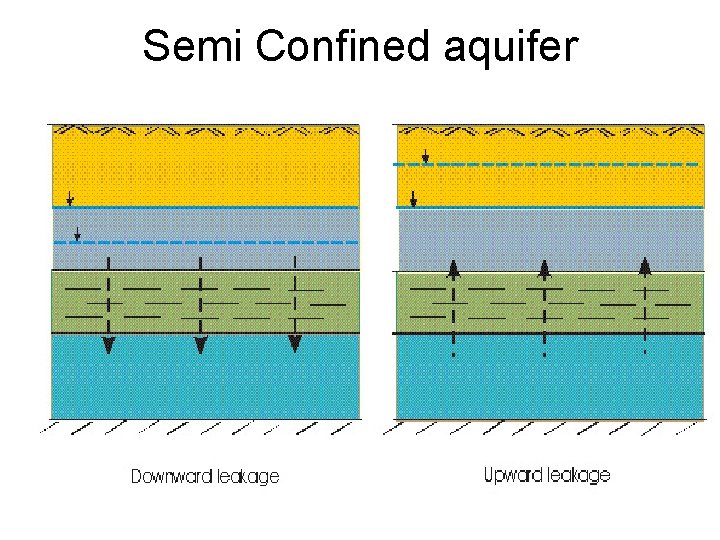
Semi Confined aquifer
Artesian Aquifer (Basin)
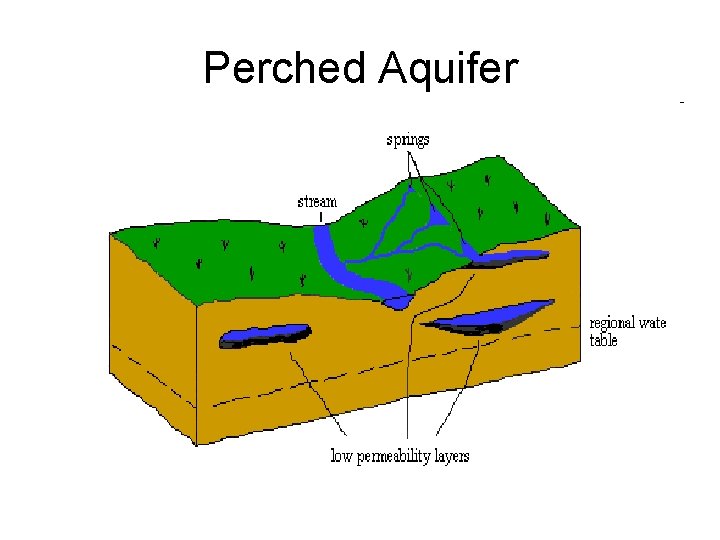
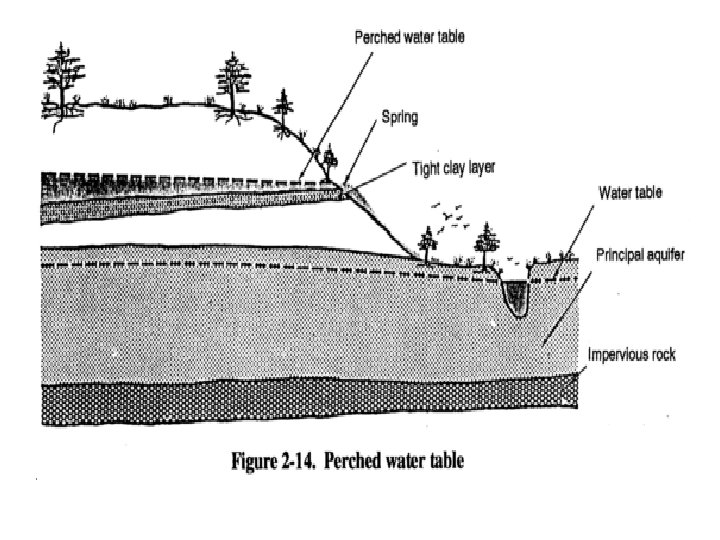
Perched Aquifer
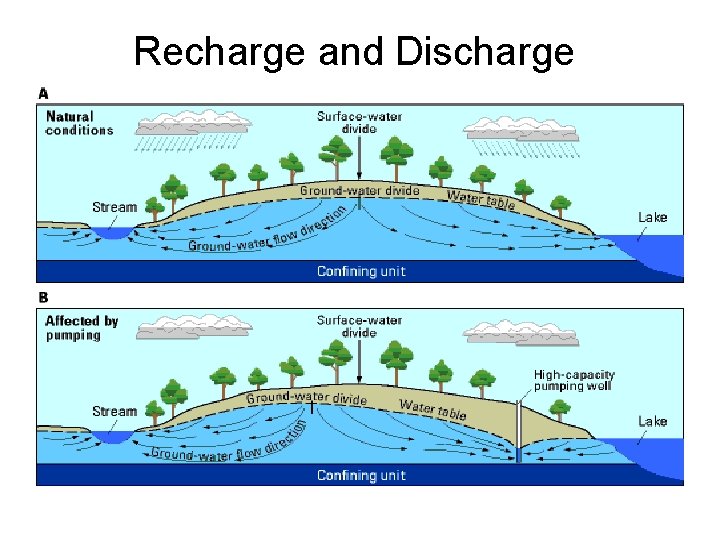
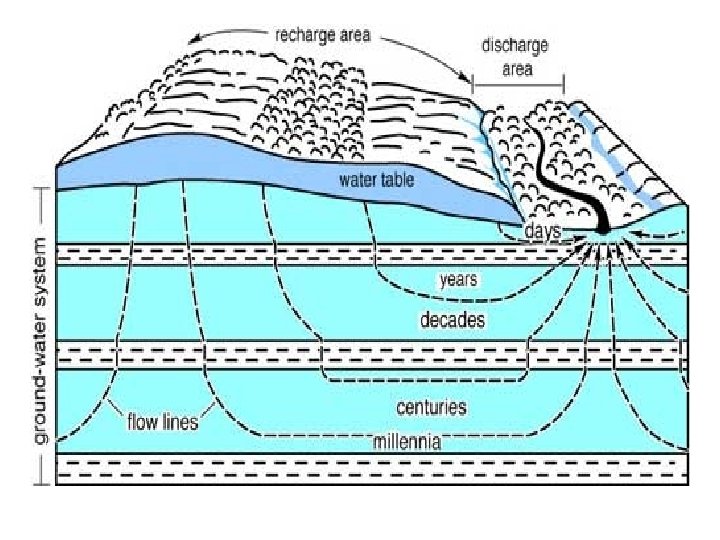
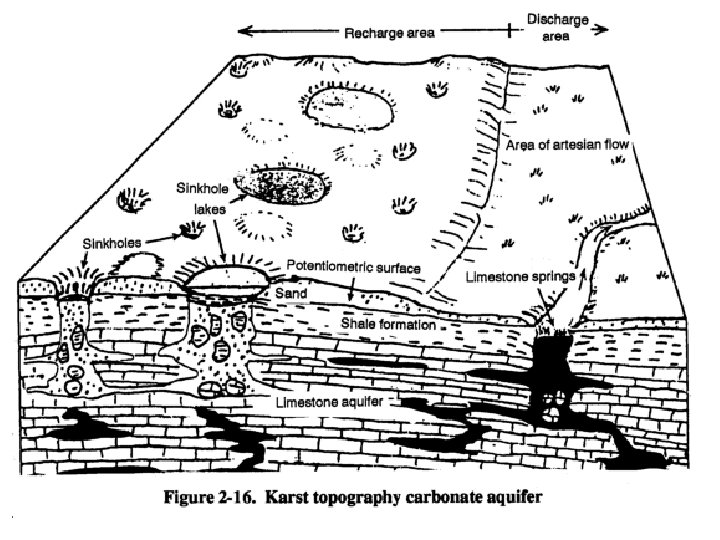
Recharge and Discharge
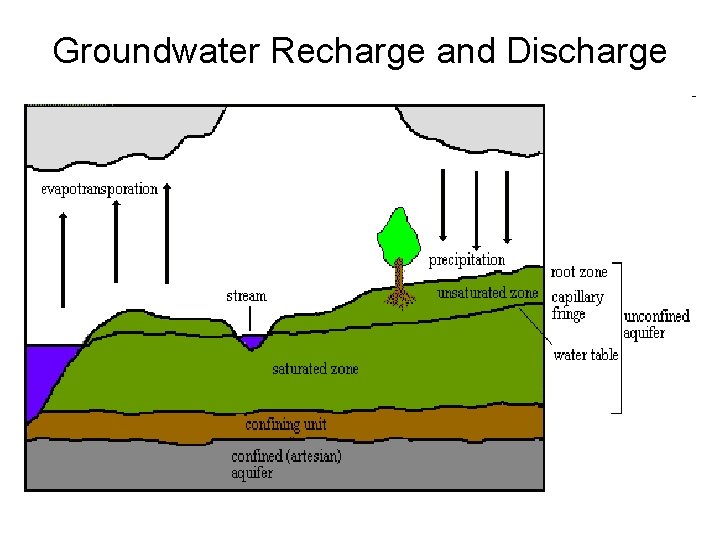
Groundwater Recharge and Discharge
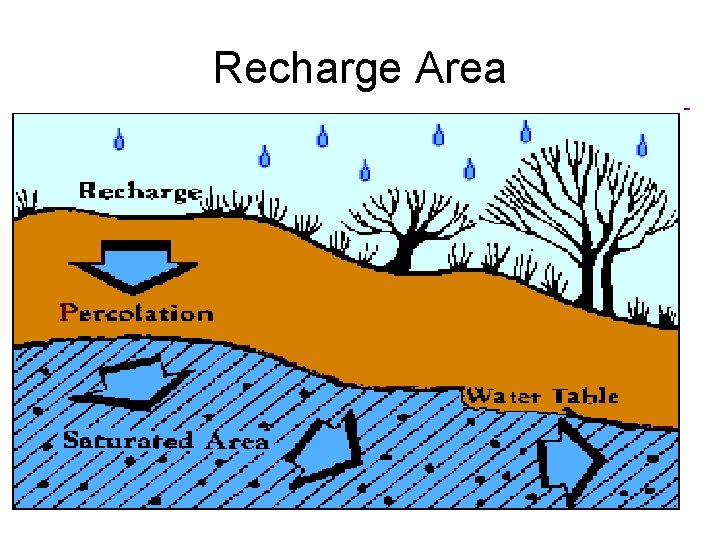
Recharge Area

Discharge Area
Springs Spring Classification • Spring Types • - Downward flow • * Stratum spring *Valley Spring • Upward flow • * Dyke spring * • Fault spring • - Mineral Springs •
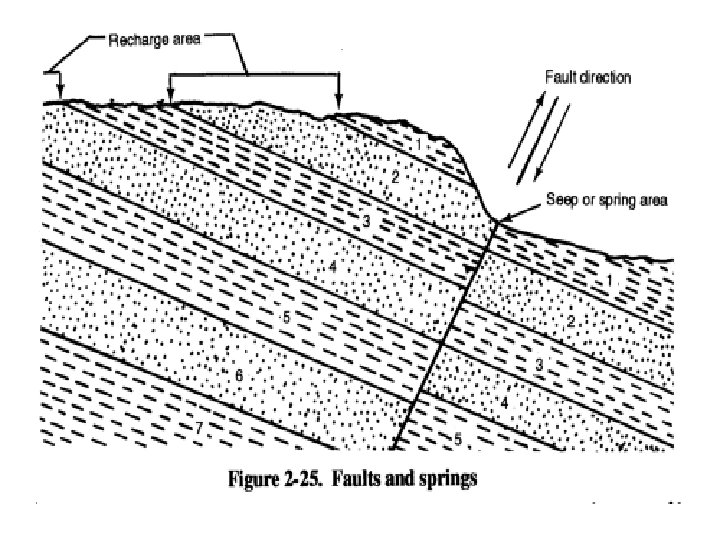
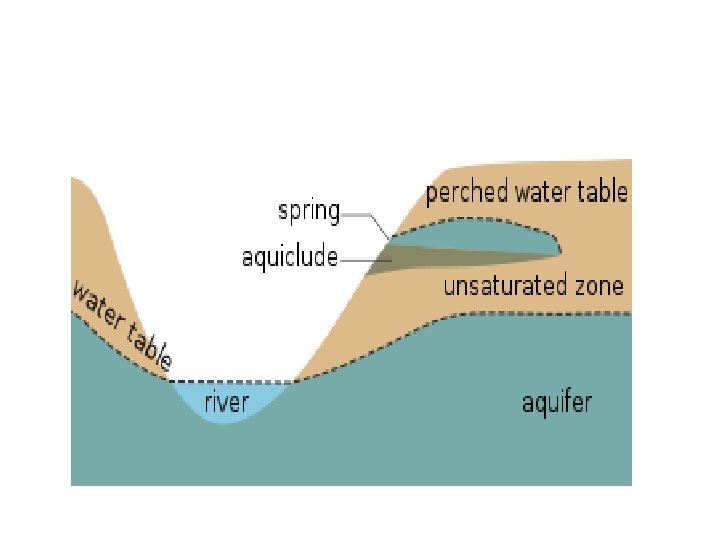
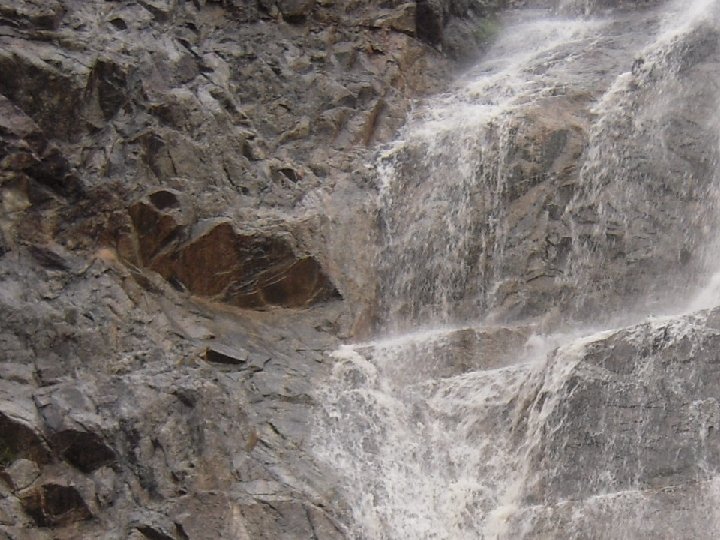
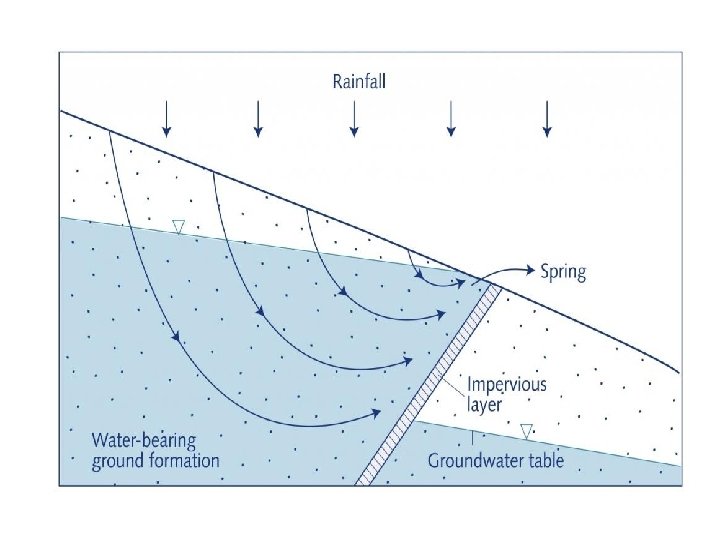
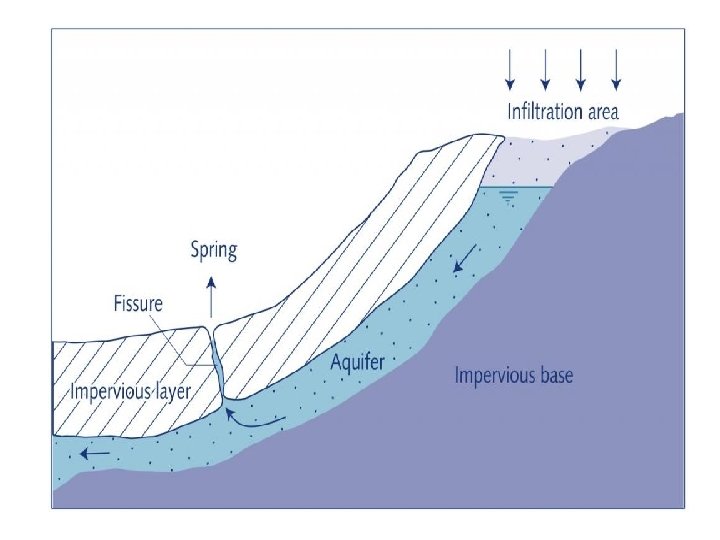
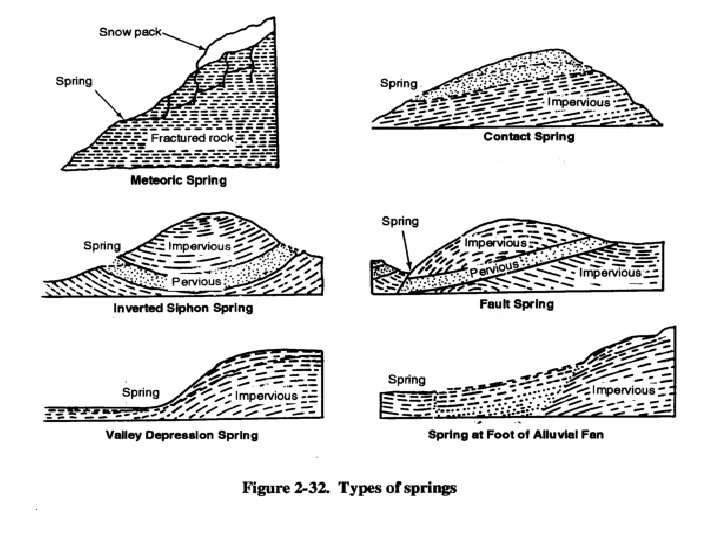
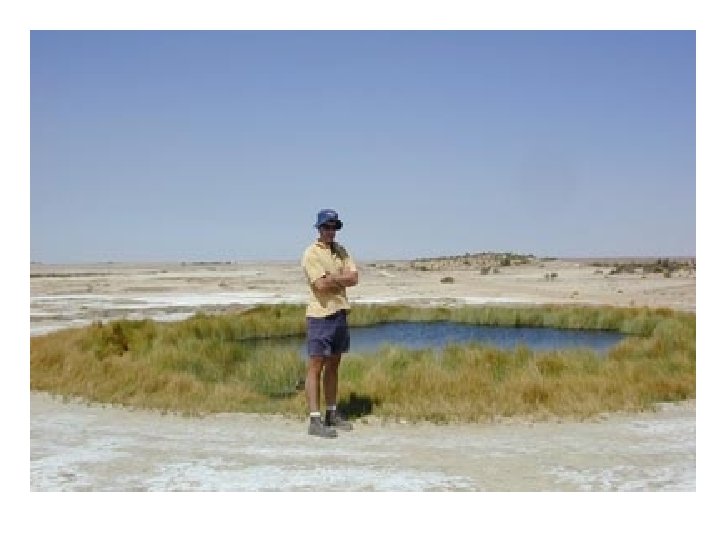

Springs

- Slides: 70