
Surface Features on Mars Dr Joshua Bandfield Mars
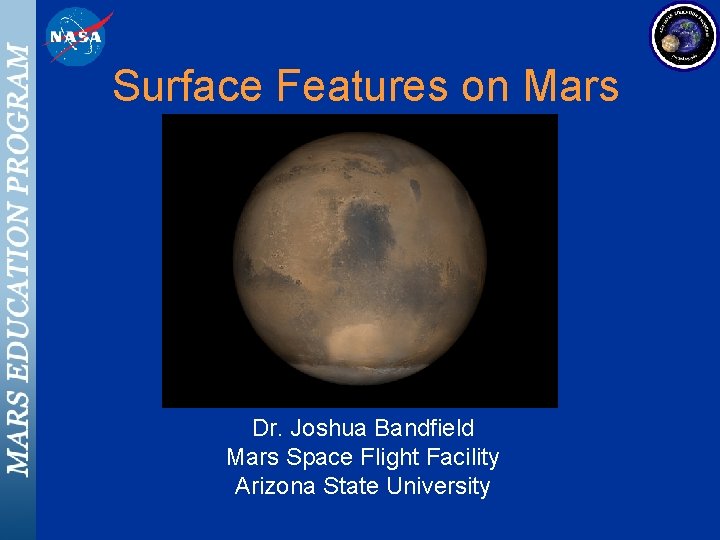
Surface Features on Mars Dr. Joshua Bandfield Mars Space Flight Facility Arizona State University
Mars has Many Types of Surface Features • • • 2 Impact Craters Volcanic Features Fluvial/Water-Related Features Layers Aeolian/Wind Features
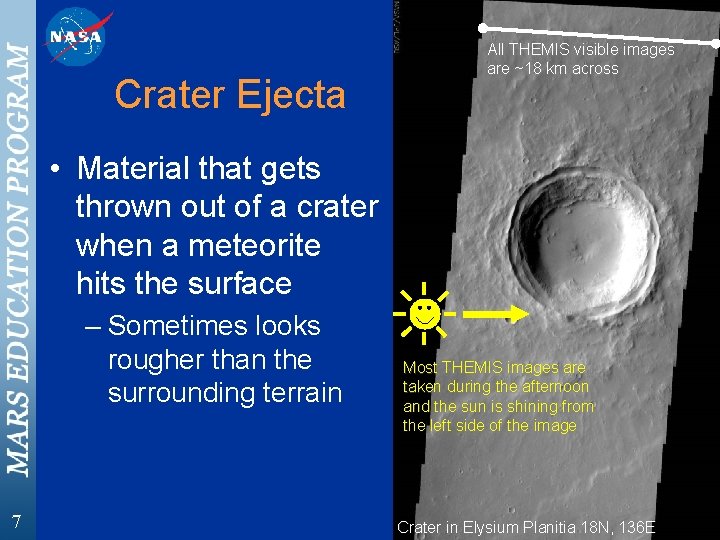
Crater Ejecta All THEMIS visible images are ~18 km across • Material that gets thrown out of a crater when a meteorite hits the surface – Sometimes looks rougher than the surrounding terrain 7 Most THEMIS images are taken during the afternoon and the sun is shining from the left side of the image Crater in Elysium Planitia 18 N, 136 E
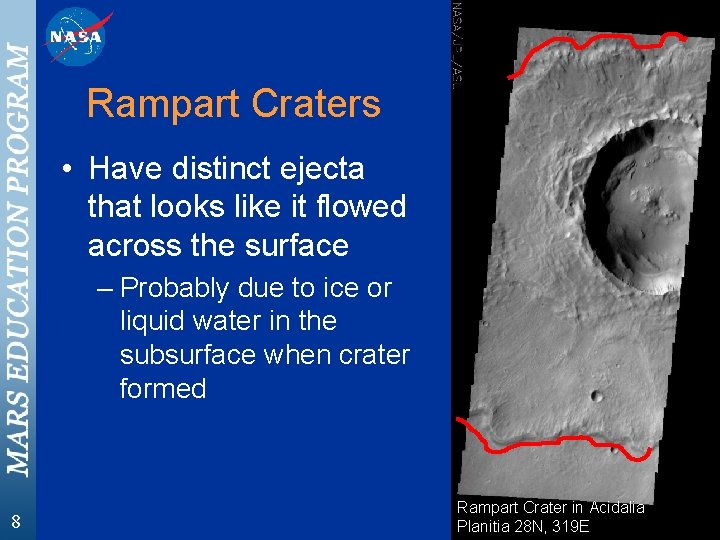
Rampart Craters • Have distinct ejecta that looks like it flowed across the surface – Probably due to ice or liquid water in the subsurface when crater formed 8 Rampart Crater in Acidalia Planitia 28 N, 319 E
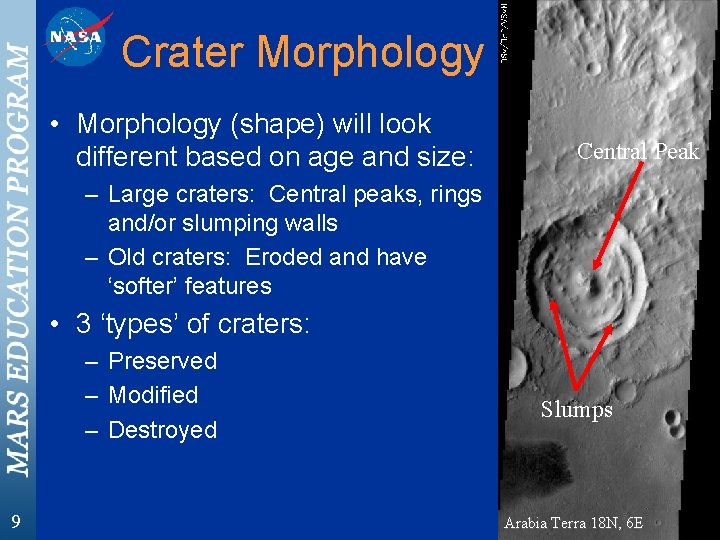
Crater Morphology • Morphology (shape) will look different based on age and size: Central Peak – Large craters: Central peaks, rings and/or slumping walls – Old craters: Eroded and have ‘softer’ features • 3 ‘types’ of craters: – Preserved – Modified – Destroyed 9 Slumps Arabia Terra 18 N, 6 E
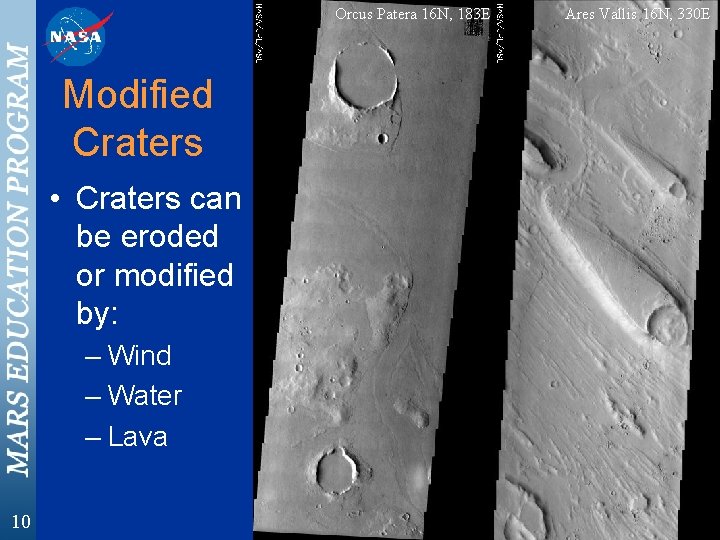
Orcus Patera 16 N, 183 E Modified Craters • Craters can be eroded or modified by: – Wind – Water – Lava 10 Ares Vallis 16 N, 330 E
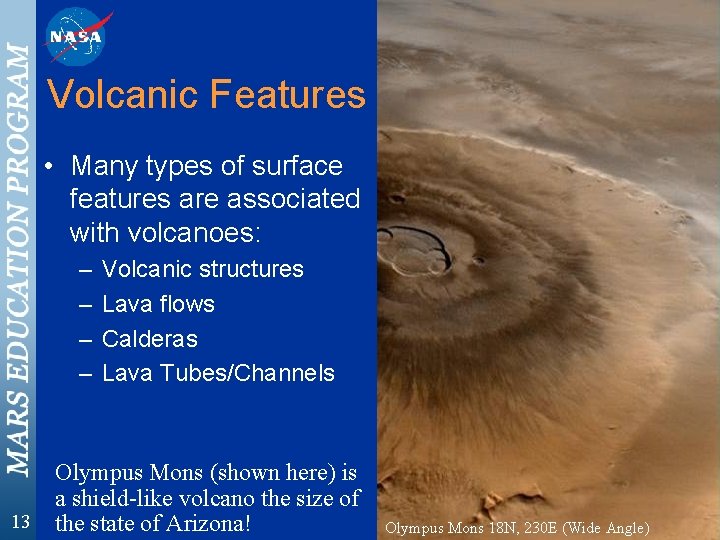
Volcanic Features • Many types of surface features are associated with volcanoes: – – 13 Volcanic structures Lava flows Calderas Lava Tubes/Channels Olympus Mons (shown here) is a shield-like volcano the size of the state of Arizona! Olympus Mons 18 N, 230 E (Wide Angle)
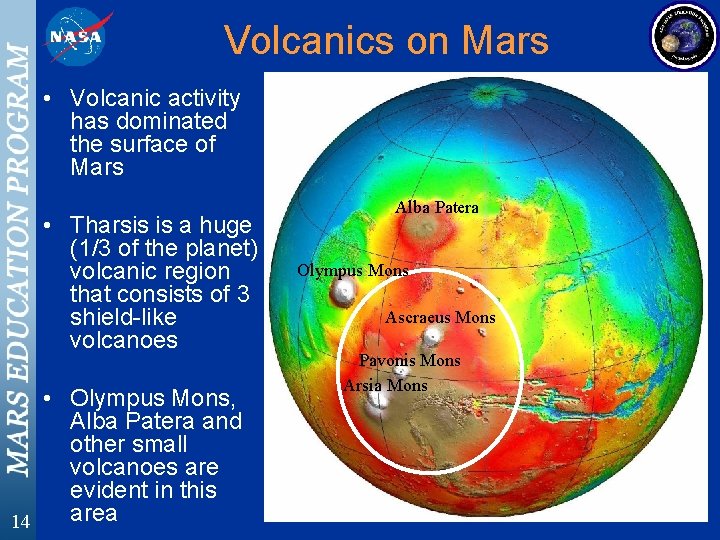
Volcanics on Mars • Volcanic activity has dominated the surface of Mars • Tharsis is a huge (1/3 of the planet) volcanic region that consists of 3 shield-like volcanoes • Olympus Mons, Alba Patera and other small volcanoes are evident in this area 14 Alba Patera Olympus Mons Ascraeus Mons Pavonis Mons Arsia Mons
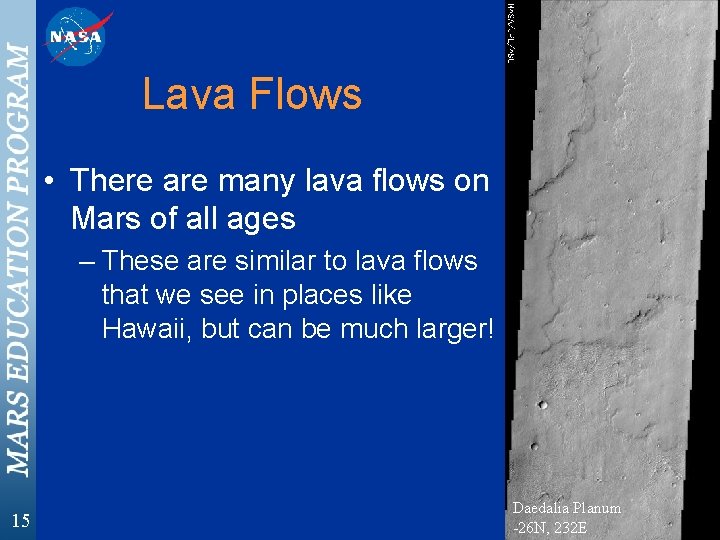
Lava Flows • There are many lava flows on Mars of all ages – These are similar to lava flows that we see in places like Hawaii, but can be much larger! 15 Daedalia Planum -26 N, 232 E
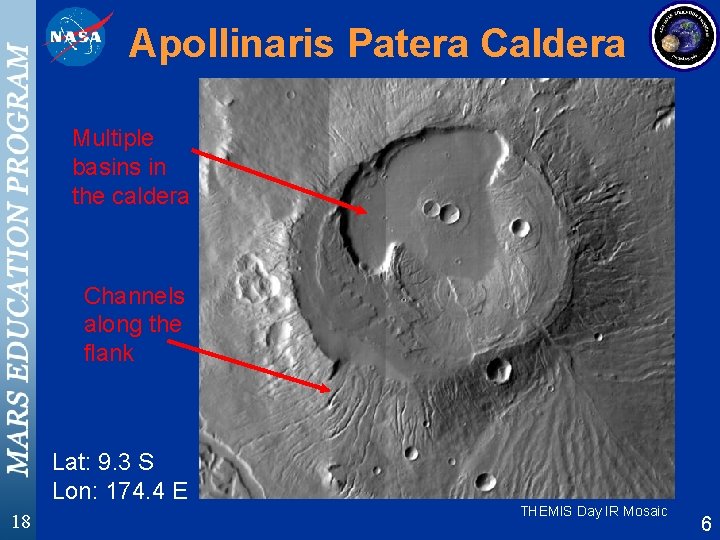
Apollinaris Patera Caldera Multiple basins in the caldera Channels along the flank Lat: 9. 3 S Lon: 174. 4 E 18 THEMIS Day IR Mosaic 6
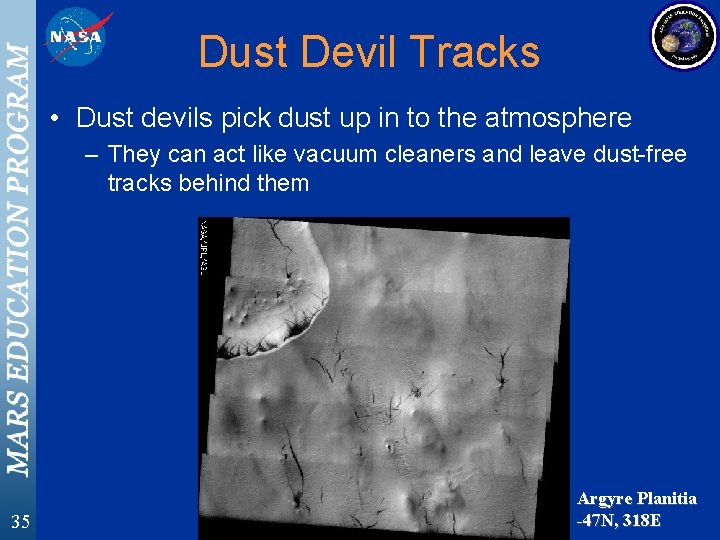
Dust Devil Tracks • Dust devils pick dust up in to the atmosphere – They can act like vacuum cleaners and leave dust-free tracks behind them 35 Argyre Planitia -47 N, 318 E
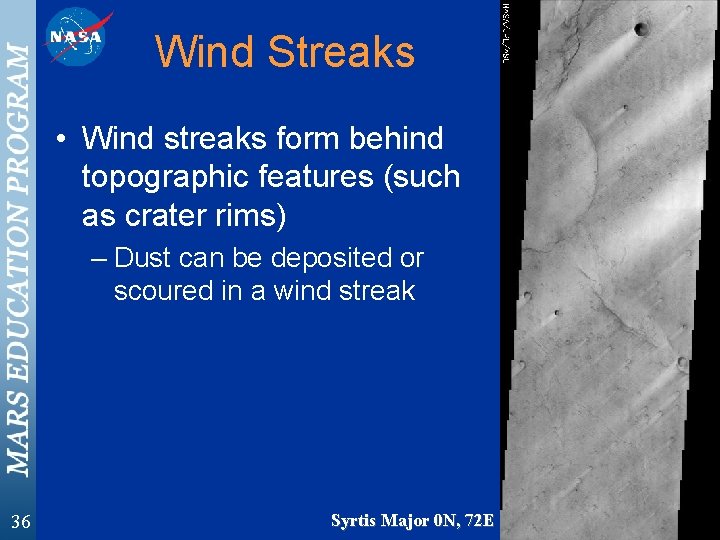
Wind Streaks • Wind streaks form behind topographic features (such as crater rims) – Dust can be deposited or scoured in a wind streak 36 Syrtis Major 0 N, 72 E
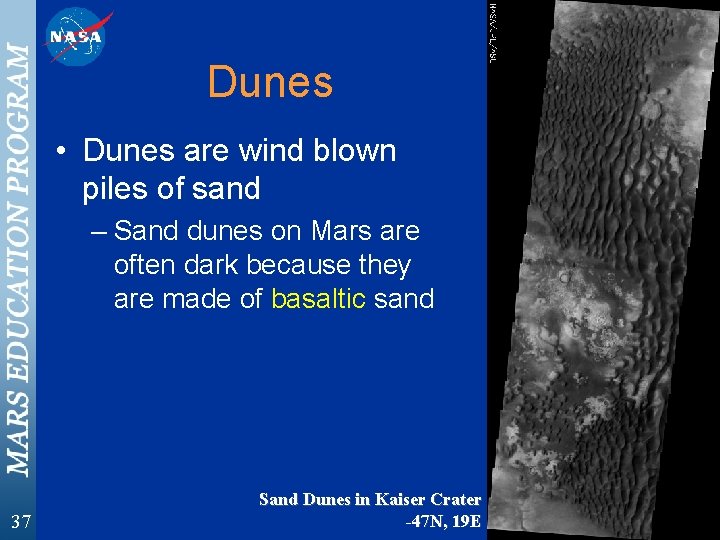
Dunes • Dunes are wind blown piles of sand – Sand dunes on Mars are often dark because they are made of basaltic sand 37 Sand Dunes in Kaiser Crater -47 N, 19 E
Surface Features on Mars • • • 39 Impact Craters Volcanic Features Fluvial/Water-Related Features Layers Aeolian/Wind Features
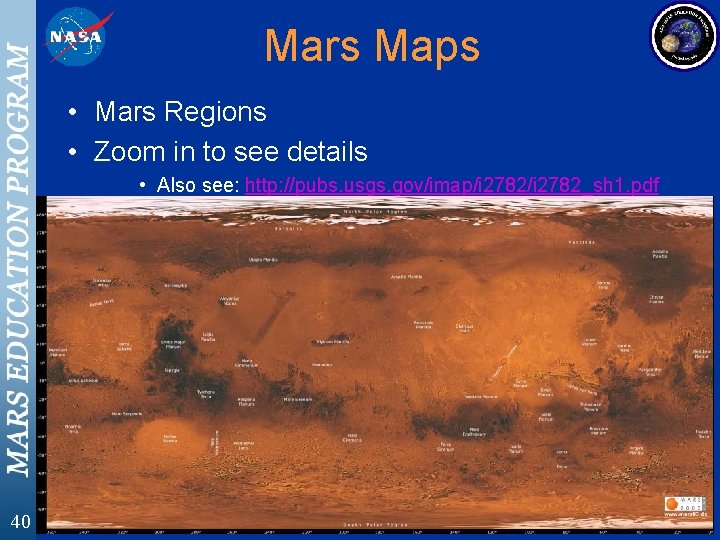
Mars Maps • Mars Regions • Zoom in to see details • Also see: http: //pubs. usgs. gov/imap/i 2782_sh 1. pdf 40
- Slides: 15