
Surface Enhanced Raman Spectroscopy of Biological Molecules Esra
Surface Enhanced Raman Spectroscopy of Biological Molecules Esra Yonel Department of Chemistry The George Washington University November 30, 2007
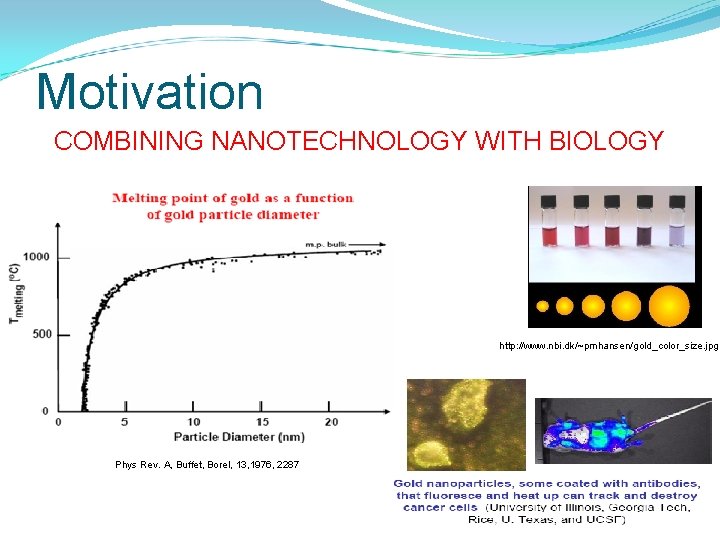
Motivation COMBINING NANOTECHNOLOGY WITH BIOLOGY http: //www. nbi. dk/~pmhansen/gold_color_size. jpg Phys Rev. A, Buffet, Borel, 13, 1976, 2287
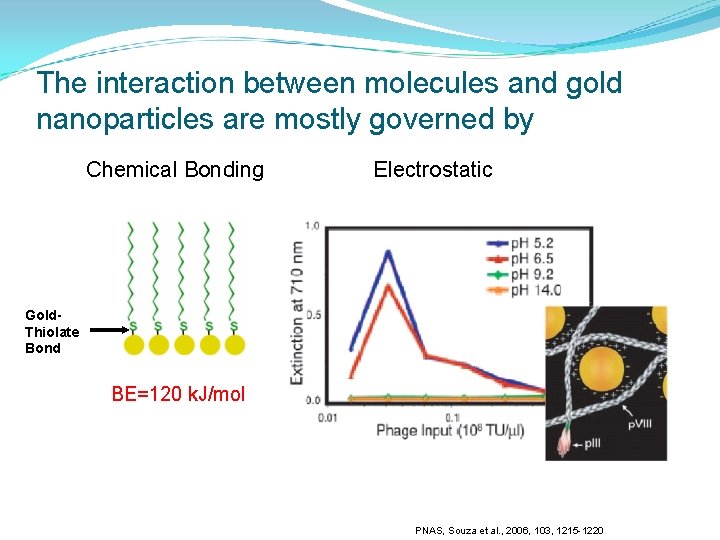
The interaction between molecules and gold nanoparticles are mostly governed by Chemical Bonding Electrostatic Gold. Thiolate Bond BE=120 k. J/mol PNAS, Souza et al. , 2006, 103, 1215 -1220
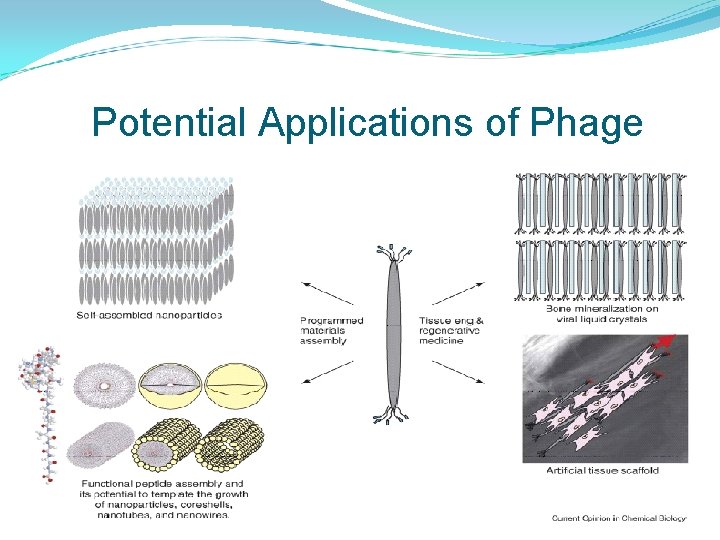
Potential Applications of Phage

PART I

Gold(Au) Nanoparticle Synthesis Au nanoparticles are synthesized by citrate-reduction method 15 ml of picopure water is brought to boil and then 1% Au. Cl 3 is added to the boiling solution. Followed by addition of 1% sodium citrate. The color of the solution changed from pale yellow to red The solution is allowed to cool to room temperature The ratio of Au. Cl 3 to sodium citrate determines the size of Gold Nanoparticles
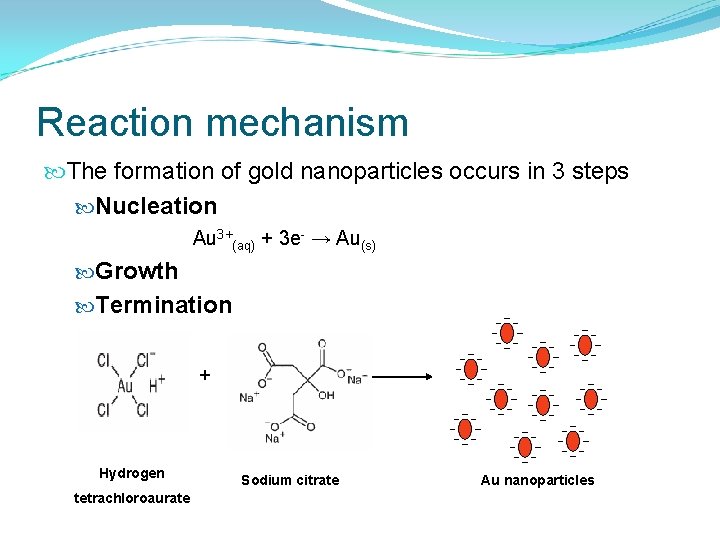
Reaction mechanism The formation of gold nanoparticles occurs in 3 steps Nucleation Au 3+(aq) + 3 e- → Au(s) Growth Termination + Hydrogen tetrachloroaurate Sodium citrate Au nanoparticles
Advantages Ease of characterization by colorimetric changes Biocompatibility The stability of enzymes on gold surface The simplicity of bioconjugate formation No need for premodification of the surface Ease of preparation Ease of investigation by spectroscopic methods

Surface Enhanced Raman Spectroscopy (SERS) Measures vibrational frequencies of analyte molecules Analytes are adsorbed on metal surface; such as gold, silver and copper Mechanisms EM Field Enhancement Interaction of light with analyte+metal surface Creation of surface plasmon Chemical Enhancement Adsorption of analyte onto metal surface

Advantages Standard Raman equipment, simple to operate Sensitive and provides fingerprint vibrational spectra Gives enhanced Raman signals pyridine SERS of 500 m. M pyridine adsorbed on Gold Normal Raman of 500 m. M pyridine
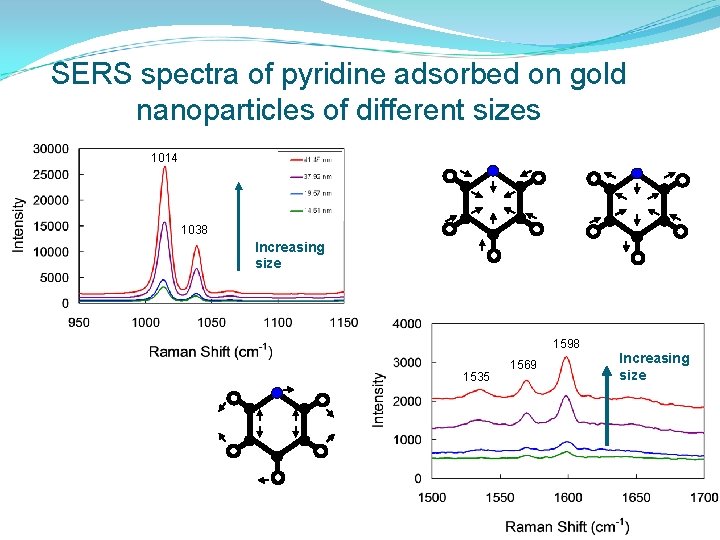
SERS spectra of pyridine adsorbed on gold nanoparticles of different sizes 1014 1038 Increasing size 1598 1535 1569 Increasing size
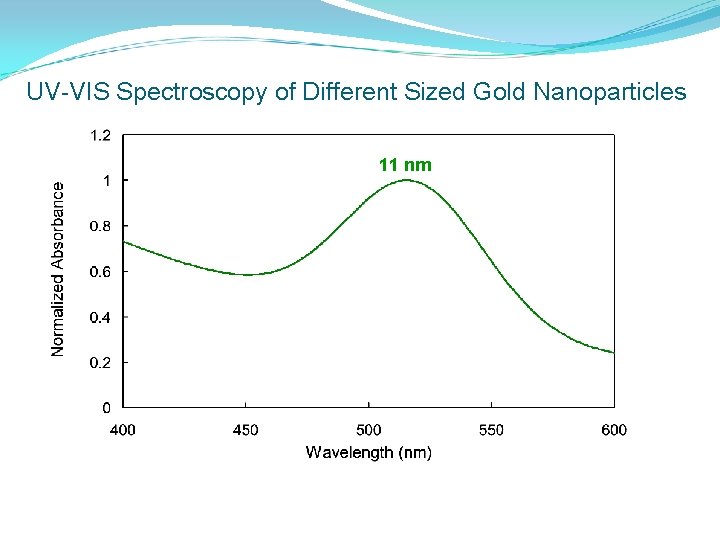
UV-VIS Spectroscopy of Different Sized Gold Nanoparticles 11 nm
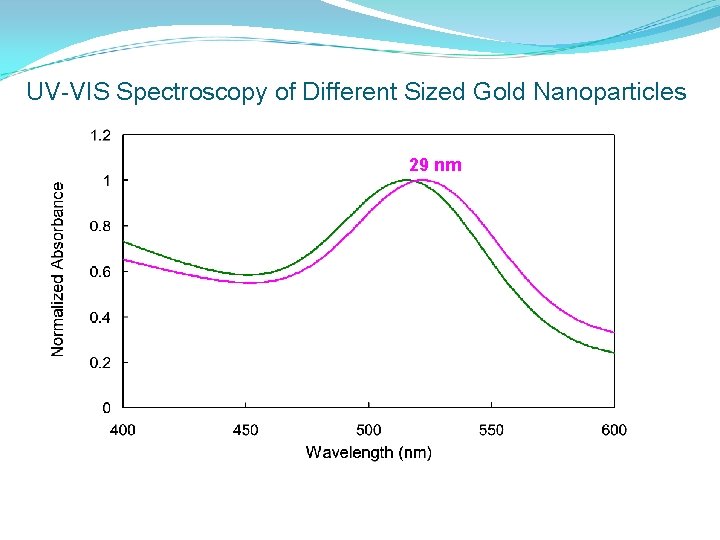
UV-VIS Spectroscopy of Different Sized Gold Nanoparticles 29 nm
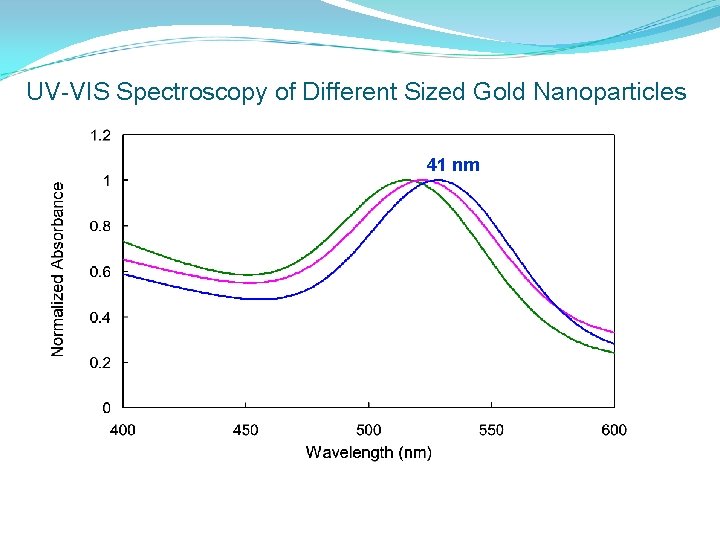
UV-VIS Spectroscopy of Different Sized Gold Nanoparticles 41 nm

UV-VIS Spectroscopy of Different Sized Gold Nanoparticles 44 nm

UV-VIS Spectroscopy of Different Sized Gold Nanoparticles 71 nm
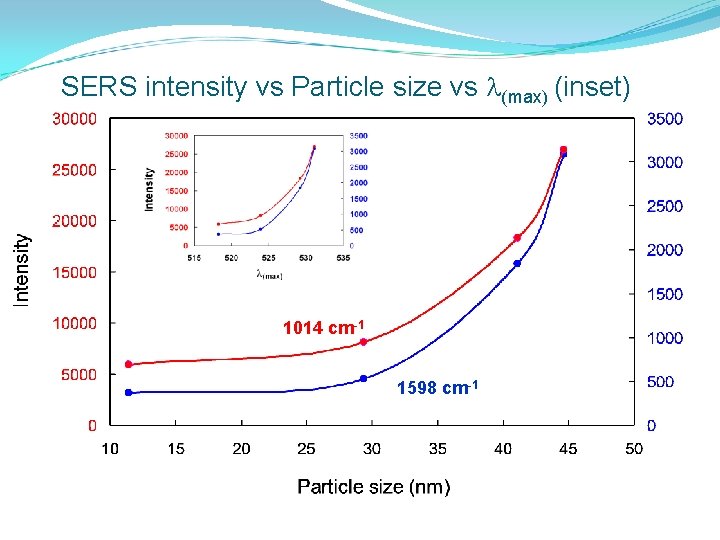
SERS intensity vs Particle size vs l(max) (inset) 1014 cm-1 1598 cm-1
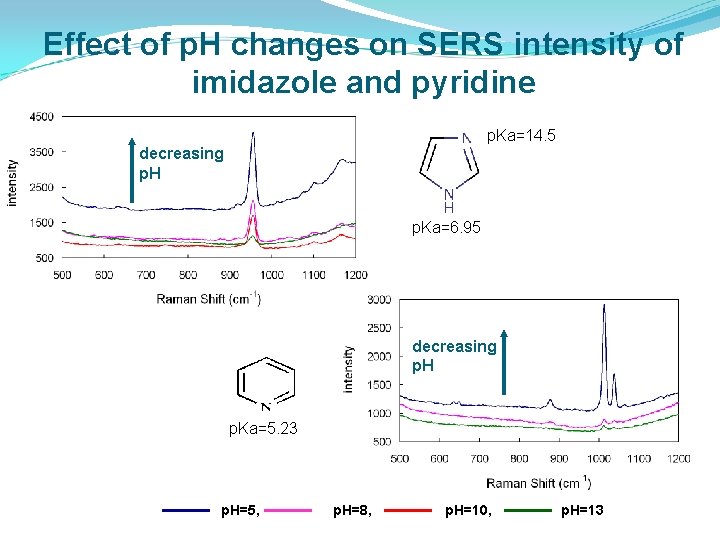
Effect of p. H changes on SERS intensity of imidazole and pyridine p. Ka=14. 5 decreasing p. H p. Ka=6. 95 decreasing p. H p. Ka=5. 23 p. H=5, p. H=8, p. H=10, p. H=13
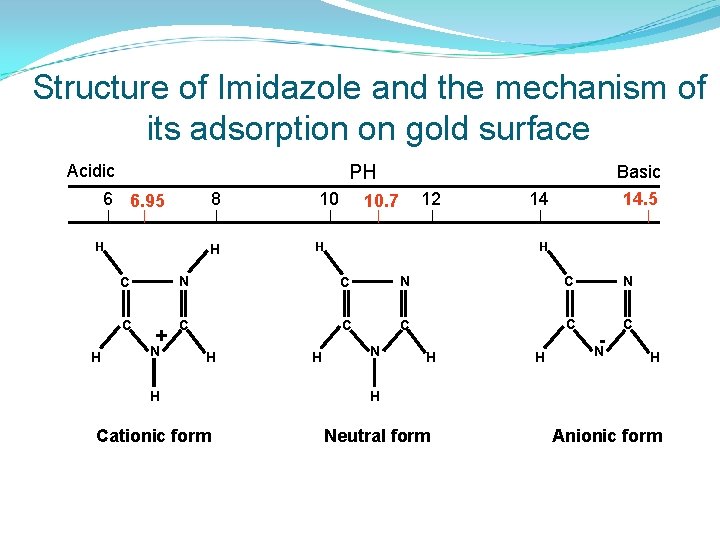
Structure of Imidazole and the mechanism of its adsorption on gold surface Acidic PH 6 6. 95 H C C H + N 8 10 H H 12 10. 7 Basic 14. 5 14 H N C N C C C H H N H H H Cationic form Neutral form H - N H Anionic form
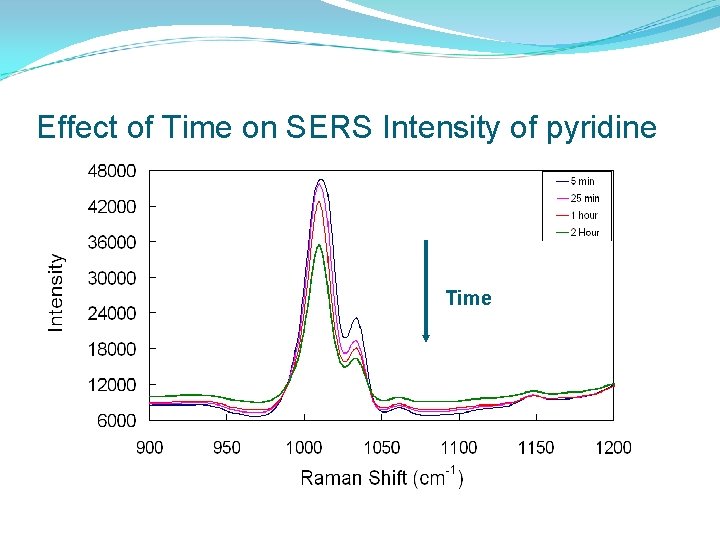
Effect of Time on SERS Intensity of pyridine Time
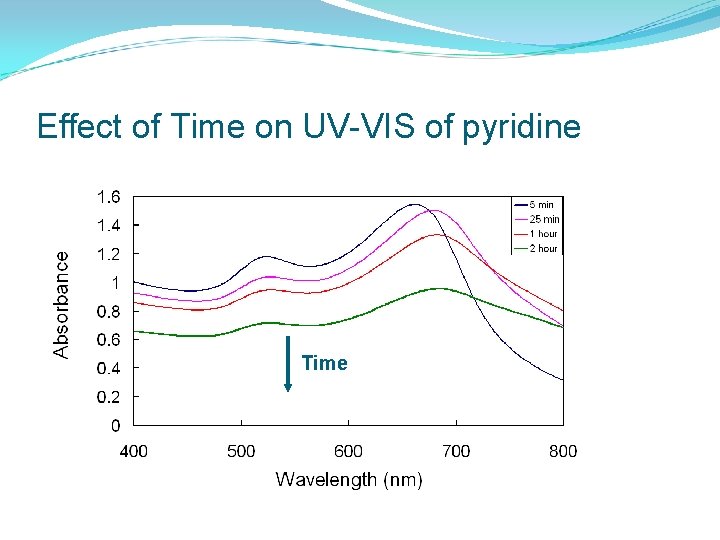
Effect of Time on UV-VIS of pyridine Time

PART II
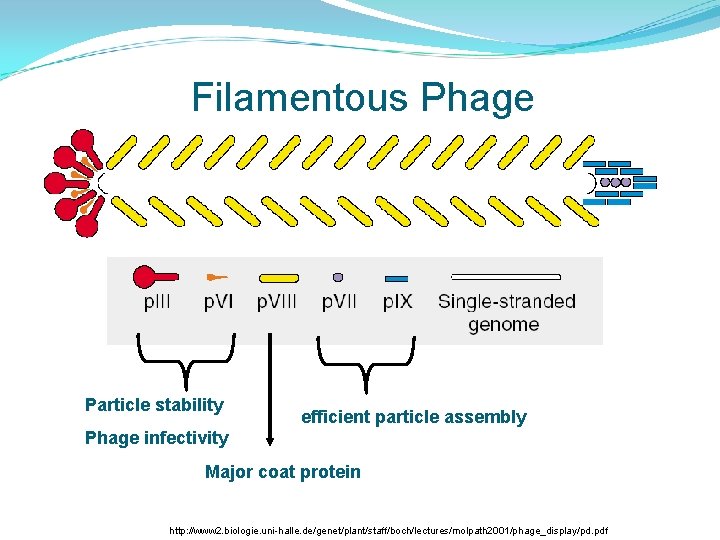
Filamentous Phage Particle stability efficient particle assembly Phage infectivity Major coat protein http: //www 2. biologie. uni-halle. de/genet/plant/staff/boch/lectures/molpath 2001/phage_display/pd. pdf
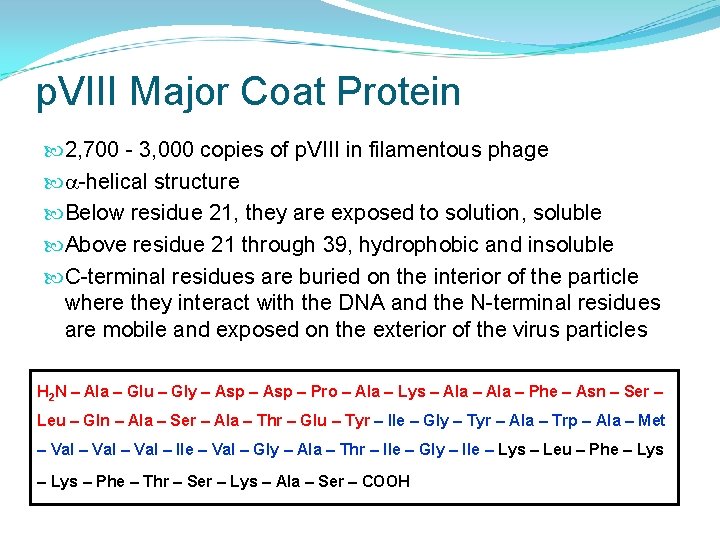
p. VIII Major Coat Protein 2, 700 - 3, 000 copies of p. VIII in filamentous phage a-helical structure Below residue 21, they are exposed to solution, soluble Above residue 21 through 39, hydrophobic and insoluble C-terminal residues are buried on the interior of the particle where they interact with the DNA and the N-terminal residues are mobile and exposed on the exterior of the virus particles H 2 N – Ala – Glu – Gly – Asp – Pro – Ala – Lys – Ala – Phe – Asn – Ser – Leu – Gln – Ala – Ser – Ala – Thr – Glu – Tyr – Ile – Gly – Tyr – Ala – Trp – Ala – Met – Val – Ile – Val – Gly – Ala – Thr – Ile – Gly – Ile – Lys – Leu – Phe – Lys – Phe – Thr – Ser – Lys – Ala – Ser – COOH
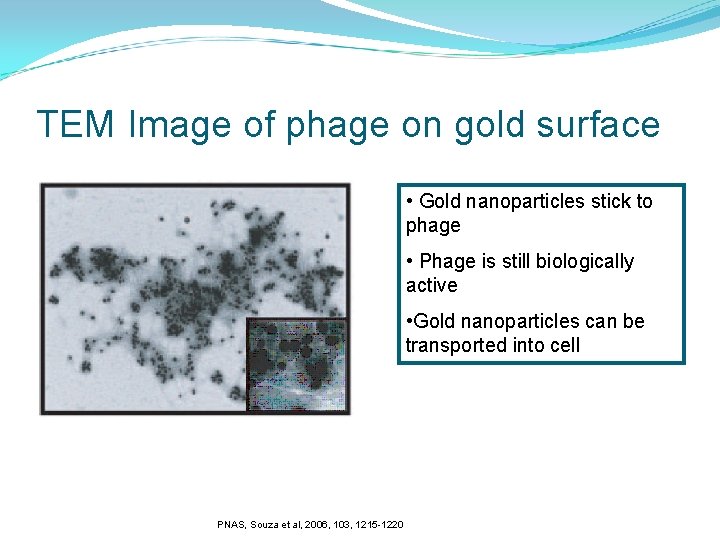
TEM Image of phage on gold surface • Gold nanoparticles stick to phage • Phage is still biologically active • Gold nanoparticles can be transported into cell PNAS, Souza et al, 2006, 103, 1215 -1220
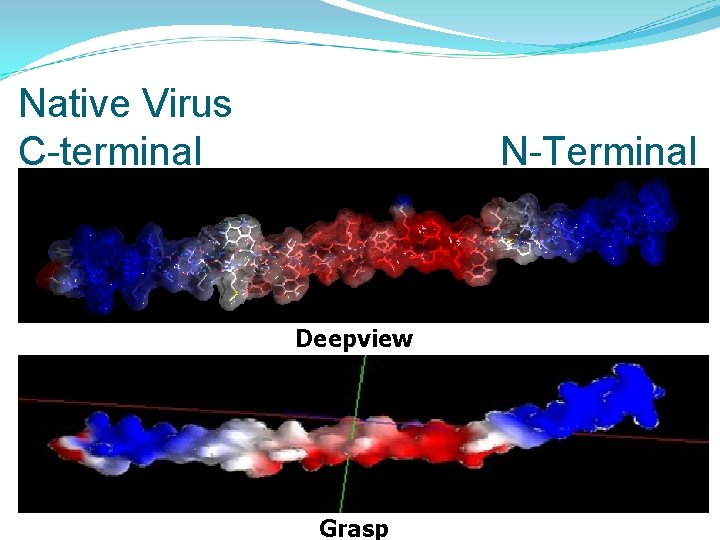
Native Virus C-terminal N-Terminal Deepview Grasp
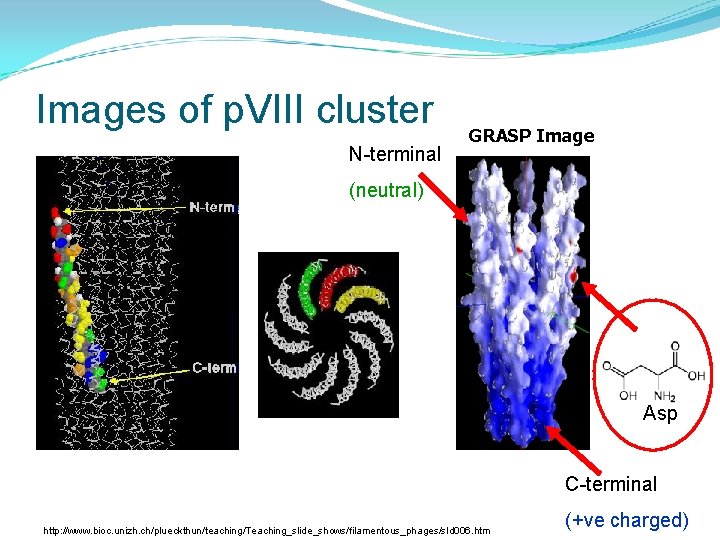
Images of p. VIII cluster N-terminal GRASP Image (neutral) Asp C-terminal http: //www. bioc. unizh. ch/plueckthun/teaching/Teaching_slide_shows/filamentous_phages/sld 006. htm (+ve charged)
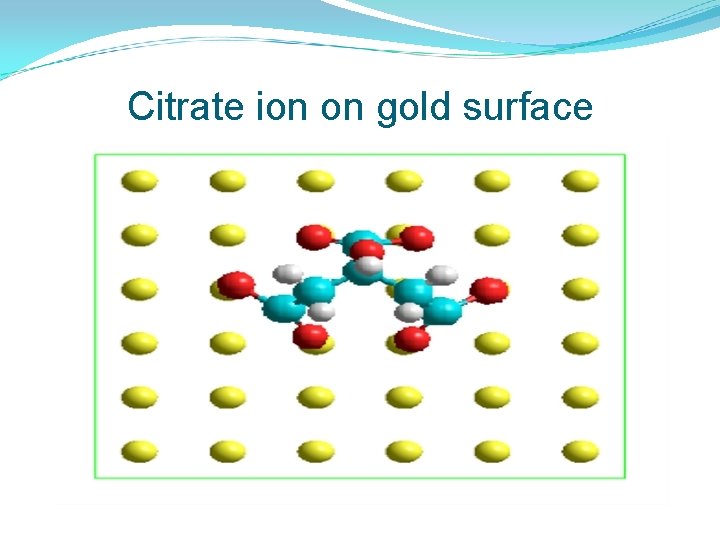
Citrate ion on gold surface

p. VIII Protein Structure ASP 4 -ASP 5
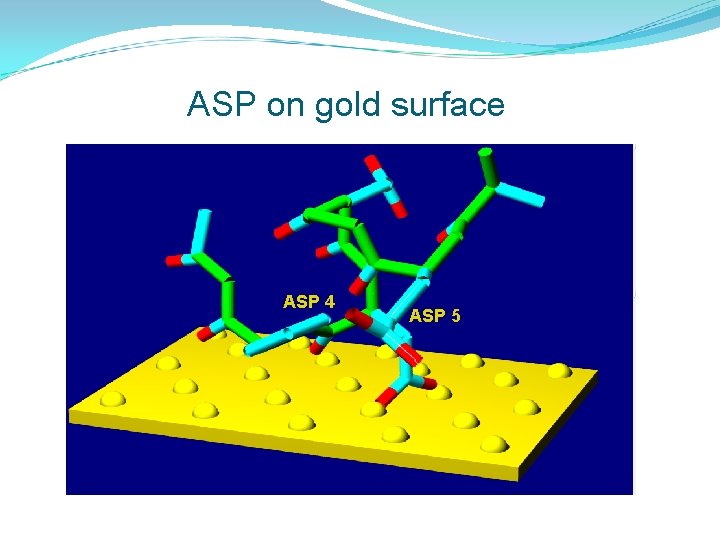
ASP on gold surface ASP 4 ASP 5
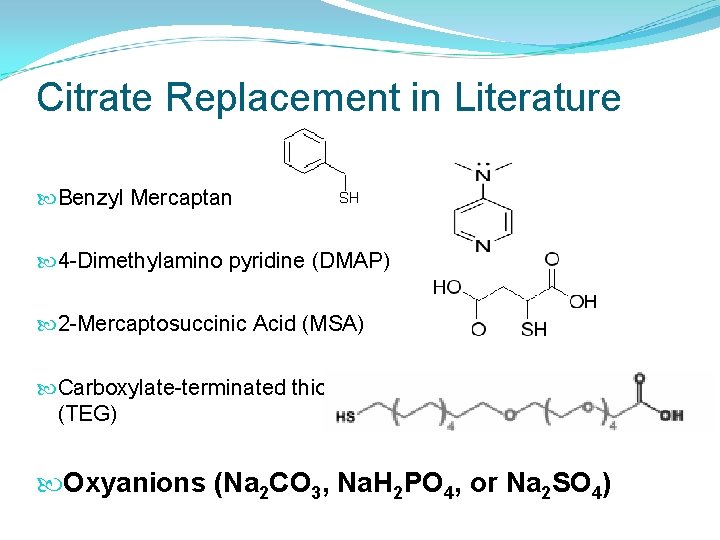
Citrate Replacement in Literature Benzyl Mercaptan 4 -Dimethylamino pyridine (DMAP) 2 -Mercaptosuccinic Acid (MSA) Carboxylate-terminated thiolalkylated tetraethylene glycol (TEG) Oxyanions (Na 2 CO 3, Na. H 2 PO 4, or Na 2 SO 4)
Citrate replacement by Oxyanions 1 Procedure Gold Nanoparticles synthesized using citrate and tannic acid Solutions of Na. Cl, Na 2 CO 3, Na. H 2 PO 4, or Na 2 SO 4 was added Solutions centrifuged and precipitate redissolved in water for optical characterization Techniques used UV-VIS: to compare surface plasmon resonance of different solutions FTIR: to direct analysis of oxyanion interaction with gold surface TEM: to compare the degree of aggregation for different solutions 1. Langmuir, Cumberland, S. L. ; Strouse, G. F. ; 2002, 18, 269 -276
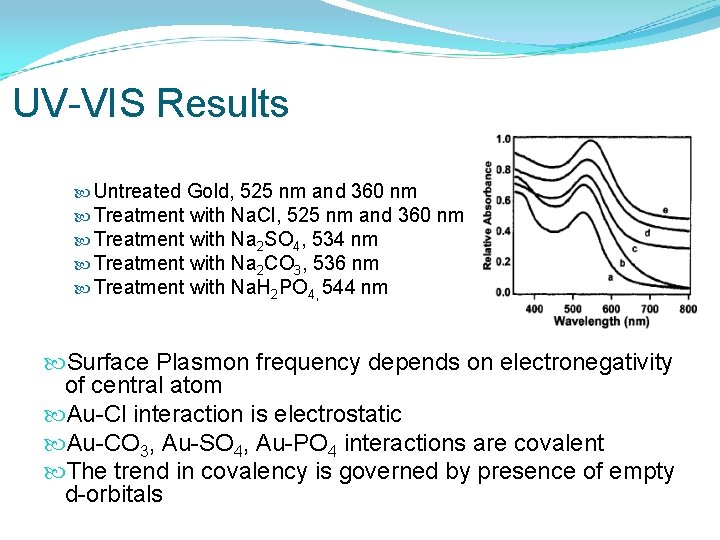
UV-VIS Results Untreated Gold, 525 nm and 360 nm Treatment with Na. Cl, 525 nm and 360 nm Treatment with Na 2 SO 4, 534 nm Treatment with Na 2 CO 3, 536 nm Treatment with Na. H 2 PO 4, 544 nm Surface Plasmon frequency depends on electronegativity of central atom Au-Cl interaction is electrostatic Au-CO 3, Au-SO 4, Au-PO 4 interactions are covalent The trend in covalency is governed by presence of empty d-orbitals
How can we prove this theory? SERS If phage is adsorbed on gold surface or not? Zeta Potential Measurements Is there any change in surface charge of gold nanoparticles?
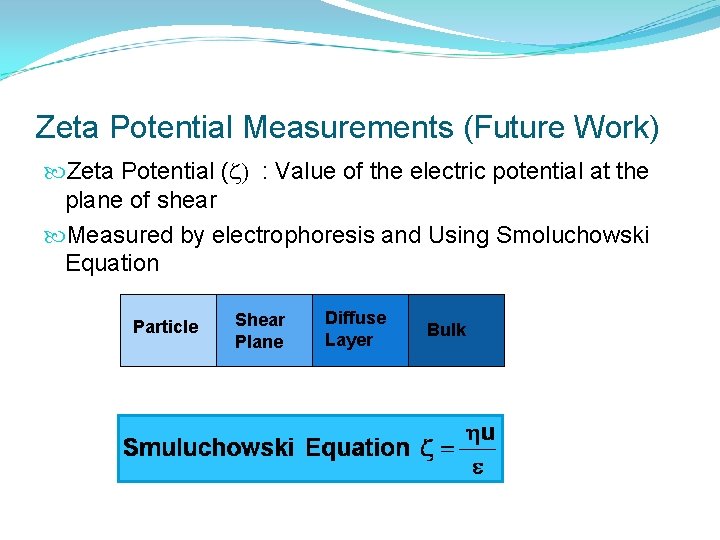
Zeta Potential Measurements (Future Work) Zeta Potential (z) : Value of the electric potential at the plane of shear Measured by electrophoresis and Using Smoluchowski Equation Particle Shear Plane Diffuse Layer Bulk

Future Directions SERS studies of Au-Phage Assembly at different Gold sizes and at different p. Hs SERS studies of Au-Model peptides such as Ala – Glu – Gly – Asp – Pro Zeta Potential Measurements of Au-Phage Networks and Au-Model peptides
Acknowledgements Many Thanks to Dr. Houston Miller Dr. Glauco Souza, MD Anderson Cancer Center Miller Group Members The George Washington University, Chemistry Department
- Slides: 37