
Surface Degradation Linked to Actuator Pin Fracture in
- Slides: 18
Surface Degradation Linked to Actuator Pin Fracture in Magnetically Controlled Growth Rods (MCGRs) Vasiliki C. Panagiotopouloua, Stewart Tucker, Harry S. Hothia, Alexander Gibson, John A. Skinner, Alister J. Hart, Thomas Ember, Julian J. H. Leong, Institute of Orthopaedics and Musculoskeletal Science University College London The Royal National Orthopaedic Hospital, Stanmore Great Ormond Street Hospital for Children, London Guy’s and St Thomas NHS Foundation Trust, London
Disclosures Stewart Tucker Consultancy agreement and royalty agreement with Nuvasive (not related to the Magec system)
Growing Rod Options • Single Rod Constructs • Double Rod Constructs eg domino, Shilla • Hybrid eg. VEPTR • MAGEC, Phenix (Magnetic Growing Rods)
Complications of growing-rod treatment for EOS Analysis of 140 patients S Bess, B Akbarnia et al JBJS November 2010 177 complications in 140 patients Complication rate of 126%
Single Growing Rods N Farooq, S. K Tucker, H. Noordeen. Spine 2010 • • 88 patients wth single submuscular growing rods Cobb Angle Improvement – 73 > 44° at final follow up T 1 -S 1 height gain: 3. 37 cm (1. 04 cm per year) 60 complications • • • 16 cases of anchor failure 31 rod fractures 11 cases developed sup or deep infection
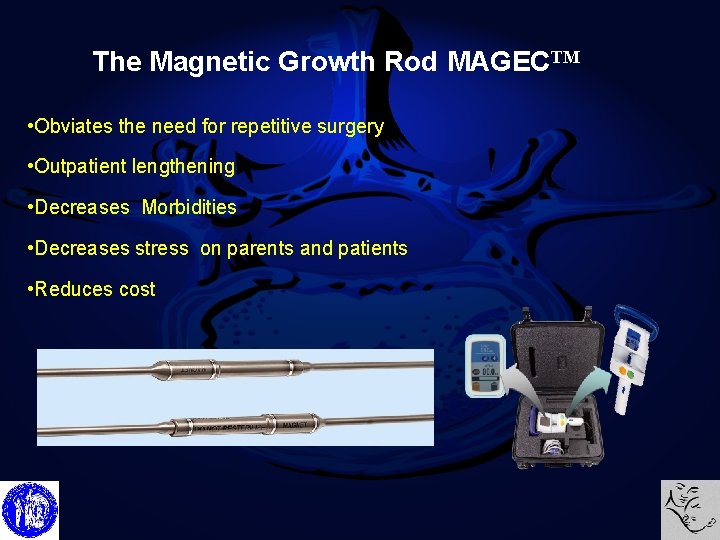
The Magnetic Growth Rod MAGECTM • Obviates the need for repetitive surgery • Outpatient lengthening • Decreases Morbidities • Decreases stress on parents and patients • Reduces cost
Brit. Spine 2016 The ‘MAGEC” Debate: Trick or Treat “up to 22% unplanned revision surgeries”
Materials & Methods ü 9 patients (8 F: 1 M) ü 15 rods in total ü Mean age at primary 10. 2 years old ü Reasons for revision: Ø Metal staining of the skin Ø Swelling Ø Progression of scoliosis Ø Failure of distraction Ø Final fusion
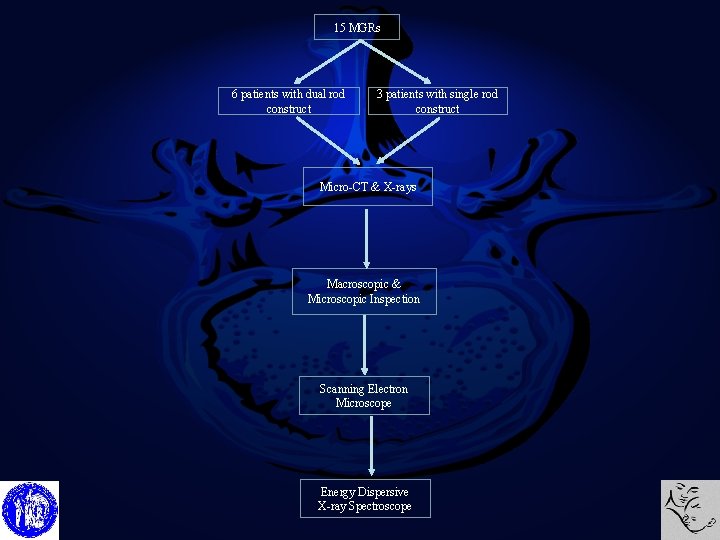
15 MGRs 6 patients with dual rod construct 3 patients with single rod construct Micro-CT & X-rays Macroscopic & Microscopic Inspection Scanning Electron Microscope Energy Dispersive X-ray Spectroscope
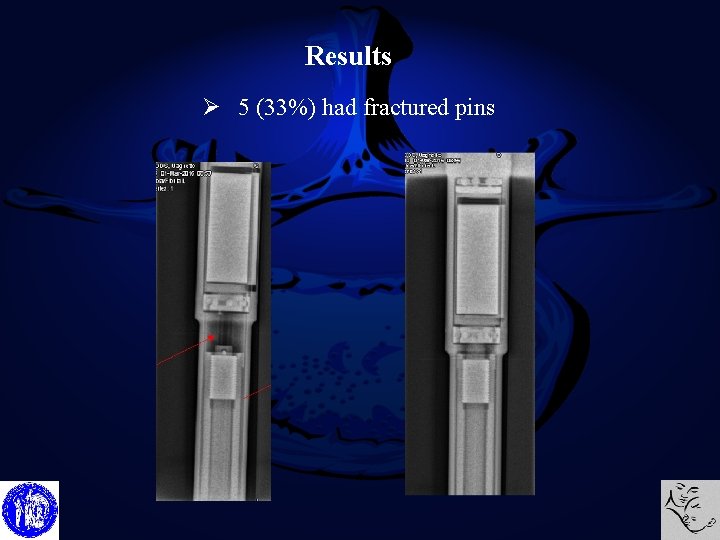
Results Ø 5 (33%) had fractured pins
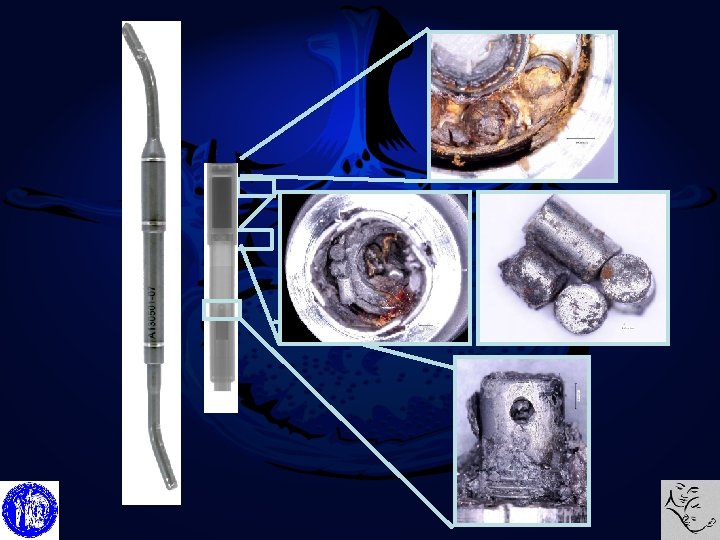
Results Ø All rods had surface damage on the actuator part, but damage appeared greater if pin fractured
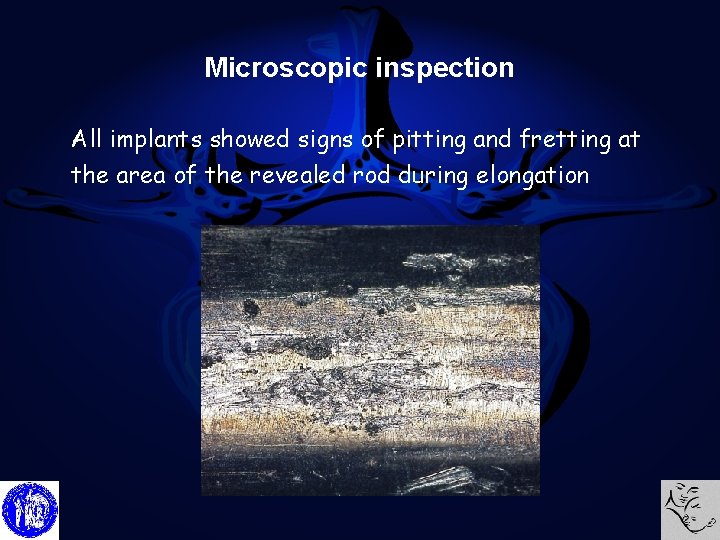
Microscopic inspection All implants showed signs of pitting and fretting at the area of the revealed rod during elongation
Results Ø We sectioned two rods: Ø one with pin fracture Ø one with intact mechanism to understand how they perform in situ
Conclusion Proposed mechanism of failure: Body fluid ingress results in corrosion of the internal mechanism. This corrosion can result in pin fracture. Distraction ability of the implant is lost Greater surface degradation Variable levels of metallosis Revision surgery is required
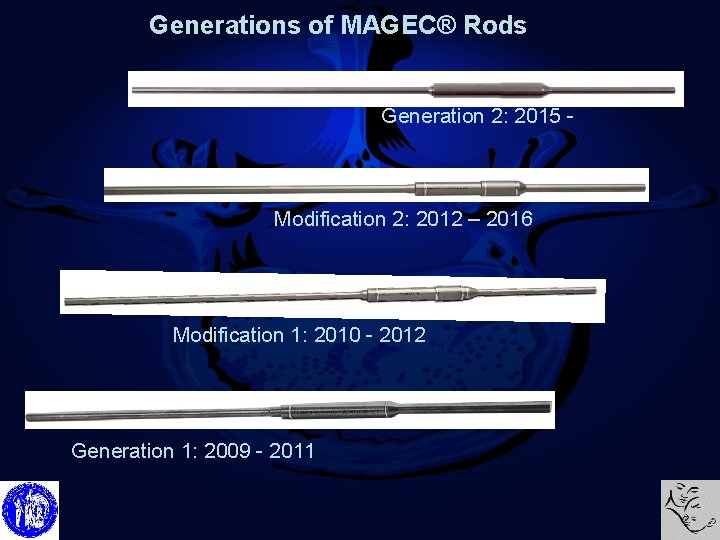
Generations of MAGEC® Rods Generation 2: 2015 - Modification 2: 2012 – 2016 Modification 1: 2010 - 2012 Generation 1: 2009 - 2011
Concern There are currently many implanted Magec rods, without the latest modifications of increased corrosion resistance and pin strength It can be anticipated that a percentage of these rods will fail, due to the mechanisms described, necessitating revision surgery
For more information Visit our website www. lirc. co. uk Follow us on Twitter @The_LIRC Join the 2016 LIRC conference