
Supraglottic Airway Devices Nap 4 Dr Anil Patel
- Slides: 19
Supraglottic Airway Devices Nap 4 Dr Anil Patel Royal National Throat Nose & Ear Hospital and University College Hospital, London
I have received an honorarium from the Laryngeal Mask Company & I have helped design the A. P. Advance Videolaryngoscope
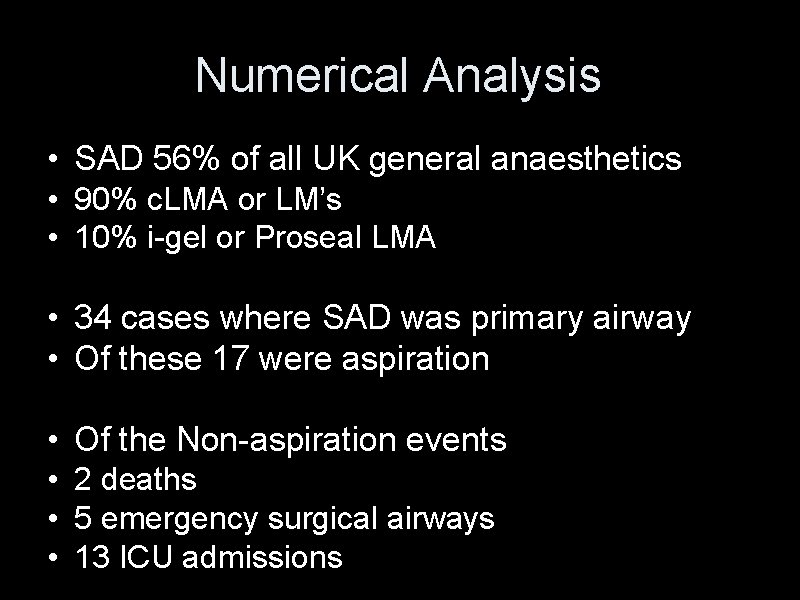
Numerical Analysis • SAD 56% of all UK general anaesthetics • 90% c. LMA or LM’s • 10% i-gel or Proseal LMA • 34 cases where SAD was primary airway • Of these 17 were aspiration • Of the Non-aspiration events • 2 deaths • 5 emergency surgical airways • 13 ICU admissions
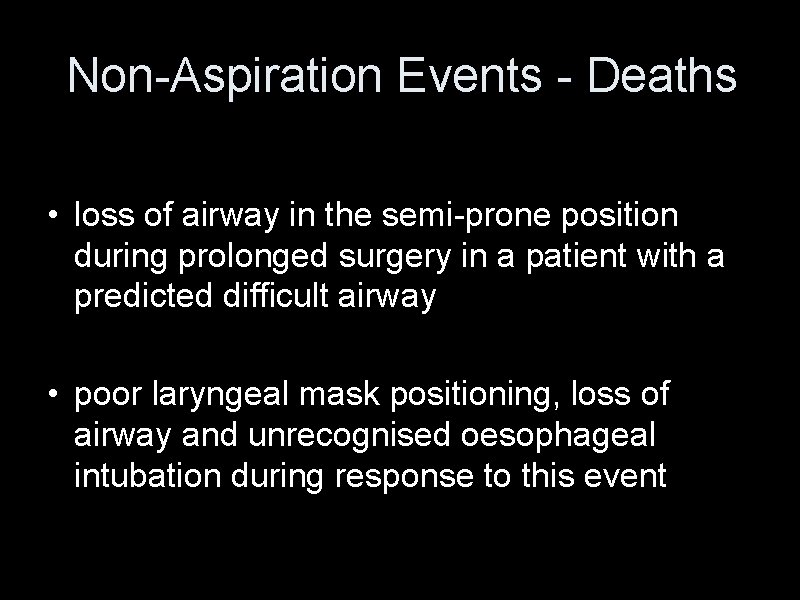
Non-Aspiration Events - Deaths • loss of airway in the semi-prone position during prolonged surgery in a patient with a predicted difficult airway • poor laryngeal mask positioning, loss of airway and unrecognised oesophageal intubation during response to this event
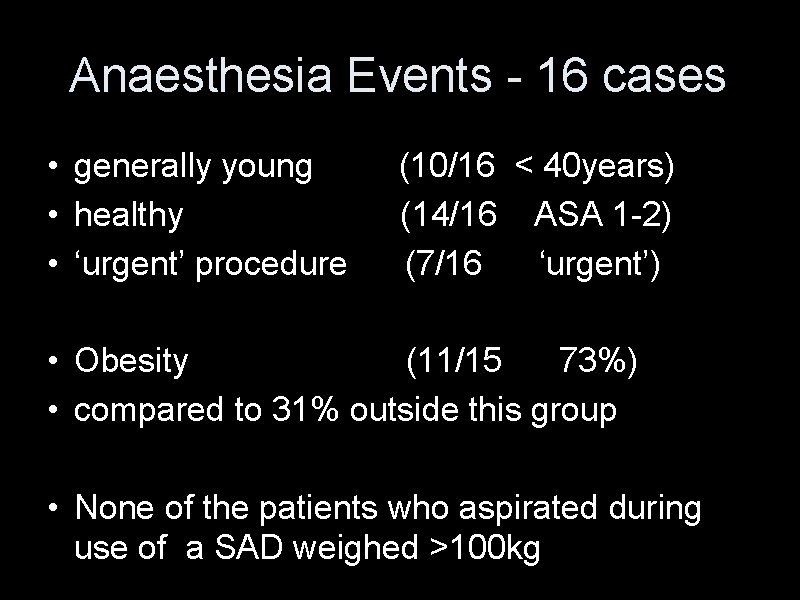
Anaesthesia Events - 16 cases • generally young • healthy • ‘urgent’ procedure (10/16 < 40 years) (14/16 ASA 1 -2) (7/16 ‘urgent’) • Obesity (11/15 73%) • compared to 31% outside this group • None of the patients who aspirated during use of a SAD weighed >100 kg
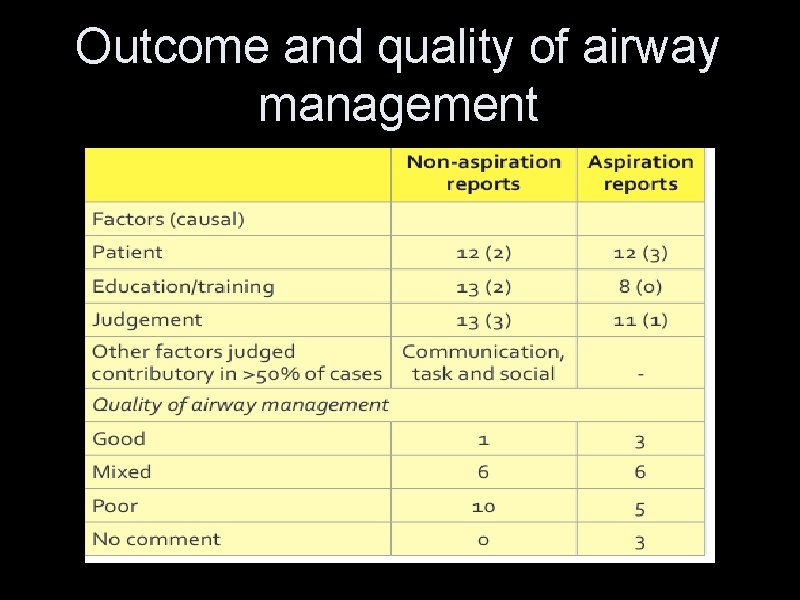
Outcome and quality of airway management
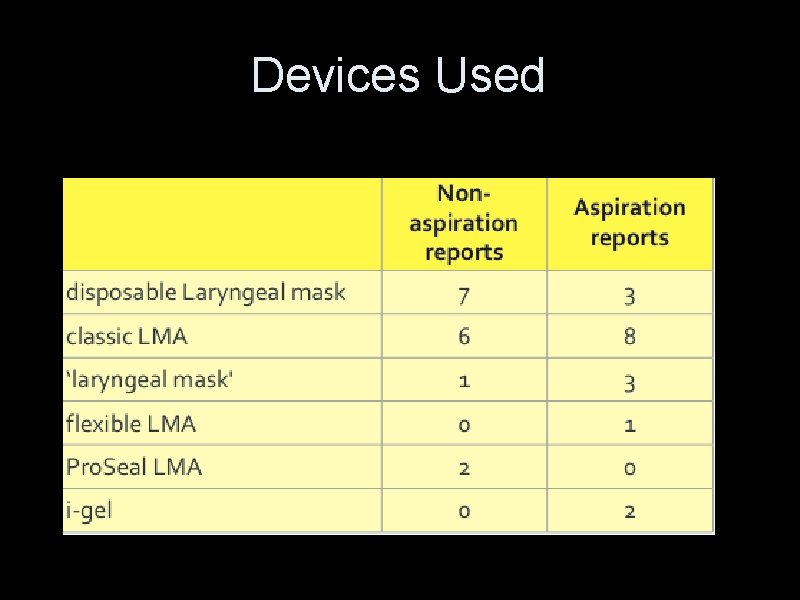
Devices Used
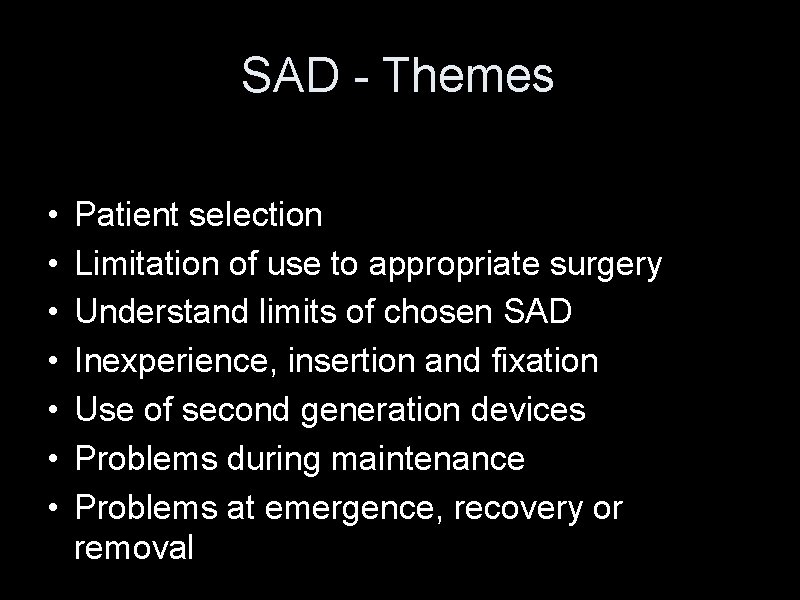
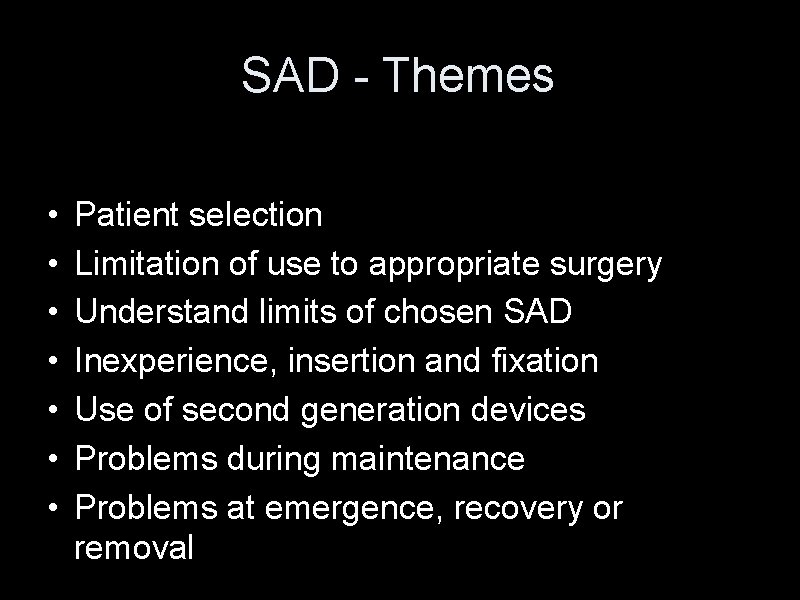
SAD - Themes • • Patient selection Limitation of use to appropriate surgery Understand limits of chosen SAD Inexperience, insertion and fixation Use of second generation devices Problems during maintenance Problems at emergence, recovery or removal
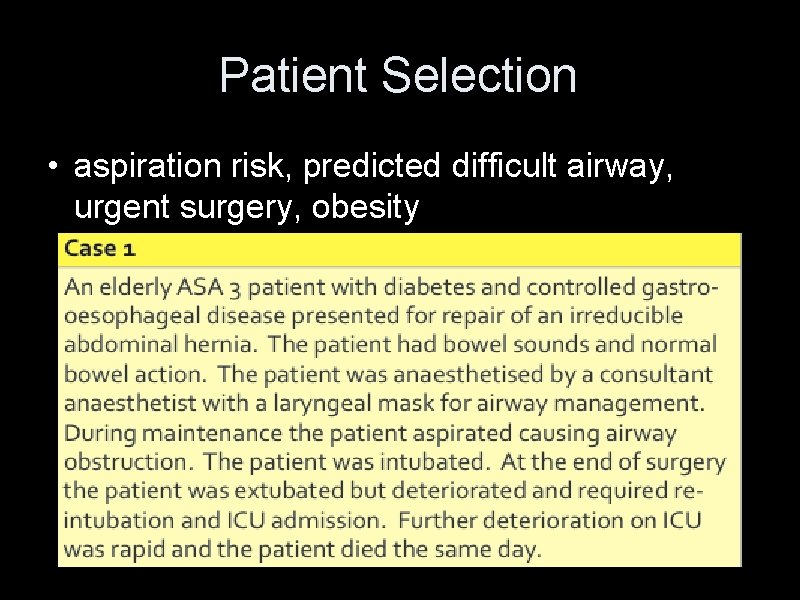
Patient Selection • aspiration risk, predicted difficult airway, urgent surgery, obesity
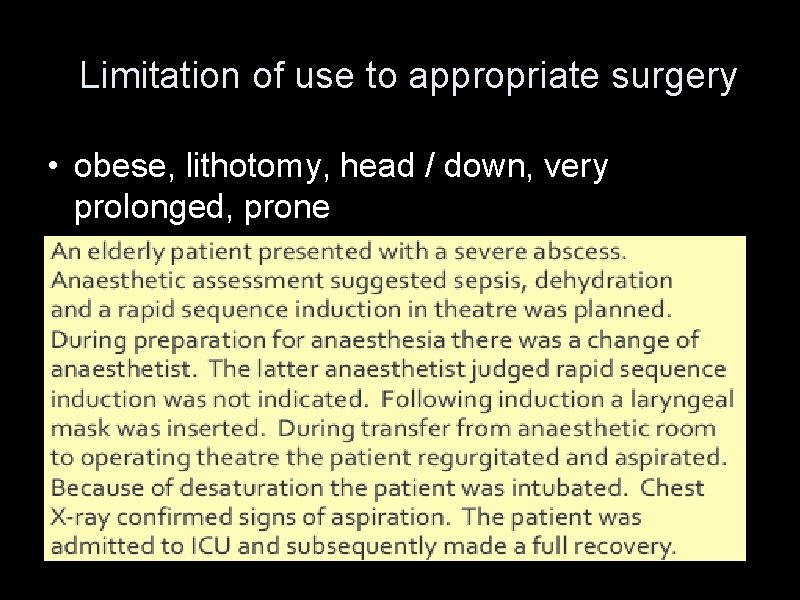
Limitation of use to appropriate surgery • obese, lithotomy, head / down, very prolonged, prone
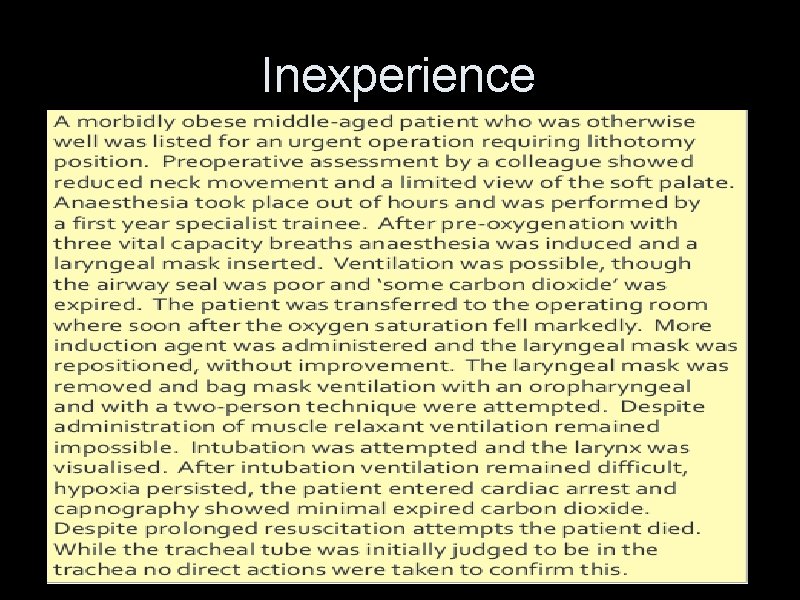
Inexperience
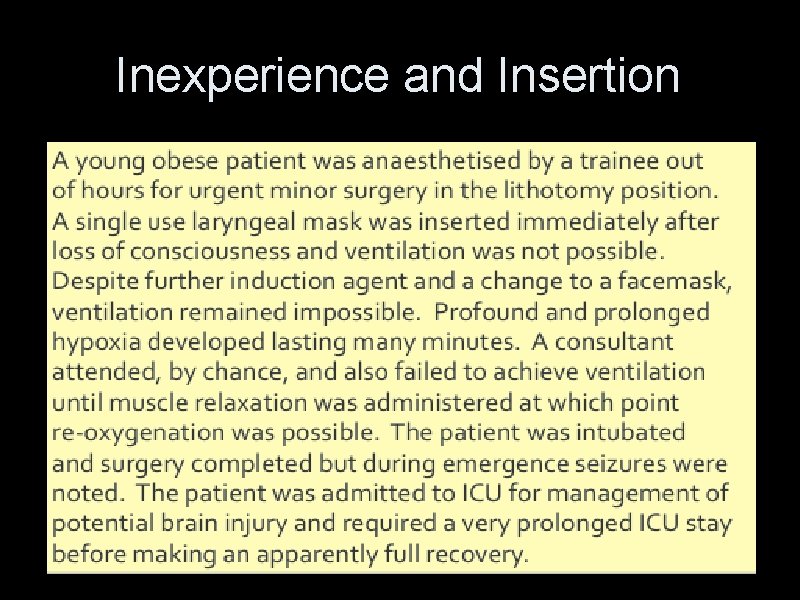
Inexperience and Insertion
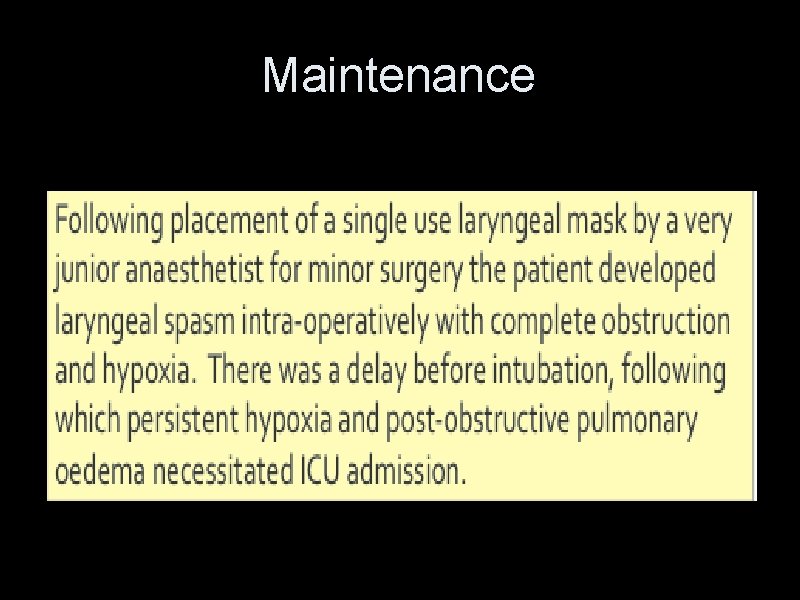
Maintenance
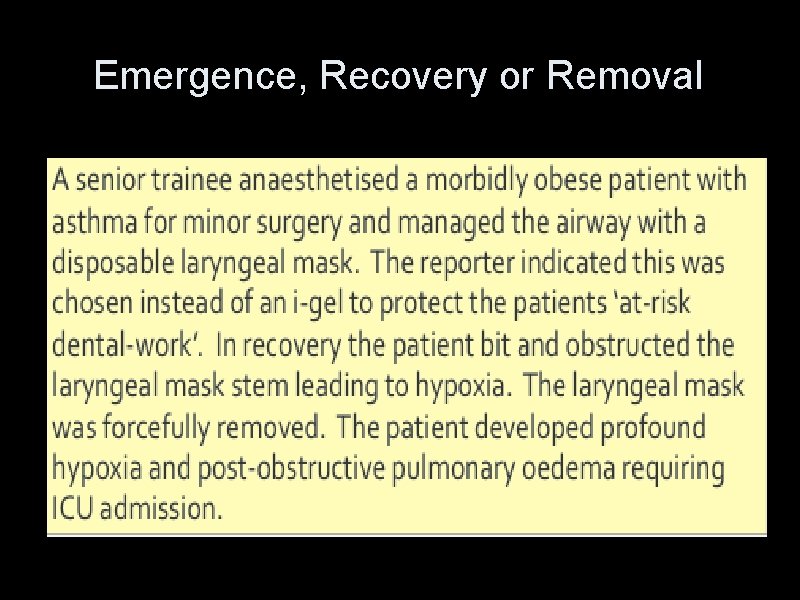
Emergence, Recovery or Removal
SAD - Themes • • Patient selection Limitation of use to appropriate surgery Understand limits of chosen SAD Inexperience, insertion and fixation Use of second generation devices Problems during maintenance Problems at emergence, recovery or removal
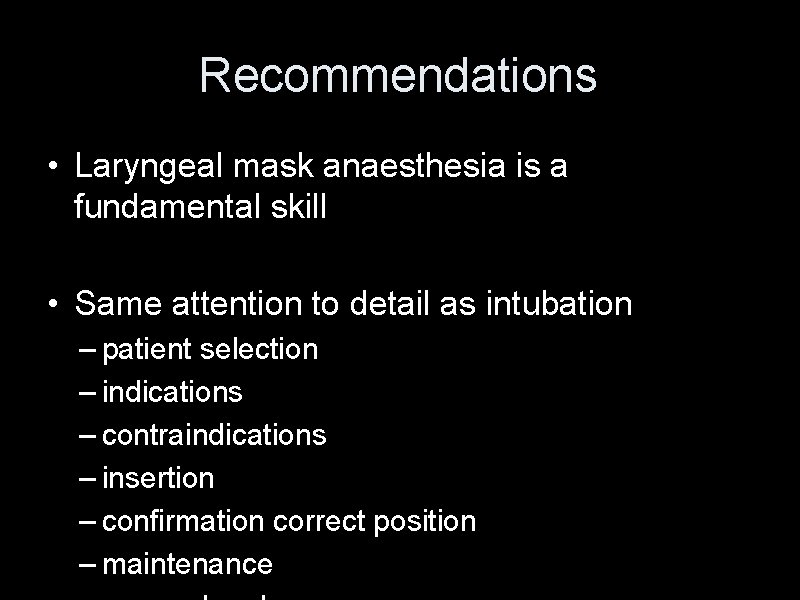
Recommendations • Laryngeal mask anaesthesia is a fundamental skill • Same attention to detail as intubation – patient selection – indications – contraindications – insertion – confirmation correct position – maintenance
Recommendations • SAD use for difficult intubation, consider awake FOI or FOI through SAD • Difficult or failed SAD placement should raise the possibility of complications during maintenance / emergence / recovery • Continuing anaesthesia with a suboptimal airway after SAD insertion is not acceptable • Recovery staff competent with SAD procedures and timing of removal
Recommendation • If tracheal intubation is not considered to be indicated but there is some (small) increased concern about regurgitation risk a second generation SAD is a more logical choice than a first generation one. • Factors that mean use of SAD is at limits of normality (prone, airway access, size) consider second generation SAD • All hospitals have second generation SAD’s available for both routine use and rescue airway management
Supraglottic Airway Devices Nap 4