
Supportive Pathways Module 4 Supportive Pathways Education Program
- Slides: 28
Supportive Pathways Module 4
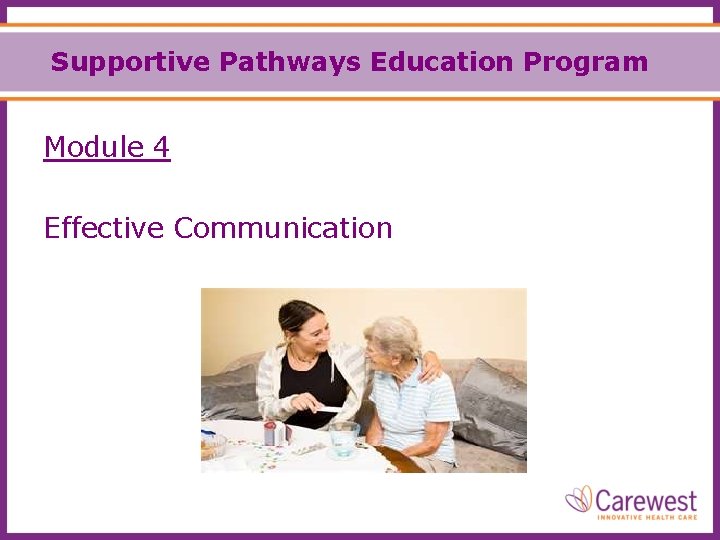
Supportive Pathways Education Program Module 4 Effective Communication
Objectives To discuss the importance of non-verbal communication To understand how the disease process affects communication To discuss different strategies to use when communicating with persons with dementia
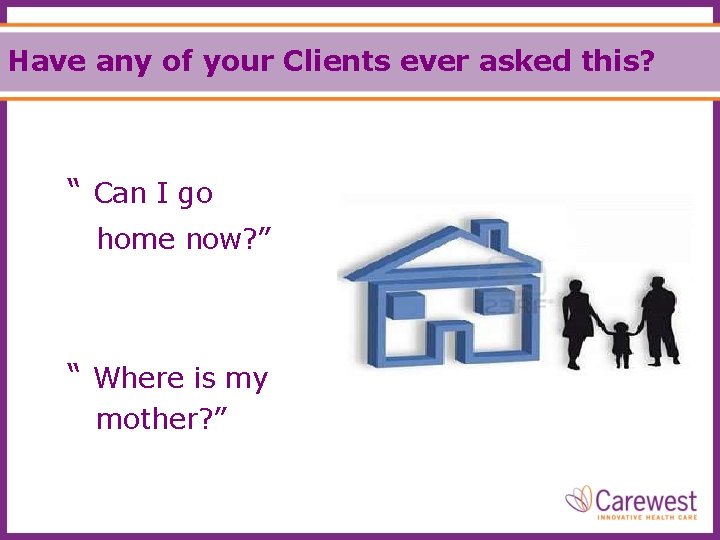
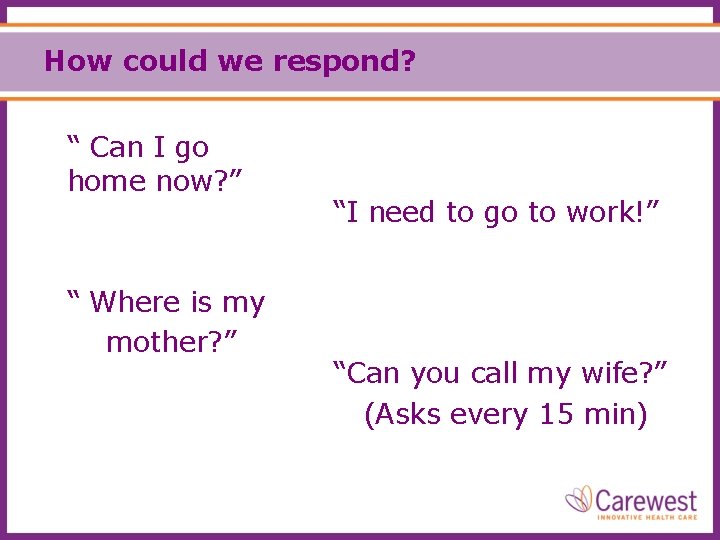
Have any of your Clients ever asked this? “ Can I go home now? ” “ Where is my mother? ”
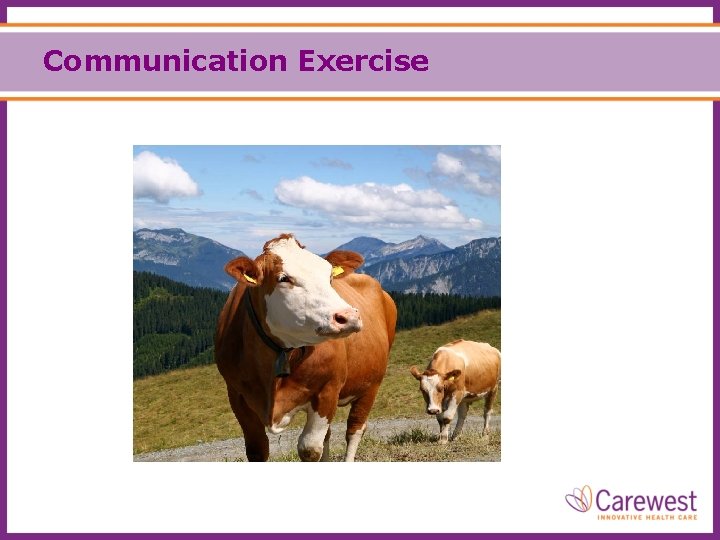
Communication Exercise
Communication The most important skill we have is the ability to ‘listen’ to verbal and non-verbal communication Never assume a client does not understand you or what is being said around them
What effects our ability to listen? • Impatience - not waiting • Distractions • Thinking we know the answer • Focused on own problems • Workload/ routines
What effects our client’s ability to listen? • May not see the person talking to them • Hard of hearing/background noise • Stressed / worried/in pain/not feeling well • English is not their first language • We give too much information at once • We don’t give them time to respond • Dementia disease processes
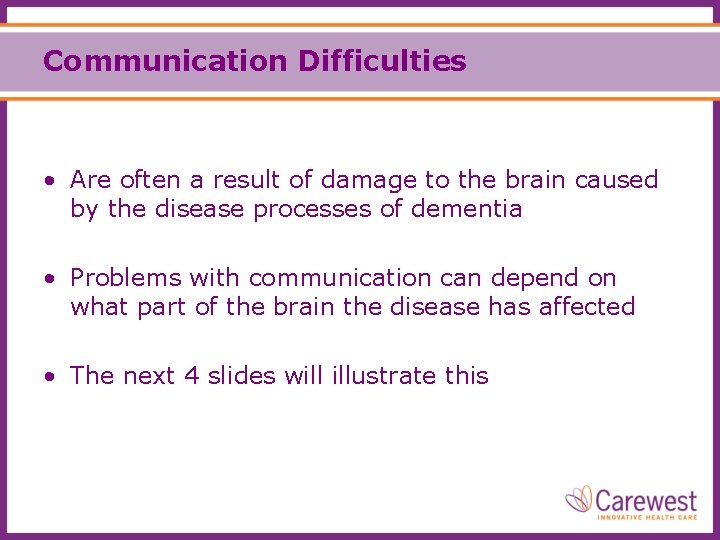
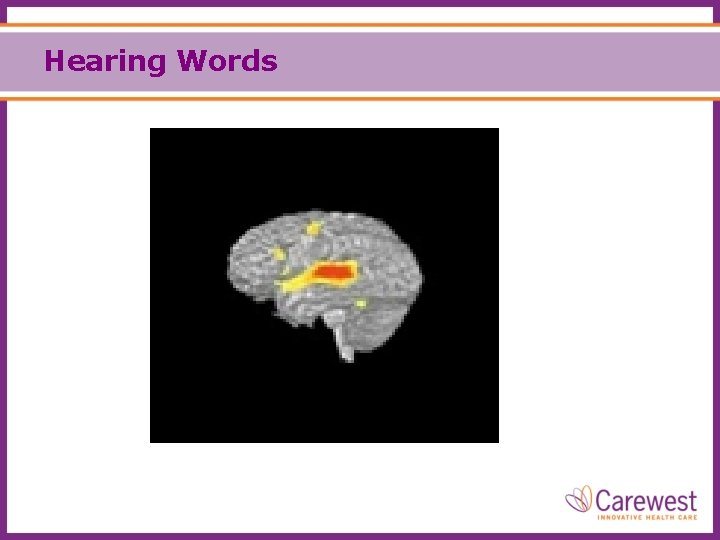
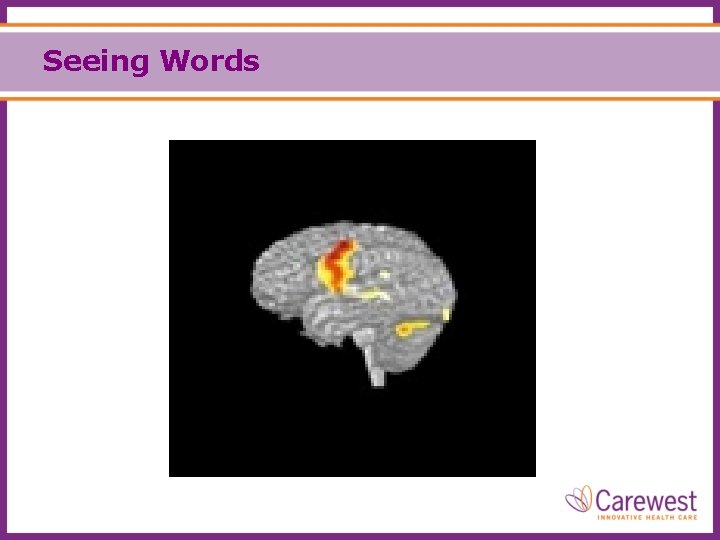
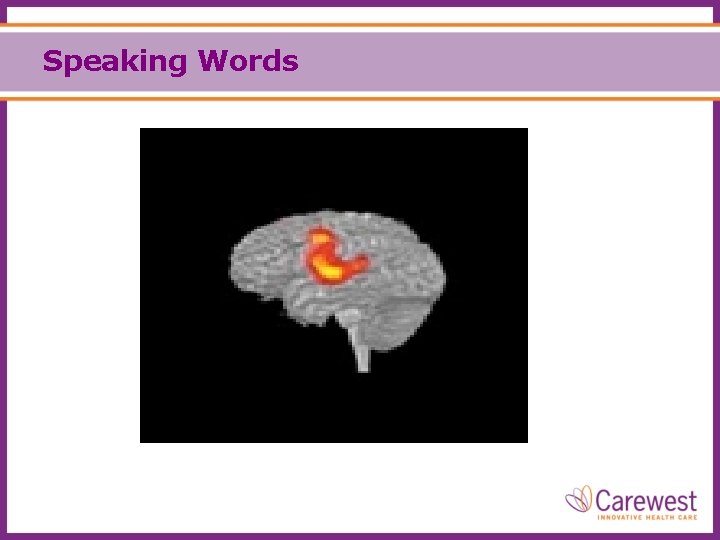
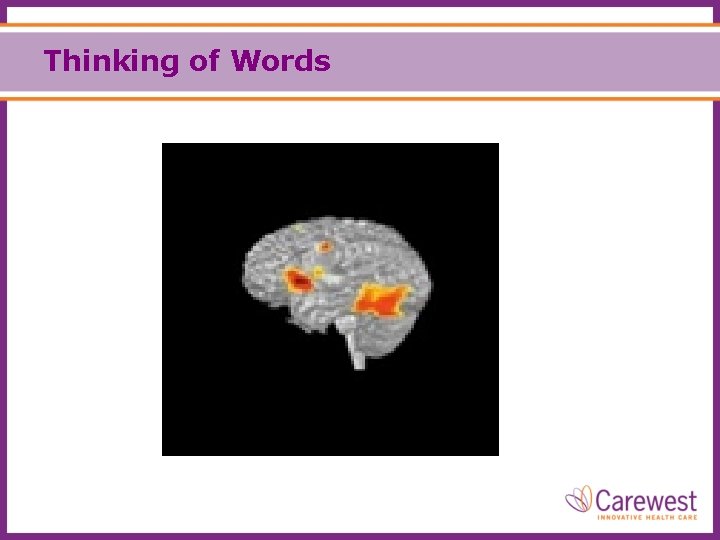
Communication Difficulties • Are often a result of damage to the brain caused by the disease processes of dementia • Problems with communication can depend on what part of the brain the disease has affected • The next 4 slides will illustrate this
Hearing Words
Seeing Words
Speaking Words
Thinking of Words
How do we communicate non-verbally? • body language (posture; space) • gestures or props • touch/eye contact / facial expressions • use of social rules e. g. handshake • tone of voice • pictures / signs / symbols / orientation boards • environmental clues e. g. smells can ↑ appetite
Key Message We need to watch for the person’s reaction to our body language/communication to ensure we are not causing them more distress. . .
“Communicating with Confused Older Adults” During the video clip: Observe the verbal and non-verbal communication skills of the staff person Also note how long it took to have a meaningful conversation – can we find 5 minutes to ‘make someone’s day”?
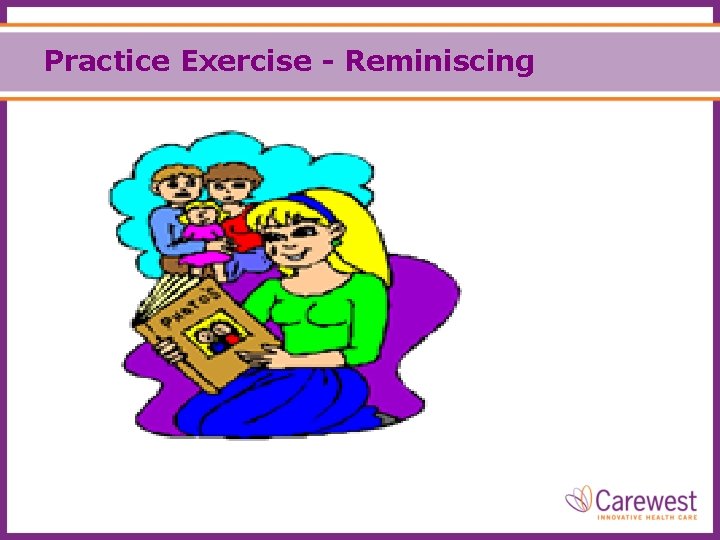
Verbal/Nonverbal Communication Skills What did you observe? • Touch • Eye contact/Closeness • Warm tone of voice • Short Sentences – Waiting for the answer • Full attention • Quiet environment • Validation • Reminiscing • Giving her value – making her feel good
Validation Respects the individual’s sense of reality. Validates what they may be feeling So we need to Join their journey – go to their reality
Reality Orientation • Orientates to person, place, time • Is more useful in early stages • Can provide cues Should not be used if it creates distress
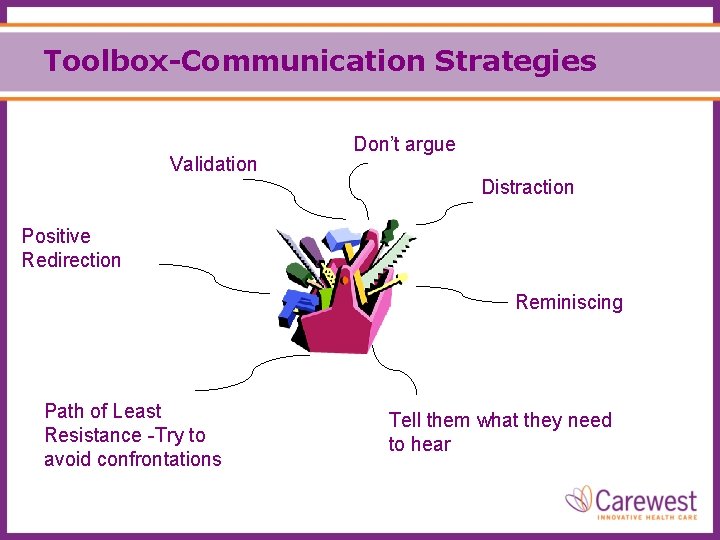
Toolbox-Communication Strategies Validation Don’t argue Distraction Positive Redirection Reminiscing Path of Least Resistance -Try to avoid confrontations Tell them what they need to hear
How could we respond? “ Can I go home now? ” “ Where is my mother? ” “I need to go to work!” “Can you call my wife? ” (Asks every 15 min)
Practice Exercise - Reminiscing
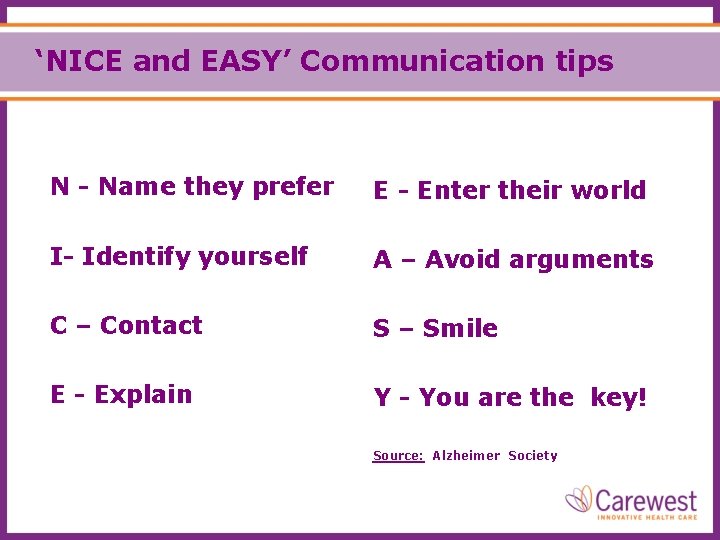
‘NICE and EASY’ Communication tips N - Name they prefer E - Enter their world I- Identify yourself A – Avoid arguments C – Contact S – Smile E - Explain Y - You are the key! Source: Alzheimer Society
Communication Exercise
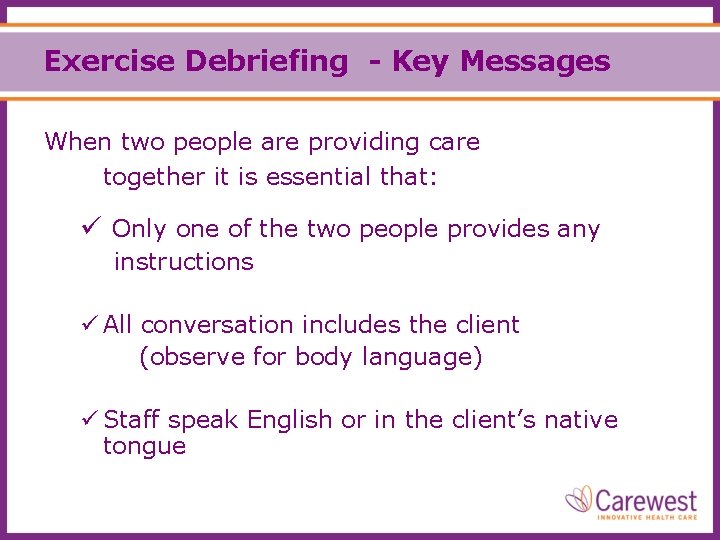
Exercise Debriefing - Key Messages When two people are providing care together it is essential that: ü Only one of the two people provides any instructions ü All conversation includes the client (observe for body language) ü Staff speak English or in the client’s native tongue
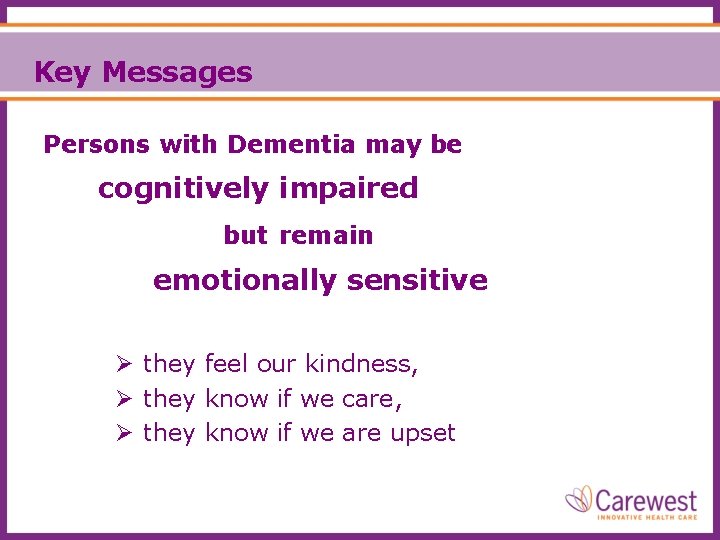
Key Messages Persons with Dementia may be cognitively impaired but remain emotionally sensitive Ø they feel our kindness, Ø they know if we care, Ø they know if we are upset
Best Practices for Communication • Ensure you follow these practices for the benefit of your clients • Be a good role model for families and other staff
Questions? Please refer to your handouts