
Supporting UASC in schools CPD 1 Introduction Background
Supporting UASC in schools CPD 1: Introduction & Background
QUIZ Eritrea Ethiopia China Iraq Afghanistan
Languages Eritrea Ethiopia China Iraq Afghanistan Tigrinya, Arabic, Tigre Amharic, Tigrinya, Oromo Mandarin, Cantonese Arabic, Sorani Kurdish, Dari, Pashtu
Who are Unaccompanied Asylum Seeking Children? The UK Home Office defines an UASC as a person under 18, applying for asylum on his or her own right, who is separated from both parents and is not being cared for by an adult who by law has responsibility to do so.
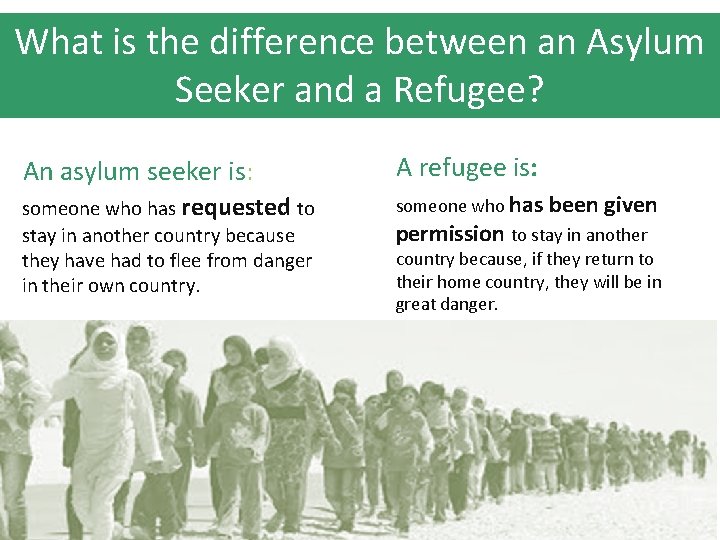
What is the difference between an Asylum Seeker and a Refugee? An asylum seeker is: A refugee is: someone who has requested to stay in another country because they have had to flee from danger in their own country. someone who has been given permission to stay in another country because, if they return to their home country, they will be in great danger. N. B. claiming asylum is a human right Not to be confused with Economic Migrant/ Illegal Immigrant

UASC in Devon UASC- Unaccompanied Asylum Seeking Children There are currently 40 UASC living in Devon Languages: Tigrinya, Vietnamese, Albanian, Dari, Farsi, Pashtu, Amharic, Oromu, Kurdish Sorani, Mandarin, Arabic Education: 9 UASC are accessing Devon schools, others over 16 are accessing OTA classes There are 19 accessing an ESOL and other courses at Exeter College
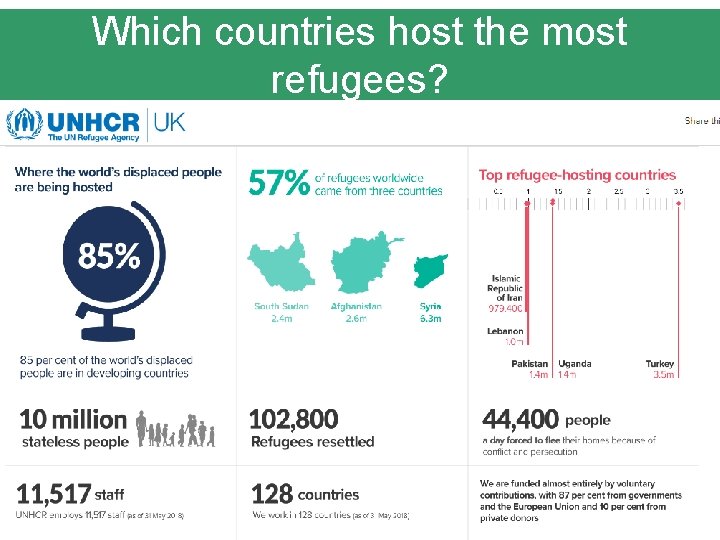
Which countries host the most refugees?
Barriers Racism Language Immigration status Trauma Limited education Culture shock Exploitation
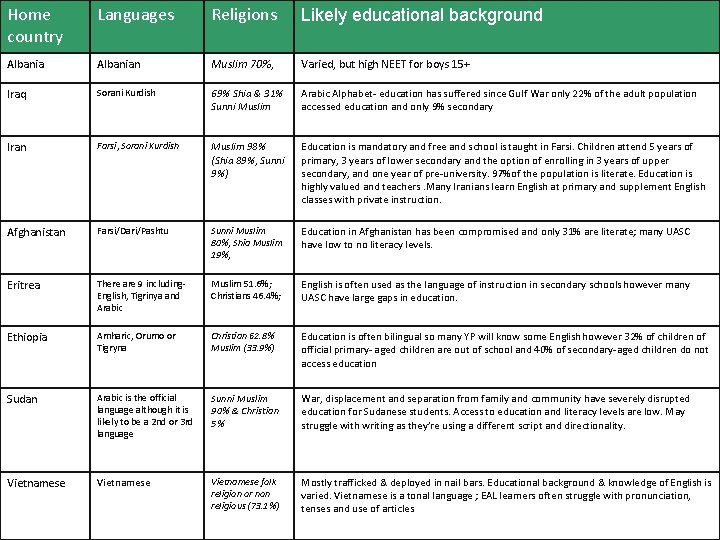
Home country Languages Religions Likely educational background Albanian Muslim 70%, Varied, but high NEET for boys 15+ Iraq Sorani Kurdish 69% Shia & 31% Sunni Muslim Arabic Alphabet- education has suffered since Gulf War only 22% of the adult population accessed education and only 9% secondary Iran Farsi, Sorani Kurdish Muslim 98% (Shia 89%, Sunni 9%) Education is mandatory and free and school is taught in Farsi. Children attend 5 years of primary, 3 years of lower secondary and the option of enrolling in 3 years of upper secondary, and one year of pre-university. 97%of the population is literate. Education is highly valued and teachers. Many Iranians learn English at primary and supplement English classes with private instruction. Afghanistan Farsi/Dari/Pashtu Sunni Muslim 80%, Shia Muslim 19%, Education in Afghanistan has been compromised and only 31% are literate; many UASC have low to no literacy levels. Eritrea There are 9 including. English, Tigrinya and Arabic Muslim 51. 6%; Christians 46. 4%; English is often used as the language of instruction in secondary schools however many UASC have large gaps in education. Ethiopia Amharic, Orumo or Tigryna Christian 62. 8% Muslim (33. 9%) Education is often bilingual so many YP will know some English however 32% of children of official primary- aged children are out of school and 40% of secondary-aged children do not access education Sudan Arabic is the official language although it is likely to be a 2 nd or 3 rd language Sunni Muslim 90% & Christian 5% War, displacement and separation from family and community have severely disrupted education for Sudanese students. Access to education and literacy levels are low. May struggle with writing as they’re using a different script and directionality. Vietnamese folk religion or non religious (73. 1%) Mostly trafficked & deployed in nail bars. Educational background & knowledge of English is varied. Vietnamese is a tonal language ; EAL learners often struggle with pronunciation, tenses and use of articles
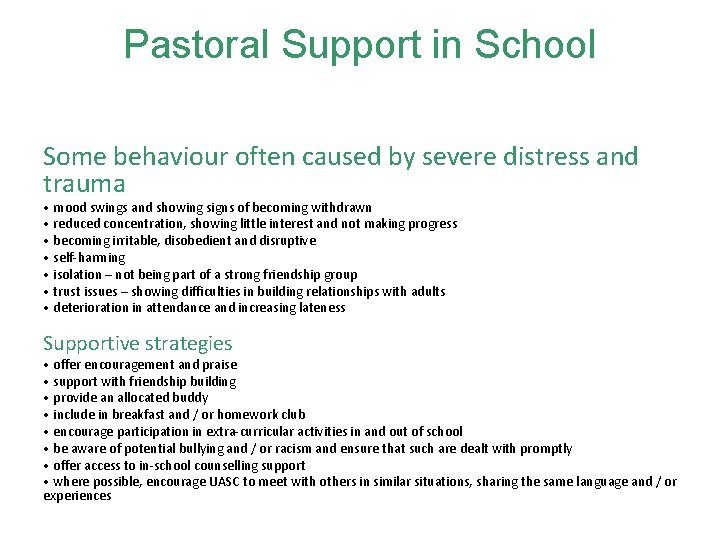
Pastoral Support in School Some behaviour often caused by severe distress and trauma • mood swings and showing signs of becoming withdrawn • reduced concentration, showing little interest and not making progress • becoming irritable, disobedient and disruptive • self-harming • isolation – not being part of a strong friendship group • trust issues – showing difficulties in building relationships with adults • deterioration in attendance and increasing lateness Supportive strategies • offer encouragement and praise • support with friendship building • provide an allocated buddy • include in breakfast and / or homework club • encourage participation in extra-curricular activities in and out of school • be aware of potential bullying and / or racism and ensure that such are dealt with promptly • offer access to in-school counselling support • where possible, encourage UASC to meet with others in similar situations, sharing the same language and / or experiences

UASC Inclusion preparing our children and the wider community to be active, empathetic and informed citizens https: //www. redcross. org. uk/get-involved/teaching-resources/secondary-teaching-resources https: //www. education. vic. gov. au/school/teachers/support/diversity/eal/Pages/ealthinkexp. aspx https: //www. geography. org. uk/teaching-resources/refugees-migration Refugee Week : http: //refugeeweek. org. uk/ Most Shocking Second a Day Video (1&2) : https: //youtu. be/Aa 3 o 7 v. WG 93 w
- Slides: 12