
Supporting Those Living With Dementia Meredith Hanley Director


- Slides: 40
Supporting Those Living With Dementia Meredith Hanley, Director of Community Capacity Building, n 4 a Kristen Felten, Dementia Specialist, Office on Aging, Wisconsin Department of Health Services
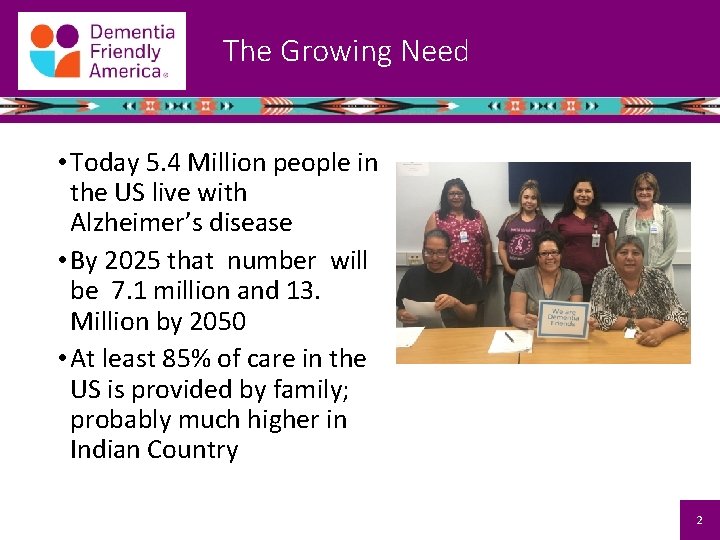
The Growing Need • Today 5. 4 Million people in the US live with Alzheimer’s disease • By 2025 that number will be 7. 1 million and 13. Million by 2050 • At least 85% of care in the US is provided by family; probably much higher in Indian Country 2
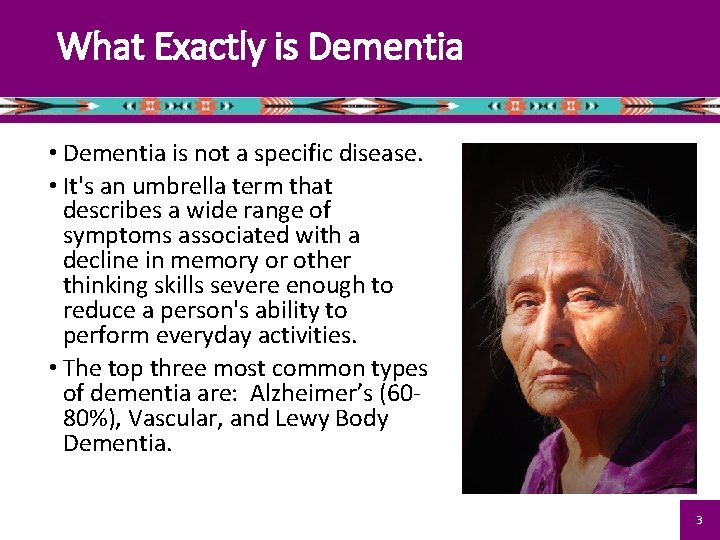
What Exactly is Dementia • Dementia is not a specific disease. • It's an umbrella term that describes a wide range of symptoms associated with a decline in memory or other thinking skills severe enough to reduce a person's ability to perform everyday activities. • The top three most common types of dementia are: Alzheimer’s (6080%), Vascular, and Lewy Body Dementia. 3
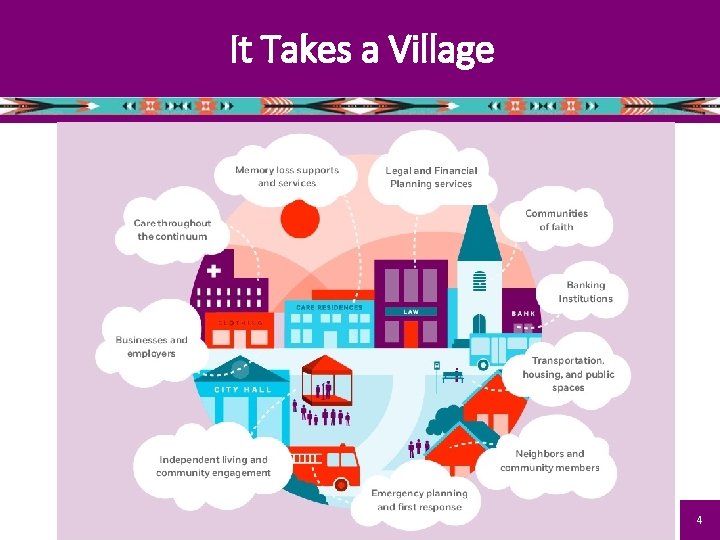
It Takes a Village 4
Dementia Friendly America Initiative Goal • Foster dementia friendly initiatives in communities across the country 5
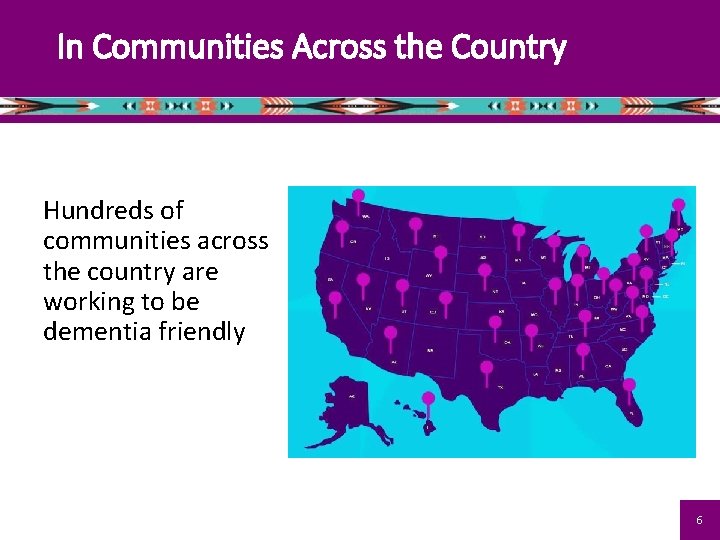
In Communities Across the Country Hundreds of communities across the country are working to be dementia friendly 6
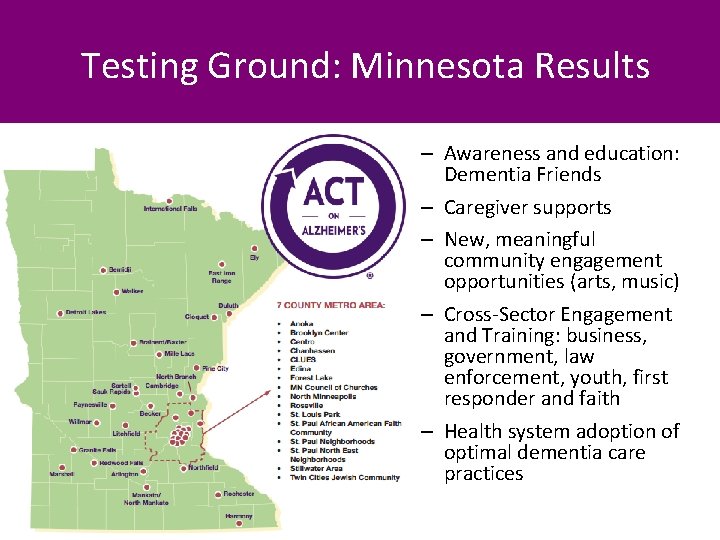
Testing Ground: Minnesota Results – Awareness and education: Dementia Friends – Caregiver supports – New, meaningful community engagement opportunities (arts, music) – Cross-Sector Engagement and Training: business, government, law enforcement, youth, first responder and faith – Health system adoption of optimal dementia care practices
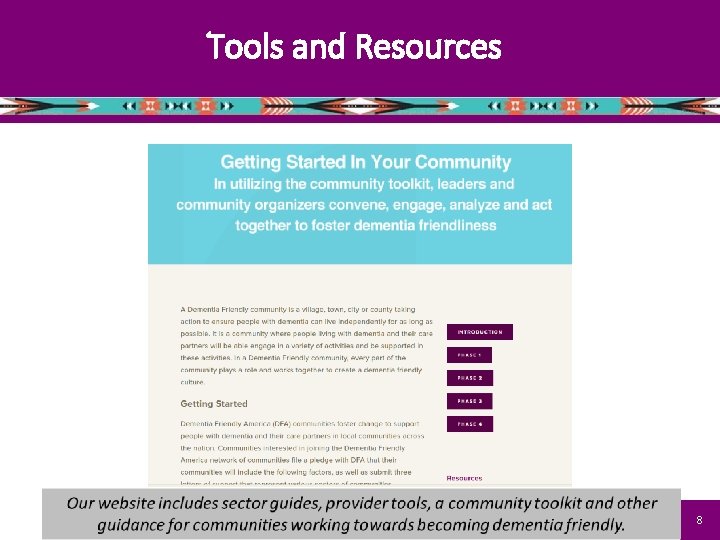
Tools and Resources 8
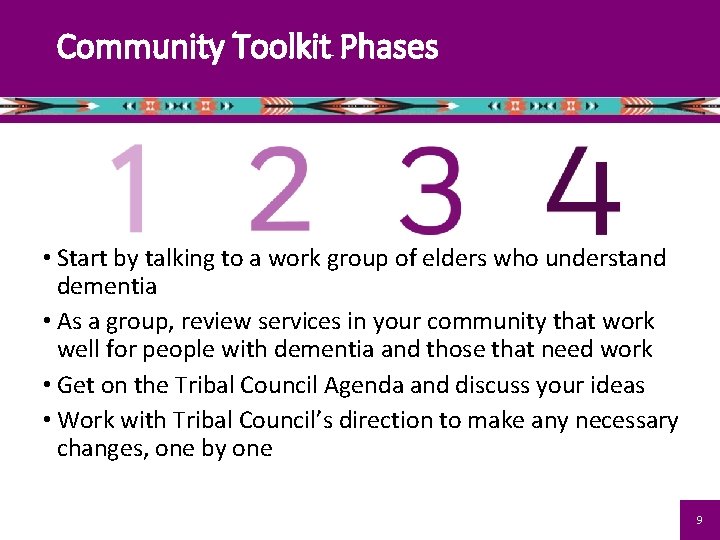
Community Toolkit Phases • Start by talking to a work group of elders who understand dementia • As a group, review services in your community that work well for people with dementia and those that need work • Get on the Tribal Council Agenda and discuss your ideas • Work with Tribal Council’s direction to make any necessary changes, one by one 9
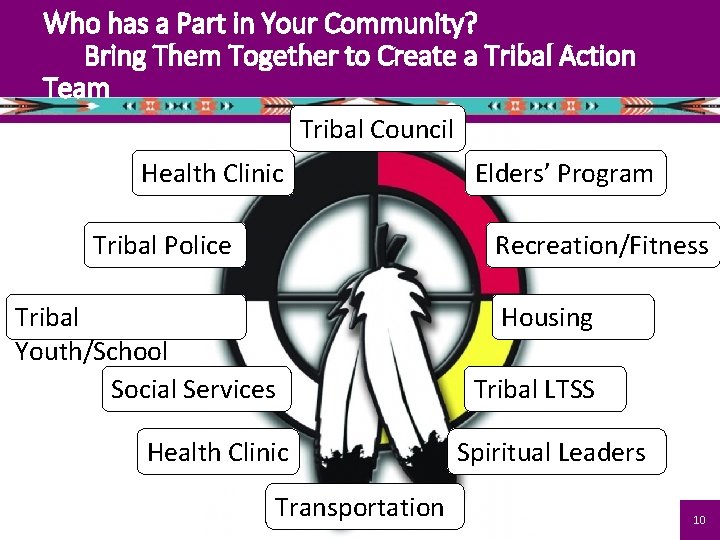
Who has a Part in Your Community? Bring Them Together to Create a Tribal Action Team Tribal Council Health Clinic Tribal Police Elders’ Program Recreation/Fitness Tribal Youth/School Social Services Health Clinic Transportation Housing Tribal LTSS Spiritual Leaders 10
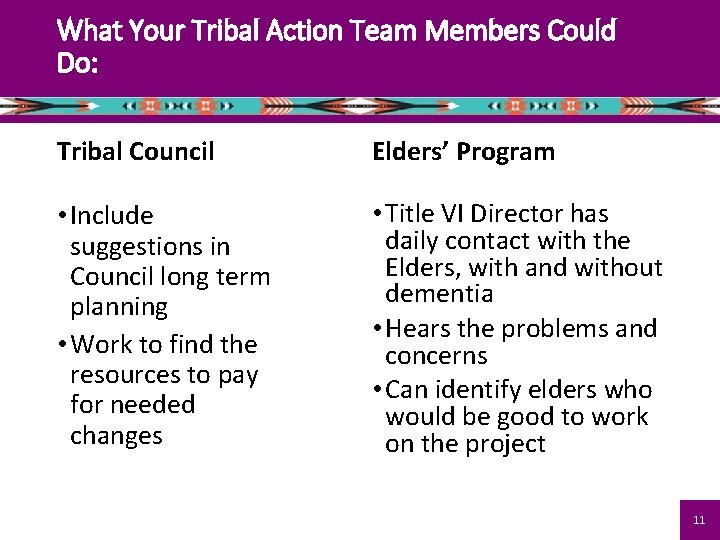
What Your Tribal Action Team Members Could Do: Tribal Council Elders’ Program • Include suggestions in Council long term planning • Work to find the resources to pay for needed changes • Title VI Director has daily contact with the Elders, with and without dementia • Hears the problems and concerns • Can identify elders who would be good to work on the project 11
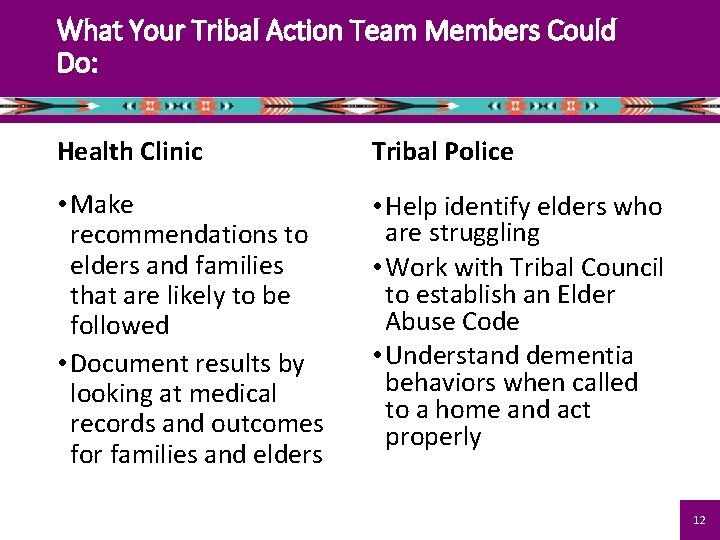
What Your Tribal Action Team Members Could Do: Health Clinic Tribal Police • Make recommendations to elders and families that are likely to be followed • Document results by looking at medical records and outcomes for families and elders • Help identify elders who are struggling • Work with Tribal Council to establish an Elder Abuse Code • Understand dementia behaviors when called to a home and act properly 12
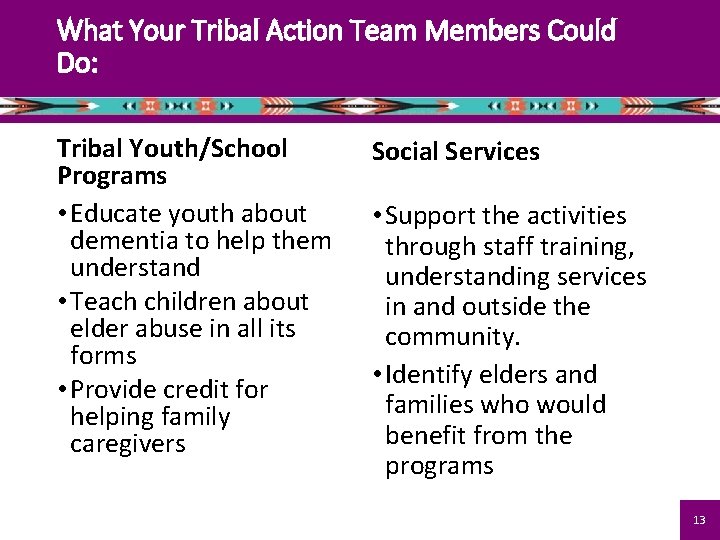
What Your Tribal Action Team Members Could Do: Tribal Youth/School Programs • Educate youth about dementia to help them understand • Teach children about elder abuse in all its forms • Provide credit for helping family caregivers Social Services • Support the activities through staff training, understanding services in and outside the community. • Identify elders and families who would benefit from the programs 13
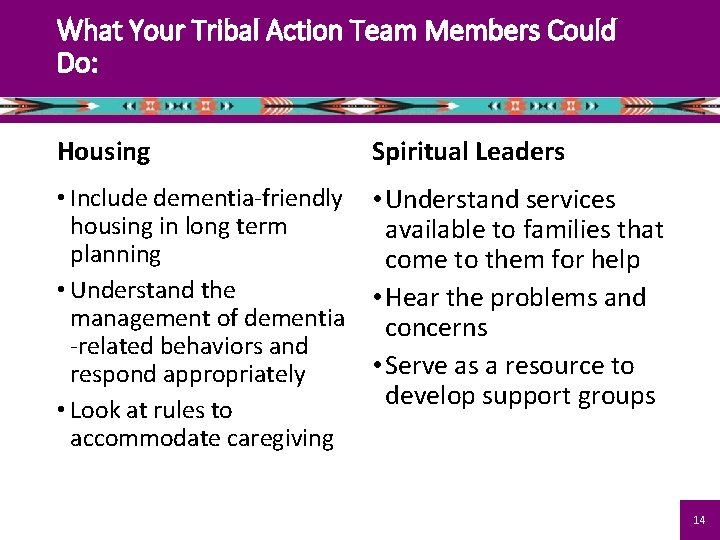
What Your Tribal Action Team Members Could Do: Housing Spiritual Leaders • Include dementia-friendly • Understand services housing in long term available to families that planning come to them for help • Understand the • Hear the problems and management of dementia concerns -related behaviors and • Serve as a resource to respond appropriately develop support groups • Look at rules to accommodate caregiving 14
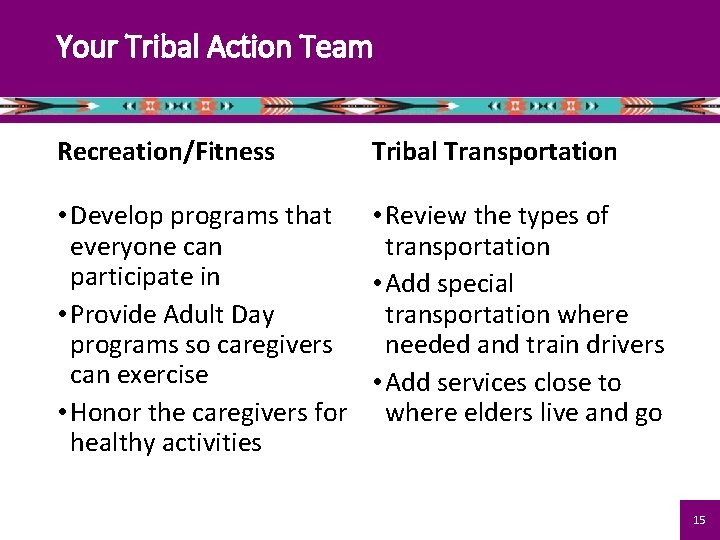
Your Tribal Action Team Recreation/Fitness Tribal Transportation • Develop programs that • Review the types of everyone can transportation participate in • Add special • Provide Adult Day transportation where programs so caregivers needed and train drivers can exercise • Add services close to • Honor the caregivers for where elders live and go healthy activities 15
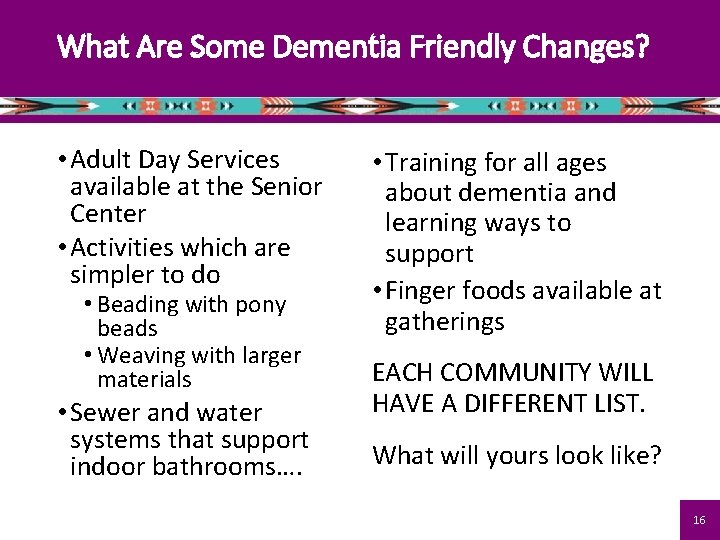
What Are Some Dementia Friendly Changes? • Adult Day Services available at the Senior Center • Activities which are simpler to do • Beading with pony beads • Weaving with larger materials • Sewer and water systems that support indoor bathrooms…. • Training for all ages about dementia and learning ways to support • Finger foods available at gatherings EACH COMMUNITY WILL HAVE A DIFFERENT LIST. What will yours look like? 16
www. dementiafriendsusa. org 17
Dementia Friends • Dementia Friends USA is part of a global movement • By helping everyone understand what dementia is and how it affects people, each of us can make a difference 18
Dementia Friends • Developed by the Alzheimer’s Society in the United Kingdom • The Dementia Friendly America initiative administers Dementia Friends in the USA • Dementia Friends programs in 30+ countries • 20, 000 Dementia Friends in the USA • 4 million+ around the world 19
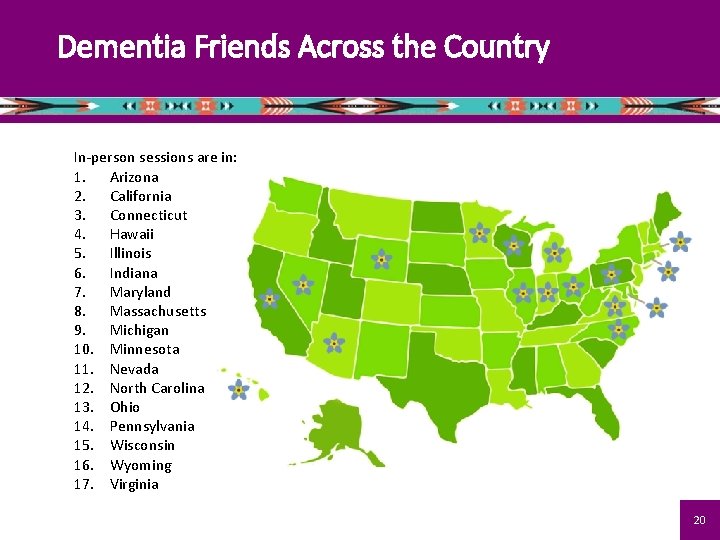
Dementia Friends Across the Country In-person sessions are in: 1. Arizona 2. California 3. Connecticut 4. Hawaii 5. Illinois 6. Indiana 7. Maryland 8. Massachusetts 9. Michigan 10. Minnesota 11. Nevada 12. North Carolina 13. Ohio 14. Pennsylvania 15. Wisconsin 16. Wyoming 17. Virginia 20
Dementia Friends Session • Signs of dementia vs normal aging • Key messages • The River exercise • Daily task exercise • Communication tips • Turning understanding into action 21
Dementia Friendly in Indian Country • Pilot testing for tribal communities • American Indians, elders, community members, and others • Feedback was to develop a dementia related story/analogy with tribal partners • Dr. Anton Treuer (Ojibwe) – Bemidji State University wrote and narrated the story • Story was then pilot tested and feedback requested 22
23
Dementia Friendly in Indian Country • Dementia Friendly Tempeh • Outreach efforts bringing education & awareness directly to tribal communities • Also reach out to those in urban areas • Reaching about 4, 000 individuals each year. • In 2015 we hosted the 1 st national conference for professionals on Alzheimer’s disease in Native Americans • In 2017, we created and introduced the Native American Dementia Toolkit that contains videos, handouts and books that staff can utilize to teach family caregivers. 24
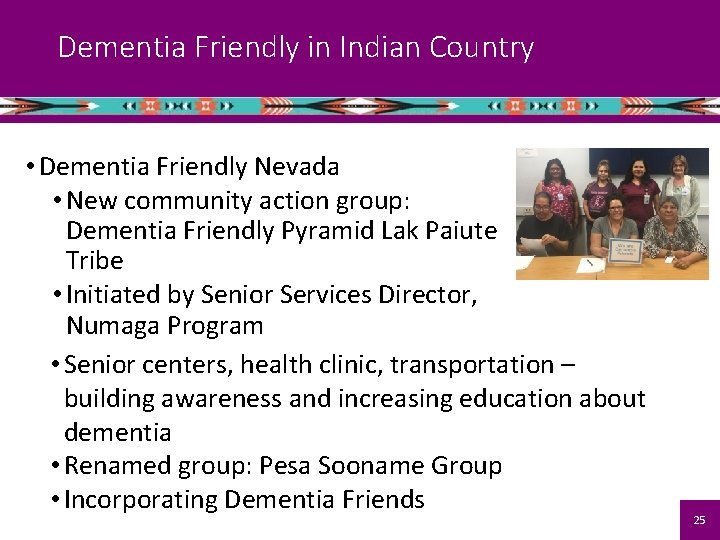
Dementia Friendly in Indian Country • Dementia Friendly Nevada • New community action group: Dementia Friendly Pyramid Lak Paiute Tribe • Initiated by Senior Services Director, Numaga Program • Senior centers, health clinic, transportation – building awareness and increasing education about dementia • Renamed group: Pesa Sooname Group • Incorporating Dementia Friends 25
For More Information Meredith Hanley mhanley@n 4 a. org info@dfamerica. org Follow Us @dfamerica_ @dementiafriend_ 26
Wisconsin’s Experience with Tribal Dementia Programs 27
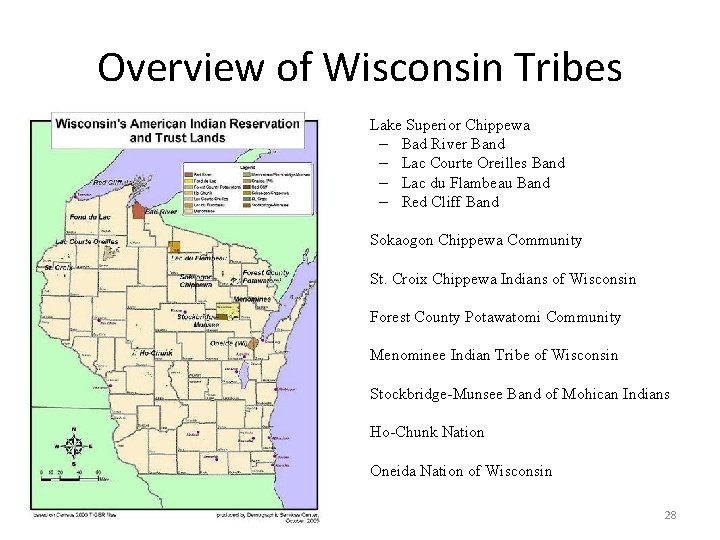
Overview of Wisconsin Tribes • Lake Superior Chippewa – Bad River Band – Lac Courte Oreilles Band – Lac du Flambeau Band – Red Cliff Band • Sokaogon Chippewa Community • St. Croix Chippewa Indians of Wisconsin • Forest County Potawatomi Community • Menominee Indian Tribe of Wisconsin • Stockbridge-Munsee Band of Mohican Indians • • • Ho-Chunk Nation Oneida Nation of Wisconsin 28
Overview of Wisconsin Tribes • Geography – Challenging to sharing resources • Population size – Ranges between 531 and 21, 000+ total members • Income from gaming – Some tribal members are ineligible for programs due to being over income requirements 29
Great Lakes Inter-Tribal Council (GLITC) • GLITC – Advocacy group for advancement and promotion of tribal nations and communities – All Wisconsin tribes are members – Programs include: economic development, health care, education, children’s services, aging and disability services, vocational rehabilitation, disease prevention 30
Wisconsin Alzheimer’s Disease Research Center • Dr. Carey Gleason, Principle Investigator • Oneida Nation • Specific Aims – Create advisory board of tribal members – Improve access to culturally tailored services – Conduct a survey for better understanding – Expand new knowledge to other tribes in WI 31
Alzheimer’s Family Caregiver Support Program (AFCSP) • Statewide program providing family caregiver support • Means tested • Diagnosis required • Unavailable to tribal members until expansion of the program in 2016 • Allocation of funds based upon population 32
Tribal Music & Memory™ • Funded by the Administration for Community Living (ACL) • Administered by the Alzheimer’s Association Greater Wisconsin Chapter – Project Coordinator – Three Staff Members – Tribal Liaison Volunteers • Funding for 50 i. Pods • Success on par with other community initiatives 33
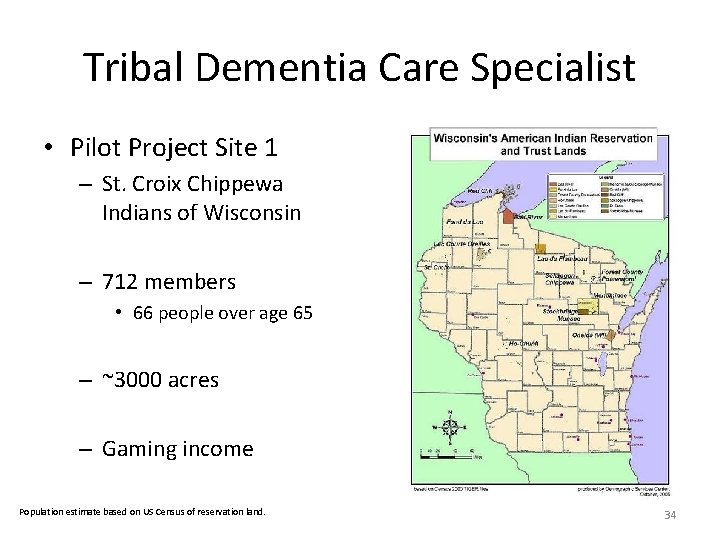
Tribal Dementia Care Specialist • Pilot Project Site 1 – St. Croix Chippewa Indians of Wisconsin – 712 members • 66 people over age 65 – ~3000 acres – Gaming income Population estimate based on US Census of reservation land. 34
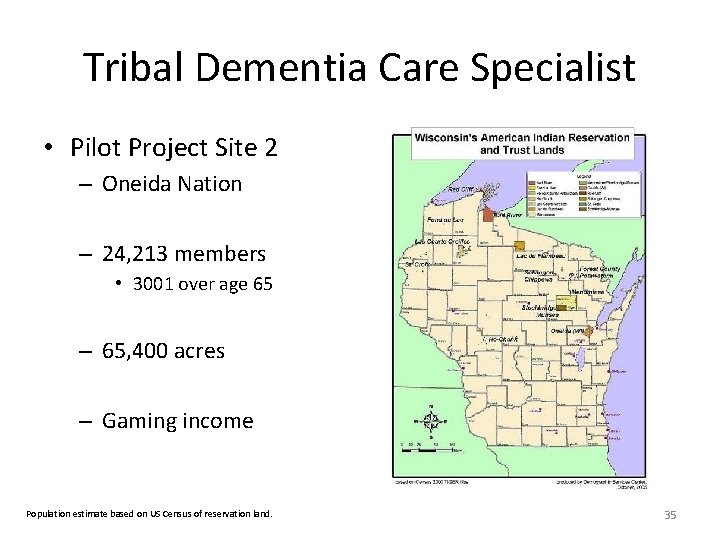
Tribal Dementia Care Specialist • Pilot Project Site 2 – Oneida Nation – 24, 213 members • 3001 over age 65 – 65, 400 acres – Gaming income Population estimate based on US Census of reservation land. 35
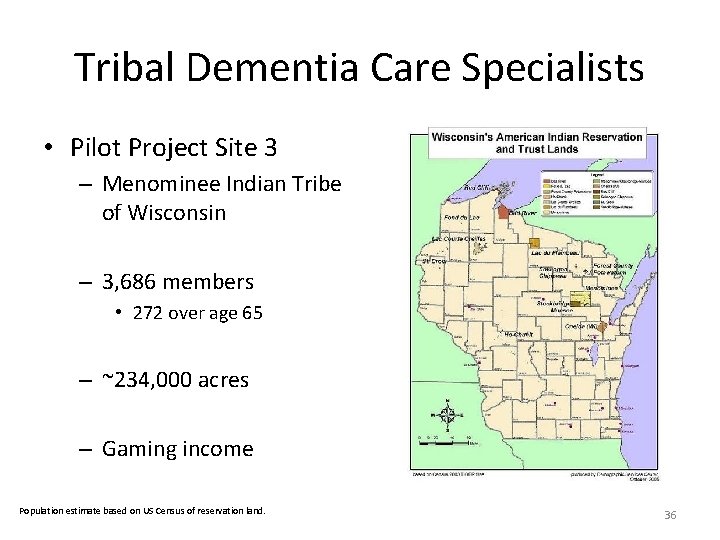
Tribal Dementia Care Specialists • Pilot Project Site 3 – Menominee Indian Tribe of Wisconsin – 3, 686 members • 272 over age 65 – ~234, 000 acres – Gaming income Population estimate based on US Census of reservation land. 36
Tribal Dementia Care Specialists • Funded one full-time position to each tribe – Provide education and outreach to members – Dementia friendly/dementia capable tribe – Individual support for people with dementia and family caregivers to remain living at home as long as they want 37
Tribal Dementia Care Specialists • Lessons learned from pilot study – Understanding and acceptance of dementia is no different – Stigma is the same – Evidence-based programs are acceptable – There is little interest in ‘memory cafes’ – Caregiver conference success 38
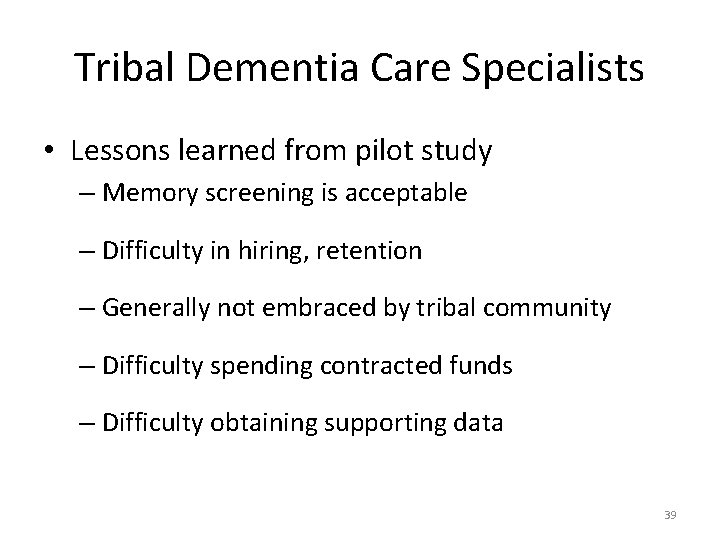
Tribal Dementia Care Specialists • Lessons learned from pilot study – Memory screening is acceptable – Difficulty in hiring, retention – Generally not embraced by tribal community – Difficulty spending contracted funds – Difficulty obtaining supporting data 39
Contact Information • • Kristen Felten, MSW, APSW Wisconsin Department of Health Services Office on Aging Kristen. felten@wi. gov 40