
Supporting the student to link theory to practice

- Slides: 14
Supporting the student to link theory to practice : ‘flipping the practice based classroom’ 7 th Annual Ped. RIO Conference Sara Smith & Martin Khechara
Background • Many UG awards now are tasked with fostering professional as well as educational development in their students • Supporting the student to relate their academic studies to the world of work, encourage engagement and capability for practice can be a challenging task for tutors
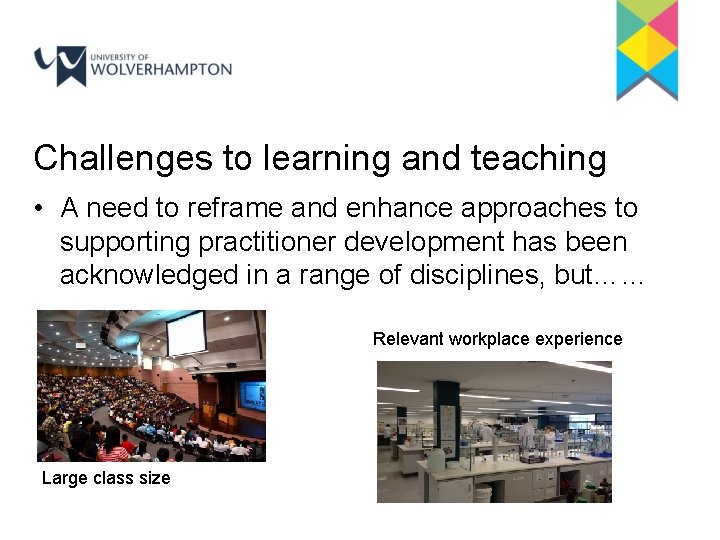
Challenges to learning and teaching • A need to reframe and enhance approaches to supporting practitioner development has been acknowledged in a range of disciplines, but…… Relevant workplace experience Large class size
Our journey • The Basic flip – Started small with a basic ‘flip’ – Allowed the incorporation of a range of novel styles – Greater tutor-student interaction – Still identified issues with student engagement
The Enhanced flip • Enabled evaluation of student understanding of flipped sessions and targeted in-class workshops • Supported student engagement – fostered in-class interactions and collaborations • Developed student confidence – breaking down peer/peer and student/tutor barriers
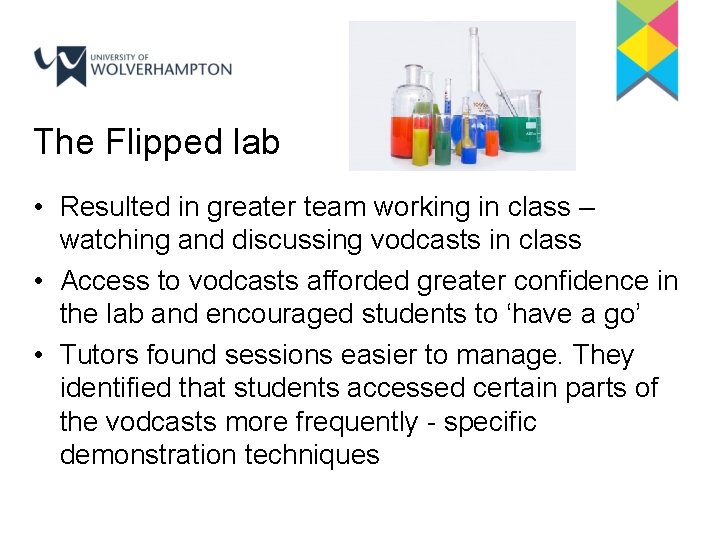
The Flipped lab • Resulted in greater team working in class – watching and discussing vodcasts in class • Access to vodcasts afforded greater confidence in the lab and encouraged students to ‘have a go’ • Tutors found sessions easier to manage. They identified that students accessed certain parts of the vodcasts more frequently - specific demonstration techniques
We’d been thinking about this…. . ‘As a result of our study, we conclude that the positive impact of AR on motivation leads students to achieve higher levels of engagement in learning activities with less cognitive effort’. Serio, D. A. , Ibenez, M. B. and Kloos, C. D. (2013) Impact of an augmented reality system on students’ motivation for a visual art course. Computers & education. 68. 586 -596.
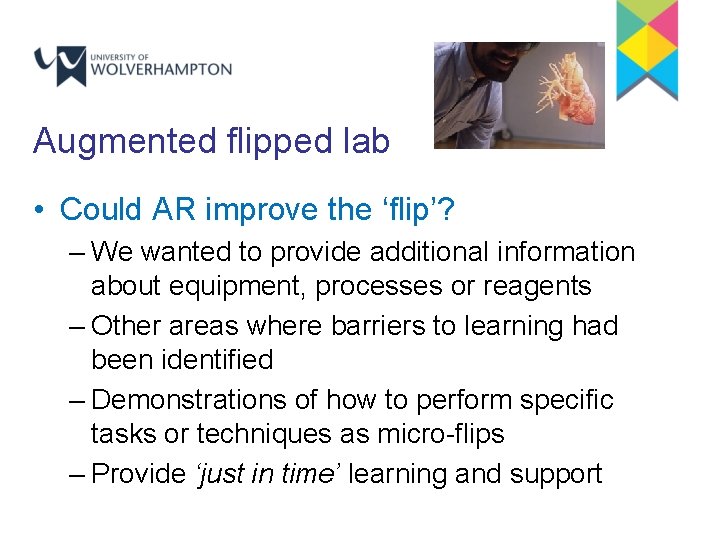
Augmented flipped lab • Could AR improve the ‘flip’? – We wanted to provide additional information about equipment, processes or reagents – Other areas where barriers to learning had been identified – Demonstrations of how to perform specific tasks or techniques as micro-flips – Provide ‘just in time’ learning and support
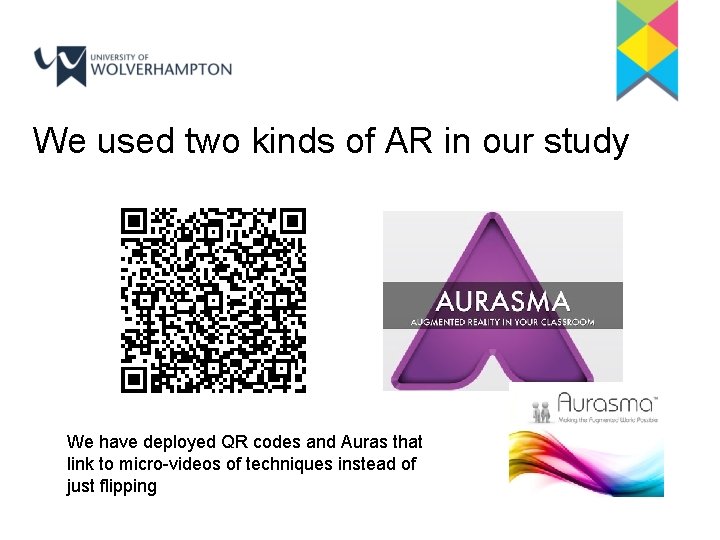
We used two kinds of AR in our study We have deployed QR codes and Auras that link to micro-videos of techniques instead of just flipping
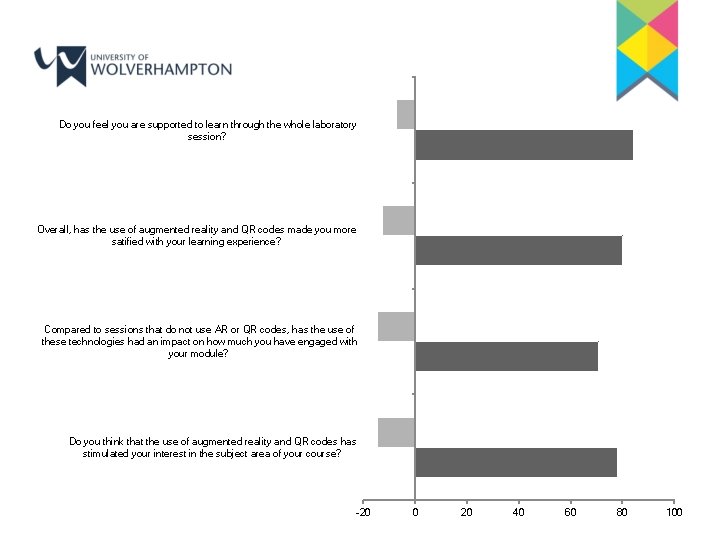
Do you feel you are supported to learn through the whole laboratory session? Overall, has the use of augmented reality and QR codes made you more satified with your learning experience? Compared to sessions that do not use AR or QR codes, has the use of these technologies had an impact on how much you have engaged with your module? Do you think that the use of augmented reality and QR codes has stimulated your interest in the subject area of your course? -20 0 20 40 60 80 100
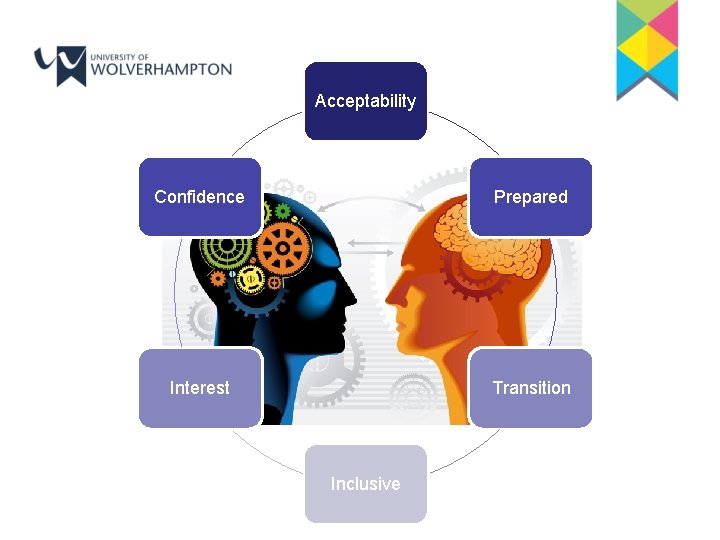
Acceptability Confidence Prepared Interest Transition Inclusive
Main findings…. . • ‘Augmented Flip’ –more inclusive learning environment allowing access to information via a range of different platforms • Not a replacement for tutors – useful additional resource • Improved students positive perception of their tutors on the module • Increased both engagement in practical exercised and motivation to take part • Supported transition into HE
Next Steps…. . • Evaluate practical implications of wider rollout of AR across the curriculum and potential scalability • Issues around accessibility of appropriate devices • The technology needs to support the teachnology!