
Supporting Students Native Language in the Classroom TEMA


- Slides: 21
Supporting Students' Native Language in the Classroom TEMA ENCARNACION
Outcome: Bilingual paraprofessionals will analyze ways to support students’ native languages by reviewing texts, videos and lesson plans.
Linguistically Responsive Teaching Orientations An understanding of socio-linguistics An inclination to advocate for English Learners An appreciation for linguistic diversity
Linguistically Responsive Teaching Four Language-Related Knowledge and Skills Knowing the students Knowing the process of second language acquisition Knowing the language demands of the content Scaffolding
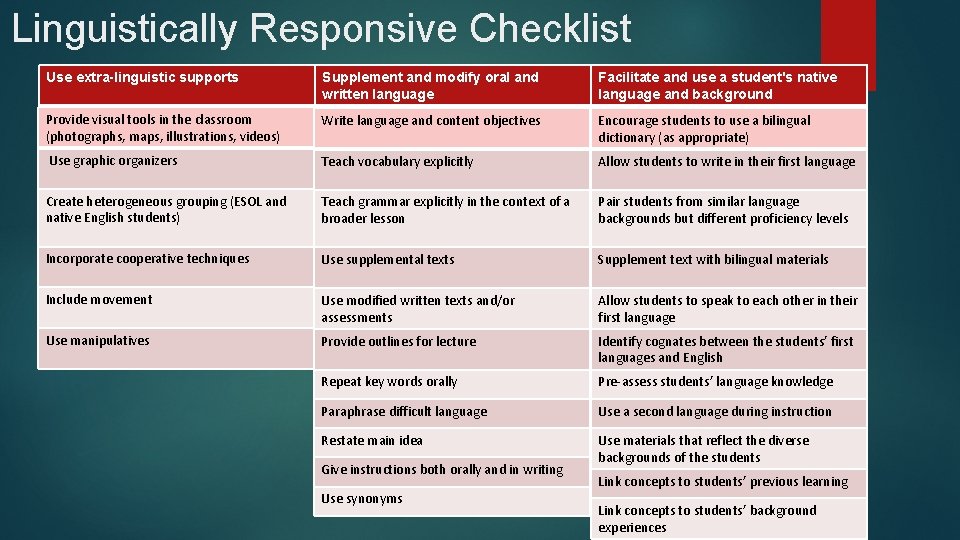
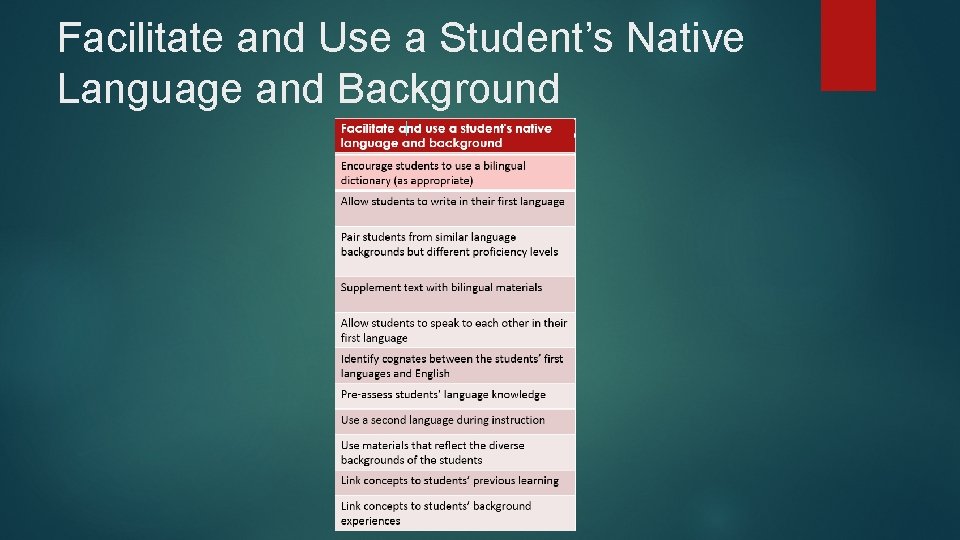
Linguistically Responsive Checklist Use extra-linguistic supports Supplement and modify oral and written language Facilitate and use a student's native language and background Provide visual tools in the classroom (photographs, maps, illustrations, videos) Write language and content objectives Encourage students to use a bilingual dictionary (as appropriate) Use graphic organizers Teach vocabulary explicitly Allow students to write in their first language Create heterogeneous grouping (ESOL and native English students) Teach grammar explicitly in the context of a broader lesson Pair students from similar language backgrounds but different proficiency levels Incorporate cooperative techniques Use supplemental texts Supplement text with bilingual materials Include movement Use modified written texts and/or assessments Allow students to speak to each other in their first language Use manipulatives Provide outlines for lecture Identify cognates between the students’ first languages and English Repeat key words orally Pre-assess students’ language knowledge Paraphrase difficult language Use a second language during instruction Restate main idea Use materials that reflect the diverse backgrounds of the students Give instructions both orally and in writing Use synonyms Link concepts to students’ previous learning Link concepts to students’ background experiences
Why Use Students’ Native Languages?
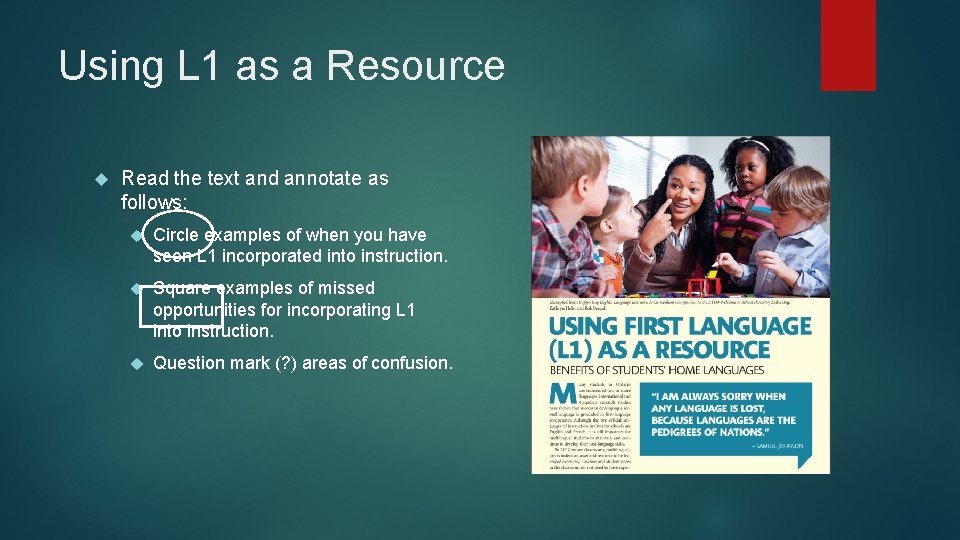
Using L 1 as a Resource Read the text and annotate as follows: Circle examples of when you have seen L 1 incorporated into instruction. Square examples of missed opportunities for incorporating L 1 into instruction. Question mark (? ) areas of confusion.
Facilitate and Use a Student’s Native Language and Background
Encourage students to use a bilingual dictionary (as appropriate) Word-to-word Picture dictionaries Google translate Office 365
Allow students to write in their first language Refer back to the reading, highlight examples of when students could write in their L 1 Brainstorming Collaborative work Outlining ideas Editing
Pair students from similar language backgrounds but different proficiency levels Understand students’ proficiency levels across language domains Understand students’ academic backgrounds in their L 1 Consider how well students work together
Supplement text with bilingual materials Newsela Bilingual Book Lists Bilingual Science Books Dual Texts Tween Tribune Foreign Language news and Newspapers
Allow students to speak to each other in their first language Refer back to the text. Highlight examples of how students can speak their L 1 during instruction.
Identify cognates between the students’ first languages and English Using Cognates to Develop Comprehension Spanish Cognates More Spanish Cognates Find Cognates French Cognates
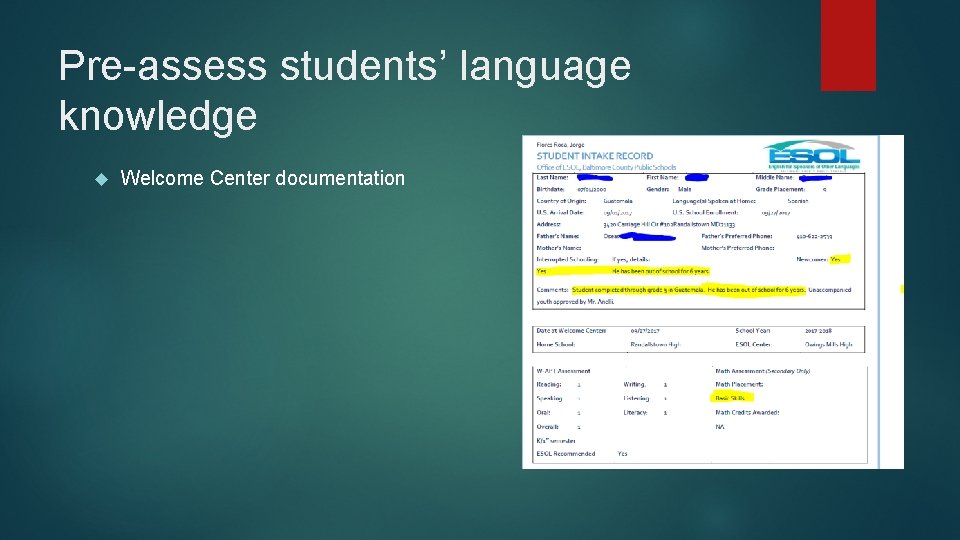
Pre-assess students’ language knowledge Welcome Center documentation
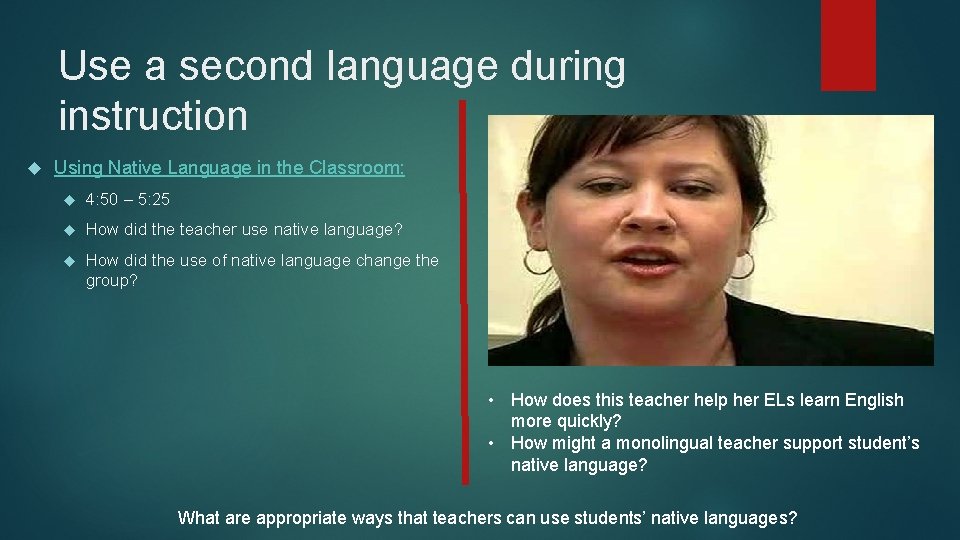
Use a second language during instruction Using Native Language in the Classroom: 4: 50 – 5: 25 How did the teacher use native language? How did the use of native language change the group? • How does this teacher help her ELs learn English more quickly? • How might a monolingual teacher support student’s native language? What are appropriate ways that teachers can use students’ native languages?
Use materials that reflect the diverse backgrounds of the students • What does Foster say about including authors of different backgrounds and the message it sends to students? • How does he think reading authors from different backgrounds will impact his students?
Link concepts to students’ previous learning Consider what students may already know about the content Pre-assess students’ prior knowledge on the topic Build on what students already know
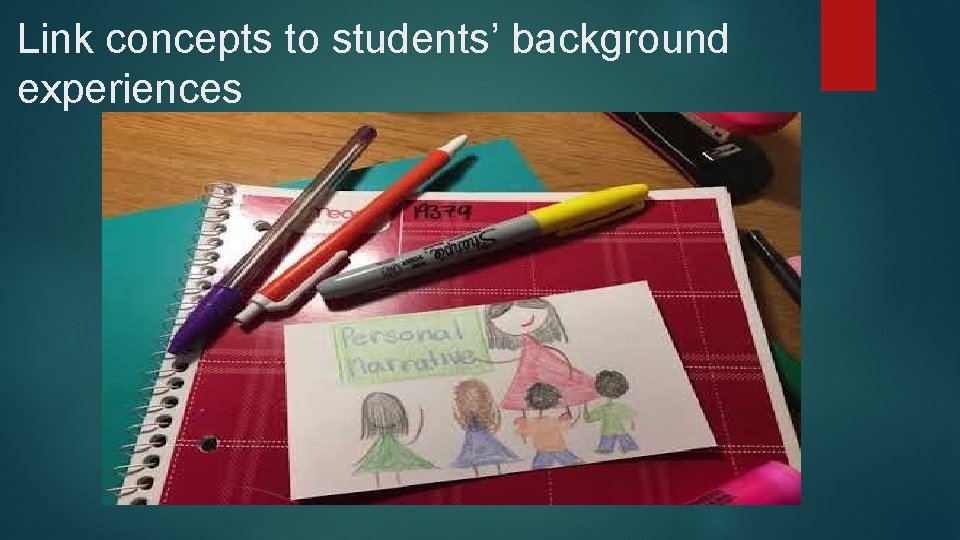
Link concepts to students’ background experiences
Make Connections Select a lesson plan from one of the content areas Text the code the lesson as follows: Red – vocabulary that would require the use of a bilingual dictionary or where cognates are evident Orange – areas where you could have students work together using their native language Green – areas where you would bring in materials that reflect student’s backgrounds Blue – areas where you could make connections with prior learning Purple - areas where you could make connections with students’ funds of knowledge After you text code, describe how you could support each area.
What will you do? Use the LRT checklist to identify one new way you will support students’ native languages in the coming week.