
Supporting international students Module 3 Plagiarism Aim This



- Slides: 19
Supporting international students Module 3: Plagiarism
Aim This module focuses on one of the most prominent issues for international students: plagiarism. It will discuss why this is the case and what you can do to support international students who may experience claims of plagiarism.
Objectives By the end of this module you will: § know what your institution’s regulations on plagiarism are and who is responsible for implementing them; § have explored reasons why international students might plagiarise; § understand the connection between plagiarism and assessment and its impact on academic staff and academic standards; and § have devised an action plan for your students’ association.
University procedures
Staff and committees
Statistics
Detection software
Task: Define plagiarism In small groups, discuss what plagiarism means and come up with a definition of plagiarism that is clear, concise and easily understood.
Definitions can include… § Self-plagiarism. § Auto-plagiarism. § Definitions of ‘work’. § Gaining personal reward. § Motivation.
Examples of definitions ‘Plagiarism is the act of including in one’s work the work of another person without providing adequate acknowledgement of having done so, either deliberately or unintentionally. ’ Guidance on the Avoidance of Plagiarism for Undergraduate & Taught Postgraduate Student, University of Edinburgh, p 1.
Examples of definitions ‘… to represent as one’s own the intellectual property of another. ’ Academic policy: Assessment, 6. 2. 1. 2, University of Stirling.
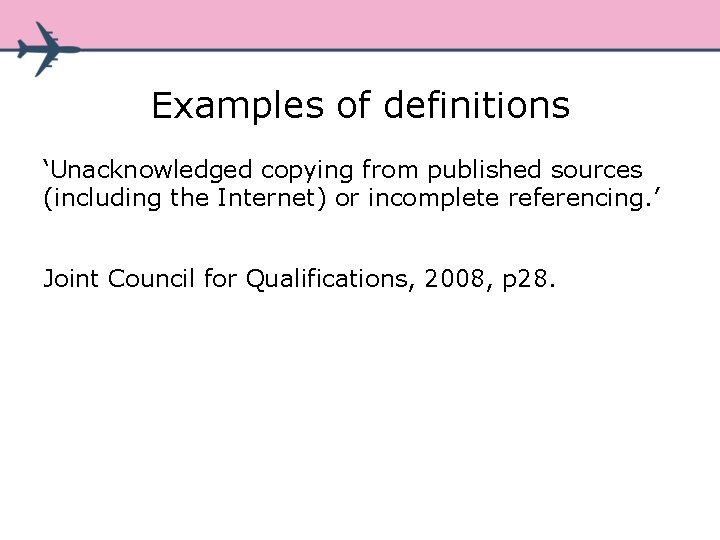
Examples of definitions ‘Unacknowledged copying from published sources (including the Internet) or incomplete referencing. ’ Joint Council for Qualifications, 2008, p 28.
Task: Why students plagiarise In small groups, consider why international students might plagiarise. Think about the reasons as broadly as possible as this will help support international students more effectively.
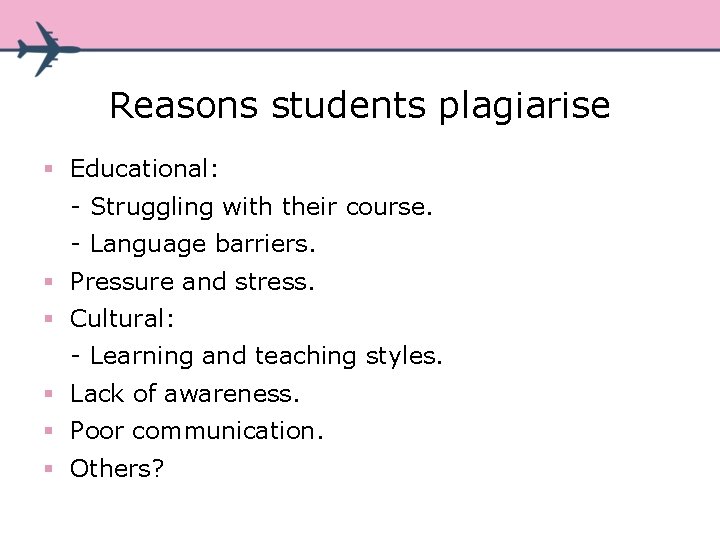
Reasons students plagiarise § Educational: - Struggling with their course. - Language barriers. § Pressure and stress. § Cultural: - Learning and teaching styles. § Lack of awareness. § Poor communication. § Others?
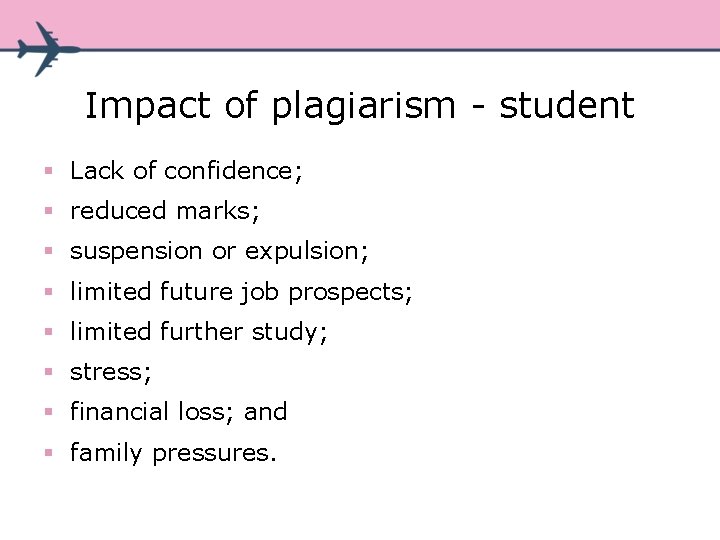
Impact of plagiarism - student § Lack of confidence; § reduced marks; § suspension or expulsion; § limited future job prospects; § limited further study; § stress; § financial loss; and § family pressures.
Wider impact of plagiarism On other students and the academic experience: § Less teaching time; § lower academic standards; § damages lecturer’s and department’s reputations.
Task: Communicating plagiarism policies In small groups devise a communication plan for your institution to explain how it will inform international students about plagiarism. Consider: § purpose of communication plan; § intended audience; § what needs to be communicated, when and how; and § how you can address the issues raised earlier.
Objectives § By the end of this module you will: § know what your institution’s regulations on plagiarism are and who is responsible for implementing them; § have explored reasons why international students might plagiarise; § understand the connection between plagiarism and assessment and its impact on academic staff and academic standards; and § have devised an action plan for your students’ association.
Questions or comments?