
Supporting Children with FASD for Success Jacqueline Pei







- Slides: 52
Supporting Children with FASD for Success Jacqueline Pei, Ph. D. , R. Psych. Departments of Educational Psychology and Pediatrics University of Alberta Lead, Intervention Network Action Team, Canada FASD Research Network
ALL OF THIS WORK WOULD NOT BE POSSIBLE WITHOUT. . . × × × × × Carmen Rasmussen Cheryl Poth Aamena Kapasi Allison Mc. Neil Btissam El Hassar Danielle Mattson Eliza Li Elizabeth Carlson Wing Sze Wence Leung × × × × × Kathryn Kryska Katrina Kully-Martens Lisa Smithson Melissa Tremblay Nicol Patricny Rianne Spaans Sabine Ricioppo Sarah Keller Vannesa Joly
OVERVIEW Considering our perspective ▹ It matters! 2. Brain based understanding 3. Intervening to support success • Evidence informed interventions • Core themes 1.
PERSPECTIVES ▸ ▸ ▸ Strengths-based Brain based All behavior is functional All kids want to succeed All kids have strengths we can access
THE BEDROCK OF MINDSETS Mindsets: people’s beliefs about human abilities and characteristics.
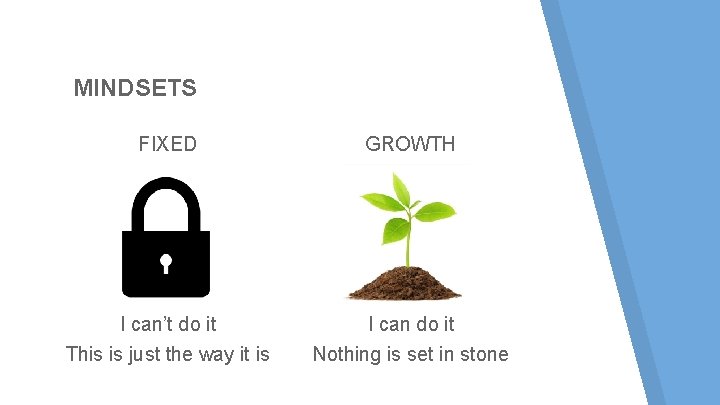
MINDSETS FIXED GROWTH I can’t do it This is just the way it is I can do it Nothing is set in stone
THE BENEFITS OF GROWTH MINDSETS • • • Overcoming Obstacles Increased Effort Higher Expectations (of others) Confronting Challenges Persistence Motivation Imagine the benefits of growth mindsets for AND towards individuals with FASD
PERSPECTIVE MATTERS (Petrenko, Pandolfino, Roddenbery, 2016) ▸ Caregivers with greater knowledge about FASD were more likely to see misbehavior as related to FASD and use prevention strategies. ▹ Caregivers who described using more antecedent strategies were generally more successful in managing behavior.
PERSPECTIVE MATTERS (Petrenko, Pandolfino, Roddenbery, 2016) ▸ Caregivers that reported a primary reliance on punishments were less successful in managing behavior, and described feeling more frustrated than other caregivers.
PERSPECTIVE MATTERS (Petrenko, Pandolfino, Roddenbery, 2016) ▸ Conclusion: Targeting caregiver attributions of behavior and supporting positive parenting practices may: ▹ reduce child behavior problems, ▹ increase parenting sense of competence, ▹ and improve family functioning
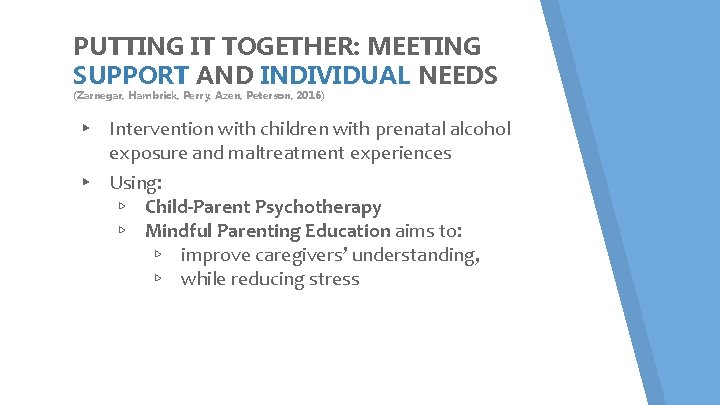
PUTTING IT TOGETHER: MEETING SUPPORT AND INDIVIDUAL NEEDS (Zarnegar, Hambrick, Perry, Azen, Peterson, 2016) ▸ Intervention with children with prenatal alcohol exposure and maltreatment experiences ▸ Using: ▹ Child-Parent Psychotherapy ▹ Mindful Parenting Education aims to: ▹ improve caregivers’ understanding, ▹ while reducing stress
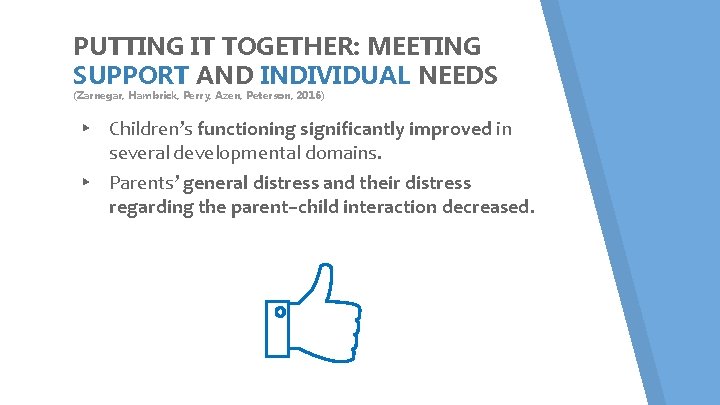
PUTTING IT TOGETHER: MEETING SUPPORT AND INDIVIDUAL NEEDS (Zarnegar, Hambrick, Perry, Azen, Peterson, 2016) ▸ Children’s functioning significantly improved in several developmental domains. ▸ Parents’ general distress and their distress regarding the parent–child interaction decreased.
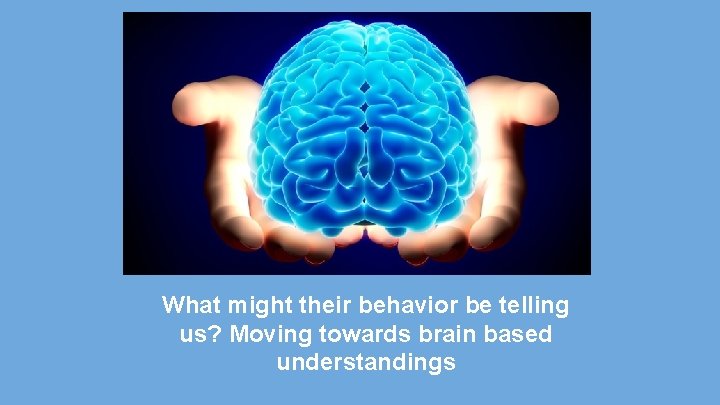
What might their behavior be telling us? Moving towards brain based understandings
WHAT IS FETAL ALCOHOL SPECTRUM DISORDER (FASD)? ▸ ▸ Brain injury to the developing brain Caused by alcohol exposure in utero May look different individuals A “consistent pattern of inconsistencies”
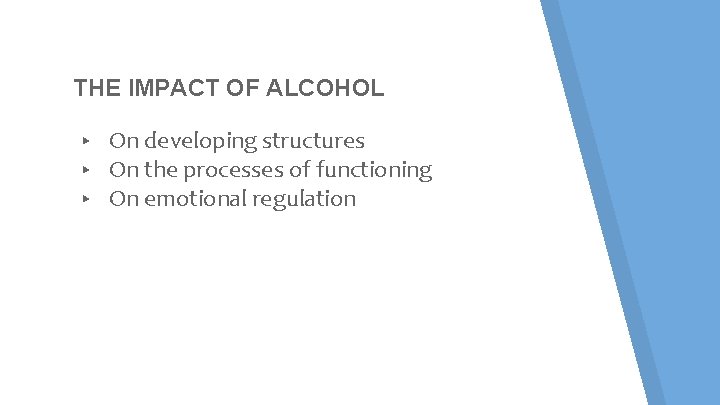
THE IMPACT OF ALCOHOL ▸ ▸ ▸ On developing structures On the processes of functioning On emotional regulation
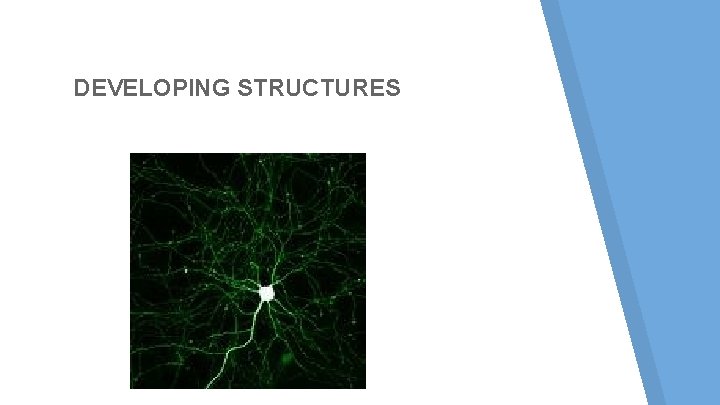
DEVELOPING STRUCTURES
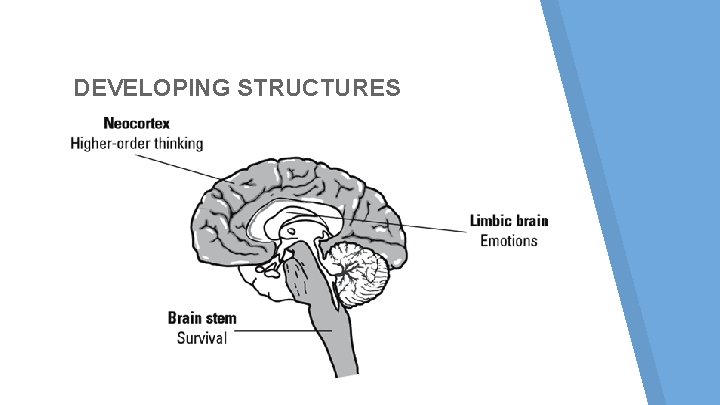
DEVELOPING STRUCTURES
FROM STRUCTURE TO FUNCTION
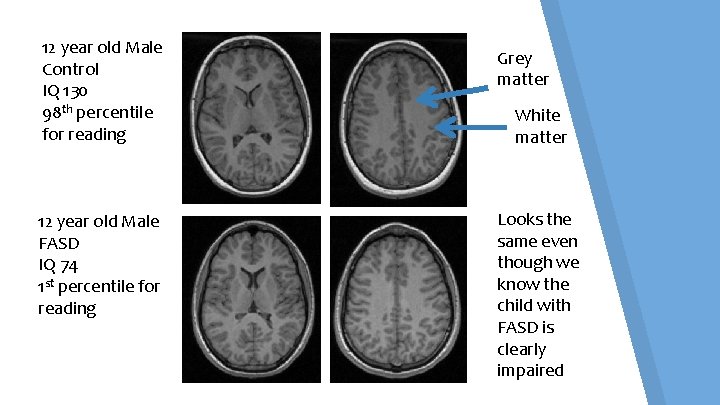
12 year old Male Control IQ 130 98 th percentile for reading 12 year old Male FASD IQ 74 1 st percentile for reading Grey matter White matter Looks the same even though we know the child with FASD is clearly impaired
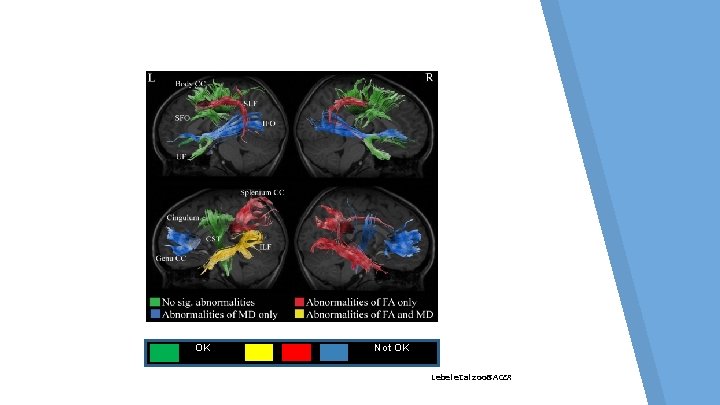
OK Not OK Lebel et al 2008 ACER
IN SUMMARY: THE IMPACT OF ALCOHOL • There is clear evidence of brain injury due to alcohol that is diffuse and impacts many different systems • This injury has a significant impact on day to day function • Therefore, FASD may often be an invisible disability … …yet has very visible consequences
INTERVENING TO SUPPORT SUCCESS First, strengths based perspective and brain informed understanding ▸ Then strategies ▹ Can be learned by children with FASD ▹ Are best when collaboratively developed ▹ Sometimes require a shift in perspective ▹ Can be applied to learning and behaviour ▸
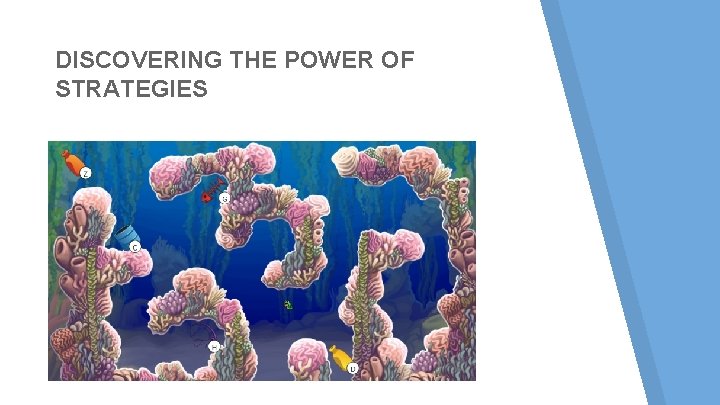
DISCOVERING THE POWER OF STRATEGIES
SURPRISE! The strategies supporting the implementation became a key outcome!
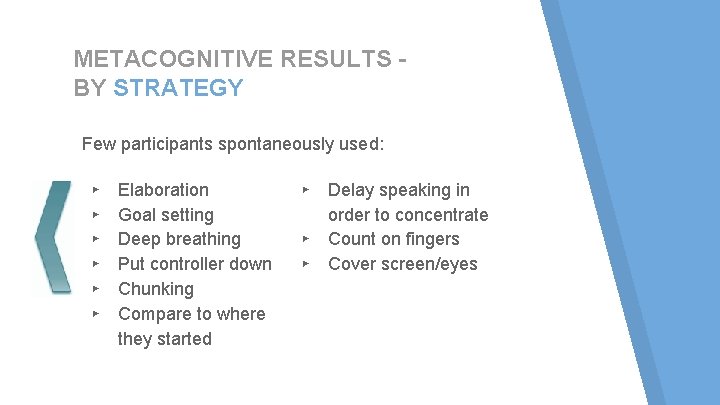
METACOGNITIVE RESULTS BY STRATEGY Few participants spontaneously used: ▸ ▸ ▸ Elaboration Goal setting Deep breathing Put controller down Chunking Compare to where they started ▸ ▸ ▸ Delay speaking in order to concentrate Count on fingers Cover screen/eyes
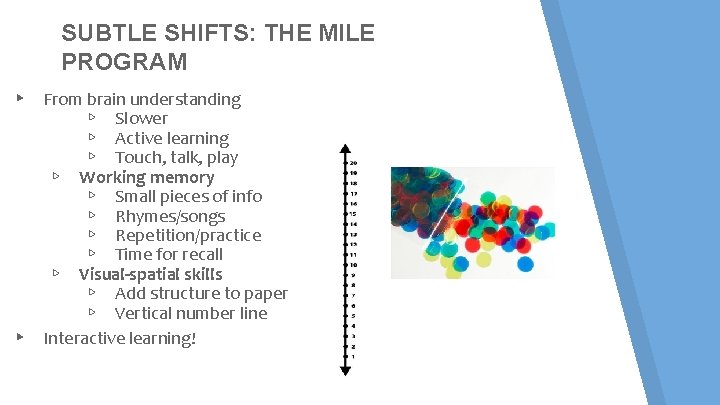
SUBTLE SHIFTS: THE MILE PROGRAM ▸ From brain understanding ▹ Slower ▹ Active learning ▹ Touch, talk, play ▹ Working memory ▹ Small pieces of info ▹ Rhymes/songs ▹ Repetition/practice ▹ Time for recall ▹ Visual-spatial skills ▹ Add structure to paper ▹ Vertical number line ▸ Interactive learning!
MILE AND INTERACTIVE LEARNING ▸ Interactive learning is the sharing of experience between children and adults (or others) where adults facilitate engagement, participation, and reflection upon experiences so that children can make sense of their world. ▸ Siegler & Alibali, 2005, p. 24 ; Hohmann & Weikart, 2000, Bodrova & Leong, 2007
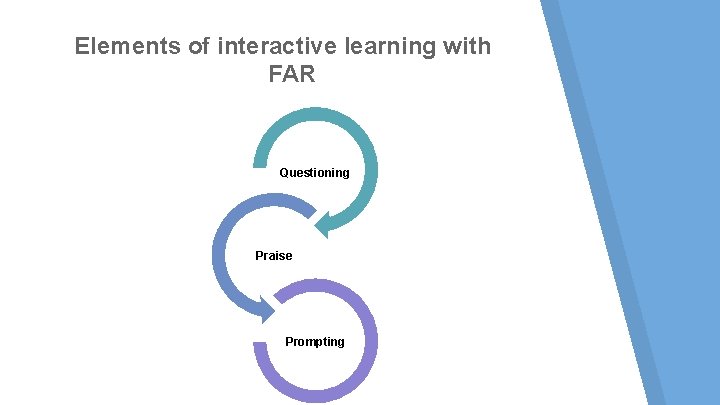
Elements of interactive learning with FAR Questioning Praise Prompting
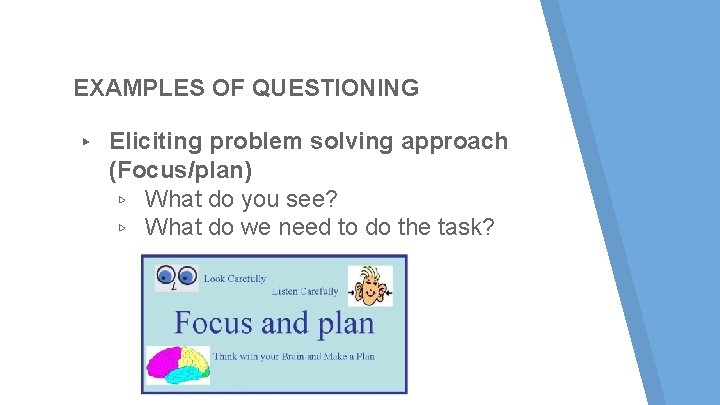
EXAMPLES OF QUESTIONING ▸ Eliciting problem solving approach (Focus/plan) ▹ What do you see? ▹ What do we need to do the task?
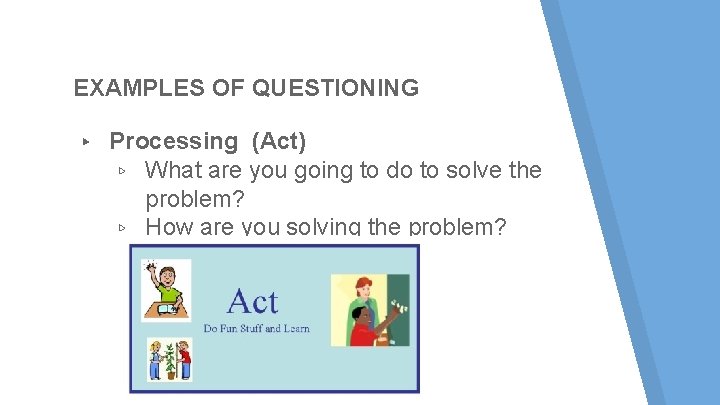
EXAMPLES OF QUESTIONING ▸ Processing (Act) ▹ What are you going to do to solve the problem? ▹ How are you solving the problem?
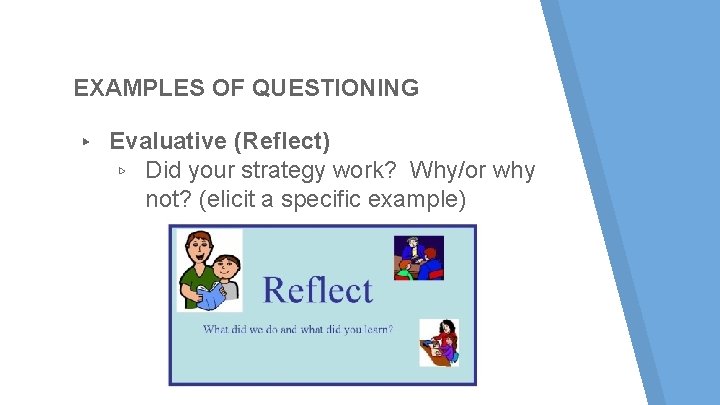
EXAMPLES OF QUESTIONING ▸ Evaluative (Reflect) ▹ Did your strategy work? Why/or why not? (elicit a specific example)
THINGS TO REMEMBER ABOUT CHILDREN’S RESPONSES ▸ ▸ ▸ It is the effort not the accuracy We set the tone – are we excited about learning? Ask for justification of both right and wrong answers Ask why? Or Tell me how… Give time Encourage the child to show, demonstrate, or use gestures to convey their understanding
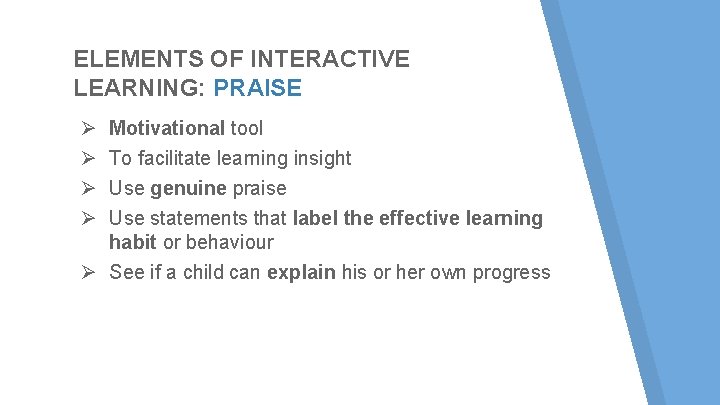
ELEMENTS OF INTERACTIVE LEARNING: PRAISE Ø Motivational tool Ø To facilitate learning insight Ø Use genuine praise Ø Use statements that label the effective learning habit or behaviour Ø See if a child can explain his or her own progress
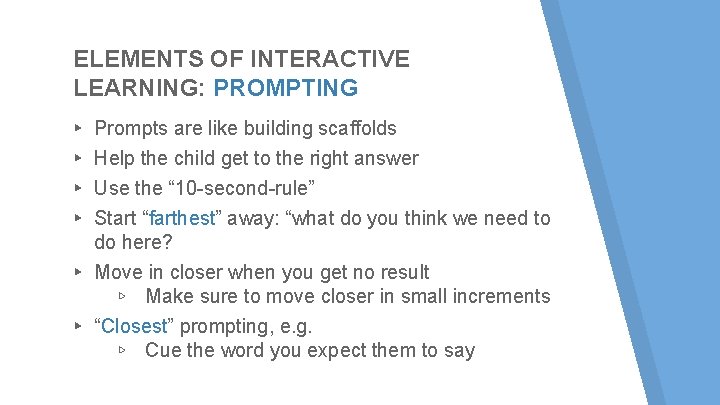
ELEMENTS OF INTERACTIVE LEARNING: PROMPTING ▸ Prompts are like building scaffolds ▸ Help the child get to the right answer ▸ Use the “ 10 -second-rule” ▸ Start “farthest” away: “what do you think we need to do here? ▸ Move in closer when you get no result ▹ Make sure to move closer in small increments ▸ “Closest” prompting, e. g. ▹ Cue the word you expect them to say
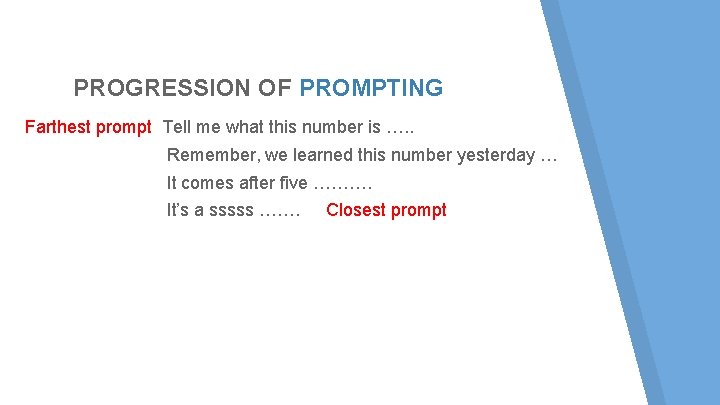
PROGRESSION OF PROMPTING Farthest prompt Tell me what this number is …. . Remember, we learned this number yesterday … It comes after five ………. It’s a sssss ……. Closest prompt
RESPONDING TO HOT EXECUTIVE DYSREGULATION
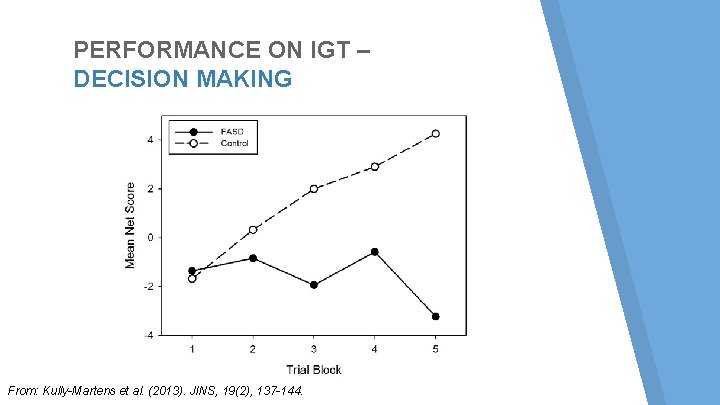
PERFORMANCE ON IGT – DECISION MAKING From: Kully-Martens et al. (2013). JINS, 19(2), 137 -144.
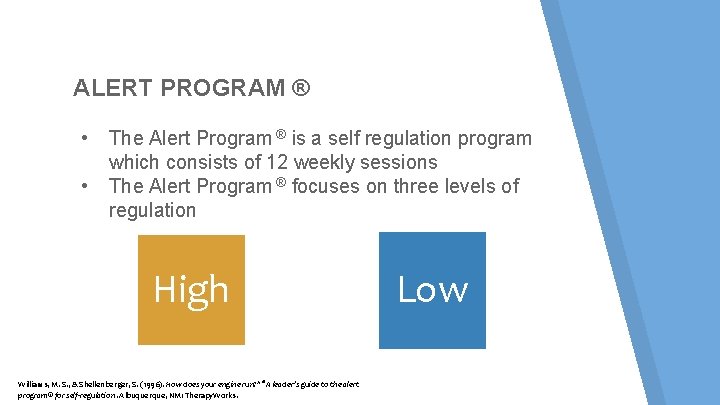
ALERT PROGRAM ® • • The Alert Program ® is a self regulation program which consists of 12 weekly sessions The Alert Program ® focuses on three levels of regulation High Williams, M. S. , & Shellenberger, S. (1996). How does your engine run? ” ® A leader’s guide to the alert program® for self-regulation. Albuquerque, NM: Therapy. Works. Low
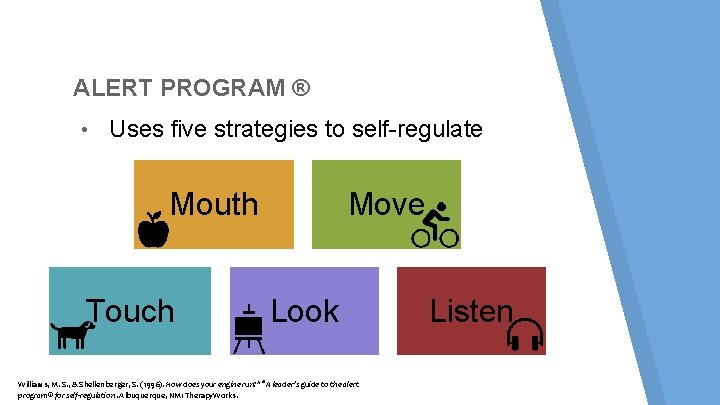
ALERT PROGRAM ® • Uses five strategies to self-regulate Mouth Touch Move Look Williams, M. S. , & Shellenberger, S. (1996). How does your engine run? ” ® A leader’s guide to the alert program® for self-regulation. Albuquerque, NM: Therapy. Works. Listen
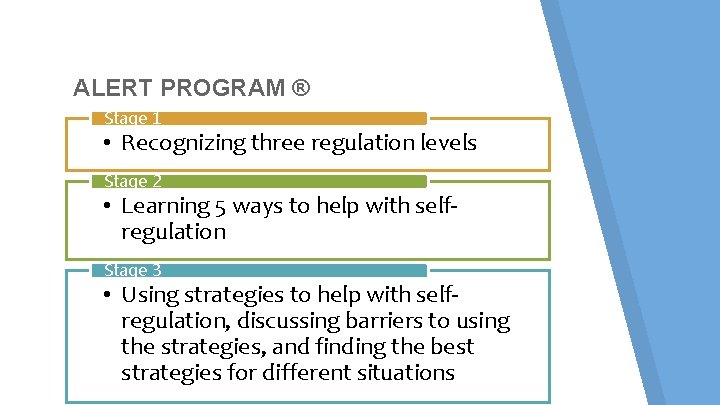
ALERT PROGRAM ® Stage 1 • Recognizing three regulation levels Stage 2 • Learning 5 ways to help with selfregulation Stage 3 • Using strategies to help with selfregulation, discussing barriers to using the strategies, and finding the best strategies for different situations
STRATEGIES For every complex problem there is an answer that is clear, simple, and wrong. H. L. Mencken
STRENGTHS-BASED ▸ What we see is what we look for…. . ▹ So if we look for problems that is what we will see ▹ If we look for brain based explanations of behavior then that is what we will see. ▹ And when we look for strengths that is what we will see
FLEXIBLE
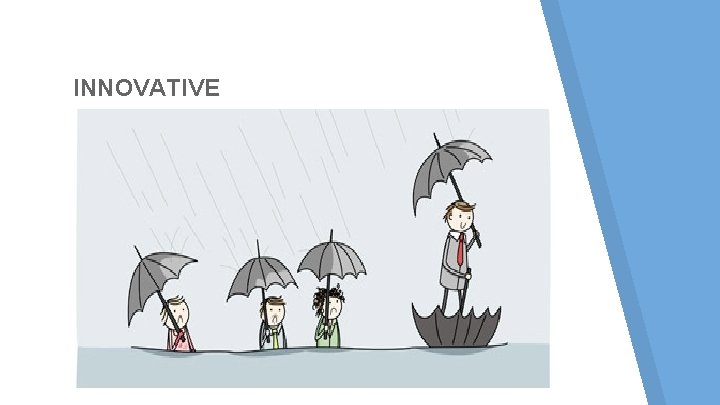
INNOVATIVE
REVIEWING THE RESEARCH Success is possible – ongoing reassessment of needs to help determine meaningful and realistic goals ▸ All behaviour is functional – we need to respond to the function by providing alternatives (e. g. access to mental health, substance abuse, etc. supports) ▸ My beliefs matter – I will see what I expect ▸
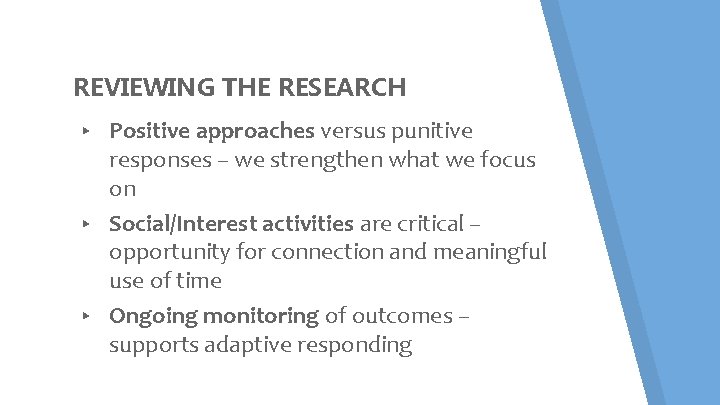
REVIEWING THE RESEARCH Positive approaches versus punitive responses – we strengthen what we focus on ▸ Social/Interest activities are critical – opportunity for connection and meaningful use of time ▸ Ongoing monitoring of outcomes – supports adaptive responding ▸
OVERARCHING THEMES Support can have a significant positive impact but ideally will incorporate high expectations and opportunities for control ▸ Nesting direct interventions with system level supports can both equip and support the individuals with FASD ▸
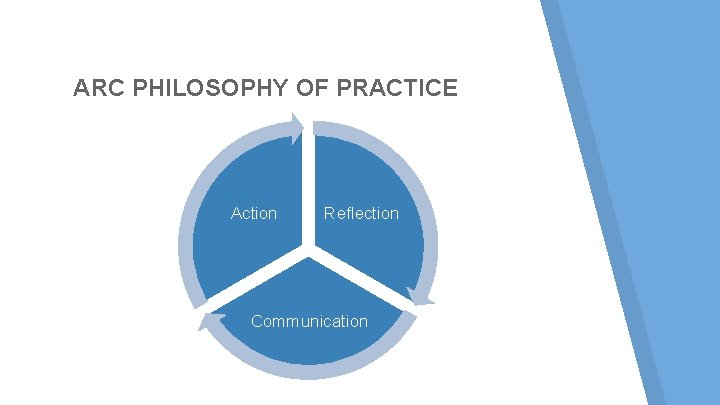
ARC PHILOSOPHY OF PRACTICE Action Reflection Communication
THANKS! Any questions? Jacqueline Pei, Ph. D. , R. Psych. Department of Educational Psychology, University of Alberta jacqueline. pei@ualberta. ca