
Supporting Children Who Are Gender Variant A guide




- Slides: 23
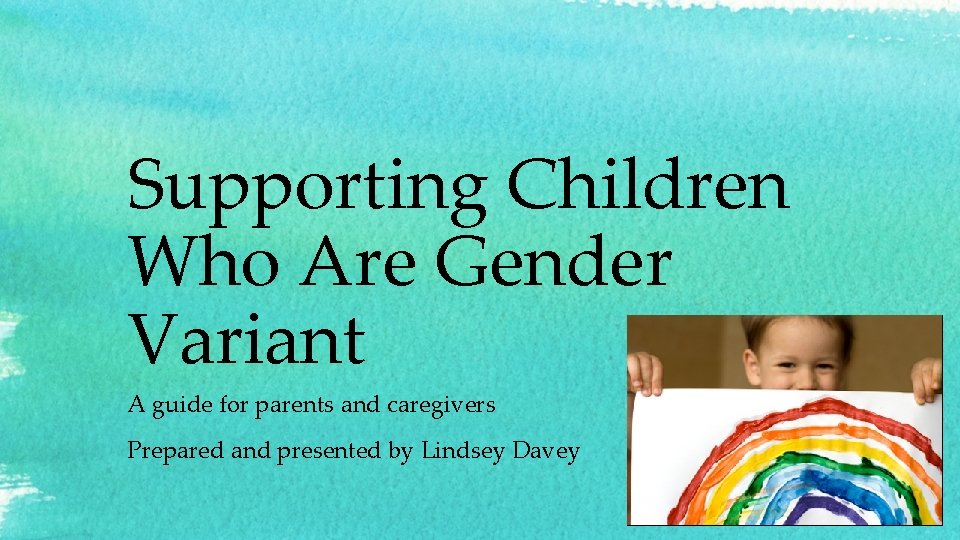
Supporting Children Who Are Gender Variant A guide for parents and caregivers Prepared and presented by Lindsey Davey
Supporting Children Who Are Gender Variant • Common terms and their definitions • Supporting gender expression • Supportive parenting practices • Rejecting parenting practices • Transitioning • Working with the school/center • Out-of-school activities • Resources
Definitions
Definitions Gender: A socially constructed system of classification that ascribes qualities of masculinity and femininity to people Gender Identity: One's innermost core concept of self which can include male, female, a blend of both or neither, and many more—how individuals perceive themselves and what they call themselves Gender Expression: Refers to the ways in which people externally communicate their gender identity to others through behavior, clothing, hairstyle, voice, and other forms of presentation Gender Role: This is the set of roles, activities, expectations and behaviors commonly associated with females and males by society
More Definitions Transgender: Sometimes used as an umbrella term to describe anyone whose identity or behavior falls outside of stereotypical gender norms Cisgender: Refers to people whose sex assignment at birth corresponds to their gender identity, and often their expression Sexual Orientation: Term that refers to being physically, romantically or sexually attracted to people of a specific gender and/or sex Transphobia: Fear or hatred of transgender people; transphobia is manifested in a number of ways, including violence, harassment, and discrimination
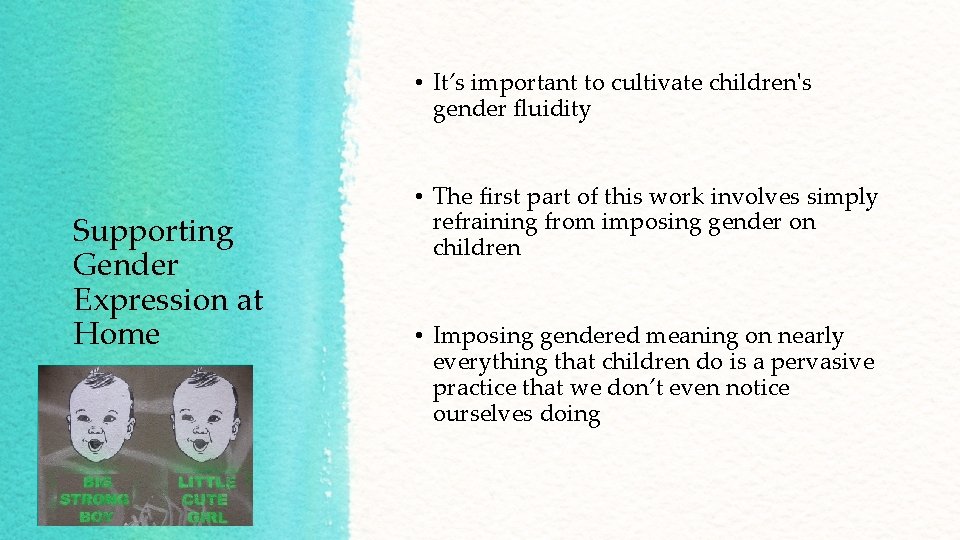
• It’s important to cultivate children's gender fluidity Supporting Gender Expression at Home • The first part of this work involves simply refraining from imposing gender on children • Imposing gendered meaning on nearly everything that children do is a pervasive practice that we don’t even notice ourselves doing
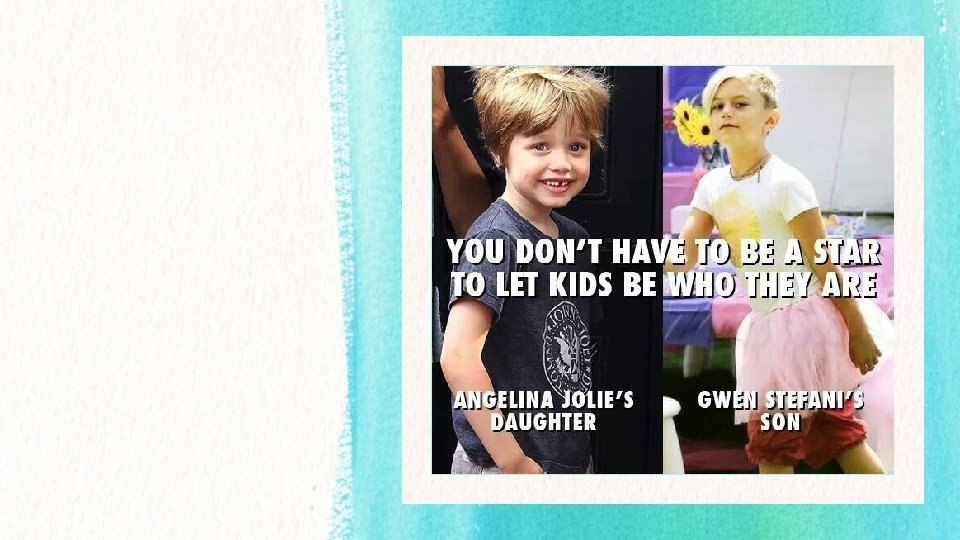
• Allowing children to form their own relationship with gender means not imposing gender on them Supporting Gender Expression at Home • Ensure that children have many gendered options available to them as well as items that are free from gendered marketing • Provide your child with the opportunity to explore a spectrum of colors, both dresses and pants, etc.
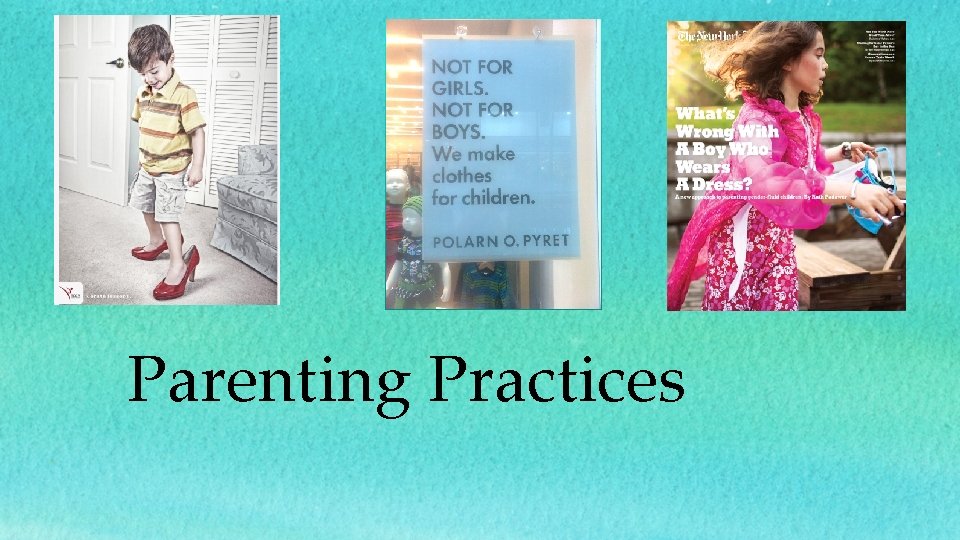
Parenting Practices
Supportive Parenting Practices • Create a supportive family environment • Allow zero tolerance for disrespect, negative comments or pressure • Require respect within the family • Maintain open and honest communication with your child • Express love and support for your child’s gender expression
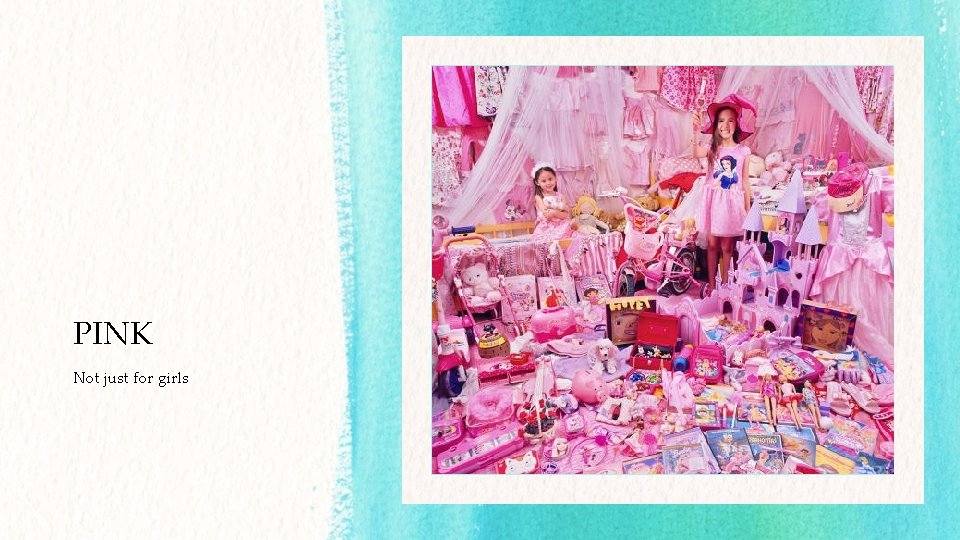
PINK Not just for girls
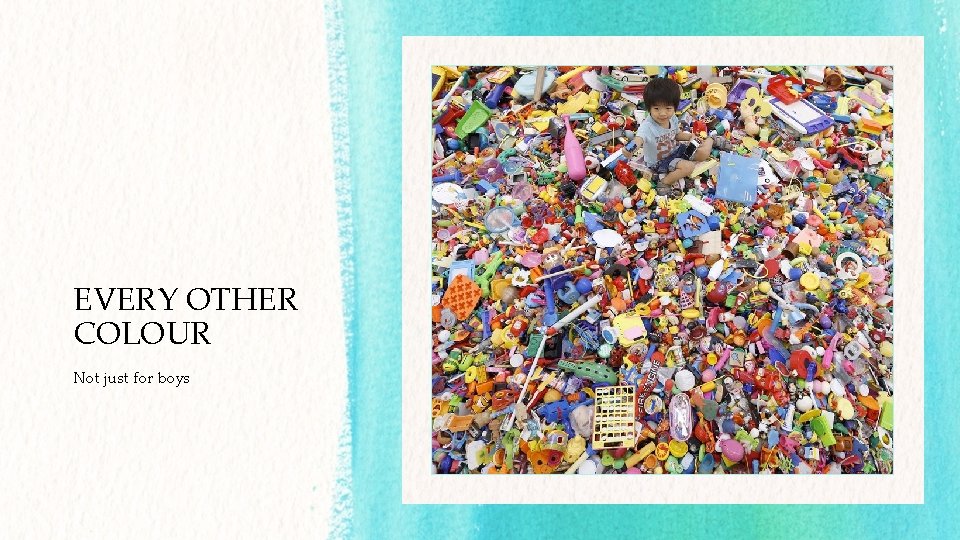
EVERY OTHER COLOUR Not just for boys
Rejecting Parenting Practices • Physical or verbal abuse • Exclusion from family activities • Blocking access to supportive friends or activities • Blaming the child for the discrimination they face • Denigration and ridicule • Religious or faith-based condemnation • Distress, denial, and shame • Silence and secrecy • Pressure to enforce gender conformity
Transitioning
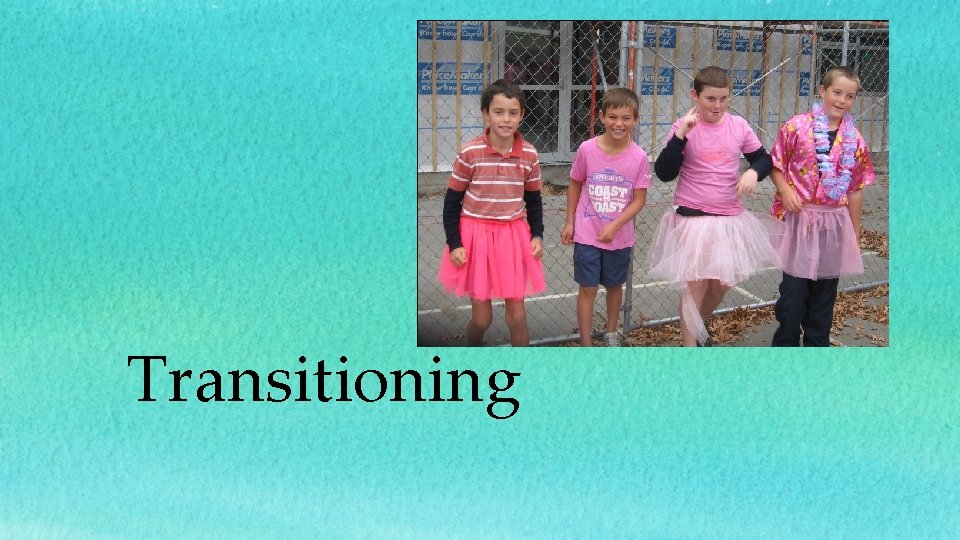
Transitioning • When a person changes outwardly from one gender to another and lives in accordance with their gender identity • Can occur in two ways: social transition through non-permanent changes in clothing, hairstyle, name and/or pronouns, and medical transition through the use of medicines and/or surgeries to promote gender based body changes • There is no rule of thumb for when a transgender child should be allowed to transition socially and/or medically • Your child’s discomfort or suffering is so obvious that despite your concerns, it is critical for them to live in the world as they choose
Working with the School/Center
Working with the school/center • Forming a positive relationship with school administrators and staff, whether you are new to a school or returning, it vital to the safety and success of your genderexpansive child • Approach the school as partners, not as adversaries • You will need to help them by providing resources, materials, and examples of other schools that have successfully met the needs of gender-expansive students • Ask for gender training to be included in this professional development
Out-of-school Activities
Out-of-school activities • Many of the same situations that arise in school situations arise in out-of-school activities as well • Most adults who run these activities have no experience with gender-expansive or transgender kids • Sometimes, camp or outside activities are opportunities for gender-expansive kids to see what it is like to present as the opposite gender • Proactively speak with the camp leaders about potential issues before they arise, and ask if they are willing to have their staff receive gender training
Resources
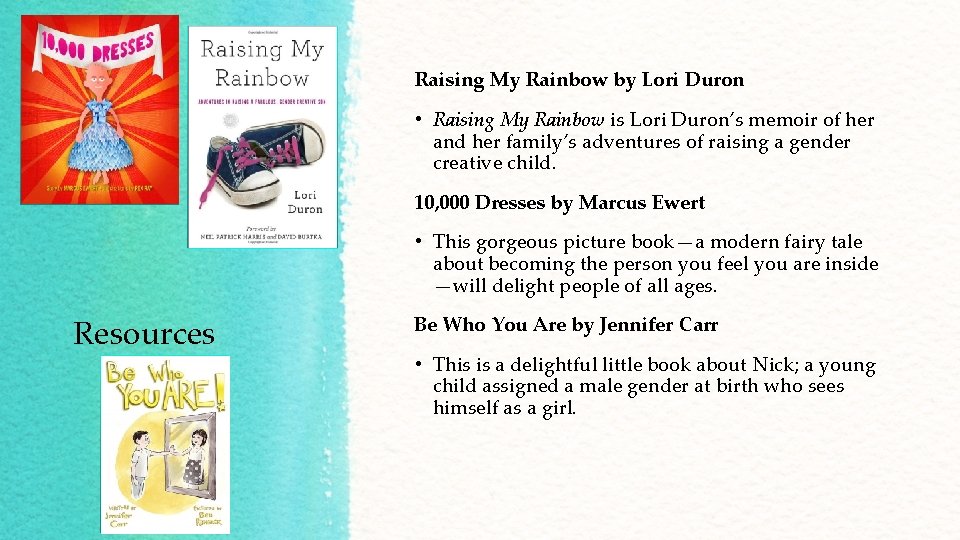
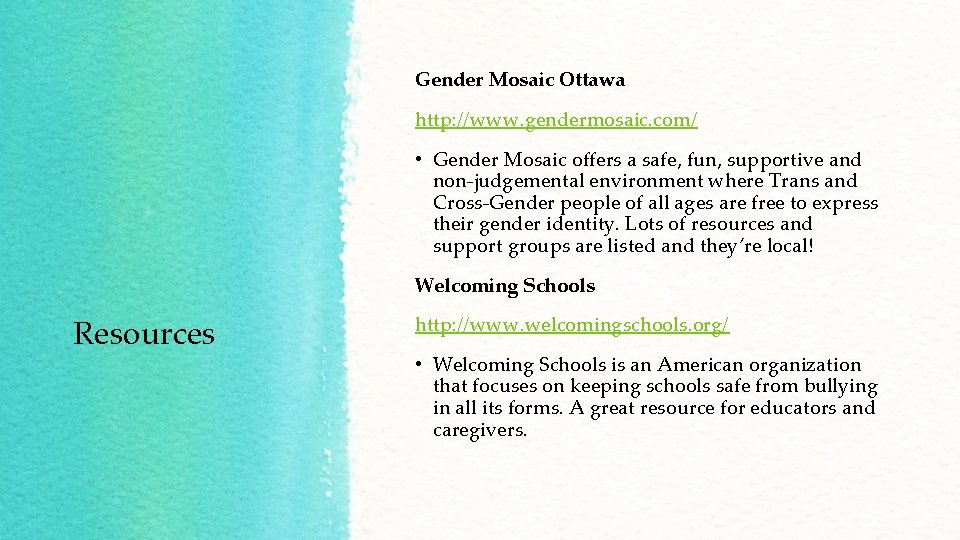
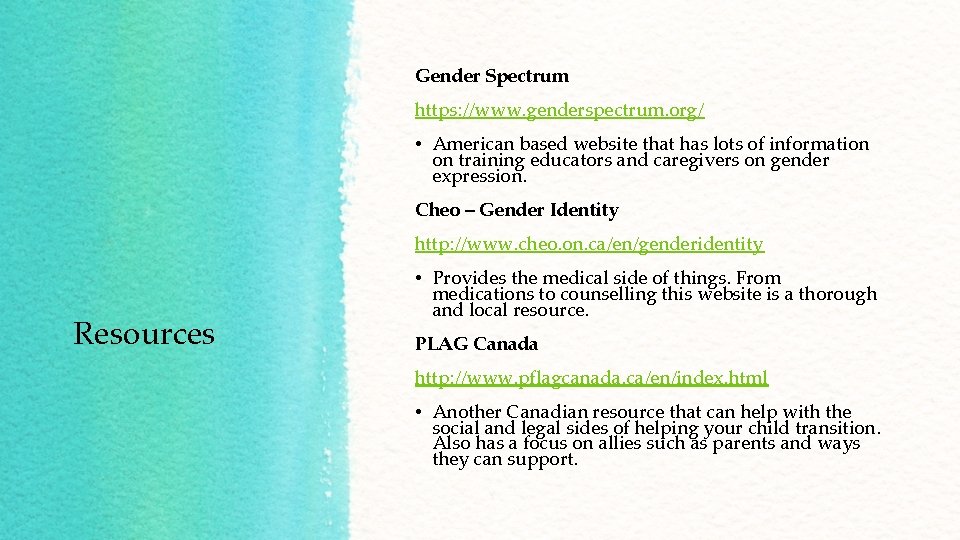
Raising My Rainbow by Lori Duron • Raising My Rainbow is Lori Duron’s memoir of her and her family’s adventures of raising a gender creative child. 10, 000 Dresses by Marcus Ewert • This gorgeous picture book—a modern fairy tale about becoming the person you feel you are inside —will delight people of all ages. Resources Be Who You Are by Jennifer Carr • This is a delightful little book about Nick; a young child assigned a male gender at birth who sees himself as a girl.
Gender Mosaic Ottawa http: //www. gendermosaic. com/ • Gender Mosaic offers a safe, fun, supportive and non-judgemental environment where Trans and Cross-Gender people of all ages are free to express their gender identity. Lots of resources and support groups are listed and they’re local! Welcoming Schools Resources http: //www. welcomingschools. org/ • Welcoming Schools is an American organization that focuses on keeping schools safe from bullying in all its forms. A great resource for educators and caregivers.
Gender Spectrum https: //www. genderspectrum. org/ • American based website that has lots of information on training educators and caregivers on gender expression. Cheo – Gender Identity http: //www. cheo. on. ca/en/genderidentity Resources • Provides the medical side of things. From medications to counselling this website is a thorough and local resource. PLAG Canada http: //www. pflagcanada. ca/en/index. html • Another Canadian resource that can help with the social and legal sides of helping your child transition. Also has a focus on allies such as parents and ways they can support.