
Support Protection Movement Mineral storage Blood cell formation
• Support • Protection • Movement • Mineral storage • Blood cell formation (hemopoiesis) • Triglyceride storage
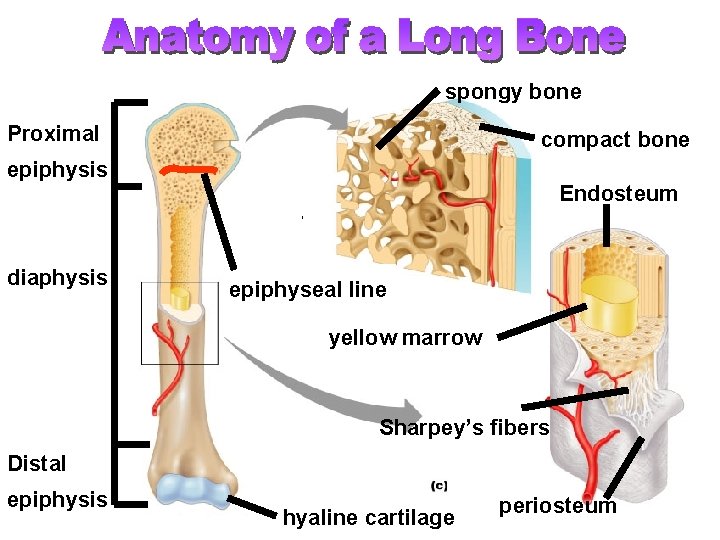
spongy bone Proximal compact bone epiphysis diaphysis Endosteum epiphyseal line yellow marrow Sharpey’s fibers Distal epiphysis hyaline cartilage periosteum
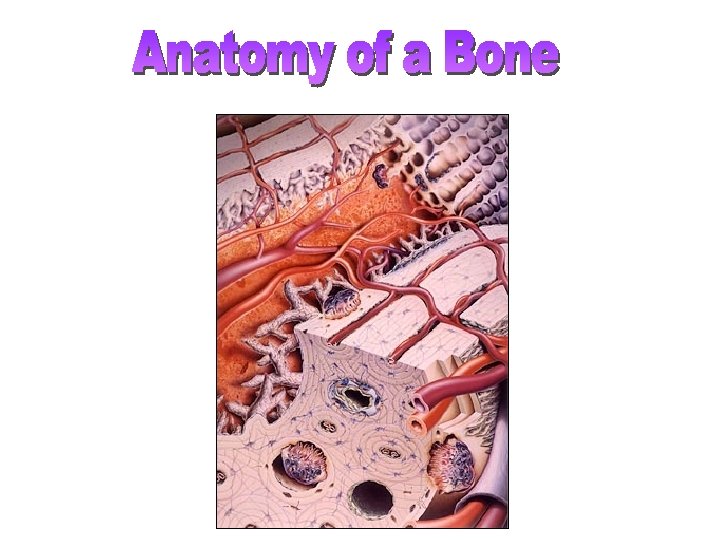
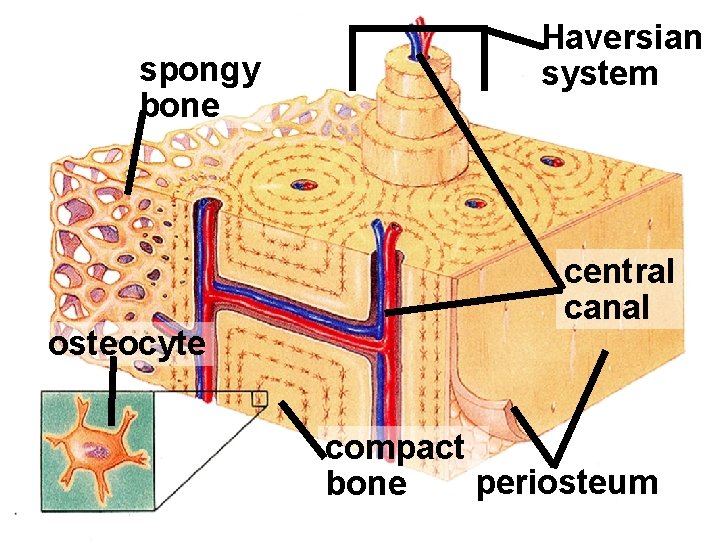
spongy bone osteocyte Haversian system central canal compact periosteum bone
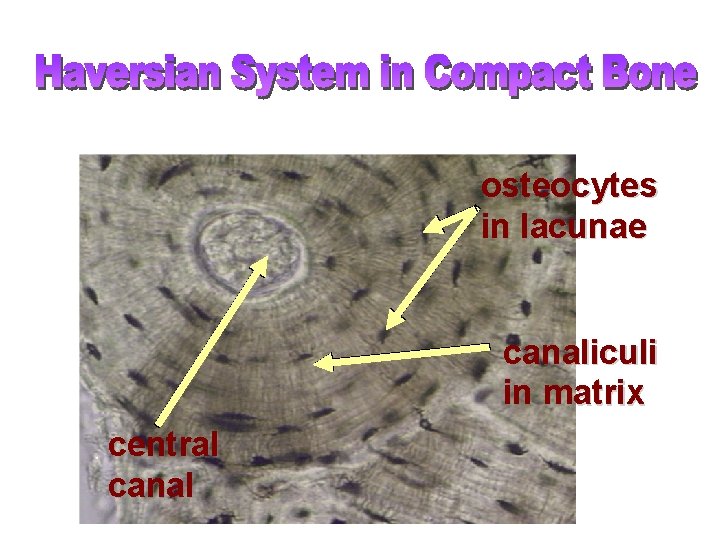
osteocytes in lacunae canaliculi in matrix central canal
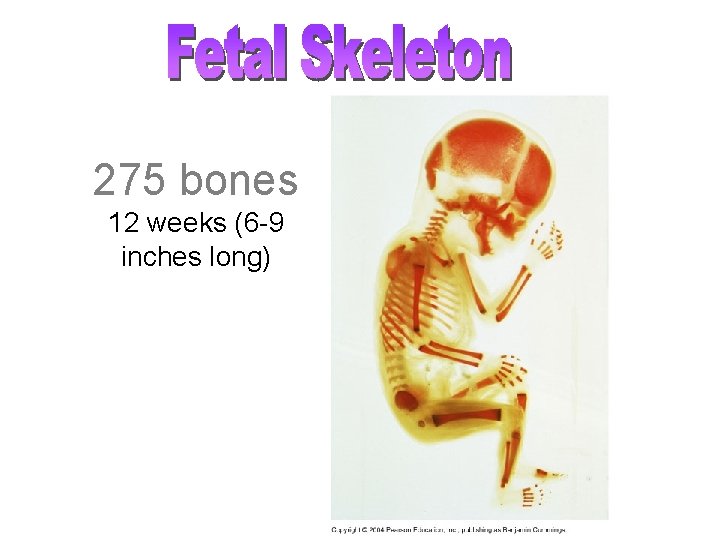
275 bones 12 weeks (6 -9 inches long)
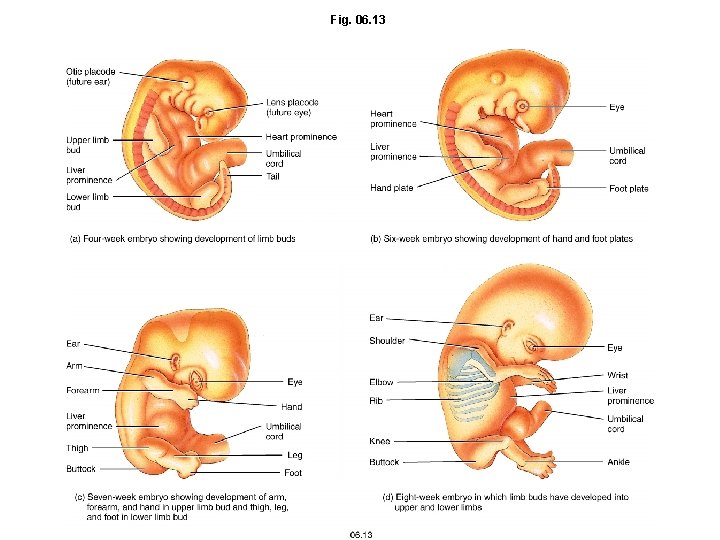
Fig. 06. 13
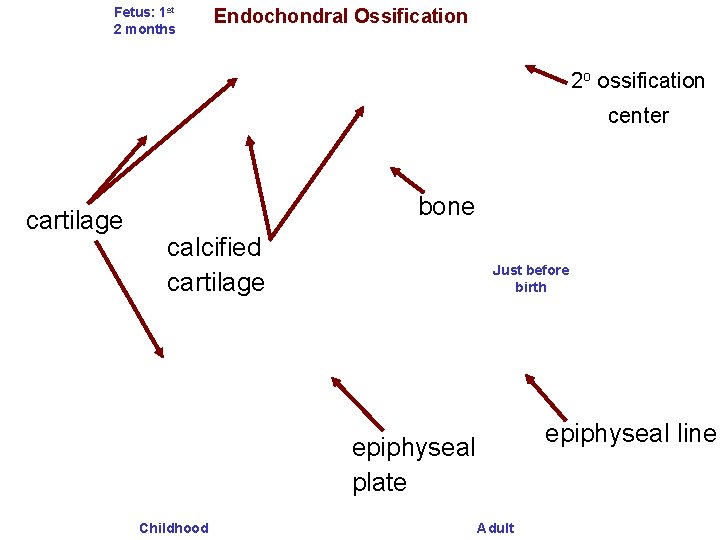
Fetus: 1 st 2 months Endochondral Ossification 2 o ossification center cartilage bone calcified cartilage Just before birth epiphyseal line epiphyseal plate Childhood Adult
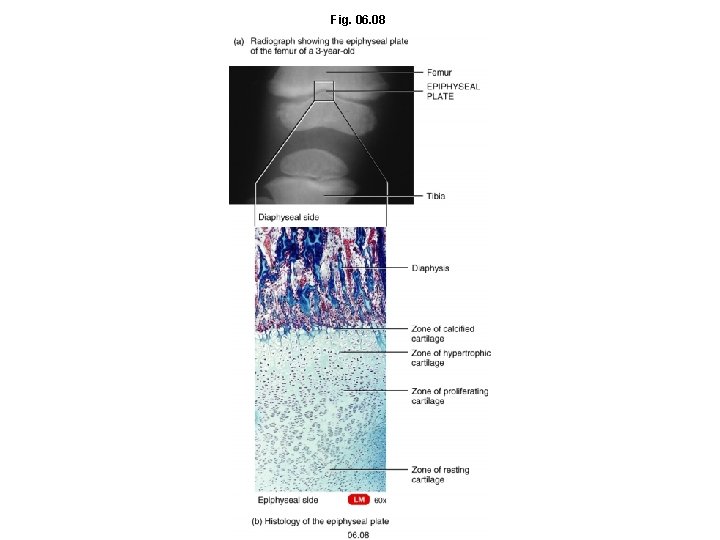
Fig. 06. 08
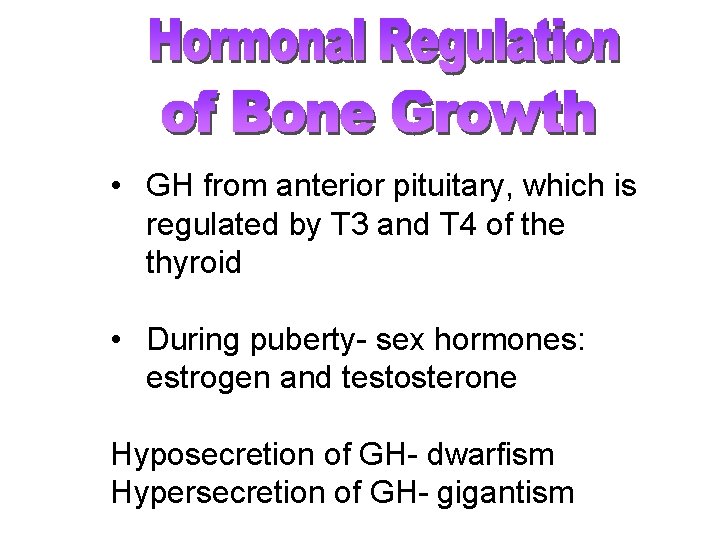
• GH from anterior pituitary, which is regulated by T 3 and T 4 of the thyroid • During puberty- sex hormones: estrogen and testosterone Hyposecretion of GH- dwarfism Hypersecretion of GH- gigantism
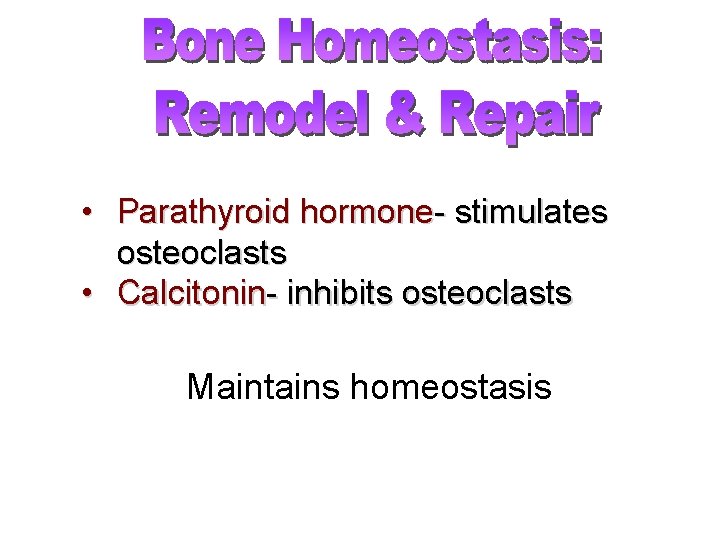
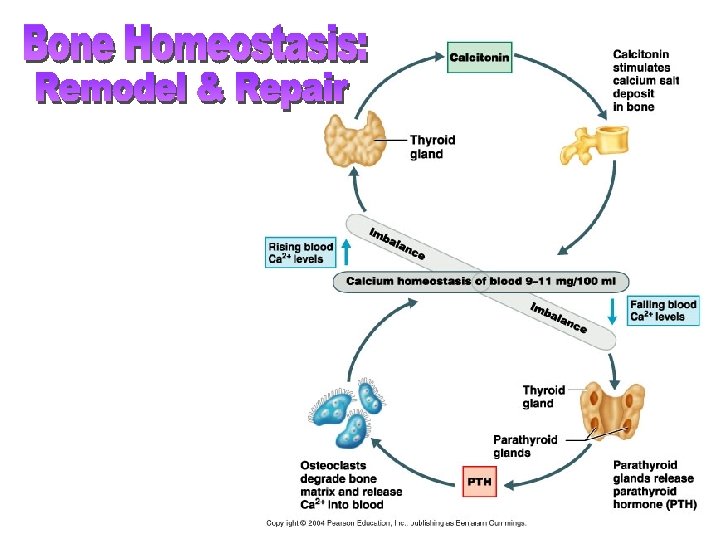
• Parathyroid hormone- stimulates osteoclasts • Calcitonin- inhibits osteoclasts Maintains homeostasis
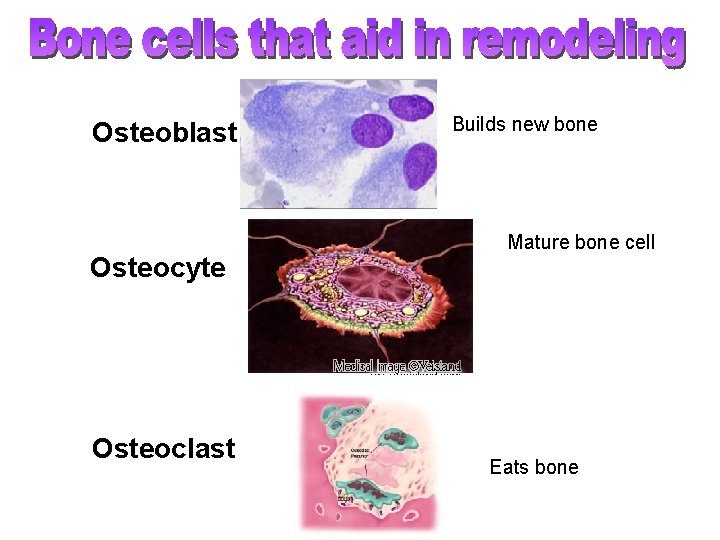
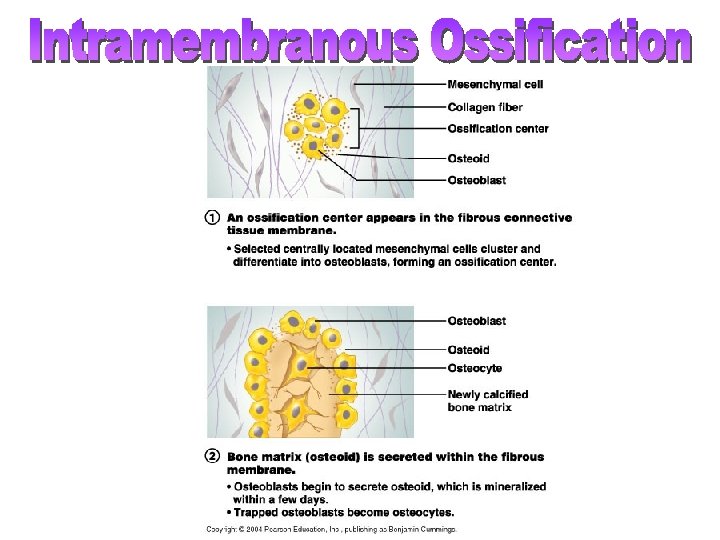
Osteoblast Osteocyte Osteoclast Builds new bone Mature bone cell Eats bone
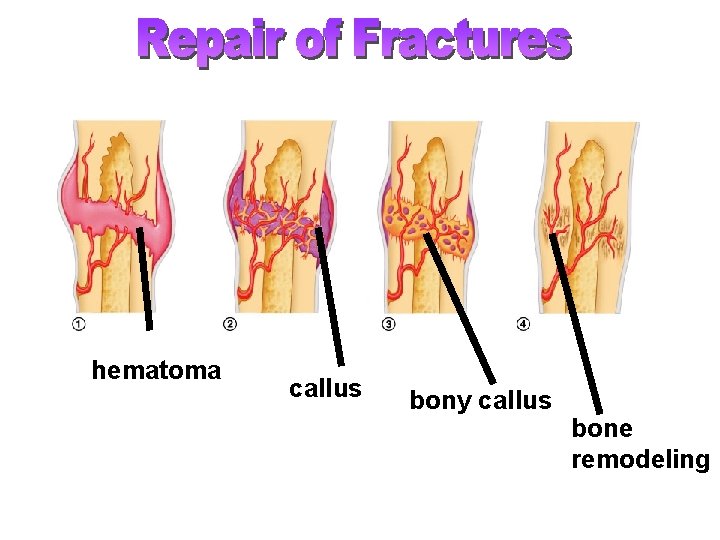
hematoma callus bony callus bone remodeling
• Usually treated by realignment Simple- closed fracture (8 -12 wks to heal) bone breaks cleanly; no penetration • Compound- bone penetrates through skin • Comminuted- bone fragments into many pieces; aged or brittle bones • Compression- bone is crushed • Depressed- broken bone portion is depressed inward • Impacted- broken bone ends are forced into each other • Spiral- excessive twisting of bone • Greenstick- bone breaks incompletely
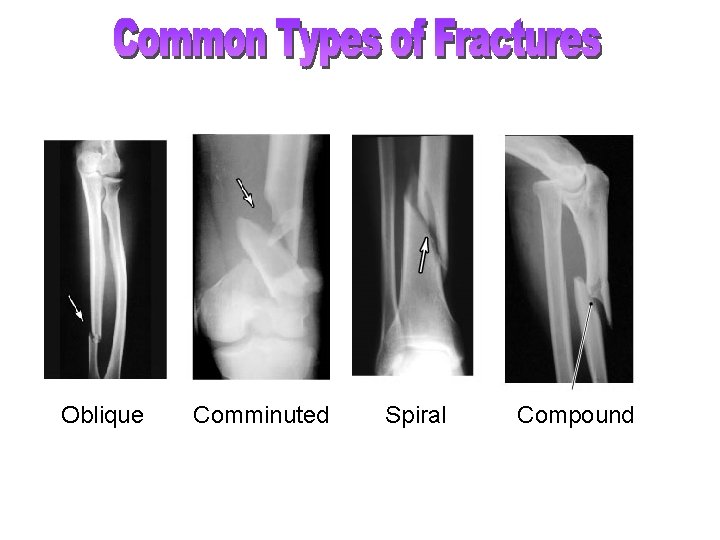
Oblique Comminuted Spiral Compound
1. Electrical stimulation of the fracture site: • Increases speed and completeness of healing • The e- stimulation inhibits PTH and slow osteoclasts down from reabsorbing bone 2. Ultrasound treatment: • Daily treatments reduce healing time of broken bones by 25 -35% 3. Free vascular fibular graft technique: • Transplant fibula in arm • Gives good blood supply not available in other treatments 4. Bone substitutes: • Crushed bone from cadaver- but risk of HIV and hepatitis • Sea bone- coral • Artificial bone- ceramic
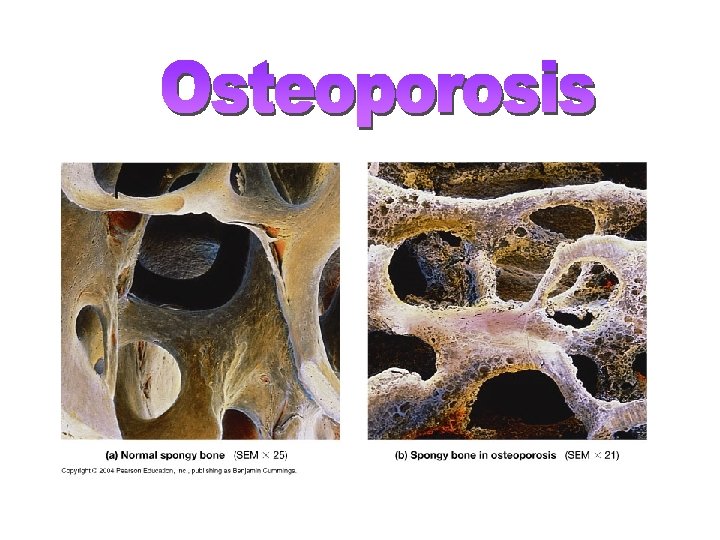
Osteoporosis- bone reabsorption outpaces bone deposit; bones become lighter and fracture easier Factors: • age, gender (more in women) • estrogen and testosterone decrease • insufficient exercise (or too much) • diet poor in Ca++ and protein • abnormal vitamin D receptors • smoking
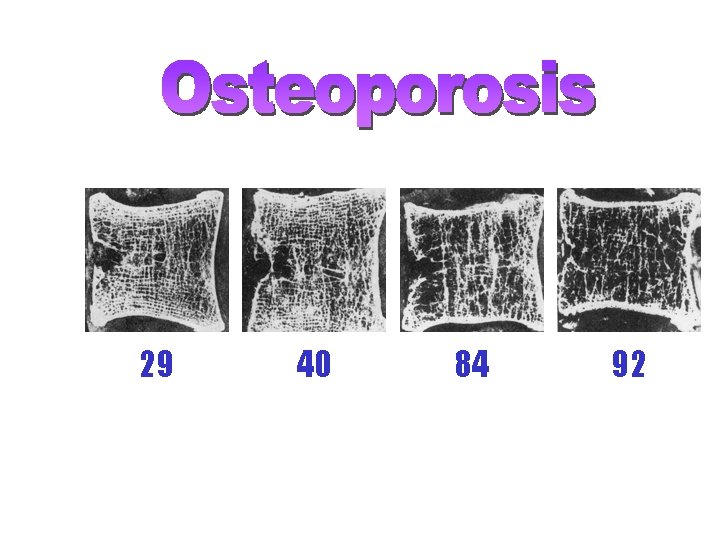
29 40 84 92
• Rickets- vitamin D deficiency • Osteomalacia- soft bones, inadequate mineralization in bones, lack of vitamin D • Pagets Disease- spotty weakening in the bones, excessive and abnormal bone remodeling • Rheumatoid arthritis- autoimmune reaction
INQUIRY 1. What does the secondary site of ossification produce? 2. What is an epiphyseal line? 3. Provide an example of a flat bone? 4. How does PTH effect bone development? 5. How many bones in the adult skeleton? 6. What does an osteoblast do and where are they primarily found? http: //www. youtube. com/watch? v=DSHoon. PWw. XQ
- Slides: 26