
Supply Outline I Law of Supply II Supply
- Slides: 52
Supply
Outline I. Law of Supply II. Supply Schedules and Supply Curves A. Supply Schedules B. Supply Curves C. Market Supply
Outline (Cont. ) III. Change in Supply vs. Change in Quantity Supplied A. Change in Supply B. Change in Quantity Supplied
What is Supply? n Supply is how much a firm is willing to sell at every given price, ceteris paribus n Thus, if all else remains the same and the price of a good goes up, what would you expect the response of a firm to be? – To produce more, since prices are going up, so will profits
Law of Supply n Law of Supply - the price of a product (or service) is directly related to the quantity supplied, ceteris paribus. n Quantity Supplied - the amount of a good (or service) produced by firms at a particular price. n While demand typically refers to consumers, supply typically refers to firms.
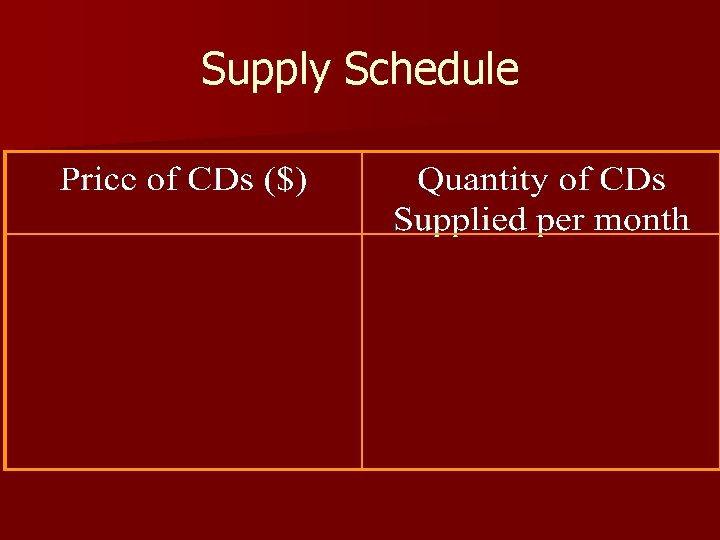
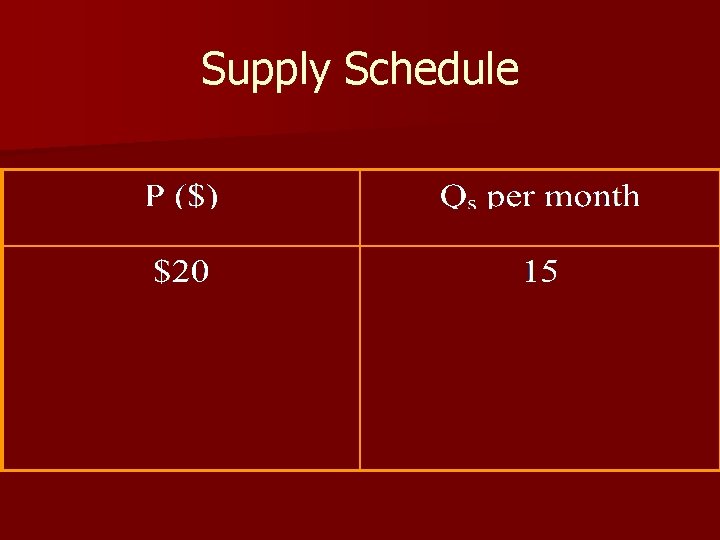
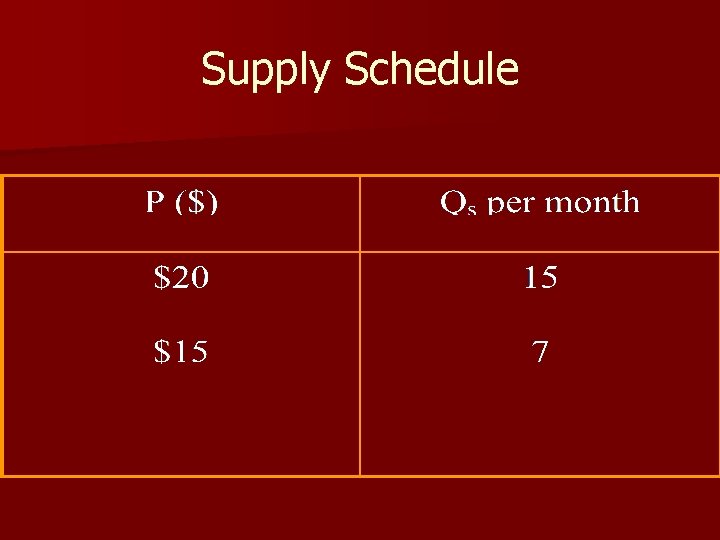
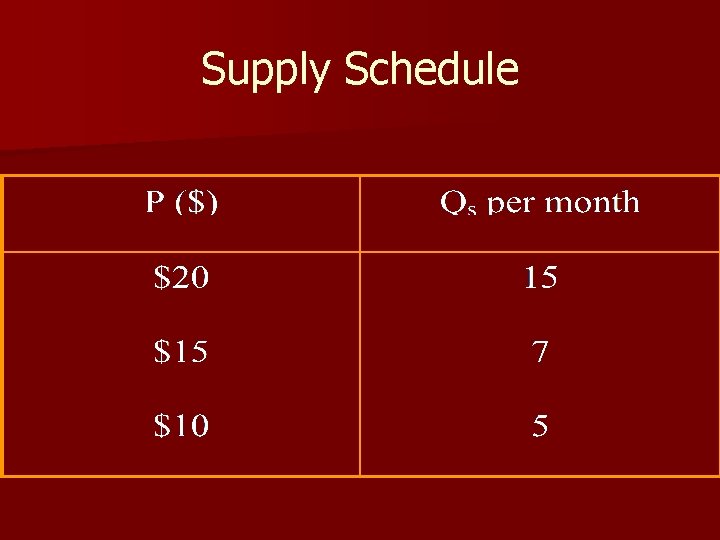
Supply Schedules and Curves n Just like we were able to construct a Demand Schedule and Demand Curve, we will do the same for Supply n Supply Schedule - a table showing the relationship between the price of a good and the quantity supplied period of time, ceteris paribus.
Supply Schedule
Supply Schedule
Supply Schedule
Supply Schedule
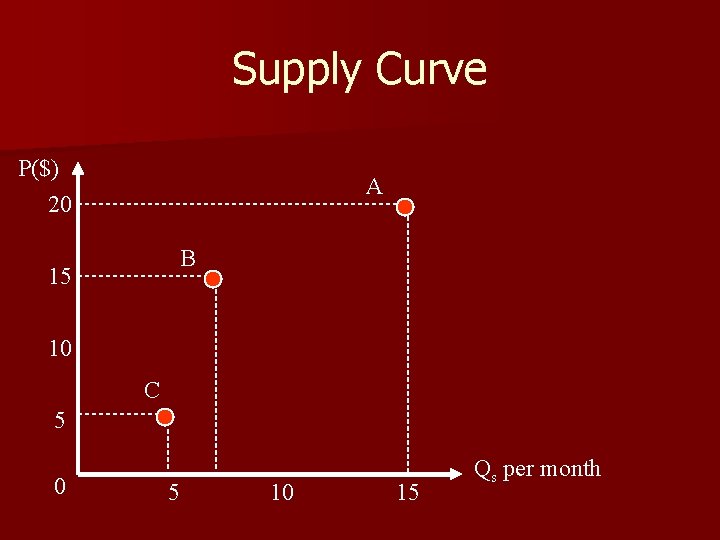
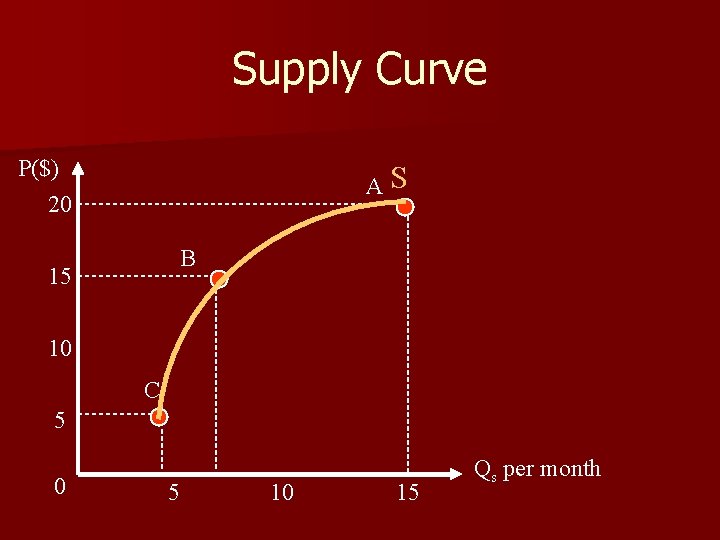
Supply Schedules and Curves n Supply Curve - a diagram showing the relationship between the price of a good and the quantity supplied period of time, ceteris paribus.
Supply Curve
Supply Curve P($) Remember to ALWAYS label your axes! Qs per month
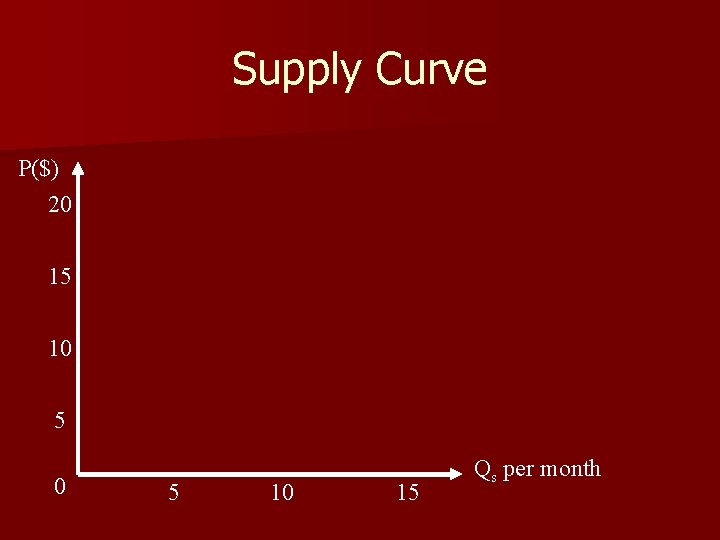
Supply Curve P($) 20 15 10 15 Qs per month
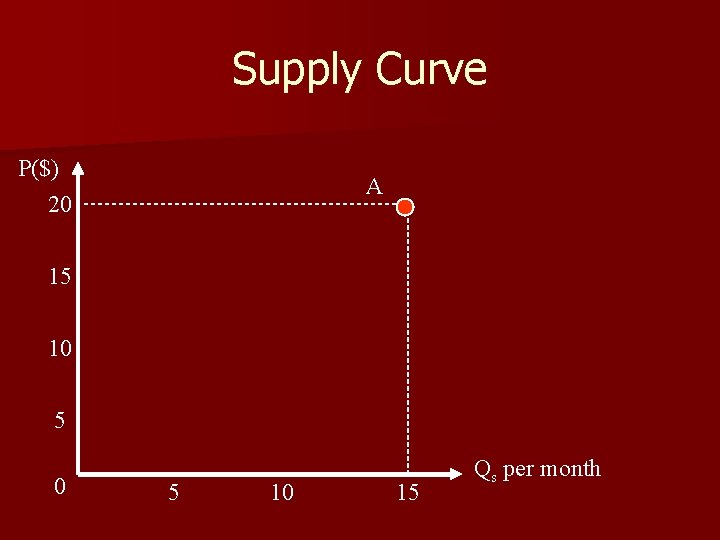
Supply Curve P($) 20 A 15 10 15 Qs per month
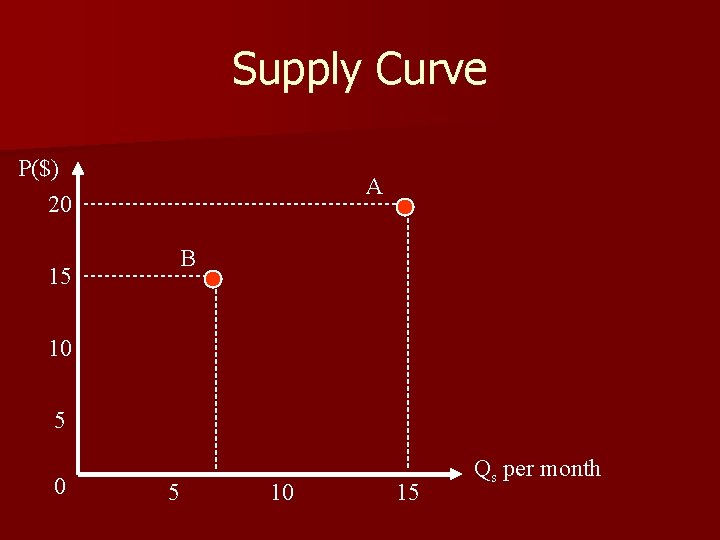
Supply Curve P($) 20 A B 15 10 15 Qs per month
Supply Curve P($) 20 A B 15 10 C 5 0 5 10 15 Qs per month
Supply Curve P($) 20 AS B 15 10 C 5 0 5 10 15 Qs per month
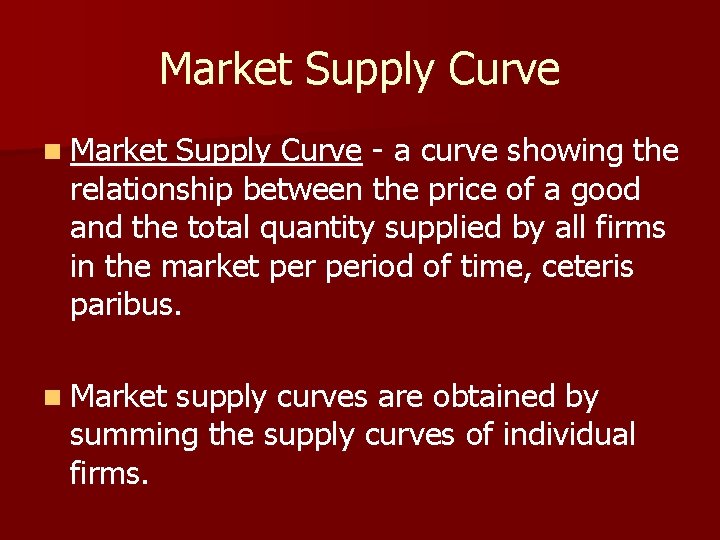
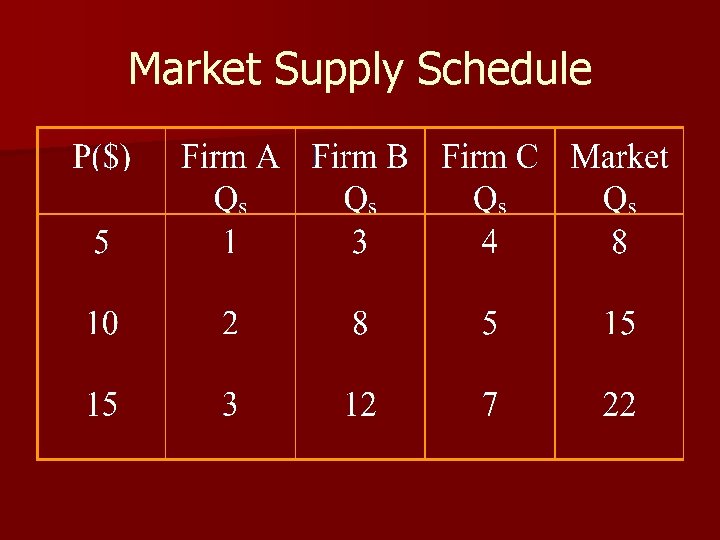
Market Supply Curve n Market Supply Curve - a curve showing the relationship between the price of a good and the total quantity supplied by all firms in the market period of time, ceteris paribus. n Market supply curves are obtained by summing the supply curves of individual firms.
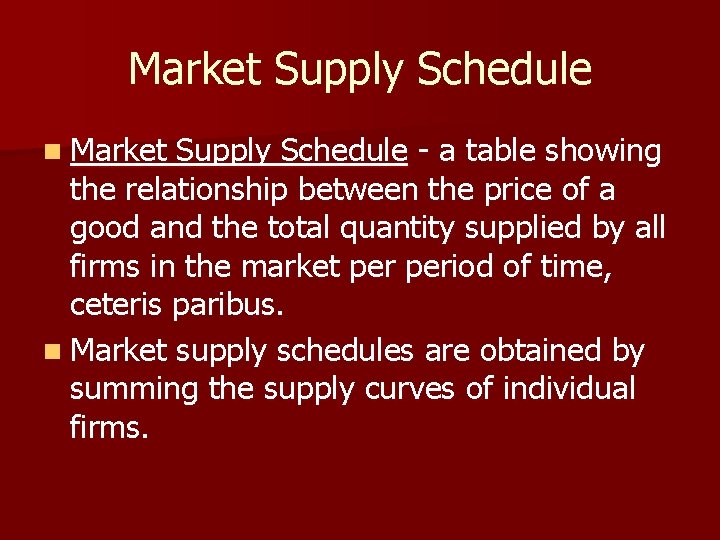
Market Supply Schedule n Market Supply Schedule - a table showing the relationship between the price of a good and the total quantity supplied by all firms in the market period of time, ceteris paribus. n Market supply schedules are obtained by summing the supply curves of individual firms.
Market Supply Schedule
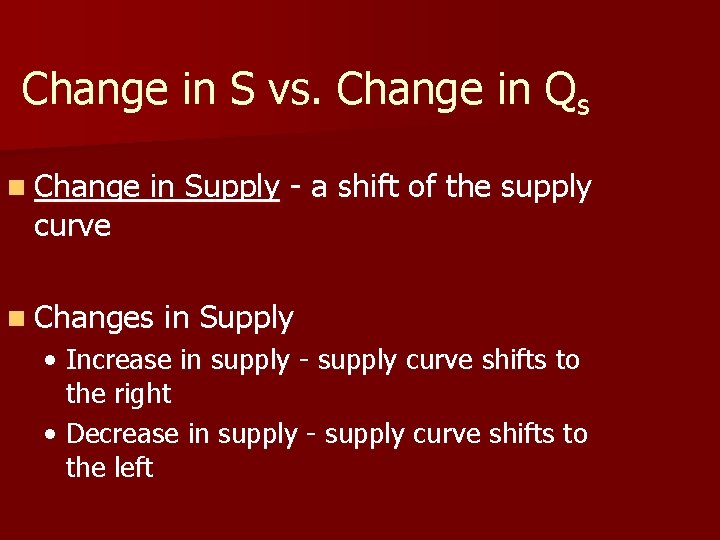
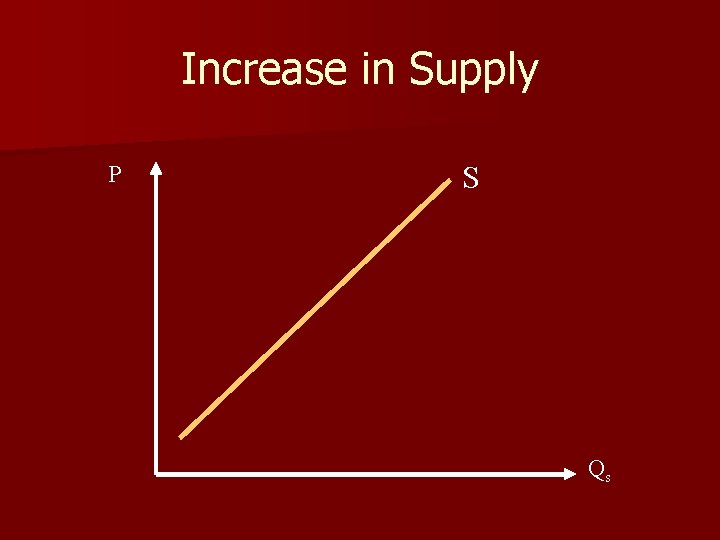
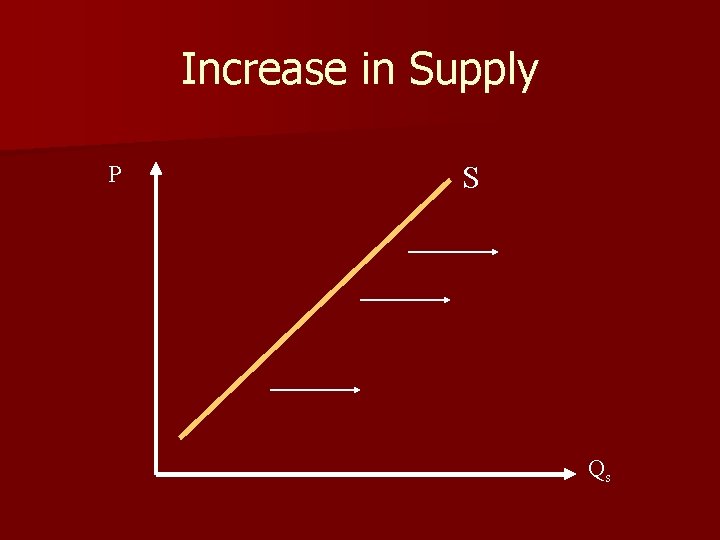
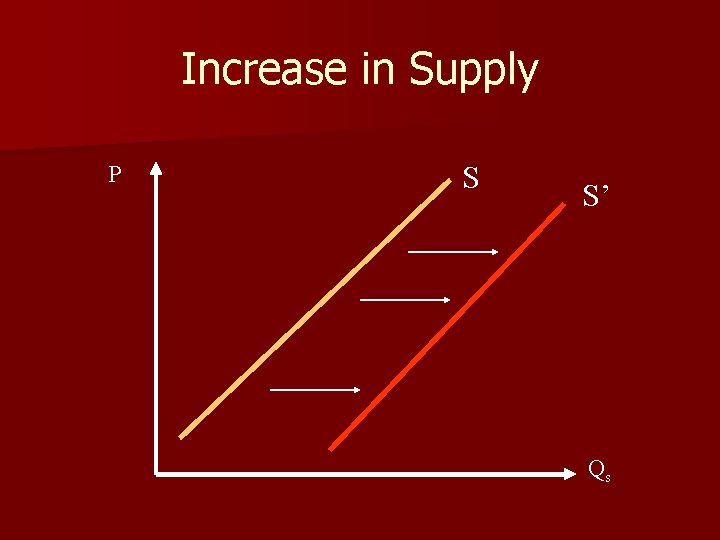
Change in S vs. Change in Qs n Change curve in Supply - a shift of the supply n Changes in Supply • Increase in supply - supply curve shifts to the right • Decrease in supply - supply curve shifts to the left
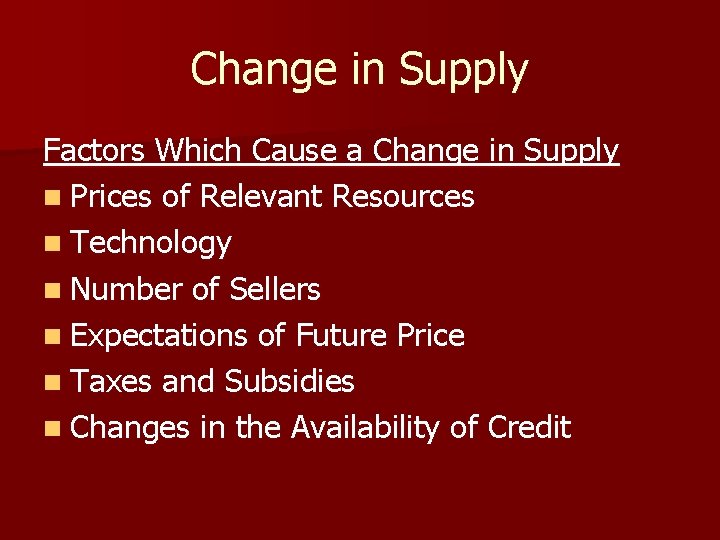
Change in Supply Factors Which Cause a Change in Supply n Prices of Relevant Resources n Technology n Number of Sellers n Expectations of Future Price n Taxes and Subsidies n Changes in the Availability of Credit
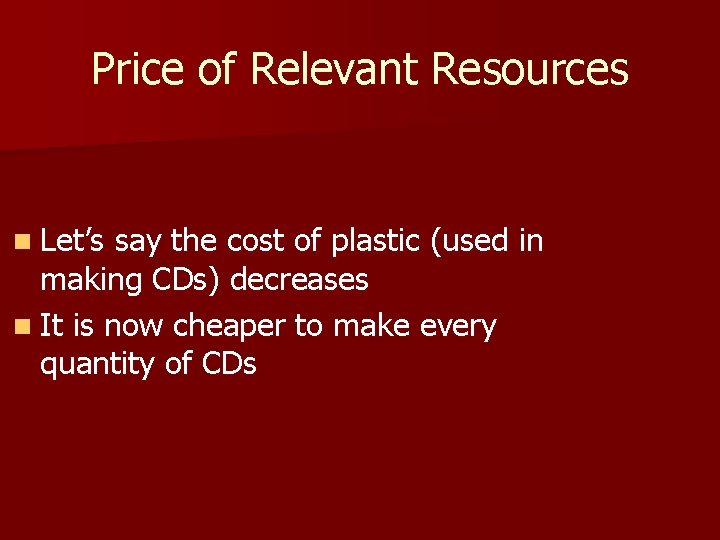
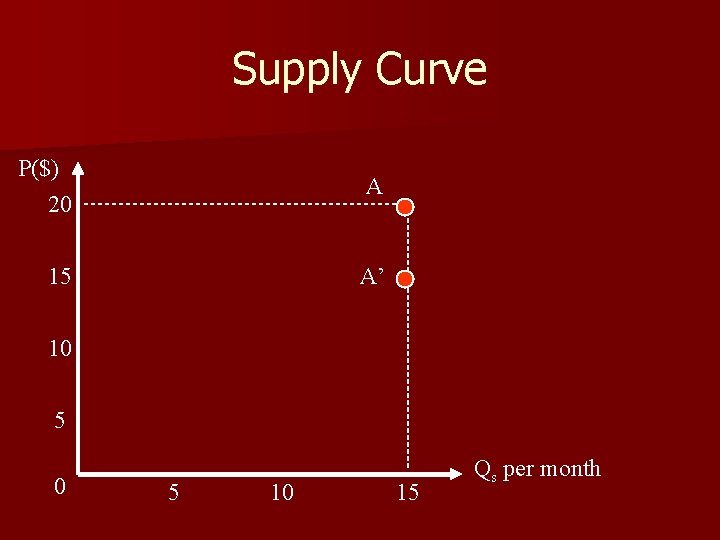
Price of Relevant Resources n Let’s say the cost of plastic (used in making CDs) decreases n It is now cheaper to make every quantity of CDs
Resource Price Decrease n So, before the cost decrease, at a price of $20 the firm was willing to make 15 CDs. If costs go down, will the firm still need $20 to make them want to supply 15 CDs? – No, in order to make the same profit they are willing to take a lower price
Supply Curve P($) 20 A 15 A’ 10 5 10 15 Qs per month
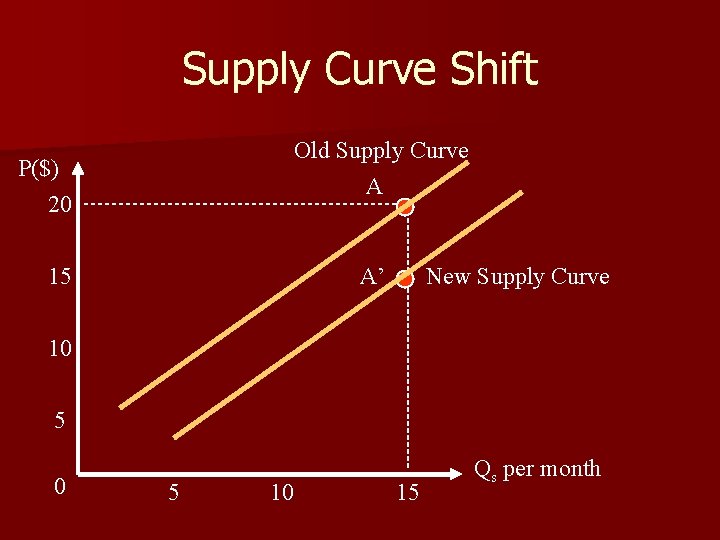
Resource Price Decrease n Thus the firm is willing to supply every quantity at a lower price. n Or in other words, at every price the firm is willing to supply more of the good n In summary, if the price of a resource goes down, supply increases (shifts to the right)
Supply Curve Shift Old Supply Curve A P($) 20 15 A’ New Supply Curve 10 5 10 15 Qs per month
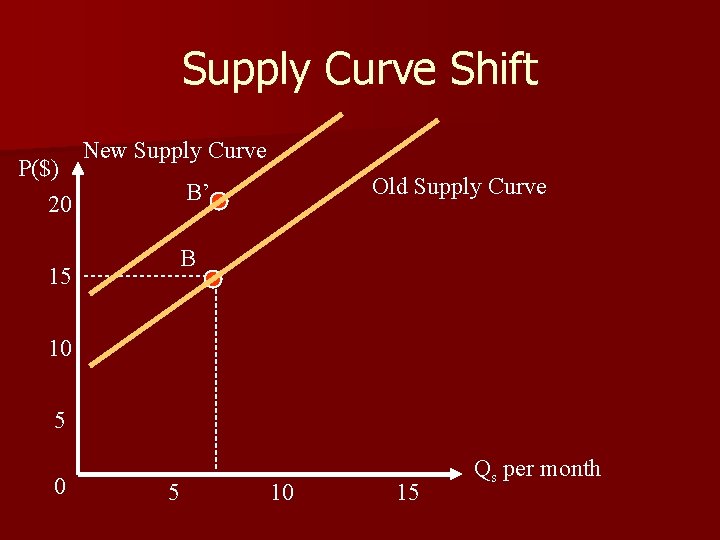
Price of Relevant Resources n Let’s say the cost of plastic (used in making CDs) increases n It is now more expensive to make every quantity of CDs
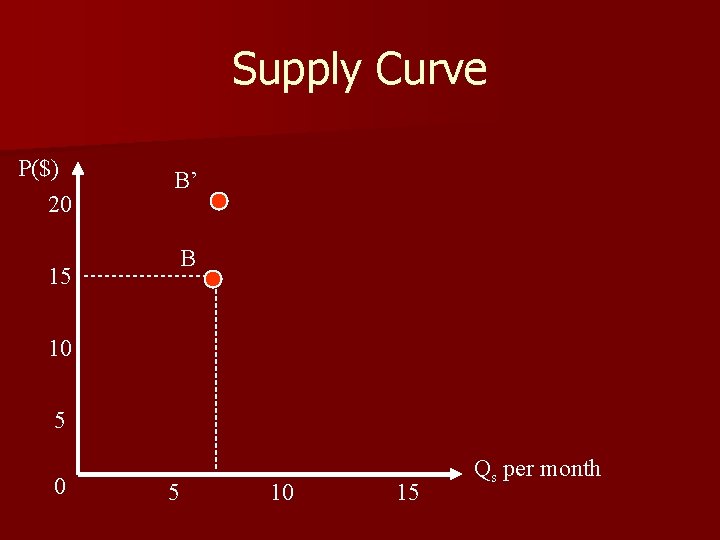
Resource Price Decrease n So, before the cost increase, at a price of $15 the firm was willing to make 7 CDs. If costs go up, will the firm still need $15 to make them want to supply 7 CDs? – No, in order to make the same profit they are going to need a higher price to cover the higher costs
Supply Curve P($) 20 B’ B 15 10 15 Qs per month
Resource Price Decrease n Thus the firm is willing to supply every quantity at a higher price. n Or in other words, at every price the firm is willing to supply less of the good n In summary, if the price of a resource goes up, supply decreases (shifts to the left)
Supply Curve Shift P($) 20 New Supply Curve Old Supply Curve B’ B 15 10 15 Qs per month
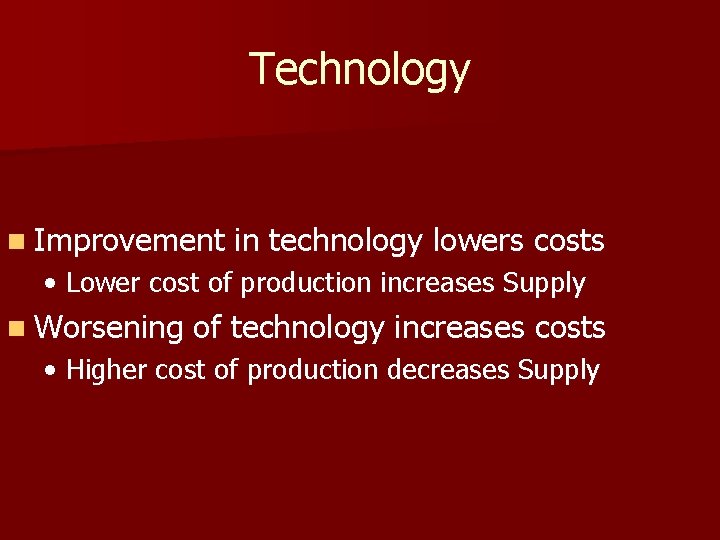
Technology n Improvement in technology lowers costs • Lower cost of production increases Supply n Worsening of technology increases costs • Higher cost of production decreases Supply
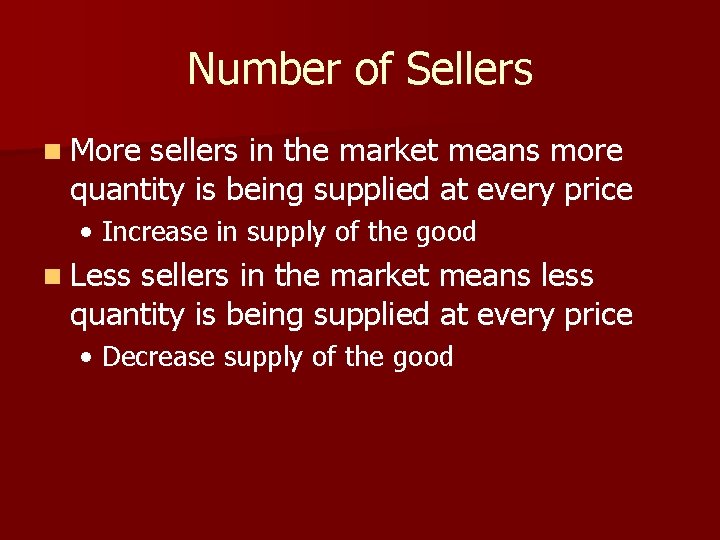
Number of Sellers n More sellers in the market means more quantity is being supplied at every price • Increase in supply of the good n Less sellers in the market means less quantity is being supplied at every price • Decrease supply of the good
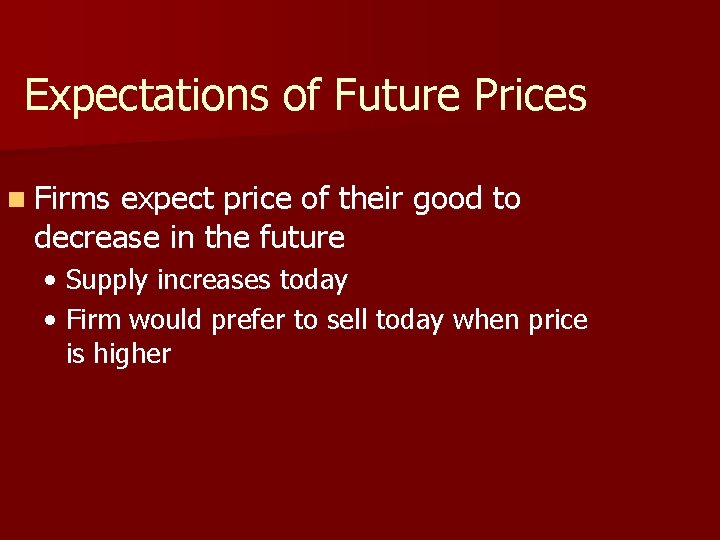
Expectations of Future Prices n Firms expect price of their good to decrease in the future • Supply increases today • Firm would prefer to sell today when price is higher
Expectations of Future Prices n Firms expect price of their good to increase in the future • Supply decreases today • Firm would prefer to wait until the good can be sold for a higher price
Taxes and Subsidies n Increase supply in tax on the good decreases • Raises the cost of production n Decrease supply in tax on the good increases • Lowers the cost of production
Taxes and Subsidies n. A subsidy is an amount the paid to the producer for each unit of a good produced n Increase in Subsidy on the Good Increases Supply • Lowers the costs of production n Decrease in Subsidy on the Good Decreases Supply • Raises the costs of production
Availability of Credit n If it is easier for the firm to borrow money, the firm will be able to produce more – Thus Supply increases n If it is more difficult for the firm to borrow money, the firm will have to produce less – Thus Supply decreases
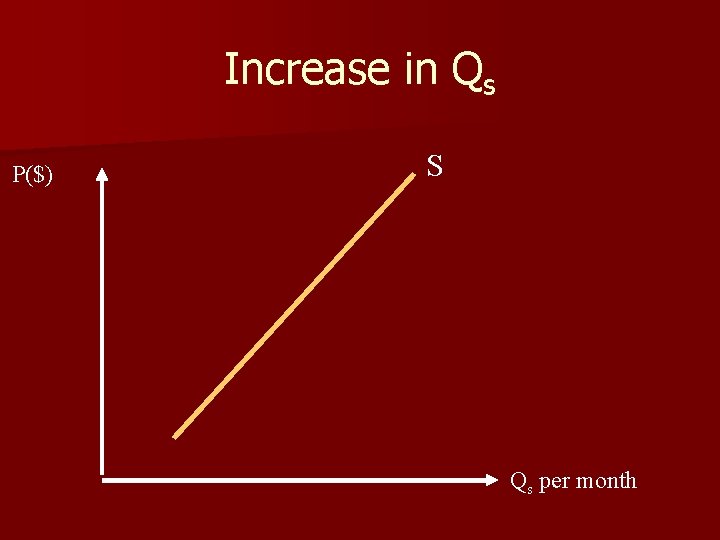
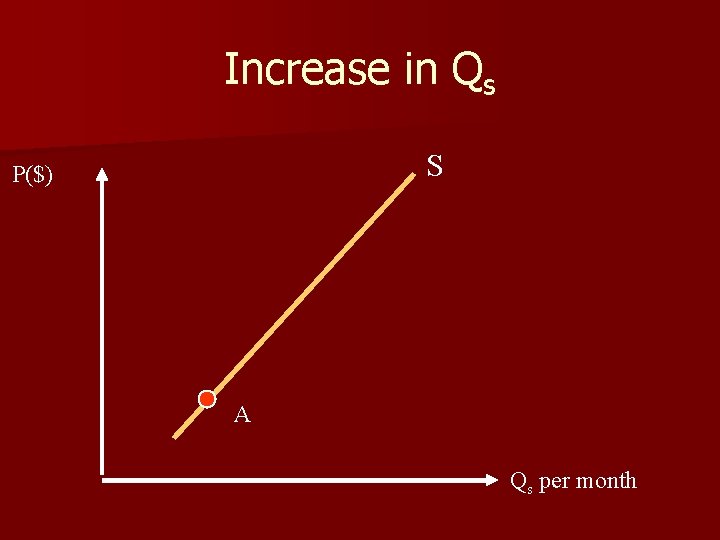
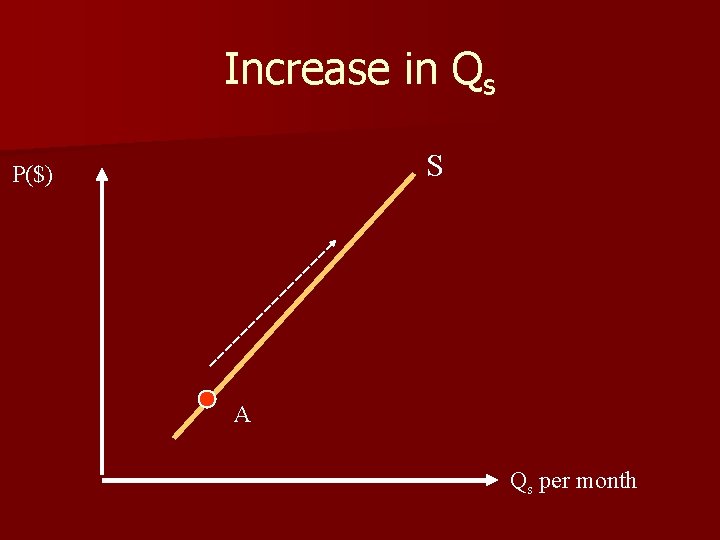
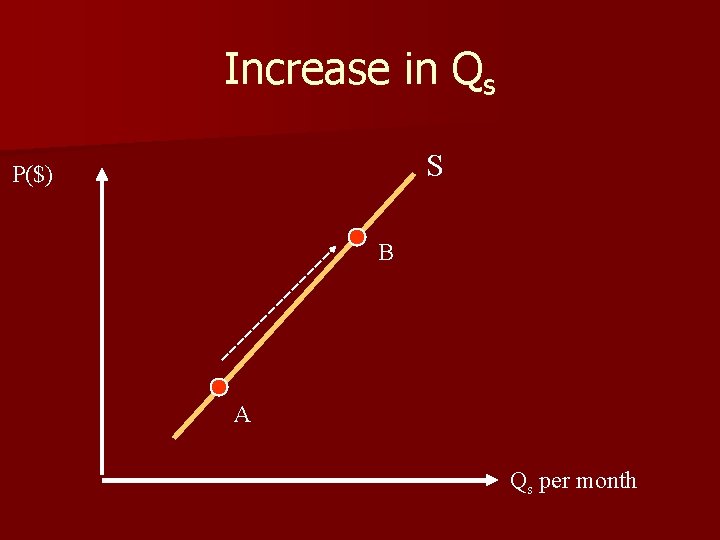
Change in Quantity Supplied (DQs) movement along a supply curve n Change • A change in quantity supplied can only be caused by a change in the price of the good. n Changes in Quantity Supplied • Increase in Qs - a movement to the right along a supply curve • Decrease in Qs - a movement to the left along a supply curve
Increase in Supply
Increase in Supply P Qs
Increase in Supply P S Qs
Increase in Supply P S Qs
Increase in Supply P S S’ Qs
Increase in Qs
Increase in Qs P($) Qs per month
Increase in Qs P($) S Qs per month
Increase in Qs S P($) A Qs per month
Increase in Qs S P($) A Qs per month
Increase in Qs S P($) B A Qs per month