
Supply Demand Approach CAP SAM EMS Basin Study
Supply & Demand Approach— CAP: SAM EMS Basin Study Supply & Demand Team Meeting #1 January 15, 2019 Ken Seasholes Manager, Resource Planning & Analysis Central Arizona Project
Water Supply & Demand Some of the major factors that affect water supply, demand reliability: § Growth § Shortage § Climate Variability § Socio-Economic Changes § Agricultural Trends § Water Storage Preferences § Policy Changes § Behavioral Shifts § …. “Driving Forces”
Supply & Demand Challenges • Complex relationships among supply & demand factors – Within demand (e. g. , housing development on Ag land) – Within supply (e. g. , use of long-term CAP contracts affects Excess CAP) – Between supply & demand (e. g. , reductions in interior use affect effluent supplies) • Significant uncertainties across multiple dimensions – – – The rate of growth The location of growth Changes in current and future demand factors The use of different supply types The reliability of those supplies
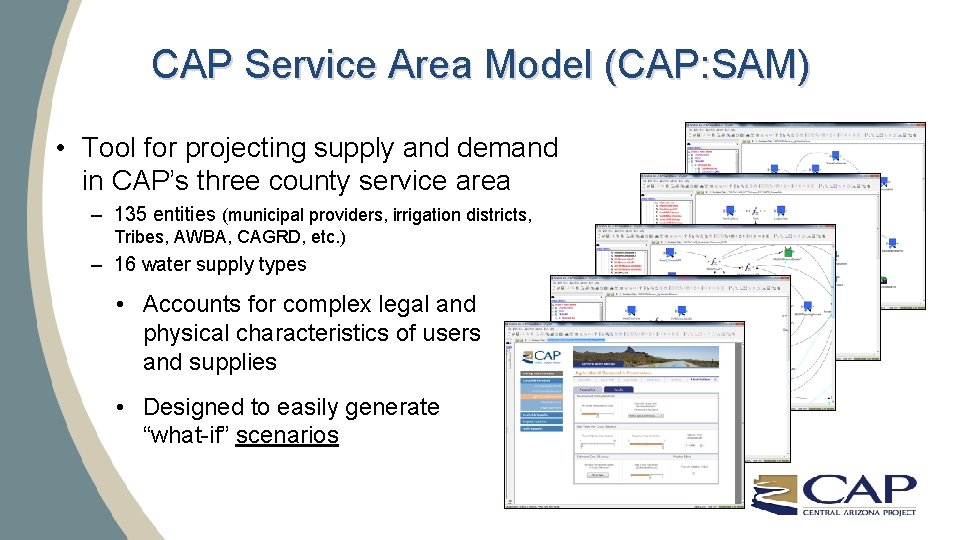
CAP Service Area Model (CAP: SAM) • Tool for projecting supply and demand in CAP’s three county service area – 135 entities (municipal providers, irrigation districts, Tribes, AWBA, CAGRD, etc. ) – 16 water supply types • Accounts for complex legal and physical characteristics of users and supplies • Designed to easily generate “what-if” scenarios
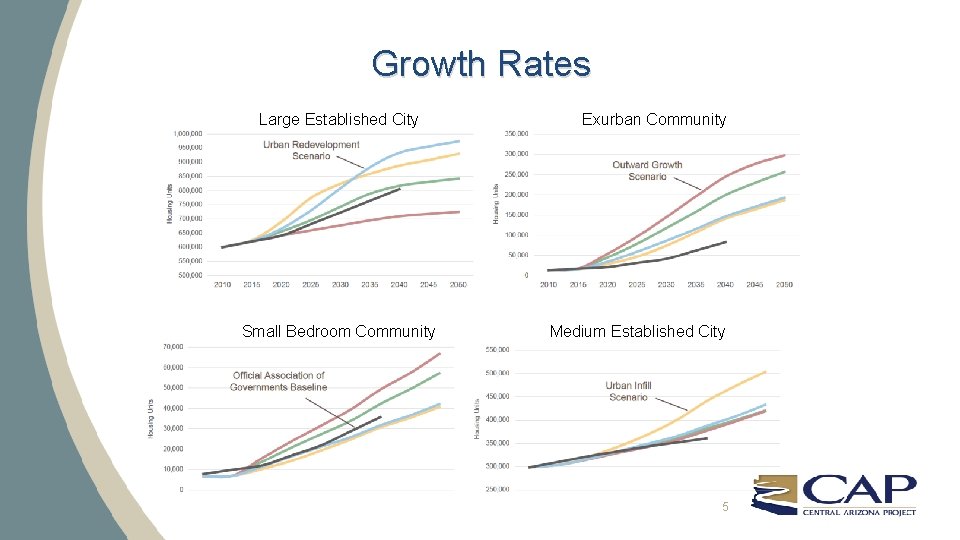
Growth Rates Large Established City Small Bedroom Community Exurban Community Medium Established City 5
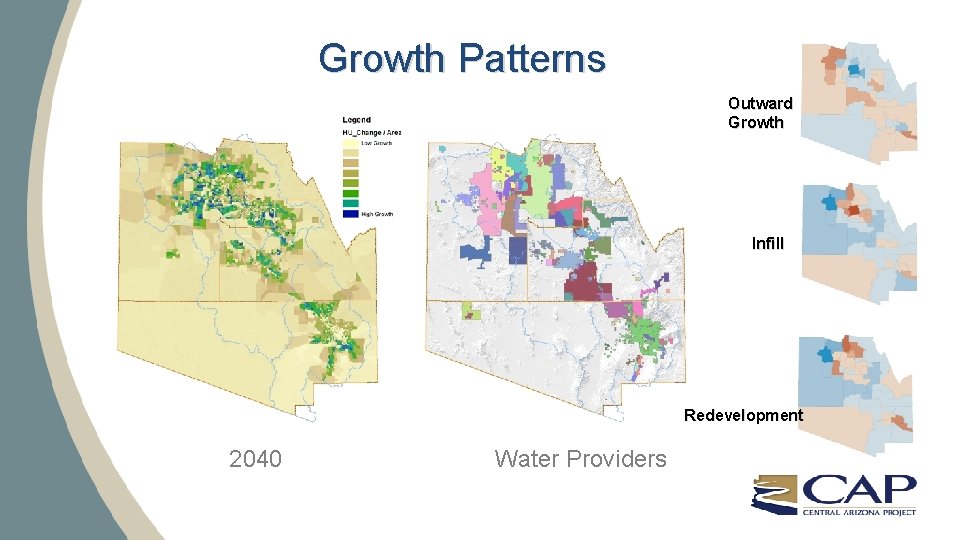
Growth Patterns Outward Growth Infill Redevelopment 2040 Water Providers
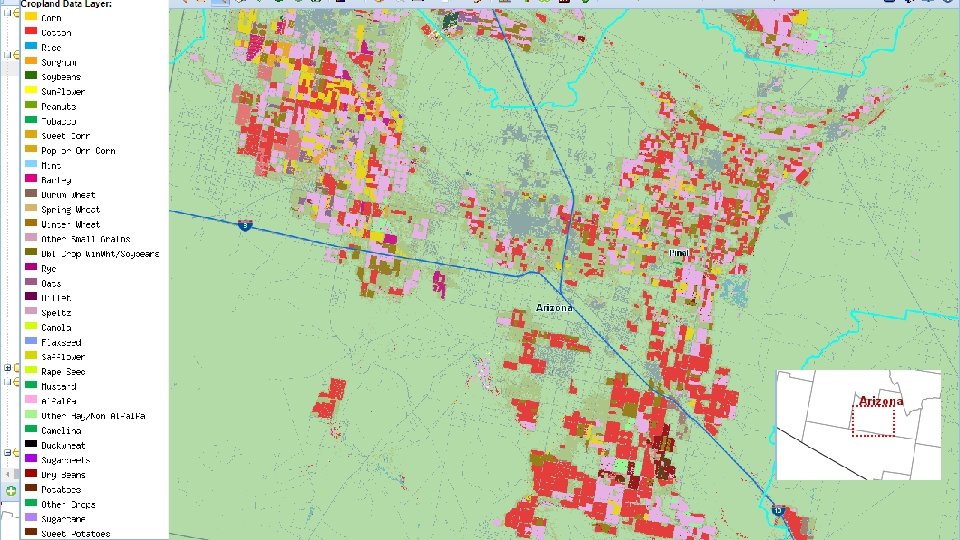
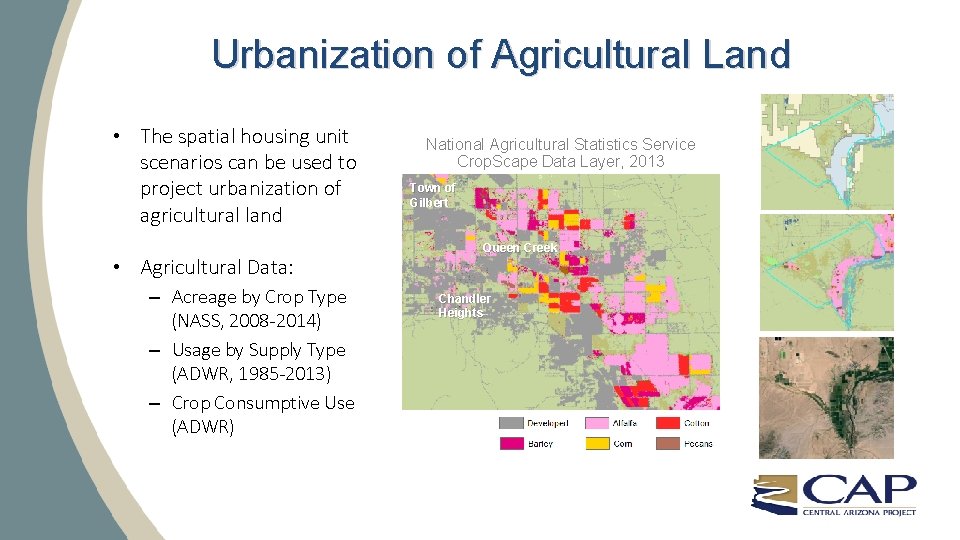
Urbanization of Agricultural Land • The spatial housing unit scenarios can be used to project urbanization of agricultural land • Agricultural Data: – Acreage by Crop Type (NASS, 2008 -2014) – Usage by Supply Type (ADWR, 1985 -2013) – Crop Consumptive Use (ADWR) National Agricultural Statistics Service Crop. Scape Data Layer, 2013 Town of Gilbert Queen Creek Chandler Heights
Other CAP: SAM Agricultural Factors • Recharge via Groundwater Savings Facility (GSF) partnerships • On-Reservation Tribal agricultural use • Changes in cropping patterns – Substitution of higher water use crops • Changes in evapotranspiration due to climate change • Changes in efficiency/irrigation technology
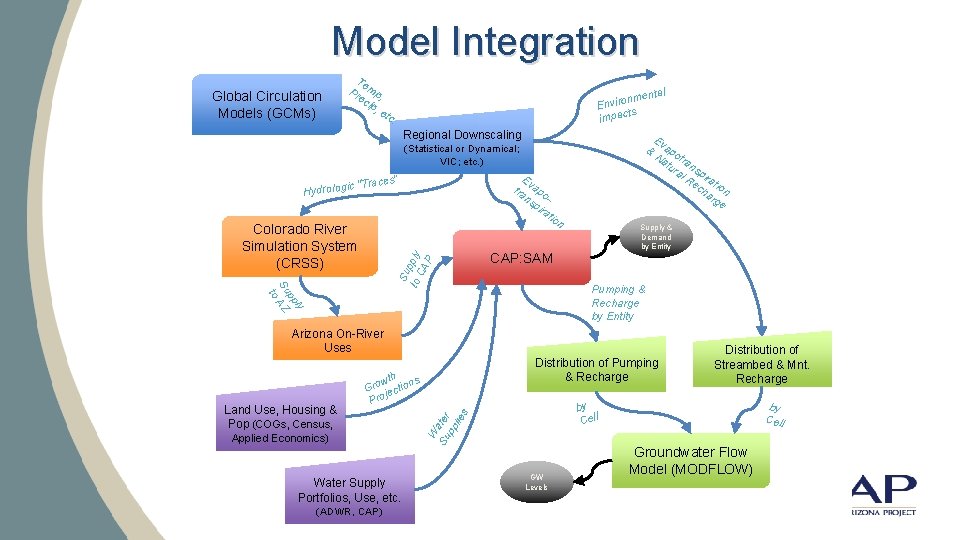
Model Integration Global Circulation Models (GCMs) Te Pr mp, ec ip, etc tal nmen Enviro ts impac . Regional Downscaling & (Statistical or Dynamical; VIC; etc. ) Ev tra apo ns pir at io s” ic “Trace Hydrolog n ly pp Su AZ to Su to pply CA P Colorado River Simulation System (CRSS) Ev a Na potr tur ans al pi Re rat ch ion ar ge Supply & Demand by Entity CAP: SAM Pumping & Recharge by Entity Arizona On-River Uses wth ns Gro jectio Pro Applied Economics) Water Supply Portfolios, Use, etc. (ADWR, CAP) Distribution of Streambed & Mnt. Recharge by Cell W Su ater pp lie s Land Use, Housing & Pop (COGs, Census, Distribution of Pumping & Recharge GW Levels Groundwater Flow Model (MODFLOW)
- Slides: 10