
SUPPLY CHAIN NETWORKS MANAGEMENT Name of the student
- Slides: 14
SUPPLY CHAIN NETWORKS & MANAGEMENT Name of the student Course Instructor’s name Submission date
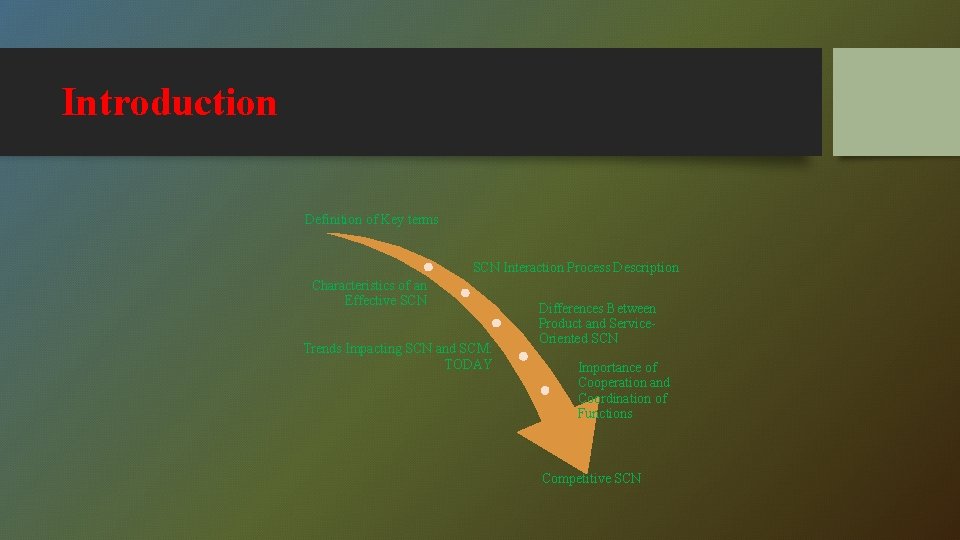
Introduction Definition of Key terms SCN Interaction Process Description Characteristics of an Effective SCN Trends Impacting SCN and SCM: TODAY Differences Between Product and Service. Oriented SCN Importance of Cooperation and Coordination of Functions Competitive SCN
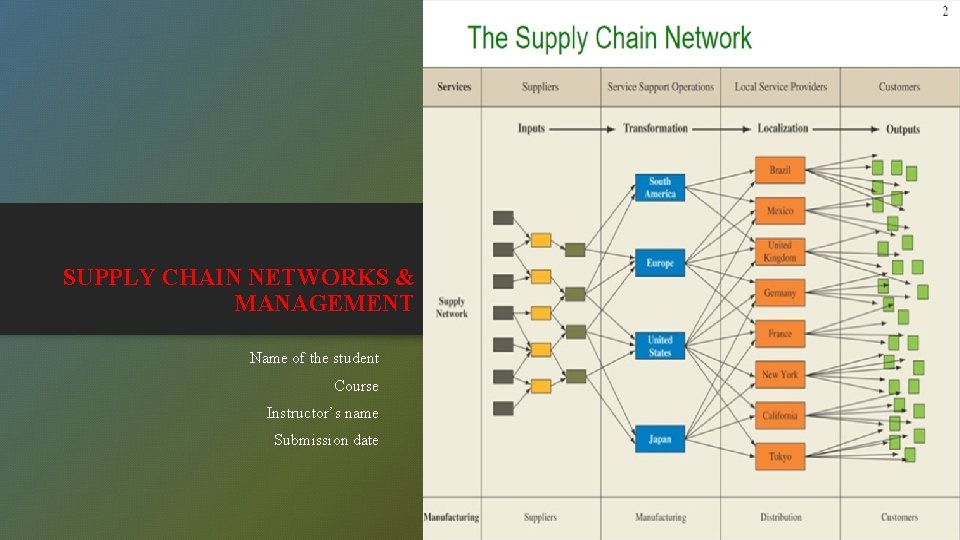
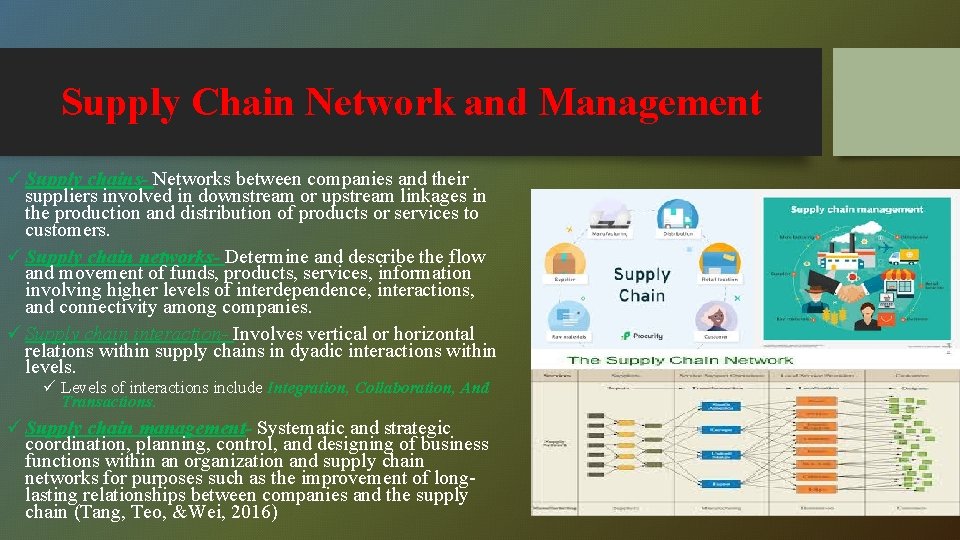
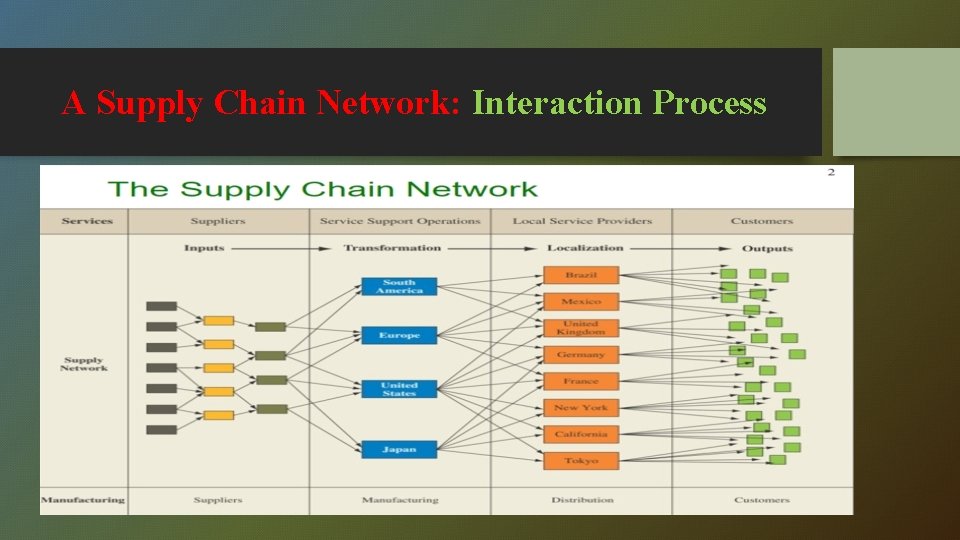
Supply Chain Network and Management ü Supply chains- Networks between companies and their suppliers involved in downstream or upstream linkages in the production and distribution of products or services to customers. ü Supply chain networks- Determine and describe the flow and movement of funds, products, services, information involving higher levels of interdependence, interactions, and connectivity among companies. ü Supply chain interaction- Involves vertical or horizontal relations within supply chains in dyadic interactions within levels. ü Levels of interactions include Integration, Collaboration, And Transactions. ü Supply chain management- Systematic and strategic coordination, planning, control, and designing of business functions within an organization and supply chain networks for purposes such as the improvement of longlasting relationships between companies and the supply chain (Tang, Teo, &Wei, 2016)
A Supply Chain Network: Interaction Process
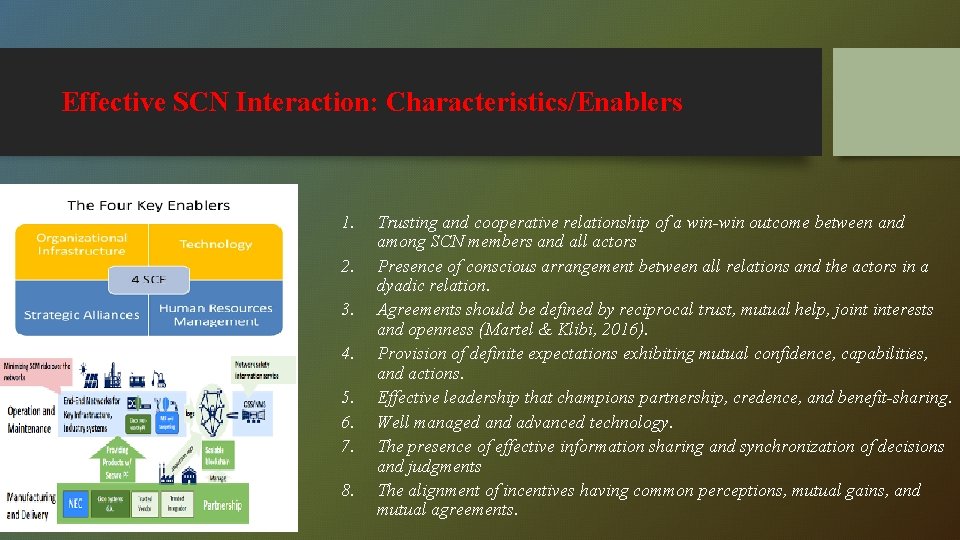
Effective SCN Interaction: Characteristics/Enablers 1. 2. 3. 4. 5. 6. 7. 8. Trusting and cooperative relationship of a win-win outcome between and among SCN members and all actors Presence of conscious arrangement between all relations and the actors in a dyadic relation. Agreements should be defined by reciprocal trust, mutual help, joint interests and openness (Martel & Klibi, 2016). Provision of definite expectations exhibiting mutual confidence, capabilities, and actions. Effective leadership that champions partnership, credence, and benefit-sharing. Well managed and advanced technology. The presence of effective information sharing and synchronization of decisions and judgments The alignment of incentives having common perceptions, mutual gains, and mutual agreements.
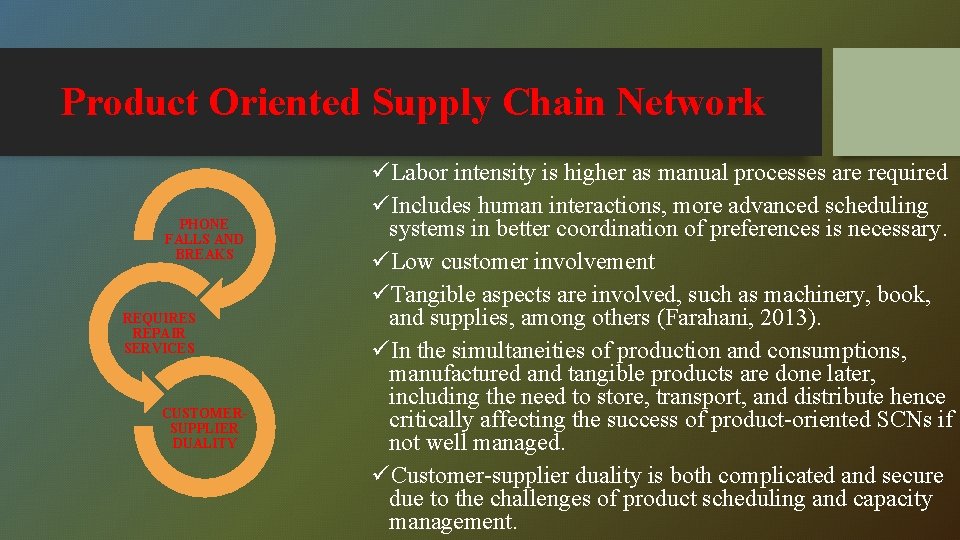
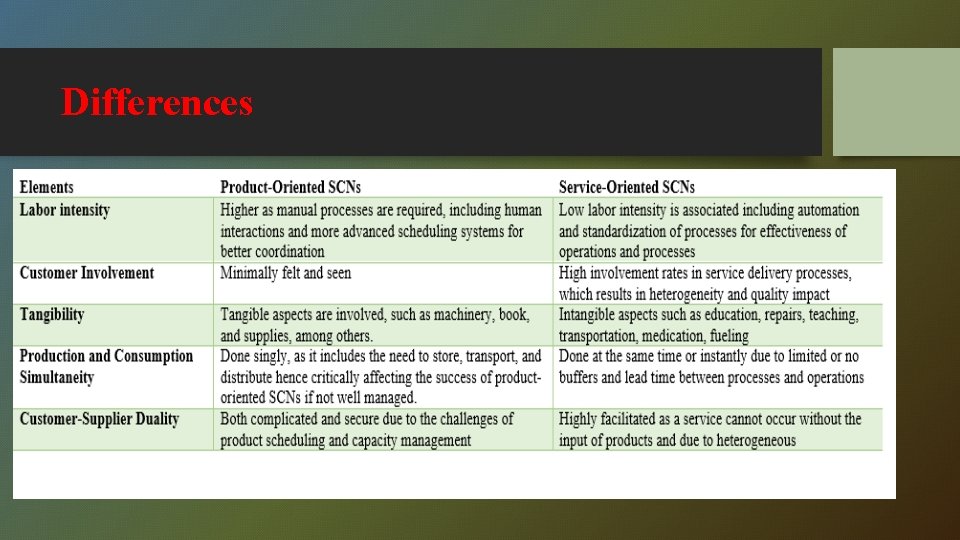
Product Oriented Supply Chain Network PHONE FALLS AND BREAKS REQUIRES REPAIR SERVICES CUSTOMERSUPPLIER DUALITY üLabor intensity is higher as manual processes are required üIncludes human interactions, more advanced scheduling systems in better coordination of preferences is necessary. üLow customer involvement üTangible aspects are involved, such as machinery, book, and supplies, among others (Farahani, 2013). üIn the simultaneities of production and consumptions, manufactured and tangible products are done later, including the need to store, transport, and distribute hence critically affecting the success of product-oriented SCNs if not well managed. üCustomer-supplier duality is both complicated and secure due to the challenges of product scheduling and capacity management.
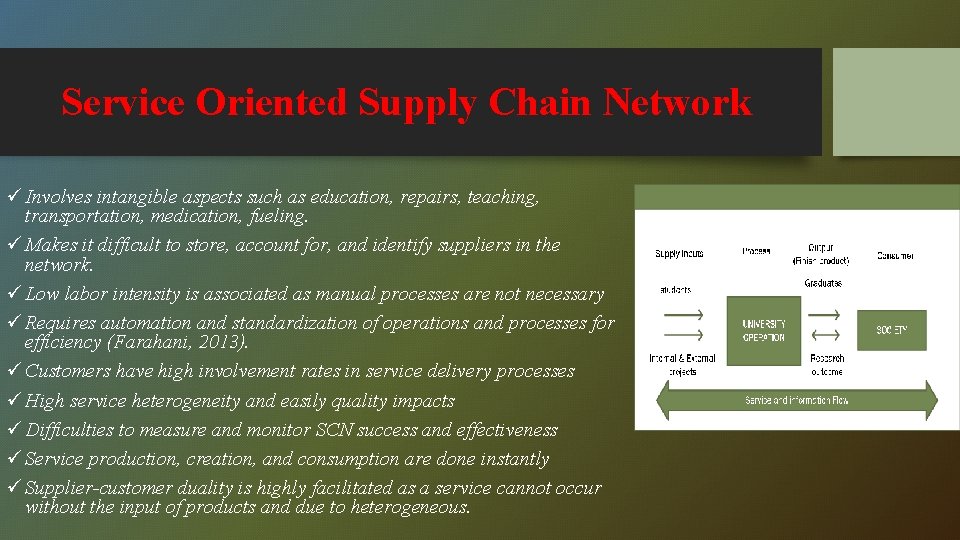
Service Oriented Supply Chain Network ü Involves intangible aspects such as education, repairs, teaching, transportation, medication, fueling. ü Makes it difficult to store, account for, and identify suppliers in the network. ü Low labor intensity is associated as manual processes are not necessary ü Requires automation and standardization of operations and processes for efficiency (Farahani, 2013). ü Customers have high involvement rates in service delivery processes ü High service heterogeneity and easily quality impacts ü Difficulties to measure and monitor SCN success and effectiveness ü Service production, creation, and consumption are done instantly ü Supplier-customer duality is highly facilitated as a service cannot occur without the input of products and due to heterogeneous.
Differences
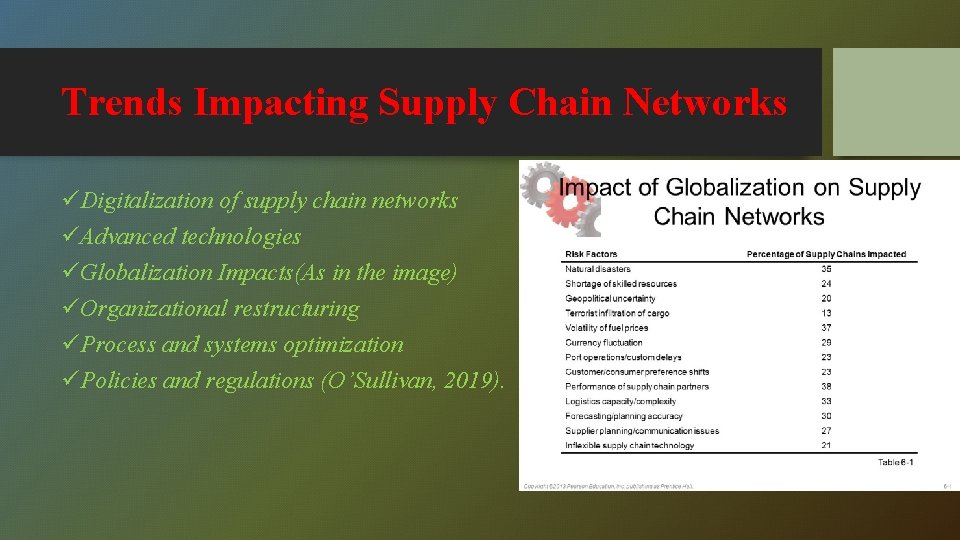
Trends Impacting Supply Chain Networks üDigitalization of supply chain networks üAdvanced technologies üGlobalization Impacts(As in the image) üOrganizational restructuring üProcess and systems optimization üPolicies and regulations (O’Sullivan, 2019).
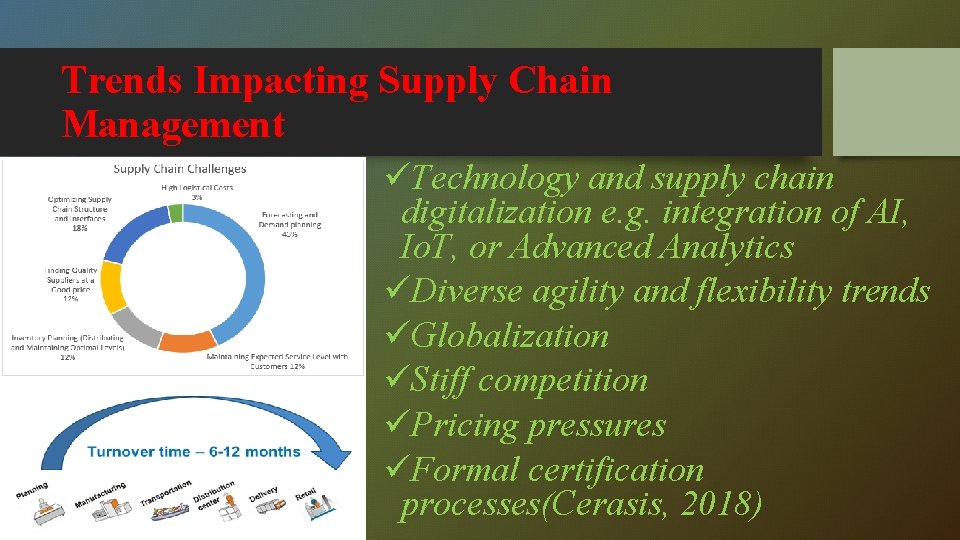
Trends Impacting Supply Chain Management üTechnology and supply chain digitalization e. g. integration of AI, Io. T, or Advanced Analytics üDiverse agility and flexibility trends üGlobalization üStiff competition üPricing pressures üFormal certification processes(Cerasis, 2018)
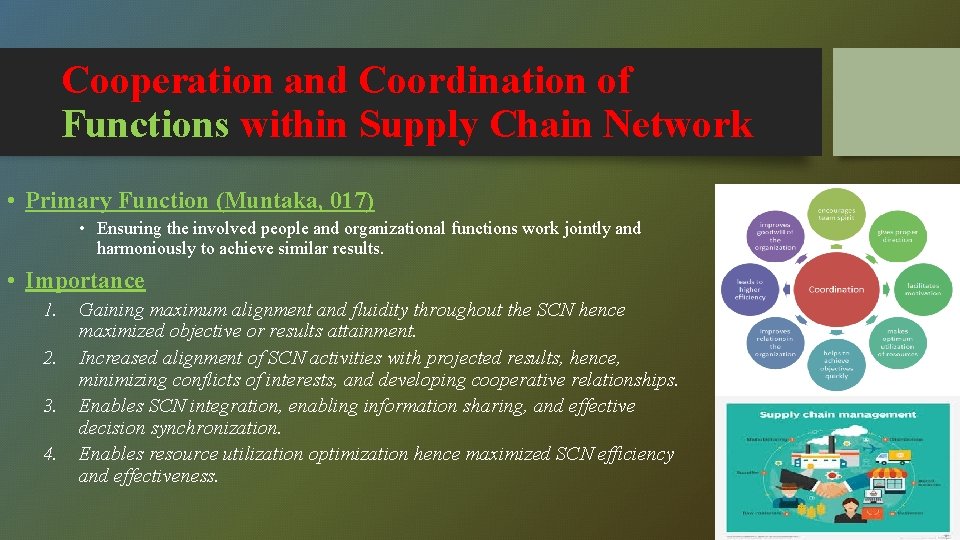
Cooperation and Coordination of Functions within Supply Chain Network • Primary Function (Muntaka, 017) • Ensuring the involved people and organizational functions work jointly and harmoniously to achieve similar results. • Importance 1. 2. 3. 4. Gaining maximum alignment and fluidity throughout the SCN hence maximized objective or results attainment. Increased alignment of SCN activities with projected results, hence, minimizing conflicts of interests, and developing cooperative relationships. Enables SCN integration, enabling information sharing, and effective decision synchronization. Enables resource utilization optimization hence maximized SCN efficiency and effectiveness.
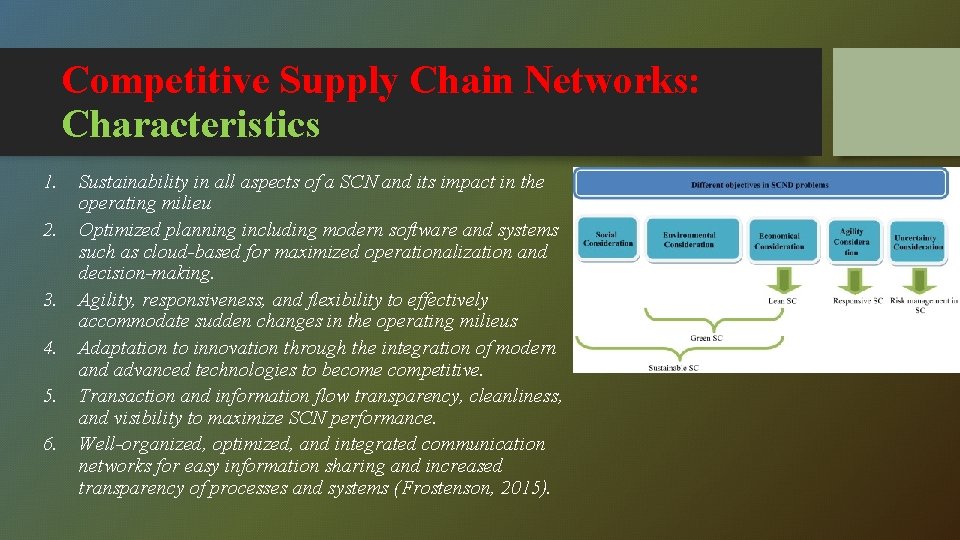
Competitive Supply Chain Networks: Characteristics 1. 2. 3. 4. 5. 6. Sustainability in all aspects of a SCN and its impact in the operating milieu Optimized planning including modern software and systems such as cloud-based for maximized operationalization and decision-making. Agility, responsiveness, and flexibility to effectively accommodate sudden changes in the operating milieus Adaptation to innovation through the integration of modern and advanced technologies to become competitive. Transaction and information flow transparency, cleanliness, and visibility to maximize SCN performance. Well-organized, optimized, and integrated communication networks for easy information sharing and increased transparency of processes and systems (Frostenson, 2015).
1. 2. 3. 4. 5. SCNs are essential and complicated factors of effective SCM in an organization. Effective interactions, including the coordination, transaction, and integration of processes and systems, result in effective SCNs and SCM. Common modern trends impacting effective operation in SCN and SCM include digitalization, globalization, and advanced technologies. Effective coordination, cooperation, and collaboration of organizational functions maximizes SCNs operational success, effectiveness, and competitiveness. SCNs competitiveness require sufficient agility, responsiveness, innovativeness, transparency, integrated communication networks, process optimization, and sustainability.
REFERENCES • Abdul Samed Muntaka, A. H. (2017). Supply Chain Integration and Flexibility and Its Impact on Business Performance. International Journal of Business and Management; , Vol. 12, No. 4; pp. 130 -143. • Cerasis. (2018). The Top Supply Chain Trends that Will Impact Supply Chain Management in 2018. Cerasis. • Farahani, R. Z. (2013). Competitive supply chain network design: An overview of classifications, models, solution techniques, and applications. Elsevier: Omega. • Magnus Frostenson, &. F. (2015). Sustainable supply chain management when focal firms are complex: a network perspective. Journal of Cleaner Production, Vol 107(16), pp; 85 -94. • Martel, A. , & Klibi, W. (2016). Designing Value-Creating Supply Chain Networks. New York: Springer. • O'Sullivan, S. (2019). Supply Chain Disruption: Aligning Business Strategy and Supply Chain Tactics. Kogan Page. • Tang, C. S. , Teo, C. -P. , & Wei, K. -K. (2016). Supply Chain Analysis: A Handbook on the Interaction of Information, System and Optimization. Los Angeles: Springer.