
Supply Chain Management to optimise the Digital Value
- Slides: 41
Supply Chain Management to optimise the Digital Value Chain
Within the scope of the TEDIP -Survey and on the basis of digital libraries!
Diploma thesis: Elisabeth Bergner
Content 1. 1 1. 2 1. 3 1. 4 1. 5 2 2. 1 2. 2 2. 3 2. 4 2. 5 Definition of the Network Economy Value Chain Digital Value Chain Definition of the digital Supply Chain E-Supply Chain Management Digital library The Value Chain of the digital library Services offered by the digital library Models of service provision Charging service provision Cost Model for the digital library
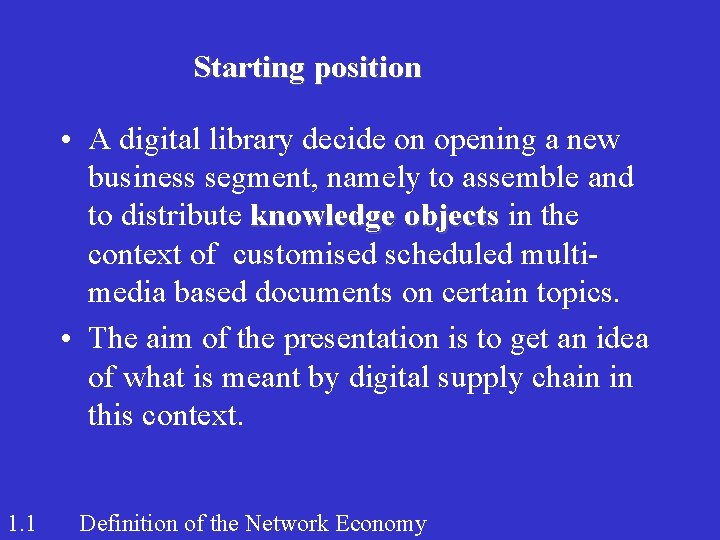
Starting position • A digital library decide on opening a new business segment, namely to assemble and to distribute knowledge objects in the knowledge objects context of customised scheduled multimedia based documents on certain topics. • The aim of the presentation is to get an idea of what is meant by digital supply chain in this context. 1. 1 Definition of the Network Economy
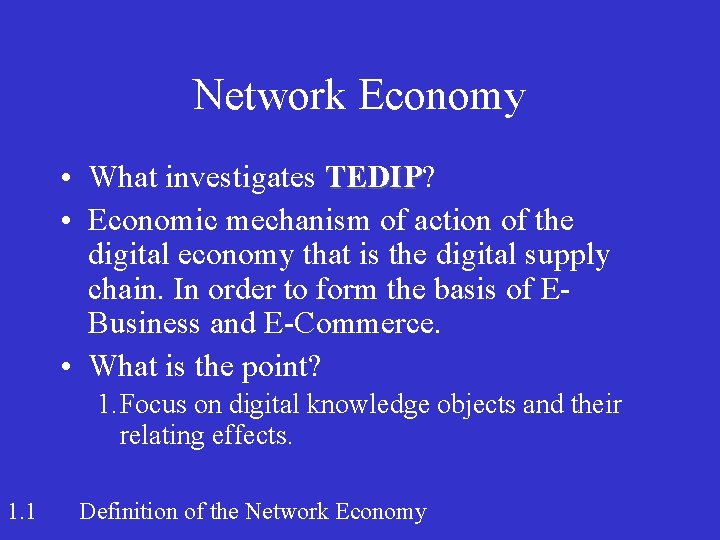
Network Economy • What investigates TEDIP? TEDIP • Economic mechanism of action of the digital economy that is the digital supply chain. In order to form the basis of EBusiness and E-Commerce. • What is the point? 1. Focus on digital knowledge objects and their relating effects. 1. 1 Definition of the Network Economy
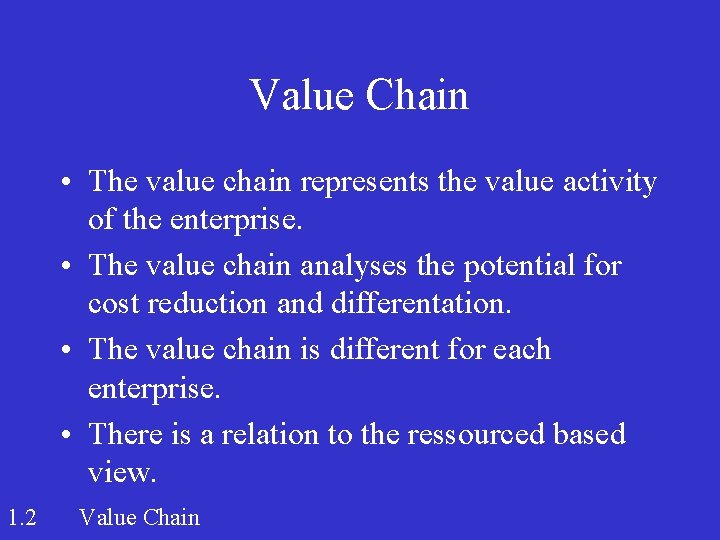
Value Chain • The value chain represents the value activity of the enterprise. • The value chain analyses the potential for cost reduction and differentation. • The value chain is different for each enterprise. • There is a relation to the ressourced based view. 1. 2 Value Chain
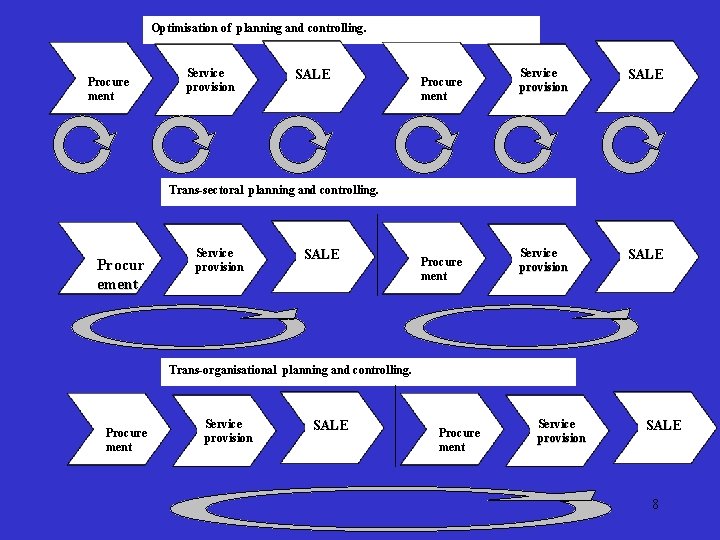
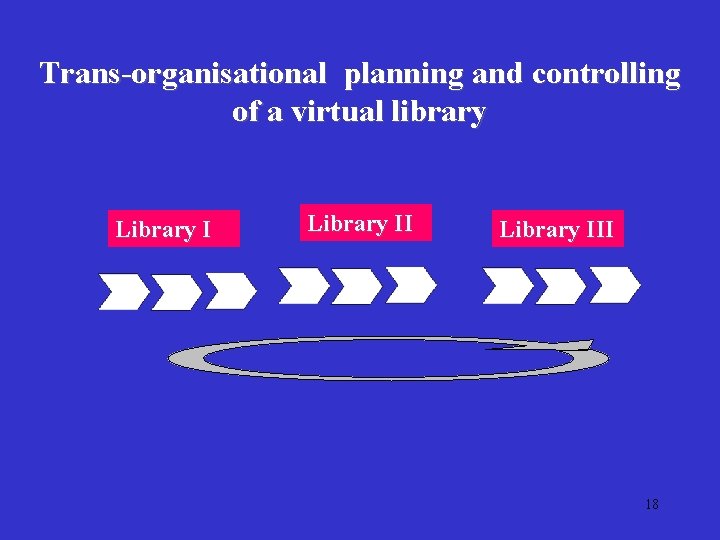
Optimisation of planning and controlling. Procure ment Service provision SALE Trans-sectoral planning and controlling. Procur ement Service provision SALE Procure ment Trans-organisational planning and controlling. Procure ment Service provision SALE 8
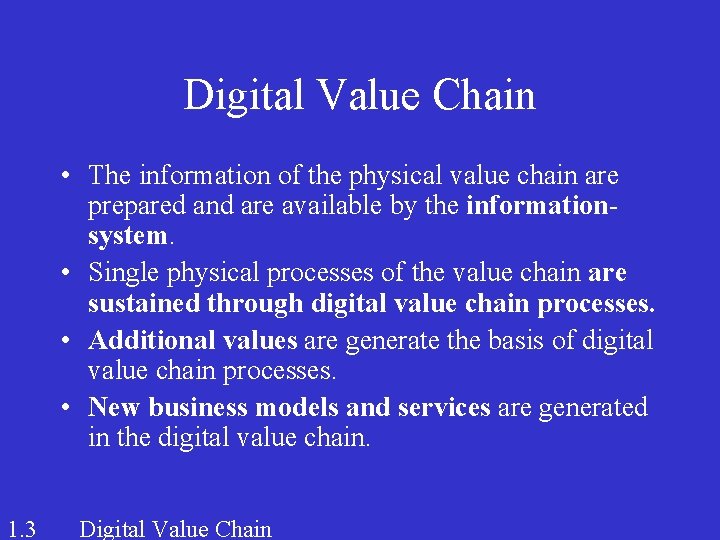
Digital Value Chain • The information of the physical value chain are prepared and are available by the informationsystem. • Single physical processes of the value chain are sustained through digital value chain processes. • Additional values are generate the basis of digital value chain processes. • New business models and services are generated in the digital value chain. 1. 3 Digital Value Chain
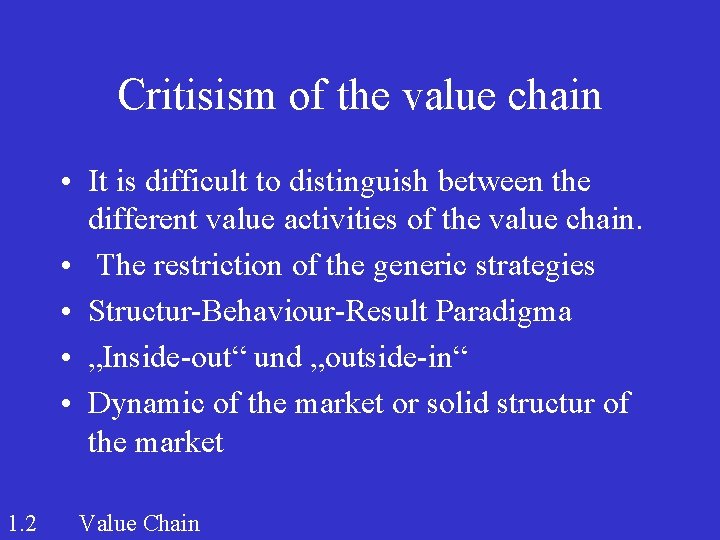
Critisism of the value chain • It is difficult to distinguish between the different value activities of the value chain. • The restriction of the generic strategies • Structur-Behaviour-Result Paradigma • „Inside-out“ und „outside-in“ • Dynamic of the market or solid structur of the market 1. 2 Value Chain
SCM • Definition of Supply Chain Management: – Value Chain Management – Management of a Value-Network 1. 4 E-Supply Chain Management
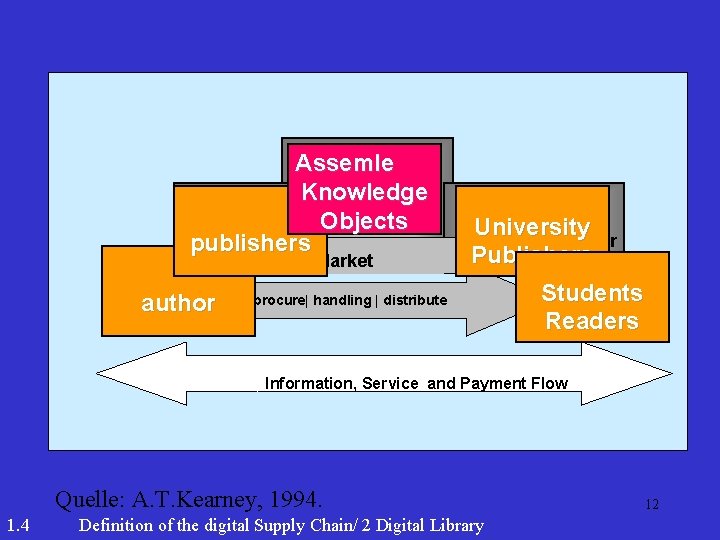
Assemle Digital Service provision Knowledge Library supplier Objects publishers Supplier of the author supplier Plan | Market University Customer Publishers procure| handling | distribute Students Ultimate customer Readers Informations-, Information, Service and Payment Flow Quelle: A. T. Kearney, 1994. 1. 4 Definition of the digital Supply Chain/ 2 Digital Library 12
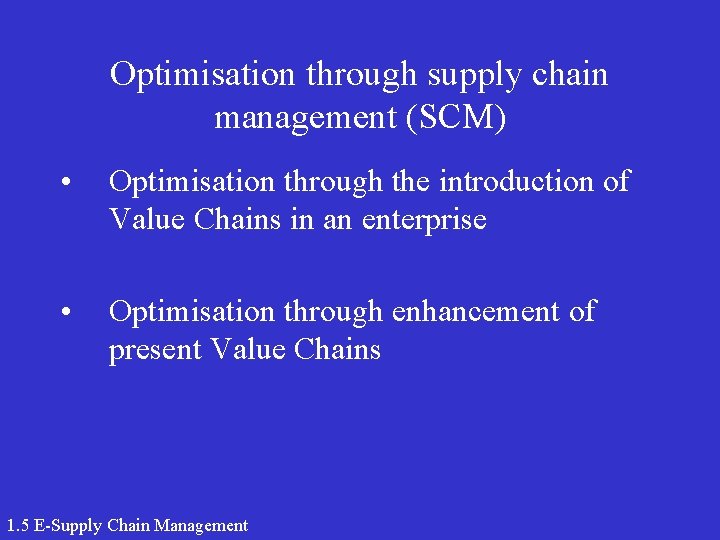
Optimisation through supply chain management (SCM) • Optimisation through the introduction of Value Chains in an enterprise • Optimisation through enhancement of present Value Chains 1. 5 E-Supply Chain Management
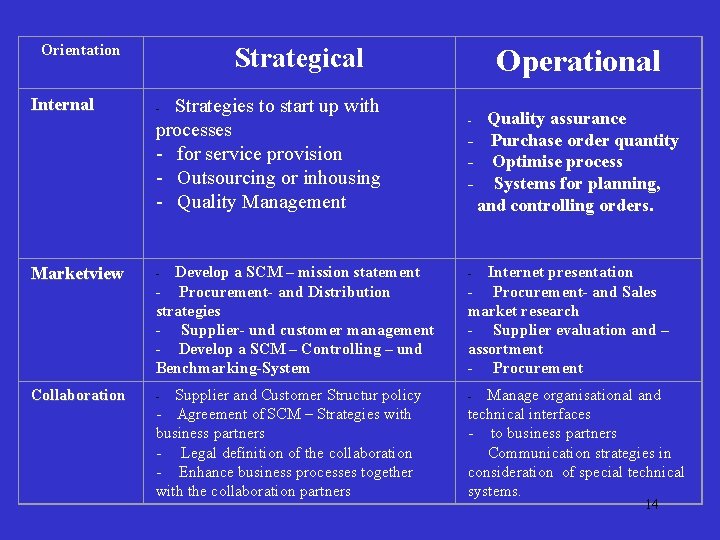
Orientation Internal Strategical Strategies to start up with processes - for service provision - Outsourcing or inhousing - Quality Management - Operational - Quality assurance - Purchase order quantity - Optimise process - Systems for planning, and controlling orders. Marketview - Develop a SCM – mission statement - Internet presentation - Procurement- and Distribution strategies - Supplier- und customer management - Develop a SCM – Controlling – und Benchmarking-System - Procurement- and Sales market research - Supplier evaluation and – assortment - Procurement Collaboration - Supplier and Customer Structur policy - Manage organisational and - Agreement of SCM – Strategies with business partners - Legal definition of the collaboration - Enhance business processes together with the collaboration partners technical interfaces - to business partners Communication strategies in consideration of special technical systems. 14
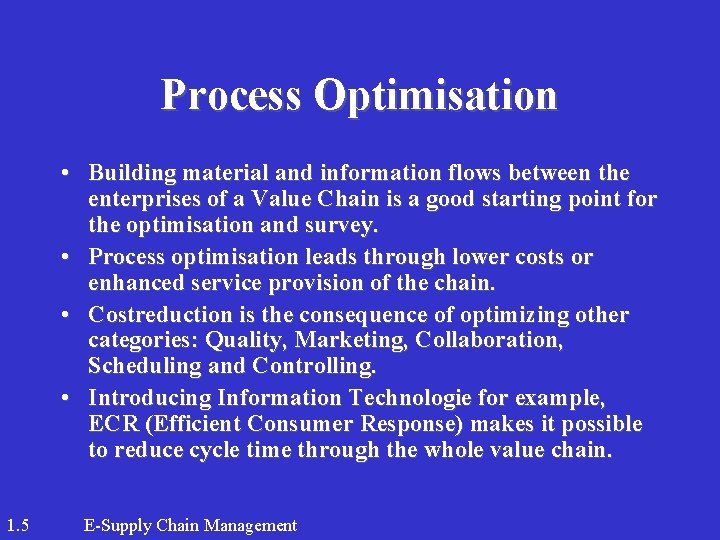
Process Optimisation • Building material and information flows between the enterprises of a Value Chain is a good starting point for the optimisation and survey. • Process optimisation leads through lower costs or enhanced service provision of the chain. • Costreduction is the consequence of optimizing other categories: Quality, Marketing, Collaboration, Scheduling and Controlling. • Introducing Information Technologie for example, ECR (Efficient Consumer Response) makes it possible to reduce cycle time through the whole value chain. 1. 5 E-Supply Chain Management
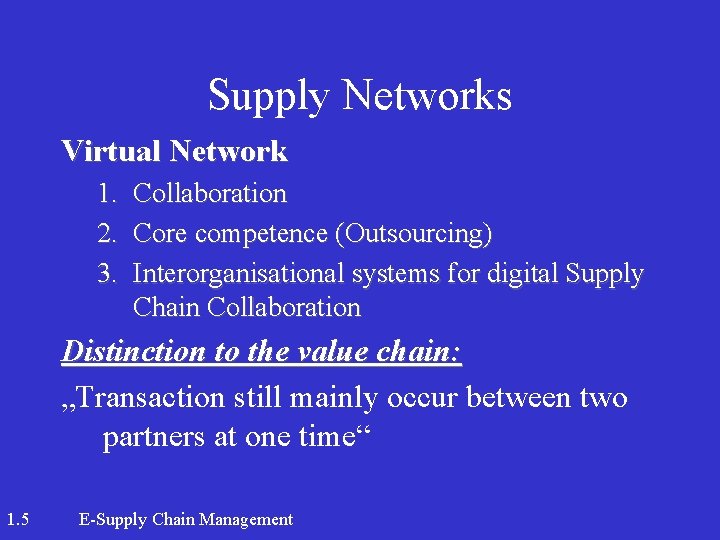
Supply Networks Virtual Network 1. Collaboration 2. Core competence (Outsourcing) 3. Interorganisational systems for digital Supply Chain Collaboration Distinction to the value chain: „Transaction still mainly occur between two partners at one time“ 1. 5 E-Supply Chain Management
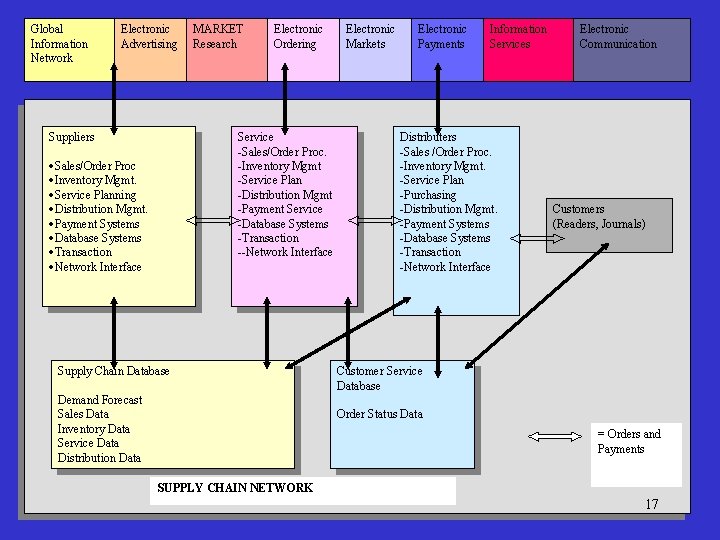
Global Information Network Electronic Advertising Suppliers MARKET Research Electronic Ordering Service -Sales/Order Proc. -Inventory Mgmt -Service Plan -Distribution Mgmt -Payment Service -Database Systems -Transaction --Network Interface ·Sales/Order Proc ·Inventory Mgmt. ·Service Planning ·Distribution Mgmt. ·Payment Systems ·Database Systems ·Transaction ·Network Interface Supply Chain Database Demand Forecast Sales Data Inventory Data Service Data Distribution Data Electronic Markets Electronic Payments Information Services Distributers -Sales /Order Proc. -Inventory Mgmt. -Service Plan -Purchasing -Distribution Mgmt. -Payment Systems -Database Systems -Transaction -Network Interface Electronic Communication Customers (Readers, Journals) Customer Service Database Order Status Data = Orders and Payments SUPPLY CHAIN NETWORK 17
Trans-organisational planning and controlling of a virtual library Library III 18
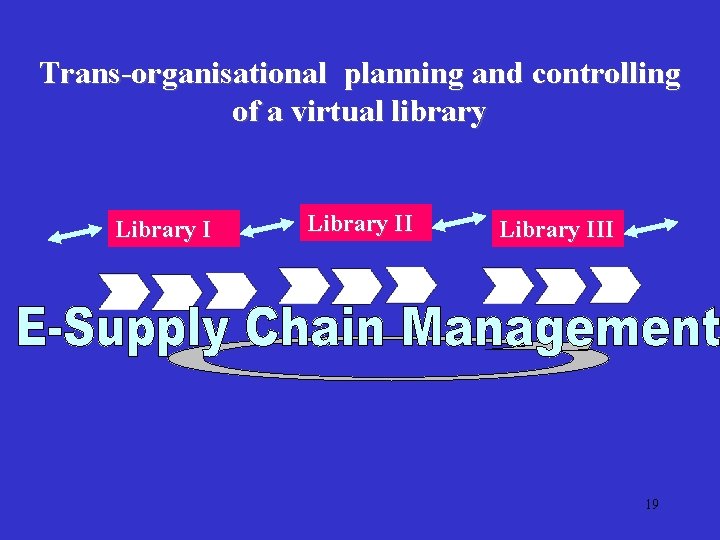
Trans-organisational planning and controlling of a virtual library Library III 19
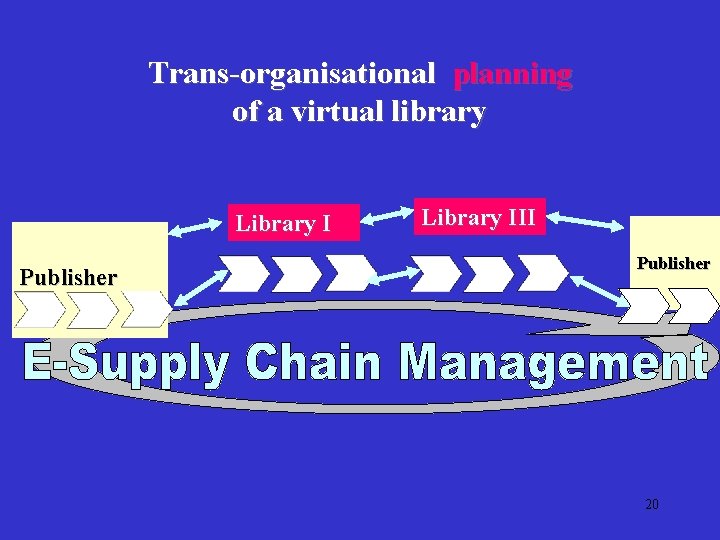
Trans-organisational planning of a virtual library Library III Publisher 20
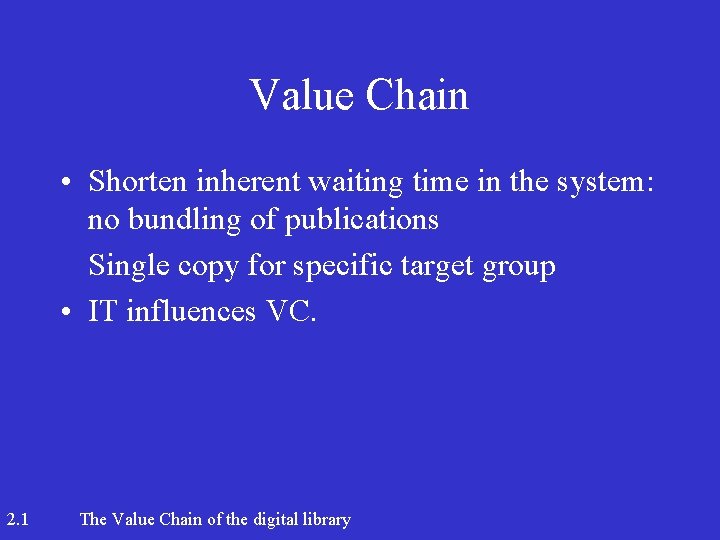
Value Chain • Shorten inherent waiting time in the system: no bundling of publications Single copy for specific target group • IT influences VC. 2. 1 The Value Chain of the digital library
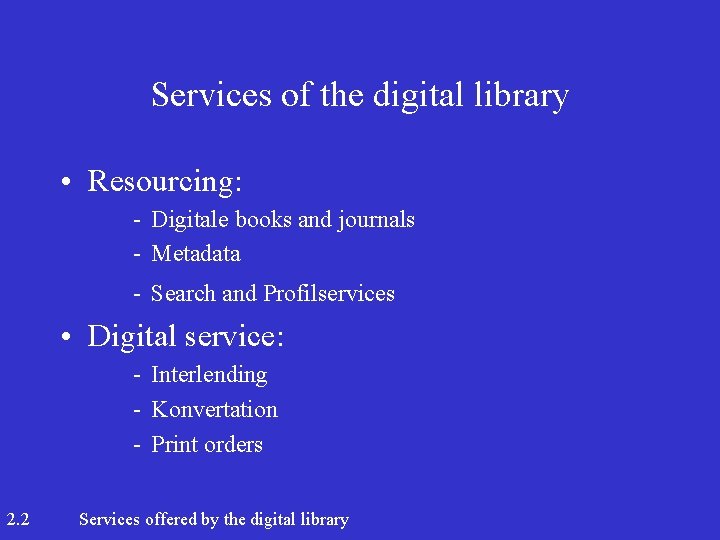
Services of the digital library • Resourcing: - Digitale books and journals - Metadata - Search and Profilservices • Digital service: - Interlending - Konvertation - Print orders 2. 2 Services offered by the digital library
Service Models • Activ supply • Passive supply • Activ collection
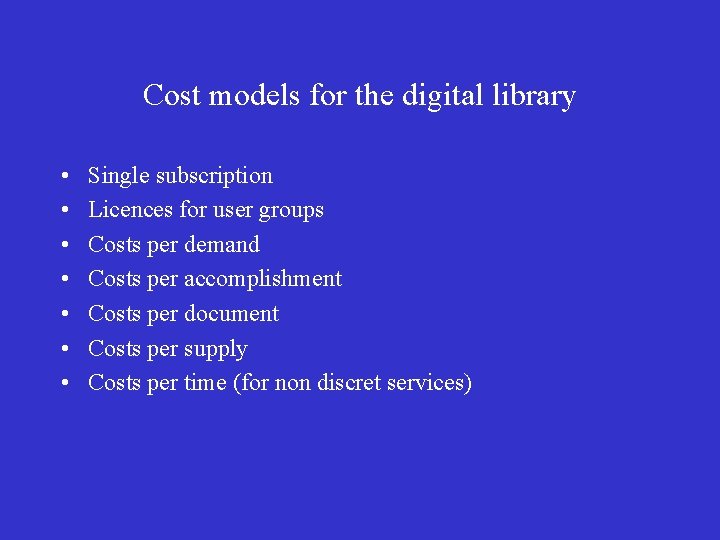
Cost models for the digital library • • Single subscription Licences for user groups Costs per demand Costs per accomplishment Costs per document Costs per supply Costs per time (for non discret services)
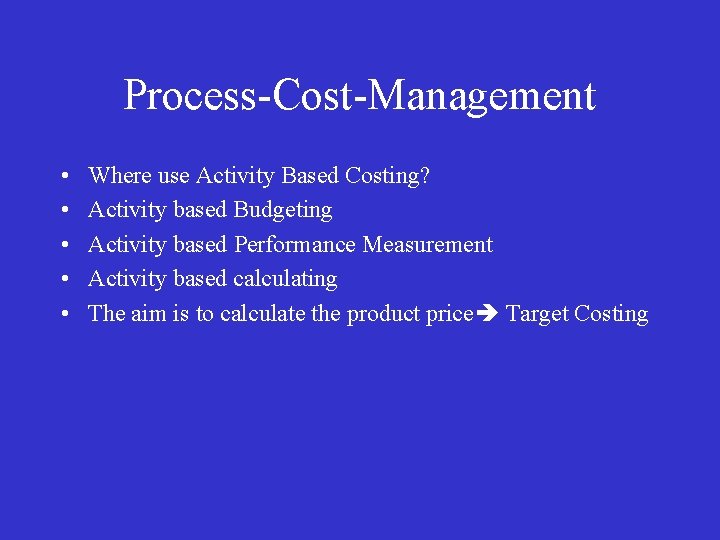
Process-Cost-Management • • • Where use Activity Based Costing? Activity based Budgeting Activity based Performance Measurement Activity based calculating The aim is to calculate the product price Target Costing
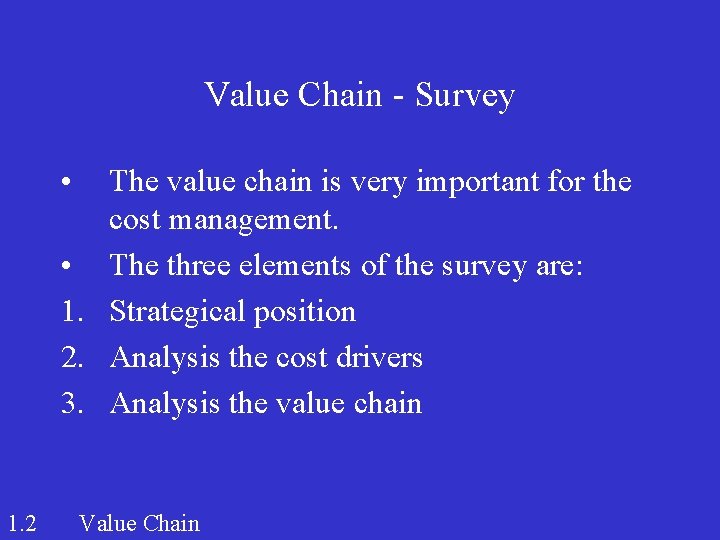
Value Chain - Survey • The value chain is very important for the cost management. • The three elements of the survey are: 1. Strategical position 2. Analysis the cost drivers 3. Analysis the value chain 1. 2 Value Chain
Charging Service • known Users • anonymous Users • Cooperation among digital libraries
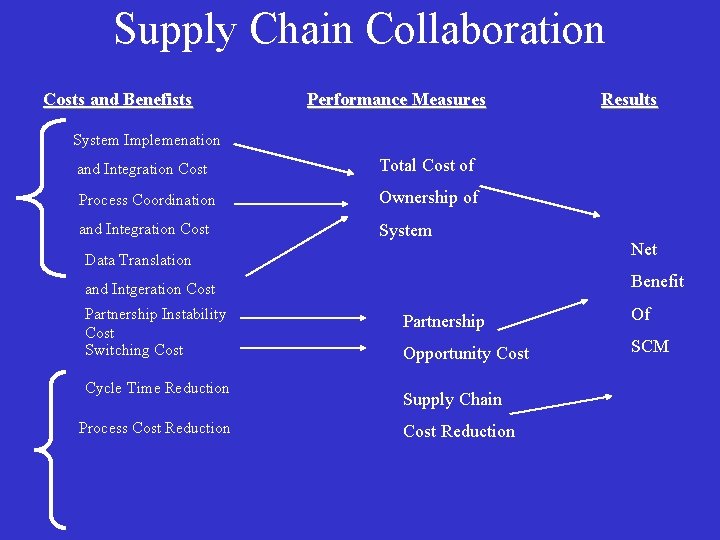
Supply Chain Collaboration Costs and Benefists Performance Measures Results System Implemenation and Integration Cost Total Cost of Process Coordination Ownership of and Integration Cost System Data Translation Benefit and Intgeration Cost Partnership Instability Cost Switching Cost Cycle Time Reduction Process Cost Reduction Net Partnership Of Opportunity Cost SCM Supply Chain Cost Reduction
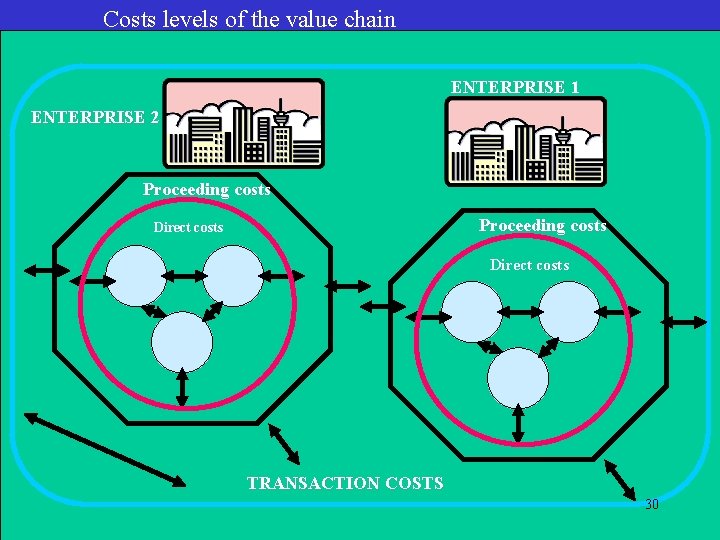
• With TCO (Total Cost of Ownership) and TCO the Interorganisational Cost Management (IOCM) are two areas that cover the Supply Chain Costing. It is important is to divide the determination for costs in the following three parts. • Direct costs • Costs of the proceedings • Transaction costs Through this division you are able to come up to the requirements of the value chain.
Costs levels of the value chain ENTERPRISE 1 ENTERPRISE 2 Proceeding costs Direct costs TRANSACTION COSTS 30
Transaction costs • The starting point of the critisim is cost accounting, that is not able to represent costs thereby incurred outside the service provision. • Transactions costs of procurement and sale • cost accounting could be extended by transaction costs and collaboration costs. • Transactions costs can only be limited connected with present financial instruments. • Criticism: Devision into direct and indirect costs!
Assignability of transaction costs • Nevertheless of critisism there are starting points to introduce transaction costs due to the following reasons: • • Align transaction costs with the value chain Strategic position is possible Structural cost drivers can be integrated Customers are the starting point.
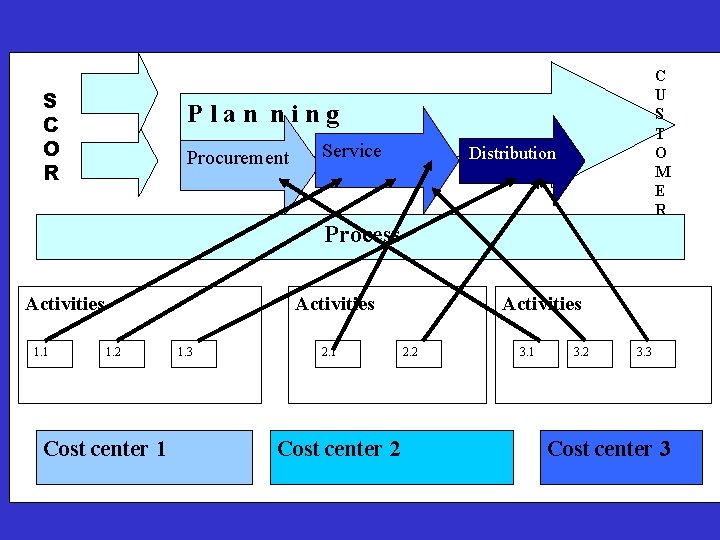
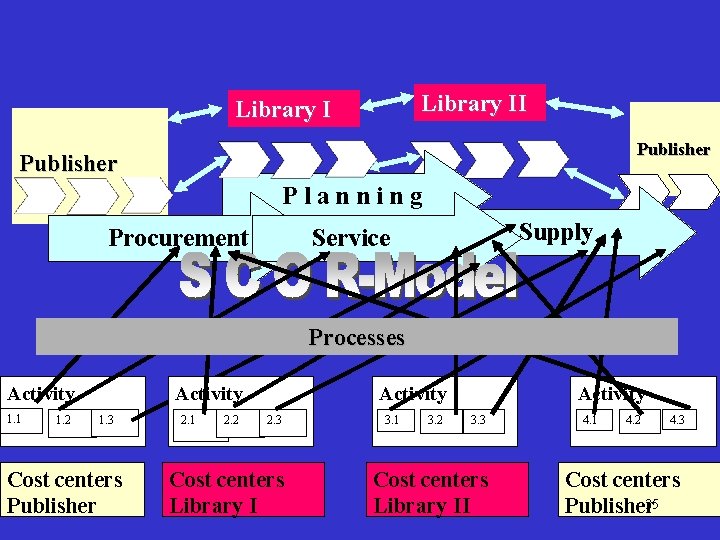
Process costs within the value chain • • • SCOR Model for the VC (Top Down) SCOR Activity based Costing is bottom up Begin with the level of the costs centers and analyse these activities. Then comprimise them to processes. • Standardised process definition in the enterprise has the advantage, that due to process description and the relating cost data of an enterprise, these cost data and process description could be compared. • Different indirect costs.
S C O R C U S T O M E R P l a n n i n g Procurement Distribution Service Process Activities 1. 1 Activities 1. 2 Cost center 1 1. 3 2. 1 Cost center 2 Activities 2. 2 3. 1 3. 2 3. 3 Cost center 3
Library II Library I Publisher P l a n n i n g Procurement Supply Service Processes Activity 1. 1 1. 2 Activity 1. 3 Cost centers Publisher 2. 1 2. 2 Activity 2. 3 Cost centers Library I 3. 1 3. 2 Activity 3. 3 Cost centers Library II 4. 1 4. 2 4. 3 Cost centers Publisher 35
Literature/ URL http: //silmaril. smeal. psu. edu/misc/supply_chain_intro. html 13 -01 -2003. http: //www. otp. org Abruf 7. 12. 2002 http: //www. mastercard. com/set http: //www. graphics. uni-bonn. de/dfgspp. v 3 d 2 Abruf 5. 12. 2002 http: //www. milicent. digital. com Abruf 4. 12. 2002 http: //www. hrl. ibm. com/mpay Abruf 3. 12. 2002 http: //www. digicash. com Abruf 2. 12. 2002 http: //www. cybercash. de Abruf 2. 12. 2002 http: //elektra. informatik. tu-muenchen. de Abruf 1. 12. 2003
Literature/ URL • • • http: //medoc. informatik. tu-muenchen. de http: //www. global-info. org http: //link. springer. de http: //opera. iiie. org http: //ist. unibwmuenchen. de/Lectures/WT 2002/Digi. Bib/Frank/Praesentation. Digitale. B ibliotheken. pdf http: //www. dlib. org/dlib/december 02/soergel/12 soergel. html http: //www. cni. org/regconfs/1997/ukoln-content/repor~24. html http: //www. firstmonday. org/issues/issue 7_5/lynch/index. html http: //www. fiz-karlsruhe. de/pressroom/getinfoe 02. html http: //www. bl. uk/services/publications. html
Literature/ URL Andersen http: //www. business. auc. dk/evolution/esapapers/welcome. html Mc. Laren et. al. : Supply Chain collaboration alternatives. S 349. Mc. Laren http: //www. emeraldinsight. com/1066 -2243. htm 38
literature/ TEDIP Report Keszi, R; Makó, C: Outsourcing as An Indicator of Regional , C: Competitiveness in the E-Economy. A Methodological Attempt to Analyse 18 -Countries Data of EMERGENCE Project
H. Bullinger: Optimierung der Abläufe, in: ZWF Bullinger Jahrg. 97, (2002) Boutellier, R. , Locker, A. : Beschaffungslogistik: mit , R. , Locker, A praxiserprobten Konzepten zum Erfolg, München-Wien, Hanser, 1998. The third ACM Conference on Digital Libraries, Pittsburgh, 1998. Horvàth und Partner(Hrsg. ): Qualitätscontrolling/Ein und Partner(Hrsg. ): Leitfaden zur betrieblichen Navigation auf dem Weg zum Total Quality Management, Stuttgart, 1997. Wildemann, H. : , Supply Chain Management und EWildemann, H. : , Technologien in: Reihe BWL aktuell, Klagenfurt, 2001. Ziegenbein, K. : Controlling in: Kompendium der praktischen Ziegenbein, K. : Betriebswirtschaft, Hrsg. : Olfert, K. , Leipzig, 2002.
Literature /periodicals Houlihan, J. : International Supply Chain Management in: , J. : International Journal of Physical Distribution and Logistics Management, Vol. 15, No. 1, p. 22 -38, 1985. Jones, T. and Reilly, D. : Using Inventory for Competitive Jones, T. and Reilly, D Advantage through Supply Chain Management in: International Journal of Physical Distribution and Lgoistics Management, Vol. 15, No. 5, p. 16 -22, 1985. in ZWF: Jahrg. 95(2000)7 -8, Prozessoptimierung, S. 349. Mc. Laren, Head et. al: Supply Chain collaboratives: et. al: understanding the expected costs and benefits. http: //www. emeraldinsight. com/1066 -2243. htm Abruf 10. 12. 2002