
Supply Chain Management Supplier Managed Inventory Michael Oldham
- Slides: 17
Supply Chain Management & Supplier Managed Inventory Michael Oldham, P. E. , CPSM ISM-Denver Pre-Dinner Seminar 1/15/2015 1
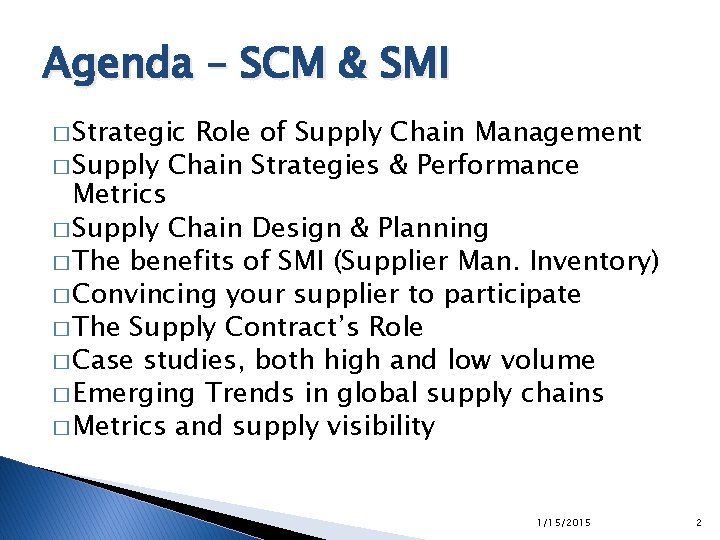
Agenda – SCM & SMI � Strategic Role of Supply Chain Management � Supply Chain Strategies & Performance Metrics � Supply Chain Design & Planning � The benefits of SMI (Supplier Man. Inventory) � Convincing your supplier to participate � The Supply Contract’s Role � Case studies, both high and low volume � Emerging Trends in global supply chains � Metrics and supply visibility 1/15/2015 2
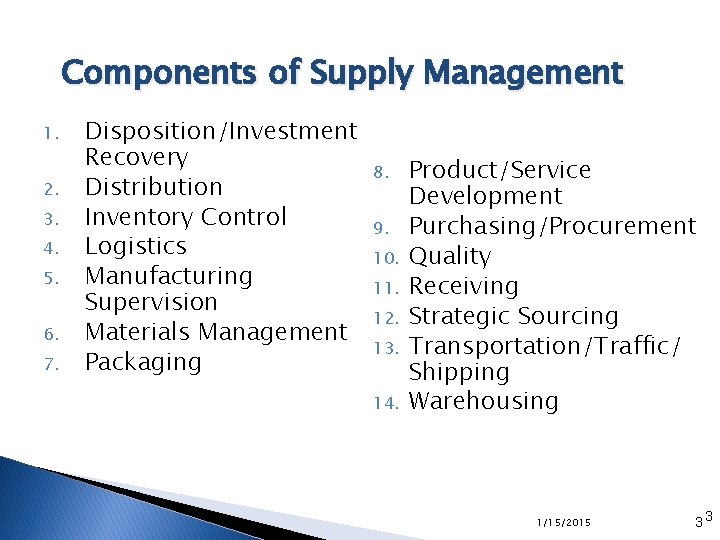
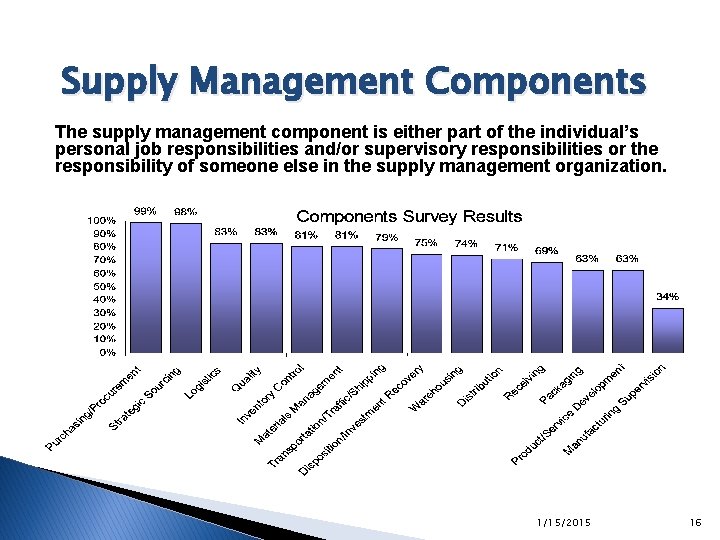
Components of Supply Management 1. 2. 3. 4. 5. 6. 7. Disposition/Investment Recovery Distribution Inventory Control Logistics Manufacturing Supervision Materials Management Packaging 8. 9. 10. 11. 12. 13. 14. Product/Service Development Purchasing/Procurement Quality Receiving Strategic Sourcing Transportation/Traffic/ Shipping Warehousing 1/15/2015 33
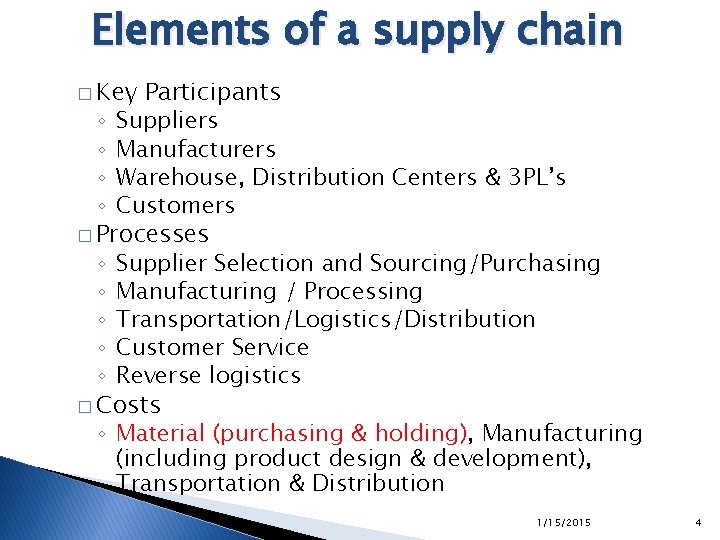
Elements of a supply chain � Key Participants ◦ Suppliers ◦ Manufacturers ◦ Warehouse, Distribution Centers & 3 PL’s ◦ Customers � Processes ◦ Supplier Selection and Sourcing/Purchasing ◦ Manufacturing / Processing ◦ Transportation/Logistics/Distribution ◦ Customer Service ◦ Reverse logistics � Costs ◦ Material (purchasing & holding), Manufacturing (including product design & development), Transportation & Distribution 1/15/2015 4
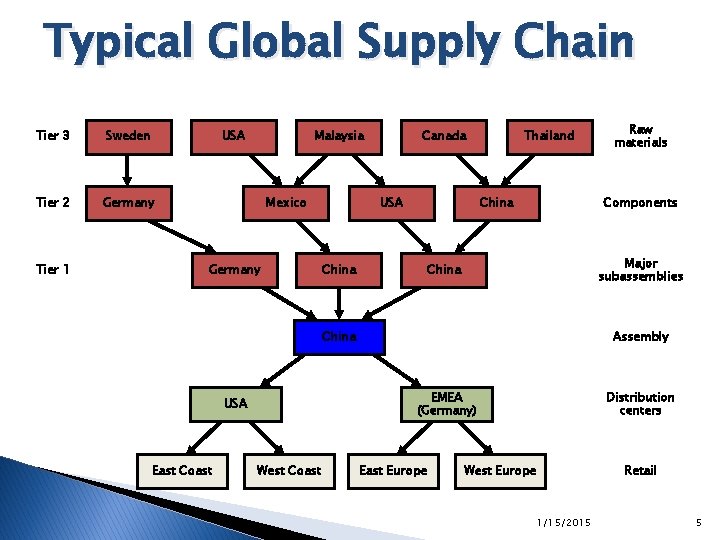
Typical Global Supply Chain Tier 3 Sweden Tier 2 Germany Tier 1 USA Malaysia Mexico Germany Canada USA Thailand Components China Major subassemblies China Assembly China East Coast Distribution centers EMEA (Germany) USA West Coast Raw materials East Europe Retail West Europe 1/15/2015 5
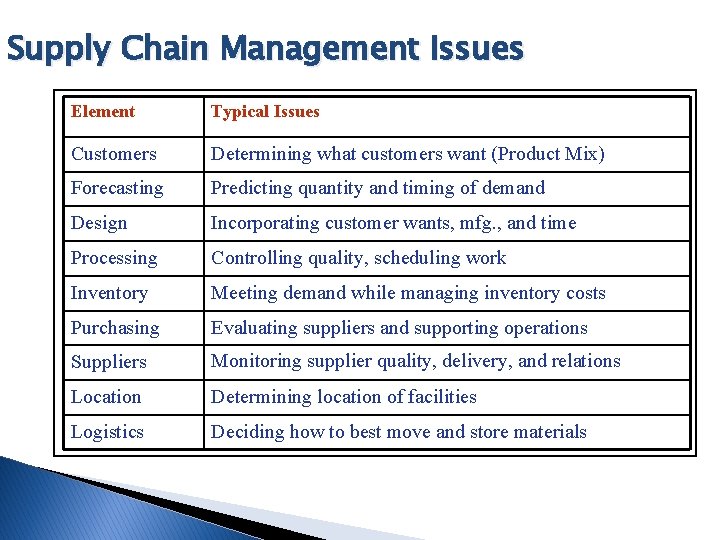
Supply Chain Management Issues Element Typical Issues Customers Determining what customers want (Product Mix) Forecasting Predicting quantity and timing of demand Design Incorporating customer wants, mfg. , and time Processing Controlling quality, scheduling work Inventory Meeting demand while managing inventory costs Purchasing Evaluating suppliers and supporting operations Suppliers Monitoring supplier quality, delivery, and relations Location Determining location of facilities Logistics Deciding how to best move and store materials
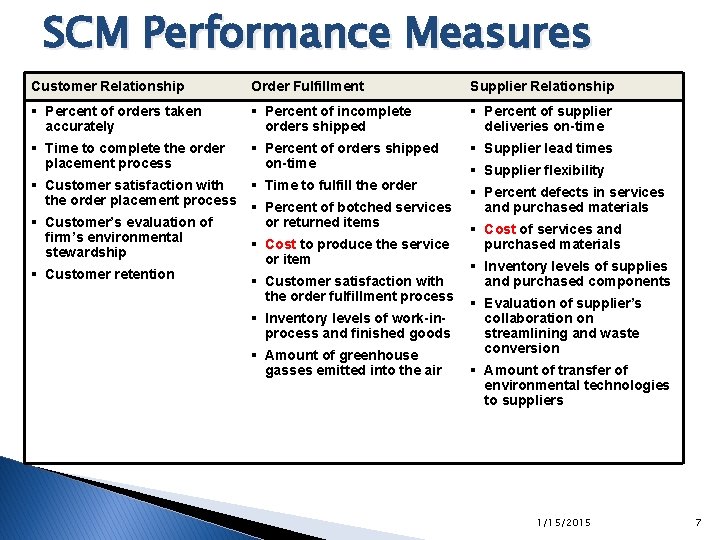
SCM Performance Measures Customer Relationship Order Fulfillment Supplier Relationship § Percent of orders taken accurately § Percent of incomplete orders shipped § Percent of supplier deliveries on-time § Time to complete the order placement process § Percent of orders shipped on-time § Supplier lead times § Customer satisfaction with § Time to fulfill the order placement process § Percent of botched services § Customer’s evaluation of or returned items firm’s environmental § Cost to produce the service stewardship or item § Customer retention § Customer satisfaction with the order fulfillment process § Inventory levels of work-inprocess and finished goods § Amount of greenhouse gasses emitted into the air § Supplier flexibility § Percent defects in services and purchased materials § Cost of services and purchased materials § Inventory levels of supplies and purchased components § Evaluation of supplier’s collaboration on streamlining and waste conversion § Amount of transfer of environmental technologies to suppliers 1/15/2015 7
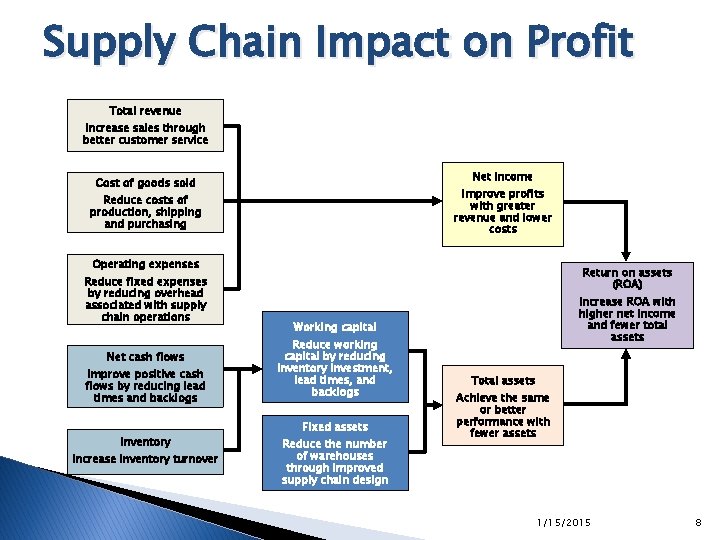
Supply Chain Impact on Profit Total revenue Increase sales through better customer service Net income Cost of goods sold Improve profits with greater revenue and lower costs Reduce costs of production, shipping and purchasing Operating expenses Reduce fixed expenses by reducing overhead associated with supply chain operations Net cash flows Improve positive cash flows by reducing lead times and backlogs Inventory Increase inventory turnover Return on assets (ROA) Increase ROA with higher net income and fewer total assets Working capital Reduce working capital by reducing inventory investment, lead times, and backlogs Fixed assets Reduce the number of warehouses through improved supply chain design Total assets Achieve the same or better performance with fewer assets 1/15/2015 8
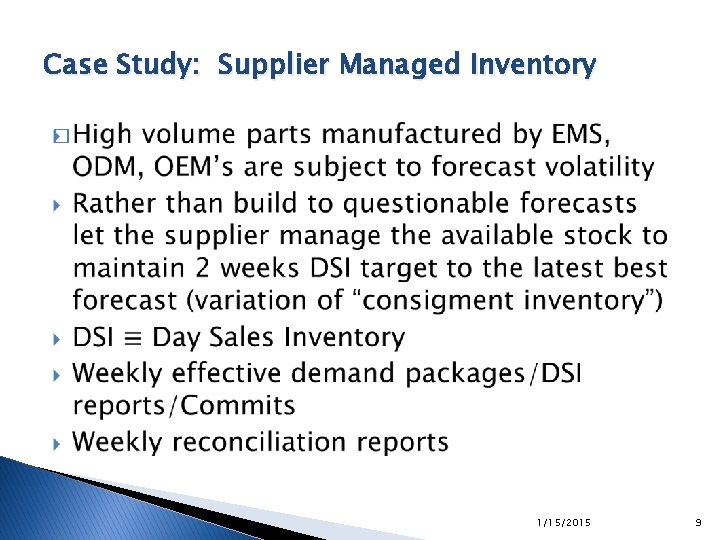
Case Study: Supplier Managed Inventory � 1/15/2015 9
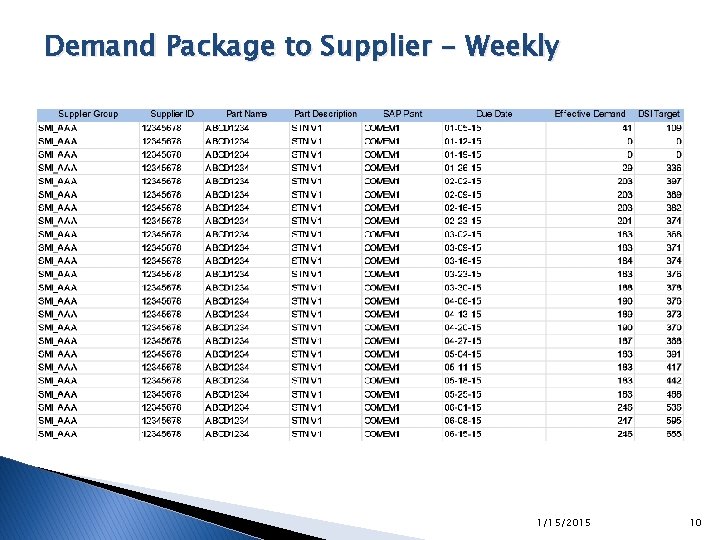
Demand Package to Supplier - Weekly 1/15/2015 10
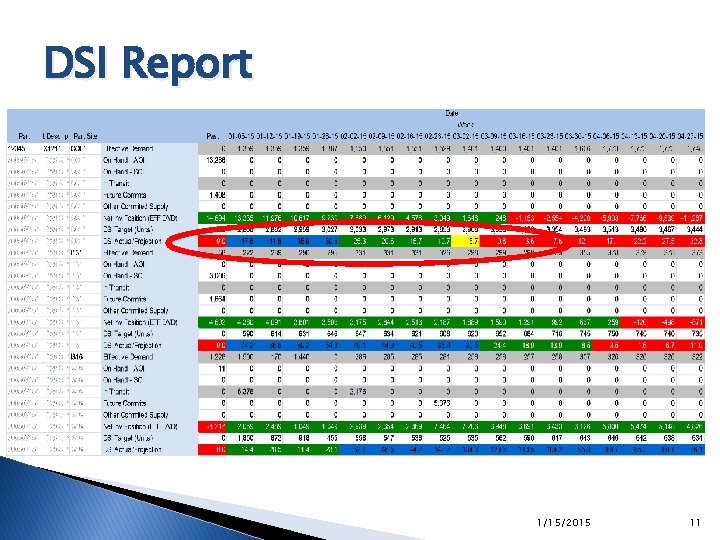
DSI Report 1/15/2015 11
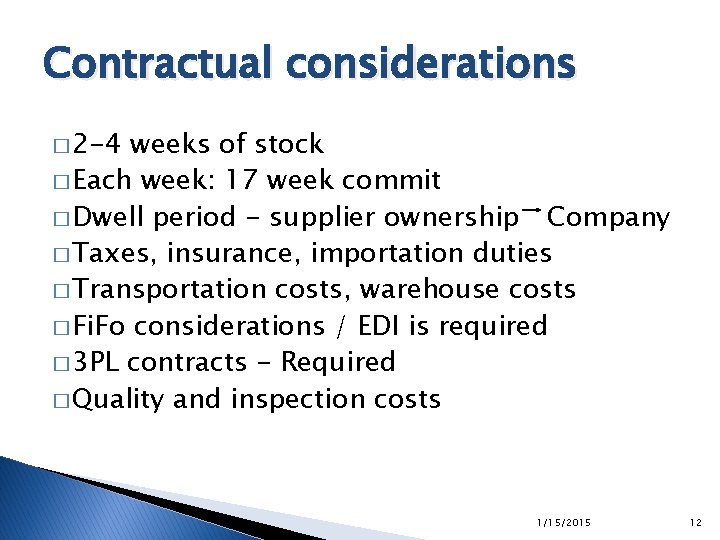
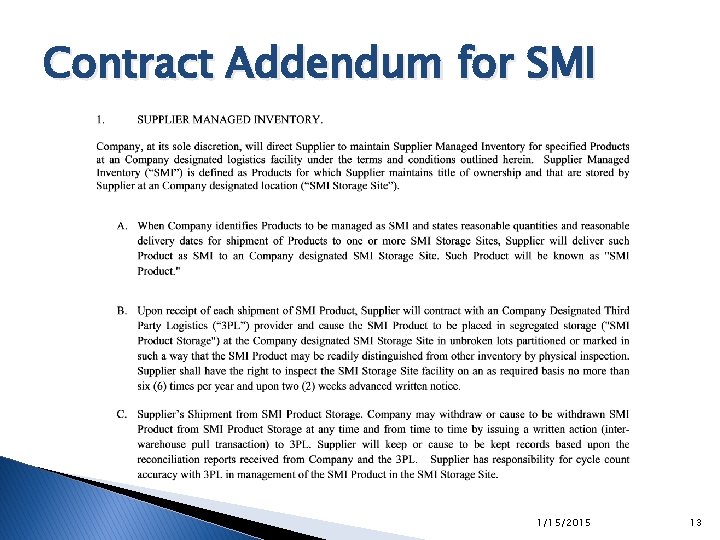
Contractual considerations � 2 -4 weeks of stock � Each week: 17 week commit � Dwell period - supplier ownership Company � Taxes, insurance, importation duties � Transportation costs, warehouse costs � Fi. Fo considerations / EDI is required � 3 PL contracts - Required � Quality and inspection costs 1/15/2015 12
Contract Addendum for SMI 1/15/2015 13
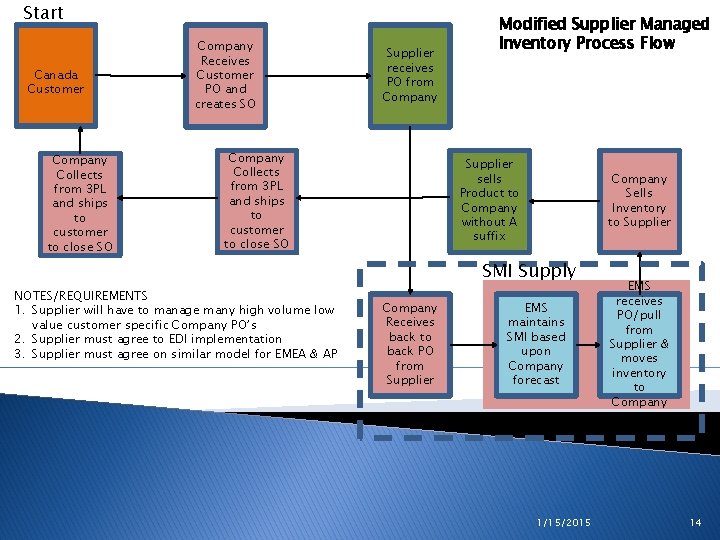
Start Canada Customer Company Collects from 3 PL and ships to customer to close SO Company Receives Customer PO and creates SO Supplier receives PO from Company Collects from 3 PL and ships to customer to close SO Modified Supplier Managed Inventory Process Flow Supplier sells Product to Company without A suffix Company Sells Inventory to Supplier SMI Supply NOTES/REQUIREMENTS 1. Supplier will have to manage many high volume low value customer specific Company PO’s 2. Supplier must agree to EDI implementation 3. Supplier must agree on similar model for EMEA & AP Company Receives back to back PO from Supplier EMS maintains SMI based upon Company forecast 1/15/2015 EMS receives PO/pull from Supplier & moves inventory to Company 14
Backup 1/15/2015 15
Supply Management Components The supply management component is either part of the individual’s personal job responsibilities and/or supervisory responsibilities or the responsibility of someone else in the supply management organization. 1/15/2015 16
Bio & Acknowledgements Mike has a master’s degree in Mechanical Engineering from the University of Colorado, Boulder. Mike has worked for Mc. Donnell Douglas, IBM and Rockwell International before joining AT&T/Lucent Technologies in Colorado. For the past 11 years Mike has been employed by Avaya Inc. with the title of Sourcing Manager. Acknowledgements: 1. Sanjay L. Ahire, Ph. D. & John B. Jensen, Ph. D. , University of South Carolina, Columbia 2. Institute for Supply Management 1/15/2015 17