
Supplied Air Respirators Airline respirators and SCBAs August
Supplied Air Respirators Airline respirators and SCBAs August, 2021 All photos from Adobe Stock unless otherwise indicated
This is limited training This module is introductory training for employees who wear supplied air respirators. The two main types of supplied air respirators are covered in this module. Abrasive blasting hoods or re-breather type respirators are not covered. This module only covers basic facts of supplied air respirators and is not complete training by itself. You will also be given hands-on training with the respiratory equipment you use. Washington State Department of Labor & Industries 2
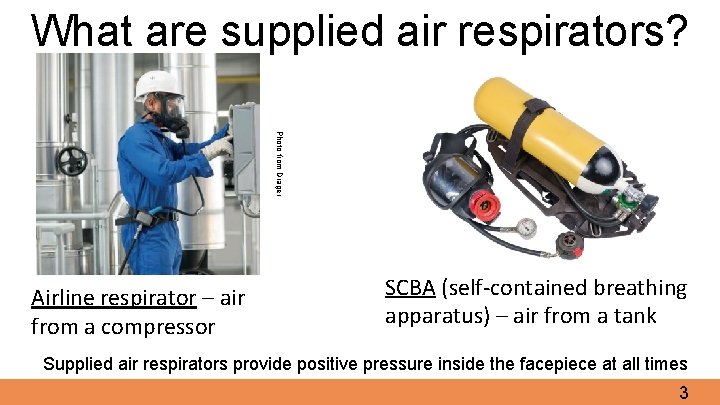
What are supplied air respirators? Photo from Drager Airline respirator – air from a compressor SCBA (self-contained breathing apparatus) – air from a tank Supplied air respirators provide positive pressure inside the facepiece at all times 3
Conditions where supplied-air respirators are required - Oxygen deficiency - High levels of toxic chemicals in the air – above “IDLH” levels - Other conditions of high levels of highly toxic chemicals in the air - Firefighting 4
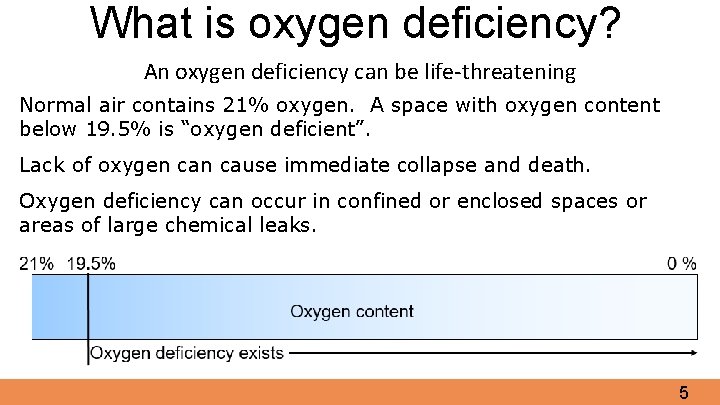
What is oxygen deficiency? An oxygen deficiency can be life-threatening Normal air contains 21% oxygen. A space with oxygen content below 19. 5% is “oxygen deficient”. Lack of oxygen cause immediate collapse and death. Oxygen deficiency can occur in confined or enclosed spaces or areas of large chemical leaks. 5

Effects of oxygen deficiency % Oxygen Symptoms 19. 5% - 16% Fatigue, mild impaired coordination 16% - 12% Increased breathing rate and pulse; impaired coordination, perception 12% - 10% Further increased breathing rate, blue lips, mental confusion 10% - 8% Fainting, nausea, vomiting, mental confusion within minutes, collapse 8% - 6% Collapse, death within 8 minutes 6% - 0% Coma within 40 seconds, death 6
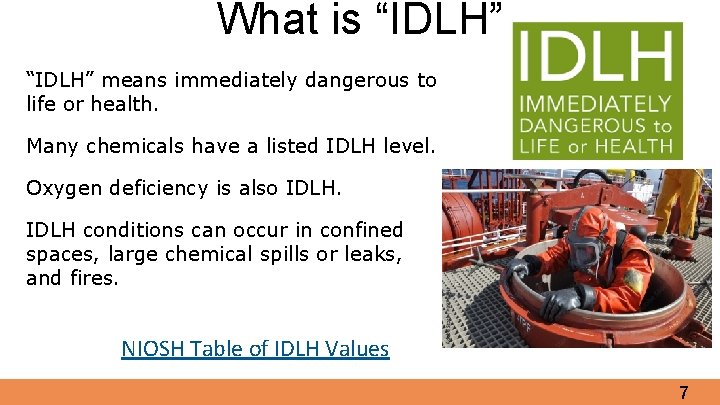
What is “IDLH” means immediately dangerous to life or health. Many chemicals have a listed IDLH level. Oxygen deficiency is also IDLH conditions can occur in confined spaces, large chemical spills or leaks, and fires. NIOSH Table of IDLH Values 7
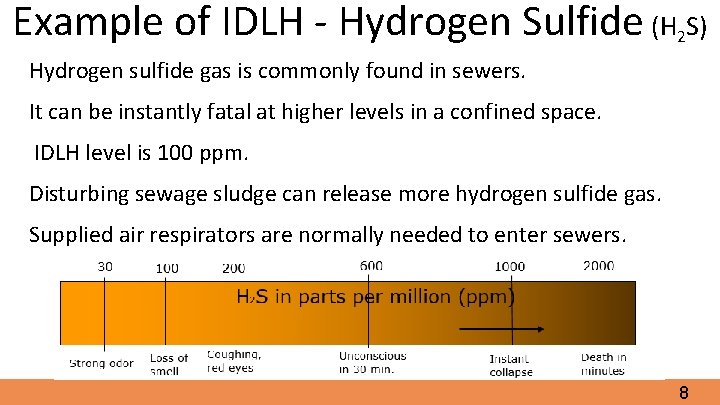
Example of IDLH - Hydrogen Sulfide (H 2 S) Hydrogen sulfide gas is commonly found in sewers. It can be instantly fatal at higher levels in a confined space. IDLH level is 100 ppm. Disturbing sewage sludge can release more hydrogen sulfide gas. Supplied air respirators are normally needed to enter sewers. 8
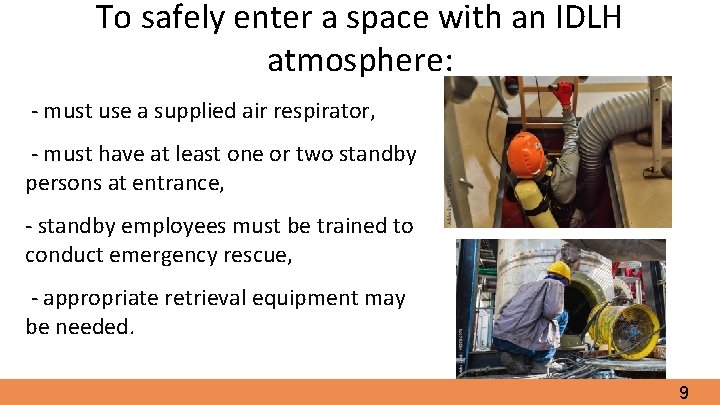
To safely enter a space with an IDLH atmosphere: - must use a supplied air respirator, - must have at least one or two standby persons at entrance, - standby employees must be trained to conduct emergency rescue, - appropriate retrieval equipment may be needed. 9
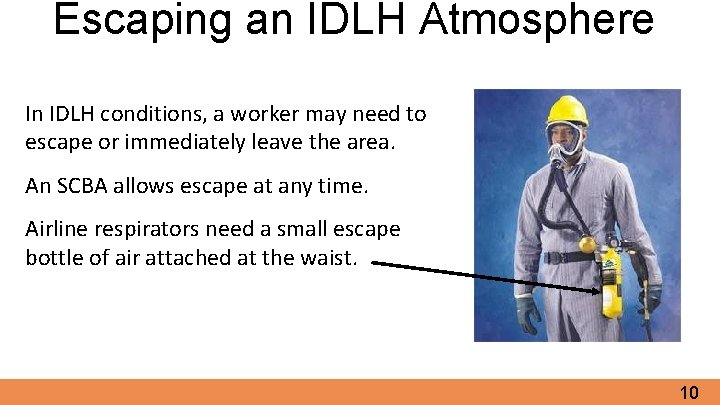
Escaping an IDLH Atmosphere In IDLH conditions, a worker may need to escape or immediately leave the area. An SCBA allows escape at any time. Airline respirators need a small escape bottle of air attached at the waist. 10
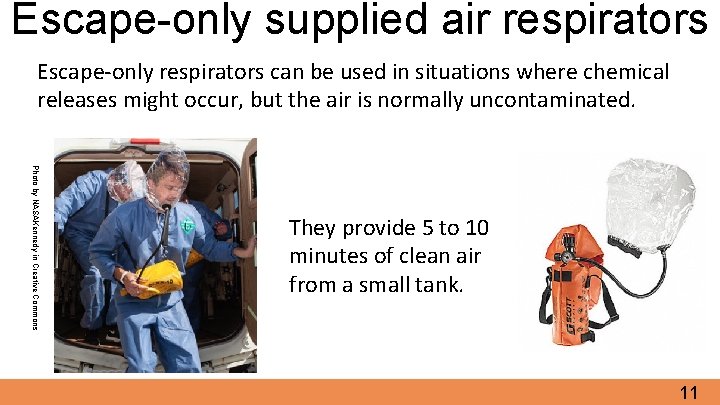
Escape-only supplied air respirators Escape-only respirators can be used in situations where chemical releases might occur, but the air is normally uncontaminated. Photo by NASAKennedy in Creative Commons They provide 5 to 10 minutes of clean air from a small tank. 11
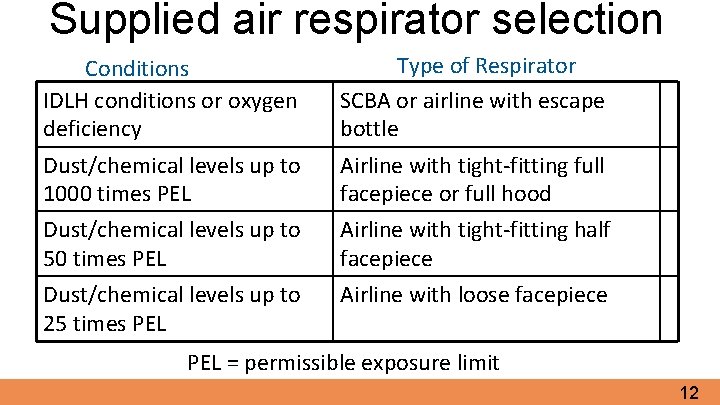
Supplied air respirator selection Conditions IDLH conditions or oxygen deficiency Type of Respirator SCBA or airline with escape bottle Dust/chemical levels up to 1000 times PEL Airline with tight-fitting full facepiece or full hood Dust/chemical levels up to 50 times PEL Airline with tight-fitting half facepiece Dust/chemical levels up to 25 times PEL Airline with loose facepiece PEL = permissible exposure limit 12
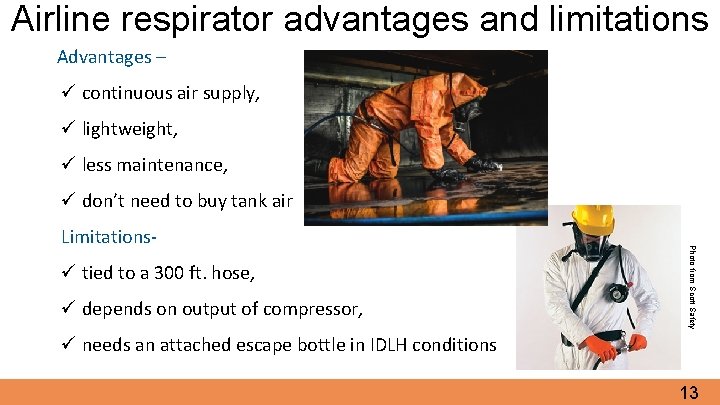
Airline respirator advantages and limitations Advantages – ü continuous air supply, ü lightweight, ü less maintenance, ü don’t need to buy tank air ü tied to a 300 ft. hose, ü depends on output of compressor, Photo from Scott Safety Limitations- ü needs an attached escape bottle in IDLH conditions 13
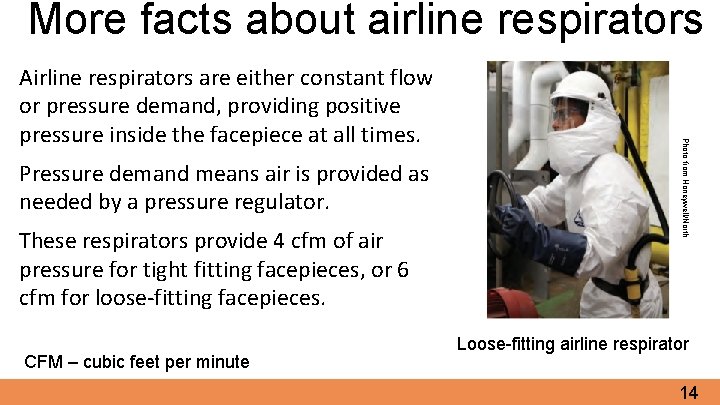
More facts about airline respirators Pressure demand means air is provided as needed by a pressure regulator. These respirators provide 4 cfm of air pressure for tight fitting facepieces, or 6 cfm for loose-fitting facepieces. CFM – cubic feet per minute Photo from Honeywell/North Airline respirators are either constant flow or pressure demand, providing positive pressure inside the facepiece at all times. Loose-fitting airline respirator 14
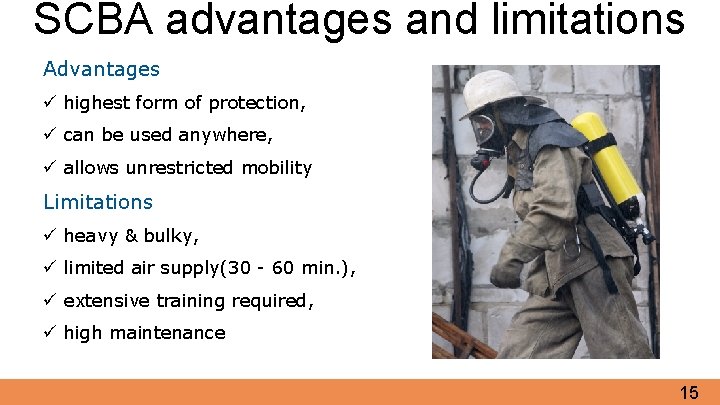
SCBA advantages and limitations Advantages ü highest form of protection, ü can be used anywhere, ü allows unrestricted mobility Limitations ü heavy & bulky, ü limited air supply(30 - 60 min. ), ü extensive training required, ü high maintenance 15
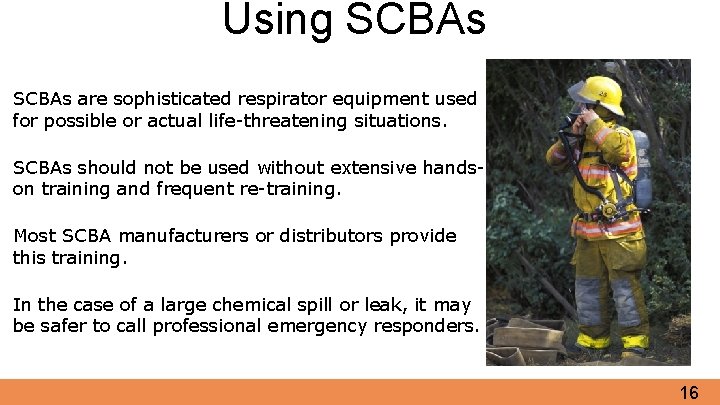
Using SCBAs are sophisticated respirator equipment used for possible or actual life-threatening situations. SCBAs should not be used without extensive handson training and frequent re-training. Most SCBA manufacturers or distributors provide this training. In the case of a large chemical spill or leak, it may be safer to call professional emergency responders. 16
Air quality for supplied air respirators Air for breathing must be “Grade D” air: - Oxygen content of 19. 5 -23. 5 percent, - Hydrocarbon (condensed) content of 5 milligrams per cubic meter of air or less, - Carbon monoxide content of 10 parts per million (ppm) or less, - Carbon dioxide less than 1000 ppm, - No noticeable odor. 17
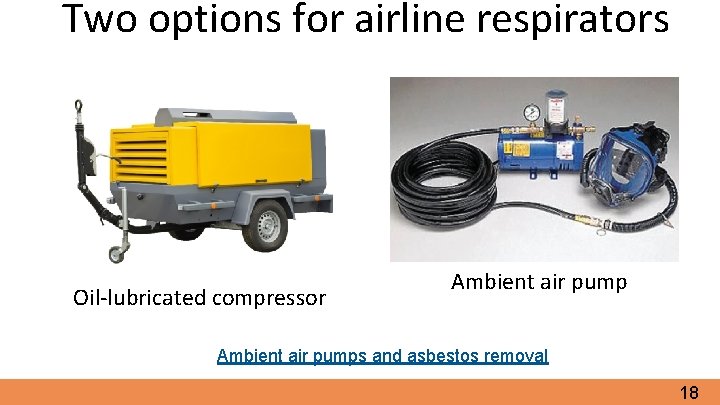
Two options for airline respirators Oil-lubricated compressor Ambient air pumps and asbestos removal 18
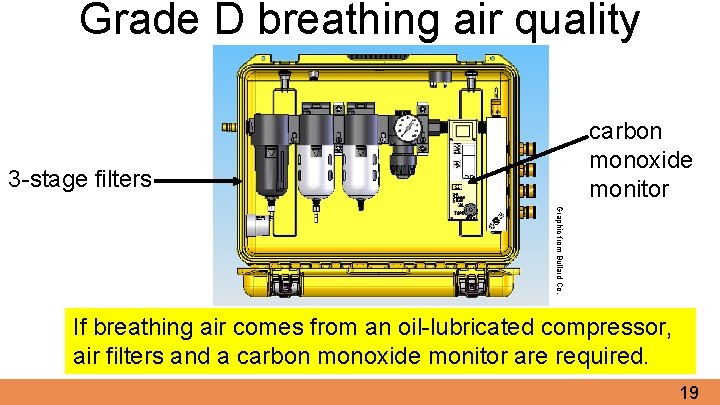
Grade D breathing air quality carbon monoxide monitor 3 -stage filters Graphic from Bullard Co. If breathing air comes from an oil-lubricated compressor, air filters and a carbon monoxide monitor are required. 19
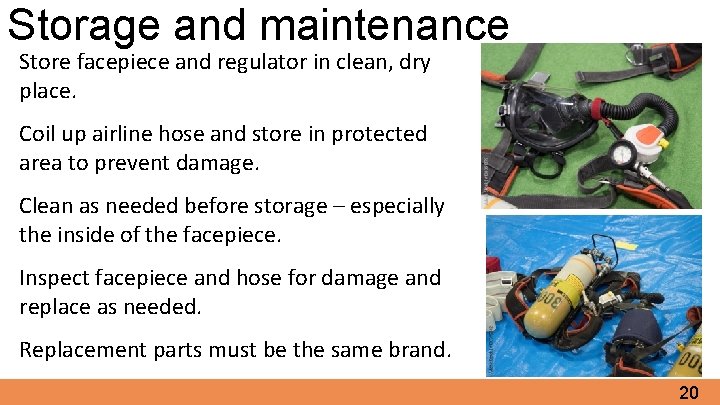
Storage and maintenance Store facepiece and regulator in clean, dry place. Coil up airline hose and store in protected area to prevent damage. Clean as needed before storage – especially the inside of the facepiece. Inspect facepiece and hose for damage and replace as needed. Replacement parts must be the same brand. 20
Where we require the use of supplied air respirators Describe areas or work situations where supplied air respirators must be used 21
What supplied respirators we use Describe or show the supplied air respirators used at worksites 22
How we provide grade D air to our supplied air respirators Describe or show the source of Grade D air for supplied air respirator in use 23
Additional Information Risk of using plant air CDC/NIOSH – A guide to atmosphere-supplying respirators L & I respirator regulations - WAC 296 -842 24
- Slides: 24