
Supplementary Slides for Software Engineering A Practitioners Approach
- Slides: 18
Supplementary Slides for Software Engineering: A Practitioner's Approach, 5/e copyright © 1996, 2001 R. S. Pressman & Associates, Inc. For University Use Only May be reproduced ONLY for student use at the university level when used in conjunction with Software Engineering: A Practitioner's Approach. Any other reproduction or use is expressly prohibited. This presentation, slides, or hardcopy may NOT be used for short courses, industry seminars, or consulting purposes. These courseware materials are to be used in conjunction with Software Engineering: A Practitioner’s Approach, 5/e and are provided with permission by R. S. Pressman & Associates, Inc. , copyright © 1996, 2001 1
Chapter 18 Software Testing Strategies These courseware materials are to be used in conjunction with Software Engineering: A Practitioner’s Approach, 5/e and are provided with permission by R. S. Pressman & Associates, Inc. , copyright © 1996, 2001 2
Testing Strategy unit test system test integration test validation test These courseware materials are to be used in conjunction with Software Engineering: A Practitioner’s Approach, 5/e and are provided with permission by R. S. Pressman & Associates, Inc. , copyright © 1996, 2001 3
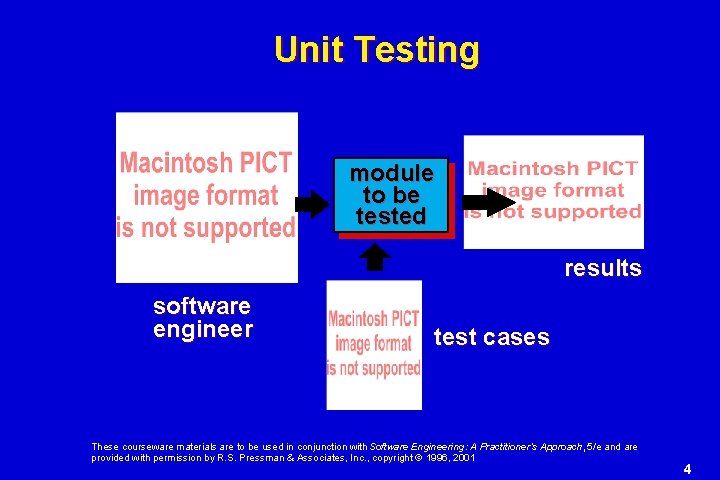
Unit Testing module to be tested results software engineer test cases These courseware materials are to be used in conjunction with Software Engineering: A Practitioner’s Approach, 5/e and are provided with permission by R. S. Pressman & Associates, Inc. , copyright © 1996, 2001 4
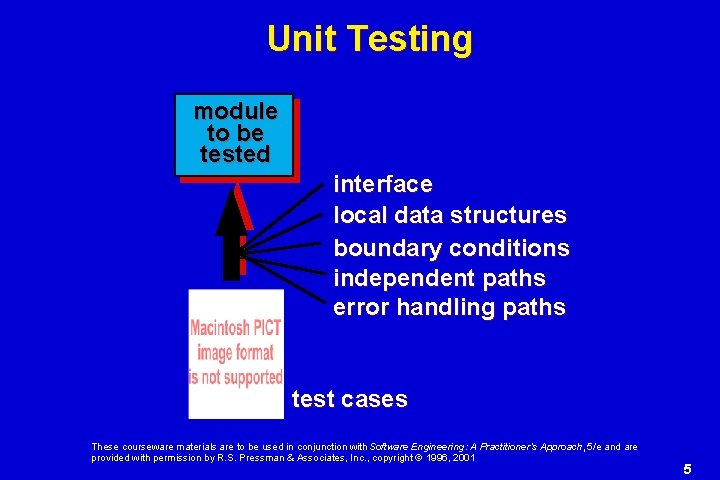
Unit Testing module to be tested interface local data structures boundary conditions independent paths error handling paths test cases These courseware materials are to be used in conjunction with Software Engineering: A Practitioner’s Approach, 5/e and are provided with permission by R. S. Pressman & Associates, Inc. , copyright © 1996, 2001 5
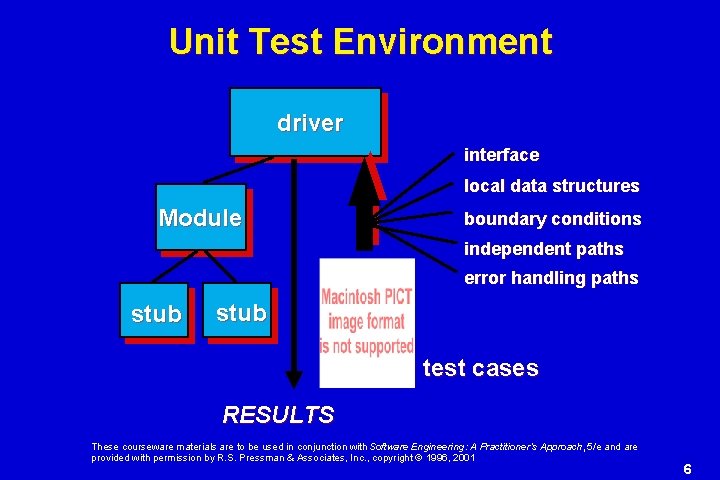
Unit Test Environment driver interface local data structures Module boundary conditions independent paths error handling paths stub test cases RESULTS These courseware materials are to be used in conjunction with Software Engineering: A Practitioner’s Approach, 5/e and are provided with permission by R. S. Pressman & Associates, Inc. , copyright © 1996, 2001 6
Integration Testing Strategies Options: • the “big bang” approach • an incremental construction strategy These courseware materials are to be used in conjunction with Software Engineering: A Practitioner’s Approach, 5/e and are provided with permission by R. S. Pressman & Associates, Inc. , copyright © 1996, 2001 7
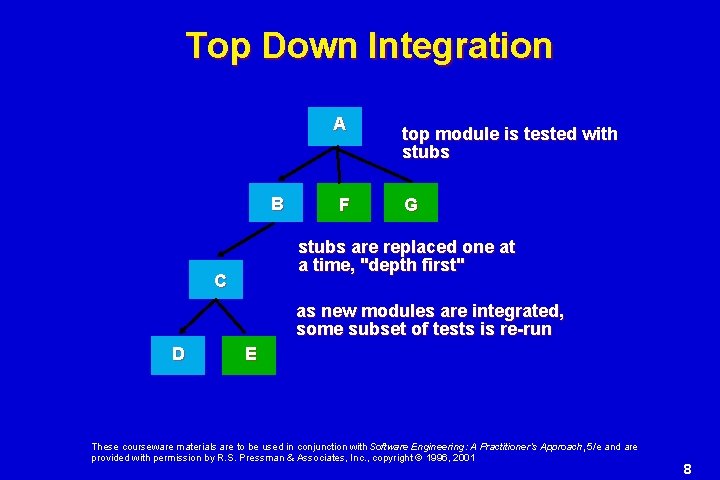
Top Down Integration A B F top module is tested with stubs G stubs are replaced one at a time, "depth first" C as new modules are integrated, some subset of tests is re-run D E These courseware materials are to be used in conjunction with Software Engineering: A Practitioner’s Approach, 5/e and are provided with permission by R. S. Pressman & Associates, Inc. , copyright © 1996, 2001 8
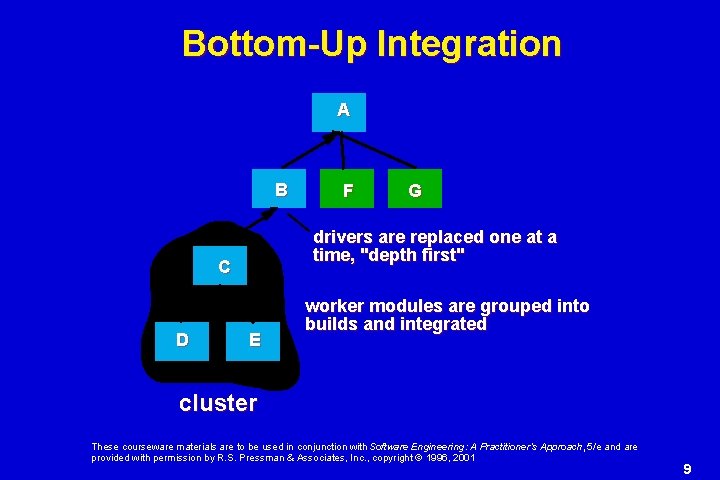
Bottom-Up Integration A B G drivers are replaced one at a time, "depth first" C D F E worker modules are grouped into builds and integrated cluster These courseware materials are to be used in conjunction with Software Engineering: A Practitioner’s Approach, 5/e and are provided with permission by R. S. Pressman & Associates, Inc. , copyright © 1996, 2001 9
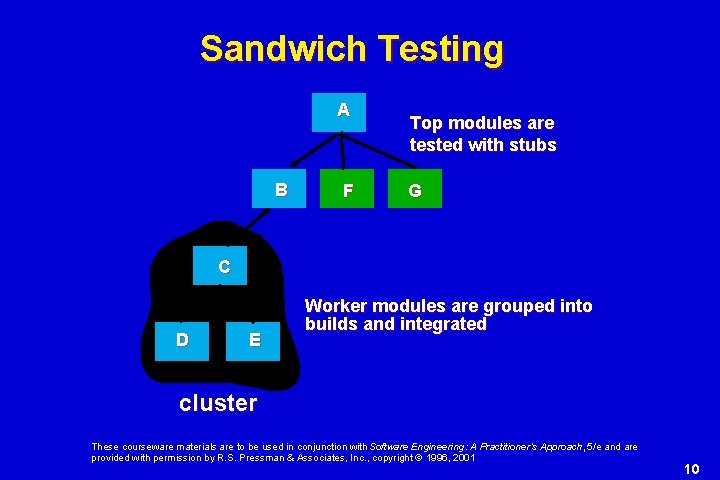
Sandwich Testing A B F Top modules are tested with stubs G C D E Worker modules are grouped into builds and integrated cluster These courseware materials are to be used in conjunction with Software Engineering: A Practitioner’s Approach, 5/e and are provided with permission by R. S. Pressman & Associates, Inc. , copyright © 1996, 2001 10
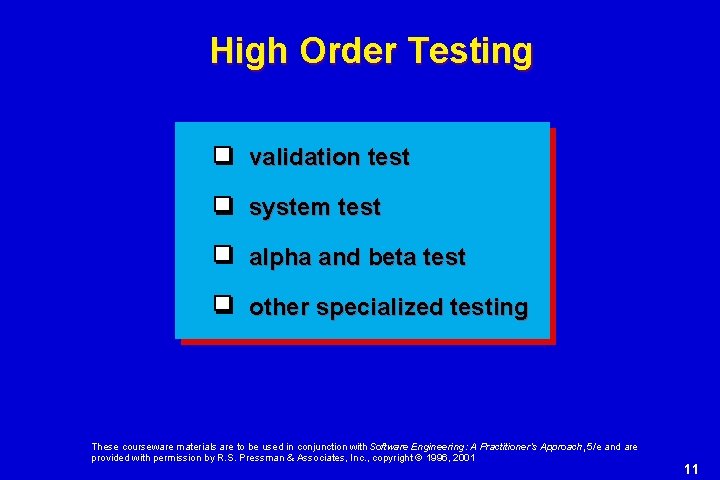
High Order Testing validation test system test alpha and beta test other specialized testing These courseware materials are to be used in conjunction with Software Engineering: A Practitioner’s Approach, 5/e and are provided with permission by R. S. Pressman & Associates, Inc. , copyright © 1996, 2001 11
Debugging: A Diagnostic Process These courseware materials are to be used in conjunction with Software Engineering: A Practitioner’s Approach, 5/e and are provided with permission by R. S. Pressman & Associates, Inc. , copyright © 1996, 2001 12
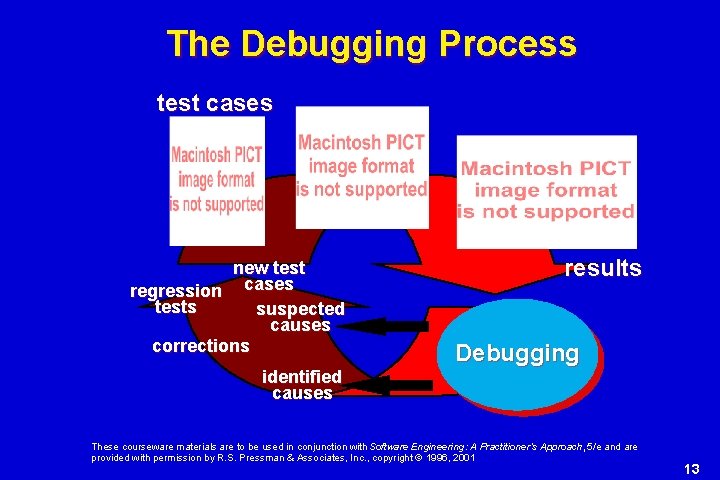
The Debugging Process test cases new test regression cases tests suspected causes corrections identified causes results Debugging These courseware materials are to be used in conjunction with Software Engineering: A Practitioner’s Approach, 5/e and are provided with permission by R. S. Pressman & Associates, Inc. , copyright © 1996, 2001 13
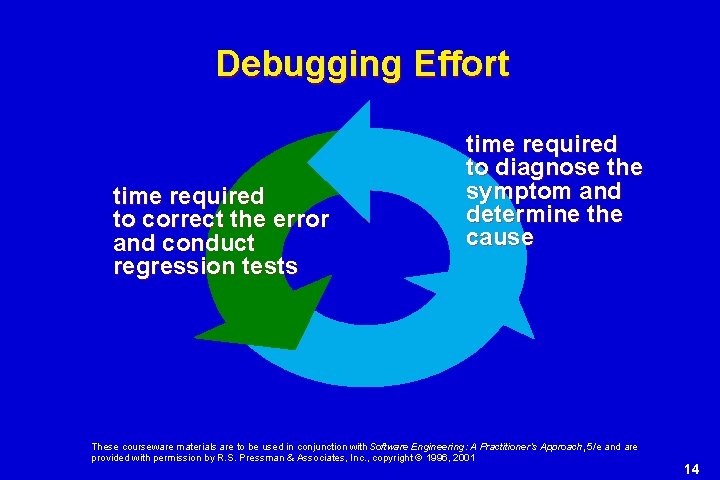
Debugging Effort time required to correct the error and conduct regression tests time required to diagnose the symptom and determine the cause These courseware materials are to be used in conjunction with Software Engineering: A Practitioner’s Approach, 5/e and are provided with permission by R. S. Pressman & Associates, Inc. , copyright © 1996, 2001 14
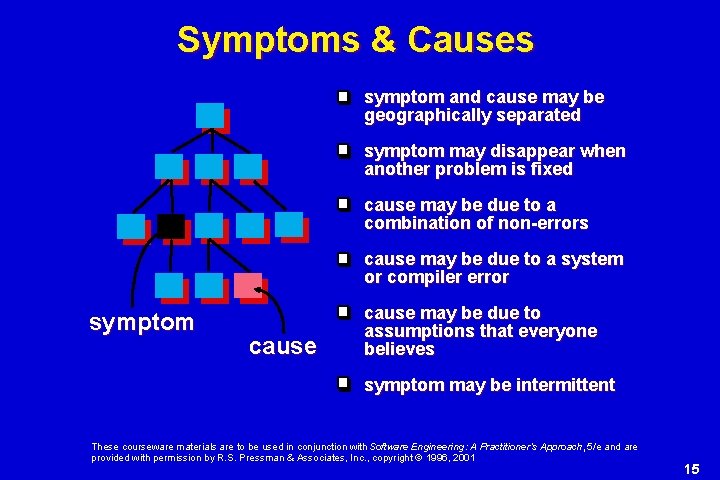
Symptoms & Causes symptom and cause may be geographically separated symptom may disappear when another problem is fixed cause may be due to a combination of non-errors cause may be due to a system or compiler error symptom cause may be due to assumptions that everyone believes symptom may be intermittent These courseware materials are to be used in conjunction with Software Engineering: A Practitioner’s Approach, 5/e and are provided with permission by R. S. Pressman & Associates, Inc. , copyright © 1996, 2001 15
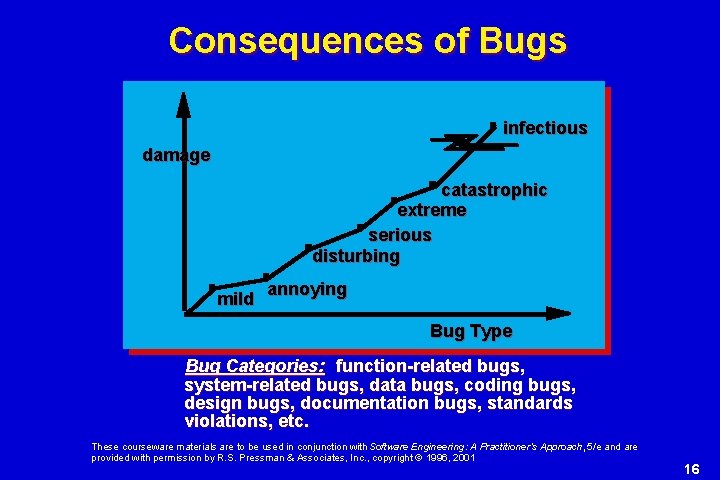
Consequences of Bugs infectious damage catastrophic extreme serious disturbing mild annoying Bug Type Bug Categories: function-related bugs, system-related bugs, data bugs, coding bugs, design bugs, documentation bugs, standards violations, etc. These courseware materials are to be used in conjunction with Software Engineering: A Practitioner’s Approach, 5/e and are provided with permission by R. S. Pressman & Associates, Inc. , copyright © 1996, 2001 16
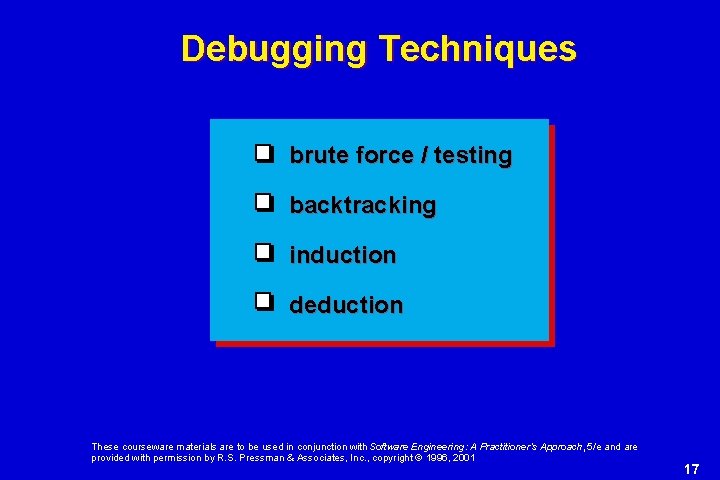
Debugging Techniques brute force / testing backtracking induction deduction These courseware materials are to be used in conjunction with Software Engineering: A Practitioner’s Approach, 5/e and are provided with permission by R. S. Pressman & Associates, Inc. , copyright © 1996, 2001 17
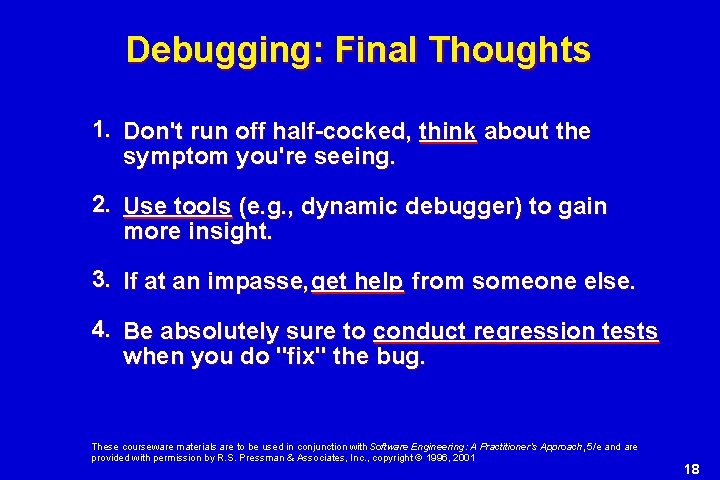
Debugging: Final Thoughts 1. Don't run off half-cocked, think about the symptom you're seeing. 2. Use tools (e. g. , dynamic debugger) to gain more insight. 3. If at an impasse, get help from someone else. 4. Be absolutely sure to conduct regression tests when you do "fix" the bug. These courseware materials are to be used in conjunction with Software Engineering: A Practitioner’s Approach, 5/e and are provided with permission by R. S. Pressman & Associates, Inc. , copyright © 1996, 2001 18