
Supplementary material for Invasive crayfish alter the longterm
- Slides: 15
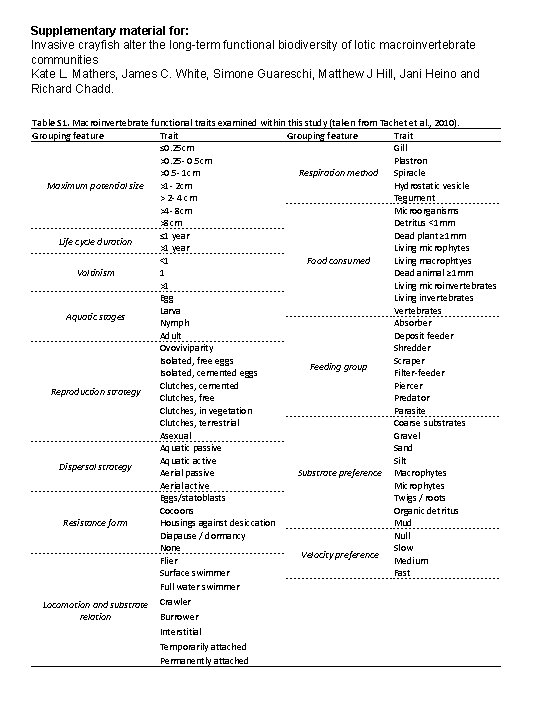
Supplementary material for: Invasive crayfish alter the long-term functional biodiversity of lotic macroinvertebrate communities Kate L. Mathers, James C. White, Simone Guareschi, Matthew J Hill, Jani Heino and Richard Chadd. Table S 1. Macroinvertebrate functional traits examined within this study (taken from Tachet et al. , 2010). Grouping feature Trait ≤ 0. 25 cm Gill >0. 25 - 0. 5 cm Plastron >0. 5 - 1 cm Spiracle Respiration method >1 - 2 cm Hydrostatic vesicle Maximum potential size > 2 - 4 cm Tegument >4 - 8 cm Microorganisms >8 cm Detritus <1 mm ≤ 1 year Dead plant ≥ 1 mm Life cycle duration >1 year Living microphytes Food consumed <1 Living macrophtyes 1 Dead animal ≥ 1 mm Voltinism >1 Living microinvertebrates Egg Living invertebrates Larva Vertebrates Aquatic stages Nymph Absorber Adult Deposit feeder Ovoviviparity Shredder Isolated, free eggs Scraper Feeding group Isolated, cemented eggs Filter-feeder Clutches, cemented Piercer Reproduction strategy Clutches, free Predator Clutches, in vegetation Parasite Clutches, terrestrial Coarse substrates Asexual Gravel Aquatic passive Sand Aquatic active Silt Dispersal strategy Aerial passive Substrate preference Macrophytes Aerial active Microphytes Eggs/statoblasts Twigs / roots Cocoons Organic detritus Housings against desiccation Mud Resistance form Diapause / dormancy Null None Slow Velocity preference Flier Medium Surface swimmer Fast Full water swimmer Locomotion and substrate relation Crawler Burrower Interstitial Temporarily attached Permanently attached
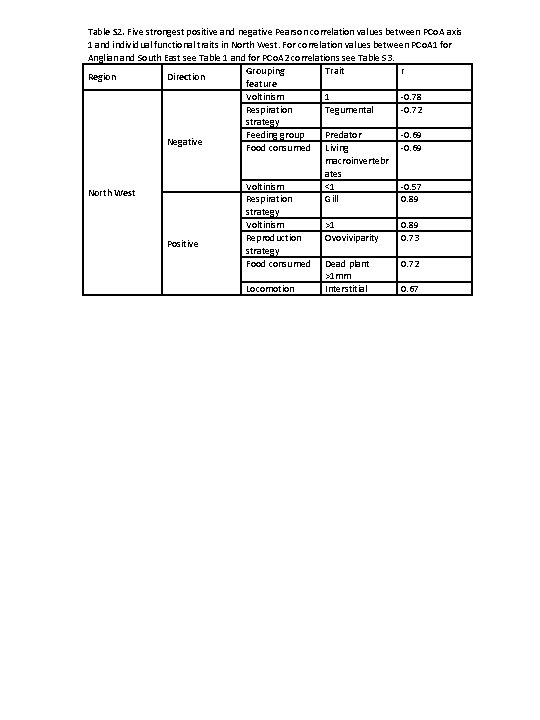
Table S 2. Five strongest positive and negative Pearson correlation values between PCo. A axis 1 and individual functional traits in North West. For correlation values between PCo. A 1 for Anglian and South East see Table 1 and for PCo. A 2 correlations see Table S 3. Grouping Trait r Region Direction feature Voltinism 1 -0. 78 Respiration Tegumental -0. 72 strategy Feeding group Predator -0. 69 Negative Food consumed Living -0. 69 macroinvertebr ates Voltinism <1 -0. 57 North West Respiration Gill 0. 89 strategy Voltinism >1 0. 89 Reproduction Ovoviviparity 0. 73 Positive strategy Food consumed Dead plant 0. 72 >1 mm Locomotion Interstitial 0. 67
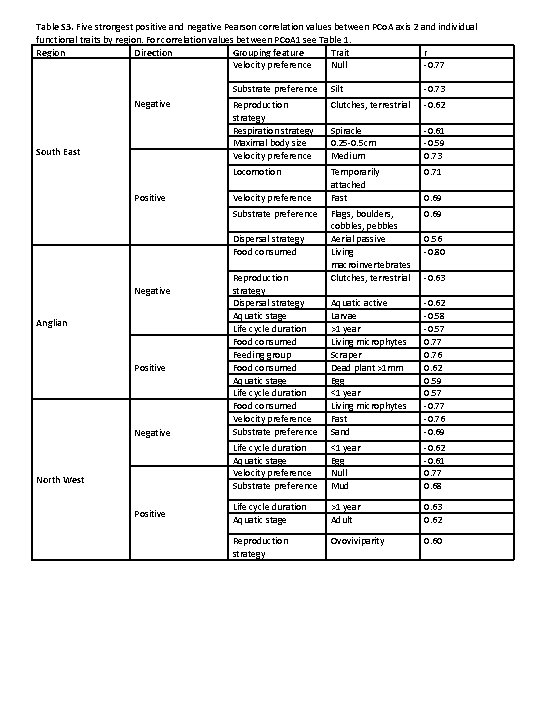
Table S 3. Five strongest positive and negative Pearson correlation values between PCo. A axis 2 and individual functional traits by region. For correlation values between PCo. A 1 see Table 1. Region Direction Grouping feature Trait r Velocity preference Null -0. 77 Negative South East Positive Substrate preference Silt -0. 73 Reproduction strategy Respiration strategy Maximal body size Velocity preference Clutches, terrestrial -0. 62 Spiracle 0. 25 -0. 5 cm Medium -0. 61 -0. 59 0. 73 Locomotion Temporarily attached Fast 0. 71 Flags, boulders, cobbles, pebbles Aerial passive Living macroinvertebrates Clutches, terrestrial 0. 69 Aquatic active Larvae >1 year Living microphytes Scraper Dead plant >1 mm Egg <1 year Living microphytes Fast Sand -0. 62 -0. 58 -0. 57 0. 76 0. 62 0. 59 0. 57 -0. 76 -0. 69 Life cycle duration Aquatic stage Velocity preference Substrate preference <1 year Egg Null Mud -0. 62 -0. 61 0. 77 0. 68 Life cycle duration Aquatic stage >1 year Adult 0. 63 0. 62 Reproduction strategy Ovoviviparity 0. 60 Velocity preference Substrate preference Dispersal strategy Food consumed Negative Anglian Positive Negative North West Positive Reproduction strategy Dispersal strategy Aquatic stage Life cycle duration Food consumed Feeding group Food consumed Aquatic stage Life cycle duration Food consumed Velocity preference Substrate preference 0. 69 0. 56 -0. 80 -0. 63
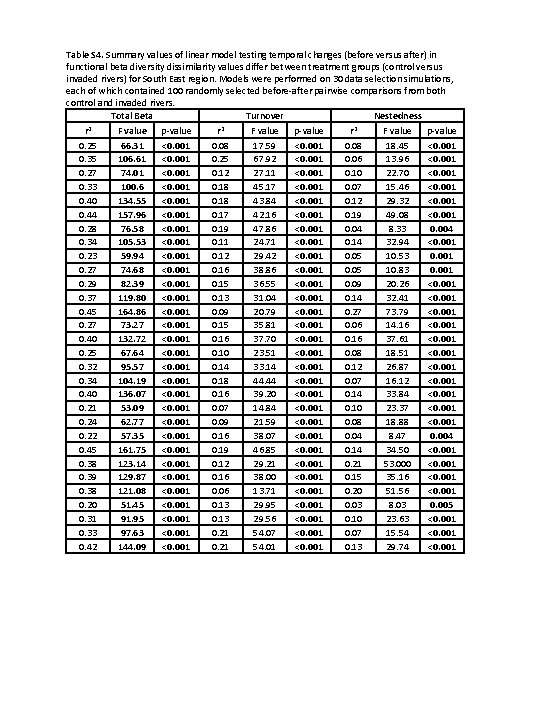
Table S 4. Summary values of linear model testing temporal changes (before versus after) in functional beta diversity dissimilarity values differ between treatment groups (control versus invaded rivers) for South East region. Models were performed on 30 data selection simulations, each of which contained 100 randomly selected before-after pairwise comparisons from both control and invaded rivers. Total Beta Turnover Nestedness 2 2 2 r F value p-value 0. 25 66. 31 <0. 001 0. 08 17. 59 <0. 001 0. 08 18. 45 <0. 001 0. 35 106. 61 <0. 001 0. 25 67. 92 <0. 001 0. 06 13. 96 <0. 001 0. 27 74. 01 <0. 001 0. 12 27. 11 <0. 001 0. 10 22. 70 <0. 001 0. 33 100. 6 <0. 001 0. 18 45. 17 <0. 001 0. 07 15. 46 <0. 001 0. 40 134. 55 <0. 001 0. 18 43. 84 <0. 001 0. 12 29. 32 <0. 001 0. 44 157. 96 <0. 001 0. 17 42. 16 <0. 001 0. 19 49. 08 <0. 001 0. 28 76. 58 <0. 001 0. 19 47. 86 <0. 001 0. 04 8. 33 0. 004 0. 34 105. 53 <0. 001 0. 11 24. 71 <0. 001 0. 14 32. 94 <0. 001 0. 23 59. 94 <0. 001 0. 12 29. 42 <0. 001 0. 05 10. 53 0. 001 0. 27 74. 68 <0. 001 0. 16 38. 86 <0. 001 0. 05 10. 83 0. 001 0. 29 82. 39 <0. 001 0. 15 36. 55 <0. 001 0. 09 20. 26 <0. 001 0. 37 119. 80 <0. 001 0. 13 31. 04 <0. 001 0. 14 32. 41 <0. 001 0. 45 164. 86 <0. 001 0. 09 20. 79 <0. 001 0. 27 73. 27 <0. 001 0. 15 35. 81 <0. 001 0. 06 14. 16 <0. 001 0. 40 132. 72 <0. 001 0. 16 37. 70 <0. 001 0. 16 37. 61 <0. 001 0. 25 67. 64 <0. 001 0. 10 23. 51 <0. 001 0. 08 18. 51 <0. 001 0. 32 95. 57 <0. 001 0. 14 33. 14 <0. 001 0. 12 26. 87 <0. 001 0. 34 104. 19 <0. 001 0. 18 44. 44 <0. 001 0. 07 16. 12 <0. 001 0. 40 136. 07 <0. 001 0. 16 39. 20 <0. 001 0. 14 33. 84 <0. 001 0. 21 53. 09 <0. 001 0. 07 14. 84 <0. 001 0. 10 23. 37 <0. 001 0. 24 62. 77 <0. 001 0. 09 21. 59 <0. 001 0. 08 18. 88 <0. 001 0. 22 57. 35 <0. 001 0. 16 38. 07 <0. 001 0. 04 8. 47 0. 004 0. 45 161. 75 <0. 001 0. 19 46. 85 <0. 001 0. 14 34. 50 <0. 001 0. 38 123. 14 <0. 001 0. 12 29. 21 <0. 001 0. 21 53. 000 <0. 001 0. 39 129. 87 <0. 001 0. 16 38. 00 <0. 001 0. 15 35. 16 <0. 001 0. 38 121. 08 <0. 001 0. 06 13. 71 <0. 001 0. 20 51. 56 <0. 001 0. 20 51. 45 <0. 001 0. 13 29. 95 <0. 001 0. 03 8. 03 0. 005 0. 31 91. 95 <0. 001 0. 13 29. 56 <0. 001 0. 10 23. 63 <0. 001 0. 33 97. 63 <0. 001 0. 21 54. 07 <0. 001 0. 07 15. 54 <0. 001 0. 42 144. 09 <0. 001 0. 21 54. 01 <0. 001 0. 13 29. 74 <0. 001
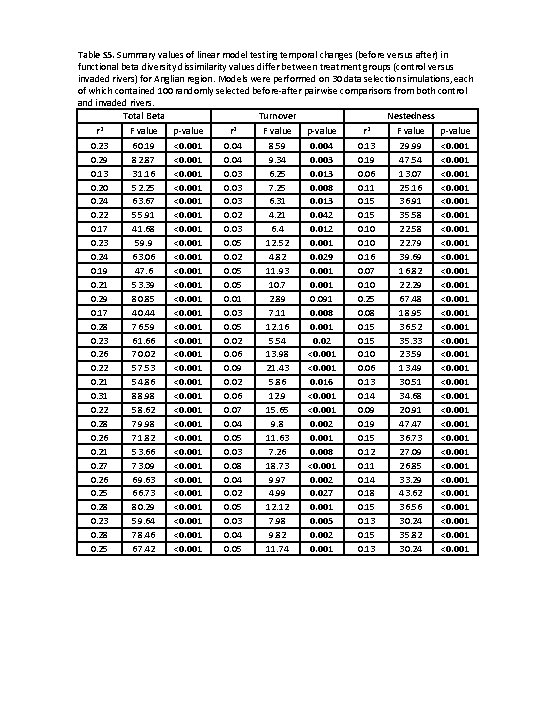
Table S 5. Summary values of linear model testing temporal changes (before versus after) in functional beta diversity dissimilarity values differ between treatment groups (control versus invaded rivers) for Anglian region. Models were performed on 30 data selection simulations, each of which contained 100 randomly selected before-after pairwise comparisons from both control and invaded rivers. Total Beta Turnover Nestedness 2 2 2 r F value p-value 0. 23 60. 19 <0. 001 0. 04 8. 59 0. 004 0. 13 29. 99 <0. 001 0. 29 82. 87 <0. 001 0. 04 9. 34 0. 003 0. 19 47. 54 <0. 001 0. 13 31. 16 <0. 001 0. 03 6. 25 0. 013 0. 06 13. 07 <0. 001 0. 20 52. 25 <0. 001 0. 03 7. 25 0. 008 0. 11 25. 16 <0. 001 0. 24 63. 67 <0. 001 0. 03 6. 31 0. 013 0. 15 36. 91 <0. 001 0. 22 55. 91 <0. 001 0. 02 4. 21 0. 042 0. 15 35. 58 <0. 001 0. 17 41. 68 <0. 001 0. 03 6. 4 0. 012 0. 10 22. 58 <0. 001 0. 23 59. 9 <0. 001 0. 05 12. 52 0. 001 0. 10 22. 79 <0. 001 0. 24 63. 06 <0. 001 0. 02 4. 82 0. 029 0. 16 39. 69 <0. 001 0. 19 47. 6 <0. 001 0. 05 11. 93 0. 001 0. 07 16. 82 <0. 001 0. 21 53. 39 <0. 001 0. 05 10. 7 0. 001 0. 10 22. 29 <0. 001 0. 29 80. 85 <0. 001 0. 01 2. 89 0. 091 0. 25 67. 48 <0. 001 0. 17 40. 44 <0. 001 0. 03 7. 11 0. 008 0. 08 18. 95 <0. 001 0. 28 76. 59 <0. 001 0. 05 12. 16 0. 001 0. 15 36. 52 <0. 001 0. 23 61. 66 <0. 001 0. 02 5. 54 0. 02 0. 15 35. 33 <0. 001 0. 26 70. 02 <0. 001 0. 06 13. 98 <0. 001 0. 10 23. 59 <0. 001 0. 22 57. 53 <0. 001 0. 09 21. 43 <0. 001 0. 06 13. 49 <0. 001 0. 21 54. 86 <0. 001 0. 02 5. 86 0. 016 0. 13 30. 51 <0. 001 0. 31 88. 98 <0. 001 0. 06 12. 9 <0. 001 0. 14 34. 68 <0. 001 0. 22 58. 62 <0. 001 0. 07 15. 65 <0. 001 0. 09 20. 91 <0. 001 0. 28 79. 98 <0. 001 0. 04 9. 8 0. 002 0. 19 47. 47 <0. 001 0. 26 71. 82 <0. 001 0. 05 11. 63 0. 001 0. 15 36. 73 <0. 001 0. 21 53. 66 <0. 001 0. 03 7. 26 0. 008 0. 12 27. 09 <0. 001 0. 27 73. 09 <0. 001 0. 08 18. 73 <0. 001 0. 11 26. 85 <0. 001 0. 26 69. 63 <0. 001 0. 04 9. 97 0. 002 0. 14 33. 29 <0. 001 0. 25 66. 73 <0. 001 0. 02 4. 99 0. 027 0. 18 43. 62 <0. 001 0. 28 80. 29 <0. 001 0. 05 12. 12 0. 001 0. 15 36. 56 <0. 001 0. 23 59. 64 <0. 001 0. 03 7. 98 0. 005 0. 13 30. 24 <0. 001 0. 28 78. 46 <0. 001 0. 04 9. 82 0. 002 0. 15 35. 82 <0. 001 0. 25 67. 42 <0. 001 0. 05 11. 74 0. 001 0. 13 30. 24 <0. 001
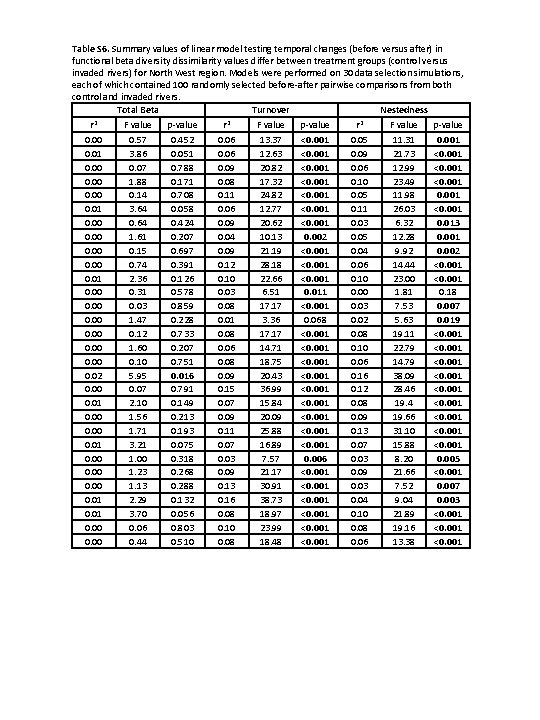
Table S 6. Summary values of linear model testing temporal changes (before versus after) in functional beta diversity dissimilarity values differ between treatment groups (control versus invaded rivers) for North West region. Models were performed on 30 data selection simulations, each of which contained 100 randomly selected before-after pairwise comparisons from both control and invaded rivers. Total Beta Turnover Nestedness 2 2 2 r F value p-value 0. 00 0. 57 0. 452 0. 06 13. 37 <0. 001 0. 05 11. 31 0. 001 0. 01 3. 86 0. 051 0. 06 12. 63 <0. 001 0. 09 21. 73 <0. 001 0. 00 0. 07 0. 788 0. 09 20. 82 <0. 001 0. 06 12. 99 <0. 001 0. 00 1. 88 0. 171 0. 08 17. 32 <0. 001 0. 10 23. 49 <0. 001 0. 00 0. 14 0. 708 0. 11 24. 82 <0. 001 0. 05 11. 98 0. 001 0. 01 3. 64 0. 058 0. 06 12. 77 <0. 001 0. 11 26. 03 <0. 001 0. 00 0. 64 0. 424 0. 09 20. 62 <0. 001 0. 03 6. 32 0. 013 0. 00 1. 61 0. 207 0. 04 10. 13 0. 002 0. 05 12. 28 0. 001 0. 00 0. 15 0. 697 0. 09 21. 19 <0. 001 0. 04 9. 92 0. 00 0. 74 0. 391 0. 12 28. 18 <0. 001 0. 06 14. 44 <0. 001 0. 01 2. 36 0. 126 0. 10 22. 66 <0. 001 0. 10 23. 00 <0. 001 0. 00 0. 31 0. 578 0. 03 6. 51 0. 011 0. 00 1. 81 0. 18 0. 00 0. 03 0. 859 0. 08 17. 17 <0. 001 0. 03 7. 53 0. 007 0. 00 1. 47 0. 228 0. 01 3. 36 0. 068 0. 02 5. 63 0. 019 0. 00 0. 12 0. 733 0. 08 17. 17 <0. 001 0. 08 19. 11 <0. 001 0. 00 1. 60 0. 207 0. 06 14. 71 <0. 001 0. 10 22. 79 <0. 001 0. 00 0. 10 0. 751 0. 08 18. 75 <0. 001 0. 06 14. 79 <0. 001 0. 02 5. 95 0. 016 0. 09 20. 43 <0. 001 0. 16 38. 09 <0. 001 0. 00 0. 07 0. 791 0. 15 36. 99 <0. 001 0. 12 28. 46 <0. 001 0. 01 2. 10 0. 149 0. 07 15. 84 <0. 001 0. 08 19. 4 <0. 001 0. 00 1. 56 0. 213 0. 09 20. 09 <0. 001 0. 09 19. 66 <0. 001 0. 00 1. 71 0. 193 0. 11 25. 88 <0. 001 0. 13 31. 10 <0. 001 0. 01 3. 21 0. 075 0. 07 16. 89 <0. 001 0. 07 15. 88 <0. 001 0. 00 1. 00 0. 318 0. 03 7. 57 0. 006 0. 03 8. 20 0. 005 0. 00 1. 23 0. 268 0. 09 21. 17 <0. 001 0. 09 21. 66 <0. 001 0. 00 1. 13 0. 288 0. 13 30. 91 <0. 001 0. 03 7. 52 0. 007 0. 01 2. 29 0. 132 0. 16 38. 73 <0. 001 0. 04 9. 04 0. 003 0. 01 3. 70 0. 056 0. 08 18. 97 <0. 001 0. 10 21. 89 <0. 001 0. 00 0. 06 0. 803 0. 10 23. 99 <0. 001 0. 08 19. 16 <0. 001 0. 00 0. 44 0. 510 0. 08 18. 48 <0. 001 0. 06 13. 38 <0. 001
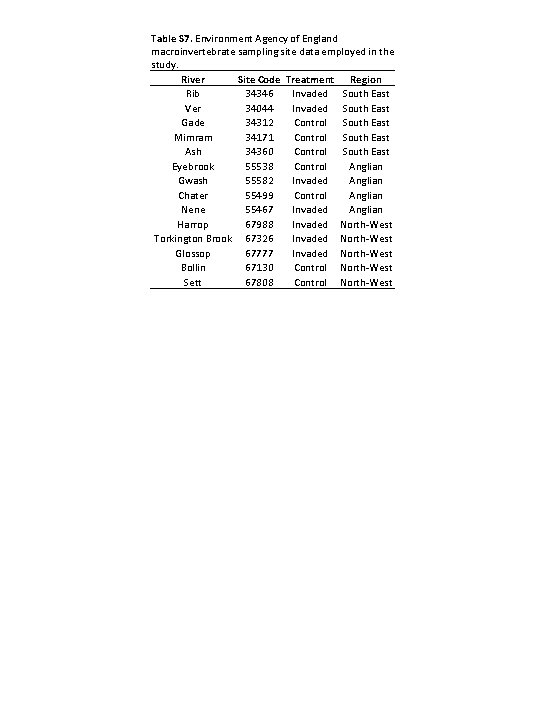
Table S 7. Environment Agency of England macroinvertebrate sampling site data employed in the study. River Site Code Treatment Region Rib 34346 Invaded South East Ver 34044 Invaded South East Gade 34312 Control South East Mimram 34171 Control South East Ash 34360 Control South East Eyebrook 55538 Control Anglian Gwash 55582 Invaded Anglian Chater 55499 Control Anglian Nene 55467 Invaded Anglian Harrop 67988 Invaded North-West Torkington Brook 67326 Invaded North-West Glossop 67777 Invaded North-West Bollin 67130 Control North-West Sett 67808 Control North-West
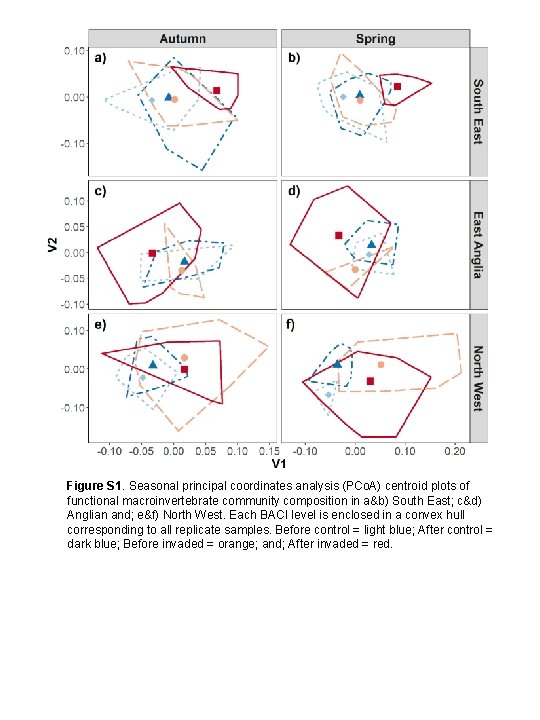
Figure S 1. Seasonal principal coordinates analysis (PCo. A) centroid plots of functional macroinvertebrate community composition in a&b) South East; c&d) Anglian and; e&f) North West. Each BACI level is enclosed in a convex hull corresponding to all replicate samples. Before control = light blue; After control = dark blue; Before invaded = orange; and; After invaded = red.
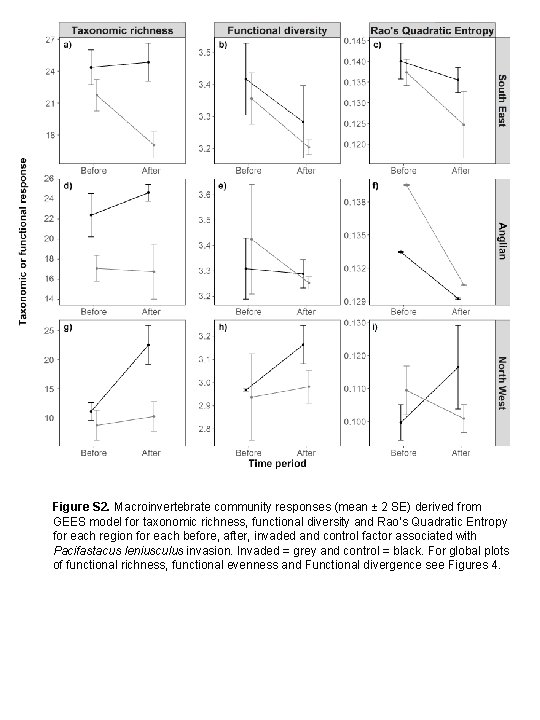
Figure S 2. Macroinvertebrate community responses (mean ± 2 SE) derived from GEES model for taxonomic richness, functional diversity and Rao’s Quadratic Entropy for each region for each before, after, invaded and control factor associated with Pacifastacus leniusculus invasion. Invaded = grey and control = black. For global plots of functional richness, functional evenness and Functional divergence see Figures 4.
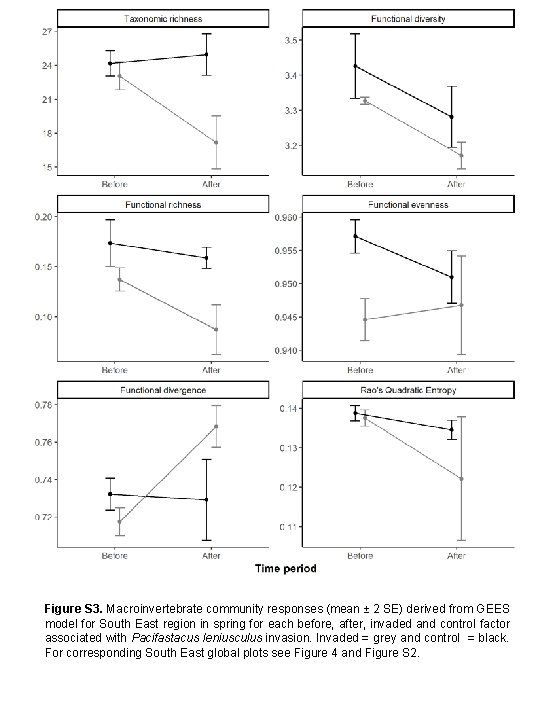
Figure S 3. Macroinvertebrate community responses (mean ± 2 SE) derived from GEES model for South East region in spring for each before, after, invaded and control factor associated with Pacifastacus leniusculus invasion. Invaded = grey and control = black. For corresponding South East global plots see Figure 4 and Figure S 2.
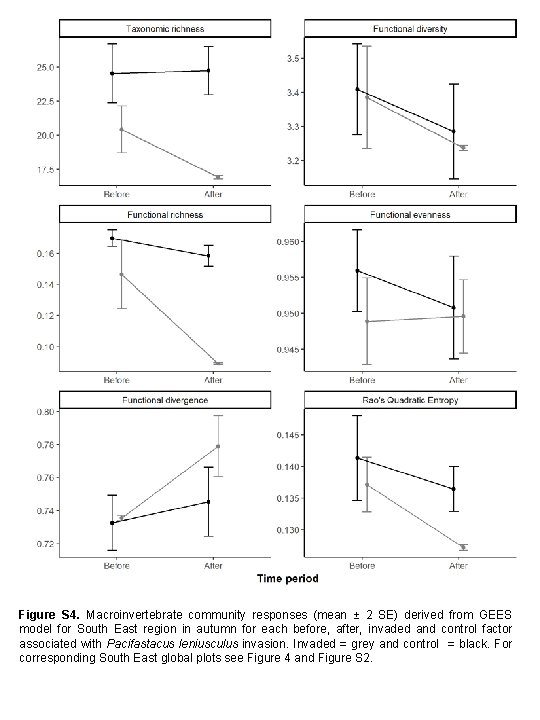
Figure S 4. Macroinvertebrate community responses (mean ± 2 SE) derived from GEES model for South East region in autumn for each before, after, invaded and control factor associated with Pacifastacus leniusculus invasion. Invaded = grey and control = black. For corresponding South East global plots see Figure 4 and Figure S 2.
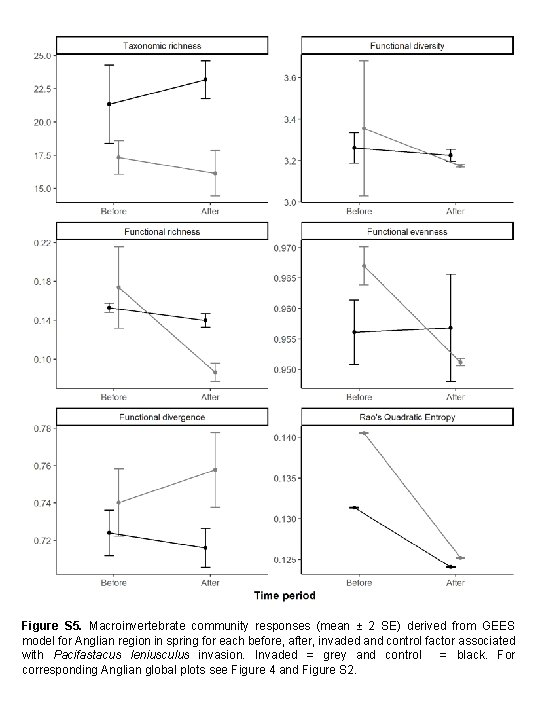
Figure S 5. Macroinvertebrate community responses (mean ± 2 SE) derived from GEES model for Anglian region in spring for each before, after, invaded and control factor associated with Pacifastacus leniusculus invasion. Invaded = grey and control = black. For corresponding Anglian global plots see Figure 4 and Figure S 2.
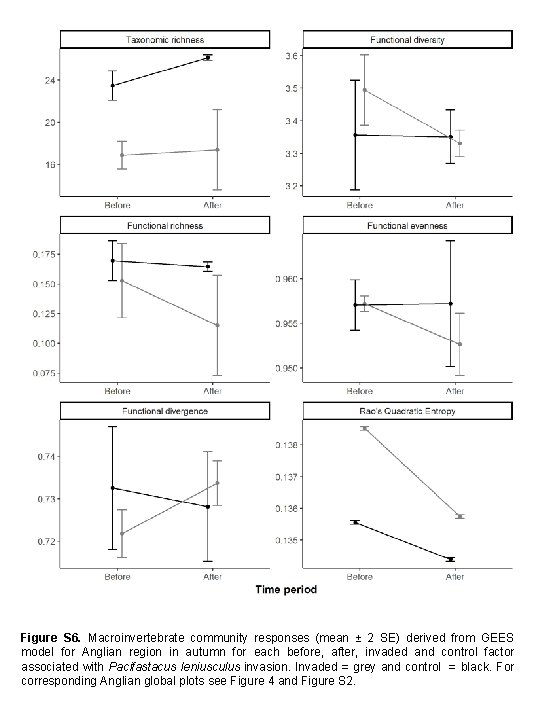
Figure S 6. Macroinvertebrate community responses (mean ± 2 SE) derived from GEES model for Anglian region in autumn for each before, after, invaded and control factor associated with Pacifastacus leniusculus invasion. Invaded = grey and control = black. For corresponding Anglian global plots see Figure 4 and Figure S 2.
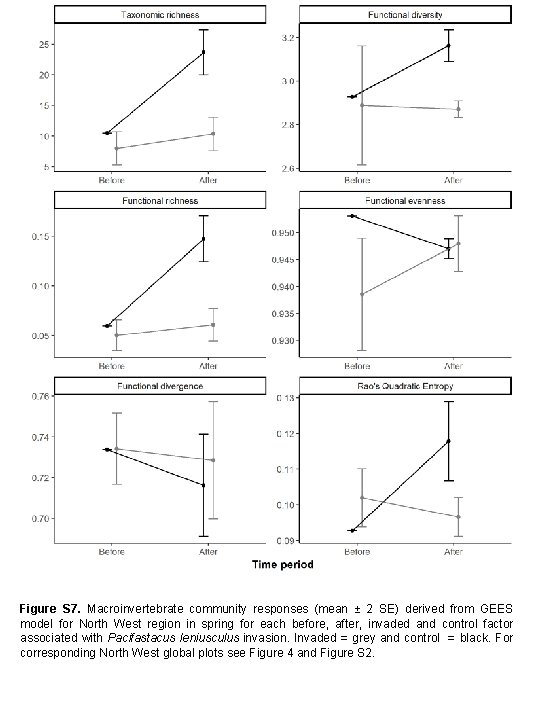
Figure S 7. Macroinvertebrate community responses (mean ± 2 SE) derived from GEES model for North West region in spring for each before, after, invaded and control factor associated with Pacifastacus leniusculus invasion. Invaded = grey and control = black. For corresponding North West global plots see Figure 4 and Figure S 2.
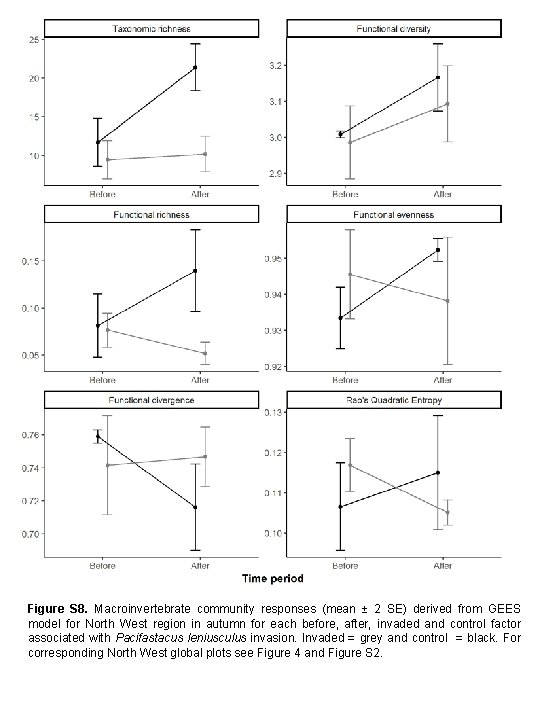
Figure S 8. Macroinvertebrate community responses (mean ± 2 SE) derived from GEES model for North West region in autumn for each before, after, invaded and control factor associated with Pacifastacus leniusculus invasion. Invaded = grey and control = black. For corresponding North West global plots see Figure 4 and Figure S 2.