
Supplemental Figures A B C D Supplemental Fig

Supplemental Figures
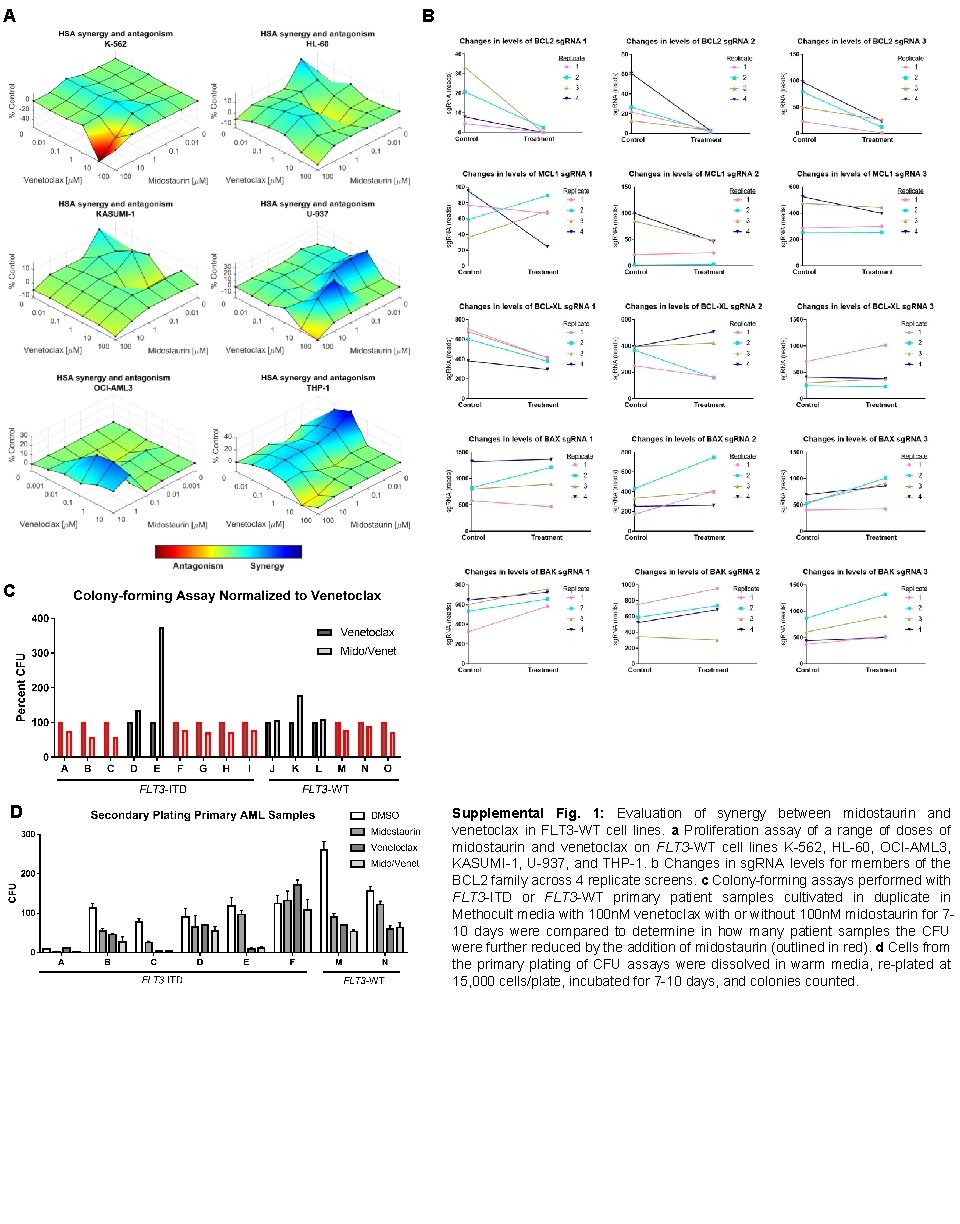
A B C D Supplemental Fig. 1: Evaluation of synergy between midostaurin and venetoclax in FLT 3 -WT cell lines. a Proliferation assay of a range of doses of midostaurin and venetoclax on FLT 3 -WT cell lines K-562, HL-60, OCI-AML 3, KASUMI-1, U-937, and THP-1. b Changes in sg. RNA levels for members of the BCL 2 family across 4 replicate screens. c Colony-forming assays performed with FLT 3 -ITD or FLT 3 -WT primary patient samples cultivated in duplicate in Methocult media with 100 n. M venetoclax with or without 100 n. M midostaurin for 710 days were compared to determine in how many patient samples the CFU were further reduced by the addition of midostaurin (outlined in red). d Cells from the primary plating of CFU assays were dissolved in warm media, re-plated at 15, 000 cells/plate, incubated for 7 -10 days, and colonies counted.
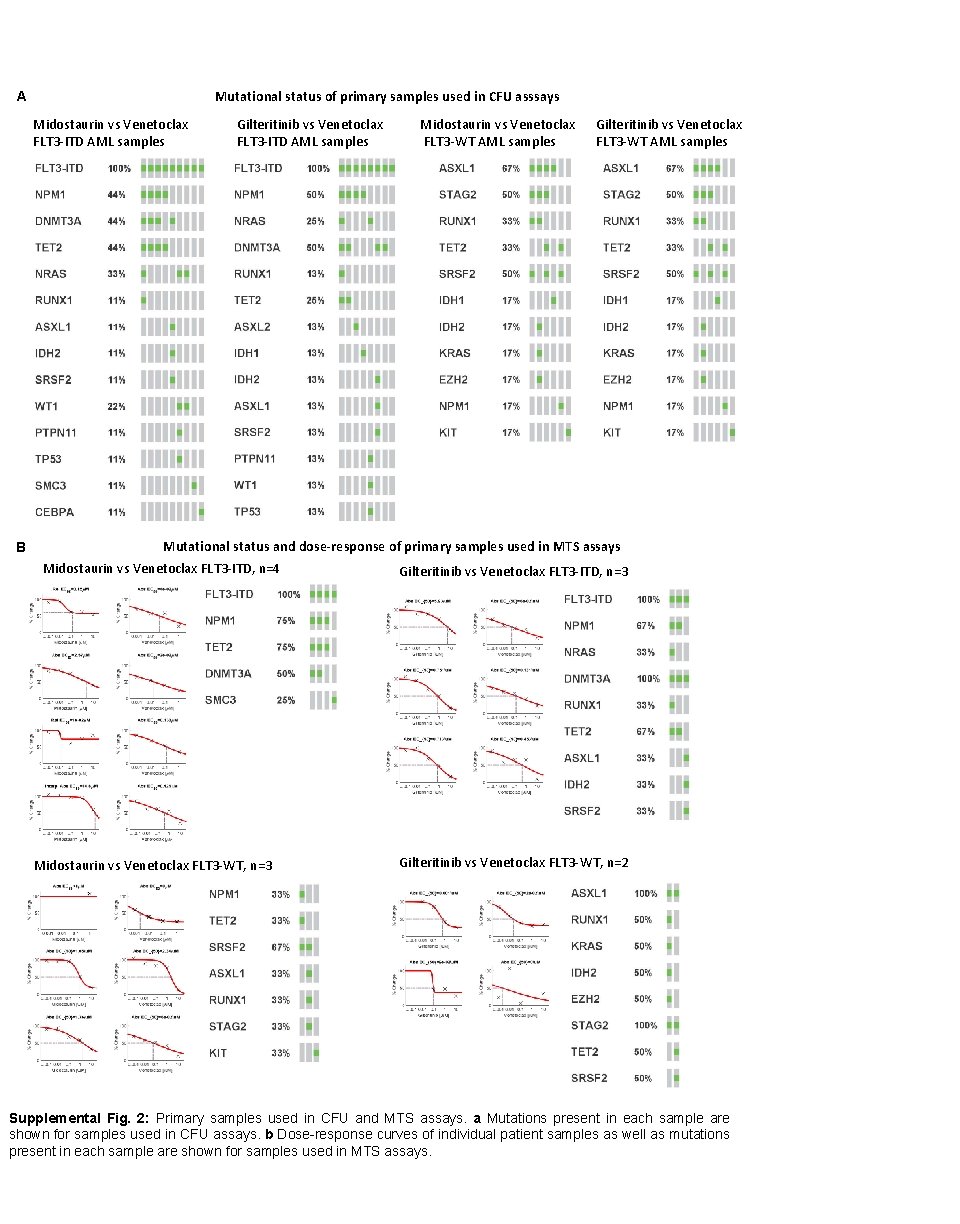
Mutational status of primary samples used in CFU asssays A Midostaurin vs Venetoclax FLT 3 -ITD AML samples B Gilteritinib vs Venetoclax FLT 3 -ITD AML samples Midostaurin vs Venetoclax FLT 3 -WT AML samples Gilteritinib vs Venetoclax FLT 3 -WT AML samples Mutational status and dose-response of primary samples used in MTS assays Midostaurin vs Venetoclax FLT 3 -ITD, n=4 Midostaurin vs Venetoclax FLT 3 -WT, n=3 Gilteritinib vs Venetoclax FLT 3 -ITD, n=3 Gilteritinib vs Venetoclax FLT 3 -WT, n=2 Supplemental Fig. 2: Primary samples used in CFU and MTS assays. a Mutations present in each sample are shown for samples used in CFU assays. b Dose-response curves of individual patient samples as well as mutations present in each sample are shown for samples used in MTS assays.
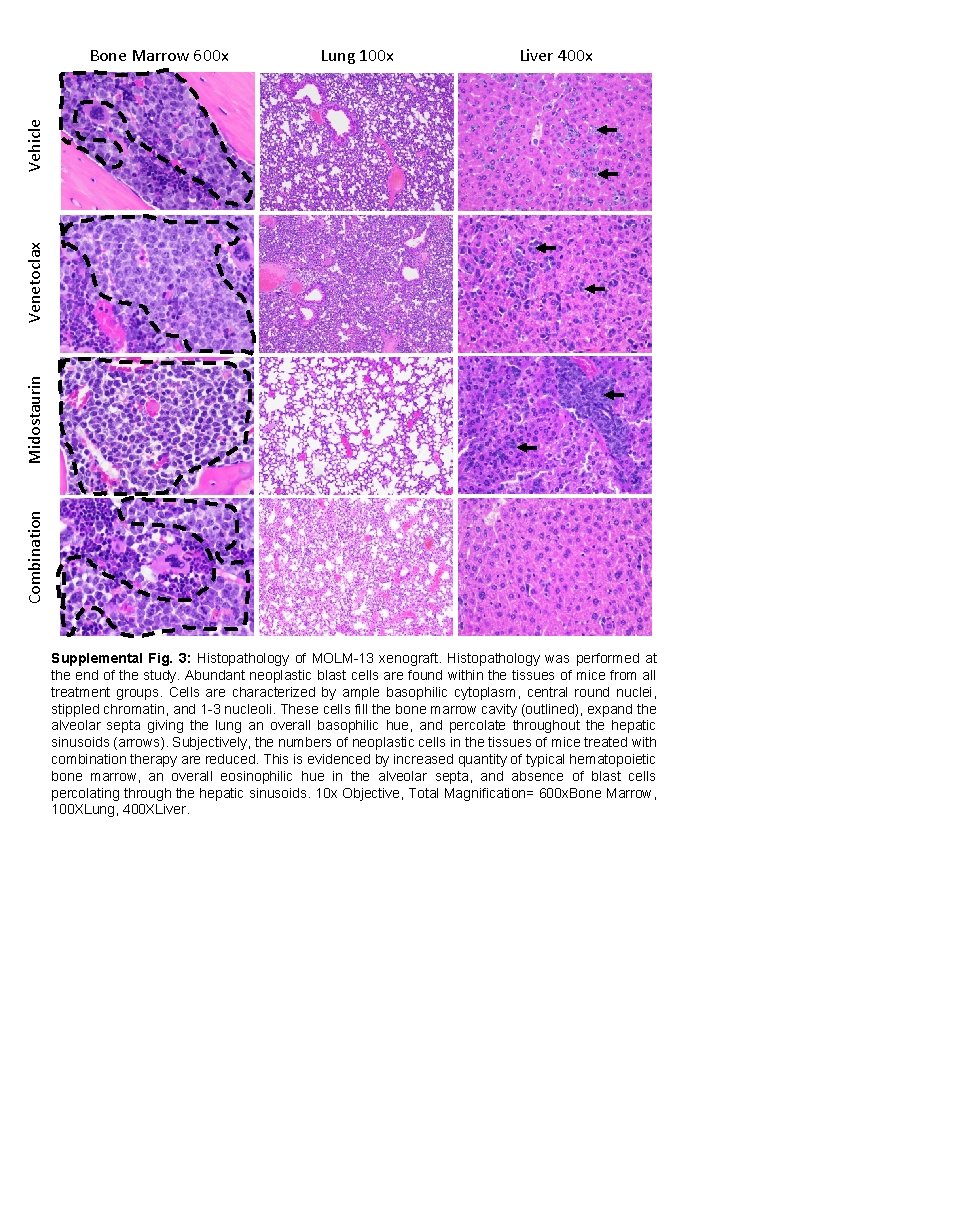
Lung 100 x Liver 400 x Combination Midostaurin Venetoclax Vehicle Bone Marrow 600 x Supplemental Fig. 3: Histopathology of MOLM-13 xenograft. Histopathology was performed at the end of the study. Abundant neoplastic blast cells are found within the tissues of mice from all treatment groups. Cells are characterized by ample basophilic cytoplasm, central round nuclei, stippled chromatin, and 1 -3 nucleoli. These cells fill the bone marrow cavity (outlined), expand the alveolar septa giving the lung an overall basophilic hue, and percolate throughout the hepatic sinusoids (arrows). Subjectively, the numbers of neoplastic cells in the tissues of mice treated with combination therapy are reduced. This is evidenced by increased quantity of typical hematopoietic bone marrow, an overall eosinophilic hue in the alveolar septa, and absence of blast cells percolating through the hepatic sinusoids. 10 x Objective, Total Magnification= 600 x. Bone Marrow, 100 XLung, 400 XLiver.
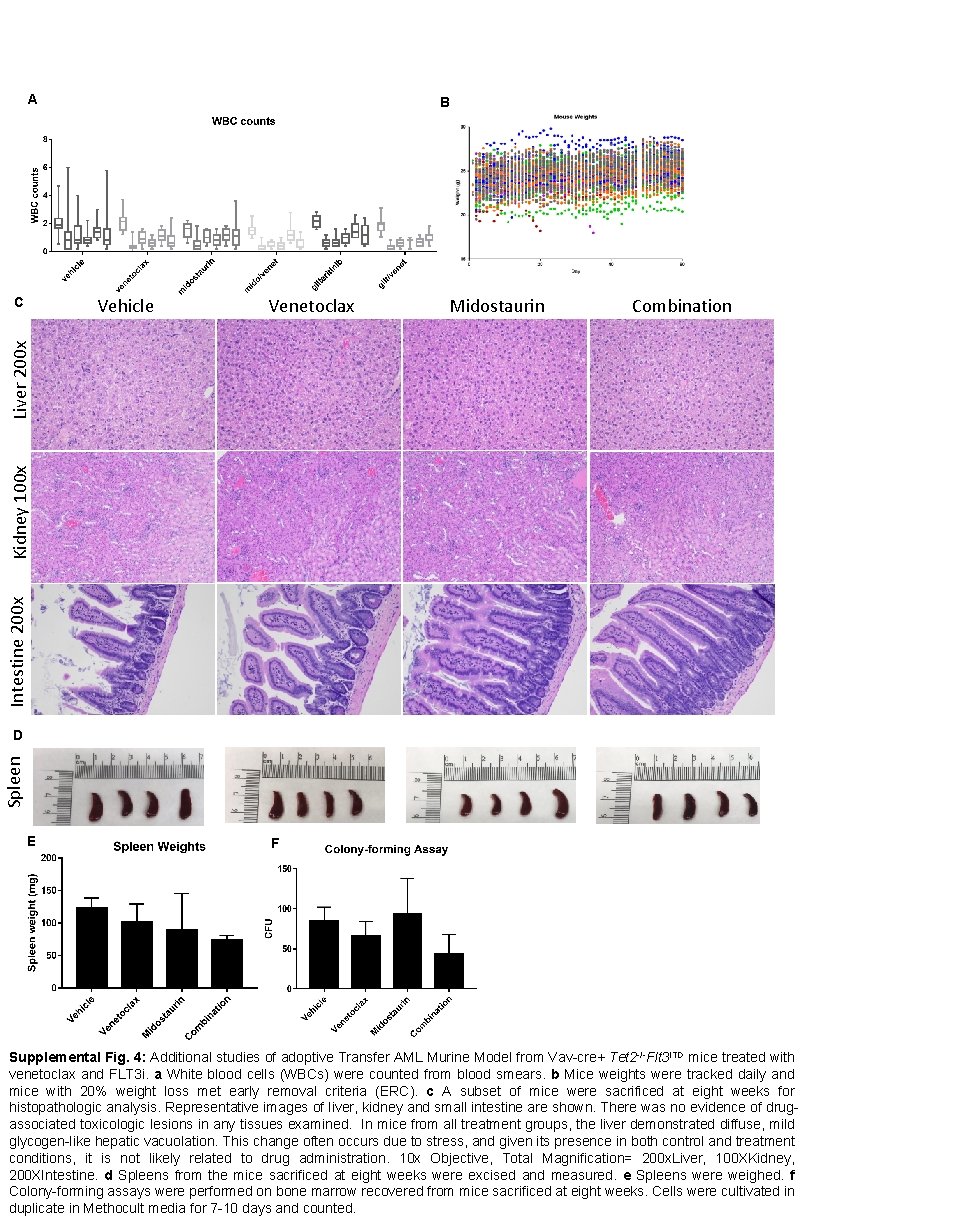
A B Vehicle Venetoclax Midostaurin Combination Intestine 200 x Kidney 100 x Liver 200 x C Spleen D E F Supplemental Fig. 4: Additional studies of adoptive Transfer AML Murine Model from Vav-cre+ Tet 2 -/-Flt 3 ITD mice treated with venetoclax and FLT 3 i. a White blood cells (WBCs) were counted from blood smears. b Mice weights were tracked daily and mice with 20% weight loss met early removal criteria (ERC). c A subset of mice were sacrificed at eight weeks for histopathologic analysis. Representative images of liver, kidney and small intestine are shown. There was no evidence of drugassociated toxicologic lesions in any tissues examined. In mice from all treatment groups, the liver demonstrated diffuse, mild glycogen-like hepatic vacuolation. This change often occurs due to stress, and given its presence in both control and treatment conditions, it is not likely related to drug administration. 10 x Objective, Total Magnification= 200 x. Liver, 100 XKidney, 200 XIntestine. d Spleens from the mice sacrificed at eight weeks were excised and measured. e Spleens were weighed. f Colony-forming assays were performed on bone marrow recovered from mice sacrificed at eight weeks. Cells were cultivated in duplicate in Methocult media for 7 -10 days and counted.
- Slides: 5