
Supervisor and Manager Safety Responsibilities Oregon State University
Supervisor and Manager Safety Responsibilities Oregon State University
In this training session, you will learn your safety responsibilities including employee training, work area inspection, and evaluation of employee tasks. You will also find resources to help you fulfill your safety responsibilities.
• At OSU, there approximately 15 agencies that have jurisdiction over health, safety and the environment. • Government agencies such as those listed at the right require specific safety rules and procedures. • Research activities are subject to additional rules and regulatory agencies, such as the National Institutes of Health
Environmental Health and Safety (EH&S) • EH&S is responsible for promoting and ensuring OSU compliance with environmental and occupational safety and health regulatory requirements. • EH&S helps groups and departments identify rules, regulations, policies, and procedures that affect operations.
EH&S assists with: • • training inspections waste management hazard assessment accident review environmental monitoring program development
Three major EH&S programs include: • Fire Prevention and Life Safety Program • Responsible for audits of university facilities to ensure life, safety, and fire code compliance • Loss Prevention Program • Responsible for asbestos abatement and monitoring, occupational safety and health education development and training, general loss prevention such as ergonomics, slip and trip hazards, and other broad university safety issues • Industrial Hygiene Program • Responsible for laboratory safety audits and compliance, indoor air quality investigations, and industrial hygiene activities related to occupational health and safety
What are you responsible for as a supervisor? Supervisors are directly responsible and accountable for carrying out health and safety regulations, and university safety procedures within their area of control.
Supervisor safety responsibilities include: • Making a reasonable effort to ensure the safety of employees and students in your area of control. • Evaluating physical capabilities of employees to perform tasks. • Promoting safe practices and attitudes. • Enforcing safe work practices. • Responding appropriately to employee safety concerns. • Completing all the same safety trainings required for your employees, so you know whether they are complying, and so you can answer their questions.
Supervisor safety responsibilities continued: • Providing job training on work area safety procedures for all employees, especially new and reassigned employees. • Supervisors must ensure that their employees or students receive all required safety training. • Supervisors must provide onthe-job training specific to their location/activities. • All training must be documented.
Supervisor safety responsibilities continued: • Conducting regular work area safety inspections with the guidance of EH&S to identify and correct unsafe conditions and work practices. • A checklist has been developed to assist with self-audits. • Go to the Hazard Identification and Control Safety Instruction for more information.
Supervisor safety responsibilities continued: • Investigating injury accidents to determine cause, correct safety deficiencies, and prevent recurrence. • For more information on accident investigations, go to the Safety Instruction.
Supervisor safety responsibilities continued: • Reporting accidents immediately; knowing worker’s compensation claims procedures and responsibilities. • Go to the Workers’ Compensation website for more information.
Supervisor safety responsibilities continued: • Providing proper equipment so employees can perform their jobs safely. • This includes tools and personal protective equipment, as well as procedures for using the equipment. • More information can be found on the EH&S PPE page.
An employee is anyone receiving monetary compensation to perform a duty at OSU • • • Faculty Staff Student employees Graduate Assistants Temporary workers paid by OSU • Keep in mind that you may also supervise non-employees (volunteers, visiting or adjunct scientists, etc. ). Their safety is equally important and safety rules and regulations apply to them as well, particularly safety training requirements.
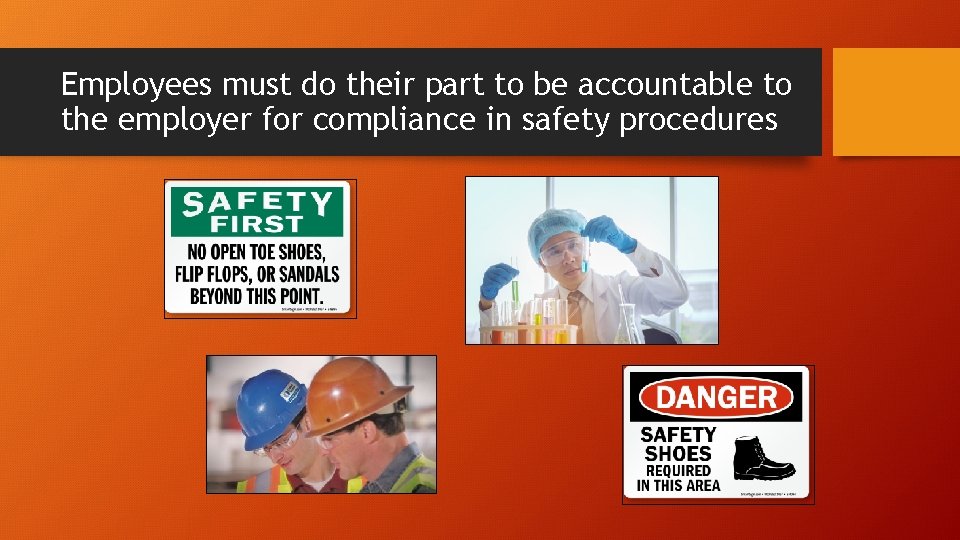
Employees must do their part to be accountable to the employer for compliance in safety procedures
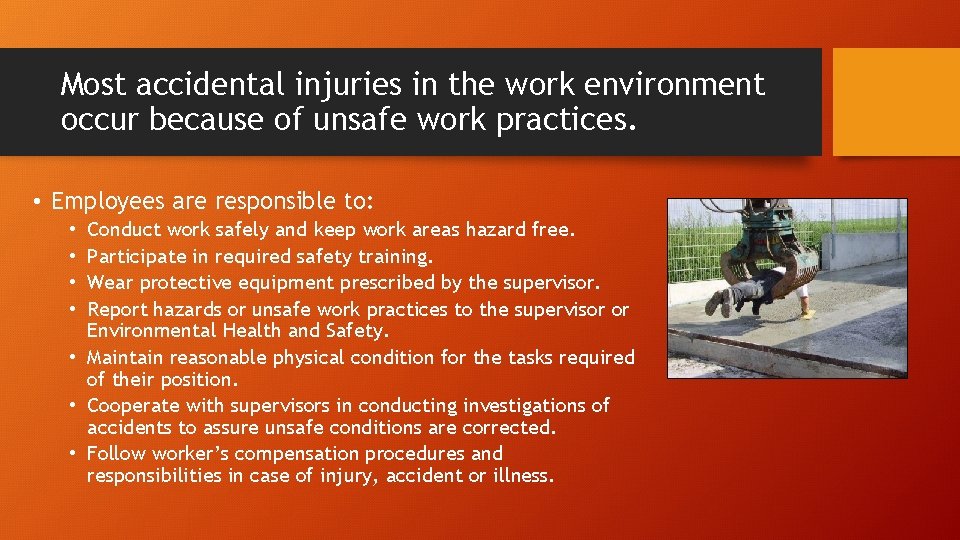
Most accidental injuries in the work environment occur because of unsafe work practices. • Employees are responsible to: Conduct work safely and keep work areas hazard free. Participate in required safety training. Wear protective equipment prescribed by the supervisor. Report hazards or unsafe work practices to the supervisor or Environmental Health and Safety. • Maintain reasonable physical condition for the tasks required of their position. • Cooperate with supervisors in conducting investigations of accidents to assure unsafe conditions are corrected. • Follow worker’s compensation procedures and responsibilities in case of injury, accident or illness. • •
To learn about specific safety programs that may apply to your work area, click a topic. • • • Biological Safety Electrical Safety Emergency Response Ergonomics Fire & Earthquake Safety General Workplace Safety • • • Hazardous Materials Laboratory & Chemical Safety Laser Safety Radiological Safety Workplace Violence Finished with topics? Click here to exit this menu and move on
Biological Safety Program The Biological Safety Program covers individuals who work with blood, body fluids, tissues or unfixed cells of human origin, or have contact with animals. There are specific requirements for training, medical surveillance and reporting. Click the icon to go to the EH&S Biological Safety home page for a full list of services. Click the icon to go to administrative policies and procedures on biological safety.
Biological Safety • This is the end of the biological safety topic. Click a button below to continue. • For more information, contact the Biological Safety Officer at 541737 -4557 or visit our website at http: //ehs. oregonstate. edu Return to main menu to pick another topic Bypass additional topics and continue
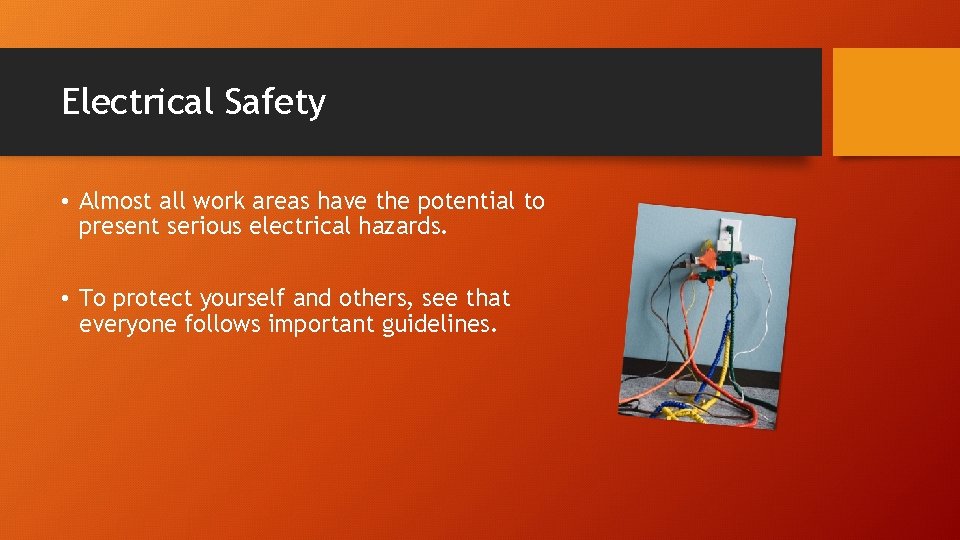
Electrical Safety • Almost all work areas have the potential to present serious electrical hazards. • To protect yourself and others, see that everyone follows important guidelines.
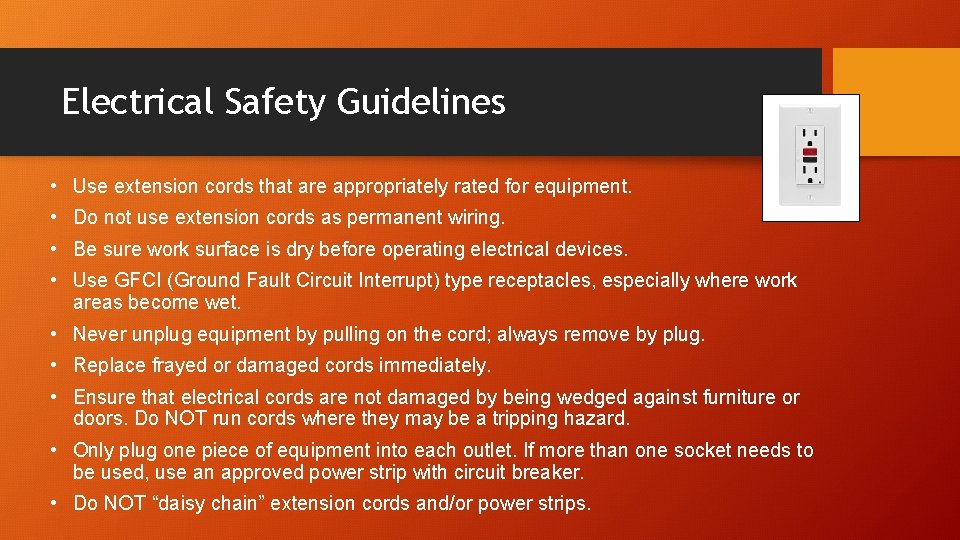
Electrical Safety Guidelines • Use extension cords that are appropriately rated for equipment. • Do not use extension cords as permanent wiring. • Be sure work surface is dry before operating electrical devices. • Use GFCI (Ground Fault Circuit Interrupt) type receptacles, especially where work areas become wet. • Never unplug equipment by pulling on the cord; always remove by plug. • Replace frayed or damaged cords immediately. • Ensure that electrical cords are not damaged by being wedged against furniture or doors. Do NOT run cords where they may be a tripping hazard. • Only plug one piece of equipment into each outlet. If more than one socket needs to be used, use an approved power strip with circuit breaker. • Do NOT “daisy chain” extension cords and/or power strips.
Electrical Safety • This is the end of the electrical safety topic. Click a button below to continue. • For more information, contact Environmental Health & Safety at 541 -737 -2273 or visit our website at http: //ehs. oregonstate. edu Return to main menu to pick another topic Bypass additional topics and continue
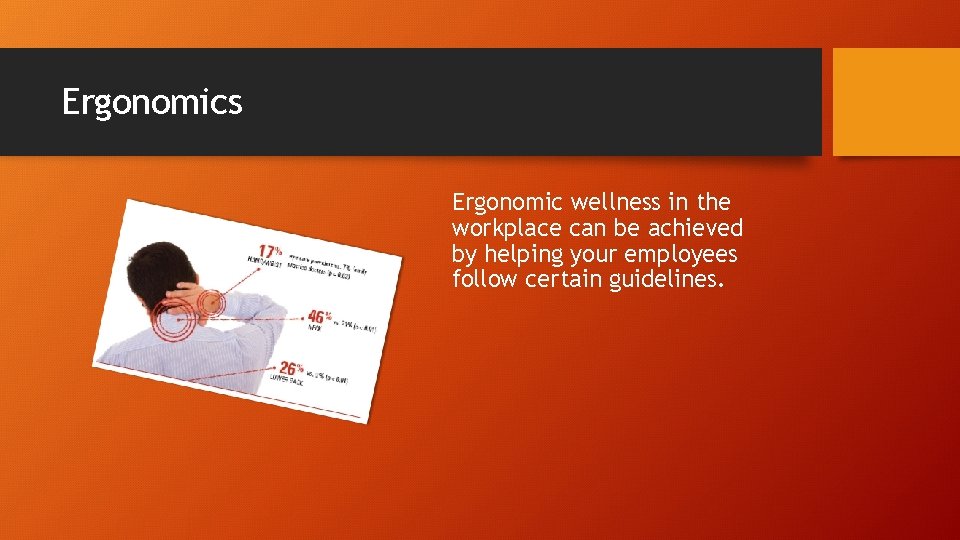
Ergonomics Ergonomic wellness in the workplace can be achieved by helping your employees follow certain guidelines.
Ergonomic Guidelines • Educate yourself and your employees about the potential risks associated with tasks involving prolonged repetitive motion. • Make necessary adjustments to achieve the best fit at work stations. • Avoid performing repetitive tasks for long durations. Take frequent short breaks or break up with alternative activities. • Use proper body posture during work tasks such as computer work or lifting heavy objects. • Adjust lighting sources to avoid glare. Environmental Health & Safety can assist with ergonomic awareness and evaluating work stations.
Ergonomics • This is the end of the ergonomics topic. Click a button below to continue. • For more information, contact Environmental Health & Safety at 541 -737 -2273 or visit our website at http: //ehs. oregonstate. edu Return to main menu to pick another topic Bypass additional topics and continue
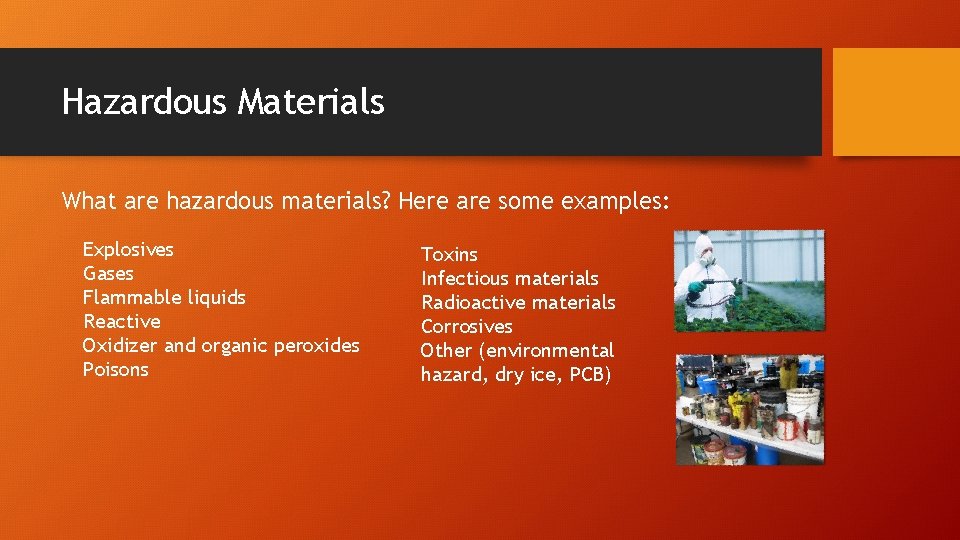
Hazardous Materials What are hazardous materials? Here are some examples: Explosives Gases Flammable liquids Reactive Oxidizer and organic peroxides Poisons Toxins Infectious materials Radioactive materials Corrosives Other (environmental hazard, dry ice, PCB)
Hazardous Materials • All employees and employers have a right to know about potential hazardous materials in the workplace and to be trained properly. • Oregon’s Hazard Communication rules (or the RIGHT TO KNOW law) informs employees and employers of up-to-date information about thousands of regulated chemicals used in the workplace.

Hazardous Materials • Employees should read the Working Safely with Hazardous Materials handbook. Click the icon to go to the booklet. Remember, hazardous materials are found everywhere, not just in laboratories.
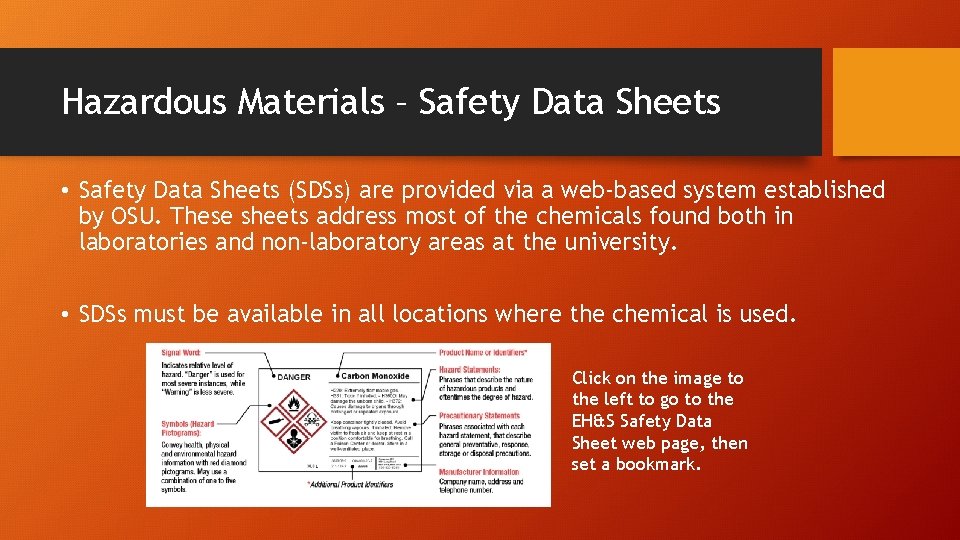
Hazardous Materials – Safety Data Sheets • Safety Data Sheets (SDSs) are provided via a web-based system established by OSU. These sheets address most of the chemicals found both in laboratories and non-laboratory areas at the university. • SDSs must be available in all locations where the chemical is used. Click on the image to the left to go to the EH&S Safety Data Sheet web page, then set a bookmark.
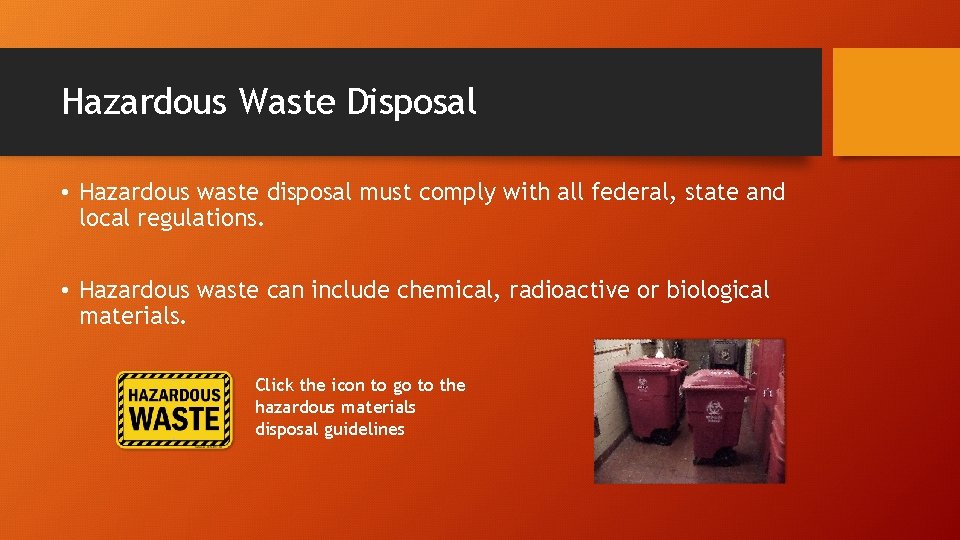
Hazardous Waste Disposal • Hazardous waste disposal must comply with all federal, state and local regulations. • Hazardous waste can include chemical, radioactive or biological materials. Click the icon to go to the hazardous materials disposal guidelines
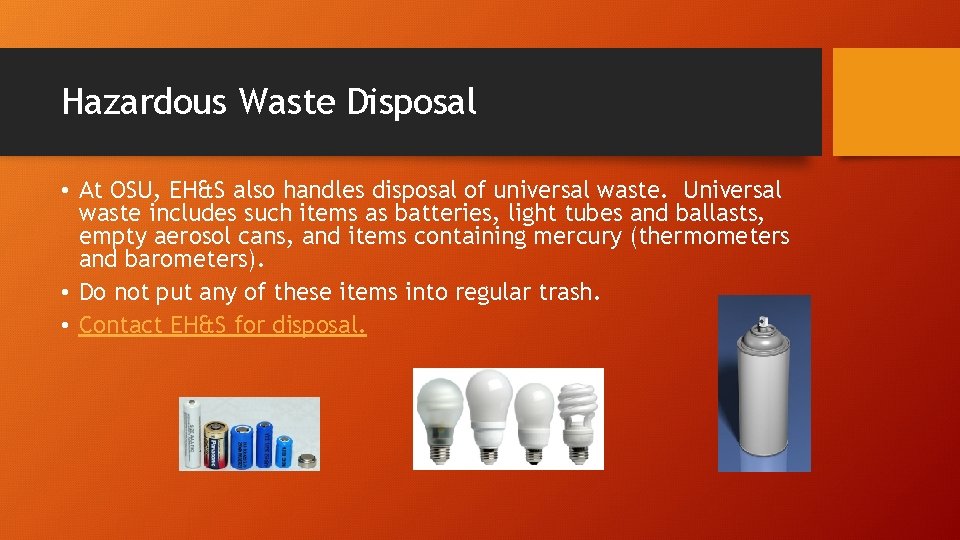
Hazardous Waste Disposal • At OSU, EH&S also handles disposal of universal waste. Universal waste includes such items as batteries, light tubes and ballasts, empty aerosol cans, and items containing mercury (thermometers and barometers). • Do not put any of these items into regular trash. • Contact EH&S for disposal.
Hazardous Waste Disposal Hazardous waste and universal waste training (and quiz) are available on-line. Click the icon to go directly to the training.
Shipping Hazardous Materials • There are many regulations regarding transportation of hazardous materials. • The Department of Transportation and the International Air Transport Association (IATA) have very specific rules for handling, packaging and shipping hazardous materials. • Never carry hazardous materials in your luggage--no matter how small the amount.
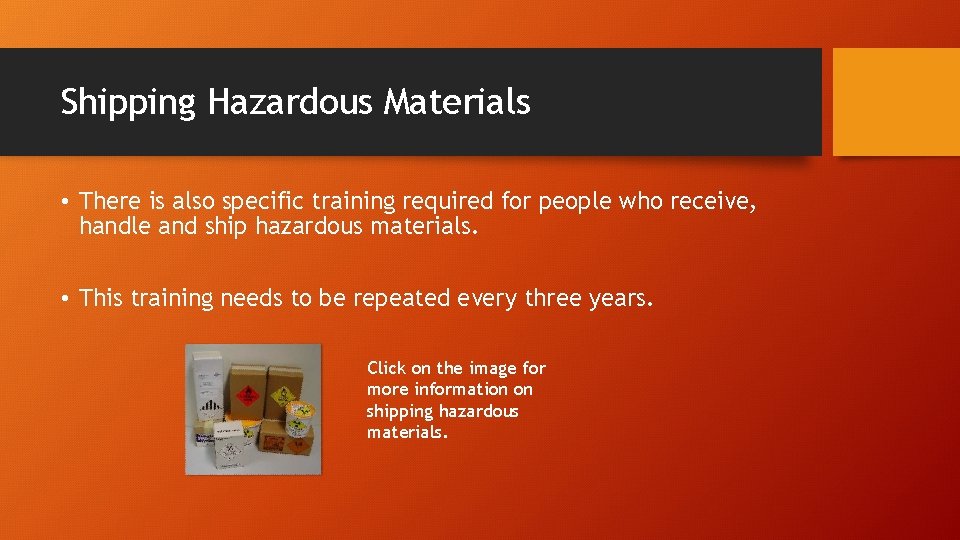
Shipping Hazardous Materials • There is also specific training required for people who receive, handle and ship hazardous materials. • This training needs to be repeated every three years. Click on the image for more information on shipping hazardous materials.
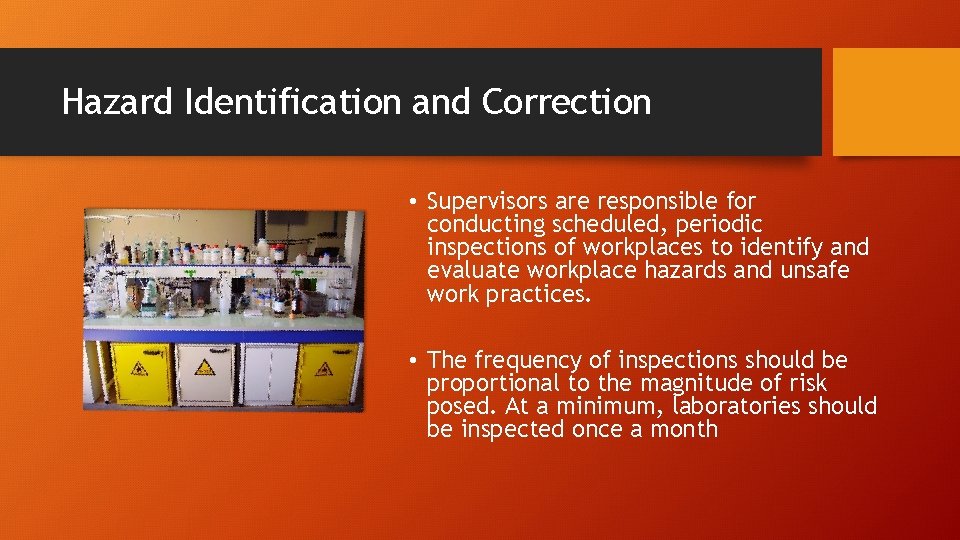
Hazard Identification and Correction • Supervisors are responsible for conducting scheduled, periodic inspections of workplaces to identify and evaluate workplace hazards and unsafe work practices. • The frequency of inspections should be proportional to the magnitude of risk posed. At a minimum, laboratories should be inspected once a month
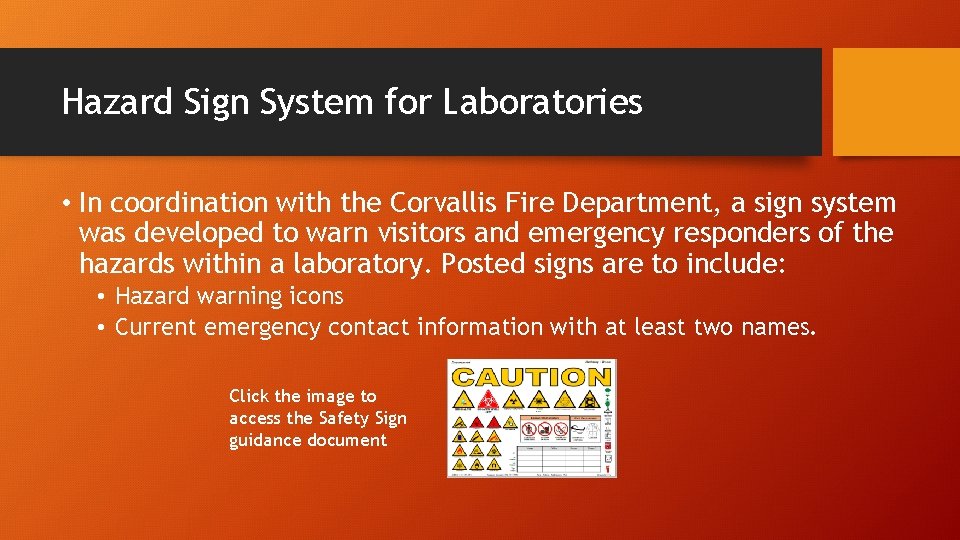
Hazard Sign System for Laboratories • In coordination with the Corvallis Fire Department, a sign system was developed to warn visitors and emergency responders of the hazards within a laboratory. Posted signs are to include: • Hazard warning icons • Current emergency contact information with at least two names. Click the image to access the Safety Sign guidance document
Hazardous Materials • This is the end of the hazardous materials topic. Click a button below to continue. • For more information, contact Environmental Health & Safety at 541 -737 -2273 or visit our website at http: //ehs. oregonstate. edu Return to main menu to pick another topic Bypass additional topics and continue
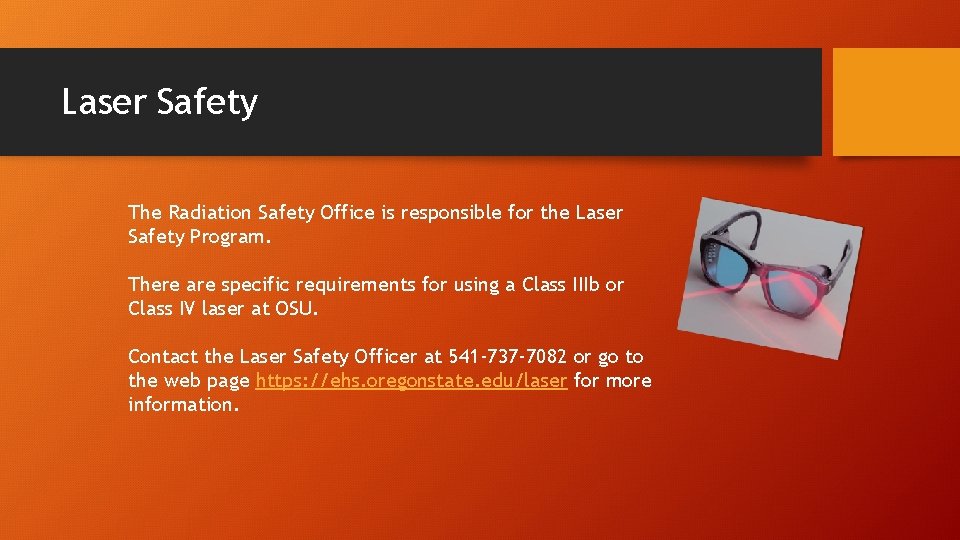
Laser Safety The Radiation Safety Office is responsible for the Laser Safety Program. There are specific requirements for using a Class IIIb or Class IV laser at OSU. Contact the Laser Safety Officer at 541 -737 -7082 or go to the web page https: //ehs. oregonstate. edu/laser for more information.
Laser Safety • This is the end of the laser safety topic. Click a button below to continue. • For more information, contact Environmental Health & Safety at 541 -737 -2273 or visit our website at http: //ehs. oregonstate. edu Return to main menu to pick another topic Bypass additional topics and continue
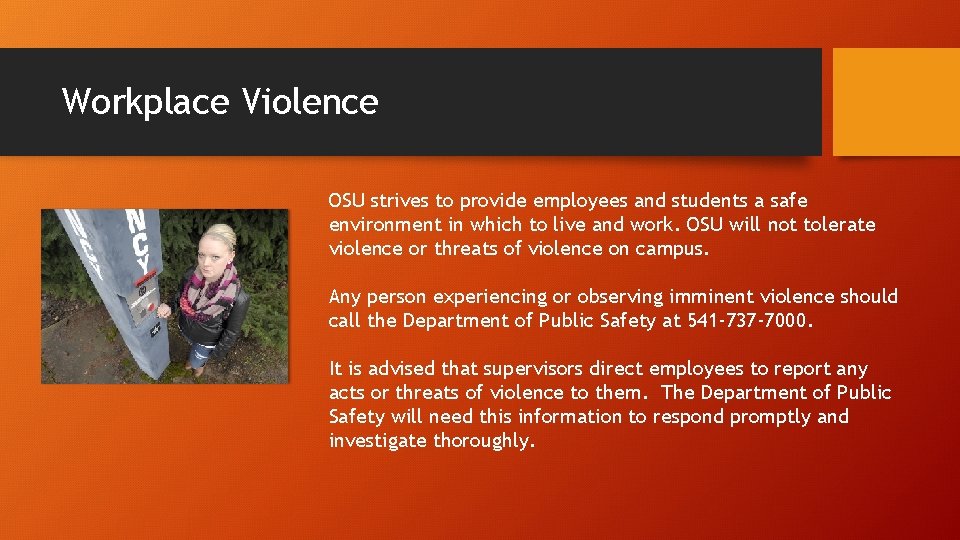
Workplace Violence OSU strives to provide employees and students a safe environment in which to live and work. OSU will not tolerate violence or threats of violence on campus. Any person experiencing or observing imminent violence should call the Department of Public Safety at 541 -737 -7000. It is advised that supervisors direct employees to report any acts or threats of violence to them. The Department of Public Safety will need this information to respond promptly and investigate thoroughly.
Workplace Violence • This is the end of the workplace violence topic. Click a button below to continue. • For more information, contact the Department of Public Safety at 541737 -3010 or visit their website at http: //publicsafety. oregonstate. edu Return to main menu to pick another topic Bypass additional topics and continue
Emergency Response OSU responds to all situations that fall under these two definitions: Emergency: An unforeseen event that calls for immediate action to protect individuals, the environment, or property. Health-threatening emergency: There is clear potential for serious injury to a person if action is not taken. (If in doubt, consider the emergency health-threatening. )
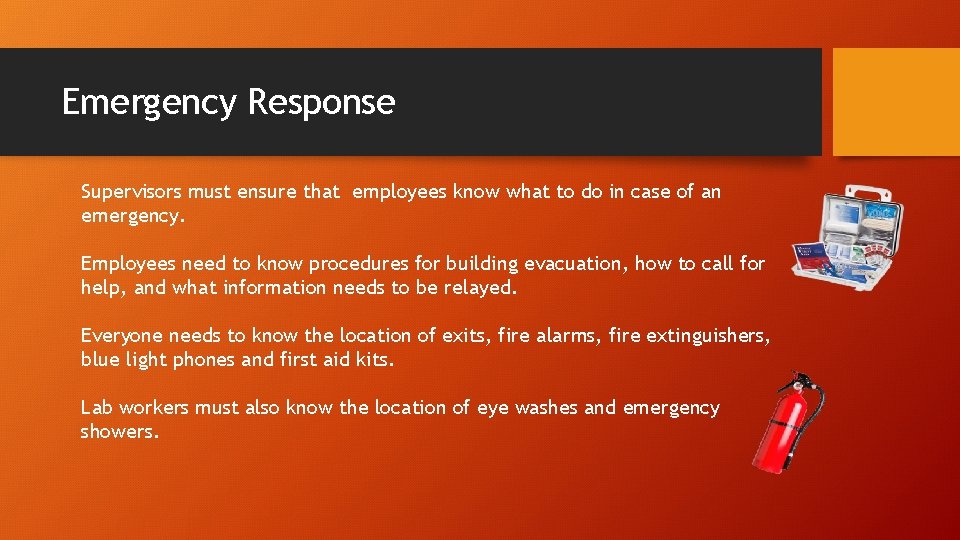
Emergency Response Supervisors must ensure that employees know what to do in case of an emergency. Employees need to know procedures for building evacuation, how to call for help, and what information needs to be relayed. Everyone needs to know the location of exits, fire alarms, fire extinguishers, blue light phones and first aid kits. Lab workers must also know the location of eye washes and emergency showers.
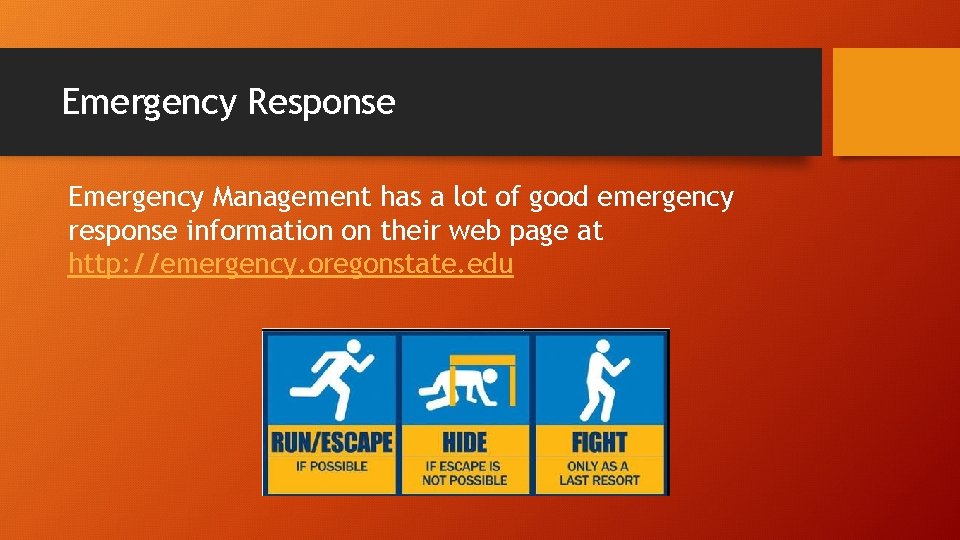
Emergency Response Emergency Management has a lot of good emergency response information on their web page at http: //emergency. oregonstate. edu
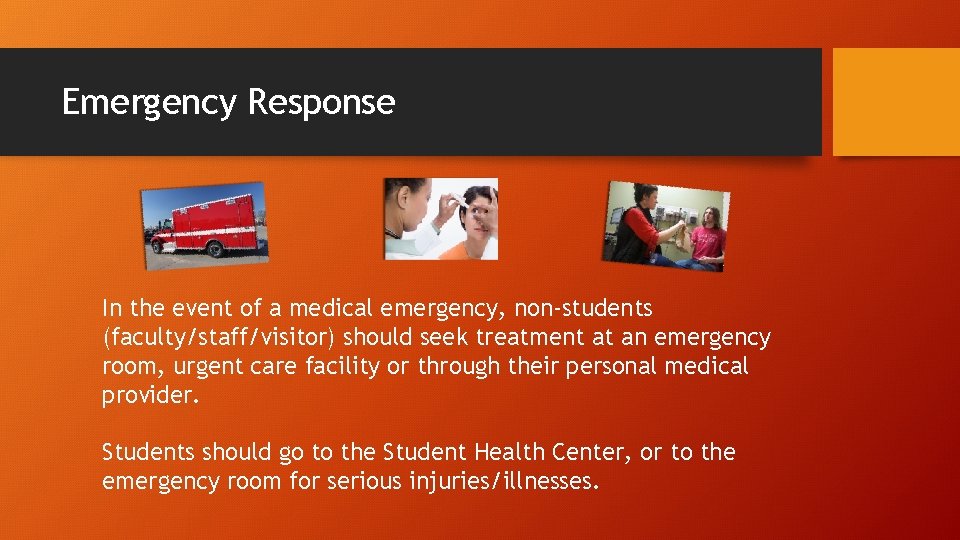
Emergency Response In the event of a medical emergency, non-students (faculty/staff/visitor) should seek treatment at an emergency room, urgent care facility or through their personal medical provider. Students should go to the Student Health Center, or to the emergency room for serious injuries/illnesses.
Emergency Response • This is the end of the emergency response topic. Click a button below to continue. • For more information, contact Emergency Management at 541 -7374713 or visit their website at http: //emergency. oregonstate. edu Return to main menu to pick another topic Bypass additional topics and continue
Fire and Earthquake Safety • To ensure fire safety in the workplace, everyone needs to know how to respond. • It is suggested that supervisors conduct annual evacuation drills to make sure employees know how to exit safely. Click the icon to go to the EH&S safety instruction on fire safety and building evacuation
Fire and Earthquake Safety • In case of fire: • Report the fire by pulling the fire alarm box (if available) and then calling 911 when in a safe location. • Evacuate the fire area. Close the door behind you to contain the fire. • Use the nearest fire exit or stairway. Do not use elevators. • Drop and crawl if smoke is present.
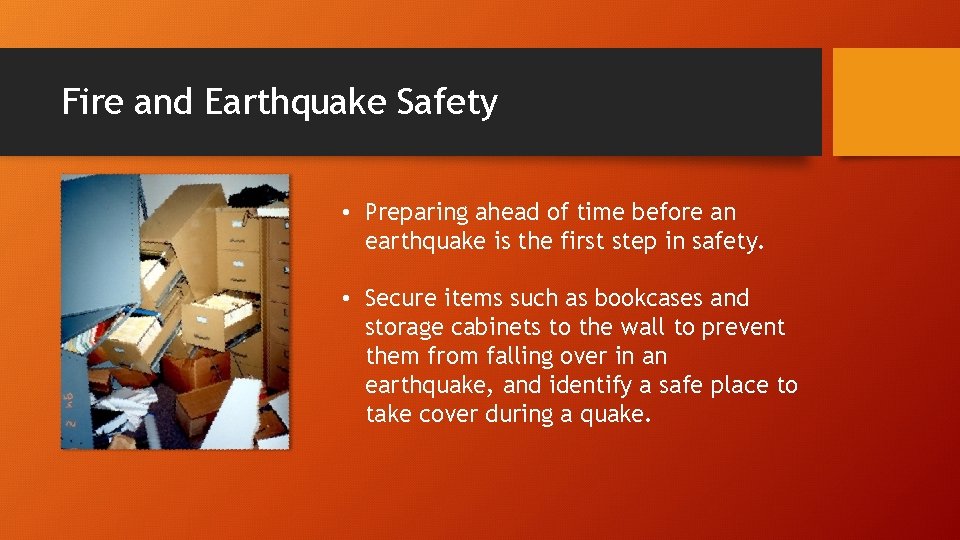
Fire and Earthquake Safety • Preparing ahead of time before an earthquake is the first step in safety. • Secure items such as bookcases and storage cabinets to the wall to prevent them from falling over in an earthquake, and identify a safe place to take cover during a quake.
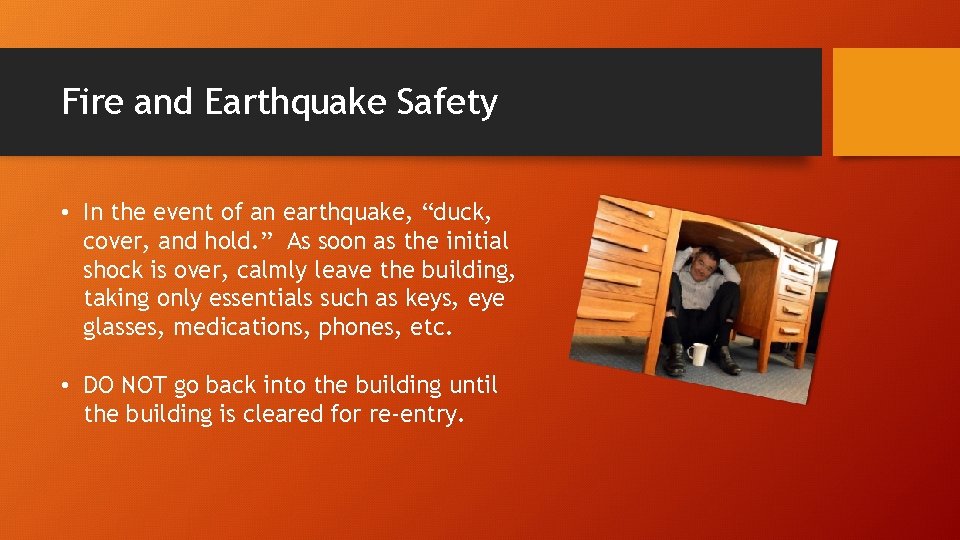
Fire and Earthquake Safety • In the event of an earthquake, “duck, cover, and hold. ” As soon as the initial shock is over, calmly leave the building, taking only essentials such as keys, eye glasses, medications, phones, etc. • DO NOT go back into the building until the building is cleared for re-entry.
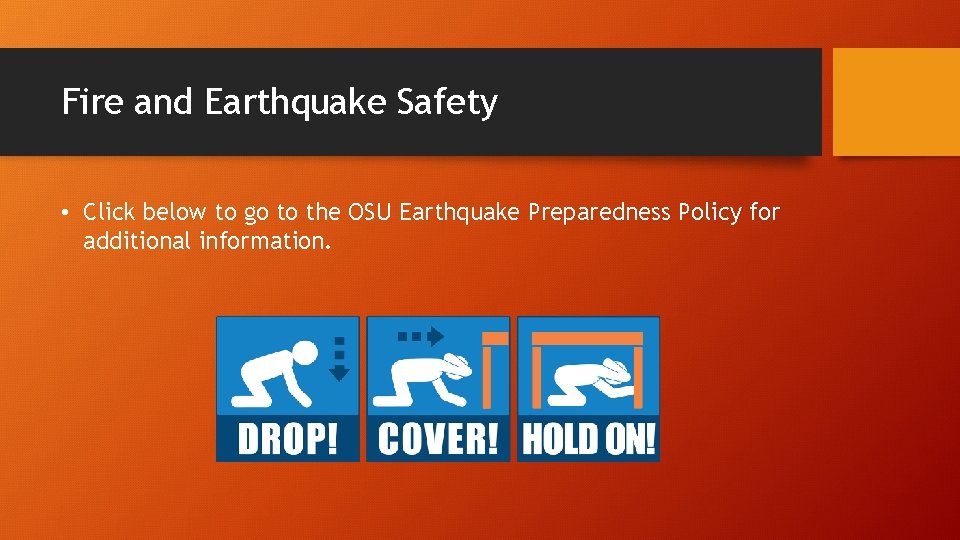
Fire and Earthquake Safety • Click below to go to the OSU Earthquake Preparedness Policy for additional information.
Fire and Earthquake Safety • This is the end of the fire and earthquake topic. Click a button below to continue. • For more information, contact Environmental Health and Safety at 541 -737 -2273 or visit our website at http: //ehs. oregonstate. edu Return to main menu to pick another topic Bypass additional topics and continue
General Workplace Safety • General workplace safety requires similar responsibilities as that of other work areas and includes developing an emergency management plan in case of evacuation, and training employees by having annual drills and refresher trainings. • All workers should know: • How to call for help in case of emergency. • Location of nearest exits. • Location of assembly point outside the building. • How to assist others who may have difficulties exiting the workplace due to a disability.
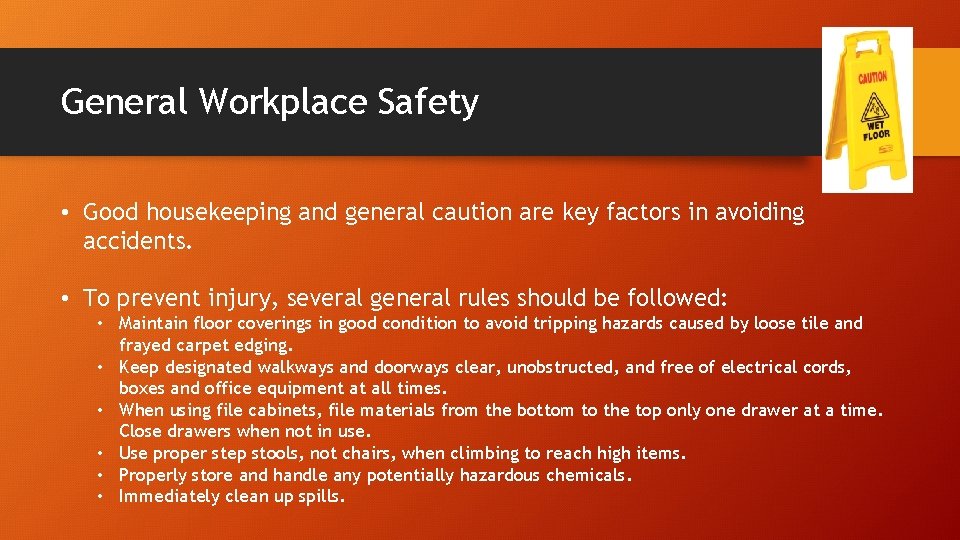
General Workplace Safety • Good housekeeping and general caution are key factors in avoiding accidents. • To prevent injury, several general rules should be followed: • Maintain floor coverings in good condition to avoid tripping hazards caused by loose tile and frayed carpet edging. • Keep designated walkways and doorways clear, unobstructed, and free of electrical cords, boxes and office equipment at all times. • When using file cabinets, file materials from the bottom to the top only one drawer at a time. Close drawers when not in use. • Use proper step stools, not chairs, when climbing to reach high items. • Properly store and handle any potentially hazardous chemicals. • Immediately clean up spills.
General Workplace Safety Want to know more about general workplace safety? Click the icon below to view the “General and Office Safety” Power. Point presentation. Click the icon above to go to the Administrative Policies and Procedures Safety Manual for more on safety.
General Workplace Safety • This is the end of the general workplace safety topic. Click a button below to continue. • For more information, contact Environmental Health and Safety at 541 -737 -2273 or visit our website at http: //ehs. oregonstate. edu Return to main menu to pick another topic Bypass additional topics and continue
Laboratory and Chemical Safety • OSU’s chemical safety program contains these components: • • • Hazard communication Labeling Safety Data Sheets (SDSs) Hazard identification and correction Inspections Training Chemical inventories Chemical storage Disposal
Laboratory and Chemical Safety • OSU has more than 1000 laboratories that use thousands of different chemicals. • EH&S works closely with departments to promote the safe use, storage, and disposal of these chemicals. • EH&S also oversees radiological and biological materials. Click the icon below to view the laboratory safety quick reference guide
Laboratory and Chemical Safety What are supervisor, principal investigator, and laboratory manager responsibilities? First, they are responsible for informing and training employees and students about hazardous substances in their work areas. Environmental Health and Safety provides technical support and training materials. Click the icon to the left to go to the EHS Training Materials webpage
Laboratory and Chemical Safety Second, they must ensure that all chemical containers are labeled with the full chemical name and the known hazards for the chemical, that it is stored properly and in secondary containment, and that employees are aware of the material and its hazards. Go to the EH&S Chemical Safety webpage for more information.
Laboratory and Chemical Safety Third, they are responsible for maintaining an up-to-date inventory of the hazardous substances in each laboratory. An online chemical inventory system is available. For technical assistance, call Environmental Health & Safety at 541 -737 -2273 or find the instructions here.
Laboratory and Chemical Safety Chemical inventories are also required in other areas such as Dixon Recreation Center, agricultural and athletic facilities, University Housing and Dining, art and photographic studios, etc. The chemical inventory method is the same for lab and non-lab areas.
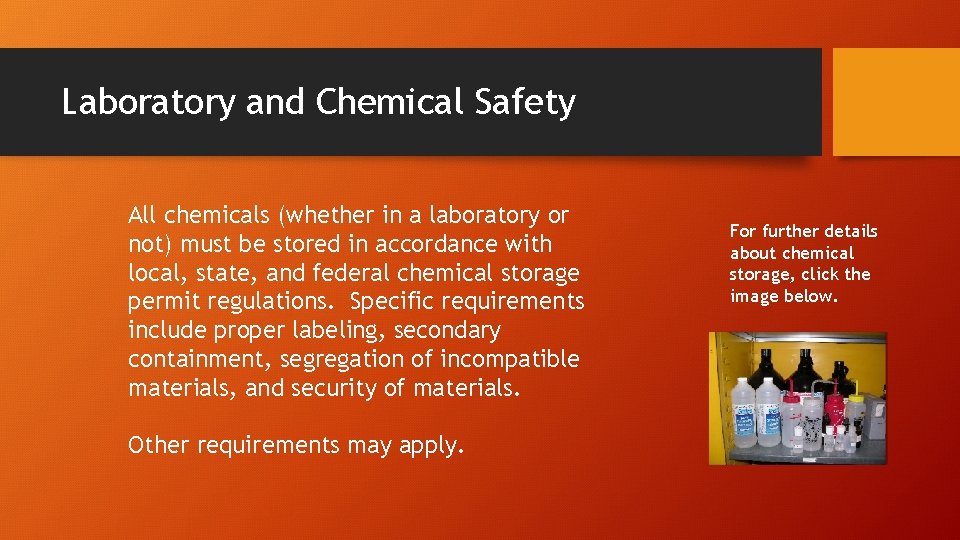
Laboratory and Chemical Safety All chemicals (whether in a laboratory or not) must be stored in accordance with local, state, and federal chemical storage permit regulations. Specific requirements include proper labeling, secondary containment, segregation of incompatible materials, and security of materials. Other requirements may apply. For further details about chemical storage, click the image below.
Laboratory and Chemical Safety Inspections and training are required whenever new substances, processes, procedures or equipment that present new or different health and safety hazards are introduced. Any supervisor who becomes aware of danger to the health and safety of individuals shall report this danger promptly to EH&S and to all who may be affected.
Laboratory and Chemical Safety • This is the end of the laboratory and chemical safety topic. Click a button below to continue. • For more information, contact Environmental Health and Safety at 541 -737 -2273 or visit our website at http: //ehs. oregonstate. edu Return to main menu to pick another topic Bypass additional topics and continue
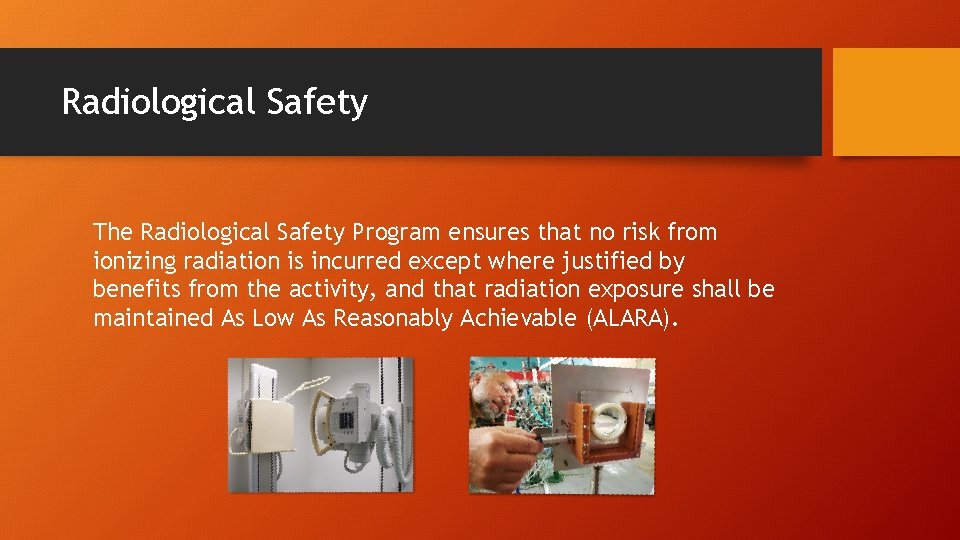
Radiological Safety The Radiological Safety Program ensures that no risk from ionizing radiation is incurred except where justified by benefits from the activity, and that radiation exposure shall be maintained As Low As Reasonably Achievable (ALARA).
Radiological Safety All uses of ionizing radiation must be specifically authorized by the Radiation Safety Committee, and the authorized user has primary responsibility for all safety aspects of work under the program. Click the icon to go to the radiation safety webpage that includes training resources.
Radiological Safety • This is the end of the radiological safety topic. Click a button below to continue. • For more information, contact Radiation Safety at 541 -737 -2227 or visit our website at http: //ehs. oregonstate. edu/rso Return to main menu to pick another topic Bypass additional topics and continue
Supervisor and Manager Safety Responsibilities We are almost to the end! There are four major items you need to remember: Number One: You must ensure that employees have the appropriate training, skills, resources, and supervision to safely perform their jobs.
Supervisor and Manager Safety Responsibilities There are four major items you need to remember: Number Two: You must work and act in a safe and healthful manner, and in compliance with all applicable safety and health rules and regulations. You must also require your employees to do the same.
Supervisor and Manager Safety Responsibilities There are four major items you need to remember: Number Three: Compliance with safety rules can be enforced through a system of effective accountability. Supervisors must be involved in addressing safety performance issues and taking disciplinary action when safety policy is not followed.
Effective Accountability • To assure accountability for employees within your unit, follow some simple procedures: • • • Include safety procedures/compliance in the employee’s position description. Require workers to comply with all safety rules and regulations. Encourage a safety culture. Discuss safety at regular staff meetings. Model the behavior you want your employees to demonstrate. In the annual performance appraisal, note what the employee did or didn’t do such as: • Perform work safely and follow all rules and regulations. • Report accidents in a timely manner, identify actions and implement corrective actions if applicable. • Reduce injuries. • Identify safety issues. • Complete required safety training in a timely manner. • Wear prescribed personal protective equipment.
Supervisor and Manager Safety Responsibilities There are four major items you need to remember: Number Four: There a number of resources available to assist and guide you with safety compliance. Click the icon to go to the EHS& webpage Click the icon to go to the Public Safety webpage Click the icon to go to OSU Safety Policies & Procedures Click the icon to go to the Oregon OSHA webpage
Congratulations! You have completed Supervisor and Manager Safety Responsibilities training. This training is enhanced by completion of the university’s Core Curriculum for Supervisors and Managers course, for which this training is the prerequisite.
- Slides: 74