
Supervision Models and Methods The University of Tennessee

- Slides: 20
Supervision Models and Methods The University of Tennessee at Martin Master's Program in Counseling
Goals of Training Introduce the concepts of supervision models and methods Outline a Developmental Model of Supervision Outline an Integrated Model of Supervision Introduce Multicultural Methods of Supervision
Developmental Models Trainee moves from a place of dependency, with limited skill and awareness to increasing autonomy, awareness and skill Supervisors match intervention with the supervisee’s level of development
Integrated Developmental Model (IDM) Self-Other Awareness: Cognitive and Affective Motivation Autonomy
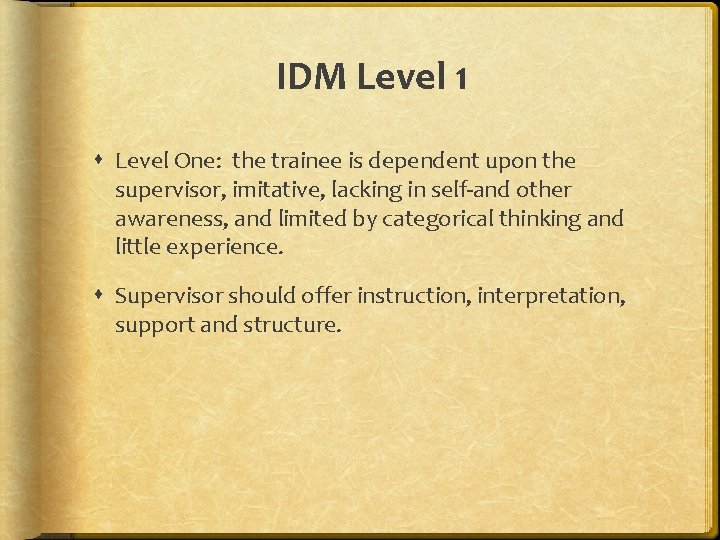
IDM Level 1 Level One: the trainee is dependent upon the supervisor, imitative, lacking in self-and other awareness, and limited by categorical thinking and little experience. Supervisor should offer instruction, interpretation, support and structure.
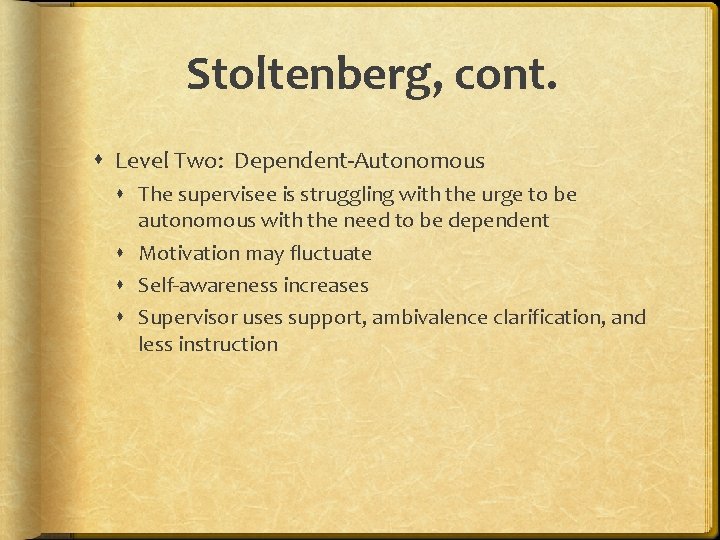
Stoltenberg, cont. Level Two: Dependent-Autonomous The supervisee is struggling with the urge to be autonomous with the need to be dependent Motivation may fluctuate Self-awareness increases Supervisor uses support, ambivalence clarification, and less instruction
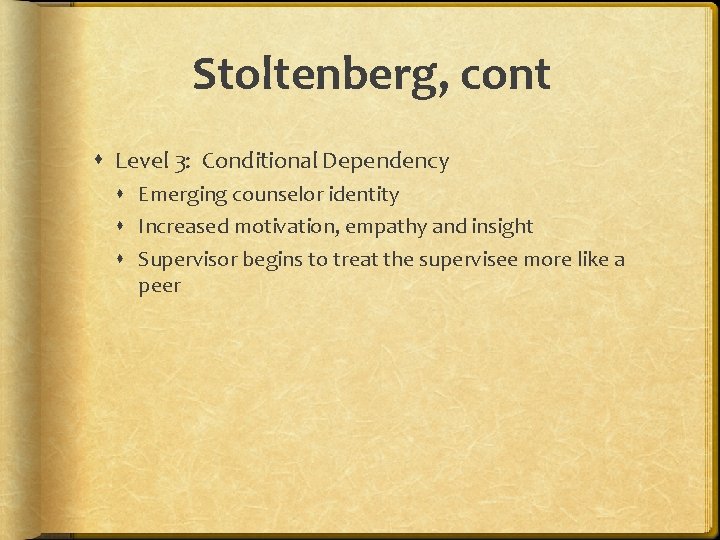
Stoltenberg, cont Level 3: Conditional Dependency Emerging counselor identity Increased motivation, empathy and insight Supervisor begins to treat the supervisee more like a peer
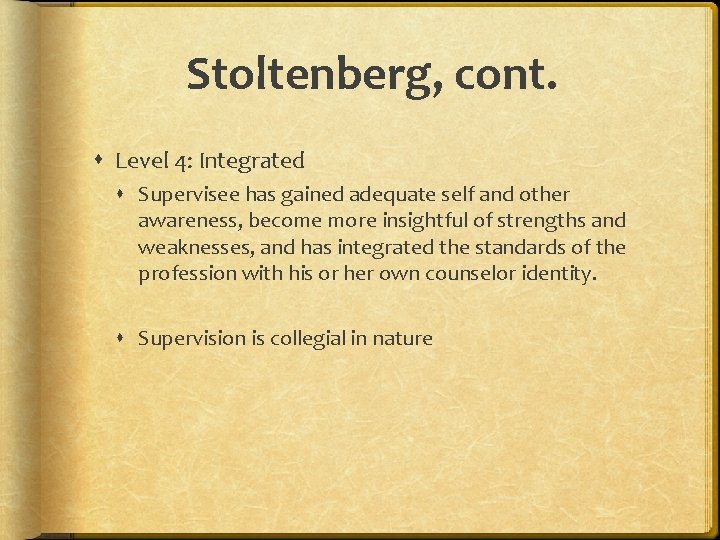
Stoltenberg, cont. Level 4: Integrated Supervisee has gained adequate self and other awareness, become more insightful of strengths and weaknesses, and has integrated the standards of the profession with his or her own counselor identity. Supervision is collegial in nature
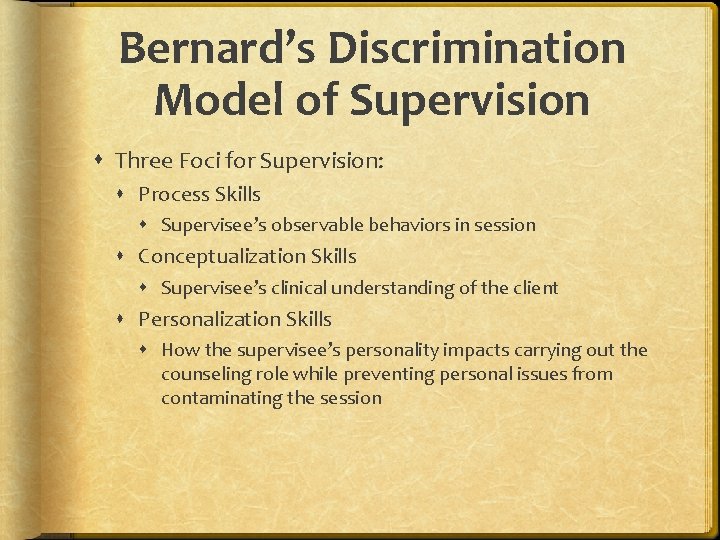
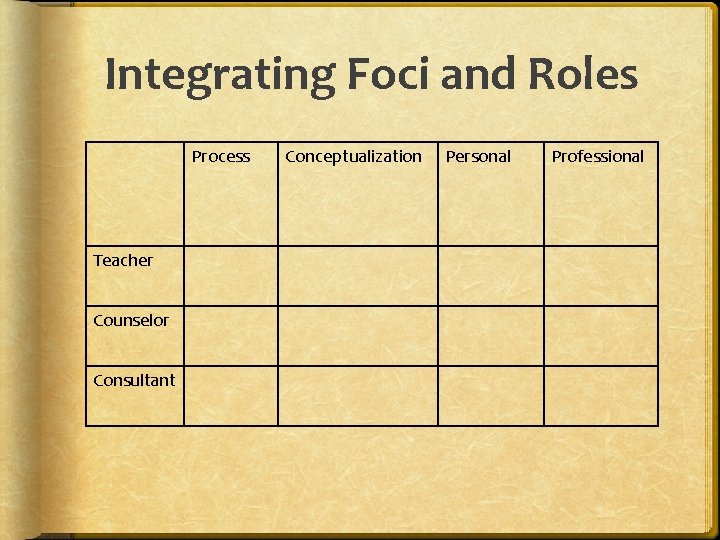
Bernard’s Discrimination Model of Supervision Three Foci for Supervision: Process Skills Supervisee’s observable behaviors in session Conceptualization Skills Supervisee’s clinical understanding of the client Personalization Skills How the supervisee’s personality impacts carrying out the counseling role while preventing personal issues from contaminating the session
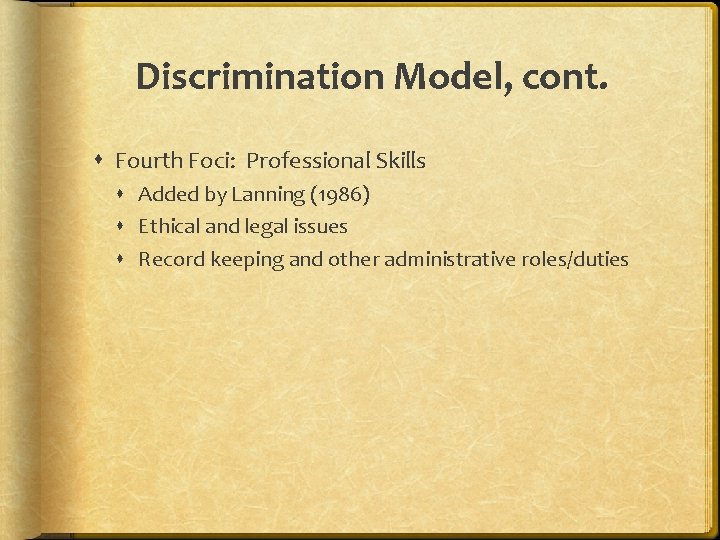
Discrimination Model, cont. Fourth Foci: Professional Skills Added by Lanning (1986) Ethical and legal issues Record keeping and other administrative roles/duties
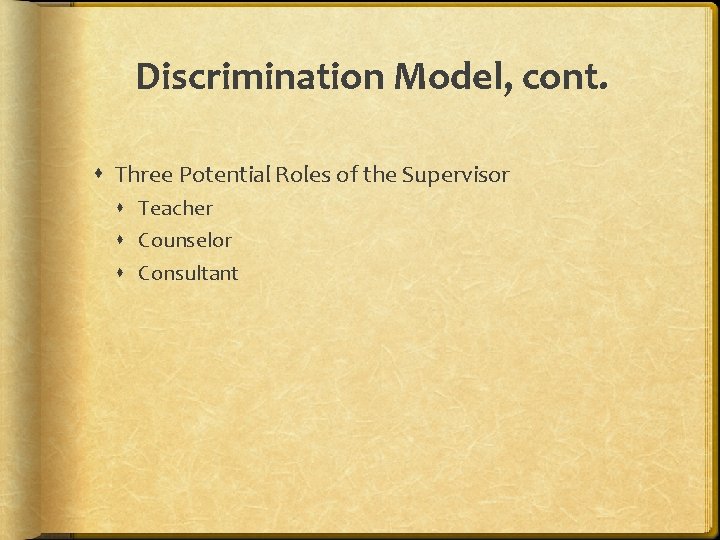
Discrimination Model, cont. Three Potential Roles of the Supervisor Teacher Counselor Consultant
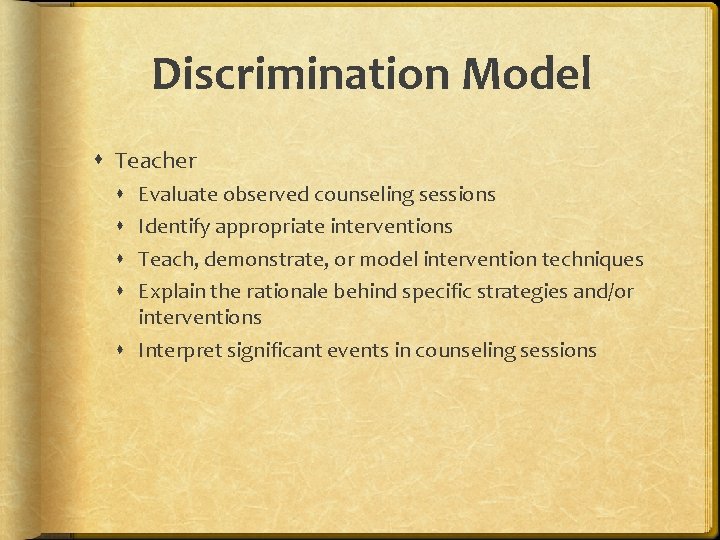
Discrimination Model Teacher Evaluate observed counseling sessions Identify appropriate interventions Teach, demonstrate, or model intervention techniques Explain the rationale behind specific strategies and/or interventions Interpret significant events in counseling sessions
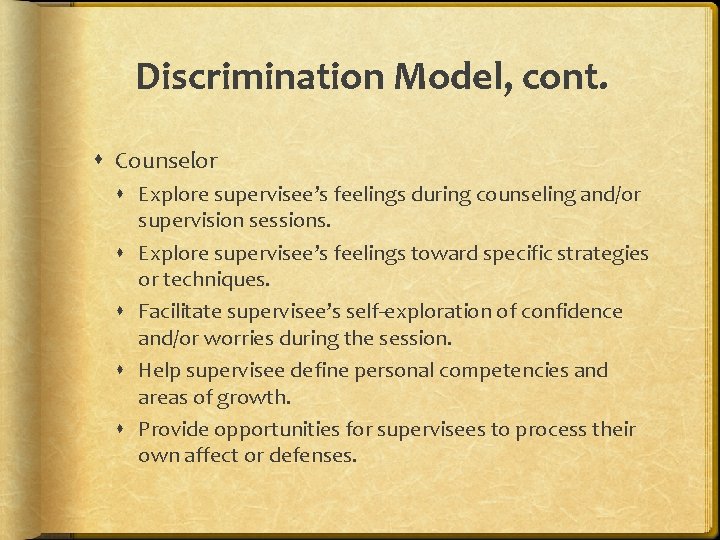
Discrimination Model, cont. Counselor Explore supervisee’s feelings during counseling and/or supervision sessions. Explore supervisee’s feelings toward specific strategies or techniques. Facilitate supervisee’s self-exploration of confidence and/or worries during the session. Help supervisee define personal competencies and areas of growth. Provide opportunities for supervisees to process their own affect or defenses.
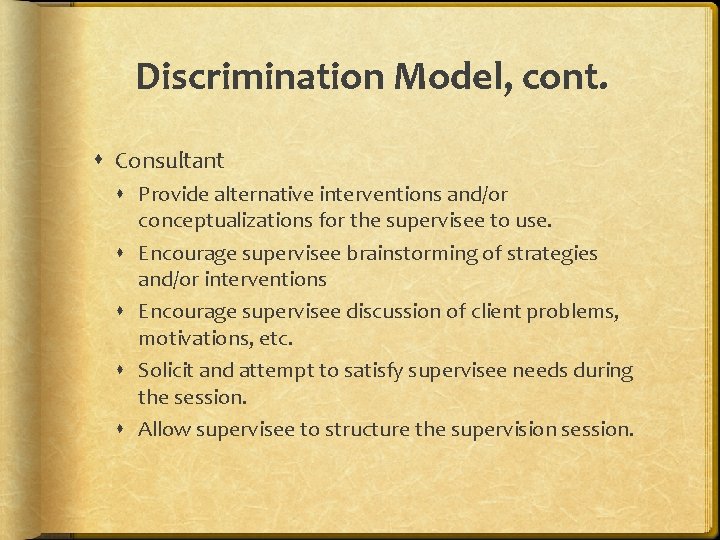
Discrimination Model, cont. Consultant Provide alternative interventions and/or conceptualizations for the supervisee to use. Encourage supervisee brainstorming of strategies and/or interventions Encourage supervisee discussion of client problems, motivations, etc. Solicit and attempt to satisfy supervisee needs during the session. Allow supervisee to structure the supervision session.
Integrating Foci and Roles Process Teacher Counselor Consultant Conceptualization Personal Professional
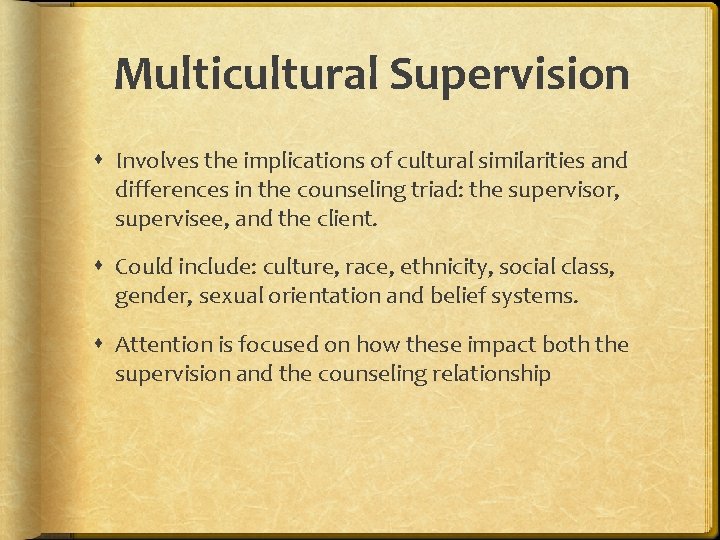
Multicultural Supervision Involves the implications of cultural similarities and differences in the counseling triad: the supervisor, supervisee, and the client. Could include: culture, race, ethnicity, social class, gender, sexual orientation and belief systems. Attention is focused on how these impact both the supervision and the counseling relationship
Reasons for Multicultural Training in Supervision The influence of culture in supervision is often over interpreted, under interpreted, or ignored. Race is a very charged issue which will emerge on its own if not directly addressed. For example: Unintentional racism, cultural tunnel vision, white privilege, paternalism and oppression Misuse of the power inherent in the supervisory relationship Mistrust and vulnerability within supervision Communication issues
Results of Multicultural Training in Supervision Supervisees instructed to focus on multicultural issues in case conceptualization were better able to consider these, as opposed to supervisees were not instructed to do so. Receiving multicultural supervision is significantly predictive of multicultural counseling competence. Supervisor’s role to serve as a catalyst or a facilitator of the trainee’s development of cultural awareness in therapeutic process.
Introducing Multicultural Issues in Supervision Responsibility of the supervisor Supervisees can learn how: Cultural issues influence theoretical orientation, case conceptualization, and treatment planning Culture impacts perceptions of clients and clients’ perceptions of them. Supervision becomes a place to continue to explore own cultural identity
Questions to Ask to Prompt Multicultural Focus How does your worldview and beliefs about the counseling process influence your expectations and goals of therapy and supervision? What assumptions are you making about the client based on your worldview/cultural values? What struggles challenges do you have as you work with culturally different clients?