
Supervising Trauma Cases Using Sensorimotor Psychotherapy and the
- Slides: 32
Supervising Trauma Cases Using Sensorimotor Psychotherapy and the Adaptive Information Processing Model Online Training for Site Supervisors Counseling Program University of Louisiana Monroe
Supervision in Clinical Practice Overview Trauma Defined Models of trauma Types of trauma that occur with the supervisee Parallel Processing during supervision Identifying the supervisee’s trauma
Trauma What exactly is trauma? “an emotional response to a terrible event like an accident, rape or natural disaster” (American Psychological Association, 2016, para. 1) How do you think this definition is helpful? How could a supervisee be traumatized within a session? Vicarious trauma Their own stuff being triggered by the client’s stuff Trauma activates trauma
Trauma Models Sensorimotor Psychotherapy Adaptive Information Processing
Sensorimotor Psychotherapy Ogden, Minton, and Pain (2006) A compilation of ideas and models related to trauma Primary focus is on the somatic memory and responses to trauma Talk therapy is not always helpful with trauma Maybe also in supervision Phases of therapy / 1. 2. 3. Stabilization / Trauma processing Cognitive restructuring Supervision conceptualization clinical case conceptualization supervisee reactions
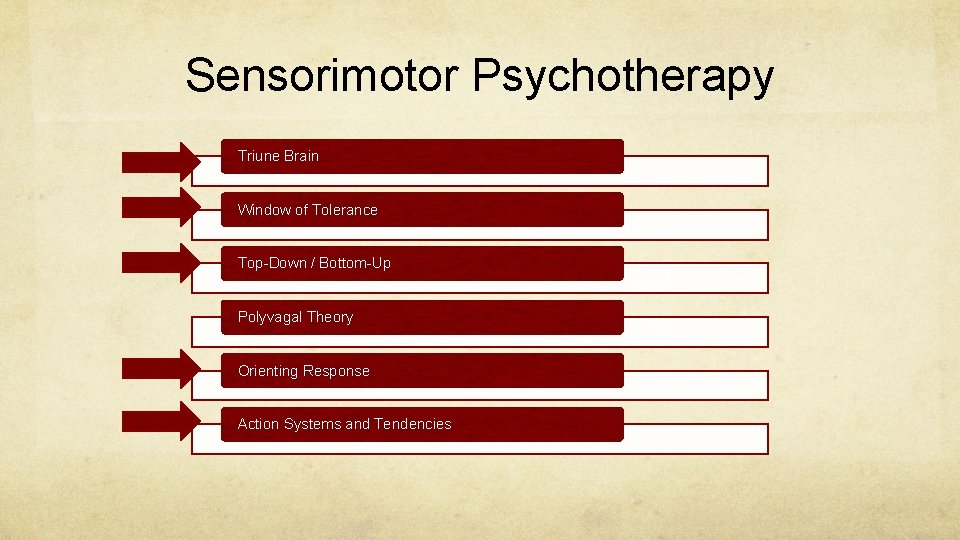
Sensorimotor Psychotherapy Triune Brain Window of Tolerance Top-Down / Bottom-Up Polyvagal Theory Orienting Response Action Systems and Tendencies
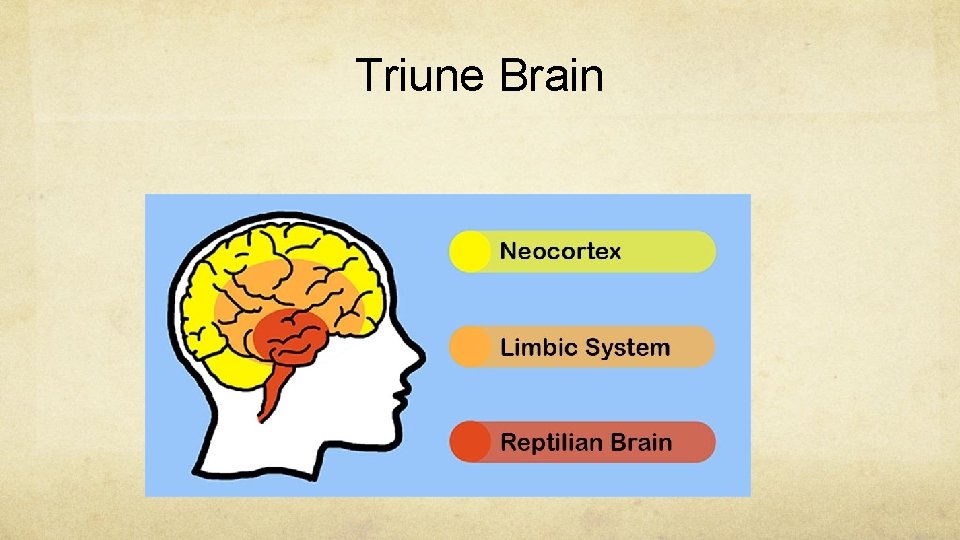
Triune Brain
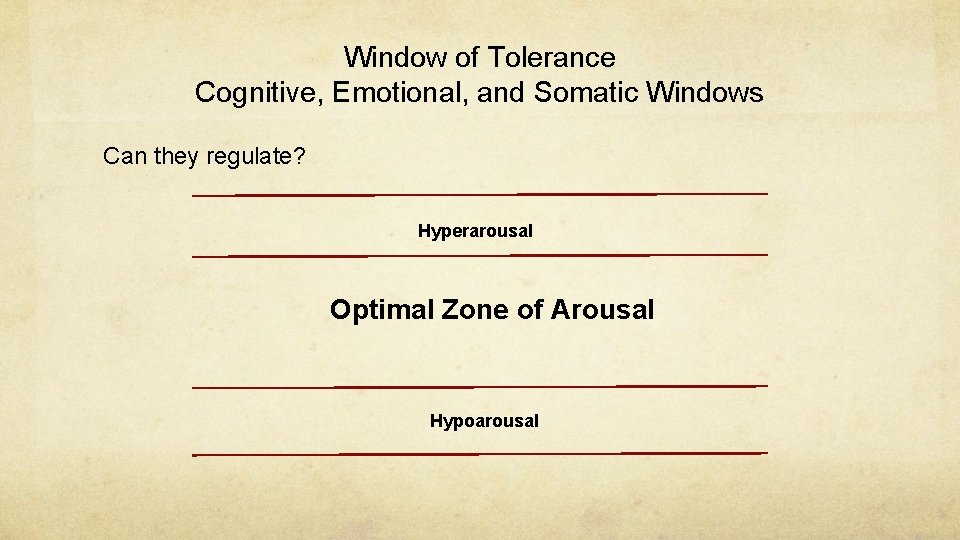
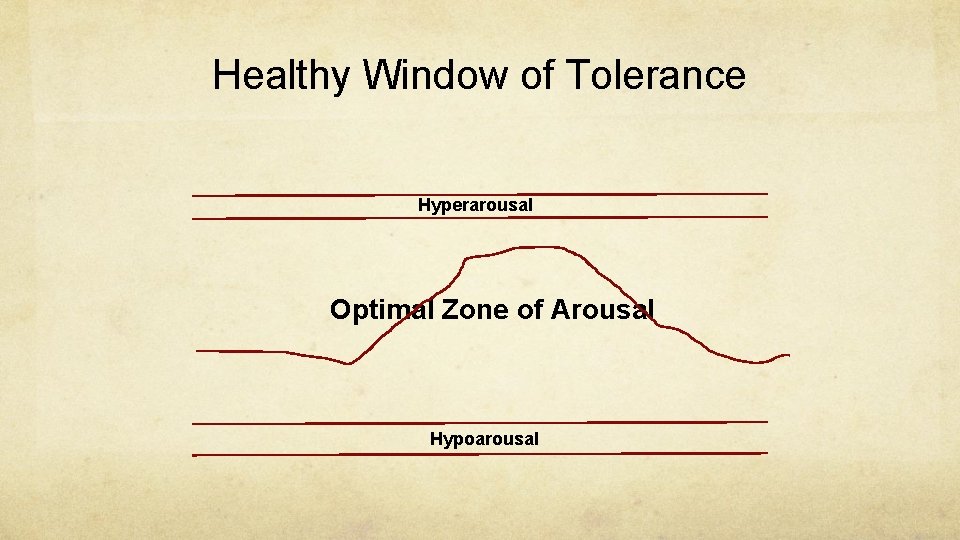
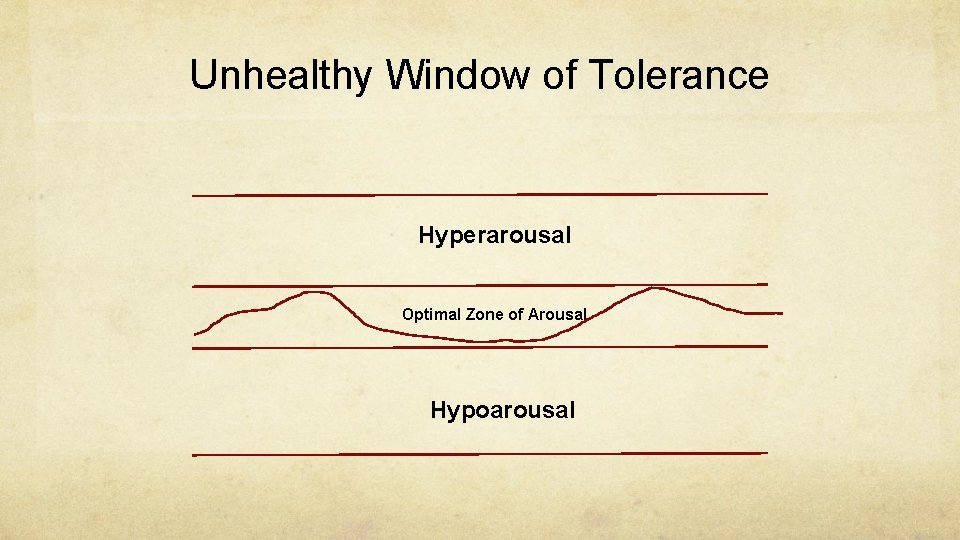
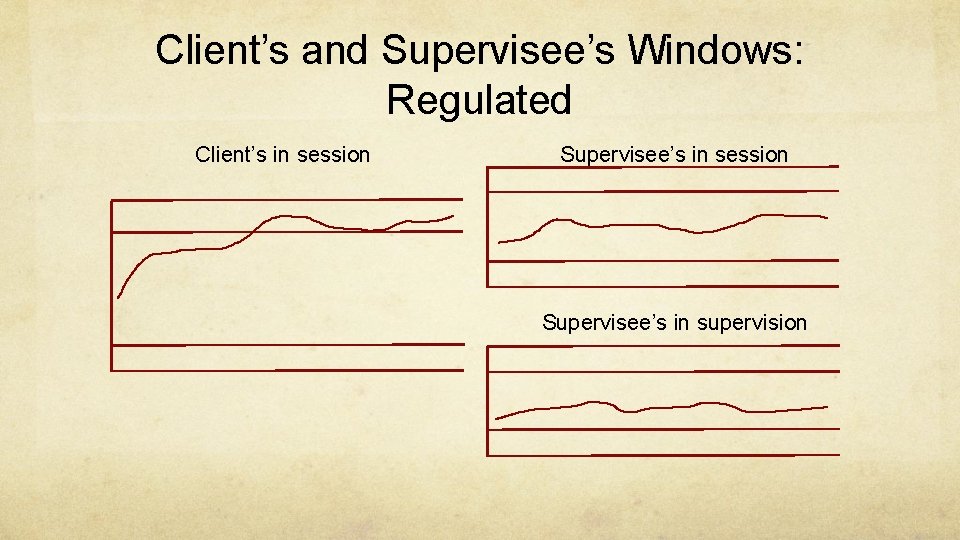
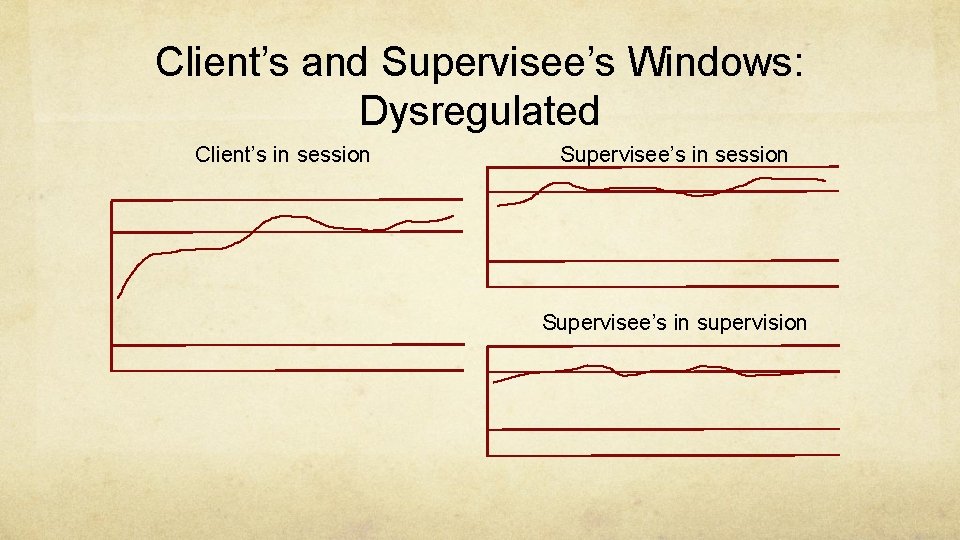
Window of Tolerance Cognitive, Emotional, and Somatic Windows Can they regulate? Hyperarousal Optimal Zone of Arousal Hypoarousal
Healthy Window of Tolerance Hyperarousal Optimal Zone of Arousal Hypoarousal
Unhealthy Window of Tolerance Hyperarousal Optimal Zone of Arousal Hypoarousal
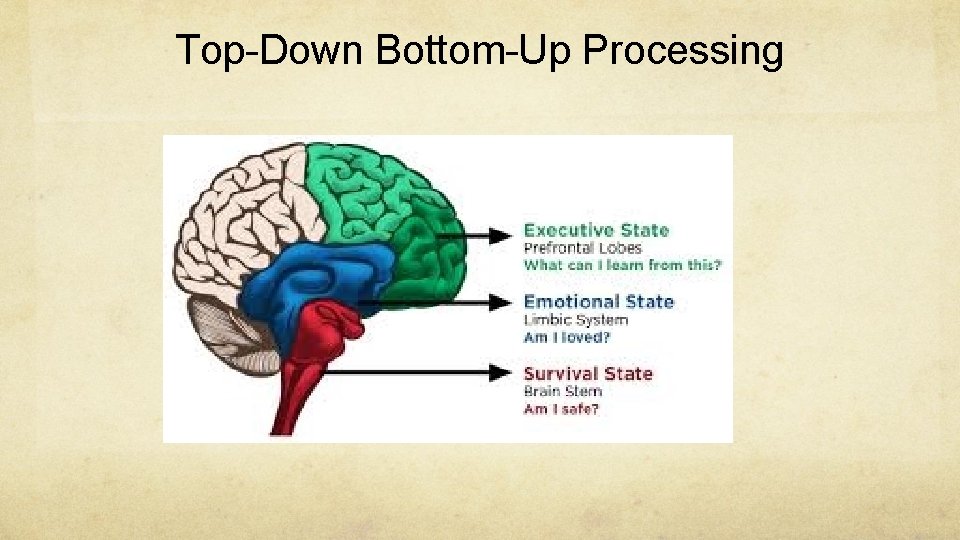
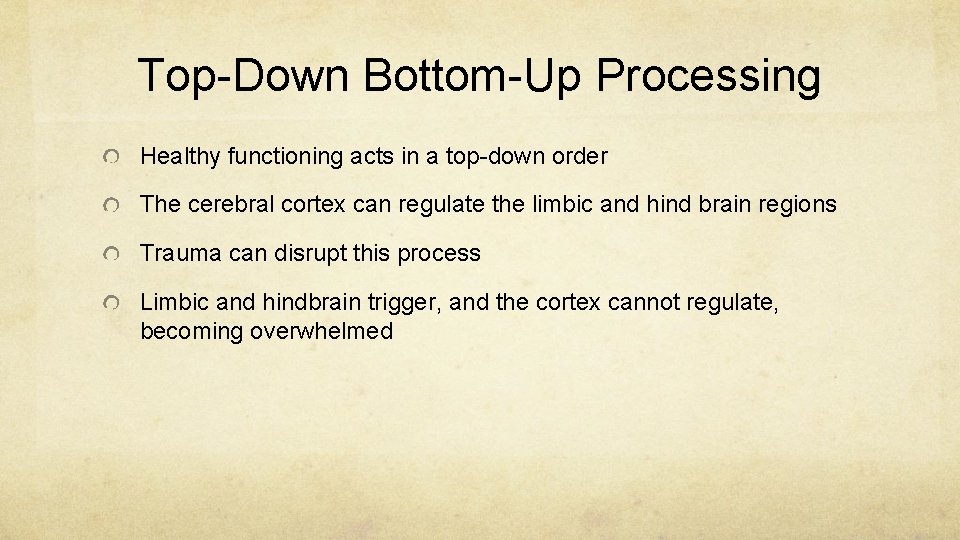
Top-Down Bottom-Up Processing
Top-Down Bottom-Up Processing Healthy functioning acts in a top-down order The cerebral cortex can regulate the limbic and hind brain regions Trauma can disrupt this process Limbic and hindbrain trigger, and the cortex cannot regulate, becoming overwhelmed
Client’s and Supervisee’s Windows: Regulated Client’s in session Supervisee’s in supervision
Client’s and Supervisee’s Windows: Dysregulated Client’s in session Supervisee’s in supervision
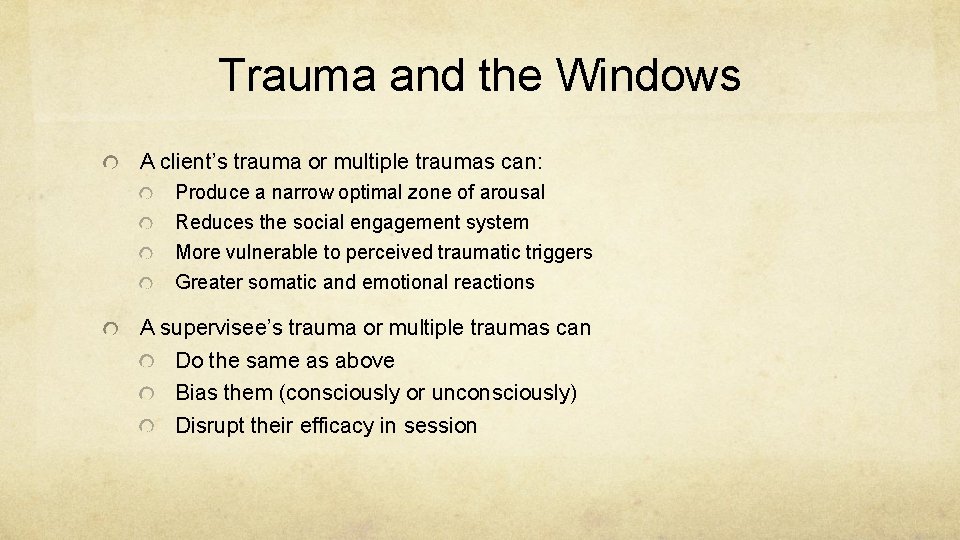
Trauma and the Windows A client’s trauma or multiple traumas can: Produce a narrow optimal zone of arousal Reduces the social engagement system More vulnerable to perceived traumatic triggers Greater somatic and emotional reactions A supervisee’s trauma or multiple traumas can Do the same as above Bias them (consciously or unconsciously) Disrupt their efficacy in session
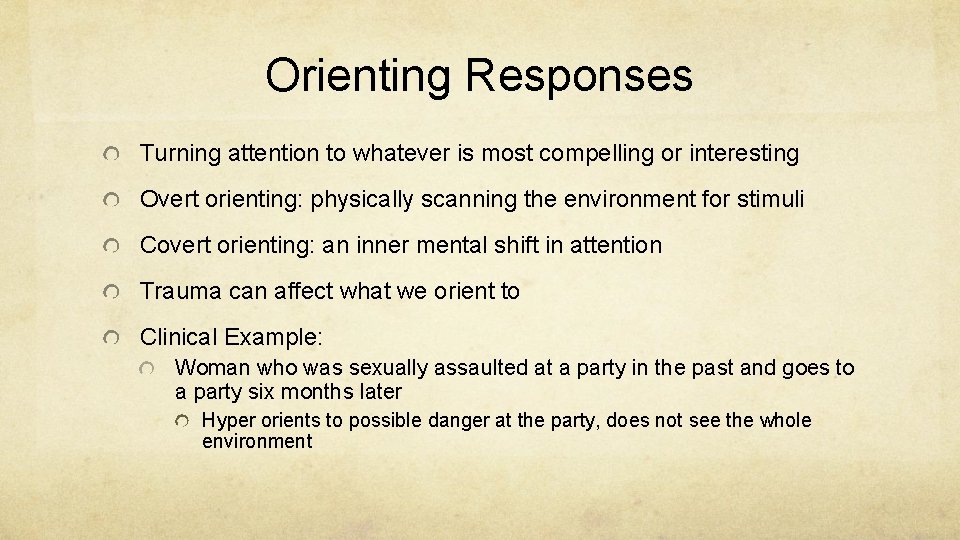
Orienting Responses Turning attention to whatever is most compelling or interesting Overt orienting: physically scanning the environment for stimuli Covert orienting: an inner mental shift in attention Trauma can affect what we orient to Clinical Example: Woman who was sexually assaulted at a party in the past and goes to a party six months later Hyper orients to possible danger at the party, does not see the whole environment
Orienting Responses How is the client orienting? • Too narrow or too broad? • Is overt and covert synchronized? • How is their orienting affecting their level of arousal and vice-versa? How is the supervisee orienting as a result of hearing the client’s story? • How might this be affected their clinical work?
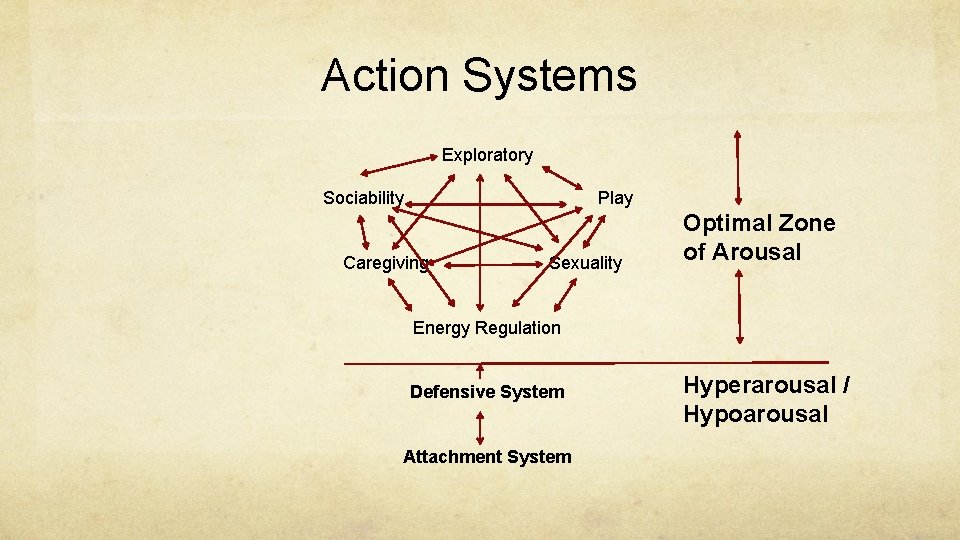
Action Systems Connects our internal realm to the physical action; is how we interact with the world through neuroception Evolution-based, epigenetically hard wired, influenced by classical conditioning, selforganizing, self-stabilizing, and adaptive Action systems can work together or separate, and activate by discrete internal and external stimuli Two main categories: (1) defensive (fight or flight) (2) daily life functioning (social engagement) When the defense system is aroused, systems of daily life are inhibited, resuming once the danger has passed. Attachment system is de-activated → Defense system is activated → de-activates other 6 systems.
Action Systems Attachment Forming close, trusted, personal relational attachments Defensive Responding to perceived danger (fight/flight) Energy Regulation Sleeping, eating, etc. Exploratory Curiosity, investigation, interest; motivates individual to seek out needs and wants
Action Systems Sociability Behavior directed towards community; friendship, companionship, colleagueship, group association. Play Spontaneous, pleasurable activity Sexual desire, pair bonding, seduction, reproduction Caregiving Care for offspring and others
Action Systems Exploratory Sociability Play Caregiving Sexuality Optimal Zone of Arousal Energy Regulation Defensive System Attachment System Hyperarousal / Hypoarousal
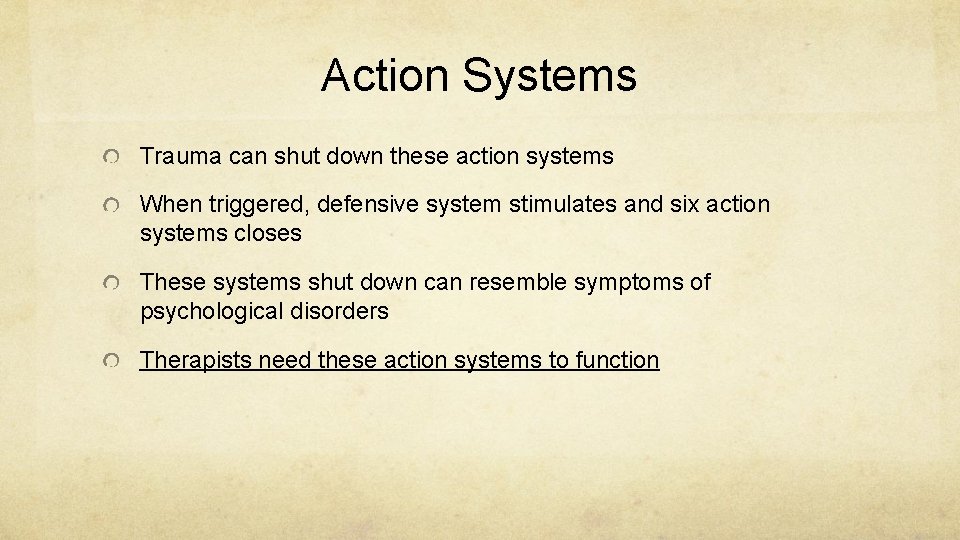
Action Systems Trauma can shut down these action systems When triggered, defensive system stimulates and six action systems closes These systems shut down can resemble symptoms of psychological disorders Therapists need these action systems to function
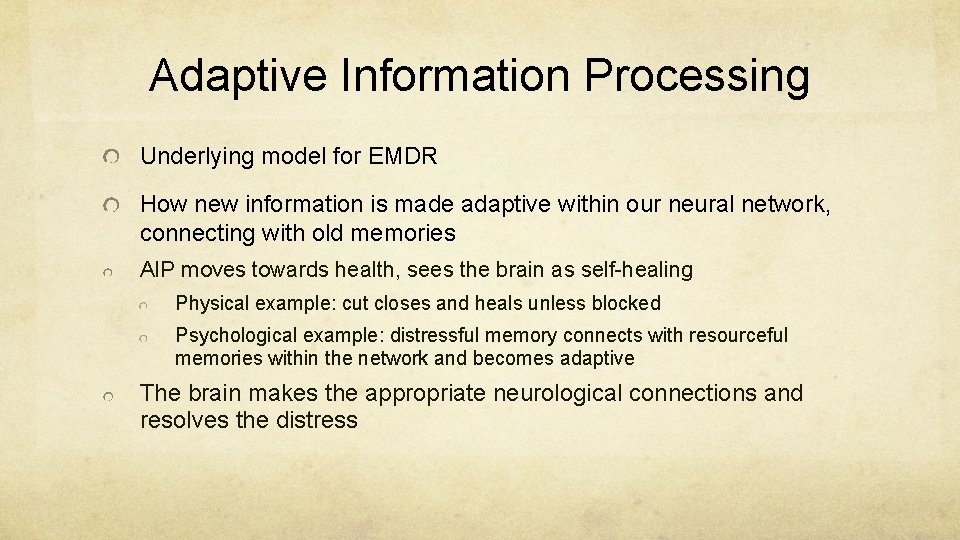
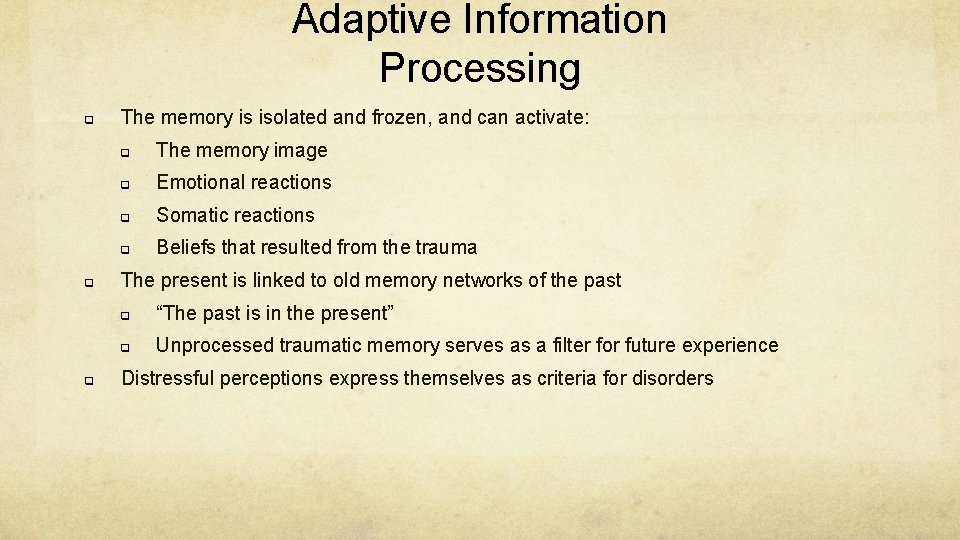
Adaptive Information Processing Underlying model for EMDR How new information is made adaptive within our neural network, connecting with old memories AIP moves towards health, sees the brain as self-healing Physical example: cut closes and heals unless blocked Psychological example: distressful memory connects with resourceful memories within the network and becomes adaptive The brain makes the appropriate neurological connections and resolves the distress
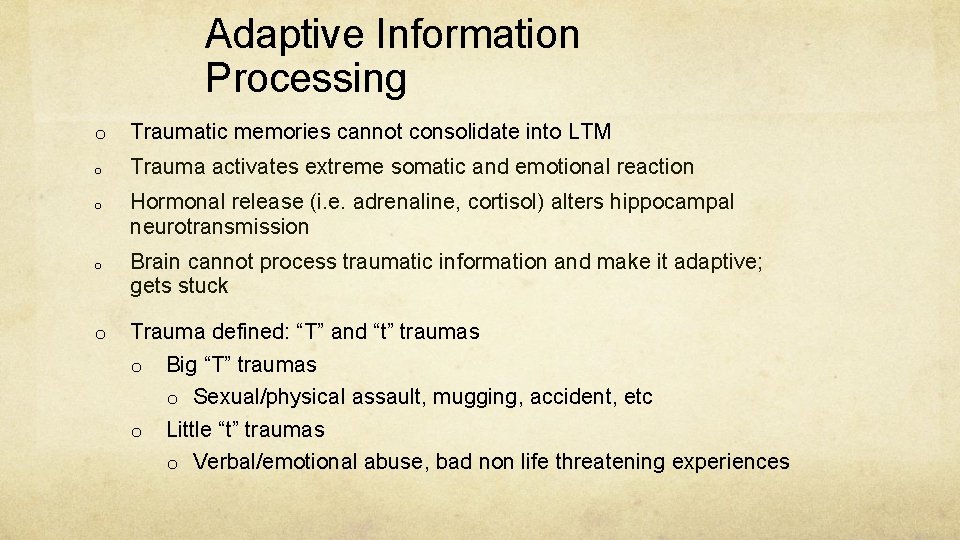
Adaptive Information Processing o Traumatic memories cannot consolidate into LTM o Trauma activates extreme somatic and emotional reaction o o o Hormonal release (i. e. adrenaline, cortisol) alters hippocampal neurotransmission Brain cannot process traumatic information and make it adaptive; gets stuck Trauma defined: “T” and “t” traumas o Big “T” traumas o Sexual/physical assault, mugging, accident, etc o Little “t” traumas o Verbal/emotional abuse, bad non life threatening experiences
Adaptive Information Processing q q q The memory is isolated and frozen, and can activate: q The memory image q Emotional reactions q Somatic reactions q Beliefs that resulted from the trauma The present is linked to old memory networks of the past q “The past is in the present” q Unprocessed traumatic memory serves as a filter for future experience Distressful perceptions express themselves as criteria for disorders
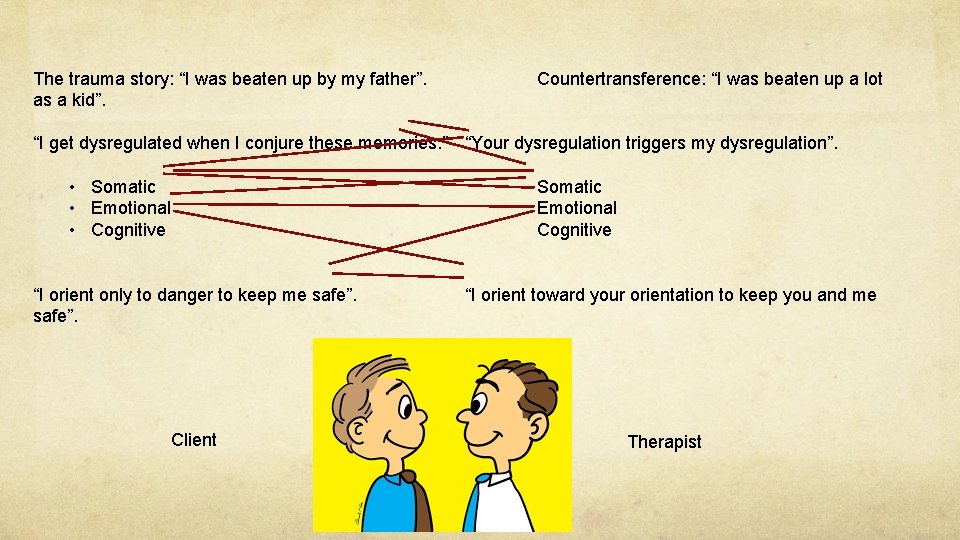
The trauma story: “I was beaten up by my father”. as a kid”. Countertransference: “I was beaten up a lot “I get dysregulated when I conjure these memories. ” “Your dysregulation triggers my dysregulation”. • Somatic • Emotional • Cognitive “I orient only to danger to keep me safe”. Client Somatic Emotional Cognitive “I orient toward your orientation to keep you and me Therapist
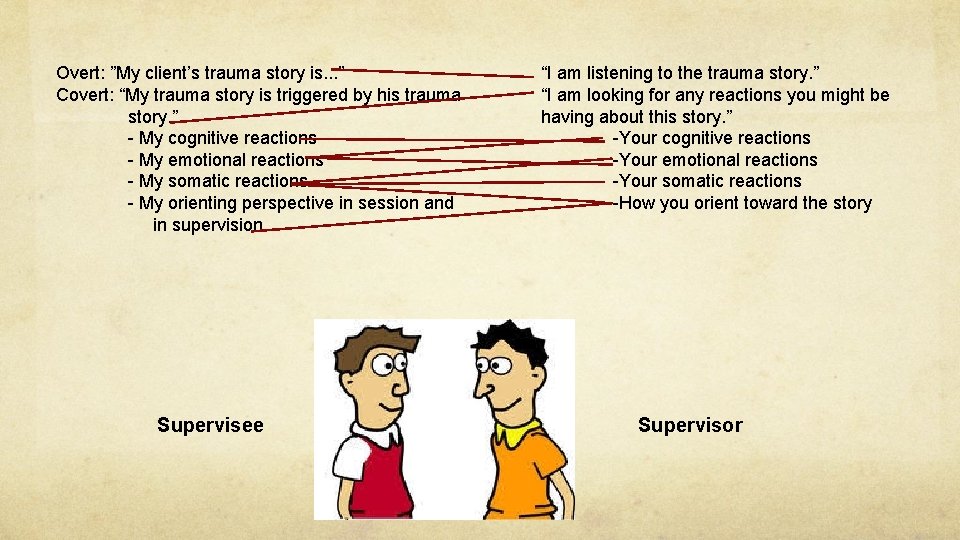
Overt: ”My client’s trauma story is. . . ” Covert: “My trauma story is triggered by his trauma story. ” - My cognitive reactions - My emotional reactions - My somatic reactions - My orienting perspective in session and in supervision Supervisee “I am listening to the trauma story. ” “I am looking for any reactions you might be having about this story. ” -Your cognitive reactions -Your emotional reactions -Your somatic reactions -How you orient toward the story Supervisor
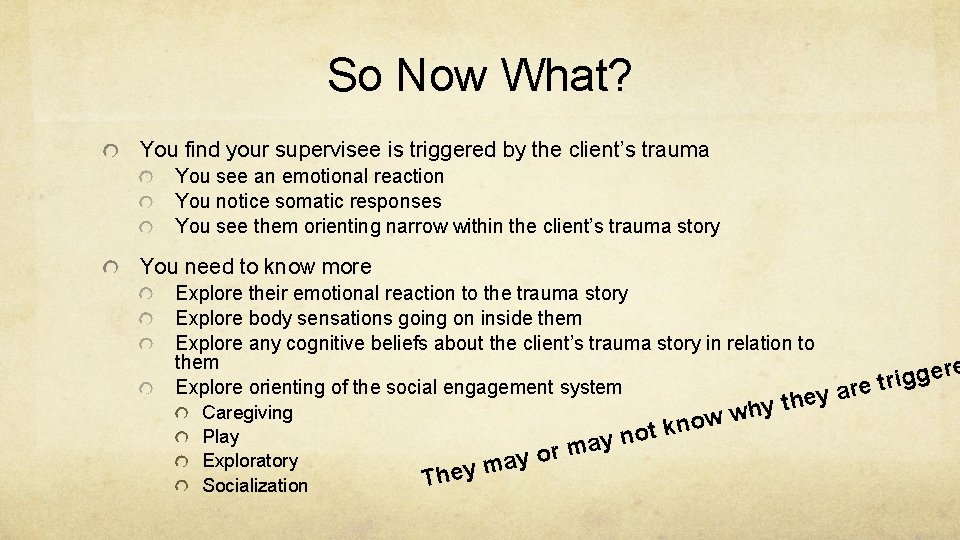
So Now What? You find your supervisee is triggered by the client’s trauma You see an emotional reaction You notice somatic responses You see them orienting narrow within the client’s trauma story You need to know more Explore their emotional reaction to the trauma story Explore body sensations going on inside them Explore any cognitive beliefs about the client’s trauma story in relation to them Explore orienting of the social engagement system y Caregiving Play Exploratory Socialization w o n k t y no They a m r o may a e h t why ger g i r t re e
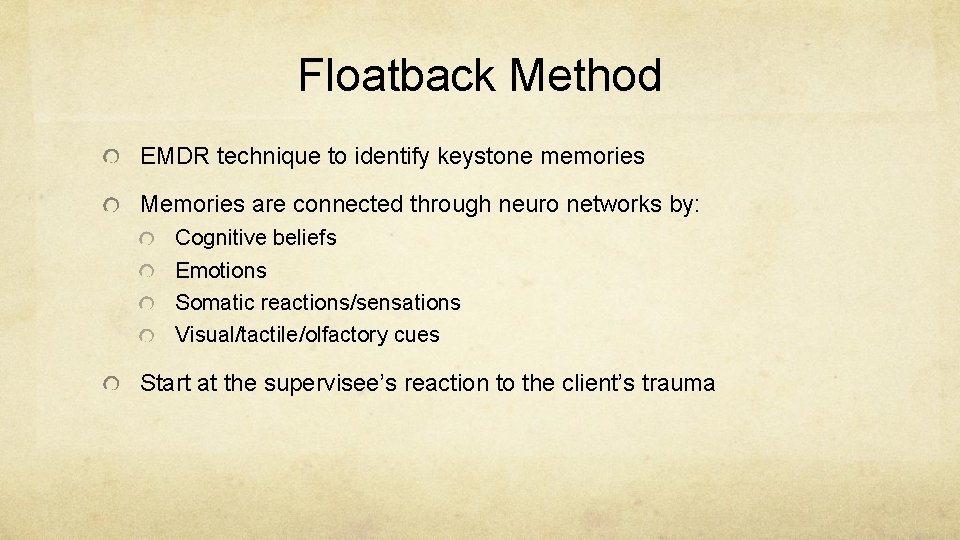
Floatback Method EMDR technique to identify keystone memories Memories are connected through neuro networks by: Cognitive beliefs Emotions Somatic reactions/sensations Visual/tactile/olfactory cues Start at the supervisee’s reaction to the client’s trauma
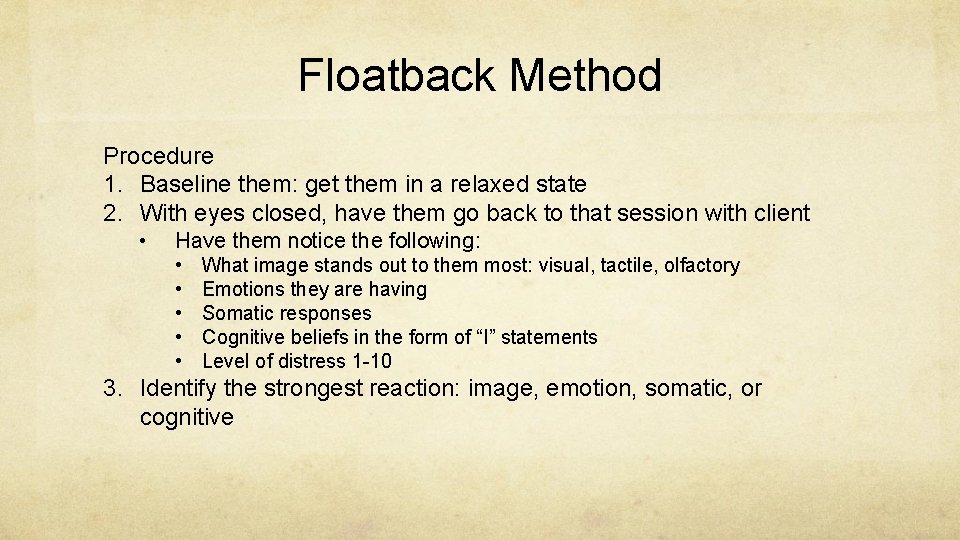
Floatback Method Procedure 1. Baseline them: get them in a relaxed state 2. With eyes closed, have them go back to that session with client • Have them notice the following: • • • What image stands out to them most: visual, tactile, olfactory Emotions they are having Somatic responses Cognitive beliefs in the form of “I” statements Level of distress 1 -10 3. Identify the strongest reaction: image, emotion, somatic, or cognitive
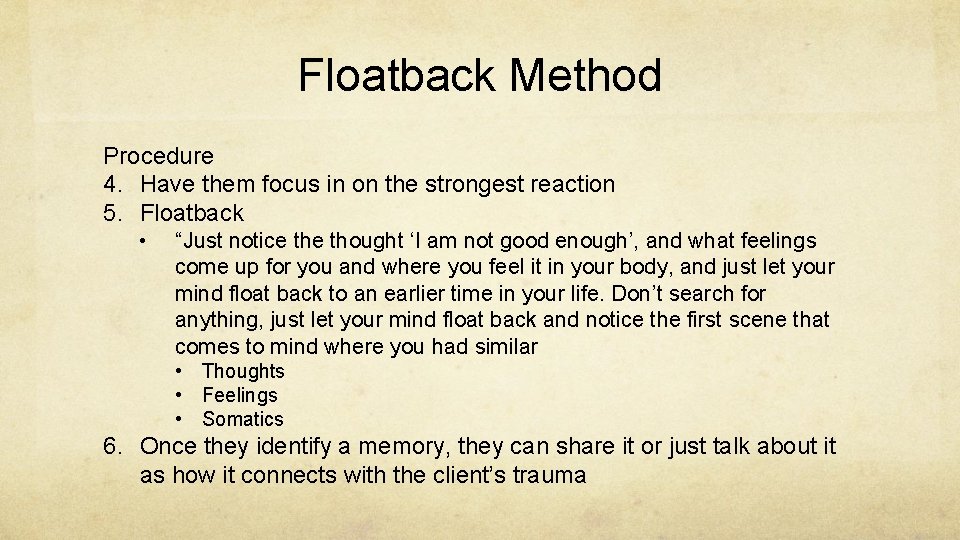
Floatback Method Procedure 4. Have them focus in on the strongest reaction 5. Floatback • “Just notice thought ‘I am not good enough’, and what feelings come up for you and where you feel it in your body, and just let your mind float back to an earlier time in your life. Don’t search for anything, just let your mind float back and notice the first scene that comes to mind where you had similar • Thoughts • Feelings • Somatics 6. Once they identify a memory, they can share it or just talk about it as how it connects with the client’s trauma
Conclusion