
Superplastic behaviour in nano ceramics A DomnguezRodrguez University
Superplastic behaviour in nano ceramics A. Domínguez-Rodríguez University of Seville (Spain)
*Definition macro and micro of superplasticity *Equation of superplasticity *How to improve superplasticity *Superplasticity in nano-ceramics: nano-Mg. O nano-YTZP
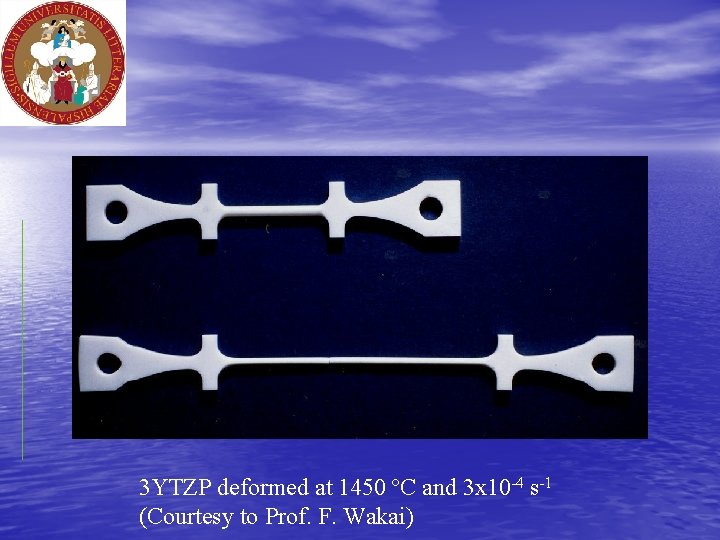
3 YTZP deformed at 1450 ºC and 3 x 10 -4 s-1 (Courtesy to Prof. F. Wakai)
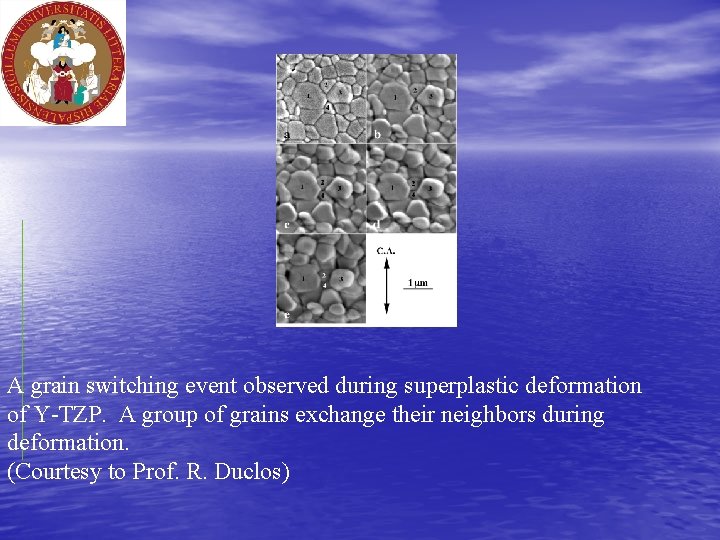
A grain switching event observed during superplastic deformation of Y-TZP. A group of grains exchange their neighbors during deformation. (Courtesy to Prof. R. Duclos)
In a material superplastically deformed: *The deformation is due to grain boundary sliding *The strain rate is controlled by the accomodation process: -Diffusion of point defects -Activity of dislocations -Cavities

Equation of superplasticity is the strain rate σ is the applied stress σ0 is the threshold stress n and p the stress and grain size exponents Q is an activation energy

How to improve superplasticity The strategy to enhance superplasticity is twofold: *Refinement of the microstructure *Improvement of the accommodation process Although both processes are independent each other, in many cases are connected.

Superplasticity in nano-Mg. O
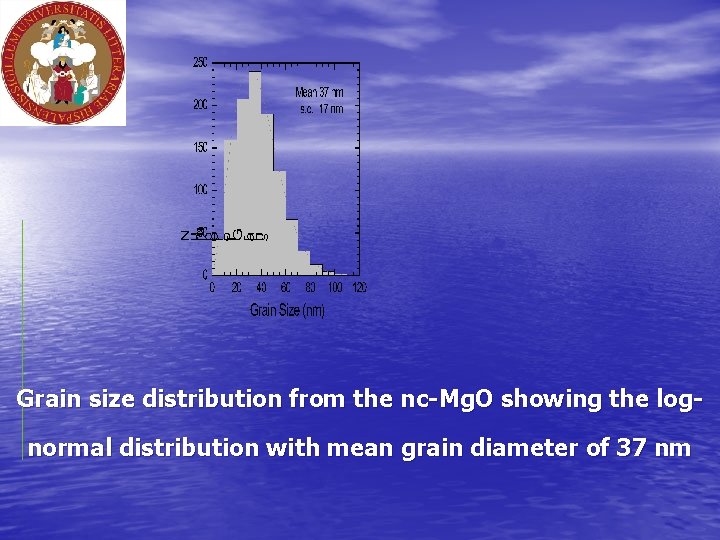
Grain size distribution from the nc-Mg. O showing the lognormal distribution with mean grain diameter of 37 nm
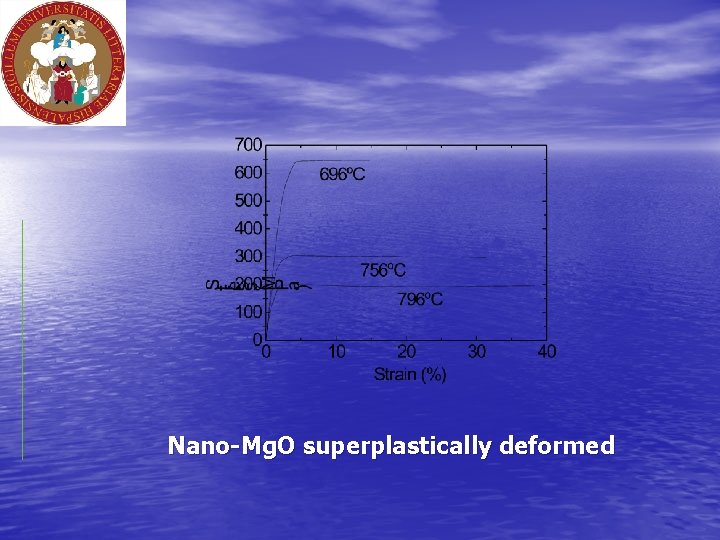
Nano-Mg. O superplastically deformed

These nano-Mg. O could be deformed in compression, at temperatures between 700 and 800 ºC at strain rates around 105 s-1 and strains around 40 %. Values of the stress exponent, n = 2, and the activation energy of 200 k. J/mol were obtained for all test conditions. Very small grain sizes permit diffusional processes to vary from slow lattice diffusion to a much faster grain boundary one and to allow grains to reach a significant mobility.

Superplasticity in nano-YTZP
In the case of YTZP, it has been successively shown that Y 3+ segregates at grain boundaries, inducing a local electric field which is screened by the gradient of oxygen vacancies between the bulk and the boundaries. When the grain size of the polycrystal becomes close to the screening length (nanoscale length), this electric field can influence the diffusional processes and in consequence the creep behavior of the nano YTZP.
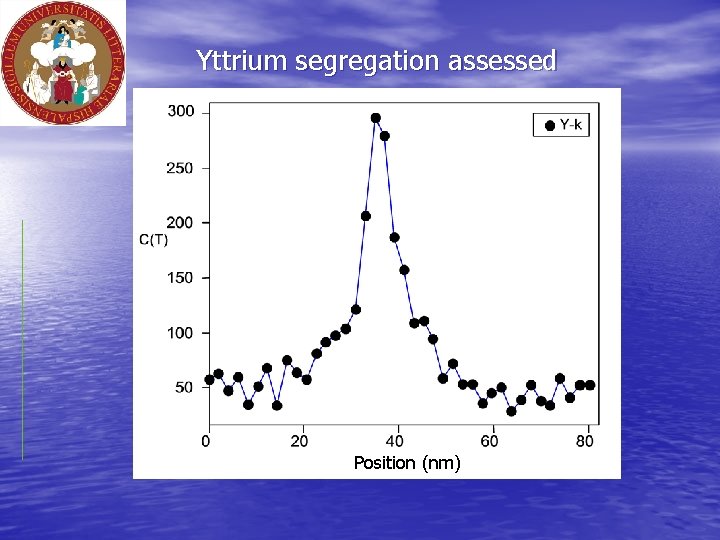
Yttrium segregation assessed ----Position (nm)
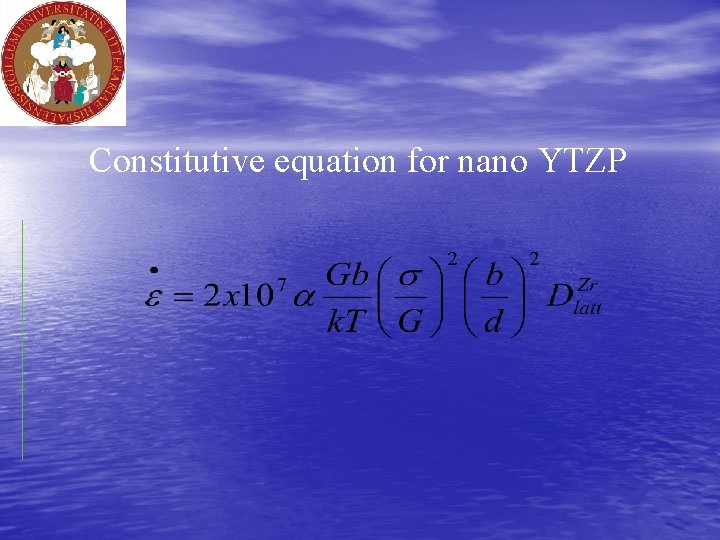
Constitutive equation for nano YTZP
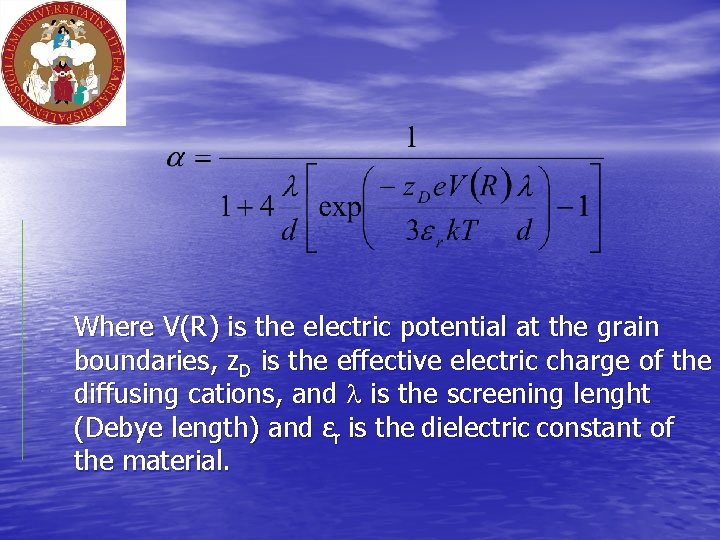
Where V(R) is the electric potential at the grain boundaries, z. D is the effective electric charge of the diffusing cations, and is the screening lenght (Debye length) and εr is the dielectric constant of the material.
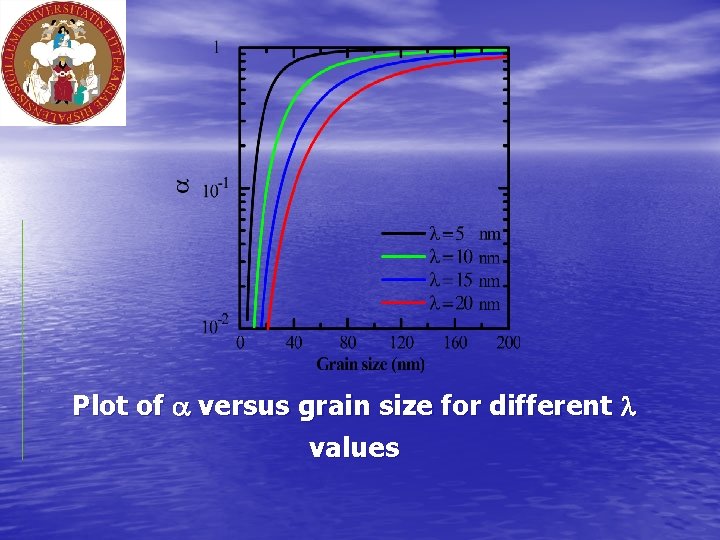
Plot of versus grain size for different values
Final remarks It is clear that the refinement of the microstructure can improve superplasticity in nano-Mg. O but not in nano-YTZP due to the nature of the grain boundary in this ceramics. In conclusion: to improve superplasticity it is more important to control the nature of the grain boundaries that the grain size itself.


- Slides: 20