
SUPERPAVE FHWA Condensed Superpave Asphalt Specifications Lecture Series

![Summary Construction Rutting Fatigue Cracking Low Temp Cracking [DTT] [RV] No aging [DSR] [BBR]](https://slidetodoc.com/presentation_image_h/c81fdf6e9295b125e56b65bcc99a70ff/image-39.jpg "Summary Construction Rutting Fatigue Cracking Low Temp Cracking [DTT] [RV] No aging [DSR] [BBR]")




- Slides: 62
SUPERPAVE FHWA Condensed Superpave Asphalt Specifications Lecture Series
What is Superpave • Final product of the 1987 -1993 FHWA Strategic Highway Research Program to investigate better pavement materials & design methods. • Superior Performing Asphalt Pavements = Superpave • Produced new standards for aggregates and bituminous binders used in paving as well as mix design changes.
Aggregates Usually refers to a soil that has in some way been processed or sorted.
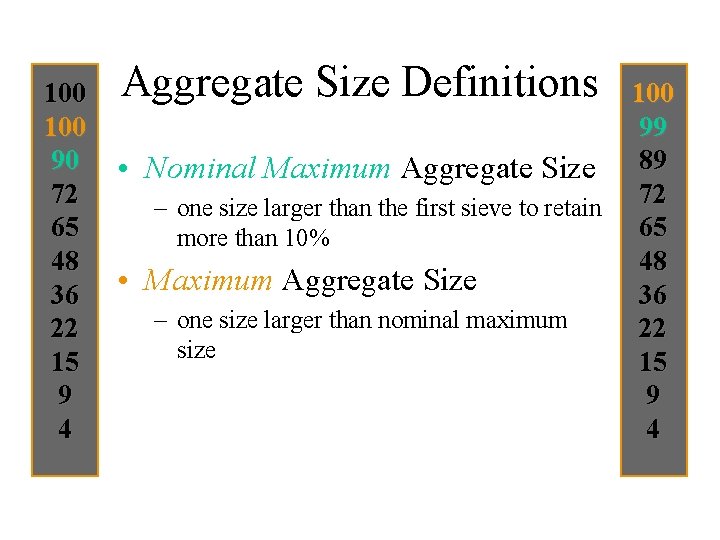
100 90 72 65 48 36 22 15 9 4 Aggregate Size Definitions • Nominal Maximum Aggregate Size – one size larger than the first sieve to retain more than 10% • Maximum Aggregate Size – one size larger than nominal maximum size 100 99 89 72 65 48 36 22 15 9 4
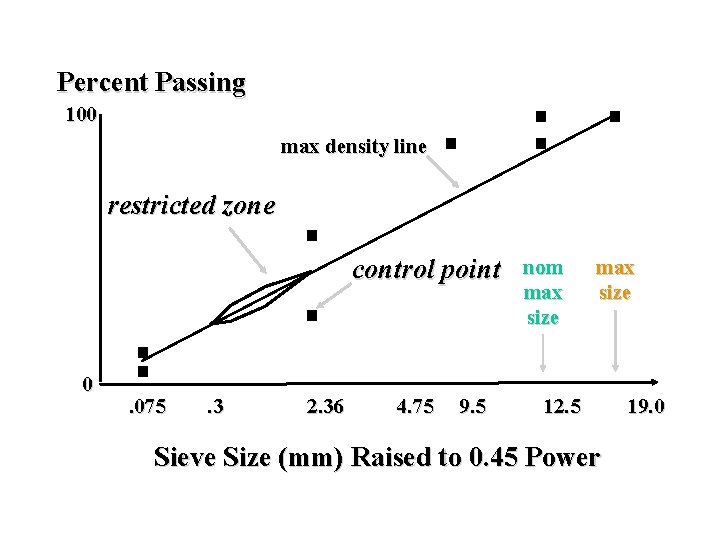
Percent Passing 100 max density line restricted zone control point 0 . 075 . 3 2. 36 4. 75 9. 5 nom max size 12. 5 Sieve Size (mm) Raised to 0. 45 Power 19. 0
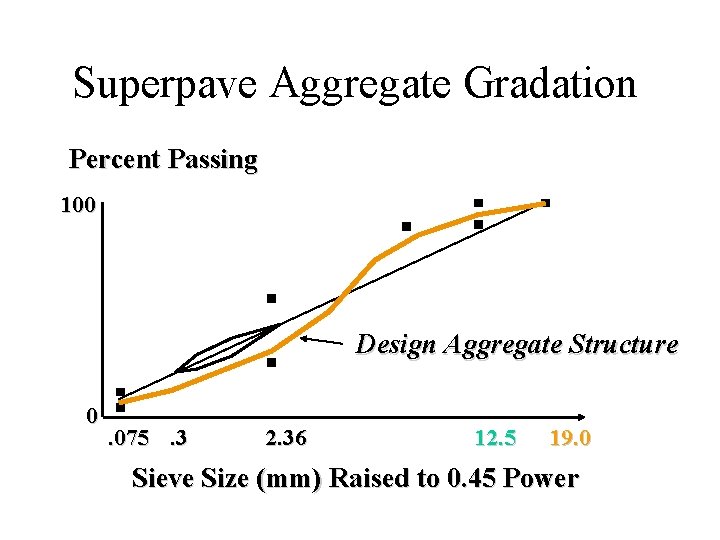
Superpave Aggregate Gradation Percent Passing 100 Design Aggregate Structure 0 . 075. 3 2. 36 12. 5 19. 0 Sieve Size (mm) Raised to 0. 45 Power
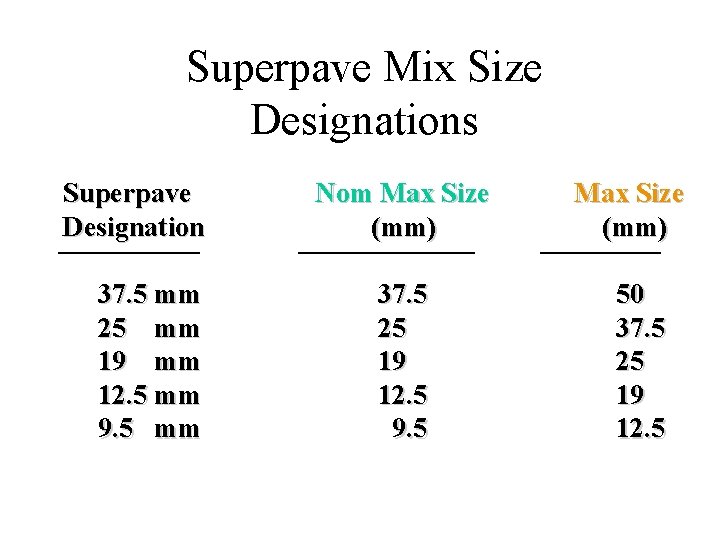
Superpave Mix Size Designations Superpave Designation 37. 5 mm 25 mm 19 mm 12. 5 mm 9. 5 mm Nom Max Size (mm) 37. 5 25 19 12. 5 9. 5 Max Size (mm) 50 37. 5 25 19 12. 5
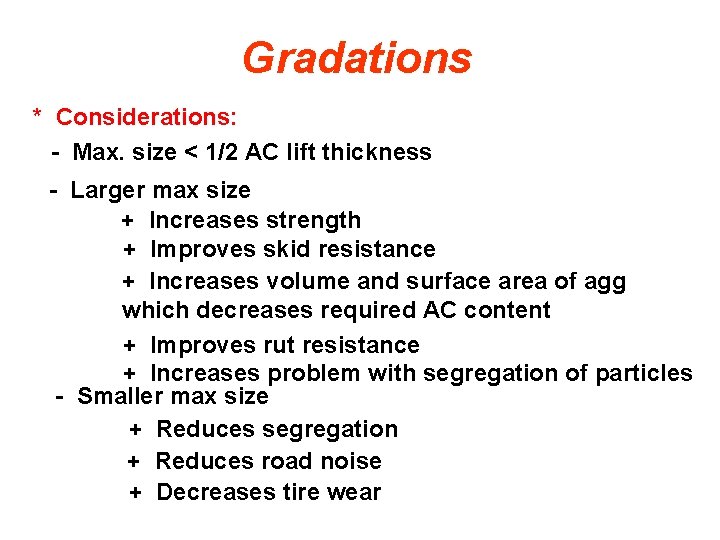
Gradations * Considerations: - Max. size < 1/2 AC lift thickness - Larger max size + Increases strength + Improves skid resistance + Increases volume and surface area of agg which decreases required AC content + Improves rut resistance + Increases problem with segregation of particles - Smaller max size + Reduces segregation + Reduces road noise + Decreases tire wear
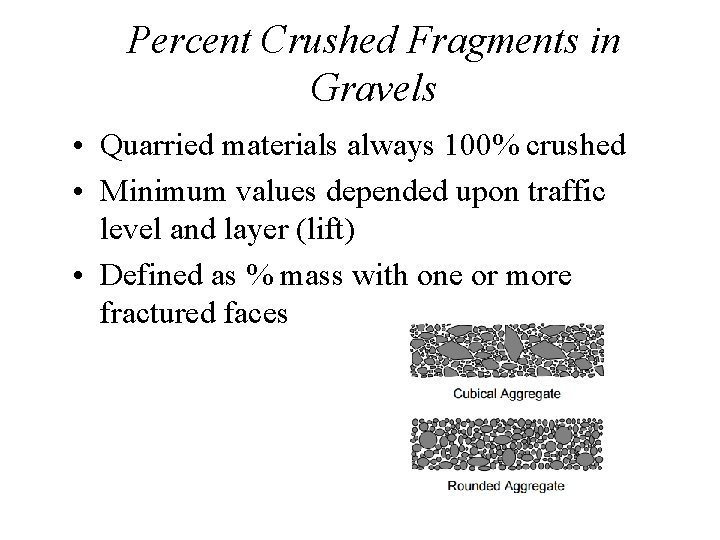
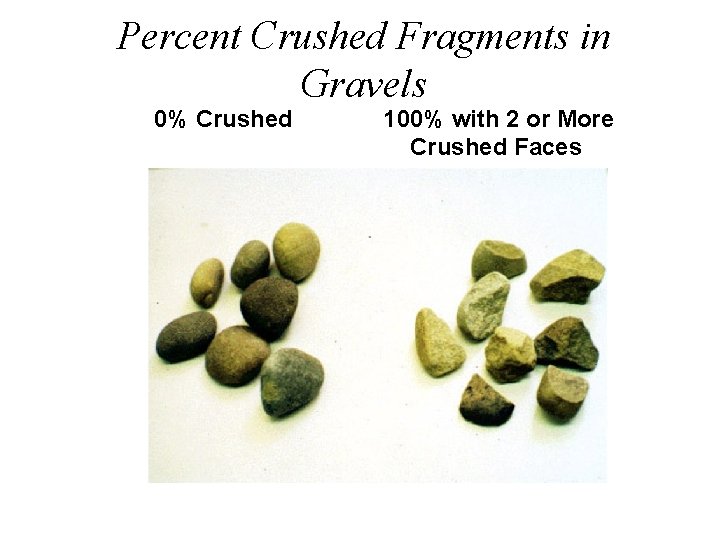
Percent Crushed Fragments in Gravels • Quarried materials always 100% crushed • Minimum values depended upon traffic level and layer (lift) • Defined as % mass with one or more fractured faces
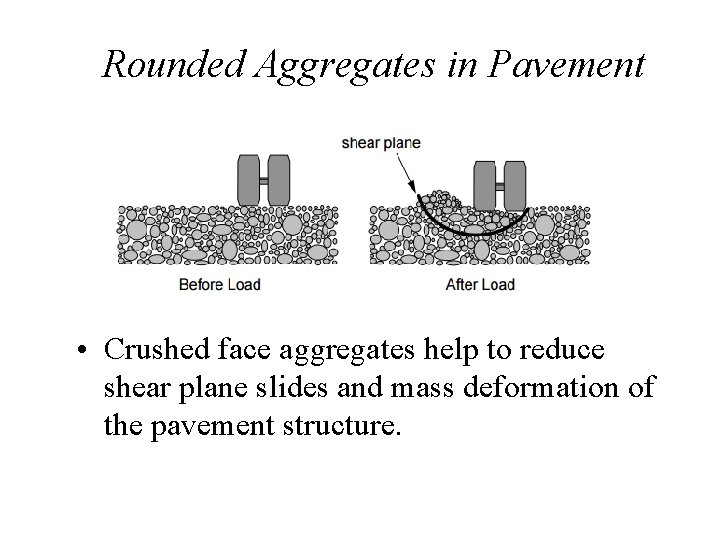
Rounded Aggregates in Pavement • Crushed face aggregates help to reduce shear plane slides and mass deformation of the pavement structure.
Percent Crushed Fragments in Gravels 0% Crushed 100% with 2 or More Crushed Faces
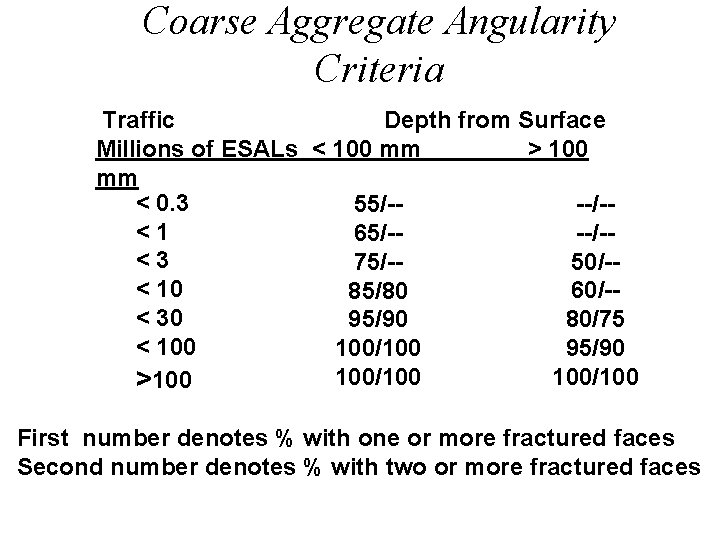
Coarse Aggregate Angularity Criteria Traffic Depth from Surface Millions of ESALs < 100 mm > 100 mm < 0. 3 --/-55/-<1 --/-65/-<3 50/-75/-< 10 60/-85/80 < 30 80/75 95/90 < 100 95/90 100/100 >100 First number denotes % with one or more fractured faces Second number denotes % with two or more fractured faces
Asphalt Cements Background History of Specifications
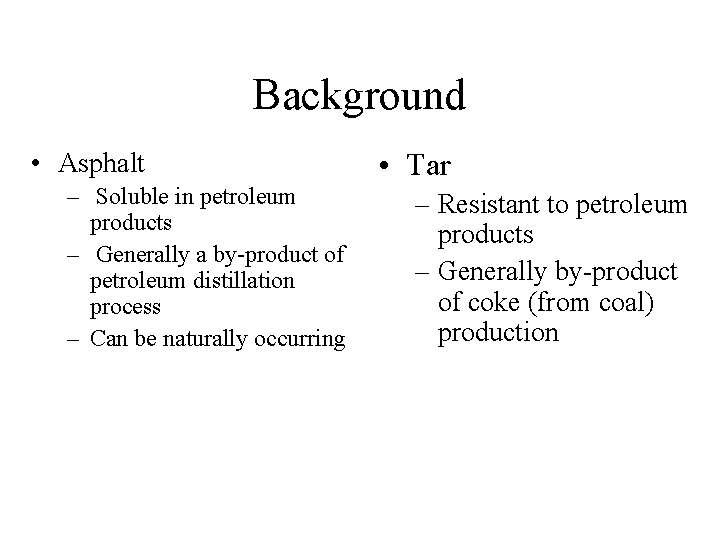
Background • Asphalt – Soluble in petroleum products – Generally a by-product of petroleum distillation process – Can be naturally occurring • Tar – Resistant to petroleum products – Generally by-product of coke (from coal) production
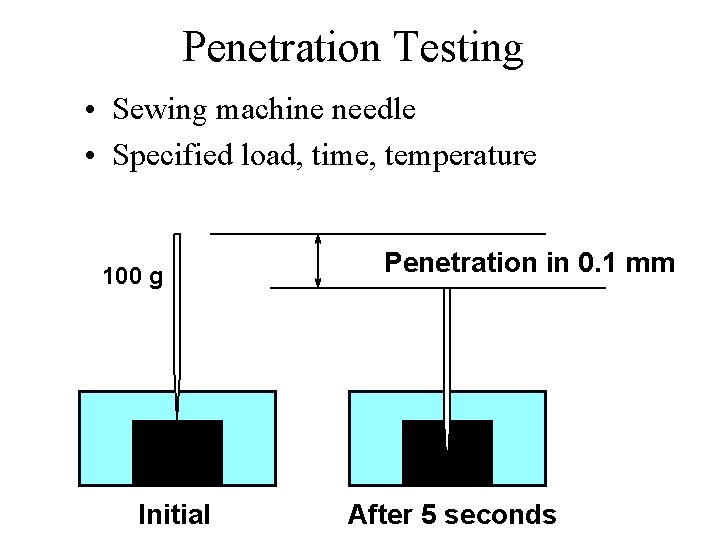
Penetration Testing • Sewing machine needle • Specified load, time, temperature 100 g Initial Penetration in 0. 1 mm After 5 seconds
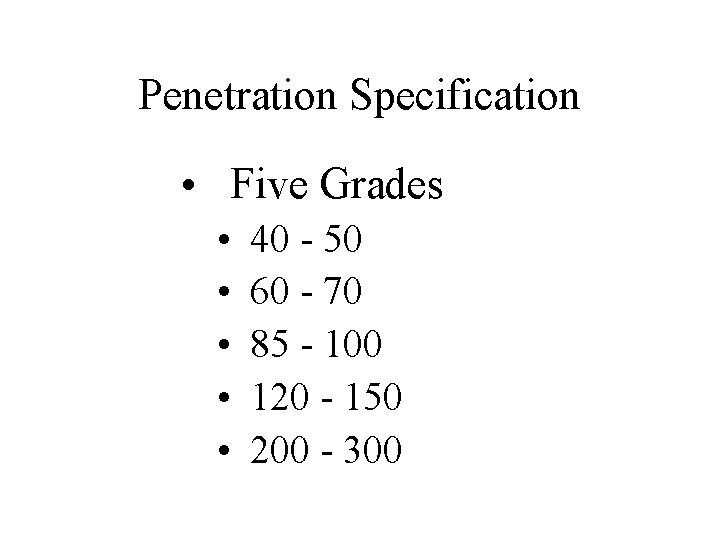
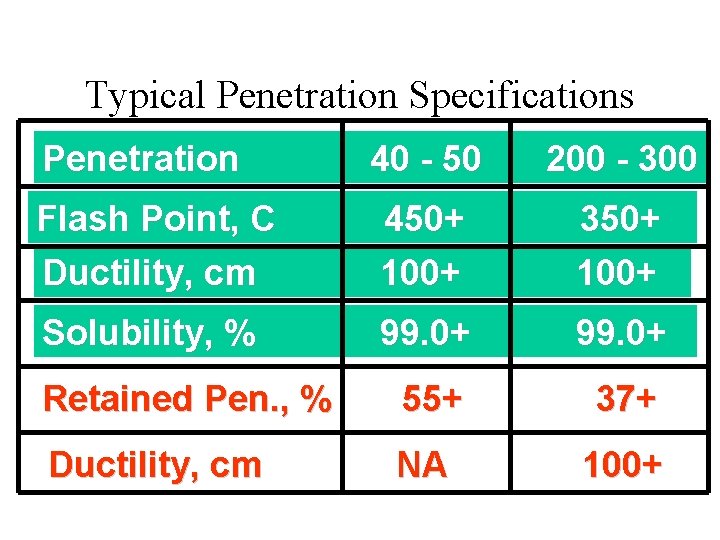
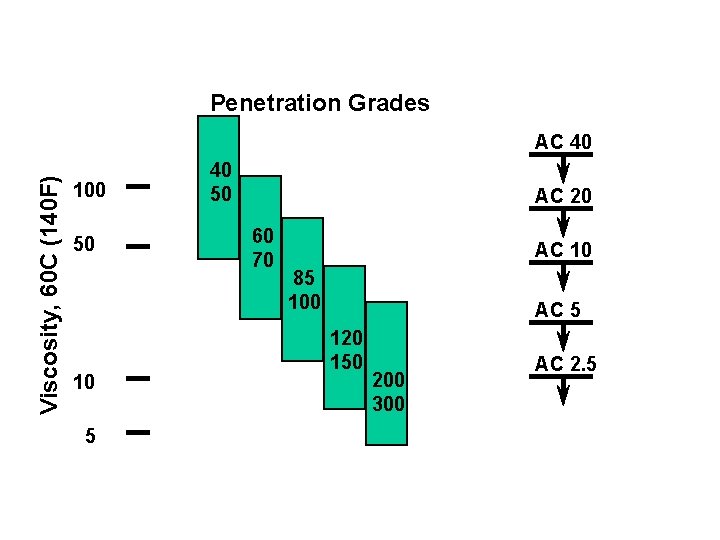
Penetration Specification • Five Grades • • • 40 - 50 60 - 70 85 - 100 120 - 150 200 - 300
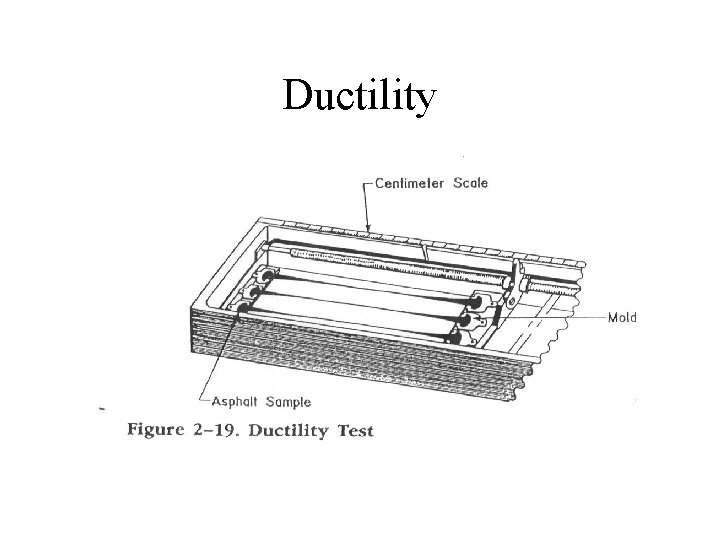
Ductility
Typical Penetration Specifications Penetration 40 - 50 200 - 300 Flash Point, C Ductility, cm 450+ 100+ 350+ 100+ Solubility, % 99. 0+ Retained Pen. , % 55+ 37+ Ductility, cm NA 100+
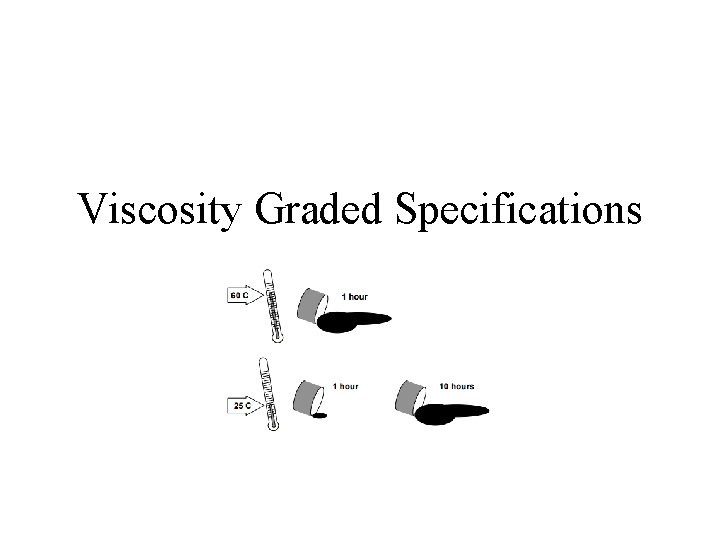
Viscosity Graded Specifications
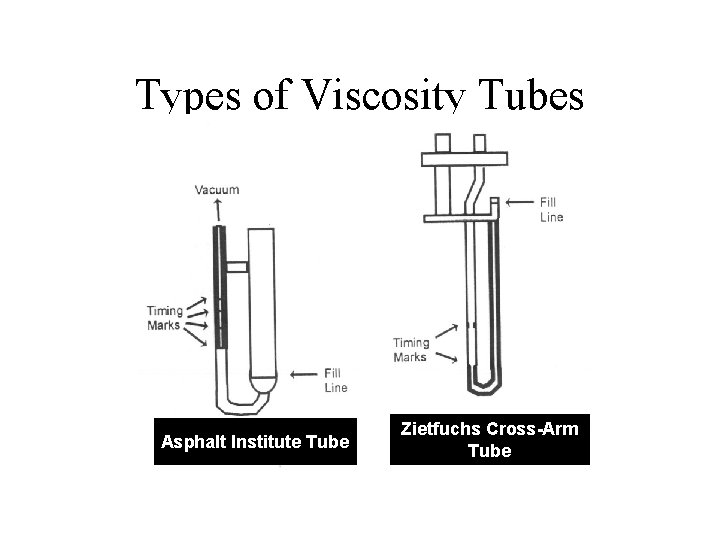
Types of Viscosity Tubes Asphalt Institute Tube Zietfuchs Cross-Arm Tube
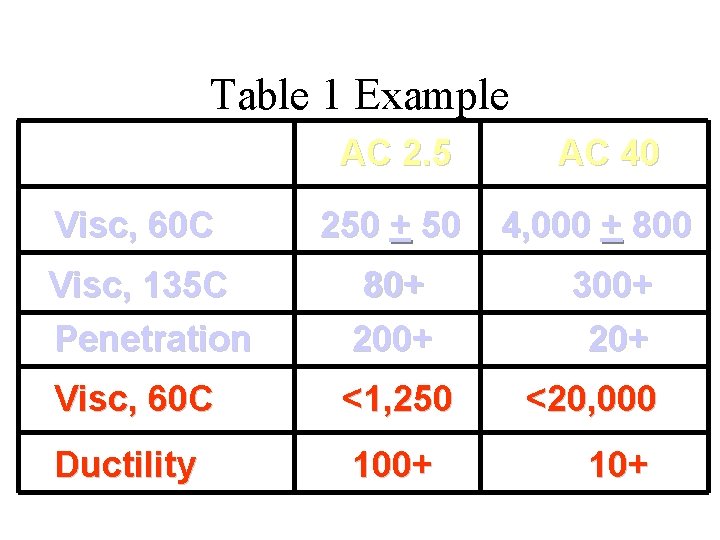
Table 1 Example AC 2. 5 Visc, 60 C 250 + 50 Visc, 135 C Penetration 80+ 200+ Visc, 60 C <1, 250 Ductility 100+ AC 40 4, 000 + 800 300+ 20+ <20, 000 10+
Penetration Grades Viscosity, 60 C (140 F) AC 40 100 50 10 5 40 50 AC 20 60 70 AC 10 85 100 AC 5 120 150 200 300 AC 2. 5
Asphalt Cements New Superpave Performance Graded Specification
PG Specifications • Fundamental properties related to pavement performance • Environmental factors • In-service & construction temperatures • Short and long term aging
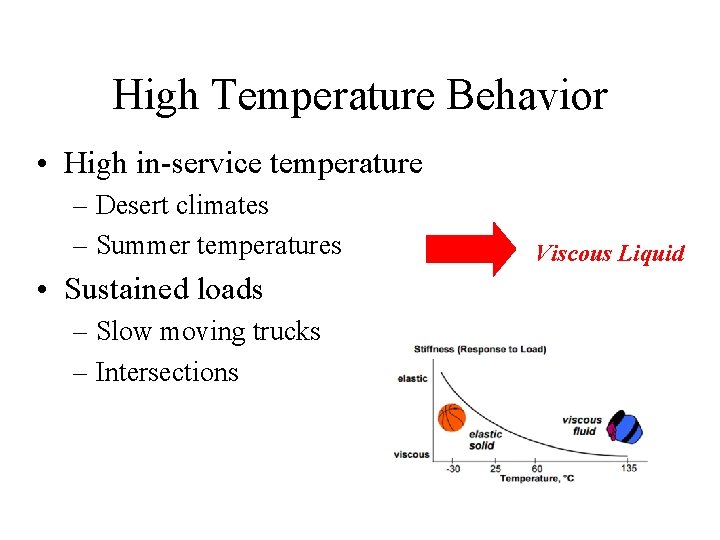
High Temperature Behavior • High in-service temperature – Desert climates – Summer temperatures • Sustained loads – Slow moving trucks – Intersections Viscous Liquid
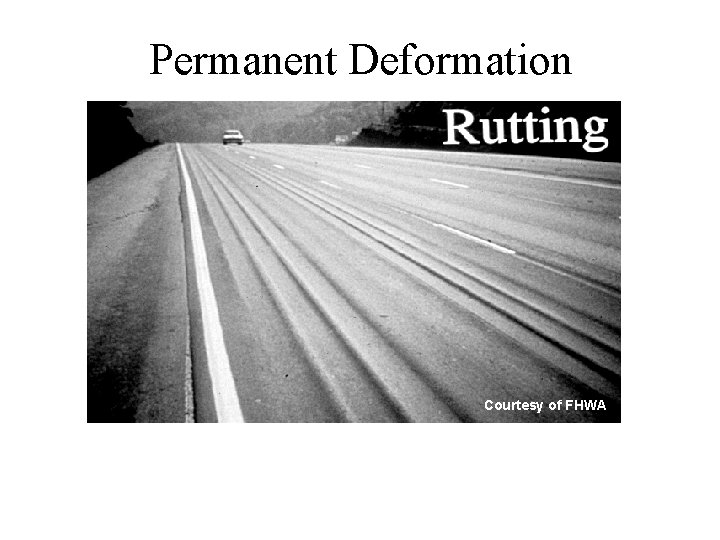
Pavement Behavior (Warm Temperatures) • Permanent deformation (rutting) • Mixture is plastic • Depends on asphalt source, additives, and aggregate properties
Permanent Deformation Courtesy of FHWA Function of warm weather and traffic
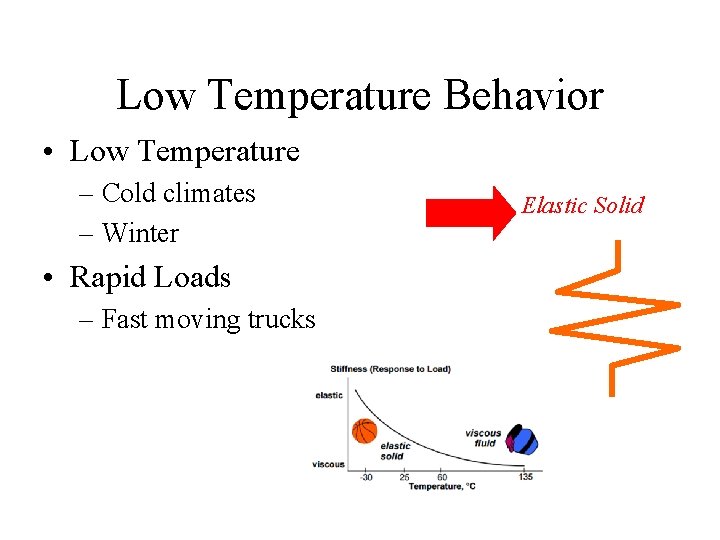
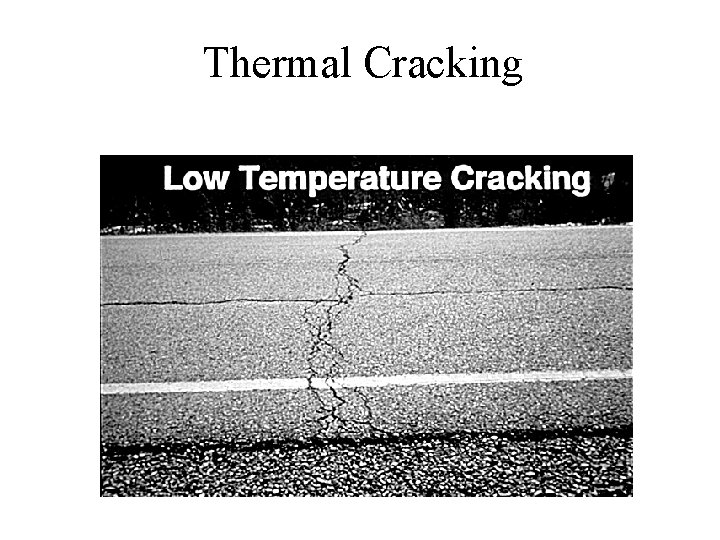
Low Temperature Behavior • Low Temperature – Cold climates – Winter • Rapid Loads – Fast moving trucks Elastic Solid
Pavement Behavior (Low Temperatures) • Thermal cracks – Stress generated by contraction due to drop in temperature – Crack forms when thermal stresses exceed ability of material to relieve stress through deformation • Material is brittle • Depends on source of asphalt and aggregate properties
Thermal Cracking Courtesy of FHWA
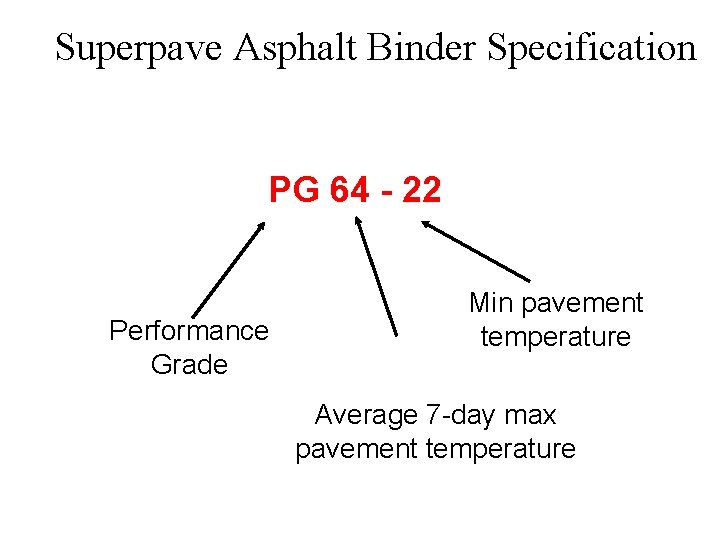
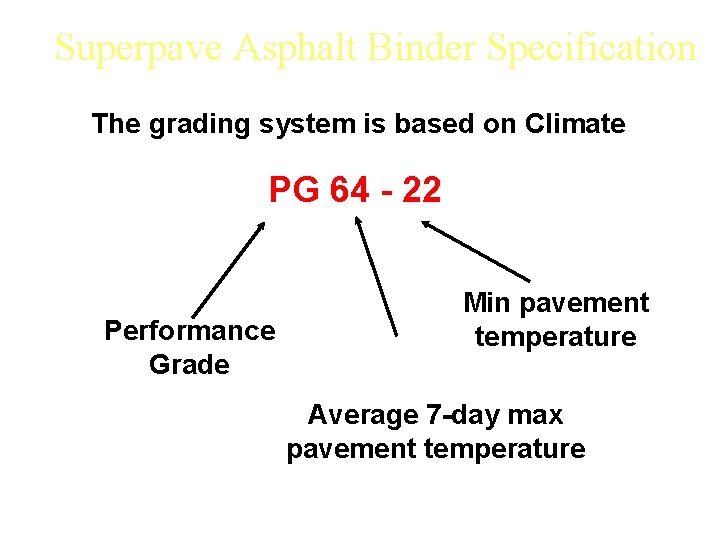
Superpave Asphalt Binder Specification The grading system is based on Climate PG 64 - 22 Performance Grade Min pavement temperature Average 7 -day max pavement temperature
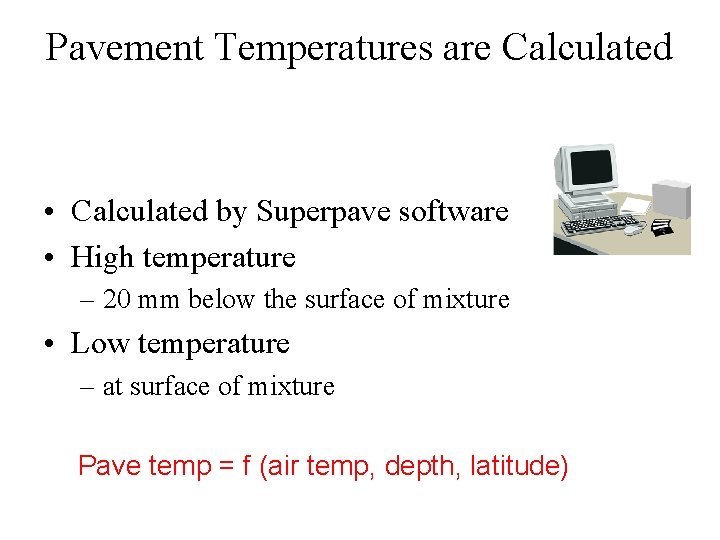
Pavement Temperatures are Calculated • Calculated by Superpave software • High temperature – 20 mm below the surface of mixture • Low temperature – at surface of mixture Pave temp = f (air temp, depth, latitude)
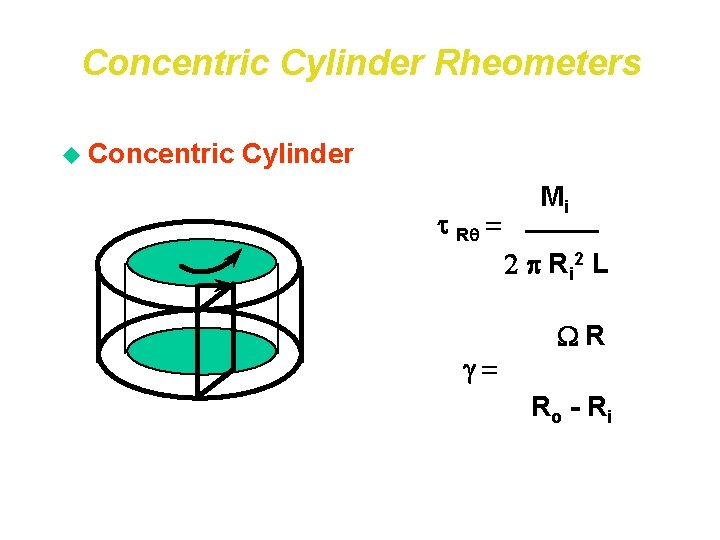
Concentric Cylinder Rheometers u Concentric Cylinder t Rq = Mi 2 p Ri 2 L g= WR Ro - R i
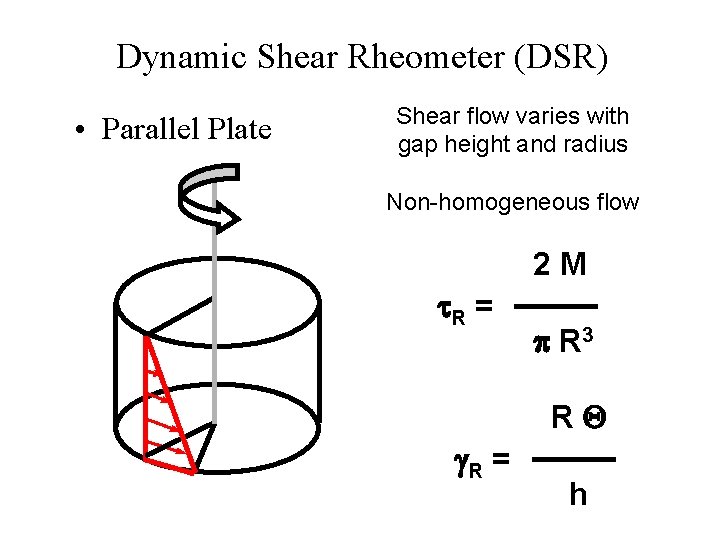
Dynamic Shear Rheometer (DSR) • Parallel Plate Shear flow varies with gap height and radius Non-homogeneous flow 2 M t. R = p R 3 RQ g. R = h
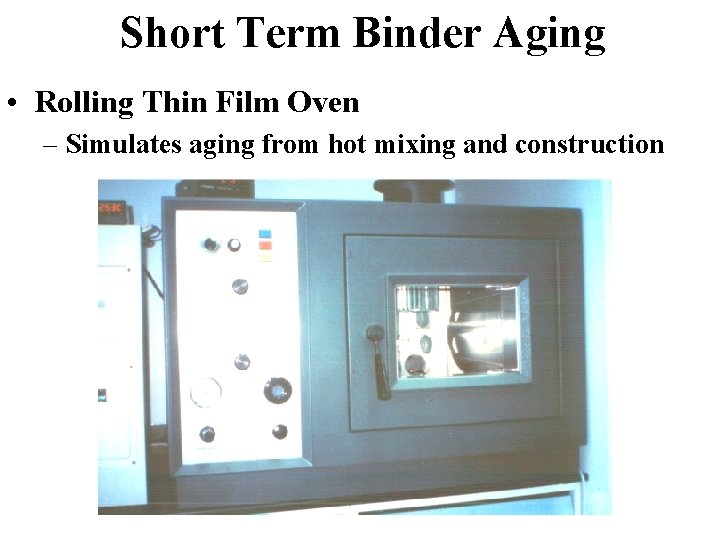
Short Term Binder Aging • Rolling Thin Film Oven – Simulates aging from hot mixing and construction
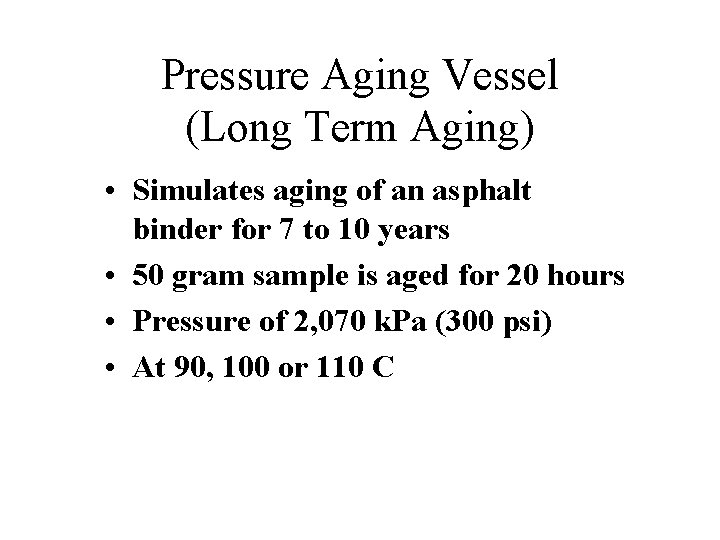
Pressure Aging Vessel (Long Term Aging) • Simulates aging of an asphalt binder for 7 to 10 years • 50 gram sample is aged for 20 hours • Pressure of 2, 070 k. Pa (300 psi) • At 90, 100 or 110 C
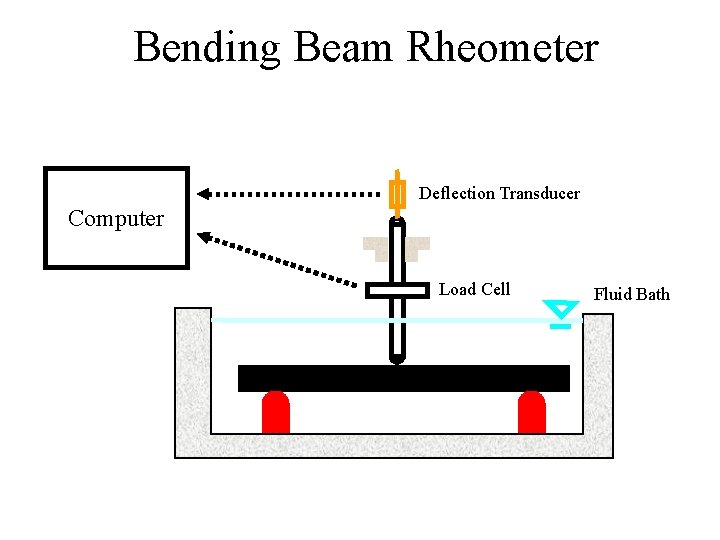
Bending Beam Rheometer Deflection Transducer Computer Air Bearing Load Cell Fluid Bath
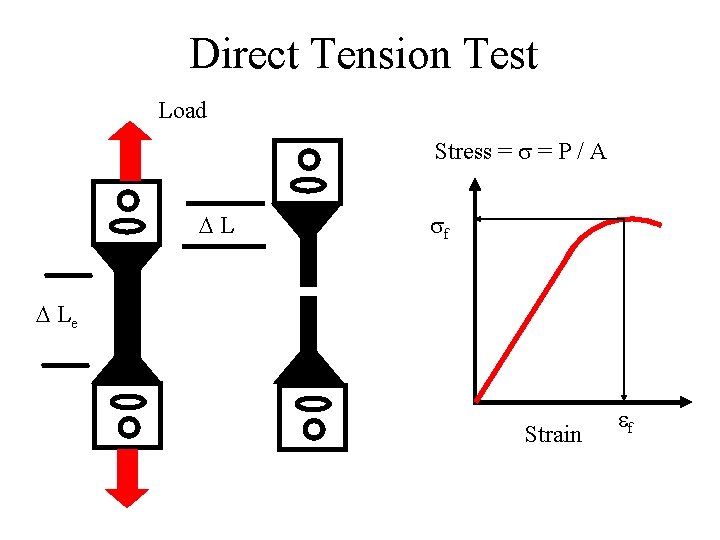
Direct Tension Test Load Stress = P / A DL sf D Le Strain ef
Summary Construction Rutting Fatigue Cracking Low Temp Cracking [DTT] [RV] No aging [DSR] [BBR] RTFO Short Term Aging PAV Long Term Aging
Superpave Binder Purchase Specification
Superpave Asphalt Binder Specification The grading system is based on Climate PG 64 - 22 Performance Grade Min pavement temperature Average 7 -day max pavement temperature
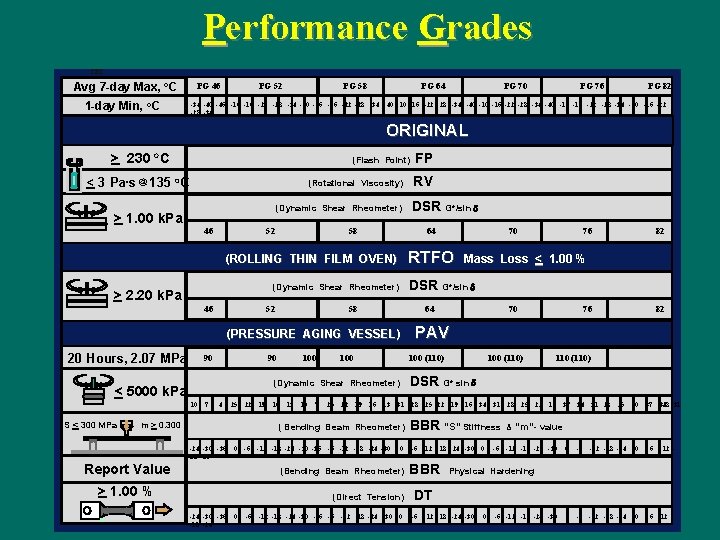
Performance Grades CEC Avg 7 -day Max, o. C 1 -day Min, o. C PG 46 PG 52 PG 58 PG 64 PG 70 PG 76 PG 82 -34 -40 -46 -10 -16 -22 -28 -34 -40 -46 -16 -22 -28 -34 -40 -10 -16 -22 -28 -34 -40 -16 -22 -28 -34 -10 -16 -22 -28 -34 ORIGINAL > 230 o. C < 3 Pa. s @ 135 o. C (Flash Point) (Rotational Viscosity) (Dynamic Shear Rheometer) > 1. 00 k. Pa 46 52 52 90 < 5000 k. Pa 10 S < 300 MPa 7 4 25 22 m > 0. 300 19 100 64 100 0 -6 Report Value 28 25 22 19 16 13 31 -12 -18 -24 -30 -36 -6 -12 -18 -24 -30 0 (Bending Beam Rheometer) > 1. 00 % (Direct Tension) -24 -30 -36 -18 -24 0 -6 100 (110) 16 7 -12 -18 -24 -30 -36 -6 -12 -18 -24 -30 0 76 82 PAV 100 (110) ( Bending Beam Rheometer) -24 -30 -36 18 -24 70 DSR G* sin 10 82 Mass Loss < 1. 00 % (Dynamic Shear Rheometer) 13 76 DSR G*/sin 58 90 70 RTFO (PRESSURE AGING VESSEL) 20 Hours, 2. 07 MPa DSR G*/sin 64 (Dynamic Shear Rheometer) 46 RV 58 (ROLLING THIN FILM OVEN) > 2. 20 k. Pa FP 25 22 19 16 34 31 28 25 110 (110) 22 19 BBR “S” Stiffness & “m”- value -6 -12 -18 -24 -30 BBR 0 -6 37 34 31 28 25 40 37 28 31 34 0 -6 -12 -18 -24 0 -6 -12 Physical Hardening DT -6 -12 -18 -24 -30 0 -6 -12 -18 -24 -30
How the PG Spec Works CEC Spec Requirement 1 -day Min, C Remains Constant Avg 7 -day Max, o. C o PG 46 PG 52 PG 58 PG 64 PG 76 PG 82 -34 -40 -46 -10 -16 -22 -28 -34 -40 -46 -16 -22 -28 -34 -40 -10 -16 -22 -28 -34 -40 -16 -22 -28 -34 -10 -16 -22 -28 -34 ORIGINAL > 230 o. C < 3 Pa. s @ 135 o. C (Flash Point) (Rotational Viscosity) (Dynamic Shear Rheometer) > 1. 00 k. Pa 46 5858 52 46 52 90 7 90 4 25 22 m > 0. 300 19 100 0 -6 Report Value 100 28 7 25 22 19 16 13 31 -12 -18 -24 -30 -36 -6 -12 -18 -24 -30 0 0 -6 -12 -18 -24 -30 -36 -6 -12 -18 -24 -30 0 76 100 (110) 16 10 82 82 PAV DSR G* sin (Direct Tension) -24 -30 -36 -18 -24 70 (Dynamic Shear Rheometer) 13 76 Mass Loss < 1. 00 % 100 (110) (Bending Beam Rheometer) > 1. 00 % 70 64 ( Bending Beam Rheometer) -24 -30 -36 18 -24 64 58 Test Temperature < 5000 k. Pa Changes 10 DSR G*/sin (PRESSURE AGING VESSEL) 20 Hours, 2. 07 MPa RV RTFO (Dynamic Shear Rheometer) > 2. 20 k. Pa FP 64 (ROLLING THIN FILM OVEN) S < 300 MPa PG 70 25 22 19 16 34 31 28 25 110 (110) 22 19 BBR “S” Stiffness & “m”- value -6 -12 -18 -24 -30 BBR 0 -6 37 34 31 28 25 40 37 28 31 34 0 -6 -12 -18 -24 0 -6 -12 Physical Hardening DT -6 -12 -18 -24 -30 0 -6 -12 -18 -24 -30
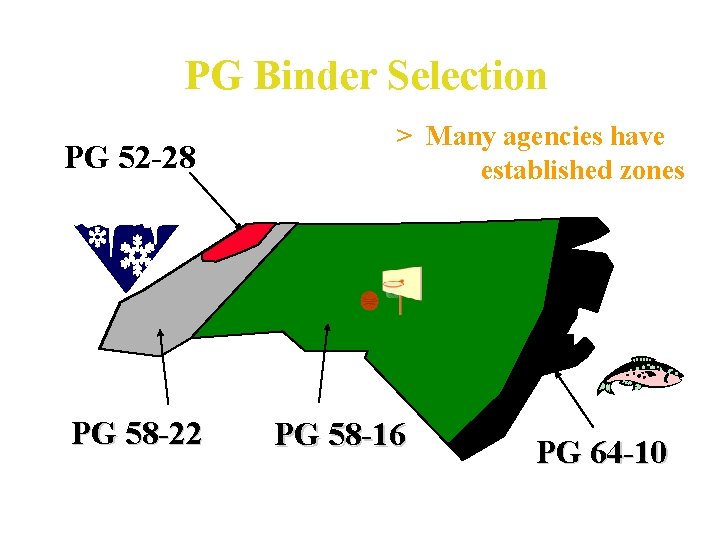
PG Binder Selection PG 52 -28 PG 58 -22 > Many agencies have established zones PG 58 -16 PG 64 -10
Summary of How to Use PG Specification • Determine – 7 -day max pavement temperatures – 1 -day minimum pavement temperature • Use specification tables to select test temperatures • Determine asphalt cement properties and compare to specification limits
Asphalt Concrete Mix Design History
Hot Mix Asphalt Concrete (HMA) Mix Designs • Objective: – Develop an economical blend of aggregates and asphalt that meet design requirements • Historical mix design methods – Marshall – Hveem • New – Superpave gyratory
Requirements in Common • Sufficient asphalt to ensure a durable pavement • Sufficient stability under traffic loads • Sufficient air voids – Upper limit to prevent excessive environmental damage – Lower limit to allow room for initial densification due to traffic • Sufficient workability
MARSHALL MIX DESIGN
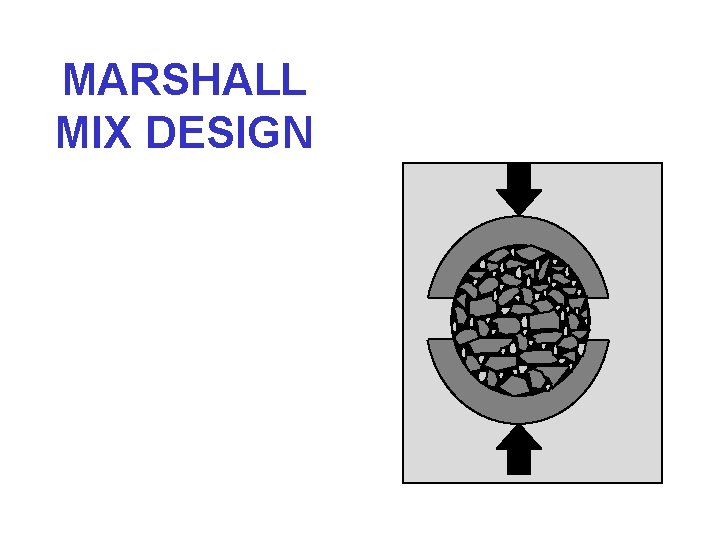
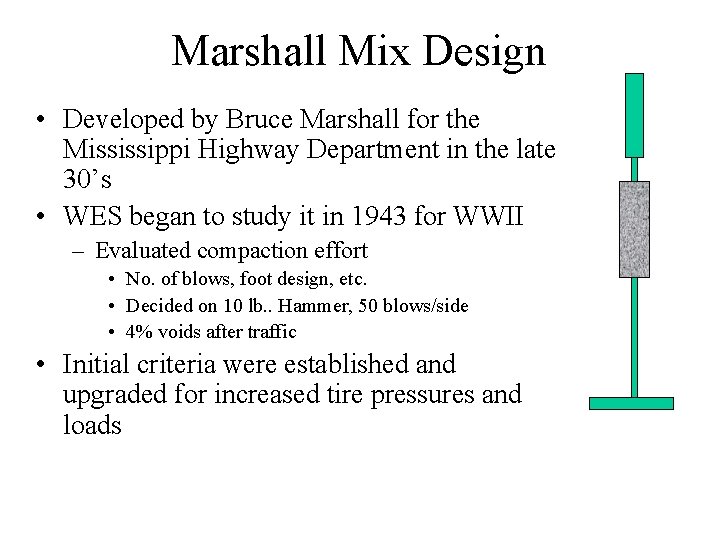
Marshall Mix Design • Developed by Bruce Marshall for the Mississippi Highway Department in the late 30’s • WES began to study it in 1943 for WWII – Evaluated compaction effort • No. of blows, foot design, etc. • Decided on 10 lb. . Hammer, 50 blows/side • 4% voids after traffic • Initial criteria were established and upgraded for increased tire pressures and loads
Marshall Mix Design • Select and test aggregate • Select and test asphalt cement – Establish mixing and compaction temperatures • Develop trial blends – Heat and mix asphalt cement and aggregates – Compact specimen (100 mm diameter)
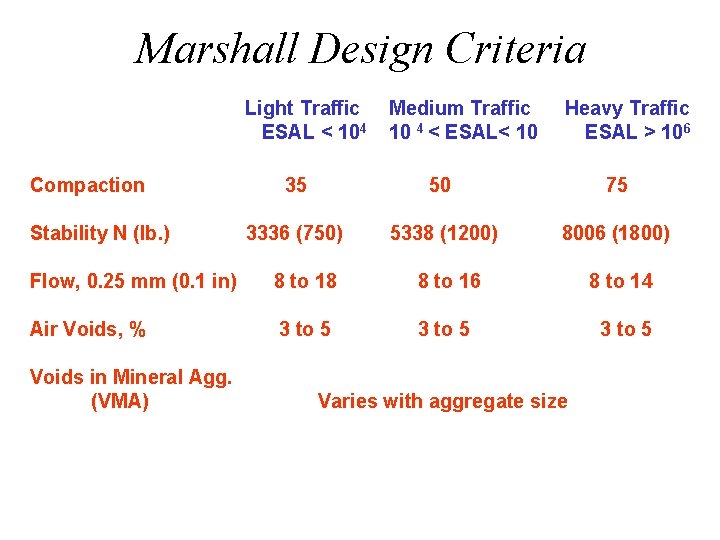
Marshall Design Criteria Light Traffic ESAL < 104 Compaction Stability N (lb. ) Medium Traffic 10 4 < ESAL< 10 Heavy Traffic ESAL > 106 35 50 75 3336 (750) 5338 (1200) 8006 (1800) Flow, 0. 25 mm (0. 1 in) 8 to 18 8 to 16 8 to 14 Air Voids, % 3 to 5 Voids in Mineral Agg. (VMA) Varies with aggregate size
Asphalt Concrete Mix Design Superpave
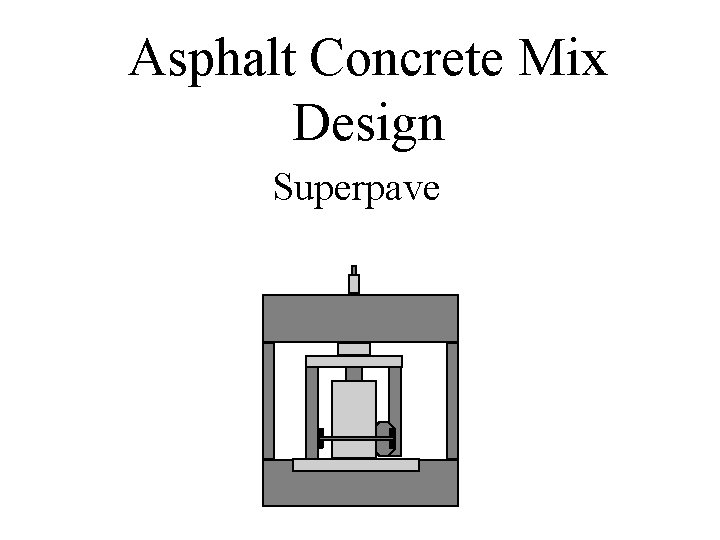
Superpave Volumetric Mix Design • Goals – Compaction method which simulates field conditions – Accommodates large size aggregates – Measure of compactibility – Able to use in field labs – Address durability issues • Film thickness • Environmental
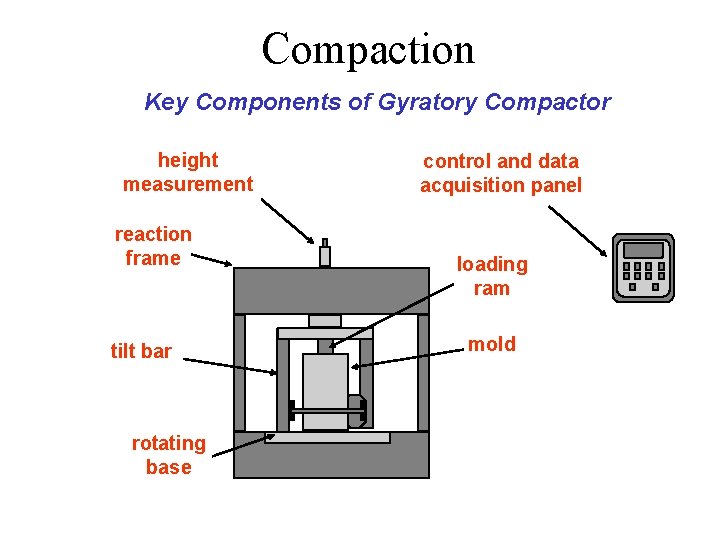
Compaction Key Components of Gyratory Compactor height measurement reaction frame tilt bar rotating base control and data acquisition panel loading ram mold
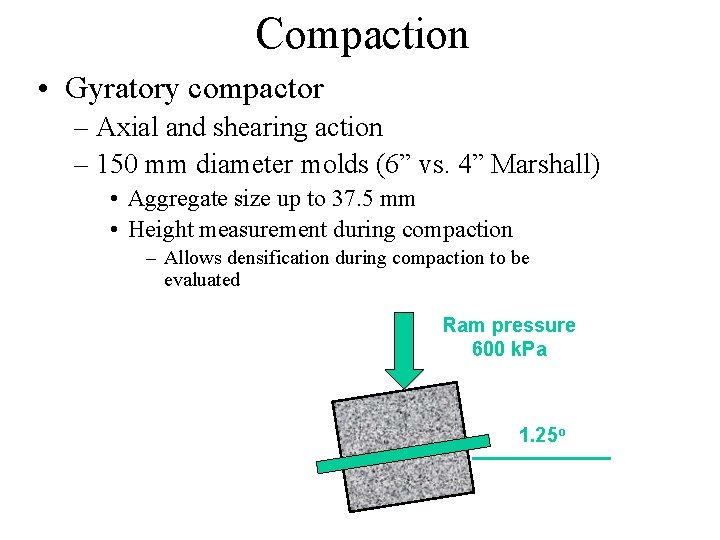
Compaction • Gyratory compactor – Axial and shearing action – 150 mm diameter molds (6” vs. 4” Marshall) • Aggregate size up to 37. 5 mm • Height measurement during compaction – Allows densification during compaction to be evaluated Ram pressure 600 k. Pa 1. 25 o
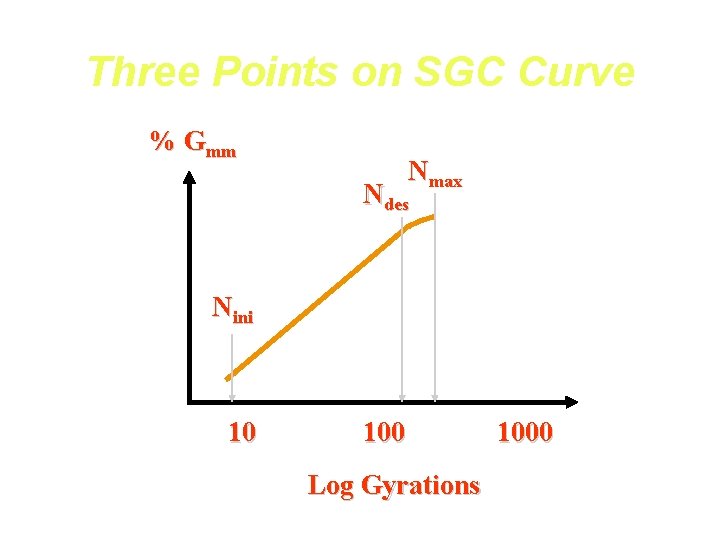
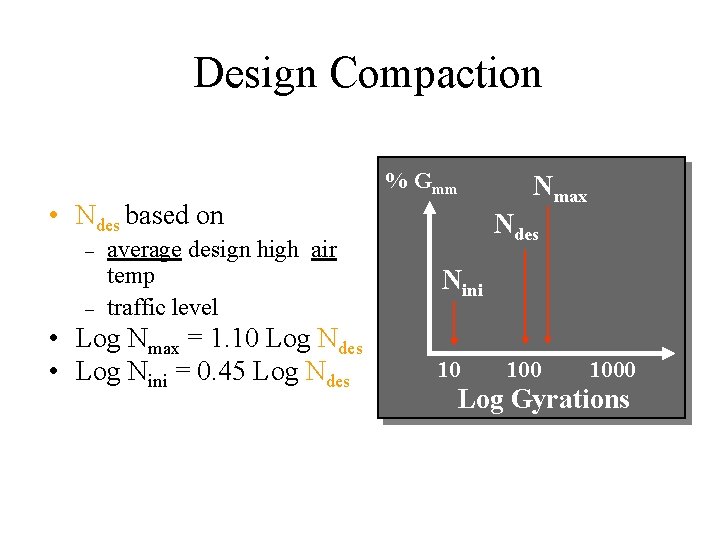
Three Points on SGC Curve % Gmm Nmax Ndes Nini 10 100 Log Gyrations 1000
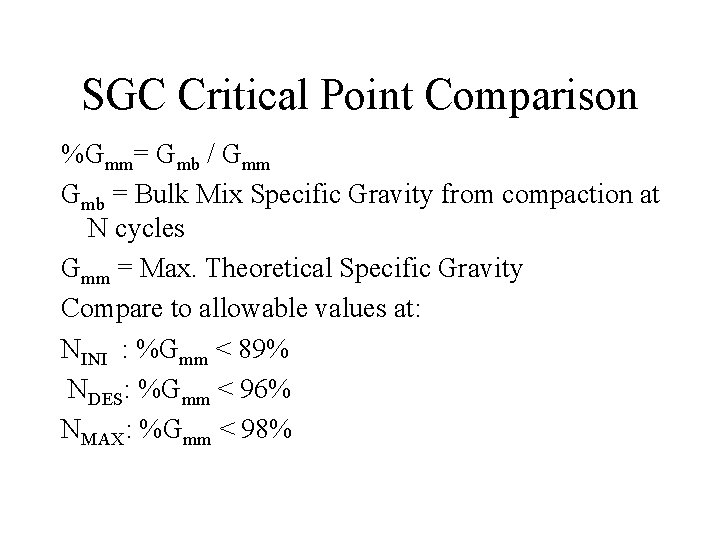
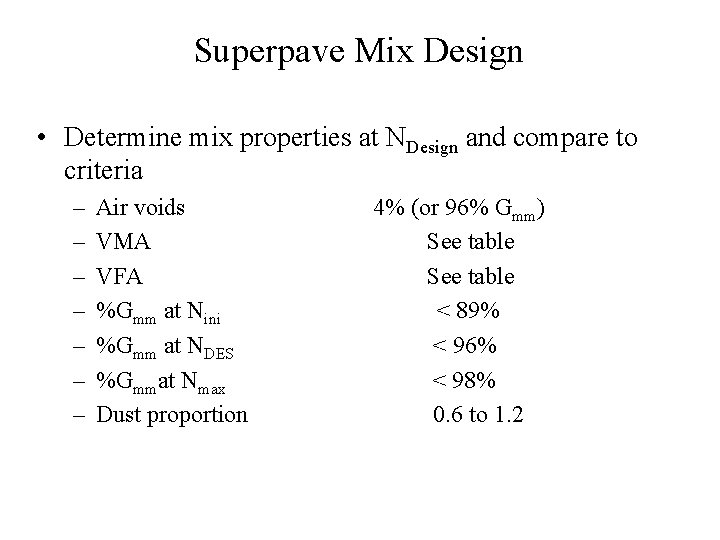
SGC Critical Point Comparison %Gmm= Gmb / Gmm Gmb = Bulk Mix Specific Gravity from compaction at N cycles Gmm = Max. Theoretical Specific Gravity Compare to allowable values at: NINI : %Gmm < 89% NDES: %Gmm < 96% NMAX: %Gmm < 98%
Design Compaction % Gmm • Ndes based on – – average design high air temp traffic level • Log Nmax = 1. 10 Log Ndes • Log Nini = 0. 45 Log Ndes Nmax Ndes Nini 10 1000 Log Gyrations
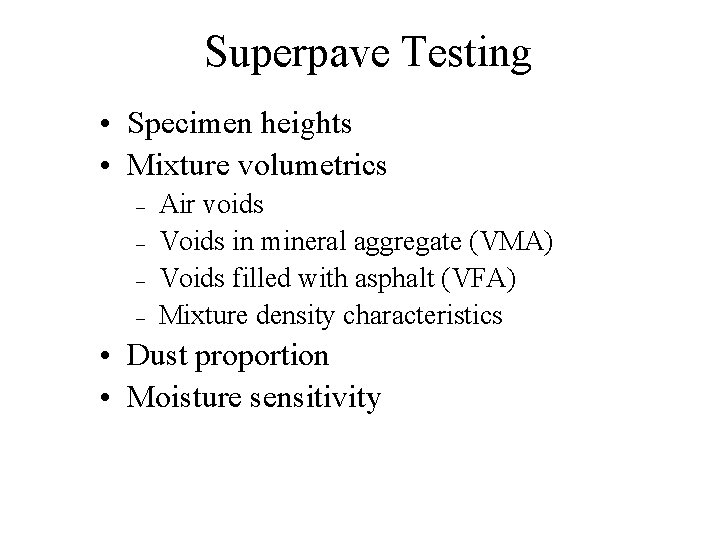
Superpave Testing • Specimen heights • Mixture volumetrics – – Air voids Voids in mineral aggregate (VMA) Voids filled with asphalt (VFA) Mixture density characteristics • Dust proportion • Moisture sensitivity
Superpave Mix Design • Determine mix properties at NDesign and compare to criteria – – – – Air voids VMA VFA %Gmm at Nini %Gmm at NDES %Gmmat Nmax Dust proportion 4% (or 96% Gmm) See table < 89% < 96% < 98% 0. 6 to 1. 2
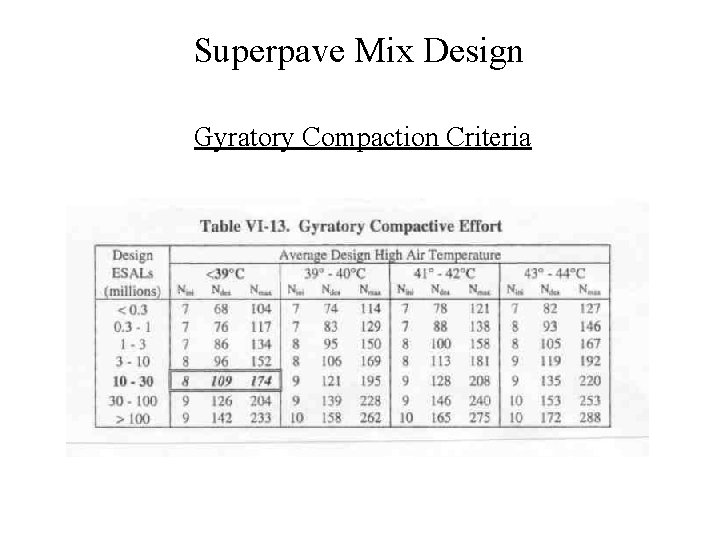
Superpave Mix Design Gyratory Compaction Criteria