
Supernovae from Massive Stars light curves and spectral



- Slides: 31
Supernovae from Massive Stars: light curves and spectral evolution Bruno Leibundgut ESO
The core-collapse SN poster child Suntzeff (2003) (also Fransson et al. 2007) SN 1987 A the best observed supernova ever
What do we want to learn about supernovae? • What explodes? – progenitors, evolution towards explosion deep imaging • How does it explode? – explosion mechanisms late phases? • Where does it explode? – environment (local and global) deep imaging/ integral-field spectroscopy – feedback • What does it leave behind? – remnants – compact remnants – chemical enrichment deep imaging • Other use of the explosions – light beacons – distance indicators – chemical factories high resolution spectroscopy faint object photometry faint object spectroscopy
Consider • Several channels towards the explosion of a massive star – electron capture – iron core collapse – pair instability • Many ways to ‘dress’ it – single vs. binary evolution • envelope stripping – circumstellar material
Shaping supernova emission • Light curves as tracers of the energy release in supernovae – energy sources – photon escape – modulations – external effects
Energy sources • shock – breakout – kinetic energy • cooling – due to expansion of the ejecta • radioactivity – nucleosynthesis • recombination – of the shock-ionised material
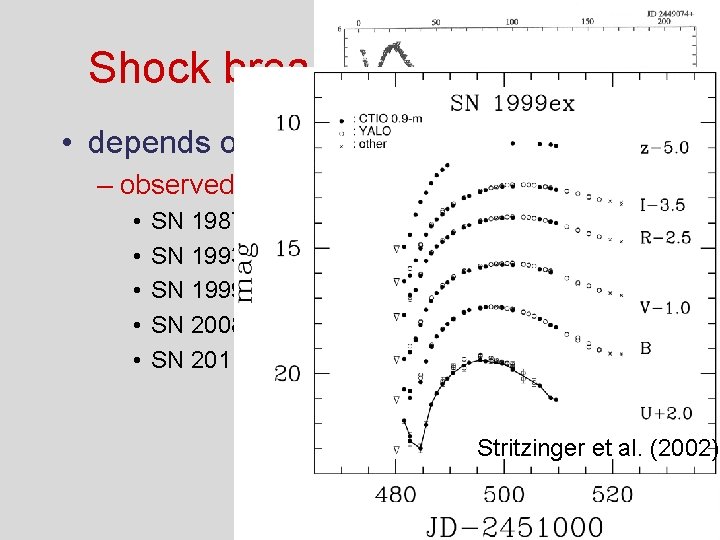
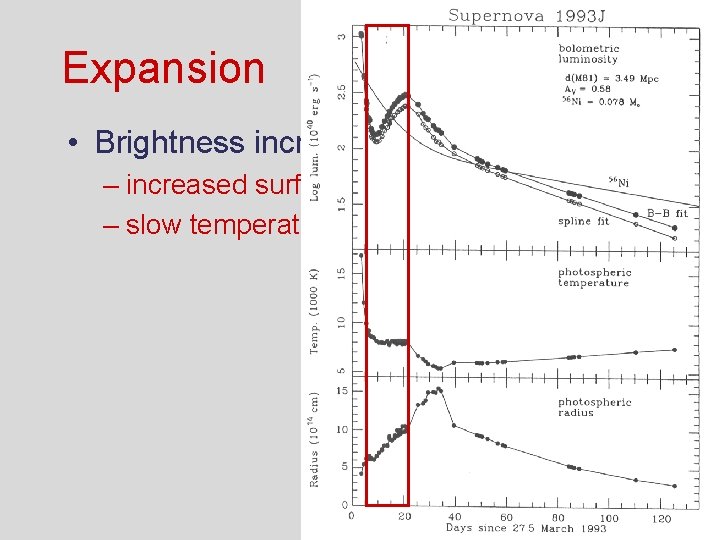
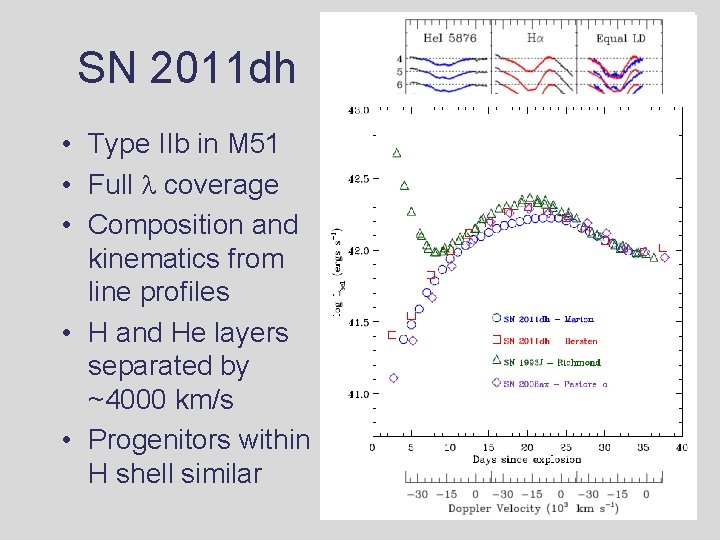
Shock breakout and cooling • depends on the size of the progenitor star – observed only in core-collapse supernovae • • • SN 1987 A SN 1993 J SN 1999 ex SN 2008 D SN 2011 dh Stritzinger et al. (2002) Arnett et al. (1989) Doroshenko et al. (1995)
Expansion • Brightness increase – increased surface area – slow temperature decrease
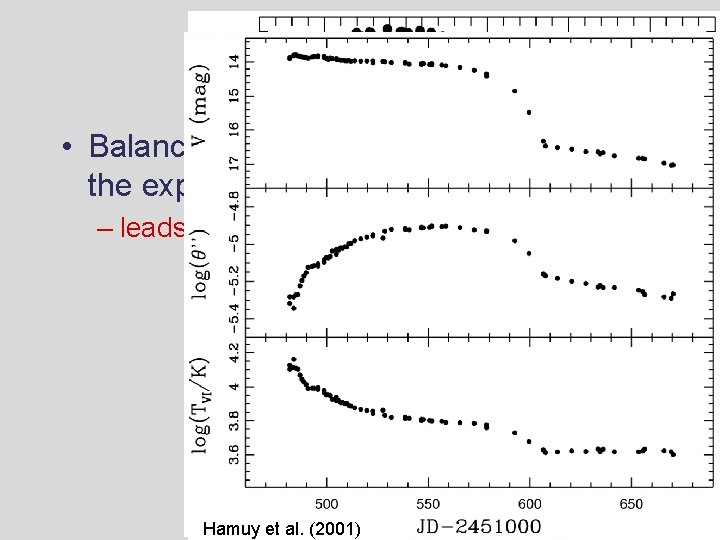
Recombination • Balance of the recombination wave and the expansion of the ejecta – leads to an extended plateau phase Hamuy et al. (2001)
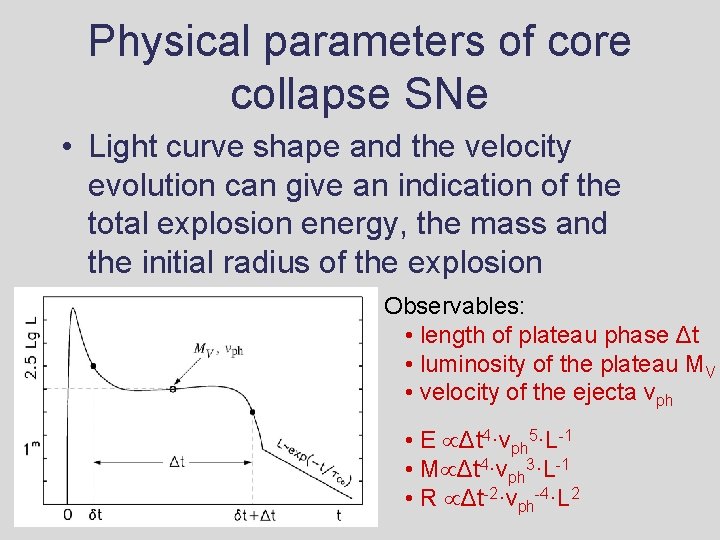
Physical parameters of core collapse SNe • Light curve shape and the velocity evolution can give an indication of the total explosion energy, the mass and the initial radius of the explosion Observables: • length of plateau phase Δt • luminosity of the plateau MV • velocity of the ejecta vph • E Δt 4·vph 5·L-1 • M Δt 4·vph 3·L-1 • R Δt-2·vph-4·L 2
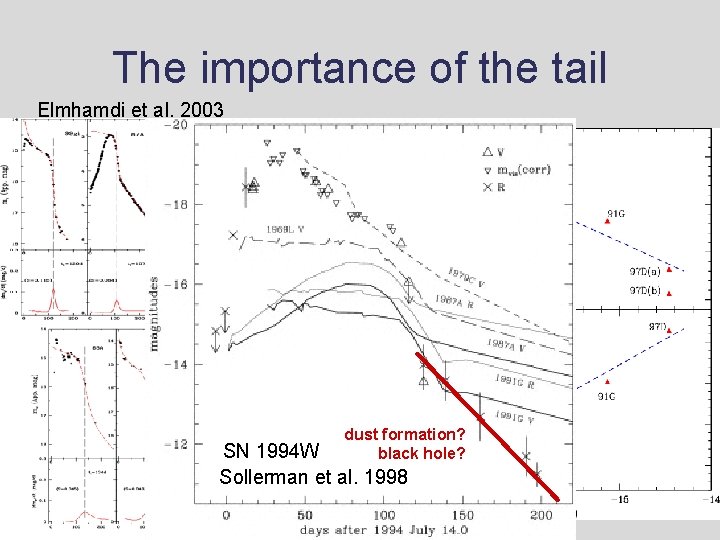
The importance of the tail Elmhamdi et al. 2003 • Attempt to determine the transition from the plateau phase to the radioactive tail dust formation? black hole? SN 1994 W Sollerman et al. 1998
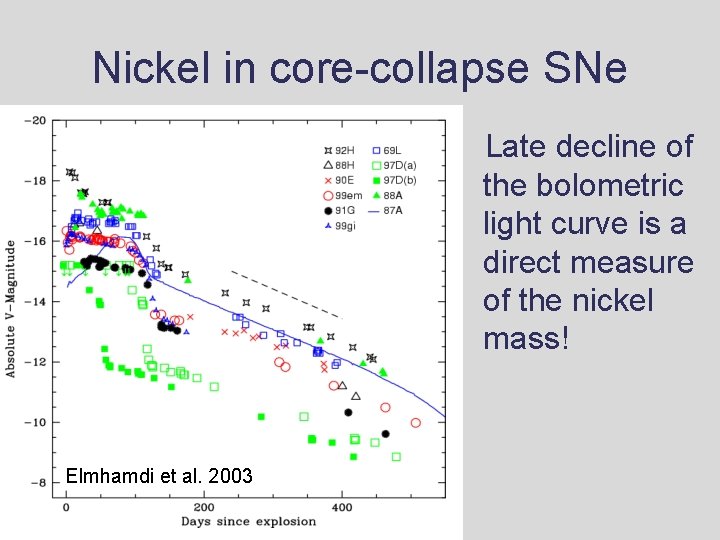
Nickel in core-collapse SNe Late decline of the bolometric light curve is a direct measure of the nickel mass! Elmhamdi et al. 2003 Supernovae Bruno Leibundgut
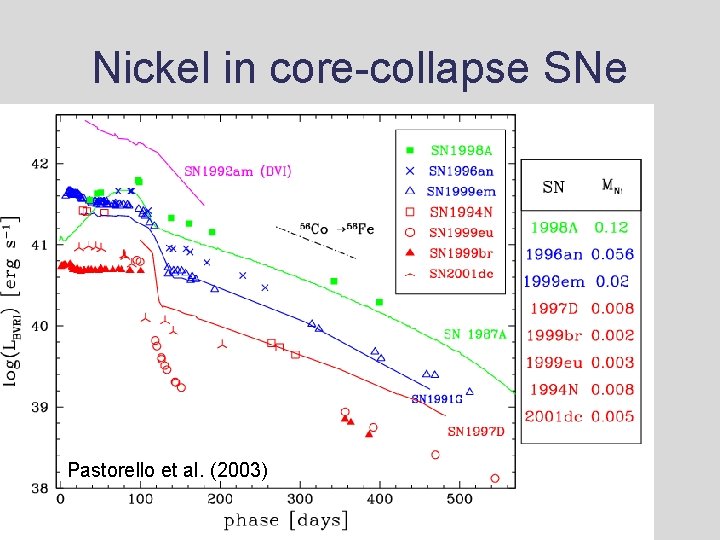
Nickel in core-collapse SNe Pastorello et al. (2003) Supernovae Bruno Leibundgut
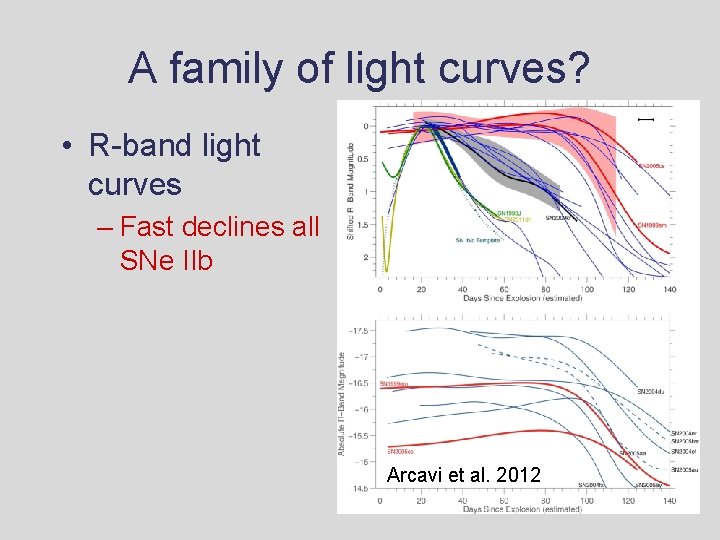
A family of light curves? • R-band light curves – Fast declines all SNe IIb Arcavi et al. 2012
SN 2011 dh • Type IIb in M 51 • Full coverage • Composition and kinematics from line profiles • H and He layers separated by ~4000 km/s • Progenitors within H shell similar Marion et al. 2013
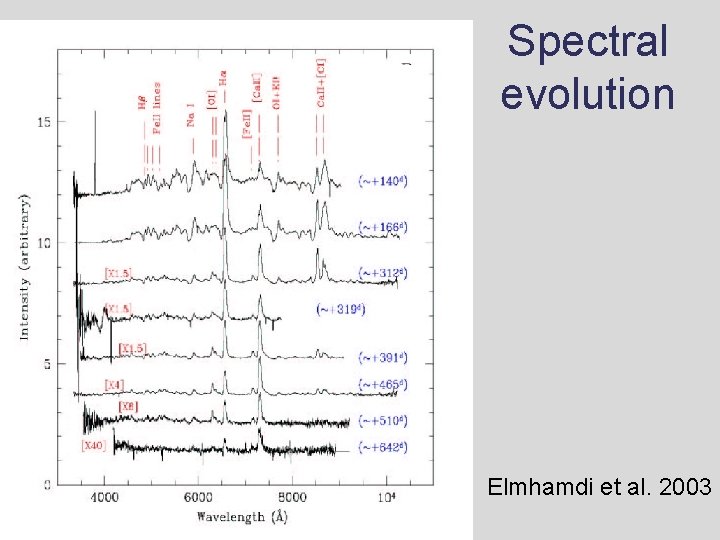
SN 1999 em Spectral evolution Elmhamdi et al. 2003
SNe II near maximum • different lines • different shapes • different velocities Hamuy 2001
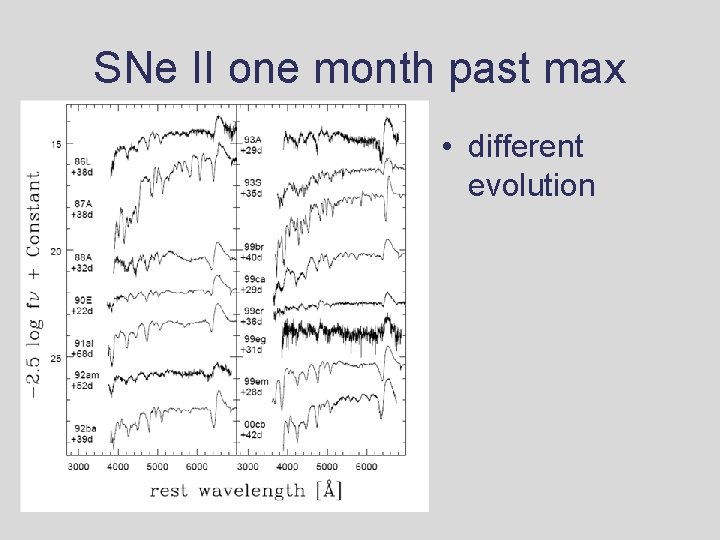
SNe II one month past max • different evolution
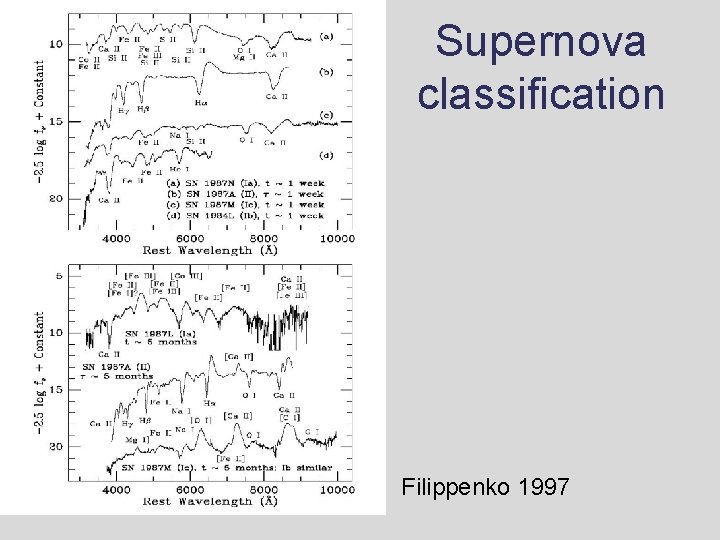
Supernova classification Filippenko 1997
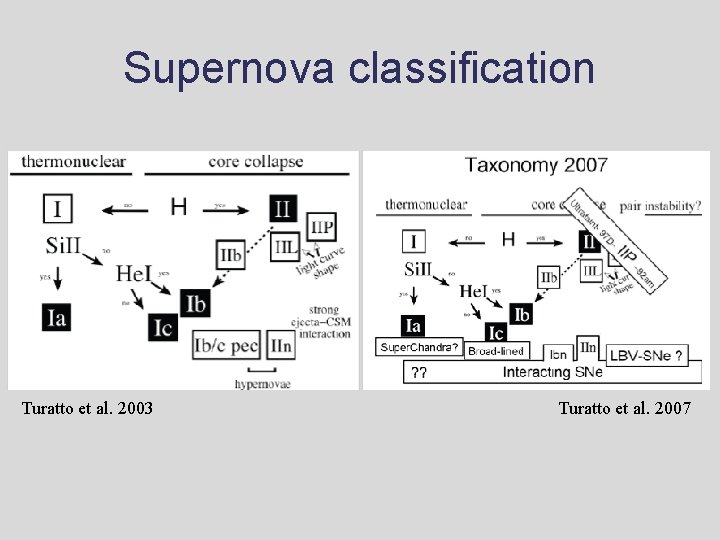
Supernova classification Turatto et al. 2003 Turatto et al. 2007
Supernovae Bruno Leibundgut
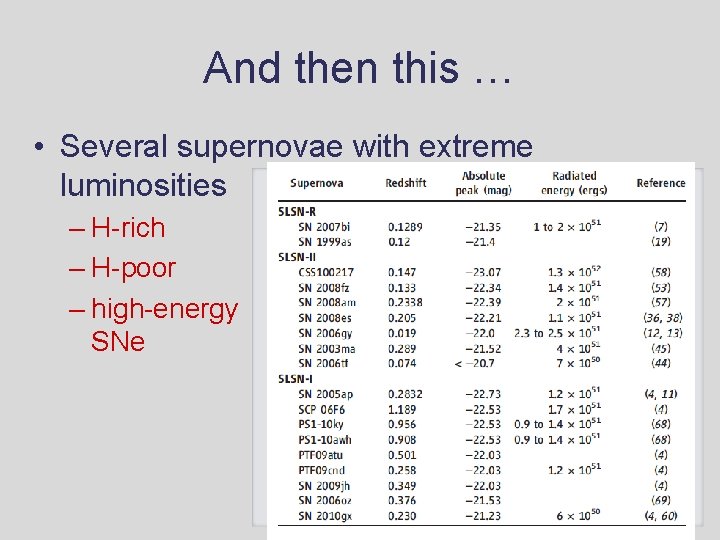
And then this … • Several supernovae with extreme luminosities – H-rich – H-poor – high-energy SNe Gal-Yam 2012
Spectroscopy
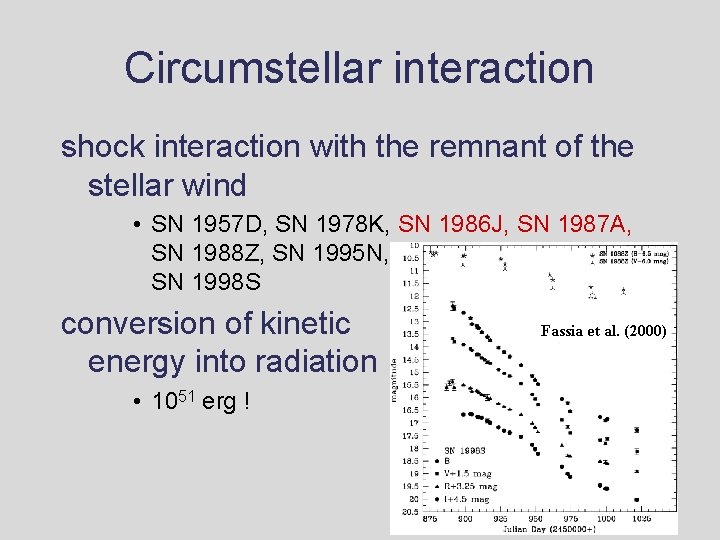
Circumstellar interaction shock interaction with the remnant of the stellar wind • SN 1957 D, SN 1978 K, SN 1986 J, SN 1987 A, SN 1988 Z, SN 1995 N, SN 1998 S conversion of kinetic energy into radiation • 1051 erg ! Fassia et al. (2000)
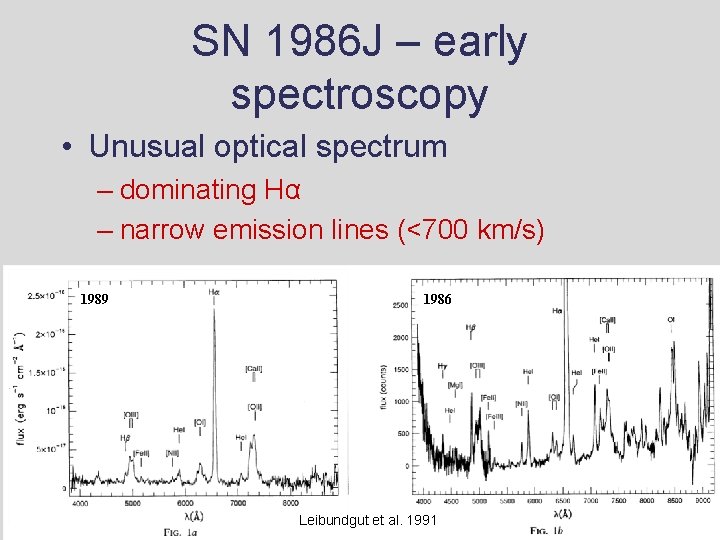
SN 1986 J – early spectroscopy • Unusual optical spectrum – dominating Hα – narrow emission lines (<700 km/s) 1989 1986 Leibundgut et al. 1991
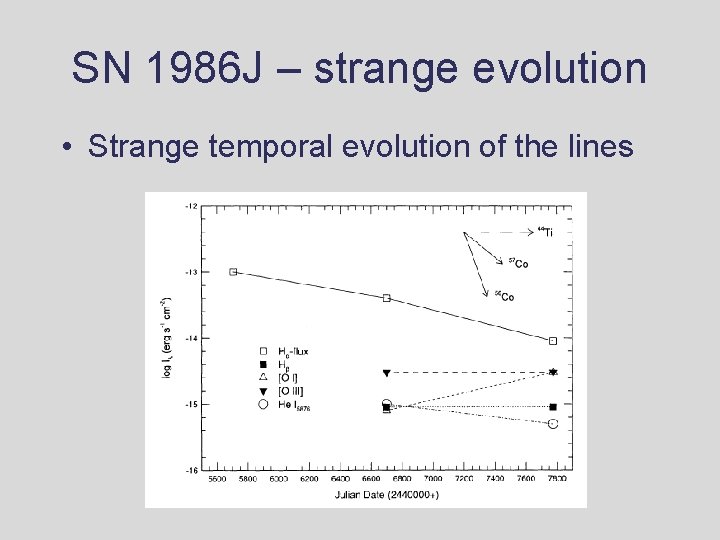
SN 1986 J – strange evolution • Strange temporal evolution of the lines
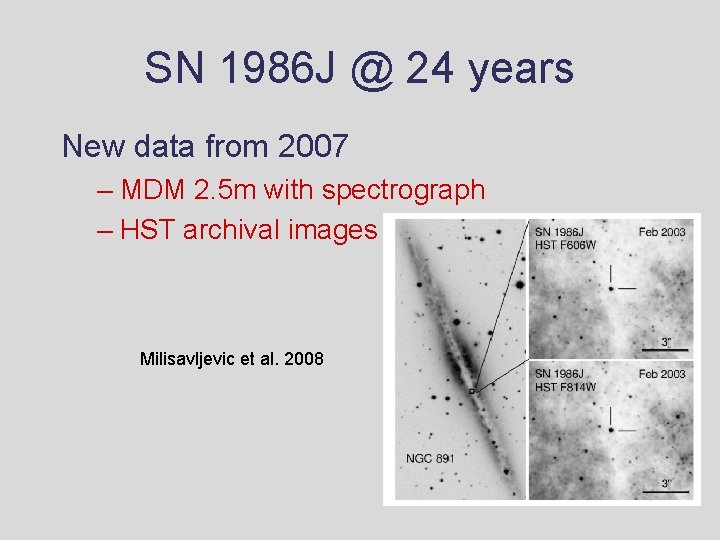
SN 1986 J @ 24 years New data from 2007 – MDM 2. 5 m with spectrograph – HST archival images Milisavljevic et al. 2008
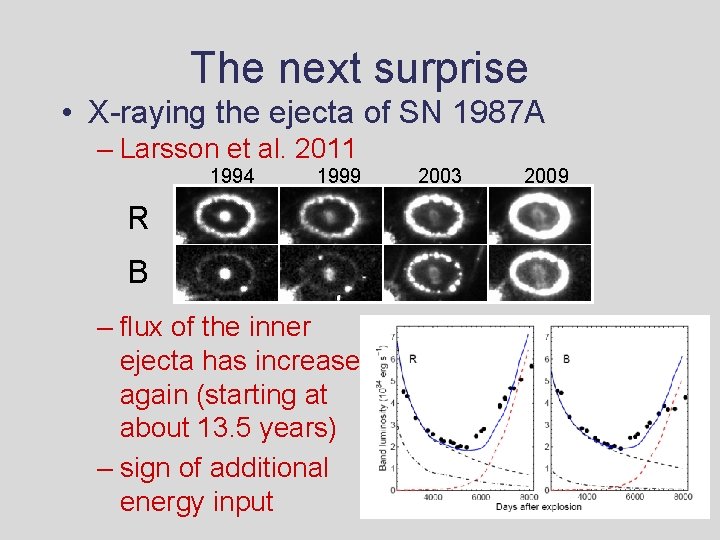
The next surprise • X-raying the ejecta of SN 1987 A – Larsson et al. 2011 1994 1999 R B – flux of the inner ejecta has increase again (starting at about 13. 5 years) – sign of additional energy input 2003 2009
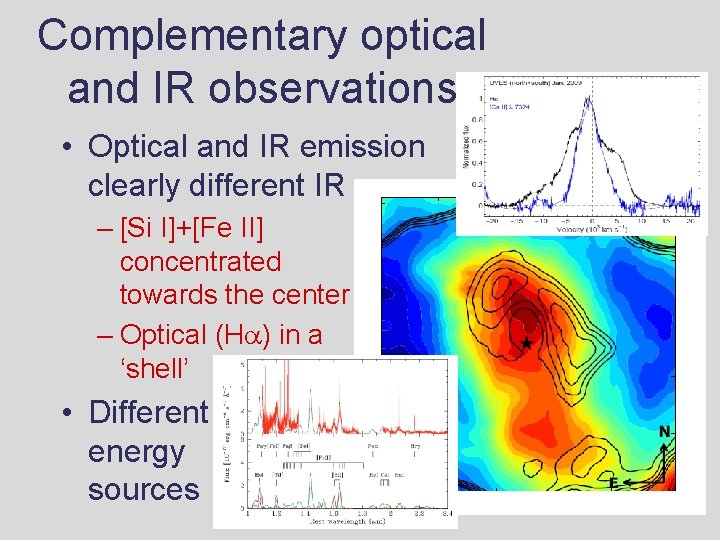
Complementary optical and IR observations • Optical and IR emission clearly different IR – [Si I]+[Fe II] concentrated towards the center – Optical (H ) in a ‘shell’ • Different energy sources
Summary • Current transient surveys find large numbers of supernovae – Palomar Transient Survey; Pan. STARRS; PESSTO; Dark Energy Survey • Many special objects – Sometimes types unclear; explosion mechanisms unknown – Need to shift paradigms? state of confusion
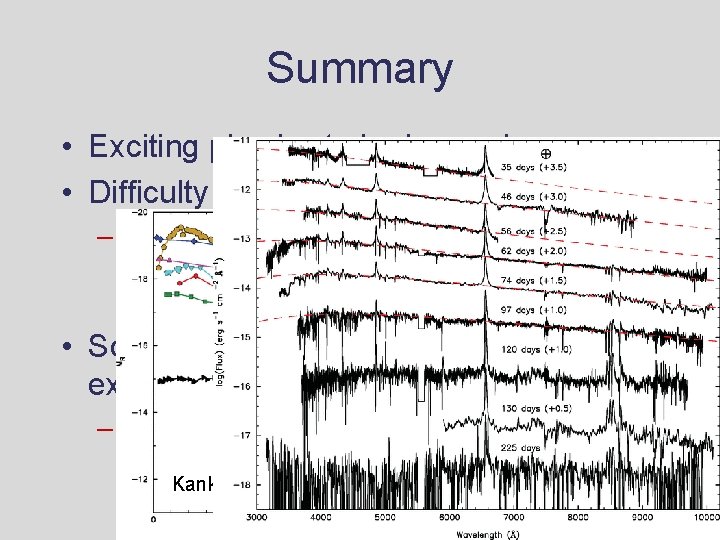
Summary • Exciting physics to be learned • Difficulty to separate different effects – Explosion type; 56 Ni production; progenitor and progenitor evolution; circumstellar interaction • Some events defy the current explanations – SN 2009 kn Kankare et al. 2012