
Supernova study with BATC Sky Survey Wang Xiaofeng
Supernova study with BATC Sky Survey Wang Xiao-feng Physics Department and Tsinghua Center for Astrophysics, Tsinghua University 2005, 8, 12, Weihai
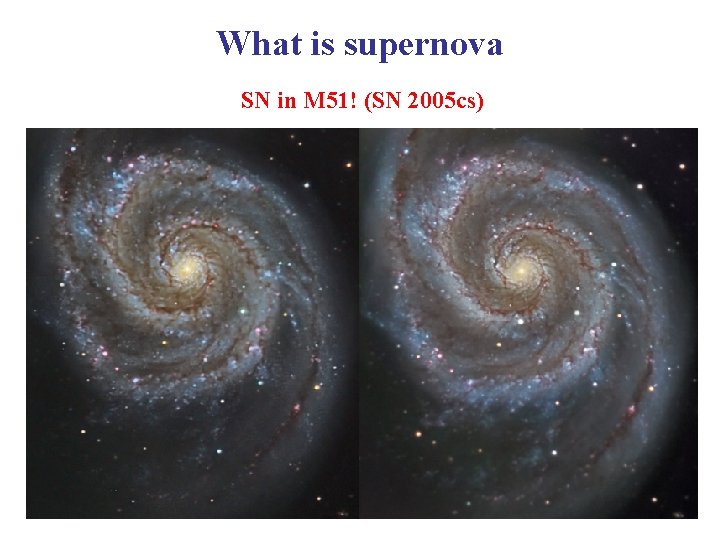
What is supernova SN in M 51! (SN 2005 cs) Stellar explosion with giant energy release Energy of the visible explosion~1051 ergs Luminosity~109 -10 L⊙ Supernovae might be the brightest objects in the universe, and can outshine a whole galaxy (for a few weeks) One of the endpoints of stellar evolution
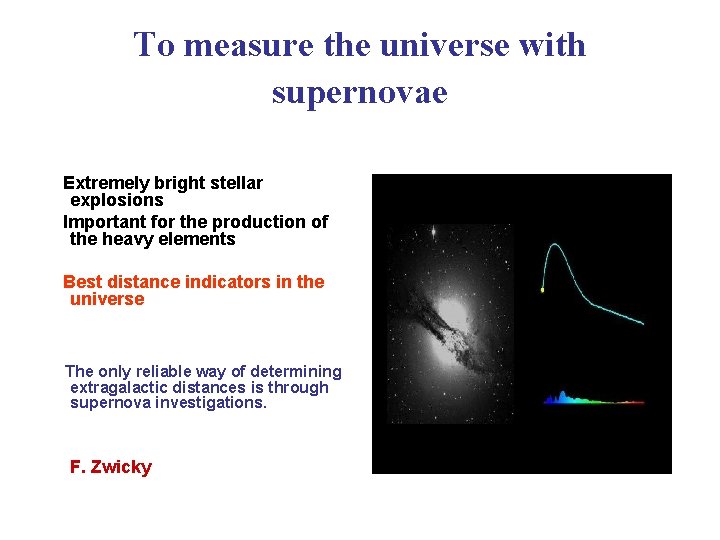
To measure the universe with supernovae Extremely bright stellar explosions Important for the production of the heavy elements Best distance indicators in the universe The only reliable way of determining extragalactic distances is through supernova investigations. F. Zwicky
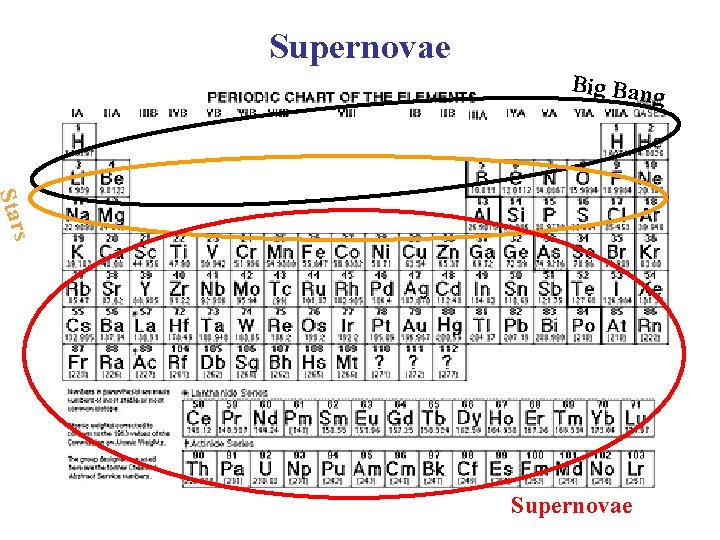
Supernovae Big Bang s Star Supernovae
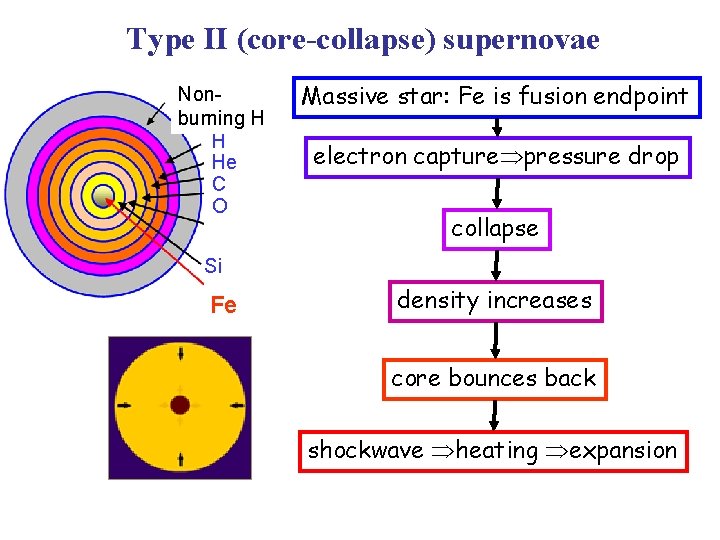
Type II (core-collapse) supernovae Nonburning H H He C O Massive star: Fe is fusion endpoint electron capture pressure drop collapse Si Fe density increases core bounces back shockwave heating expansion
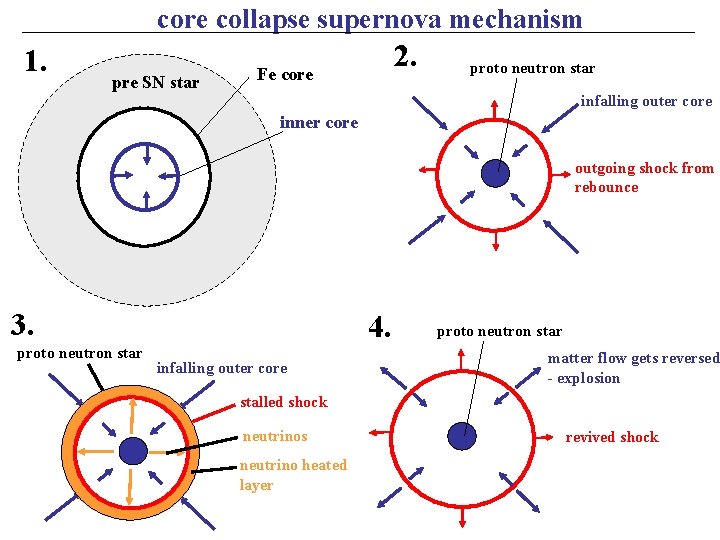
core collapse supernova mechanism 1. pre SN star 2. Fe core proto neutron star infalling outer core inner core outgoing shock from rebounce 3. proto neutron star 4. infalling outer core proto neutron star matter flow gets reversed - explosion stalled shock neutrinos neutrino heated layer revived shock
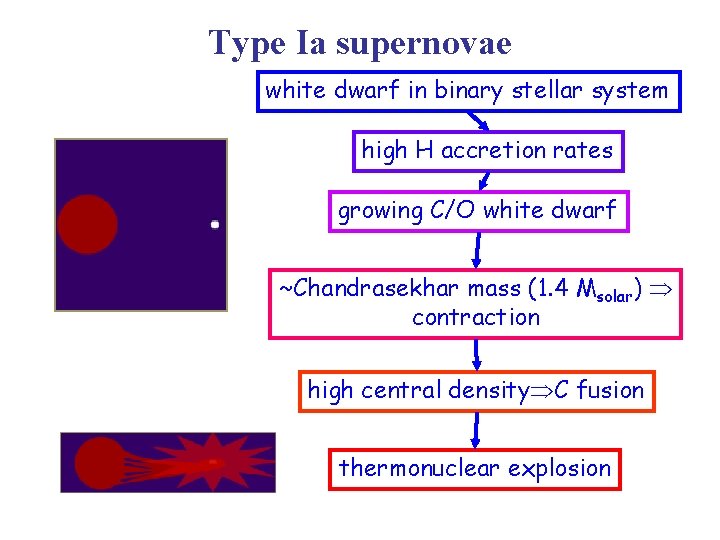
Type Ia supernovae white dwarf in binary stellar system high H accretion rates growing C/O white dwarf ~Chandrasekhar mass (1. 4 Msolar) contraction high central density C fusion thermonuclear explosion
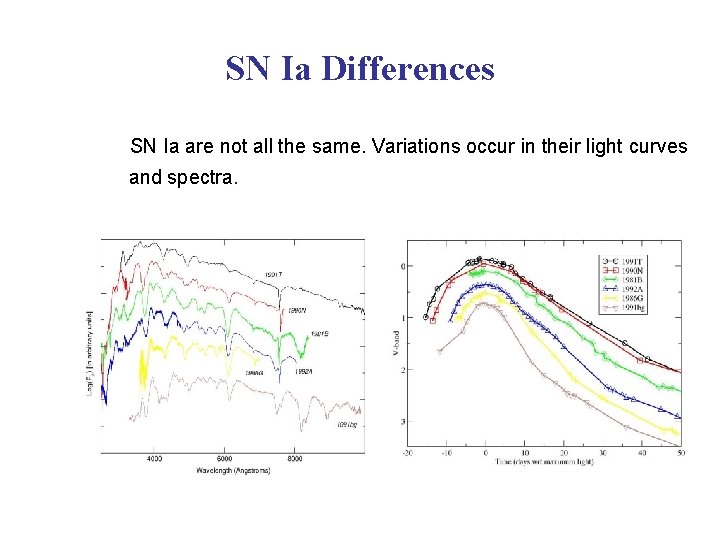
SN Ia Differences SN Ia are not all the same. Variations occur in their light curves and spectra.
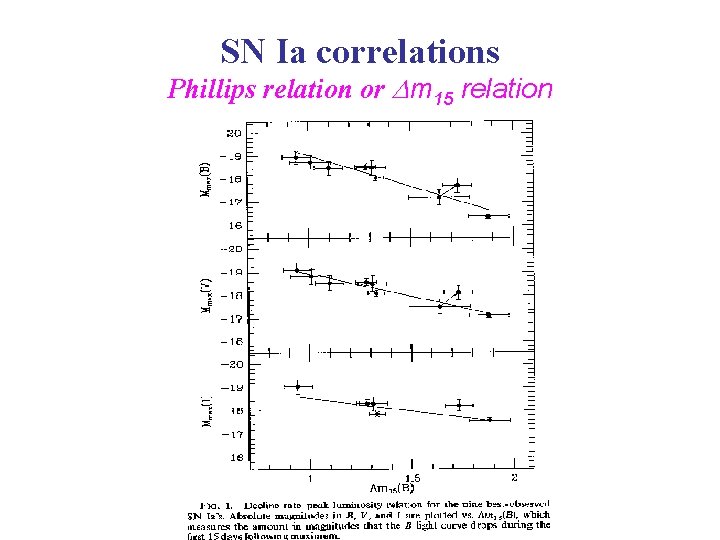
SN Ia correlations Phillips relation or m 15 relation
Luminosity and Light Curve shape • m 15 relation Phillips (1993), Hamuy et al. (1996), Phillips et al. (1999) • MLCS Riess et al. (1996, 1998), Jha et al. (2003) • Stretch Perlmutter et al. (1997, 1999), Goldhaber et al. (2001)
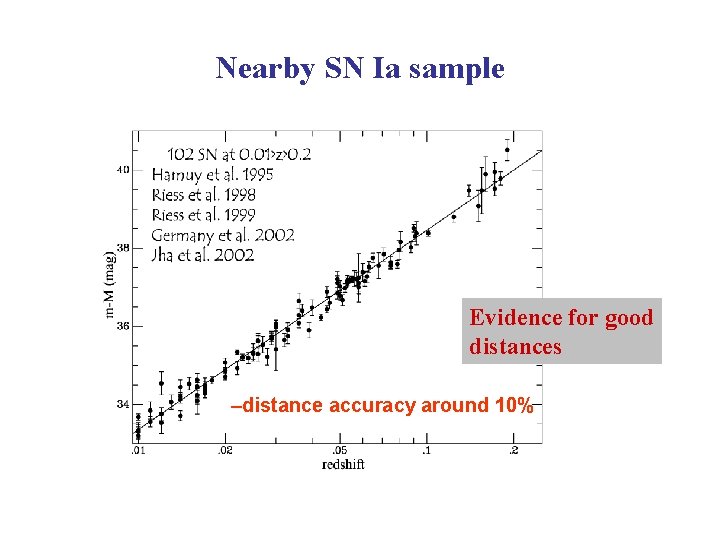
Nearby SN Ia sample Evidence for good distances –distance accuracy around 10%
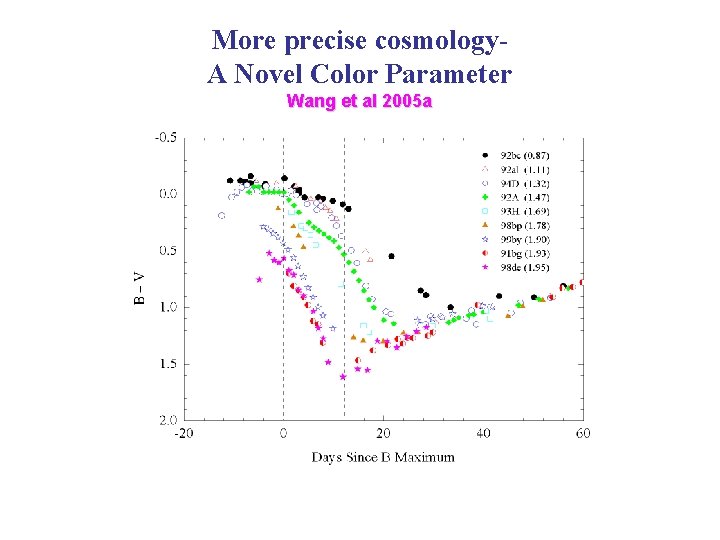
More precise cosmology. A Novel Color Parameter Wang et al 2005 a
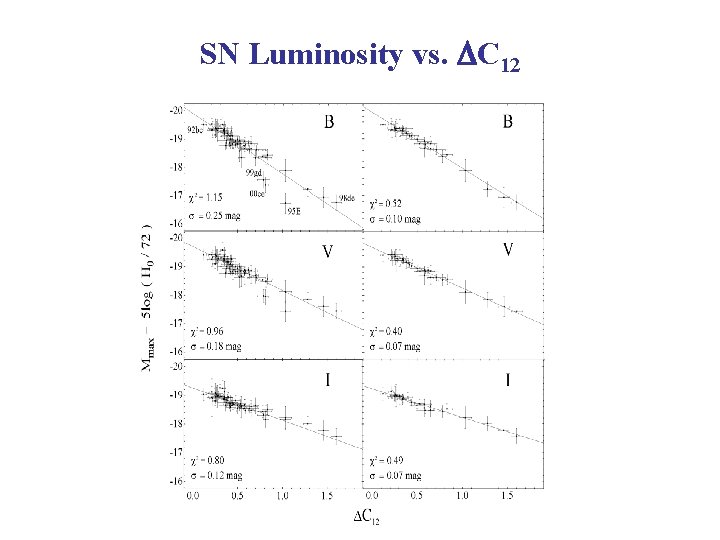
SN Luminosity vs. C 12
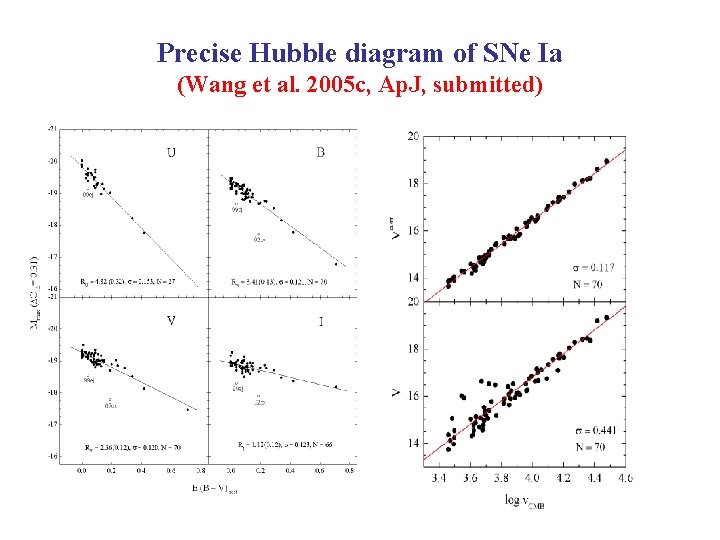
Precise Hubble diagram of SNe Ia (Wang et al. 2005 c, Ap. J, submitted)
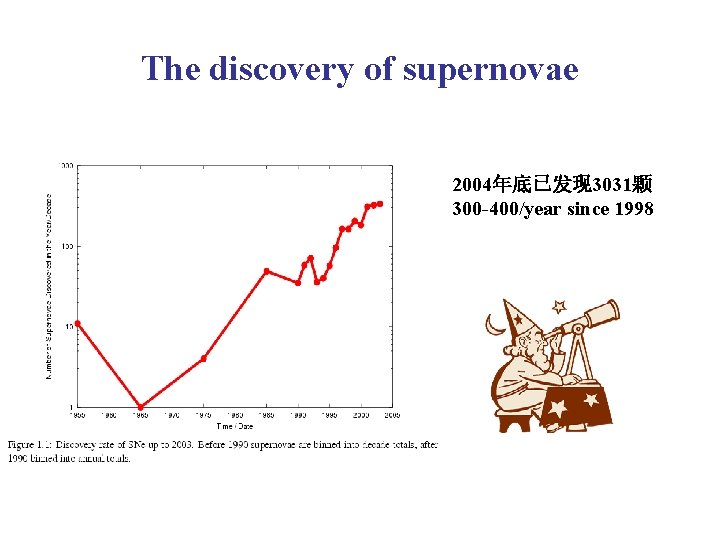
The discovery of supernovae 2004年底已发现 3031颗 300 -400/year since 1998
Multicolor SN study with BATC Sky Survey • Multicolor photometry of bright supernovae(Ia, II, Ib, Ic) SN 1993 J: Circumstellar Interaction around SN 1993 J(Wang et al. 2004 a) Late-time photometry of SN 1993 J -- heroic observation compaign (Zhang, Wang, Zhou et al. AJ, 2004, 128, 1857) SN 2004 dj: Progenitor and Light curves (Wang et al. 2005 b; Zhang, Wang, Zhou et al. 2005) SN 2004 et: An atypical type II supernpovae in NGC 6946 (in preparation) SN 2005 cs in M 51 (on minitoring) Ia: SNe 2002 er, 2002 fk, 2003 kf, 2003 cg (Wang et al. 2004 b) • SN survey plan in Nearby clusters of galaxies interrupted but contributes to BATC’s image reduction
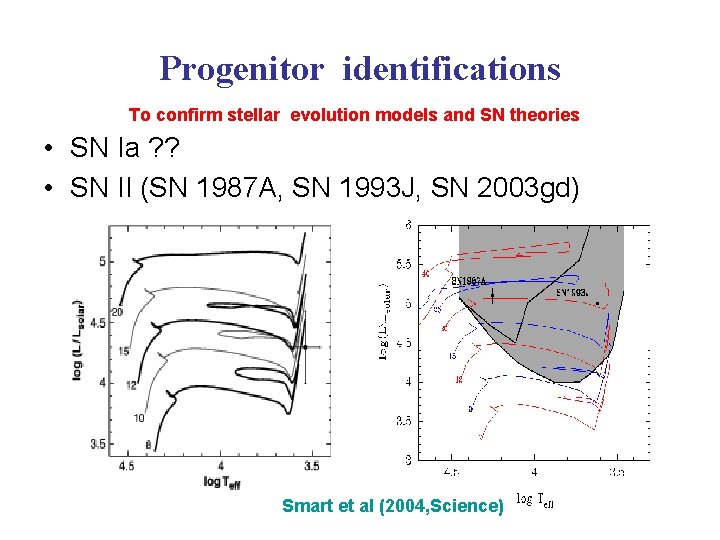
Progenitor identifications To confirm stellar evolution models and SN theories • SN Ia ? ? • SN II (SN 1987 A, SN 1993 J, SN 2003 gd) Smart et al (2004, Science)
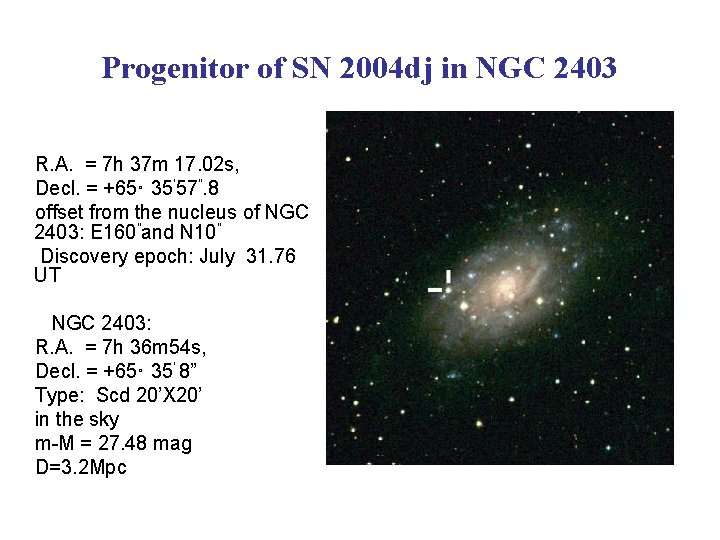
Progenitor of SN 2004 dj in NGC 2403 SN Position: R. A. = 7 h 37 m 17. 02 s, Decl. = +65。35’ 57”. 8 offset from the nucleus of NGC 2403: E 160”and N 10” Discovery epoch: July 31. 76 UT NGC 2403: R. A. = 7 h 36 m 54 s, Decl. = +65。35’ 8” Type: Scd 20’X 20’ in the sky m-M = 27. 48 mag D=3. 2 Mpc
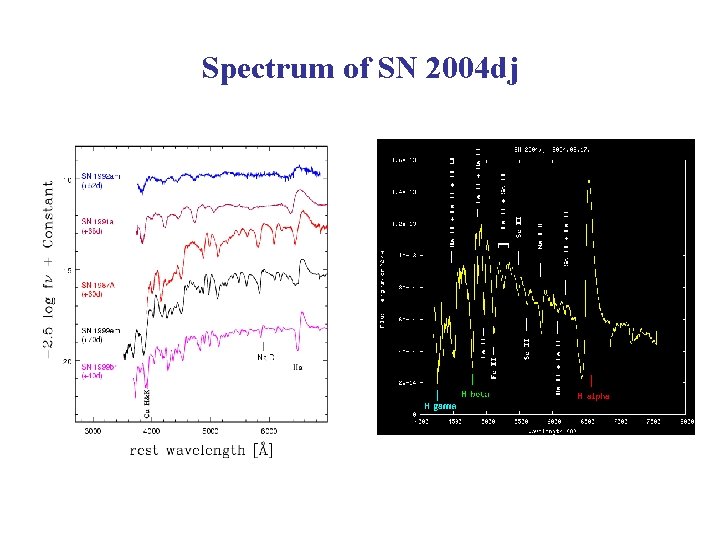
Spectrum of SN 2004 dj
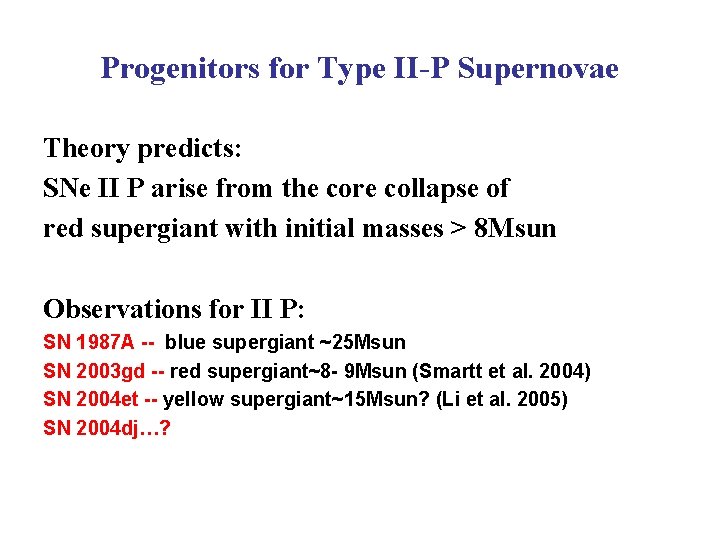
Progenitors for Type II-P Supernovae Theory predicts: SNe II P arise from the core collapse of red supergiant with initial masses > 8 Msun Observations for II P: SN 1987 A -- blue supergiant ~25 Msun SN 2003 gd -- red supergiant~8 - 9 Msun (Smartt et al. 2004) SN 2004 et -- yellow supergiant~15 Msun? (Li et al. 2005) SN 2004 dj…?
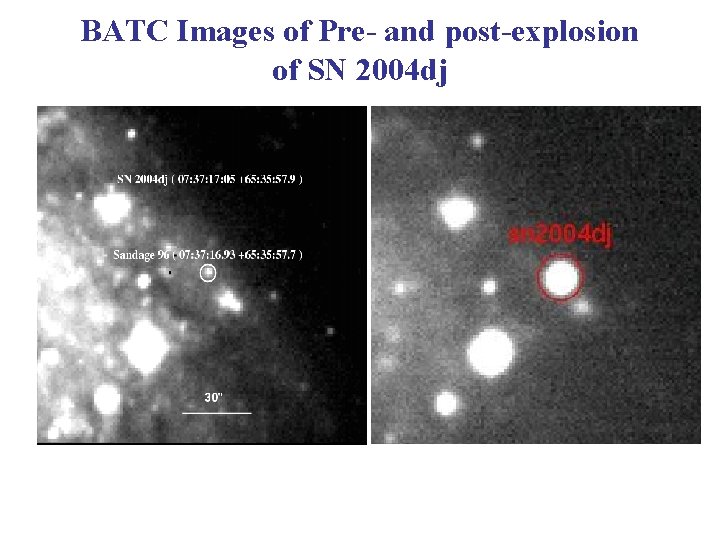
BATC Images of Pre- and post-explosion of SN 2004 dj Pre- and post-explosion images of SN 2004 dj by 60/90 cm Schmidt telescope of NAOC
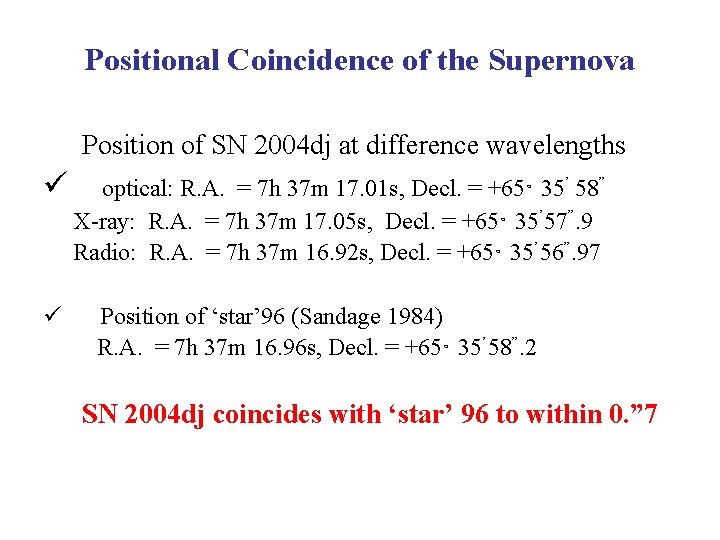
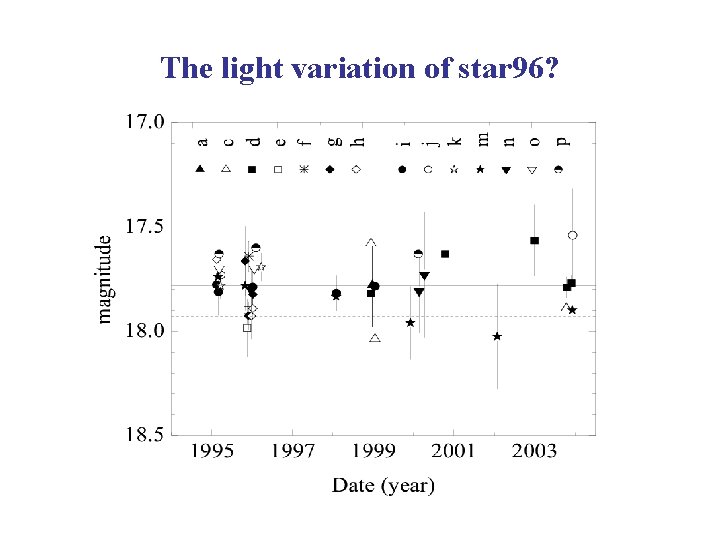
Positional Coincidence of the Supernova Position of SN 2004 dj at difference wavelengths ü ü optical: R. A. = 7 h 37 m 17. 01 s, Decl. = +65。35’ 58” X-ray: R. A. = 7 h 37 m 17. 05 s, Decl. = +65。35’ 57”. 9 Radio: R. A. = 7 h 37 m 16. 92 s, Decl. = +65。35’ 56”. 97 Position of ‘star’ 96 (Sandage 1984) R. A. = 7 h 37 m 16. 96 s, Decl. = +65。35’ 58”. 2 SN 2004 dj coincides with ‘star’ 96 to within 0. ” 7
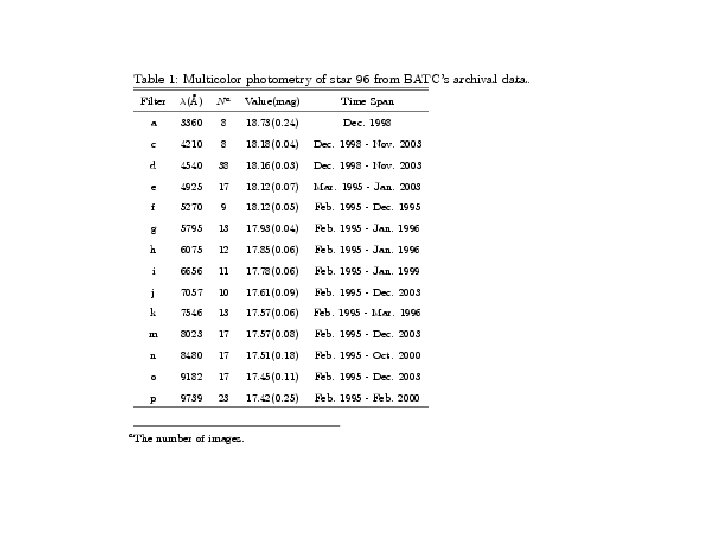
The light variation of star 96?
Stellar population of Star 96 • Stellar model: the spectral flux library (Pickles 1998, PASP) • Cluster model: a simple stellar population of Galaxy Isochrone Synthesis spectra Evolution library (Bruzual & Charlot 2003) To test with Chi-square minimization
Reddening and Metallicity • Reddening Na ID interstellar absorption lines can provide clues to the line-of-sight reddening E(B – V) ~ EW: large uncertainty! As a fitting parameter along with the T or log t • Metallicity Garnett et al. (1997) measured the metallity and its radial distribution in NGC 2403 log(O/H)+12 ~8. 45 Z~0. 008
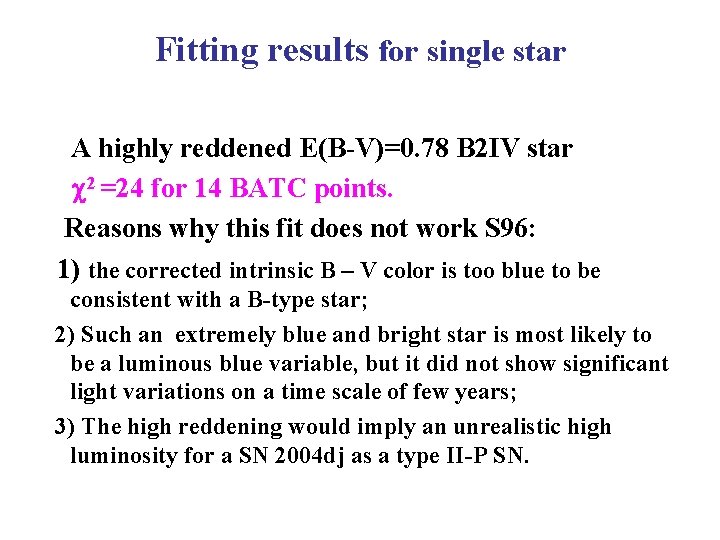
Fitting results for single star A highly reddened E(B-V)=0. 78 B 2 IV star 2 =24 for 14 BATC points. Reasons why this fit does not work S 96: 1) the corrected intrinsic B – V color is too blue to be consistent with a B-type star; 2) Such an extremely blue and bright star is most likely to be a luminous blue variable, but it did not show significant light variations on a time scale of few years; 3) The high reddening would imply an unrealistic high luminosity for a SN 2004 dj as a type II-P SN.
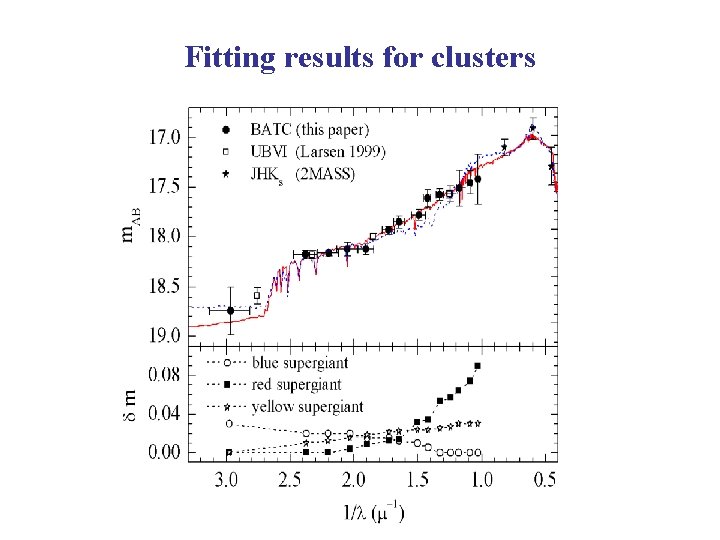
Fitting results for clusters
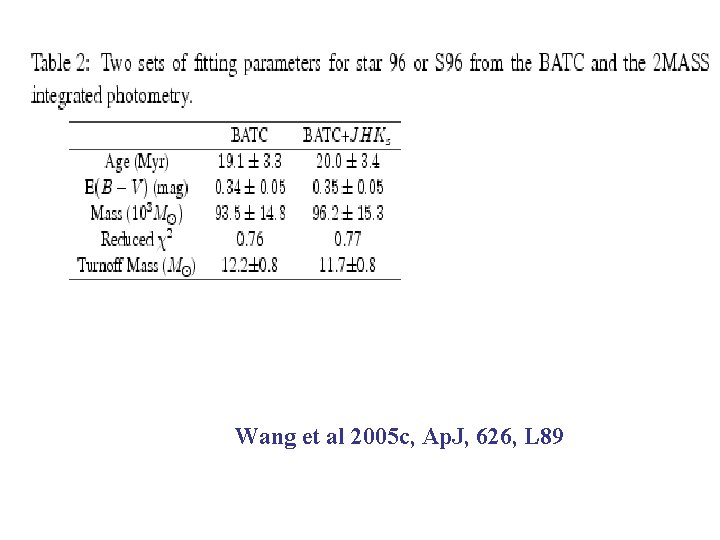
Wang et al 2005 c, Ap. J, 626, L 89
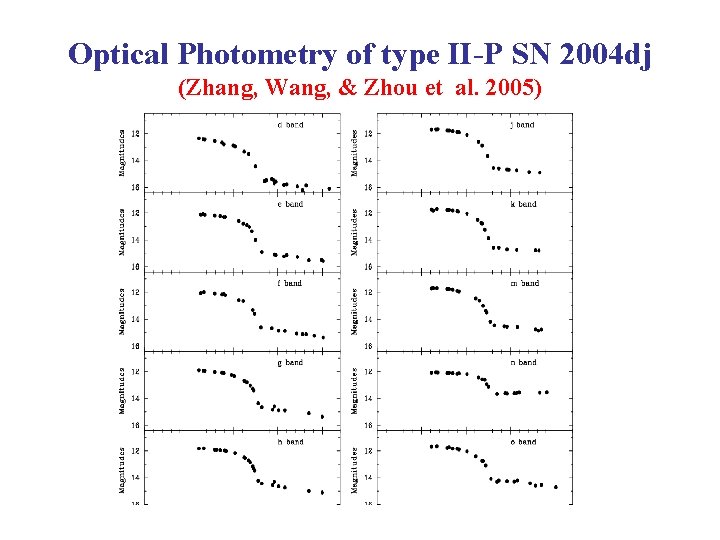
Optical Photometry of type II-P SN 2004 dj (Zhang, Wang, & Zhou et al. 2005)
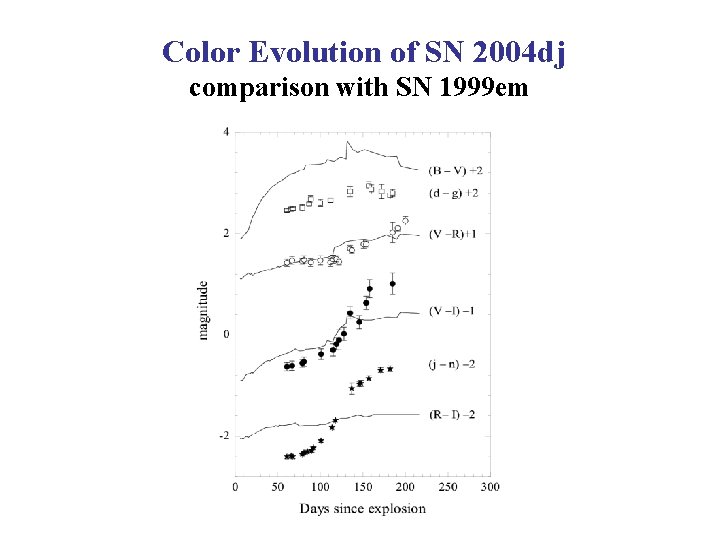
Color Evolution of SN 2004 dj comparison with SN 1999 em
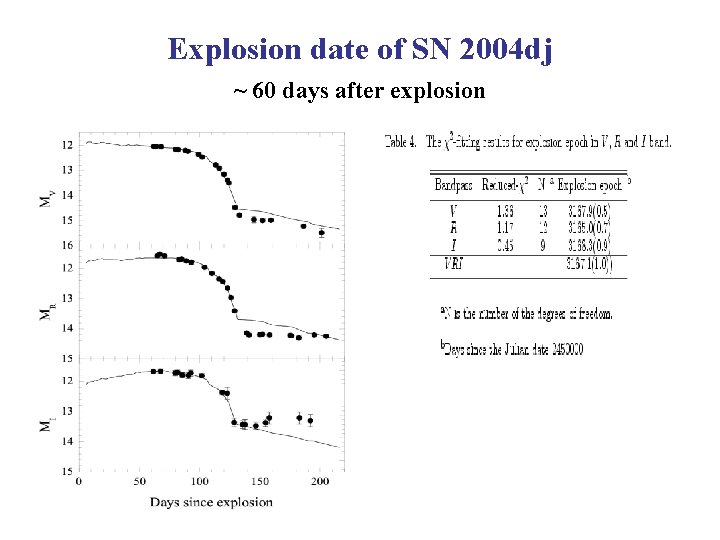
Explosion date of SN 2004 dj ~ 60 days after explosion
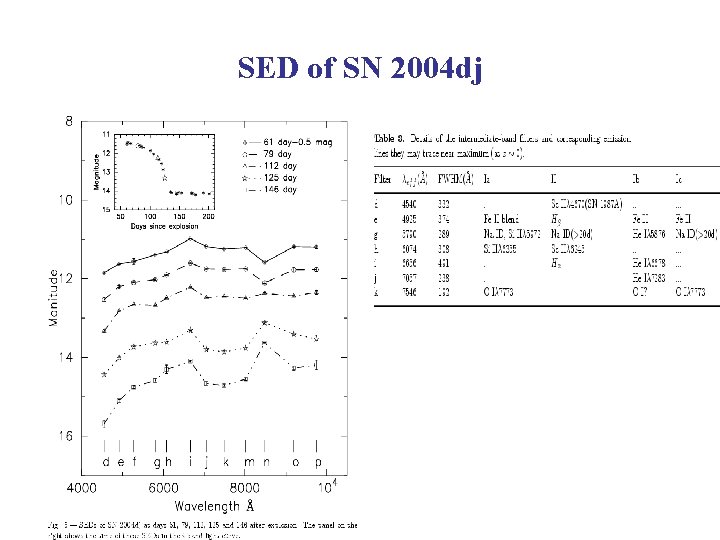
SED of SN 2004 dj
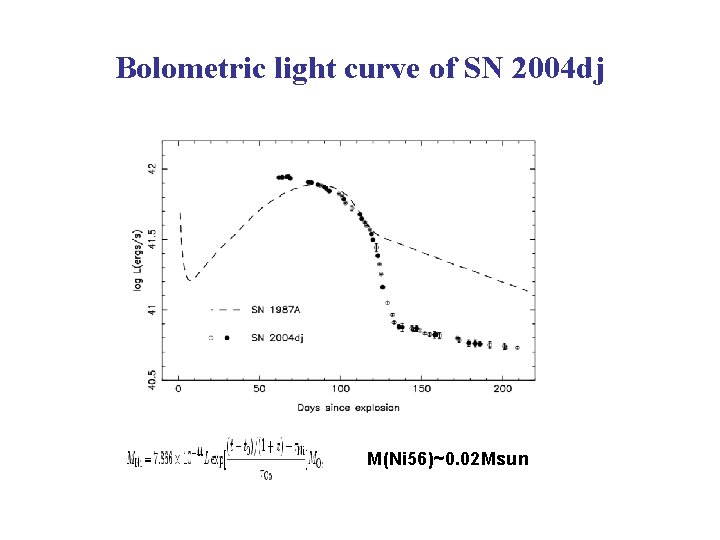
Bolometric light curve of SN 2004 dj M(Ni 56)~0. 02 Msun
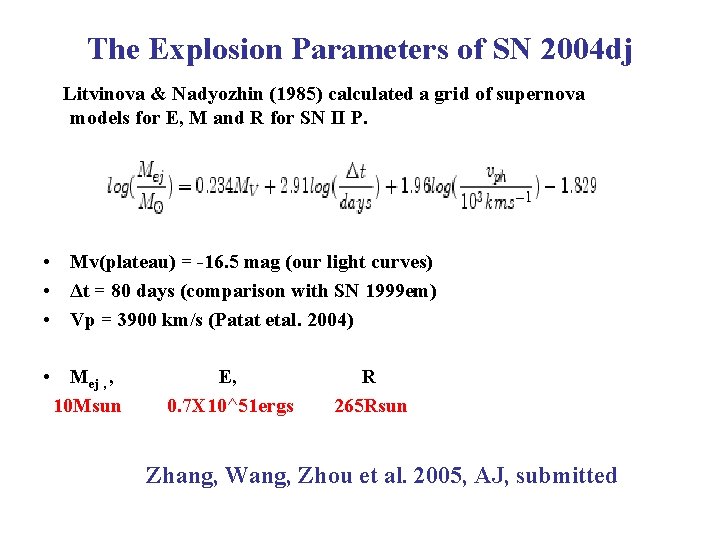
The Explosion Parameters of SN 2004 dj Litvinova & Nadyozhin (1985) calculated a grid of supernova models for E, M and R for SN II P. • Mv(plateau) = -16. 5 mag (our light curves) • Δt = 80 days (comparison with SN 1999 em) • Vp = 3900 km/s (Patat etal. 2004) • Mej , , 10 Msun E, 0. 7 X 10^51 ergs R 265 Rsun Zhang, Wang, Zhou et al. 2005, AJ, submitted
Future SN work • Publishing a series of multicolor light curve data obtained by BATC observations (~20 SNe Ia) • Late-time photometry of some bright SNe II, Ib, Ic • Simultaneous observations of some bright SNe (TNT UBVRI+BATC intermediate-band filters) • Progenitor work
- Slides: 37