
SUPERCONDUCTIVE MAGNETORESISTIVE RANDOMACCESS MEMORY JMRAM By Charles Nathan
SUPERCONDUCTIVE MAGNETORESISTIVE RANDOM-ACCESS MEMORY (JMRAM) By Charles Nathan Cardinell Mentor Nathan Newman
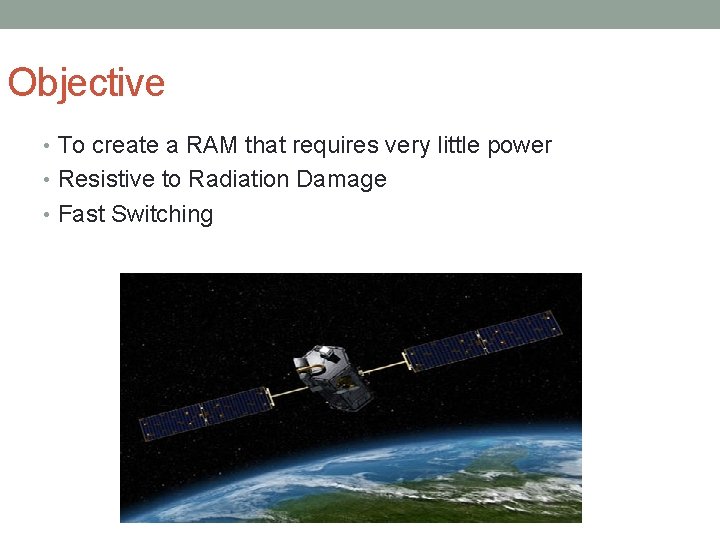
Objective • To create a RAM that requires very little power • Resistive to Radiation Damage • Fast Switching
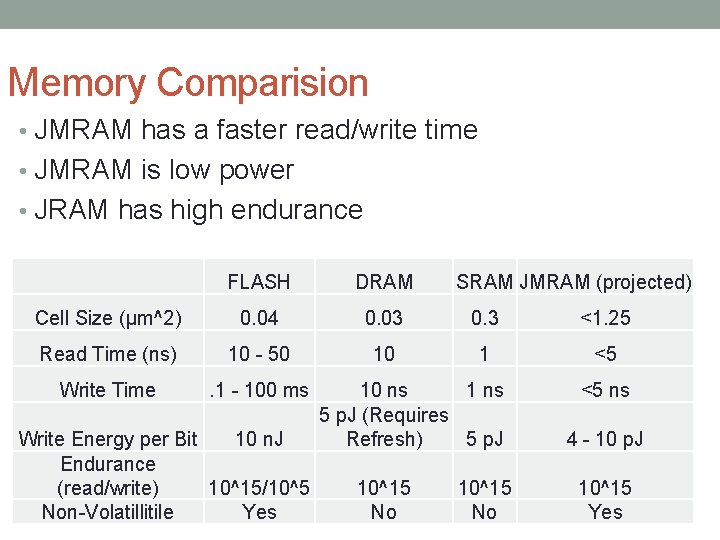
Memory Comparision • JMRAM has a faster read/write time • JMRAM is low power • JRAM has high endurance FLASH DRAM Cell Size (μm^2) 0. 04 0. 03 0. 3 <1. 25 Read Time (ns) 10 - 50 10 1 <5 Write Time . 1 - 100 ms Write Energy per Bit 10 n. J Endurance (read/write) 10^15/10^5 Non-Volatillitile Yes SRAM JMRAM (projected) 10 ns 1 ns 5 p. J (Requires Refresh) 5 p. J 10^15 No <5 ns 4 - 10 p. J 10^15 Yes
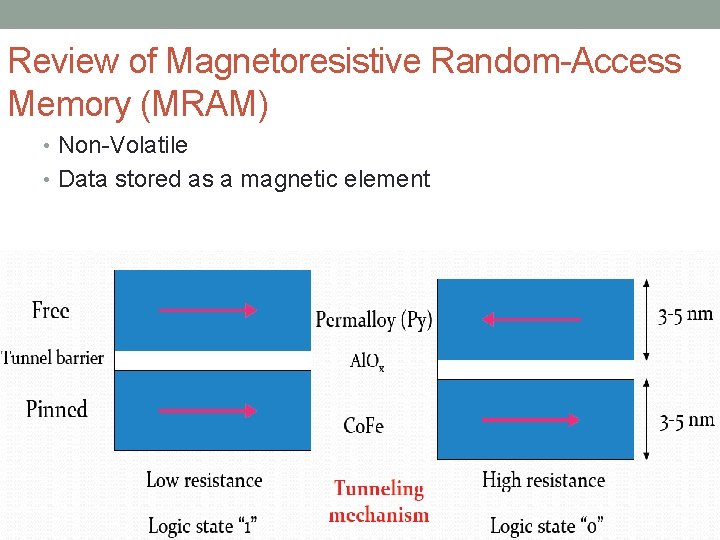
Review of Magnetoresistive Random-Access Memory (MRAM) • Non-Volatile • Data stored as a magnetic element
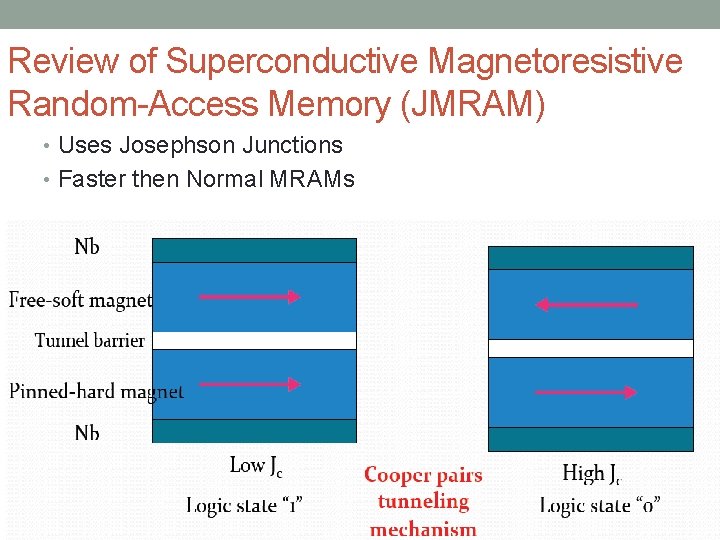
Review of Superconductive Magnetoresistive Random-Access Memory (JMRAM) • Uses Josephson Junctions • Faster then Normal MRAMs
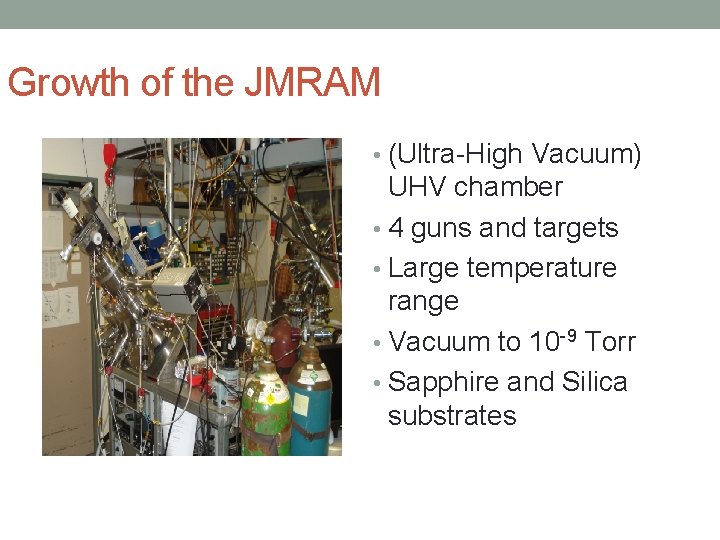
Growth of the JMRAM • (Ultra-High Vacuum) UHV chamber • 4 guns and targets • Large temperature range • Vacuum to 10 -9 Torr • Sapphire and Silica substrates
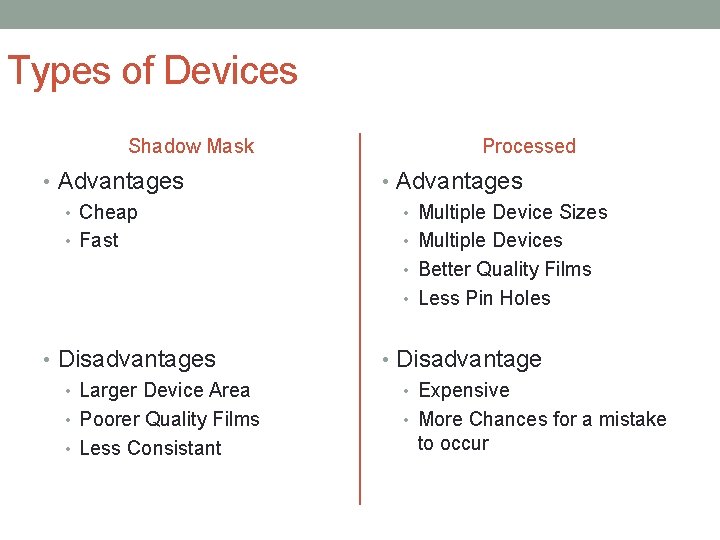
Types of Devices Shadow Mask Processed • Advantages • Cheap • Fast • Advantages • Multiple Device Sizes • Multiple Devices • Better Quality Films • Less Pin Holes • Disadvantages • Larger Device Area • Poorer Quality Films • Less Consistant • Disadvantage • Expensive • More Chances for a mistake to occur
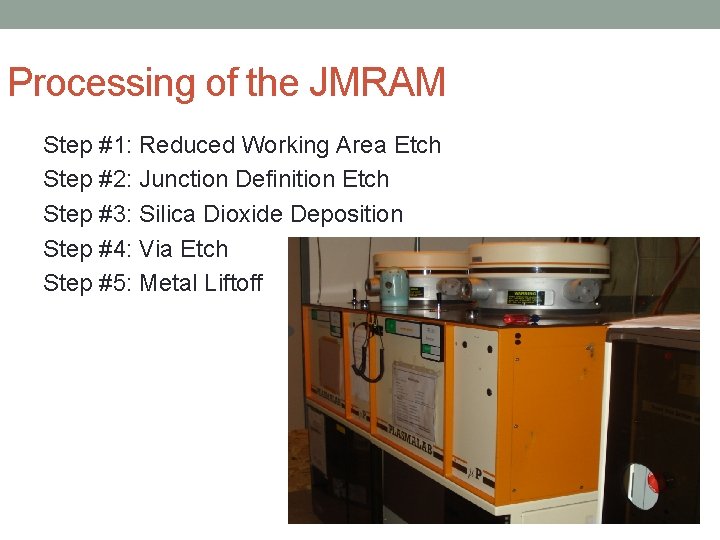
Processing of the JMRAM Step #1: Reduced Working Area Etch Step #2: Junction Definition Etch Step #3: Silica Dioxide Deposition Step #4: Via Etch Step #5: Metal Liftoff
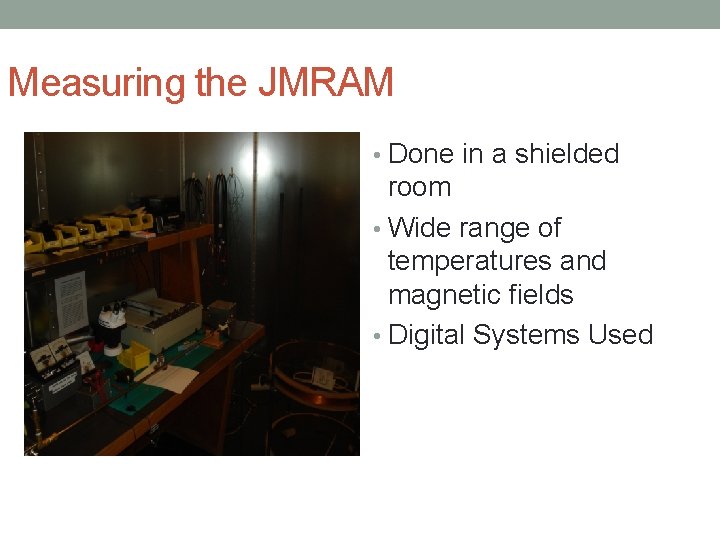
Measuring the JMRAM • Done in a shielded room • Wide range of temperatures and magnetic fields • Digital Systems Used
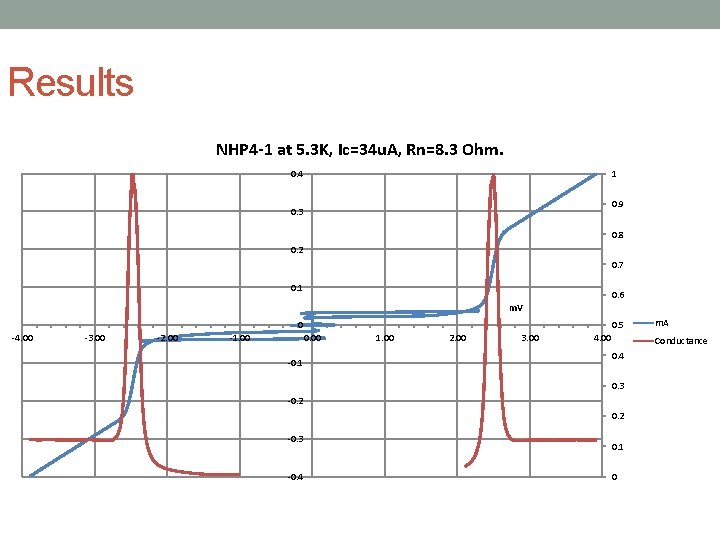
Results NHP 4 -1 at 5. 3 K, Ic=34 u. A, Rn=8. 3 Ohm. 0. 4 1 0. 9 0. 3 0. 8 0. 2 0. 7 0. 1 0. 6 m. V 0 -4. 00 -3. 00 -2. 00 -1. 00 0. 5 0. 00 -0. 1 1. 00 2. 00 3. 00 4. 00 Conductance 0. 4 0. 3 -0. 2 -0. 3 -0. 4 m. A 0. 1 0
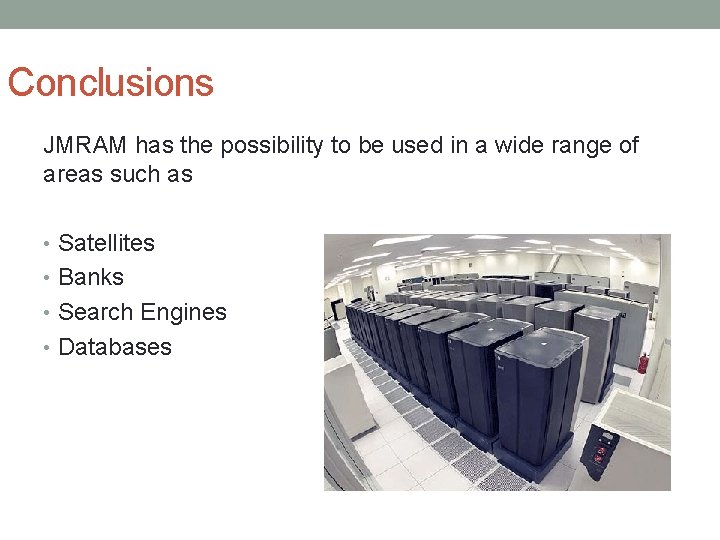
Conclusions JMRAM has the possibility to be used in a wide range of areas such as • Satellites • Banks • Search Engines • Databases
THANK YOU Questions?
- Slides: 12