
Superbubble Driven Outflows in Cosmological Galaxy Evolution Ben
Superbubble Driven Outflows in Cosmological Galaxy Evolution Ben Keller (Mc. Master University) James Wadsley, Hugh Couchman CASCA 2015 Paper: astro-ph: 1505. 06268 Keller, Wadsley & Couchman 2015 Background Image: Gas column density of IGM around a simulated L* galaxy (image is ~10 Rvir across). The dense central object is where the galaxy resides.
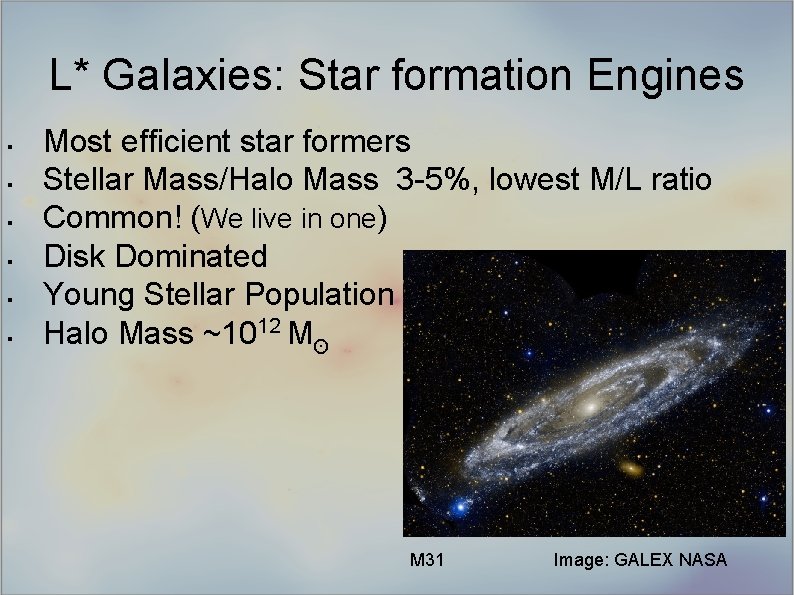
L* Galaxies: Star formation Engines § § § Most efficient star formers Stellar Mass/Halo Mass 3 -5%, lowest M/L ratio Common! (We live in one) Disk Dominated Young Stellar Population Halo Mass ~1012 Mʘ M 31 Image: GALEX NASA
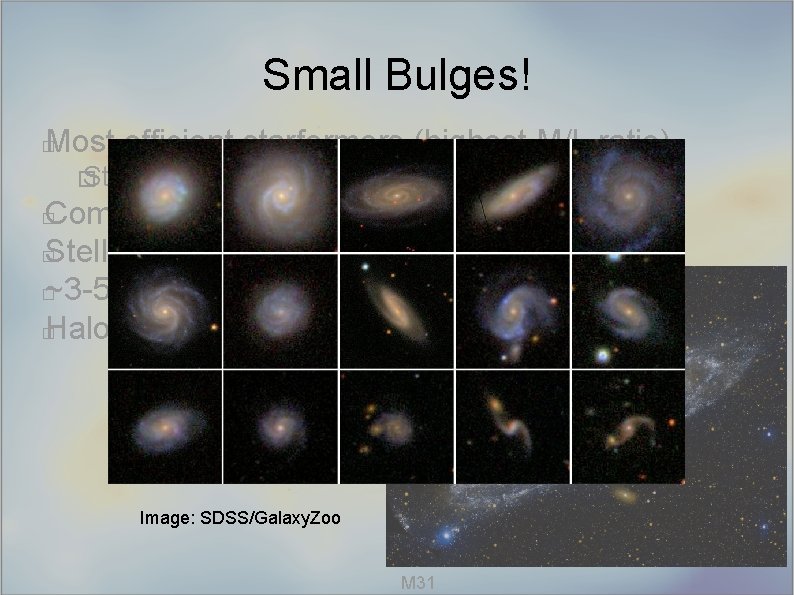
Small Bulges! Most efficient starformers (highest M/L ratio) � � Still inefficient in general, SFE ~1% today Common! (We live in one) � Stellar Mass Fraction � ~3 -5% � Halo Mass ~1012 Msun � Image: SDSS/Galaxy. Zoo M 31
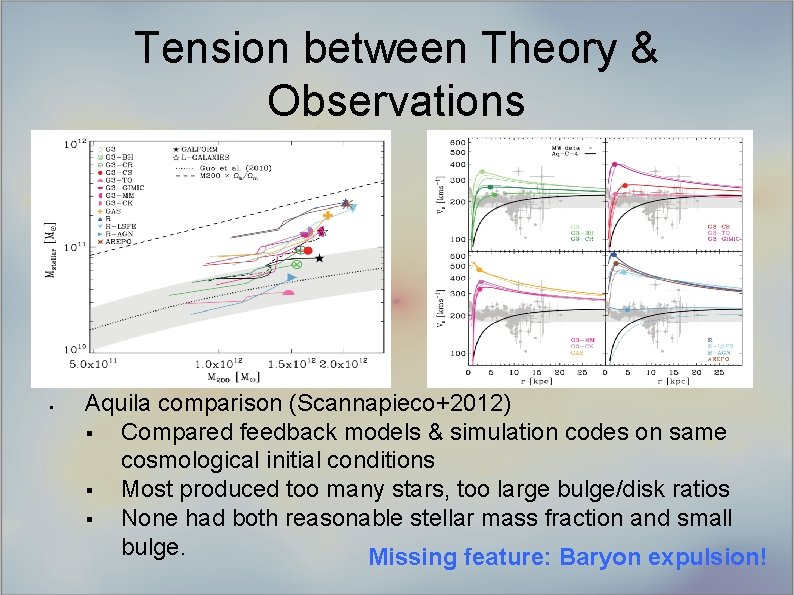
Tension between Theory & Observations § Aquila comparison (Scannapieco+2012) § Compared feedback models & simulation codes on same cosmological initial conditions § Most produced too many stars, too large bulge/disk ratios § None had both reasonable stellar mass fraction and small bulge. Missing feature: Baryon expulsion!
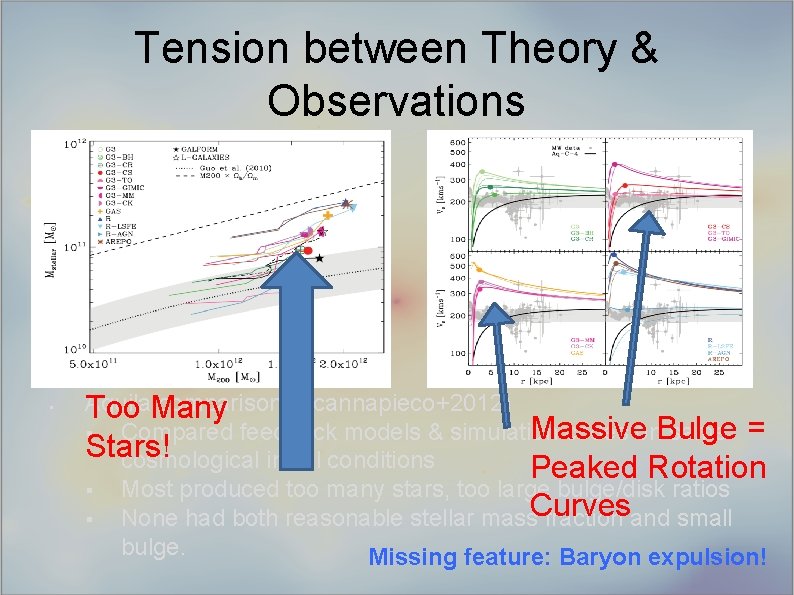
Tension between Theory & Observations § Aquila comparison (Scannapieco+2012) Too Many Massive § Compared feedback models & simulation codes on. Bulge same = Stars! cosmological initial conditions Peaked Rotation § Most produced too many stars, too large bulge/disk ratios Curves § None had both reasonable stellar mass fraction and small bulge. Missing feature: Baryon expulsion!
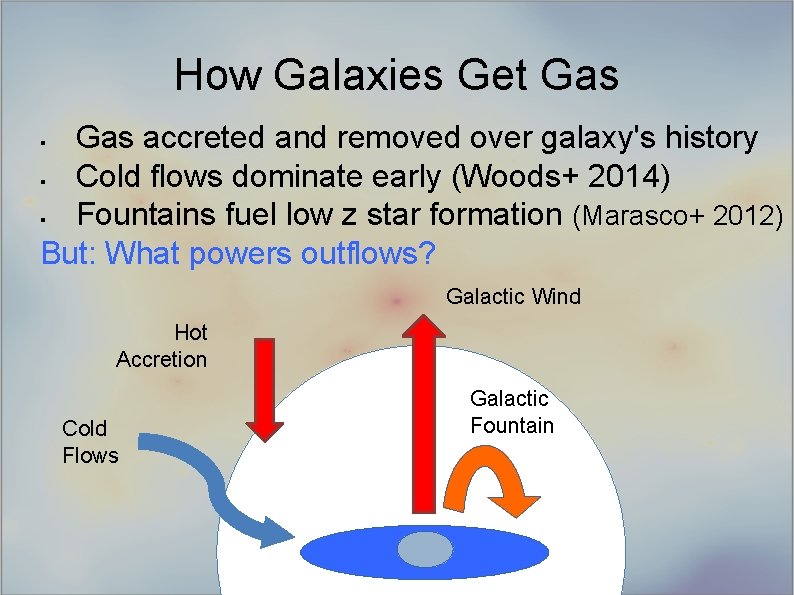
How Galaxies Get Gas accreted and removed over galaxy's history § Cold flows dominate early (Woods+ 2014) § Fountains fuel low z star formation (Marasco+ 2012) But: What powers outflows? § Galactic Wind Hot Accretion Cold Flows Galactic Fountain

Galactic Outflows § Observational evidence abounds § § UV absorption (Wiener+ 2009) Hα emission lines (Heckman+ 1987) Supernova powered superbubbles may power them (Larson 1974) M 82 Image: HST NASA/ESA
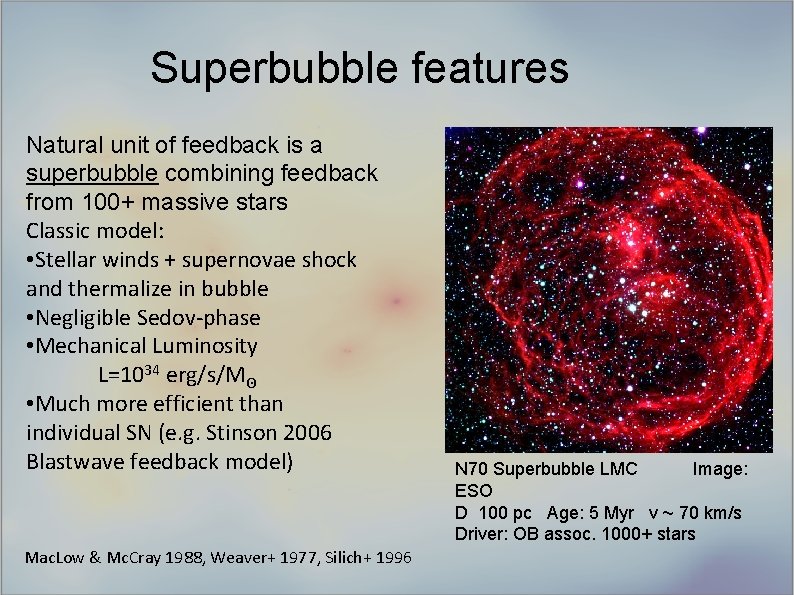
Superbubble features Natural unit of feedback is a superbubble combining feedback from 100+ massive stars Classic model: • Stellar winds + supernovae shock and thermalize in bubble • Negligible Sedov-phase • Mechanical Luminosity L=1034 erg/s/Mʘ • Much more efficient than individual SN (e. g. Stinson 2006 Blastwave feedback model) Mac. Low & Mc. Cray 1988, Weaver+ 1977, Silich+ 1996 N 70 Superbubble LMC Image: ESO D 100 pc Age: 5 Myr v ~ 70 km/s Driver: OB assoc. 1000+ stars
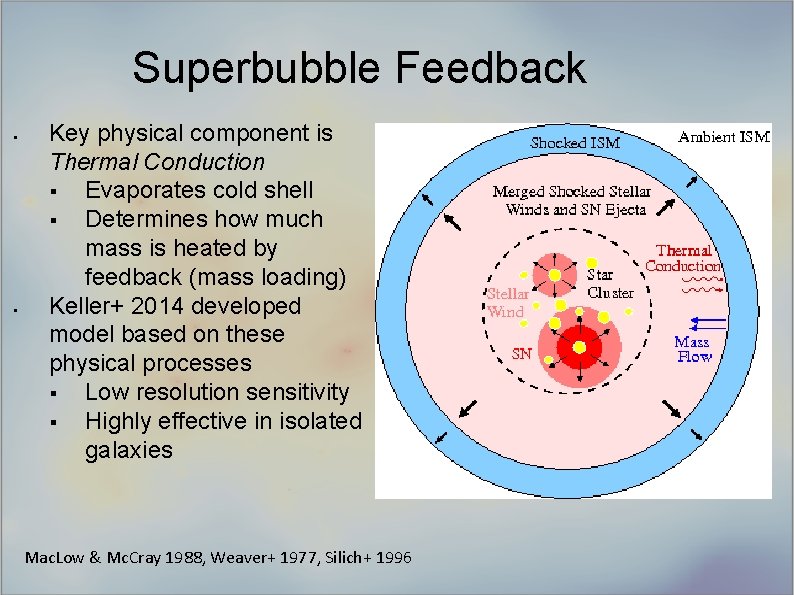
Superbubble Feedback § § Key physical component is Thermal Conduction § Evaporates cold shell § Determines how much mass is heated by feedback (mass loading) Keller+ 2014 developed model based on these physical processes § Low resolution sensitivity § Highly effective in isolated galaxies Mac. Low & Mc. Cray 1988, Weaver+ 1977, Silich+ 1996
Gasoline • N-body Solver (Tree Method) and Smoothed Particle Hydrodynamics • Physics: Gravity, Hydrodynamics, Atomic Chemistry (Radiative Heating, Cooling), Radiative Transfer (Woods et al, in prep) • Subgrid Physics: Star Formation, Turbulent Diffusion Wadsley+ 2004
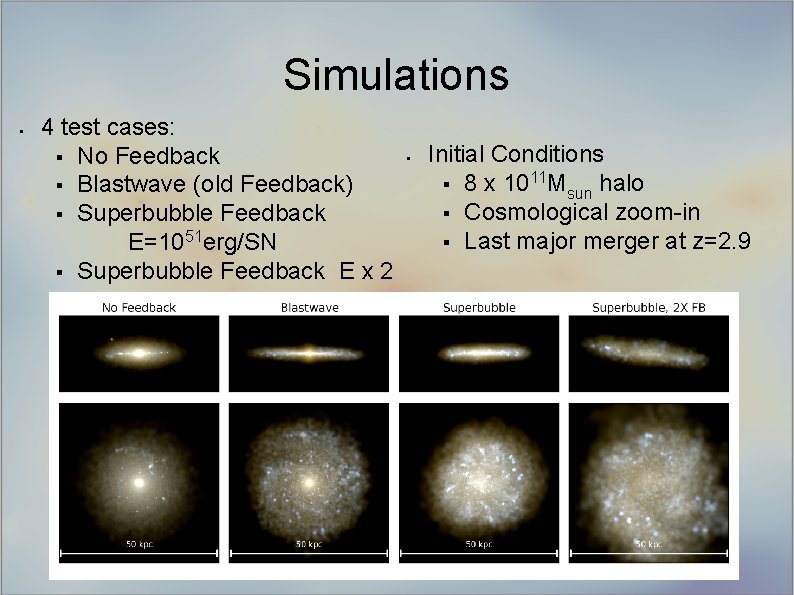
Simulations § 4 test cases: § No Feedback § Blastwave (old Feedback) § Superbubble Feedback E=1051 erg/SN § Superbubble Feedback E x 2 § Initial Conditions § 8 x 10¹¹ Msun halo § Cosmological zoom-in § Last major merger at z=2. 9
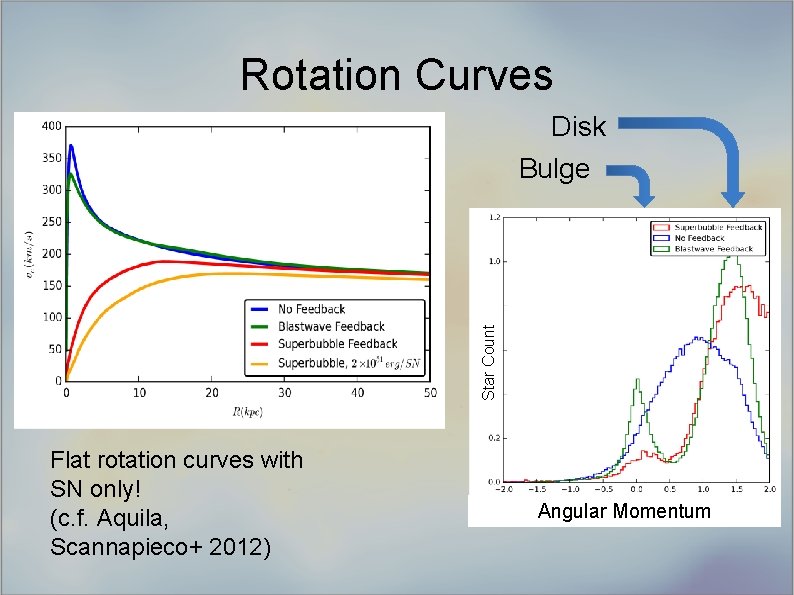
Rotation Curves Star Count Disk Bulge Flat rotation curves with SN only! (c. f. Aquila, Scannapieco+ 2012) Angular Momentum
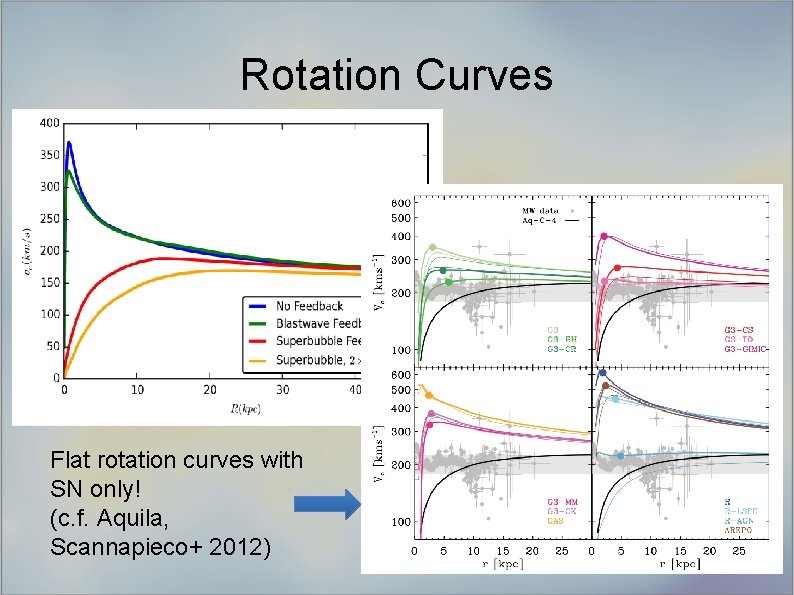
Star Count Rotation Curves Flat rotation curves with SN only! (c. f. Aquila, Scannapieco+ 2012) Angular Momentum
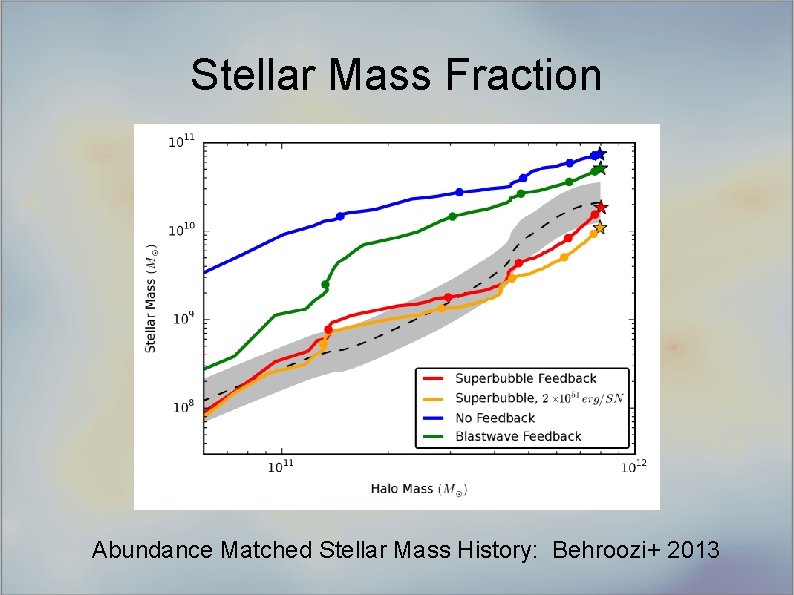
Stellar Mass Fraction Abundance Matched Stellar Mass History: Behroozi+ 2013
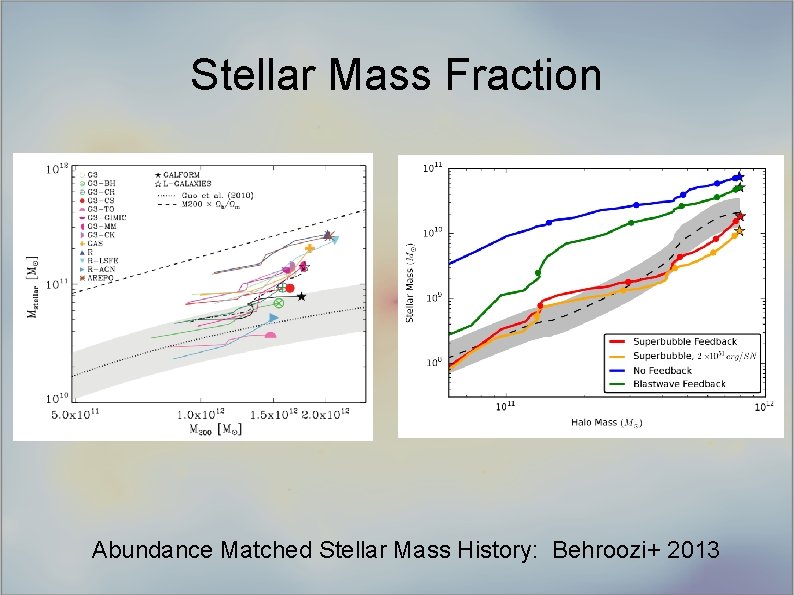
Stellar Mass Fraction Abundance Matched Stellar Mass History: Behroozi+ 2013
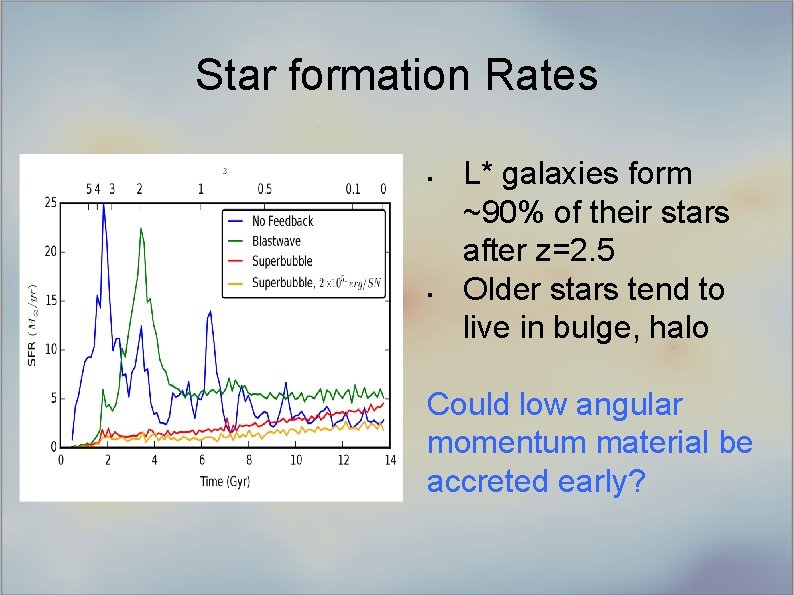
Star formation Rates § § L* galaxies form ~90% of their stars after z=2. 5 Older stars tend to live in bulge, halo Could low angular momentum material be accreted early?
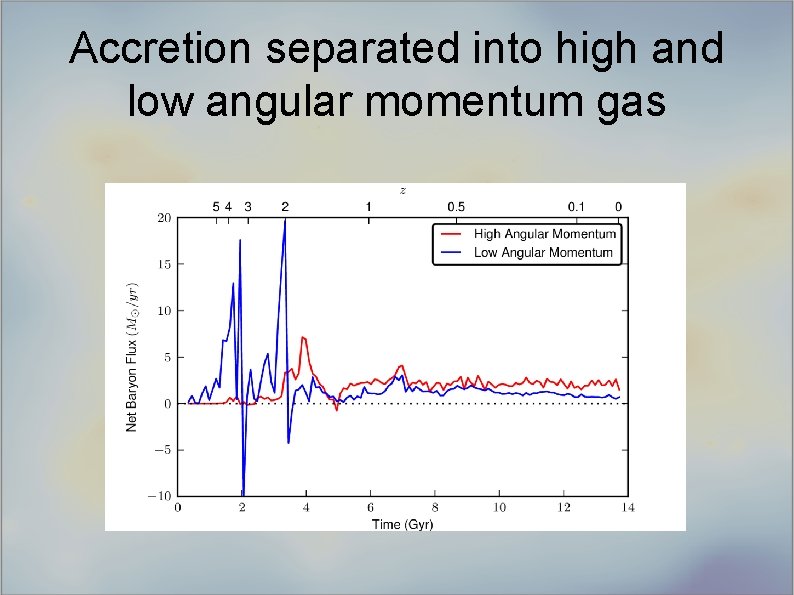
Accretion separated into high and low angular momentum gas
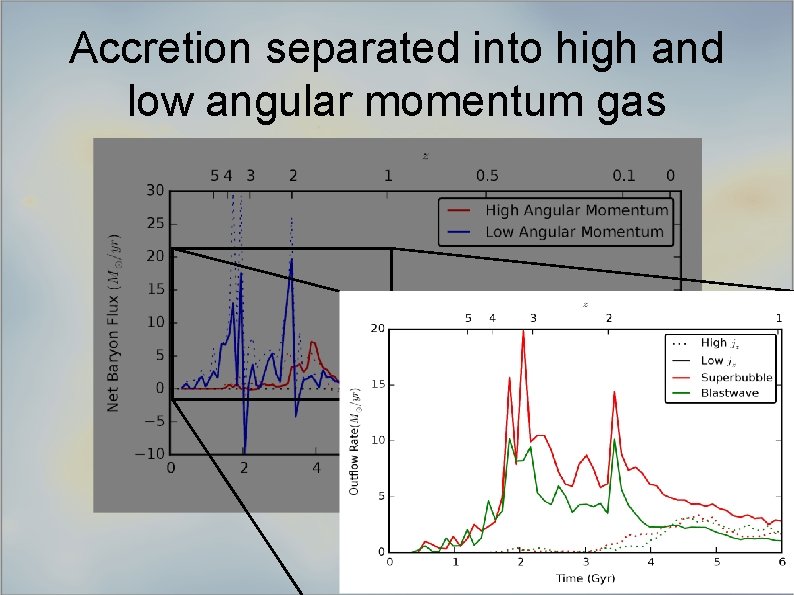
Accretion separated into high and low angular momentum gas
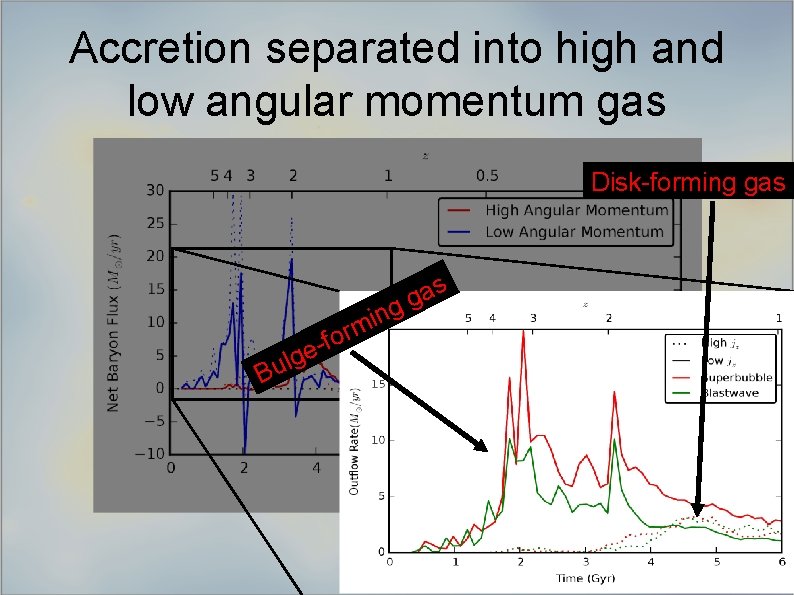
Accretion separated into high and low angular momentum gas Disk-forming gas r s a g g min Bu o f lge
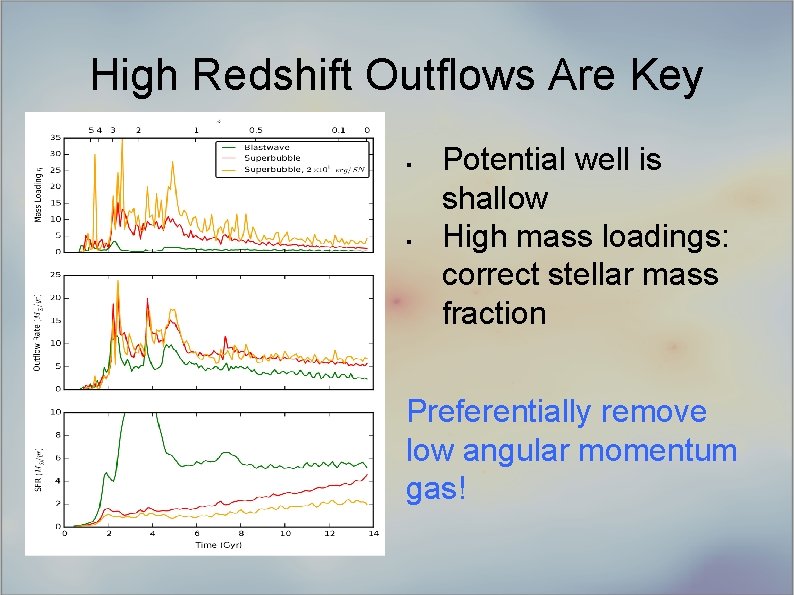
High Redshift Outflows Are Key § § Potential well is shallow High mass loadings: correct stellar mass fraction Preferentially remove low angular momentum gas!
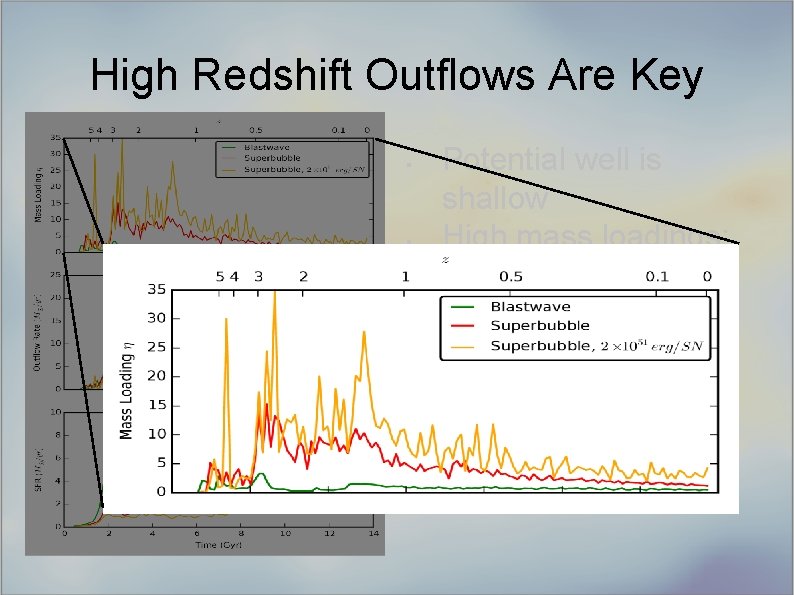
High Redshift Outflows Are Key § § Potential well is shallow High mass loadings: correct stellar mass fraction Preferentially remove low angular momentum gas!
Conclusions § § Galactic outflows can be driven by thermal supernovae feedback alone if physics of superbubbles is included in simulation Strong outflows at high redshift remove gas that otherwise results in too many stars forming These outflows preferentially remove low angular momentum gas, preventing the formation of a massive bulge We can make a Milky Way Paper: astro-ph: 1505. 06268
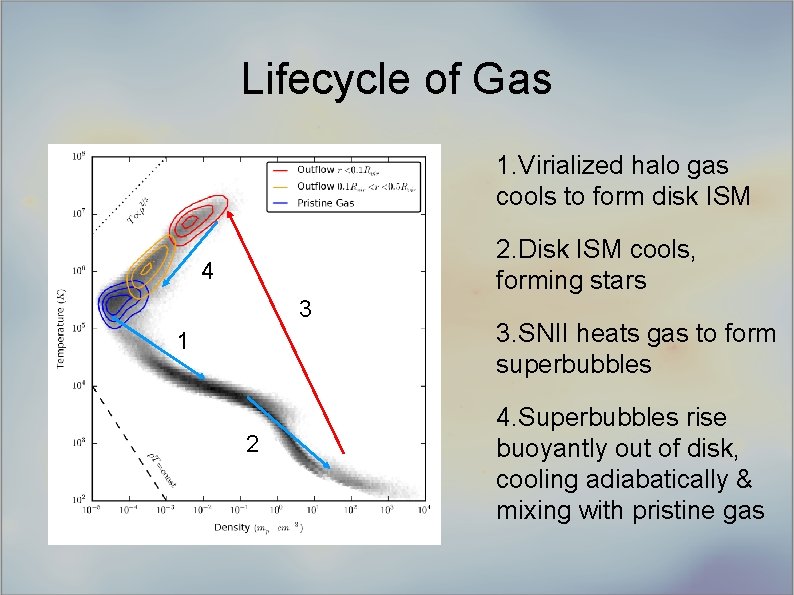
Lifecycle of Gas 1. Virialized halo gas cools to form disk ISM 2. Disk ISM cools, forming stars 4 3 1 2 3. SNII heats gas to form superbubbles 4. Superbubbles rise buoyantly out of disk, cooling adiabatically & mixing with pristine gas
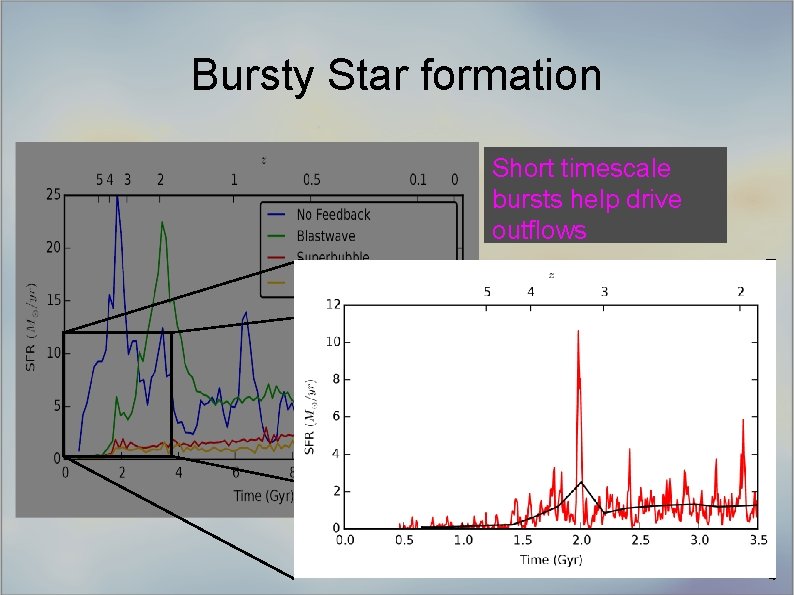
Bursty Star formation Short timescale bursts help drive outflows
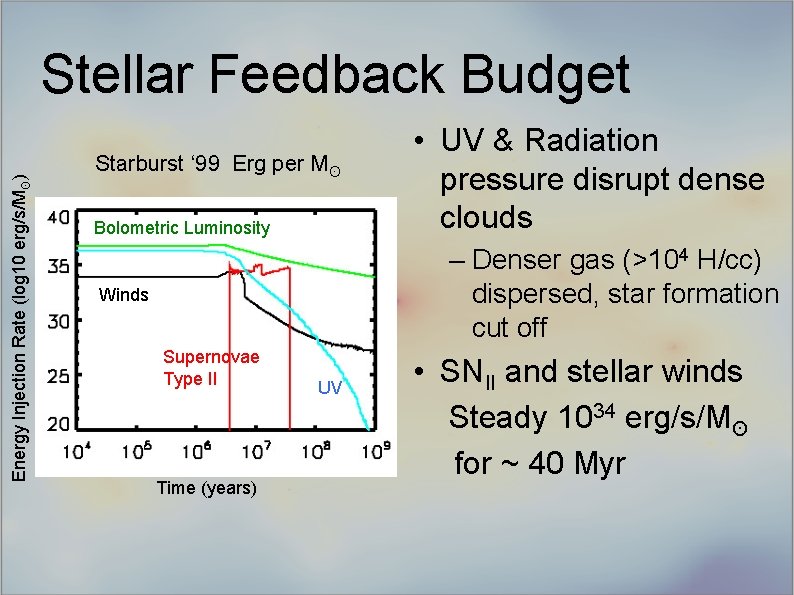
Energy Injection Rate (log 10 erg/s/Mʘ) Stellar Feedback Budget Starburst ‘ 99 Erg per Mʘ Bolometric Luminosity • UV & Radiation pressure disrupt dense clouds – Denser gas (>104 H/cc) dispersed, star formation cut off Winds Supernovae Type II Time (years) UV • SNII and stellar winds Steady 1034 erg/s/Mʘ for ~ 40 Myr
- Slides: 25