
Super B SVT HDI for Layer 0 Detector
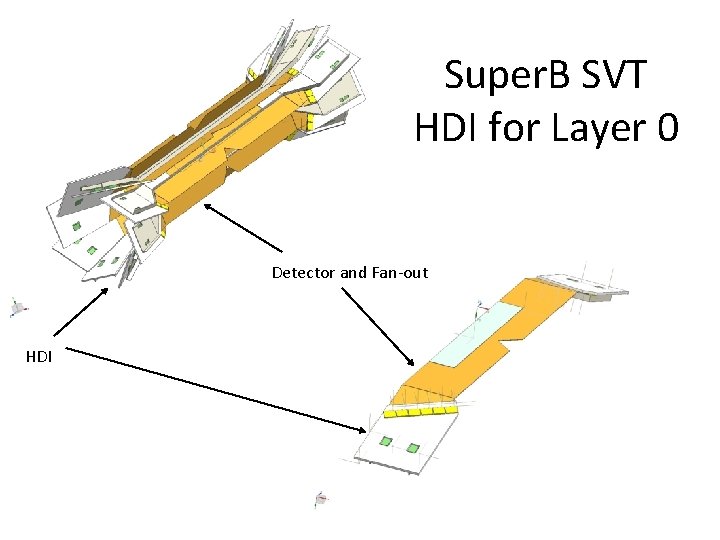
Super. B SVT HDI for Layer 0 Detector and Fan-out HDI
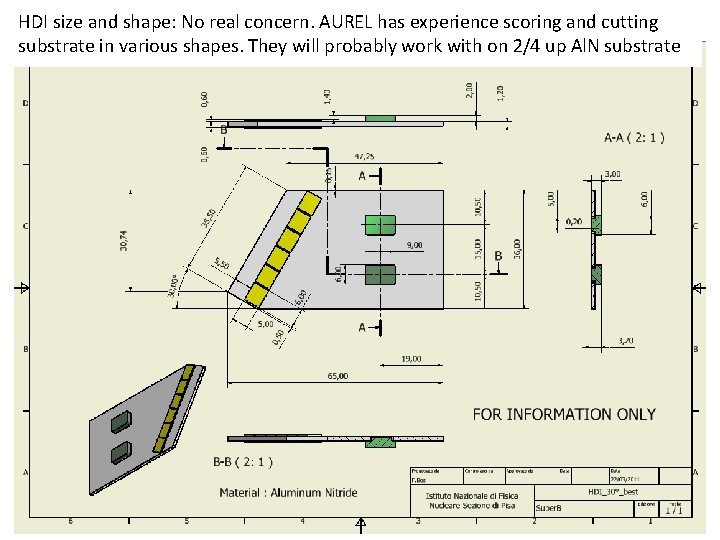
HDI size and shape: No real concern. AUREL has experience scoring and cutting substrate in various shapes. They will probably work with on 2/4 up Al. N substrate
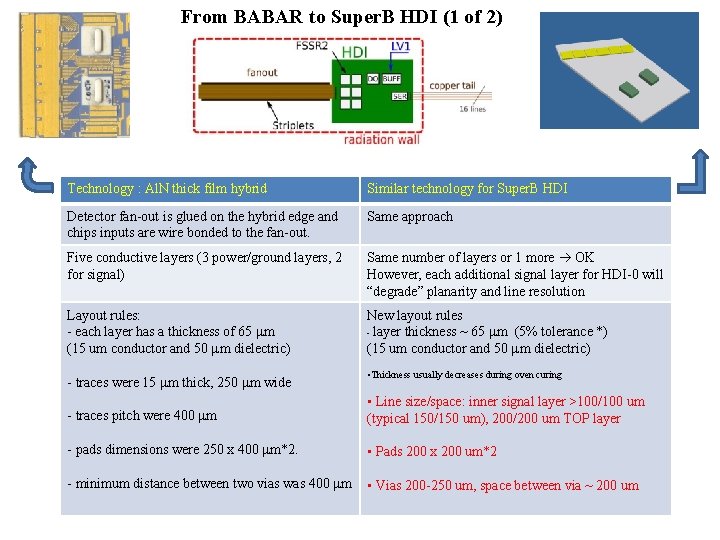
From BABAR to Super. B HDI (1 of 2) Technology : Al. N thick film hybrid Similar technology for Super. B HDI Detector fan-out is glued on the hybrid edge and chips inputs are wire bonded to the fan-out. Same approach Five conductive layers (3 power/ground layers, 2 for signal) Same number of layers or 1 more OK However, each additional signal layer for HDI-0 will “degrade” planarity and line resolution Layout rules: - each layer has a thickness of 65 mm (15 um conductor and 50 mm dielectric) New layout rules - layer thickness ~ 65 mm (5% tolerance *) (15 um conductor and 50 mm dielectric) - traces were 15 mm thick, 250 mm wide • Thickness usually decreases during oven curing - traces pitch were 400 mm • Line size/space: inner signal layer >100/100 um (typical 150/150 um), 200/200 um TOP layer - pads dimensions were 250 x 400 mm*2. • Pads 200 x 200 um*2 - minimum distance between two vias was 400 mm • Vias 200 -250 um, space between via ~ 200 um
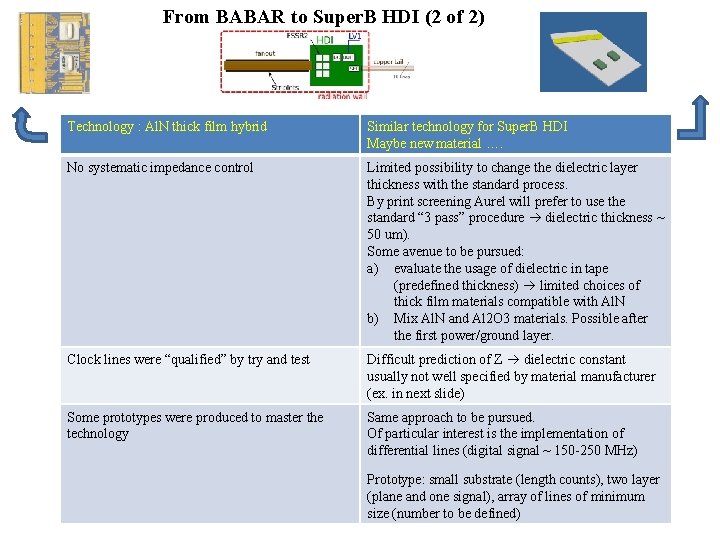
From BABAR to Super. B HDI (2 of 2) Technology : Al. N thick film hybrid Similar technology for Super. B HDI Maybe new material …. No systematic impedance control Limited possibility to change the dielectric layer thickness with the standard process. By print screening Aurel will prefer to use the standard “ 3 pass” procedure dielectric thickness ~ 50 um). Some avenue to be pursued: a) evaluate the usage of dielectric in tape (predefined thickness) limited choices of thick film materials compatible with Al. N b) Mix Al. N and Al 2 O 3 materials. Possible after the first power/ground layer. Clock lines were “qualified” by try and test Difficult prediction of Z dielectric constant usually not well specified by material manufacturer (ex. in next slide) Some prototypes were produced to master the technology Same approach to be pursued. Of particular interest is the implementation of differential lines (digital signal ~ 150 -250 MHz) Prototype: small substrate (length counts), two layer (plane and one signal), array of lines of minimum size (number to be defined)
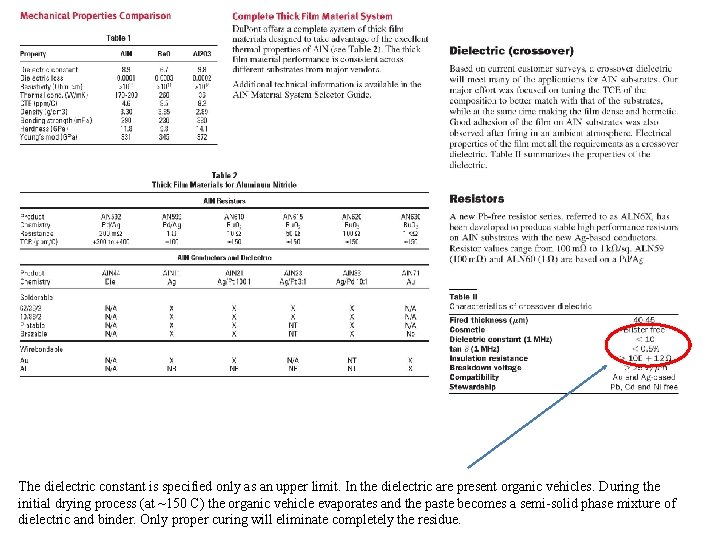
The dielectric constant is specified only as an upper limit. In the dielectric are present organic vehicles. During the initial drying process (at ~150 C) the organic vehicle evaporates and the paste becomes a semi-solid phase mixture of dielectric and binder. Only proper curing will eliminate completely the residue.
- Slides: 5