
Sun Summary You are a photon of light
- Slides: 16
Sun Summary… You are a photon of light. You were just created in the core of the Sun by the synthesis (fusion) of two hydrogen molecules into helium. Describe your journey in first person (use “I”), from the core of the Sun until you get ejected into space by a solar storm (pick one of the 3 discussed). Along your journey through the Sun’s layers make sure to describe what the temperature and density are like as you pass through.
Nebular Theory
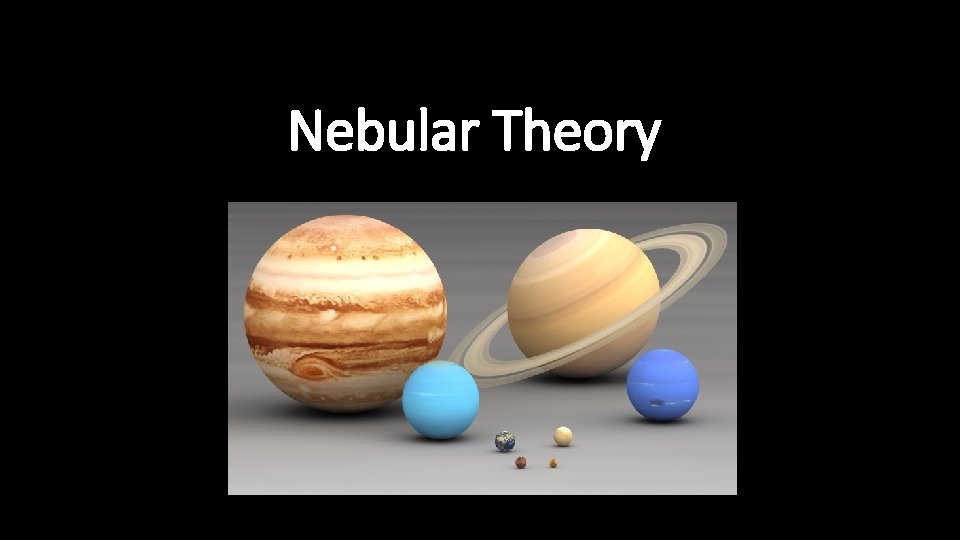
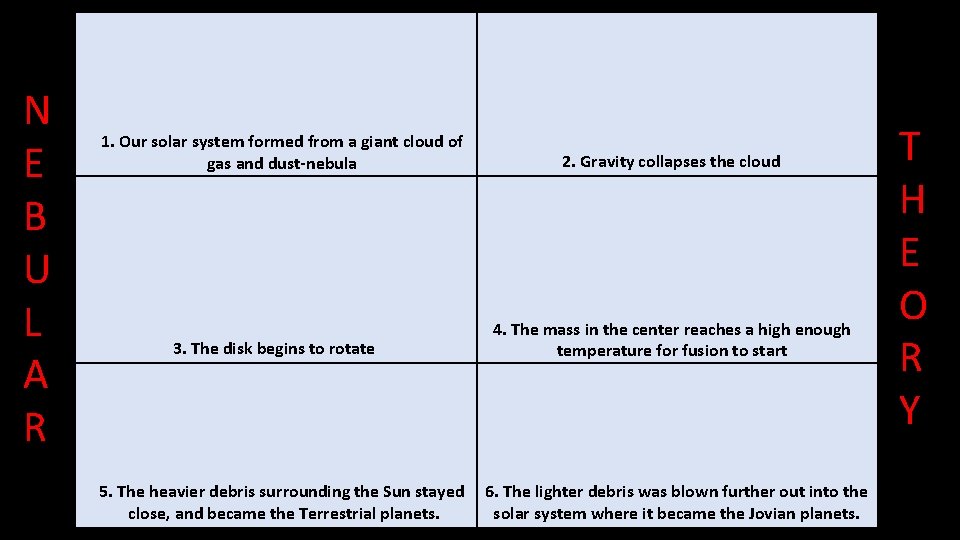
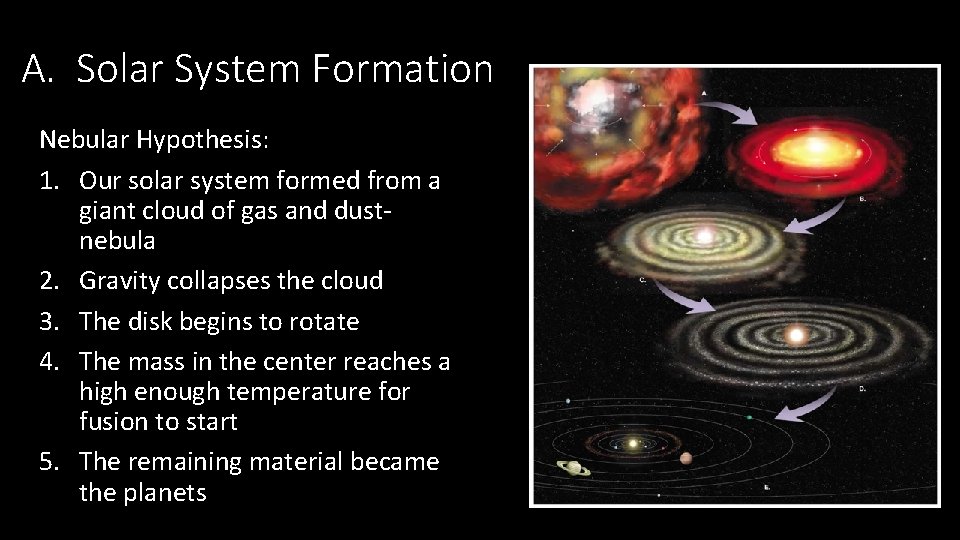
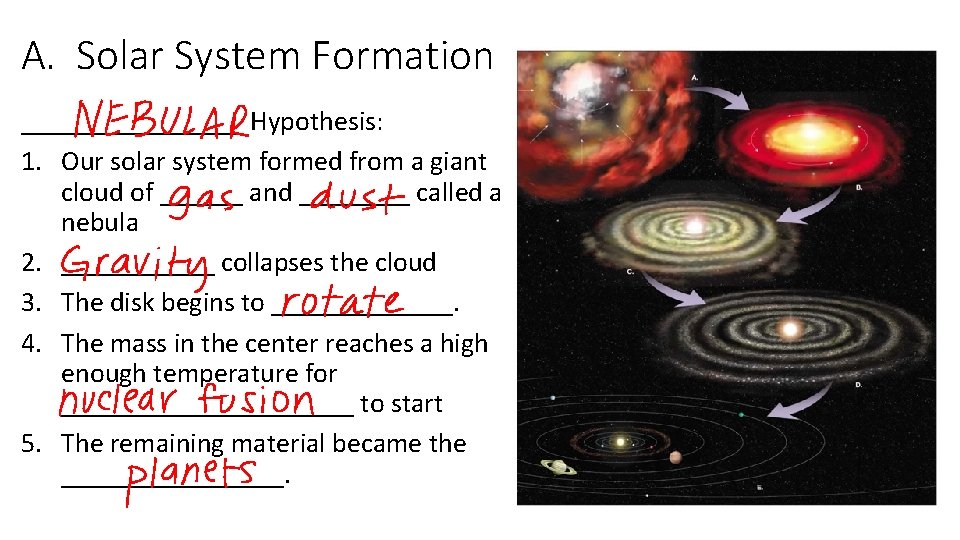
N E B U L A R 1. Our solar system formed from a giant cloud of gas and dust-nebula 3. The disk begins to rotate 5. The heavier debris surrounding the Sun stayed close, and became the Terrestrial planets. 2. Gravity collapses the cloud 4. The mass in the center reaches a high enough temperature for fusion to start 6. The lighter debris was blown further out into the solar system where it became the Jovian planets. T H E O R Y
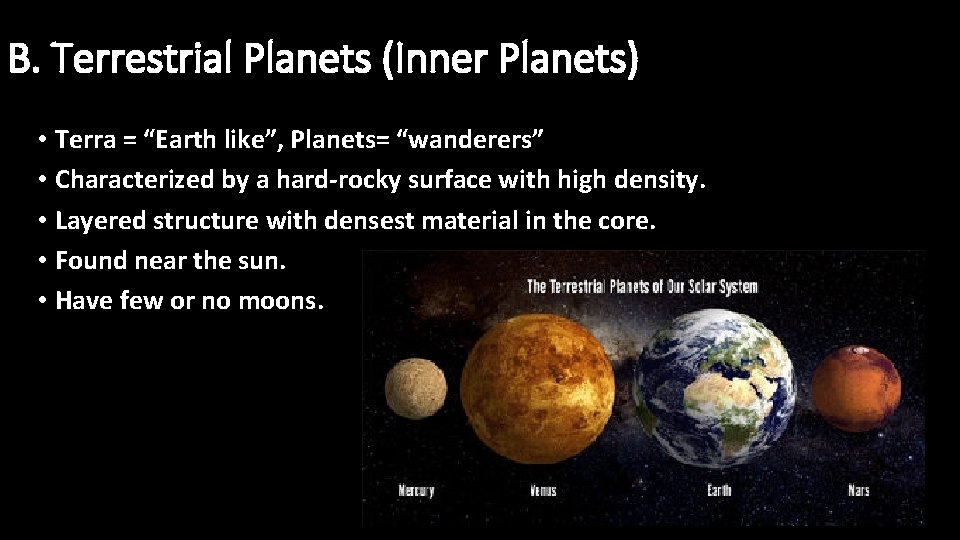
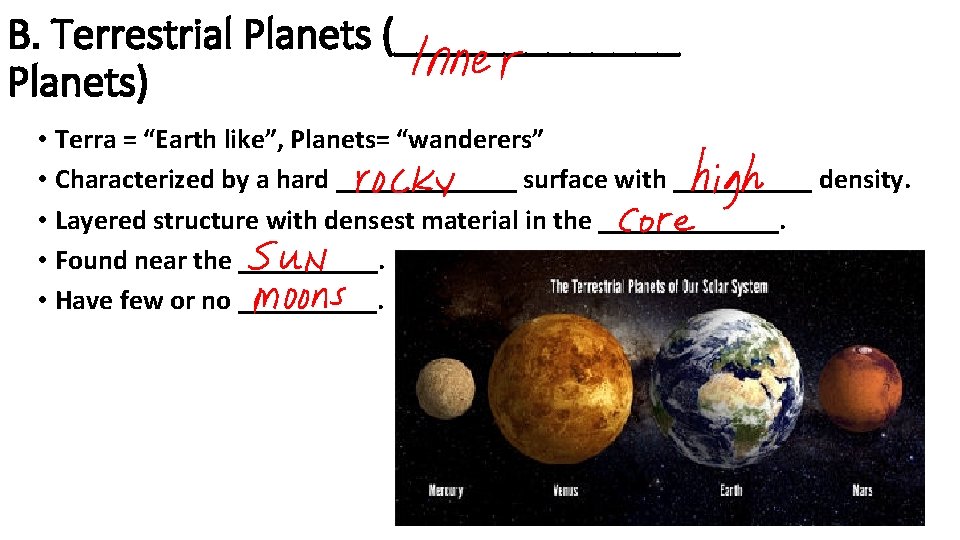
B. Terrestrial Planets (Inner Planets) • Terra = “Earth like”, Planets= “wanderers” • Characterized by a hard-rocky surface with high density. • Layered structure with densest material in the core. • Found near the sun. • Have few or no moons.
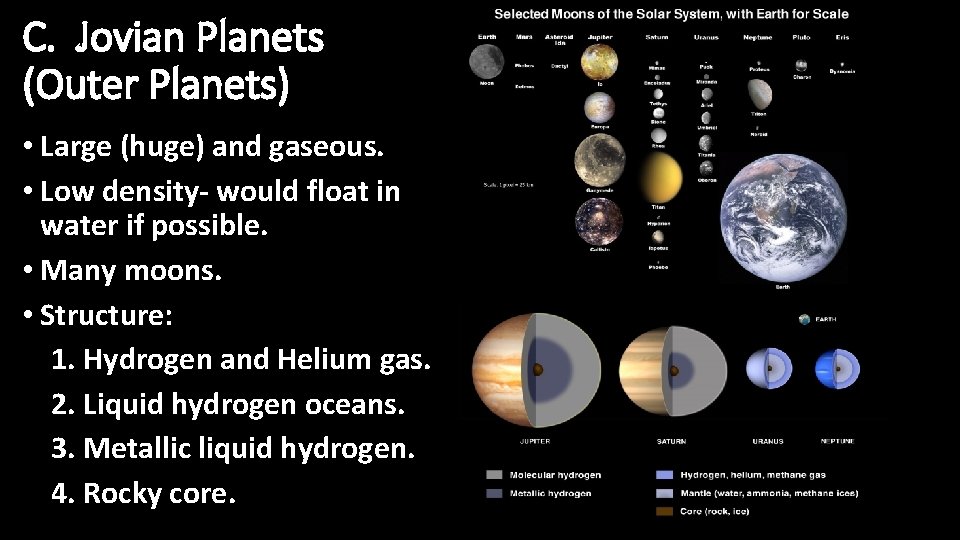
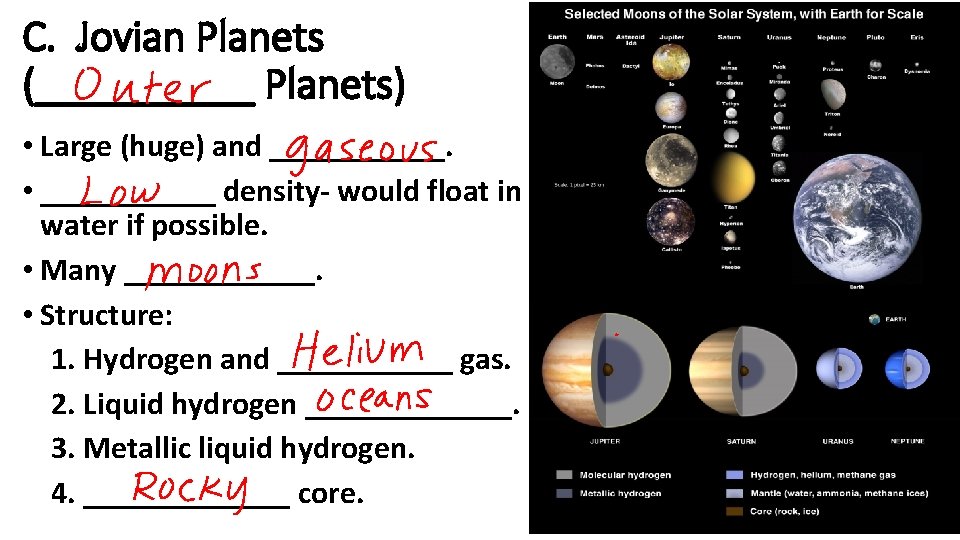
C. Jovian Planets (Outer Planets) • Large (huge) and gaseous. • Low density- would float in water if possible. • Many moons. • Structure: 1. Hydrogen and Helium gas. 2. Liquid hydrogen oceans. 3. Metallic liquid hydrogen. 4. Rocky core.
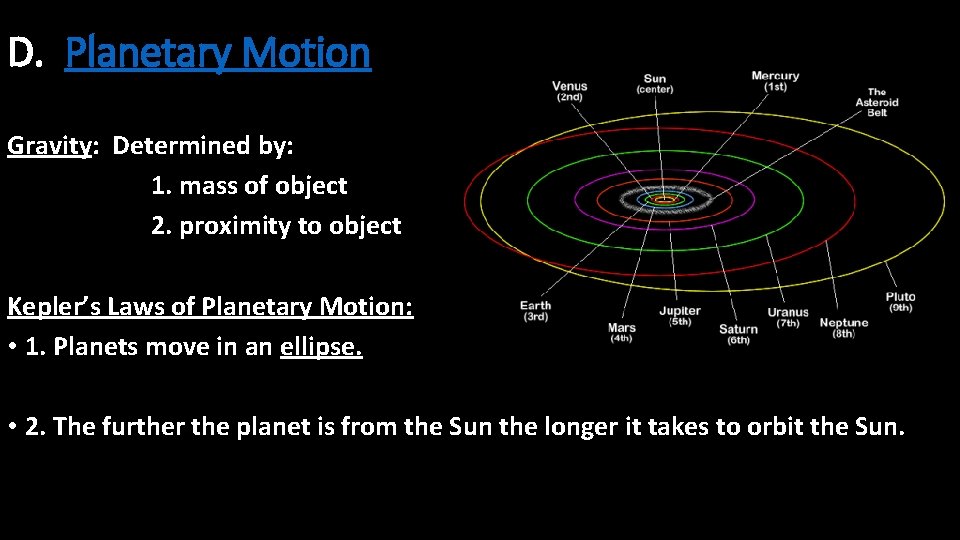
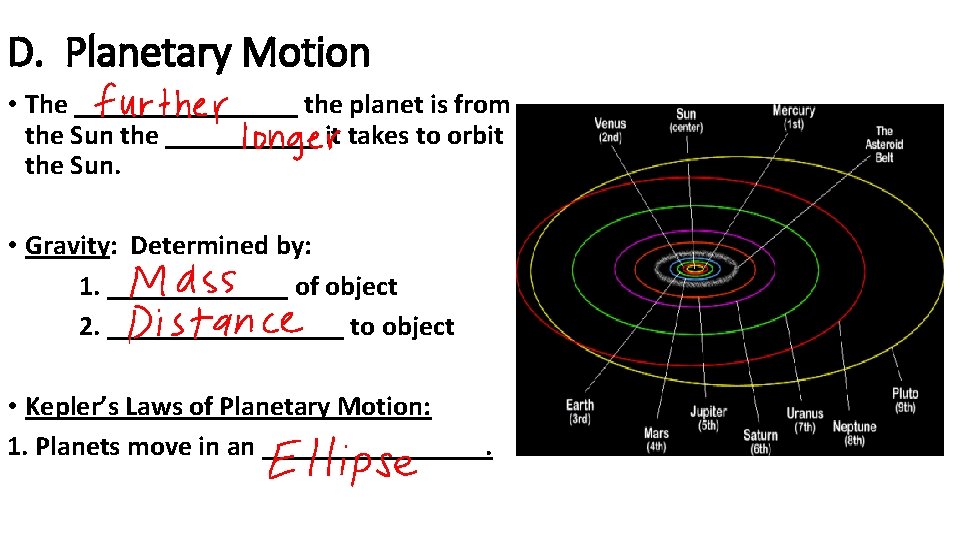
D. Planetary Motion Gravity: Determined by: 1. mass of object 2. proximity to object Kepler’s Laws of Planetary Motion: • 1. Planets move in an ellipse. • 2. The further the planet is from the Sun the longer it takes to orbit the Sun.
A. Solar System Formation Nebular Hypothesis: 1. Our solar system formed from a giant cloud of gas and dustnebula 2. Gravity collapses the cloud 3. The disk begins to rotate 4. The mass in the center reaches a high enough temperature for fusion to start 5. The remaining material became the planets
BINGO TIME!!!-MIX UP THE ORDER OF THE WORDS 1. Make a 4 x 4 BINGO card 2. On the FRONT SIDE: Draw a picture of the definition of the vocab word. 3. On the BACK SIDE: Write the vocab word only…NO DEFINITIONS!!! NO DEF I NITI ANY O WH N S ERE !!!! Astronomical Unit Ellipse Jovian Gravity Rotation Geocentric Waning Heliocentric Nuclear Fusion Sunspots Terrestrial Revolution Eclipse Inertia Waxing Nebular Theory
BINGO TIME!!!-MIX UP THE ORDER OF THE WORDS On the FRONT SIDE: Write the vocab word (include a picture if you finish early) On the BACK SIDE: Write the definition of the vocabulary word. Asteroids Astronomical Unit Comet Eclipse Ellipse Geocentric Heliocentric Inertia Jovian Nuclear Fusion Photosphere Retrograde rotation Sunspots Terrestrial
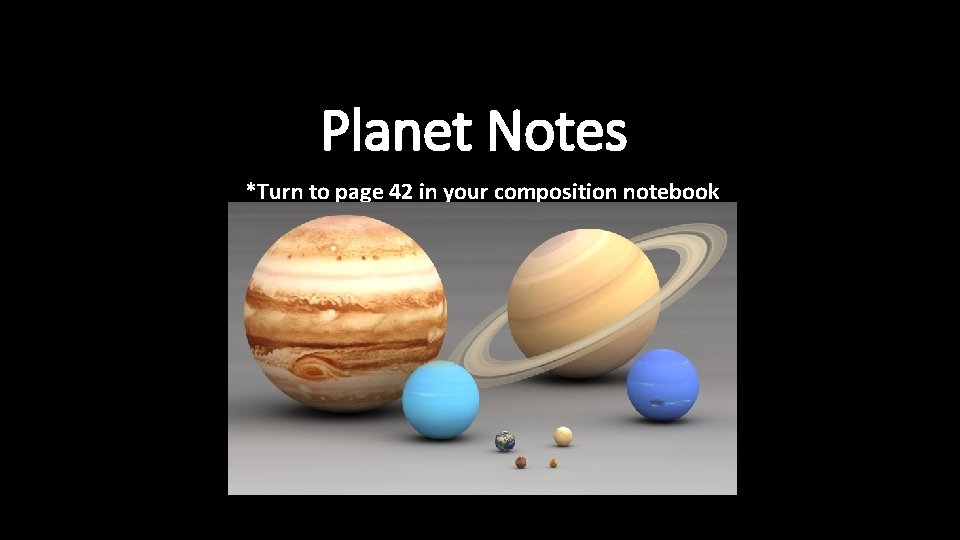
Planet Notes *Turn to page 42 in your composition notebook
A. Solar System Formation ________ Hypothesis: 1. Our solar system formed from a giant cloud of ______ and ____ called a nebula 2. ______ collapses the cloud 3. The disk begins to _______. 4. The mass in the center reaches a high enough temperature for ___________ to start 5. The remaining material became the ________.
B. Terrestrial Planets (_______ Planets) • Terra = “Earth like”, Planets= “wanderers” • Characterized by a hard _______ surface with _____ density. • Layered structure with densest material in the _______. • Found near the _____. • Have few or no _____.
C. Jovian Planets (_____ Planets) • Large (huge) and ______. • ______ density- would float in water if possible. • Many ______. • Structure: 1. Hydrogen and ______ gas. 2. Liquid hydrogen _______. 3. Metallic liquid hydrogen. 4. _______ core.
D. Planetary Motion • The ________ the planet is from the Sun the ______ it takes to orbit the Sun. • Gravity: Determined by: 1. _______ of object 2. _________ to object • Kepler’s Laws of Planetary Motion: 1. Planets move in an ________.