
Sun Skin Dr Robin Pullen UV light from
Sun & Skin Dr Robin Pullen
UV light from the sun or sunbeds • Infrared rays- causes the heat that we feel. This does not damage the skin. • UVA- causes sunburn (you cannot feel it- hence burning on cool days). This is the main cause of cancer. • UVB- ages the skin and penetrates deeply. Much less likely to cause sunburn and hence cancer. • Getting sunburnt just once every 2 years can triple your risk of melanoma.
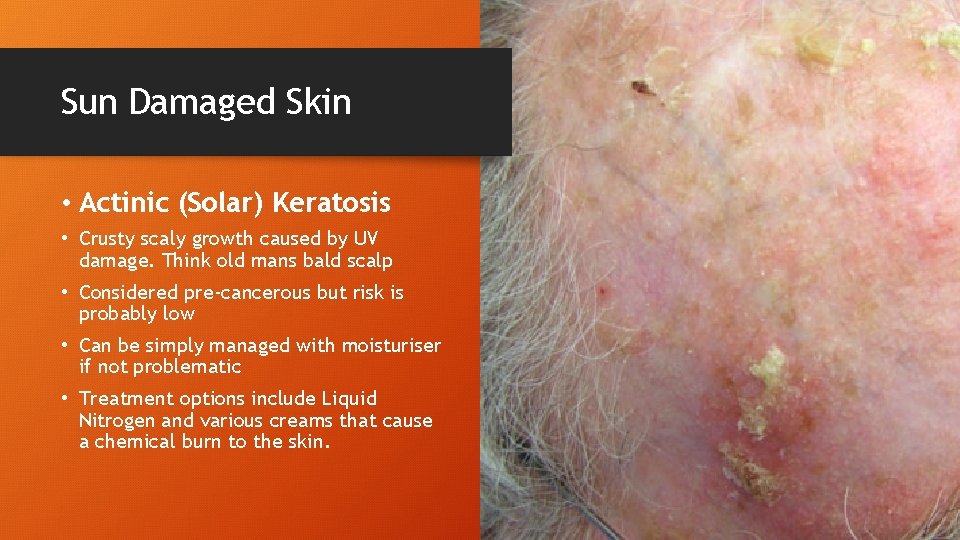
Sun Damaged Skin • Actinic (Solar) Keratosis • Crusty scaly growth caused by UV damage. Think old mans bald scalp • Considered pre-cancerous but risk is probably low • Can be simply managed with moisturiser if not problematic • Treatment options include Liquid Nitrogen and various creams that cause a chemical burn to the skin.
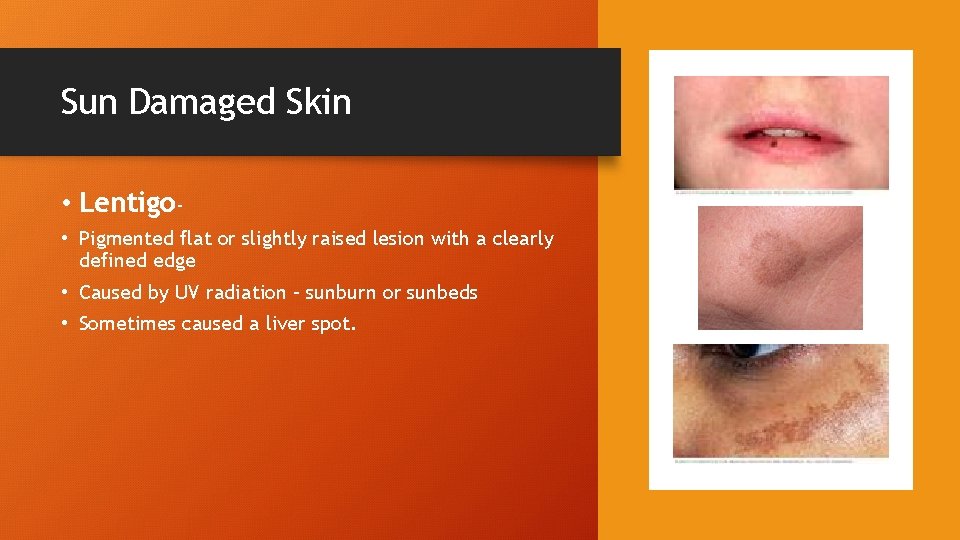
Sun Damaged Skin • Lentigo • Pigmented flat or slightly raised lesion with a clearly defined edge • Caused by UV radiation – sunburn or sunbeds • Sometimes caused a liver spot.

Allergic Reaction to Sun Exposure • Polymorphic Light Reaction • Immune response to spring/summer UV exposure • Common in young women 20 -40 years old • Milder versions seen in up to 20% Northern Europeans • Lots of variations seen such as Juvenile light reaction
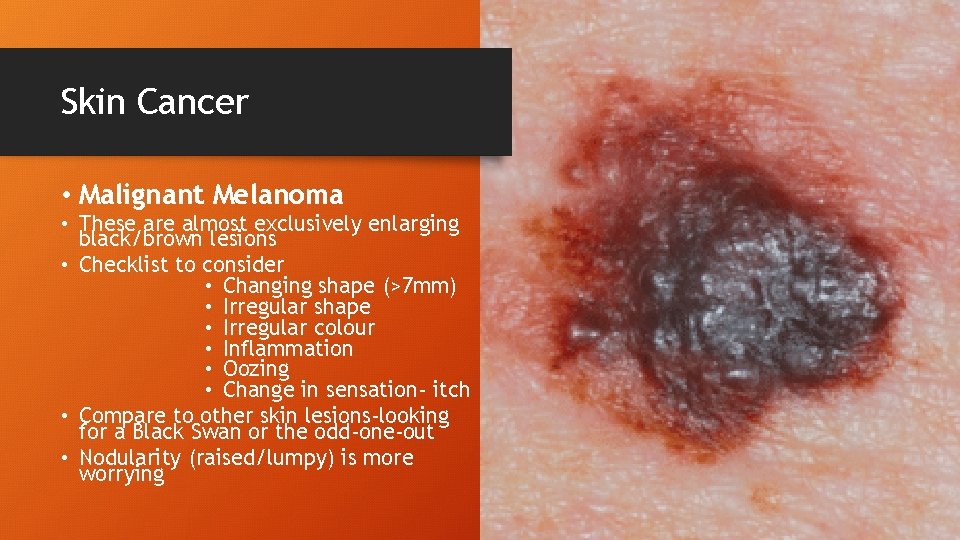
Skin Cancer • Malignant Melanoma • These are almost exclusively enlarging black/brown lesions • Checklist to consider • Changing shape (>7 mm) • Irregular shape • Irregular colour • Inflammation • Oozing • Change in sensation- itch • Compare to other skin lesions-looking for a Black Swan or the odd-one-out • Nodularity (raised/lumpy) is more worrying
Skin Cancer • Malignant melanoma • Self-photos- have to be very good to be useful • (in rashes they can be very useful) • Not just about cumulative exposure to sunlight • Thought to be related to burning especially as a child • Early presentation has a big impact on rates of cure
Skin Cancer (non-melanoma) • Related to cumulative sun exposure- often on sun exposed sites- head, neck, ears, arms, hands and lower legs
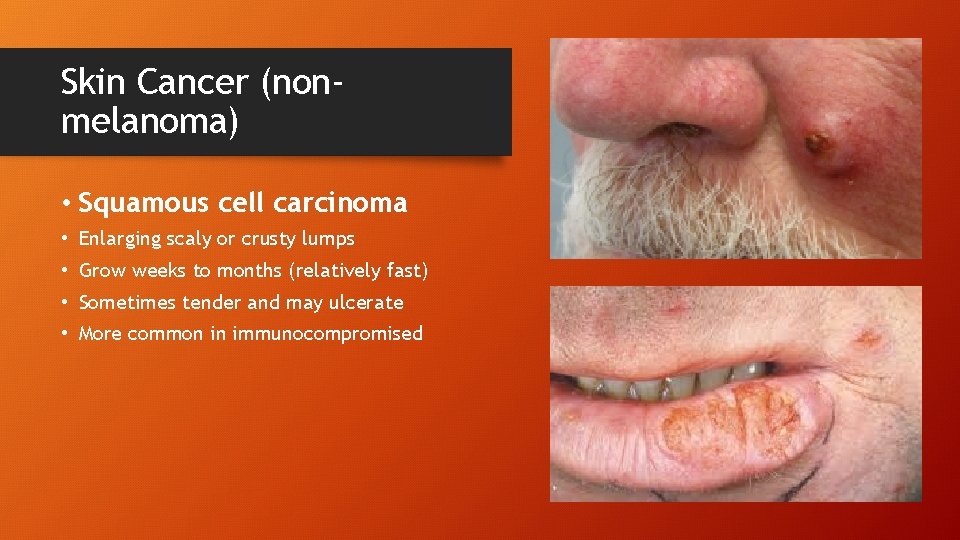
Skin Cancer (nonmelanoma) • Squamous cell carcinoma • Enlarging scaly or crusty lumps • Grow weeks to months (relatively fast) • Sometimes tender and may ulcerate • More common in immunocompromised
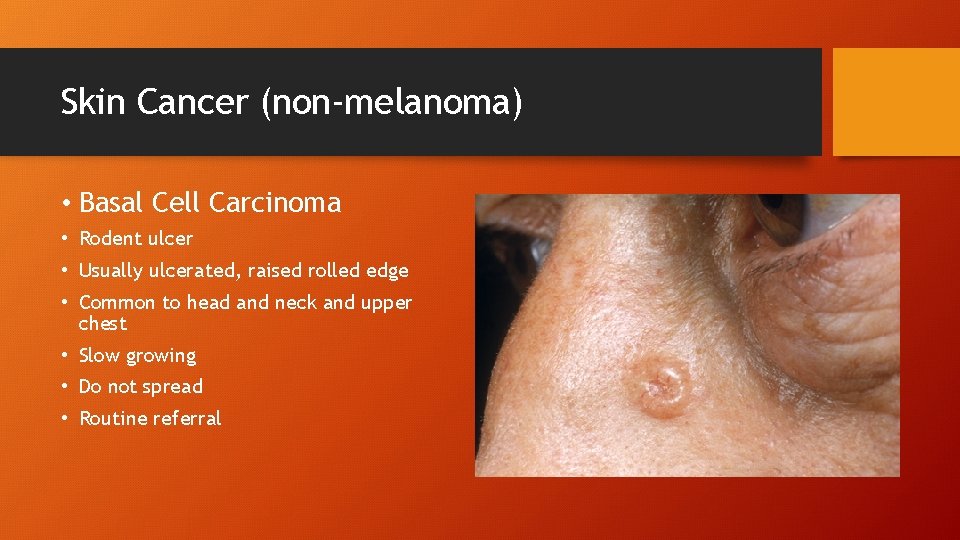
Skin Cancer (non-melanoma) • Basal Cell Carcinoma • Rodent ulcer • Usually ulcerated, raised rolled edge • Common to head and neck and upper chest • Slow growing • Do not spread • Routine referral
Skin Damage- Prevention • Safe sun expose is healthy and promotes wellbeing and builds up supplies of vitamin D • Avoid burning especially as a child • Avoidance of midday sun and the use of shade, sun hats and sunglasses is better than any lotion or cream • Hair is a brilliant sun guard. If you have little. . wear a hat! • Immunocompromised at higher risk of SCC • https: //www. youtube. com/watch? v=Ht. OWk. WV 49 QA
- Slides: 11