
SumProduct Networks CS 886 Topics in Natural Language

- Slides: 18
Sum-Product Networks CS 886 Topics in Natural Language Processing Guest Lecture by Pascal Poupart University of Waterloo July 22, 2015
Outline • What is a Sum-Product Network? • Inference • Language modeling 2
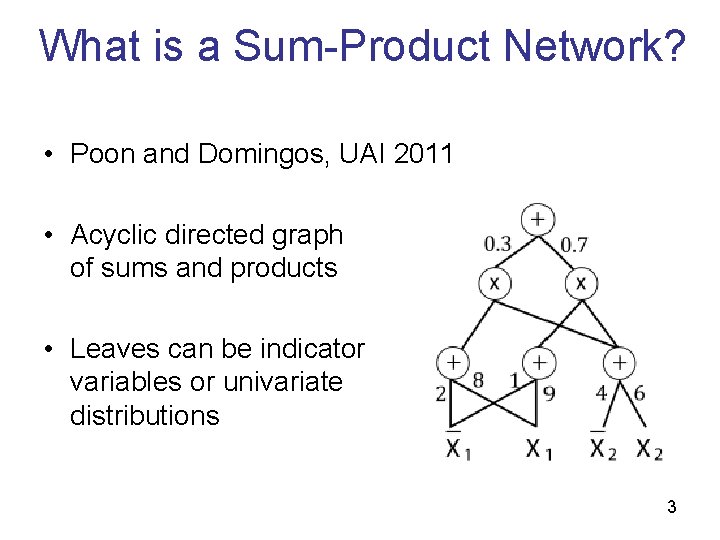
What is a Sum-Product Network? • Poon and Domingos, UAI 2011 • Acyclic directed graph of sums and products • Leaves can be indicator variables or univariate distributions 3
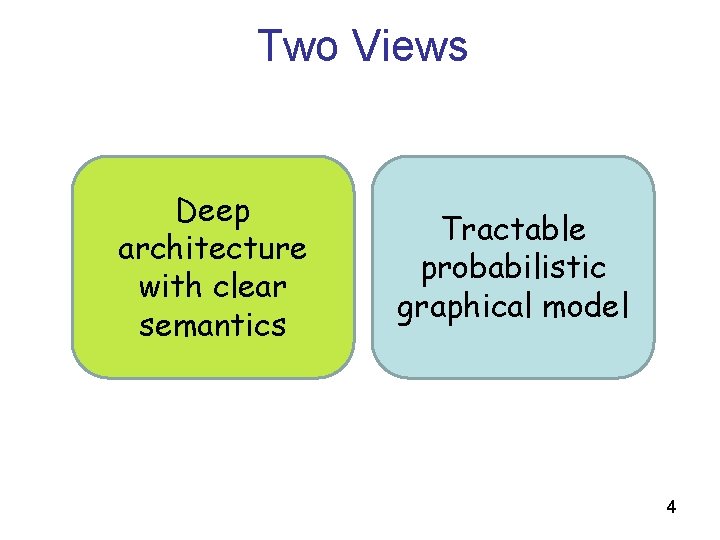
Two Views Deep architecture with clear semantics Tractable probabilistic graphical model 4
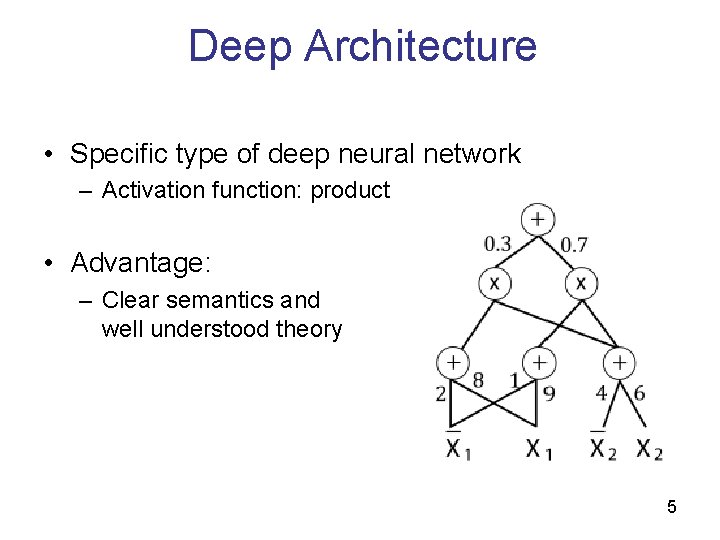
Deep Architecture • Specific type of deep neural network – Activation function: product • Advantage: – Clear semantics and well understood theory 5
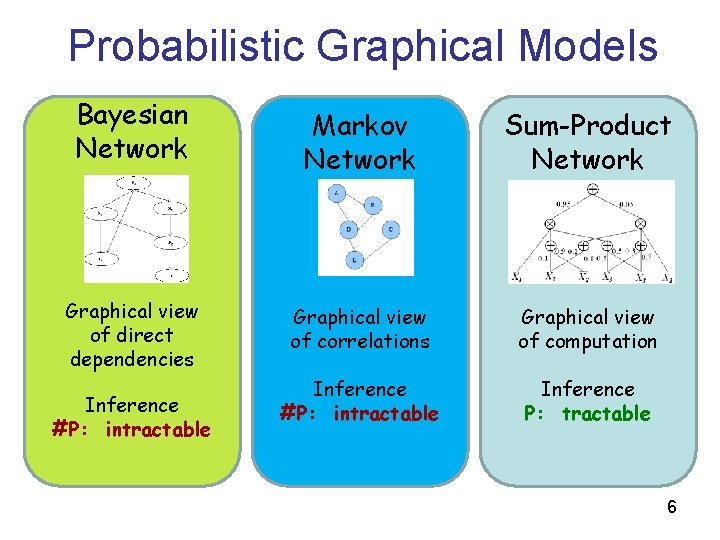
Probabilistic Graphical Models Bayesian Network Graphical view of direct dependencies Inference #P: intractable Markov Network Sum-Product Network Graphical view of correlations Graphical view of computation Inference #P: intractable Inference P: tractable 6
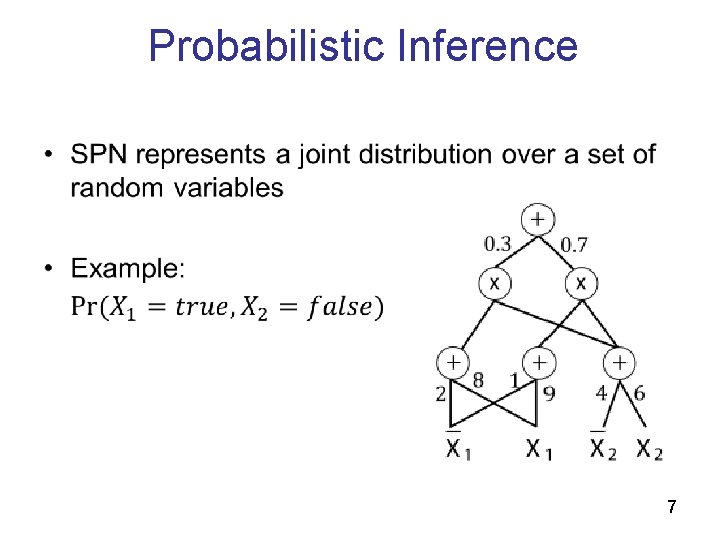
Probabilistic Inference • 7
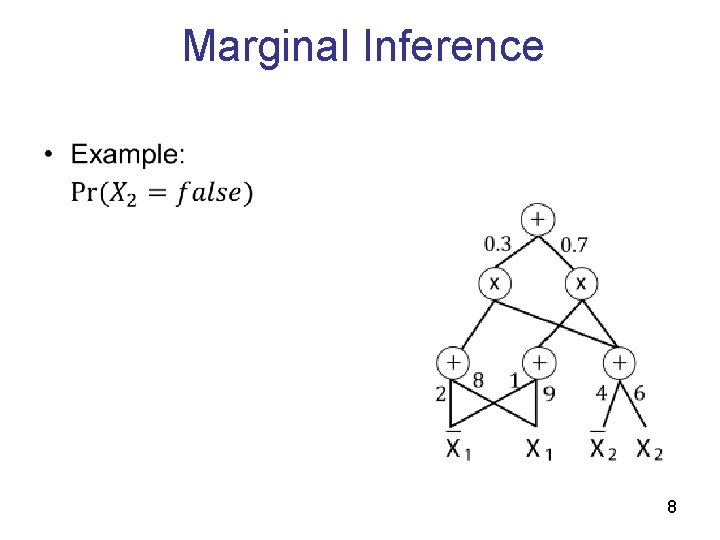
Marginal Inference • 8
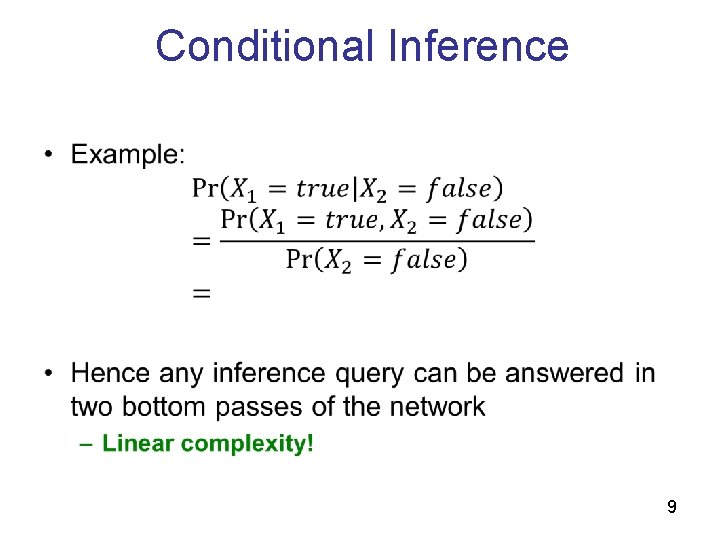
Conditional Inference • 9
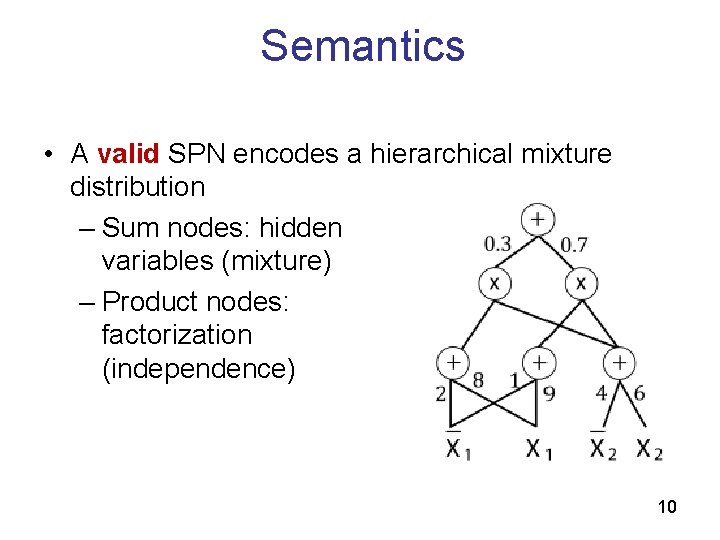
Semantics • A valid SPN encodes a hierarchical mixture distribution – Sum nodes: hidden variables (mixture) – Product nodes: factorization (independence) 10
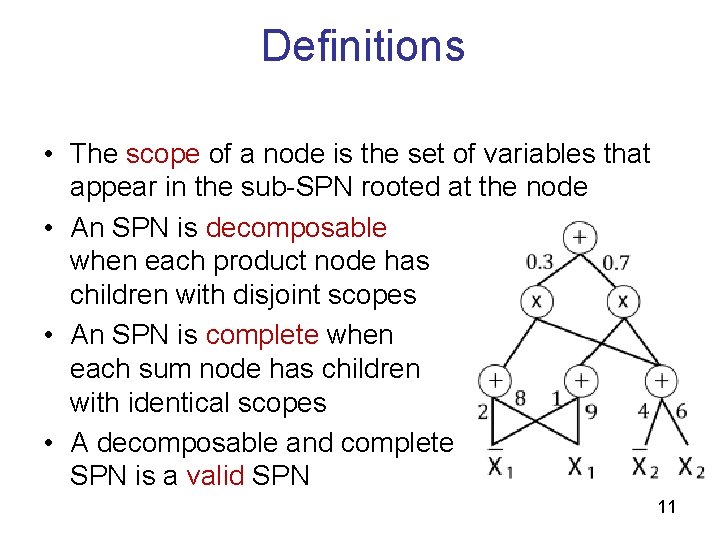
Definitions • The scope of a node is the set of variables that appear in the sub-SPN rooted at the node • An SPN is decomposable when each product node has children with disjoint scopes • An SPN is complete when each sum node has children with identical scopes • A decomposable and complete SPN is a valid SPN 11
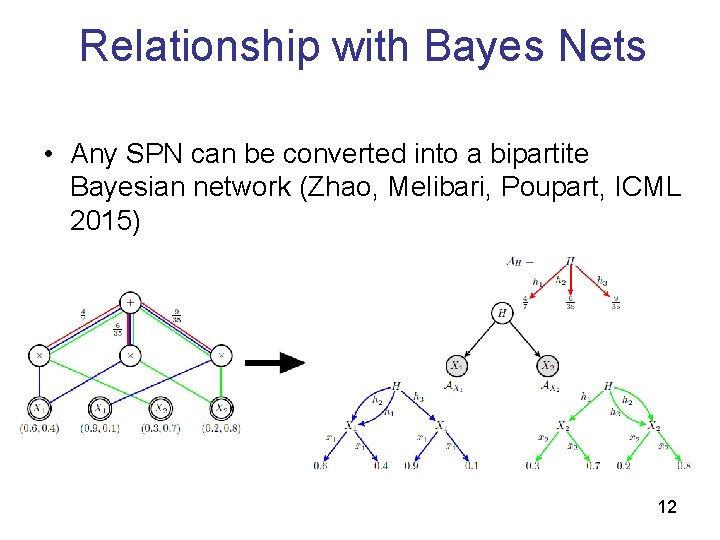
Relationship with Bayes Nets • Any SPN can be converted into a bipartite Bayesian network (Zhao, Melibari, Poupart, ICML 2015) 12
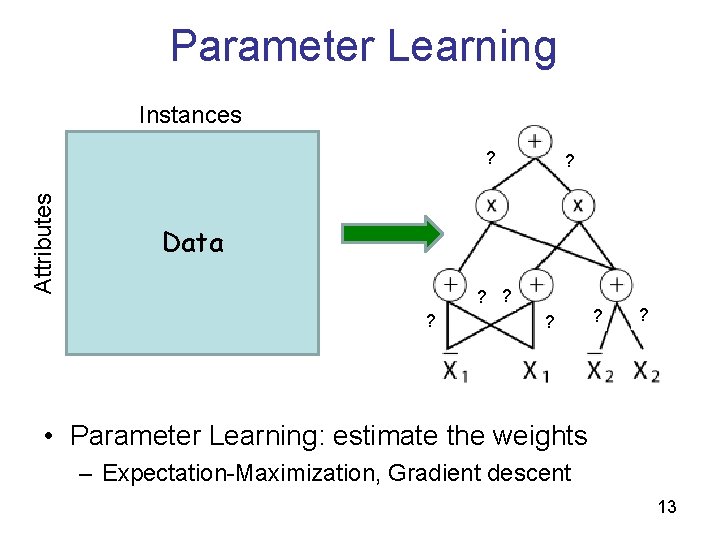
Parameter Learning Instances Attributes ? ? Data ? ? ? ? • Parameter Learning: estimate the weights – Expectation-Maximization, Gradient descent 13
Structure Learning • Alternate between – Data Clustering: sum nodes – Variable partitioning: product nodes 14
Applications • • Image completion (Poon, Domingos; 2011) Activity recognition (Amer, Todorovic; 2012) Language modeling (Cheng et al. ; 2014) Speech modeling (Perhaz et al. ; 2014) 15
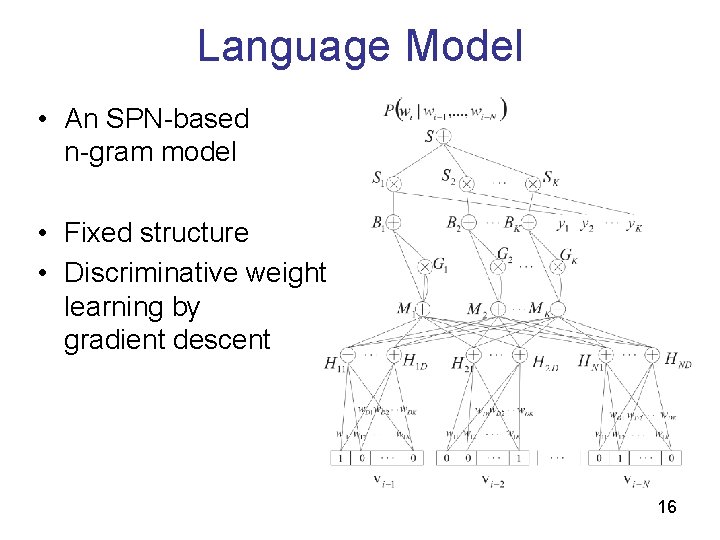
Language Model • An SPN-based n-gram model • Fixed structure • Discriminative weight learning by gradient descent 16
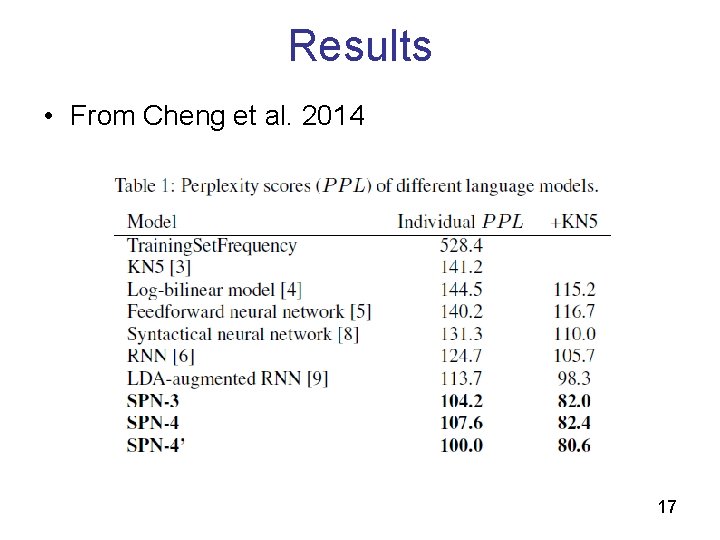
Results • From Cheng et al. 2014 17
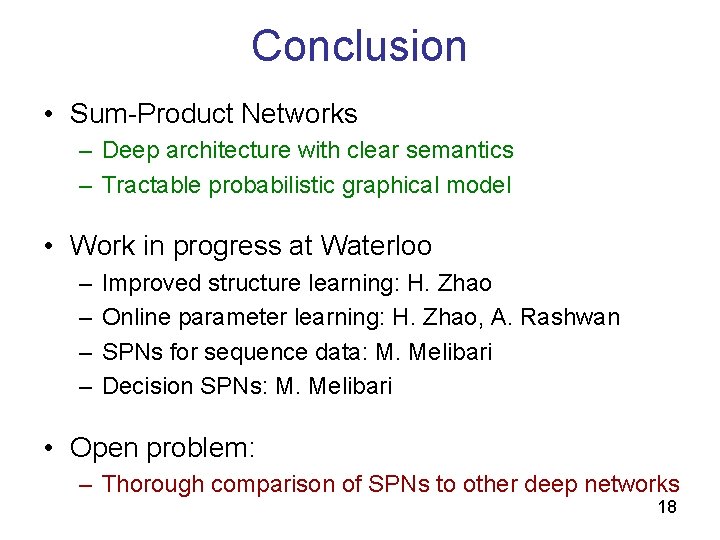
Conclusion • Sum-Product Networks – Deep architecture with clear semantics – Tractable probabilistic graphical model • Work in progress at Waterloo – – Improved structure learning: H. Zhao Online parameter learning: H. Zhao, A. Rashwan SPNs for sequence data: M. Melibari Decision SPNs: M. Melibari • Open problem: – Thorough comparison of SPNs to other deep networks 18