
Summation and tetanization Comparison of smooth and skeletal

- Slides: 13
Summation and tetanization Comparison of smooth and skeletal contraction Dr. Arwa Rawashdeh
Types of skeletal muscle Objectives Summation and tetanus Fatigue Comparison between skeletal and smooth muscle contraction
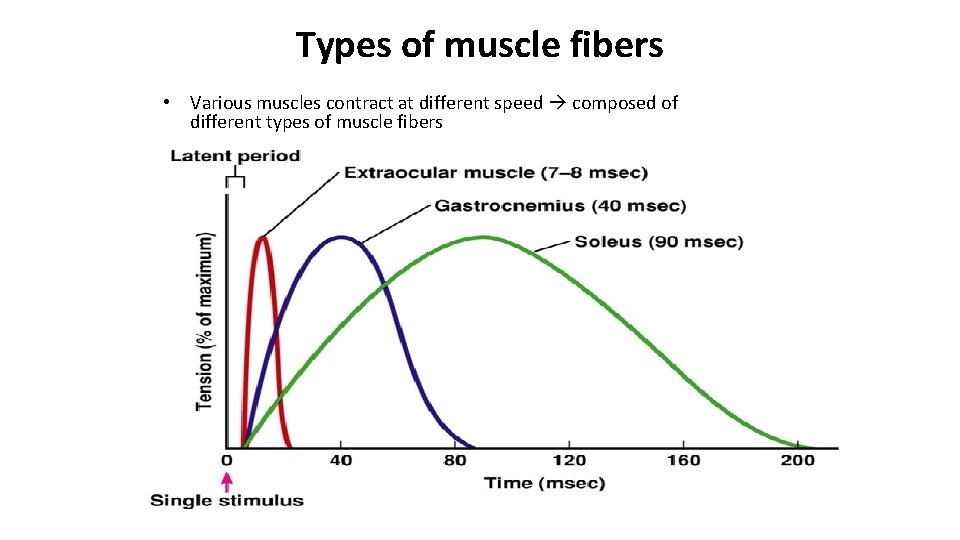
Types of muscle fibers • Various muscles contract at different speed composed of different types of muscle fibers
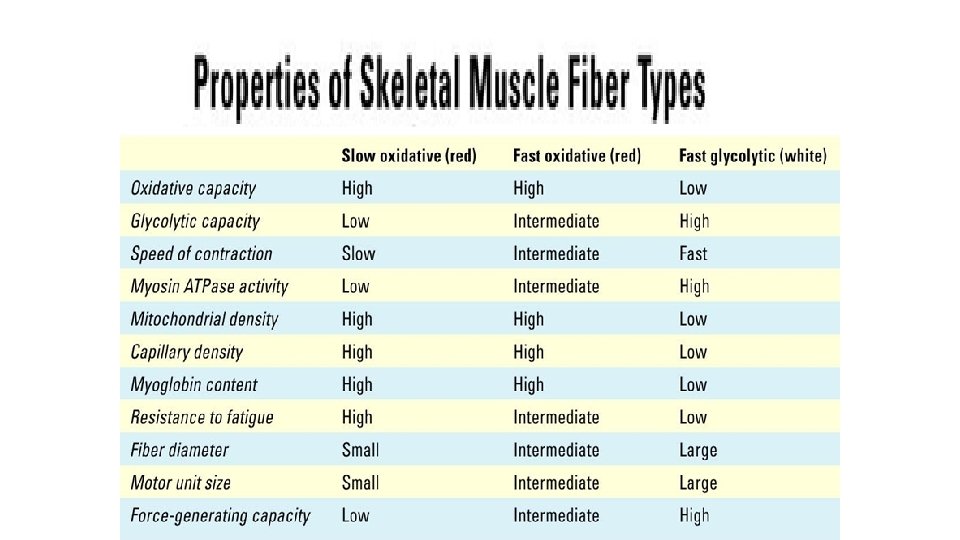
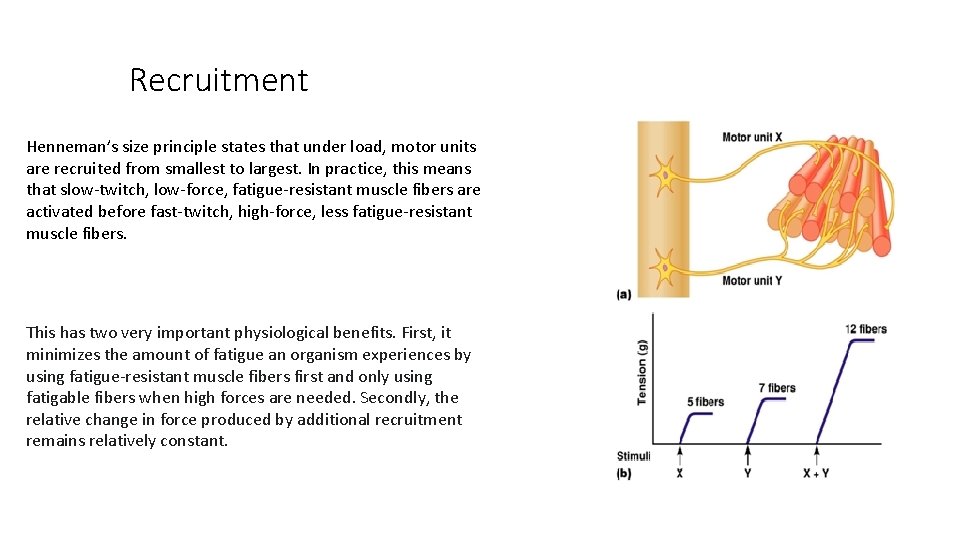
Recruitment Henneman’s size principle states that under load, motor units are recruited from smallest to largest. In practice, this means that slow-twitch, low-force, fatigue-resistant muscle fibers are activated before fast-twitch, high-force, less fatigue-resistant muscle fibers. This has two very important physiological benefits. First, it minimizes the amount of fatigue an organism experiences by using fatigue-resistant muscle fibers first and only using fatigable fibers when high forces are needed. Secondly, the relative change in force produced by additional recruitment remains relatively constant.
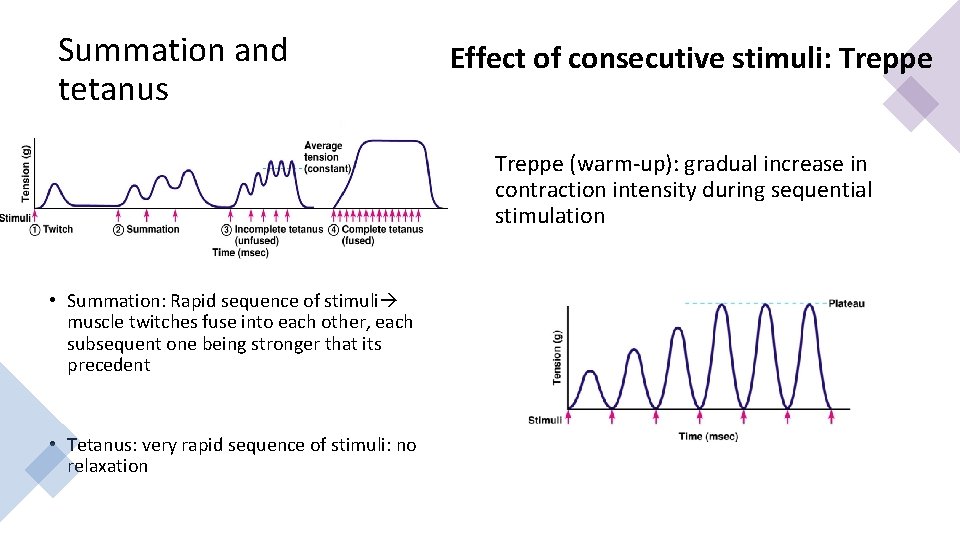
Summation and tetanus Effect of consecutive stimuli: Treppe (warm-up): gradual increase in contraction intensity during sequential stimulation • Summation: Rapid sequence of stimuli muscle twitches fuse into each other, each subsequent one being stronger that its precedent • Tetanus: very rapid sequence of stimuli: no relaxation
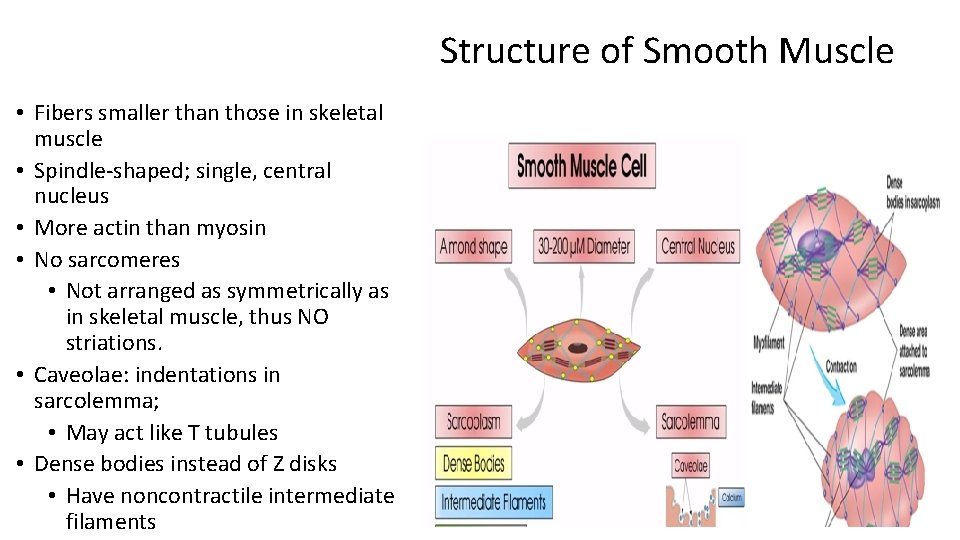
Structure of Smooth Muscle • Fibers smaller than those in skeletal muscle • Spindle-shaped; single, central nucleus • More actin than myosin • No sarcomeres • Not arranged as symmetrically as in skeletal muscle, thus NO striations. • Caveolae: indentations in sarcolemma; • May act like T tubules • Dense bodies instead of Z disks • Have noncontractile intermediate filaments
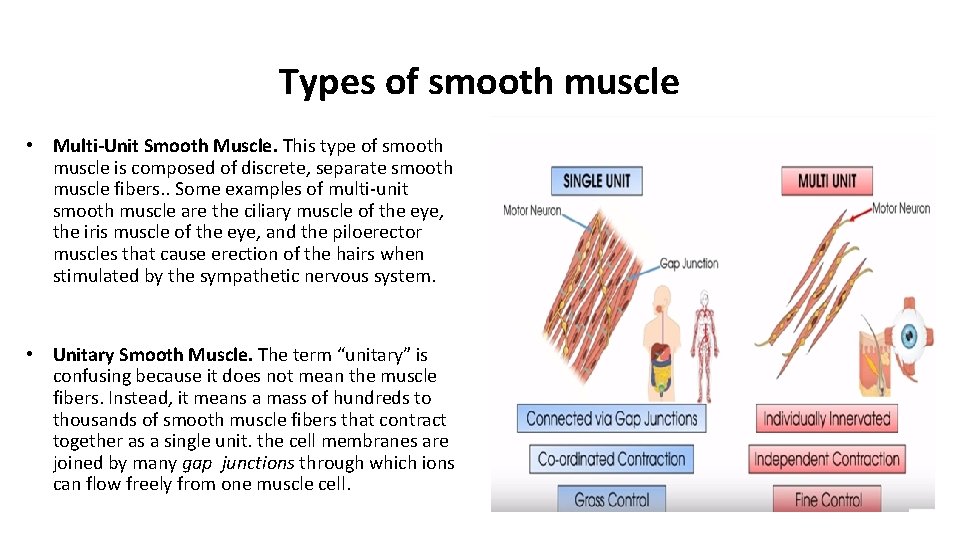
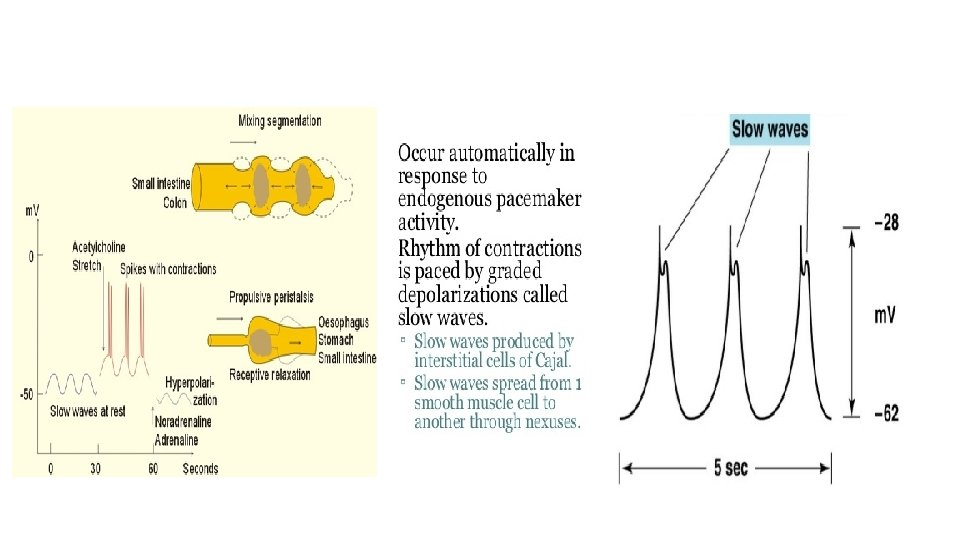
Types of smooth muscle • Multi-Unit Smooth Muscle. This type of smooth muscle is composed of discrete, separate smooth muscle fibers. . Some examples of multi-unit smooth muscle are the ciliary muscle of the eye, the iris muscle of the eye, and the piloerector muscles that cause erection of the hairs when stimulated by the sympathetic nervous system. • Unitary Smooth Muscle. The term “unitary” is confusing because it does not mean the muscle fibers. Instead, it means a mass of hundreds to thousands of smooth muscle fibers that contract together as a single unit. the cell membranes are joined by many gap junctions through which ions can flow freely from one muscle cell.
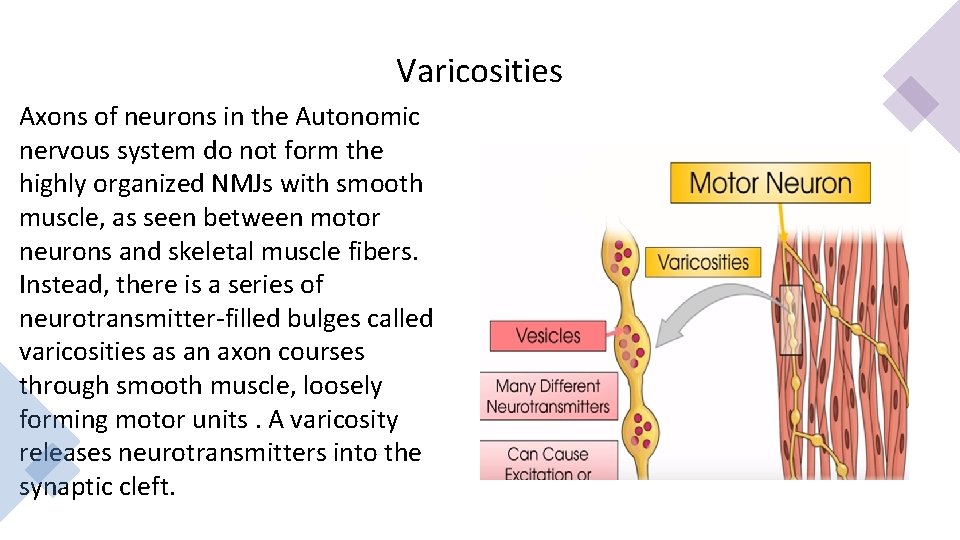
Varicosities Axons of neurons in the Autonomic nervous system do not form the highly organized NMJs with smooth muscle, as seen between motor neurons and skeletal muscle fibers. Instead, there is a series of neurotransmitter-filled bulges called varicosities as an axon courses through smooth muscle, loosely forming motor units. A varicosity releases neurotransmitters into the synaptic cleft.
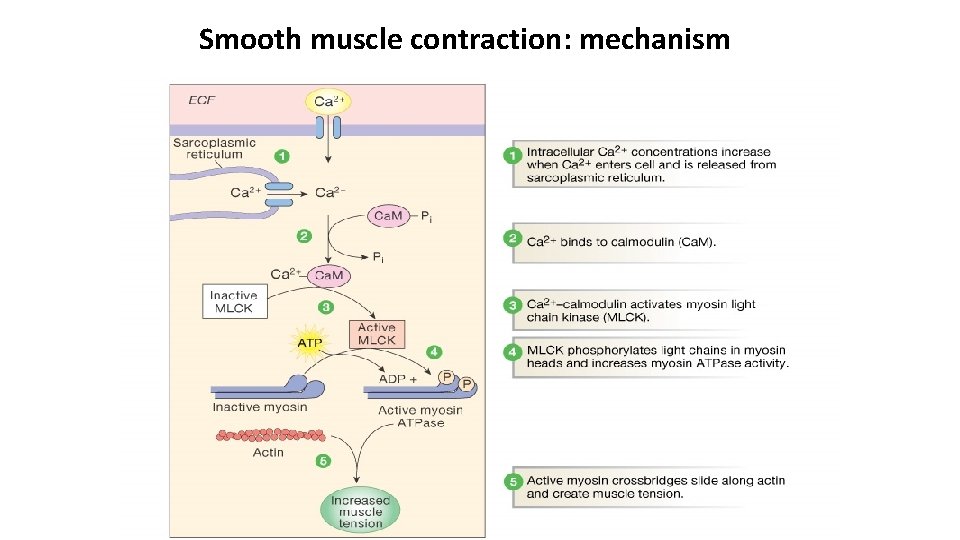
Smooth muscle contraction: mechanism
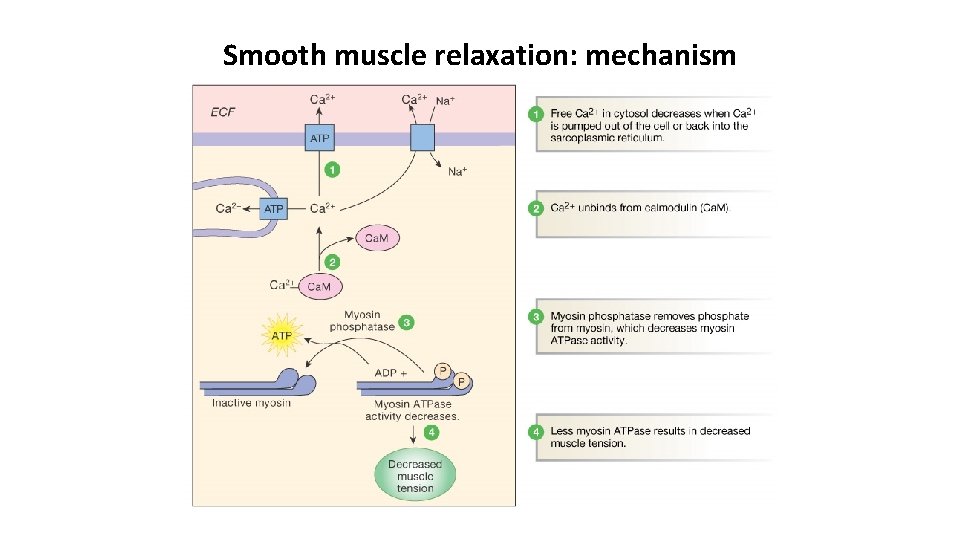
Smooth muscle relaxation: mechanism