
Summary Response Analysis The three types of academic

- Slides: 14
Summary, Response, Analysis The three types of academic writing
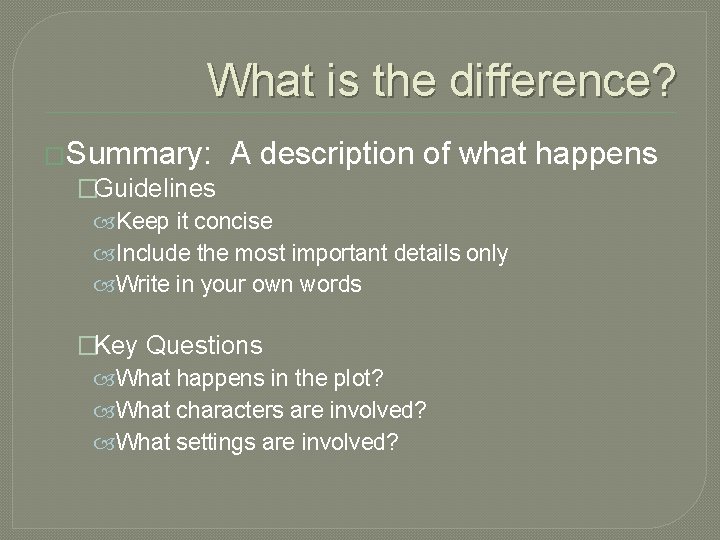
What is the difference? �Summary: A description of what �Guidelines Keep it concise Include the most important details only Write in your own words �Key Questions What happens in the plot? What characters are involved? What settings are involved? happens
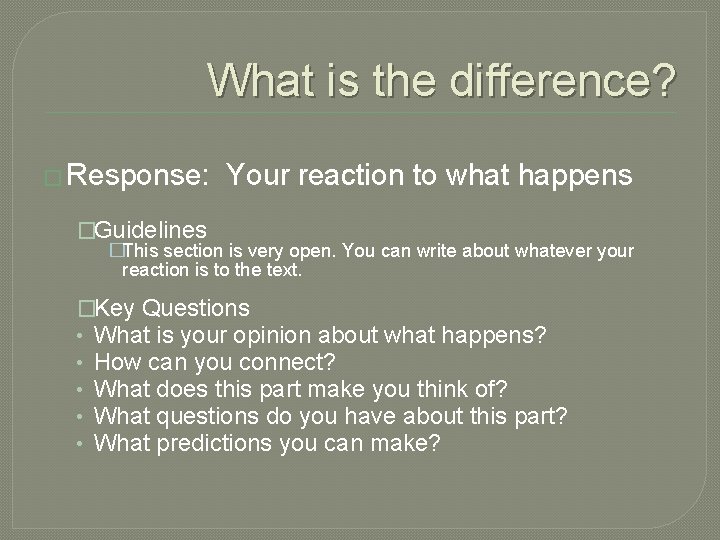
What is the difference? � Response: Your reaction to what happens �Guidelines �This section is very open. You can write about whatever your reaction is to the text. �Key Questions • What is your opinion about what happens? • How can you connect? • What does this part make you think of? • What questions do you have about this part? • What predictions you can make?
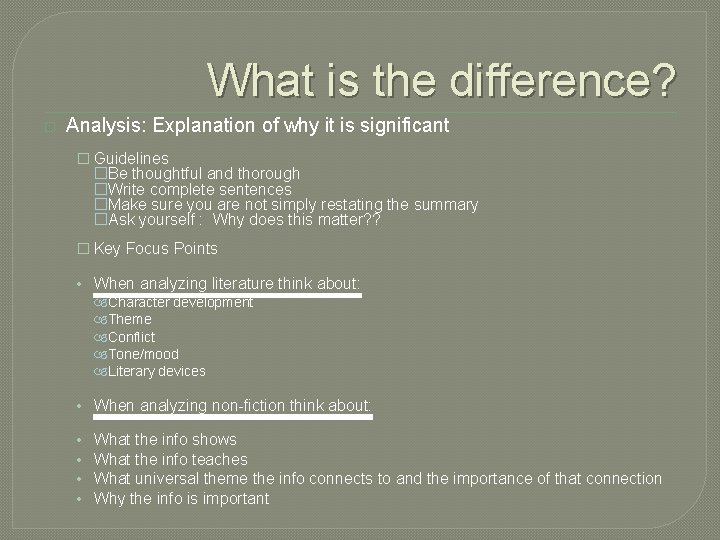
What is the difference? � Analysis: Explanation of why it is significant � Guidelines �Be thoughtful and thorough �Write complete sentences �Make sure you are not simply restating the summary �Ask yourself : Why does this matter? ? � Key Focus Points • When analyzing literature think about: Character development Theme Conflict Tone/mood Literary devices • When analyzing non-fiction think about: • • What the info shows What the info teaches What universal theme the info connects to and the importance of that connection Why the info is important
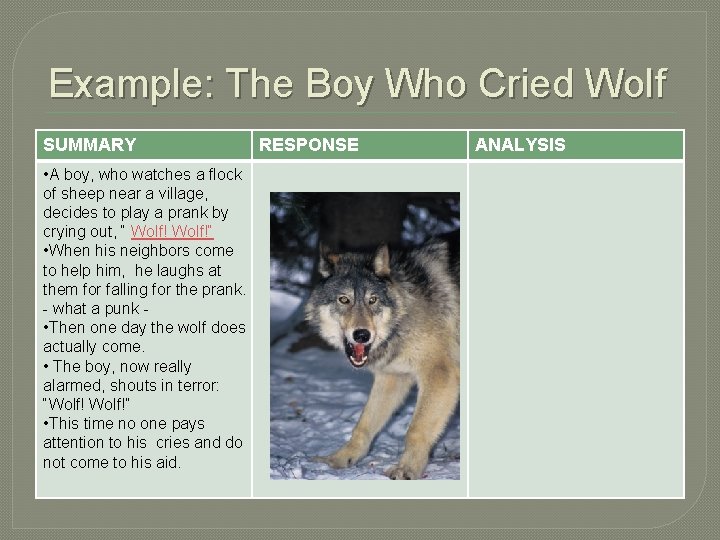
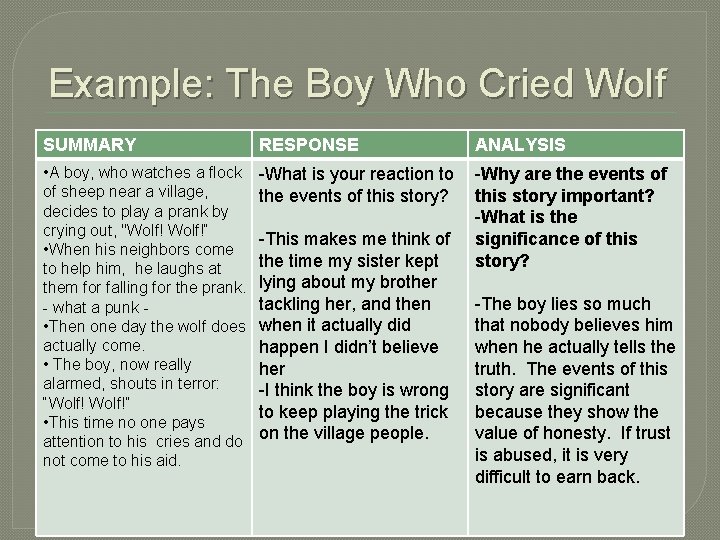
Example: The Boy Who Cried Wolf SUMMARY • A boy, who watches a flock of sheep near a village, decides to play a prank by crying out, “ Wolf!“ • When his neighbors come to help him, he laughs at them for falling for the prank. - what a punk • Then one day the wolf does actually come. • The boy, now really alarmed, shouts in terror: “Wolf!“ • This time no one pays attention to his cries and do not come to his aid. RESPONSE ANALYSIS
Example: The Boy Who Cried Wolf SUMMARY RESPONSE • A boy, who watches a -What is your reaction flock of sheep near a to the events of this village, decides to play a story? prank by crying out, “Wolf!” • When his neighbors come to help him, he laughs at them for falling for the prank. - what a punk • Then one day the wolf does actually come. • The boy, now really alarmed, shouts in terror: “Wolf!“ • This time no one pays attention to his cries and do not come to his aid. ANALYSIS
Example: The Boy Who Cried Wolf SUMMARY RESPONSE • A boy, who watches a flock of sheep near a village, decides to play a prank by crying out, "Wolf!“ • When his neighbors come to help him, he laughs at them for falling for the prank. - what a punk • Then one day the wolf does actually come. • The boy, now really alarmed, shouts in terror: “Wolf!“ • This time no one pays attention to his cries and do not come to his aid. -What is your reaction to the events of this story? -This makes me think of the time my sister kept lying about my brother tackling her, and then when it actually did happen I didn’t believe her -I think the boy is wrong to keep playing the trick on the village people. ANALYSIS
Example: The Boy Who Cried Wolf SUMMARY RESPONSE • A boy, who watches a flock of sheep near a village, decides to play a prank by crying out, "Wolf!“ • When his neighbors come to help him, he laughs at them for falling for the prank. - what a punk • Then one day the wolf does actually come. • The boy, now really alarmed, shouts in terror: “Wolf!“ • This time no one pays attention to his cries and do not come to his aid. -What is your reaction to the events of this story? ANALYSIS -Why are the events of this story important? -What is the significance of this -This makes me think of story? the time my sister kept lying about my brother tackling her, and then when it actually did happen I didn’t believe her -I think the boy is wrong to keep playing the trick on the village people.
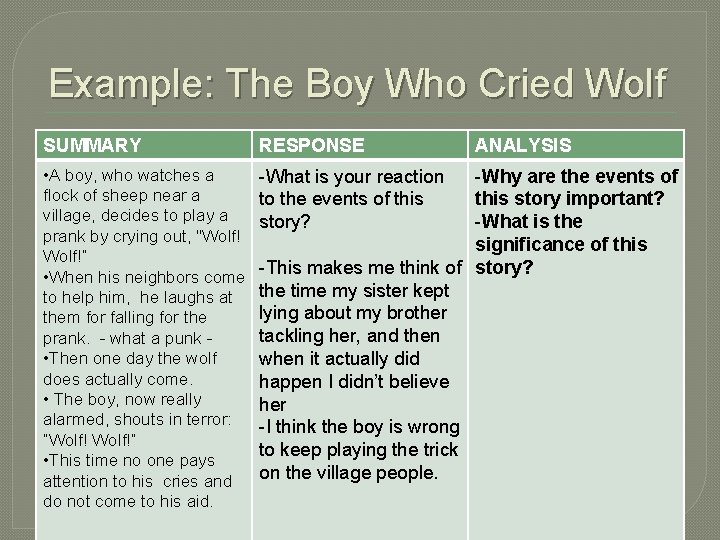
Example: The Boy Who Cried Wolf SUMMARY RESPONSE ANALYSIS • A boy, who watches a flock of sheep near a village, decides to play a prank by crying out, "Wolf!“ • When his neighbors come to help him, he laughs at them for falling for the prank. - what a punk • Then one day the wolf does actually come. • The boy, now really alarmed, shouts in terror: “Wolf!“ • This time no one pays attention to his cries and do not come to his aid. -What is your reaction to the events of this story? -Why are the events of this story important? -What is the significance of this story? -This makes me think of the time my sister kept lying about my brother tackling her, and then when it actually did happen I didn’t believe her -I think the boy is wrong to keep playing the trick on the village people. -The boy lies so much that nobody believes him when he actually tells the truth. The events of this story are significant because they show the value of honesty. If trust is abused, it is very difficult to earn back.
Lets Practice Some More!
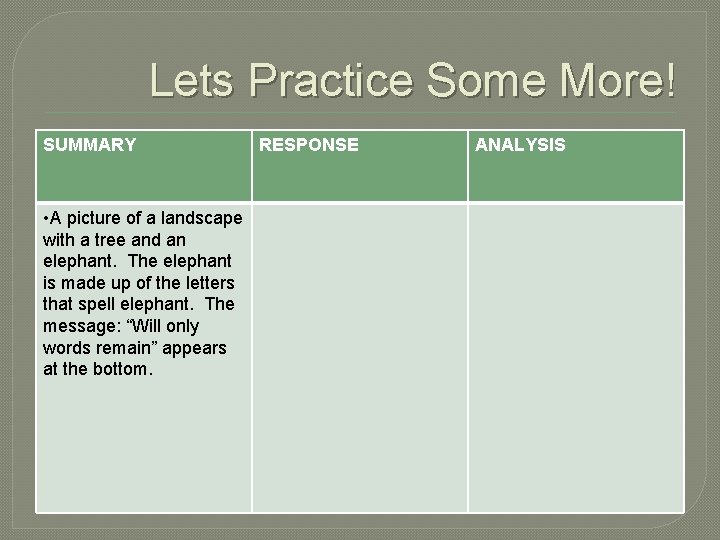
Lets Practice Some More! SUMMARY • A picture of a landscape with a tree and an elephant. The elephant is made up of the letters that spell elephant. The message: “Will only words remain” appears at the bottom. RESPONSE ANALYSIS
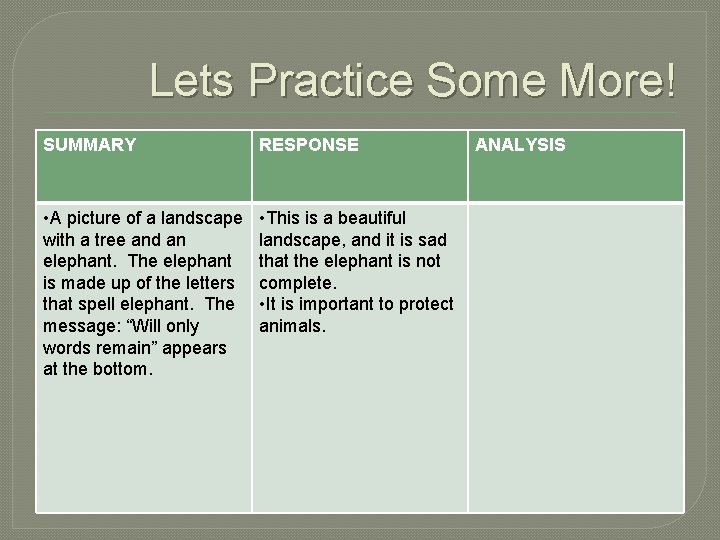
Lets Practice Some More! SUMMARY RESPONSE • A picture of a landscape with a tree and an elephant. The elephant is made up of the letters that spell elephant. The message: “Will only words remain” appears at the bottom. • This is a beautiful landscape, and it is sad that the elephant is not complete. • It is important to protect animals. ANALYSIS
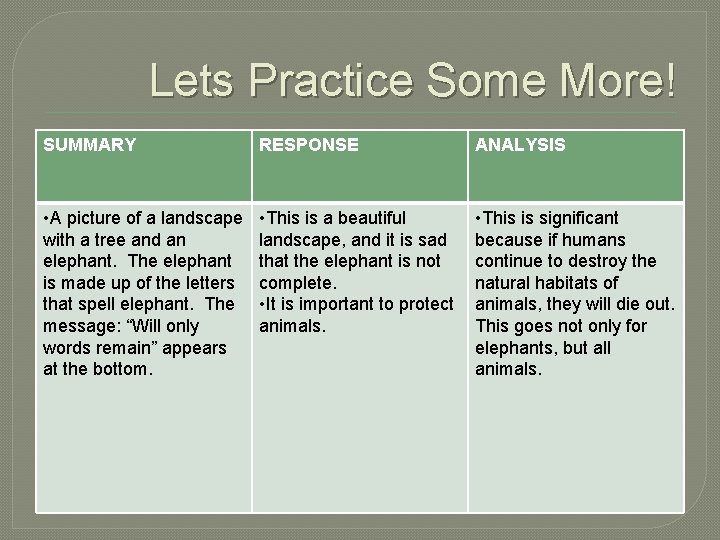
Lets Practice Some More! SUMMARY RESPONSE ANALYSIS • A picture of a landscape with a tree and an elephant. The elephant is made up of the letters that spell elephant. The message: “Will only words remain” appears at the bottom. • This is a beautiful landscape, and it is sad that the elephant is not complete. • It is important to protect animals. • This is significant because if humans continue to destroy the natural habitats of animals, they will die out. This goes not only for elephants, but all animals.
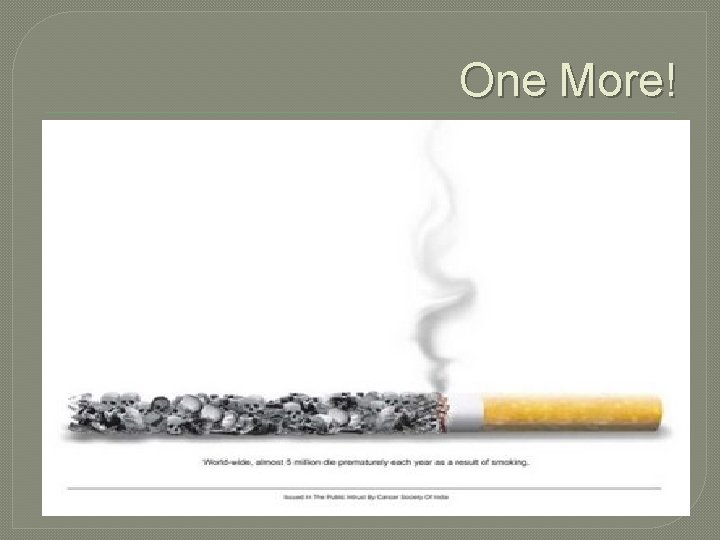
One More!