
Summary of Lecture 3 VETS 2011 Cerebellum Demo
Summary of Lecture 3 VETS 2011 Cerebellum • • • Demo of VOR in owl: VOR plasticity World record cerebellum: Electric fish: nanosecond timing Summary of structure and function in cerebellum Time-to-place conversion Adaptive plasticity of VOR (Owl, “wet head example”) �� Contrast procedural learning with declarati
Procedural Memory • Gain of reflexes (e. g. VOR) • Conditioned reflexes (e. g. eye blink) • Skilled sequences (e. g. cycling, typing)
Vestibulo-Ocular Reflex (VOR) • Fastest reflex in brain • Operates “perfectly” without cerebellum (i. e. same conditions) • But gain adaptation requires cerebellum (i. e. as conditions change, such as growth, ageing, muscle strength, oxidative damage etc)

VOR circuit: 1. Vestibular hair cell 2. Vestibular neuron 3. Oculomotor neuron Only 2 synapses. Purkinje cell modulates VOR reflex at vestibular neuron
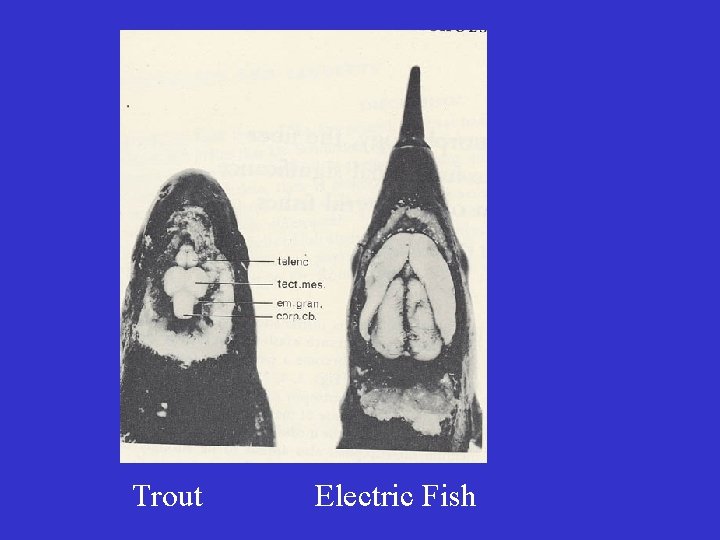
Trout Electric Fish
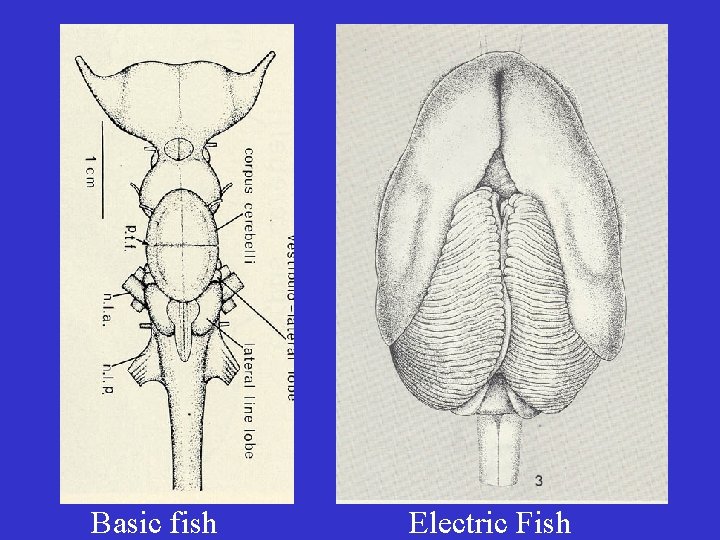
Basic fish Electric Fish
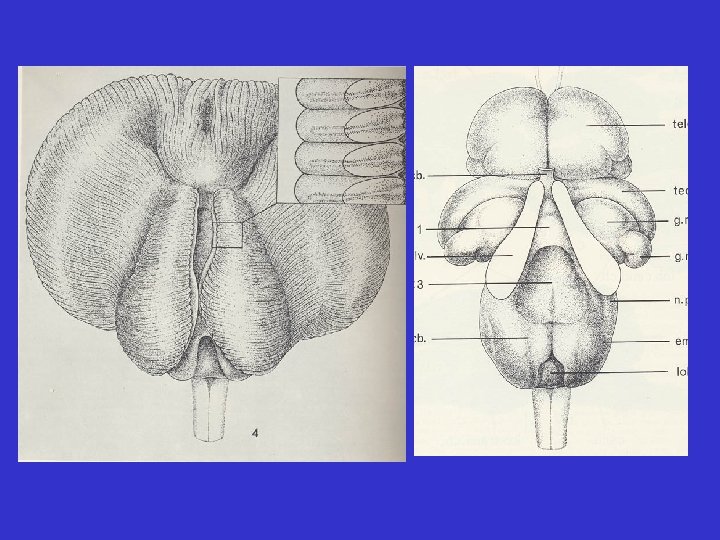
Cerebellum Forebrain
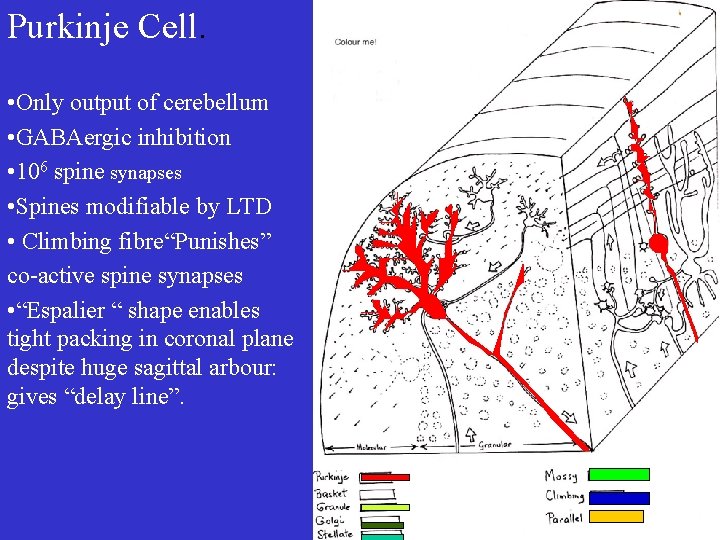
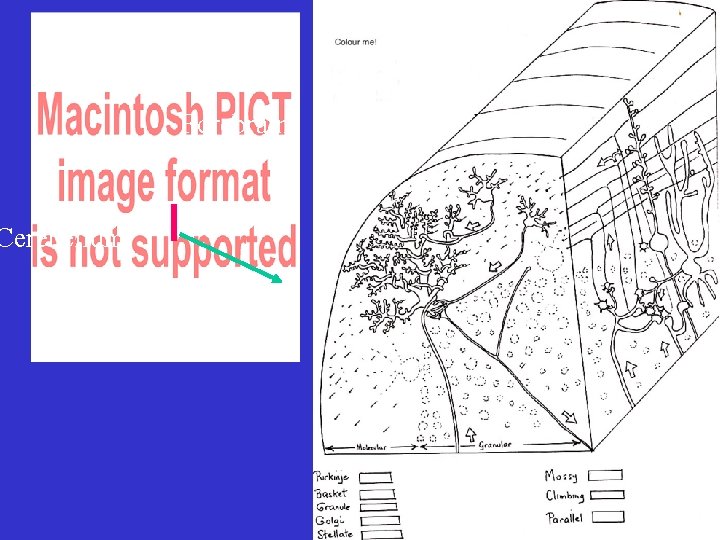
Purkinje Cell. • Only output of cerebellum • GABAergic inhibition • 106 spine synapses • Spines modifiable by LTD • Climbing fibre“Punishes” co-active spine synapses • “Espalier “ shape enables tight packing in coronal plane despite huge sagittal arbour: gives “delay line”.
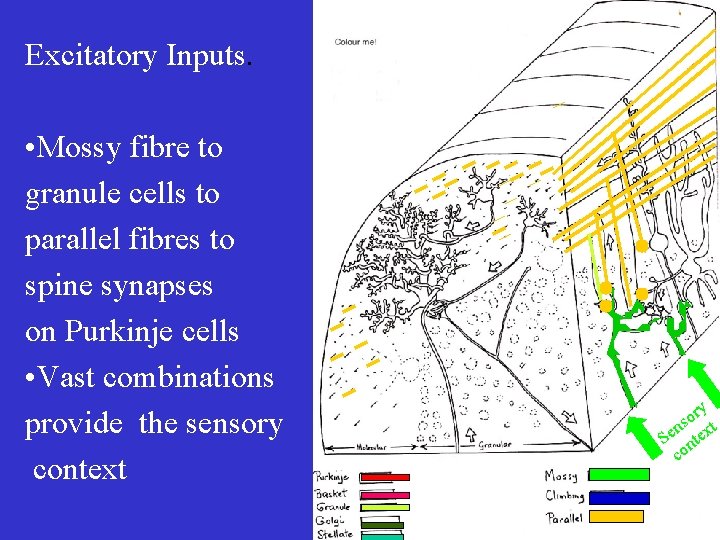
Excitatory Inputs. • Mossy fibre to granule cells to parallel fibres to spine synapses on Purkinje cells • Vast combinations provide the sensory context ry o ns ext e S nt co
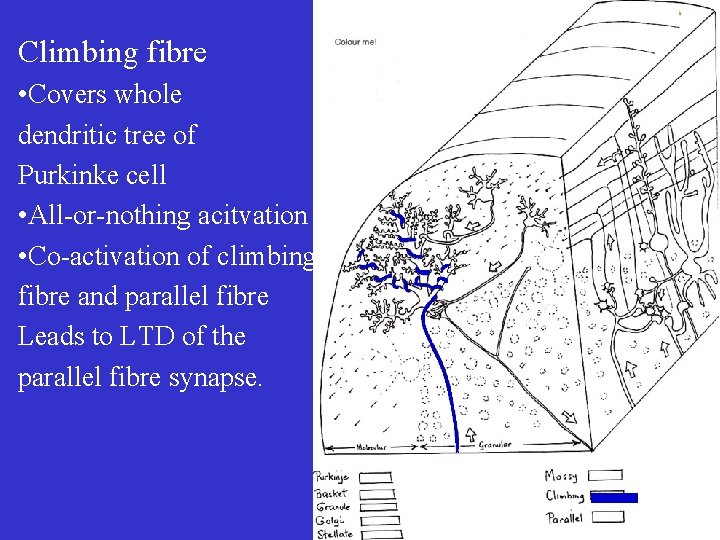
Climbing fibre • Covers whole dendritic tree of Purkinke cell • All-or-nothing acitvation • Co-activation of climbing fibre and parallel fibre Leads to LTD of the parallel fibre synapse.
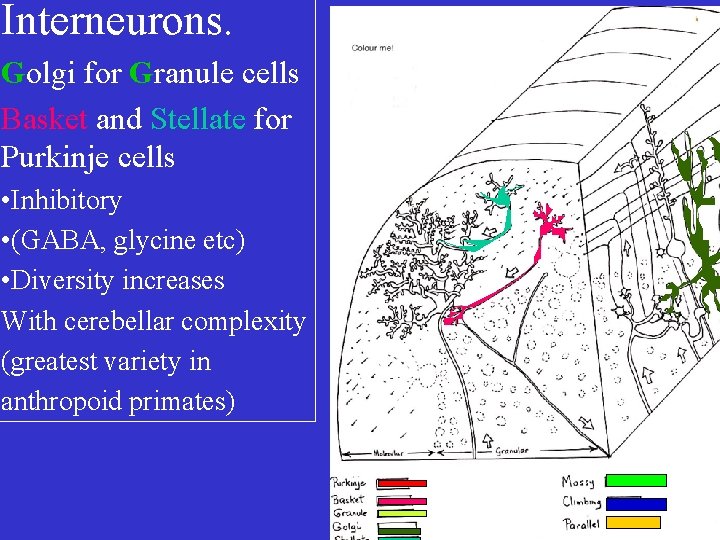
Interneurons. Golgi for Granule cells Basket and Stellate for Purkinje cells • Inhibitory • (GABA, glycine etc) • Diversity increases With cerebellar complexity (greatest variety in anthropoid primates)
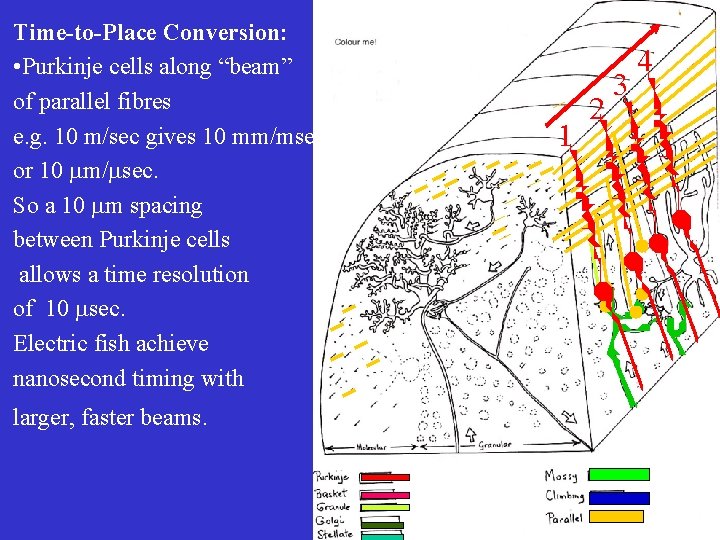
Time-to-Place Conversion: • Purkinje cells along “beam” of parallel fibres e. g. 10 m/sec gives 10 mm/msec or 10 mm/msec. So a 10 mm spacing between Purkinje cells allows a time resolution of 10 msec. Electric fish achieve nanosecond timing with larger, faster beams. 1 2 3 4
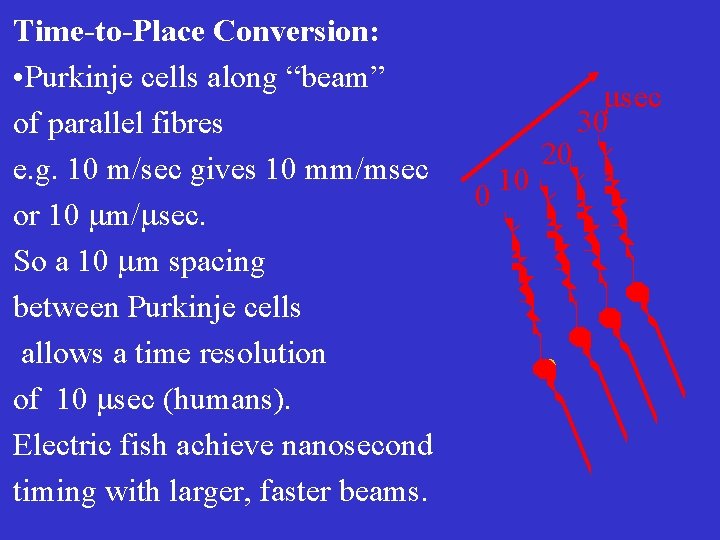
Time-to-Place Conversion: • Purkinje cells along “beam” of parallel fibres e. g. 10 m/sec gives 10 mm/msec or 10 mm/msec. So a 10 mm spacing between Purkinje cells allows a time resolution of 10 msec (humans). Electric fish achieve nanosecond timing with larger, faster beams. 0 10 20 msec 30
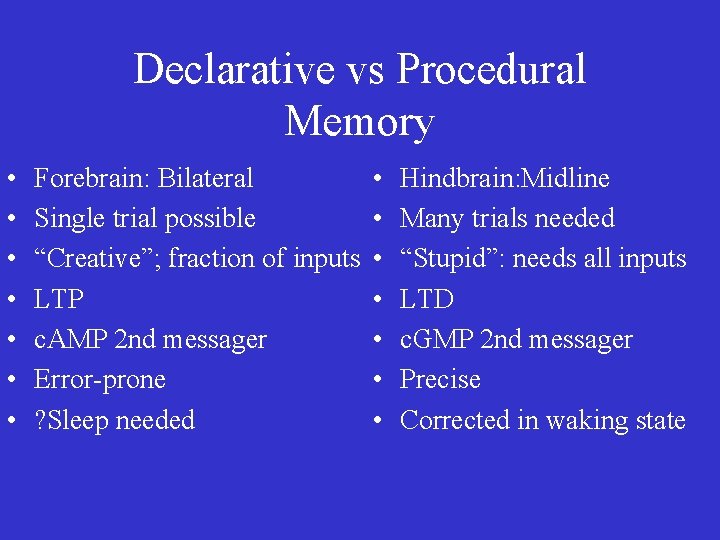
Declarative vs Procedural Memory • • Forebrain: Bilateral Single trial possible “Creative”; fraction of inputs LTP c. AMP 2 nd messager Error-prone ? Sleep needed • • Hindbrain: Midline Many trials needed “Stupid”: needs all inputs LTD c. GMP 2 nd messager Precise Corrected in waking state
- Slides: 16