
Summary of EPA Proposal to Revise the PM
- Slides: 30
Summary of EPA Proposal to Revise the PM NAAQS and Draft WRAP Technical Comments
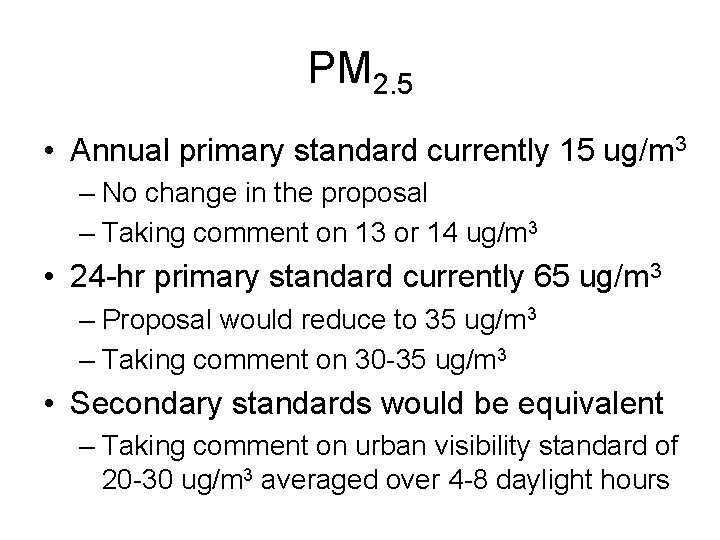
PM 2. 5 • Annual primary standard currently 15 ug/m 3 – No change in the proposal – Taking comment on 13 or 14 ug/m 3 • 24 -hr primary standard currently 65 ug/m 3 – Proposal would reduce to 35 ug/m 3 – Taking comment on 30 -35 ug/m 3 • Secondary standards would be equivalent – Taking comment on urban visibility standard of 20 -30 ug/m 3 averaged over 4 -8 daylight hours
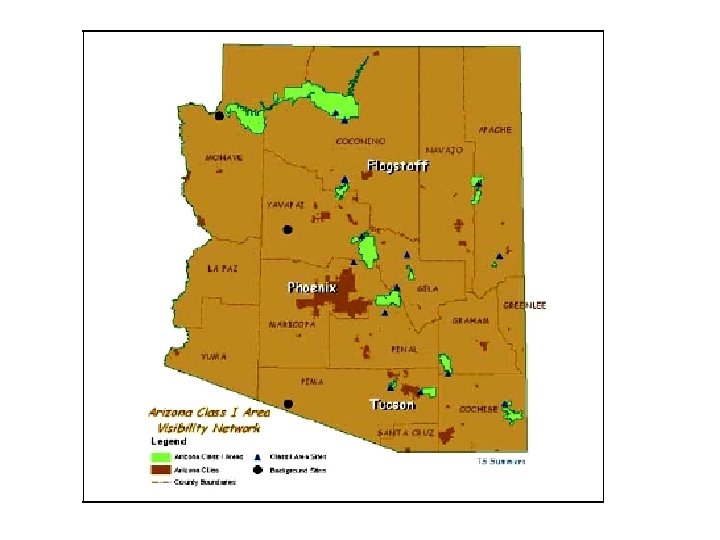
PM 2. 5 • Draft WRAP technical comments support secondary standard for urban visibility – Would have direct benefits to Class I areas impacted by urban areas
PM 10 • Proposal would revoke annual standard in all areas • Proposal would revoke 24 -hr standard in all areas except in urbanized areas where: – Population is at least 100, 000, and – At least one monitor is violating the standard • 24 -hr standard would remain in areas above until PM 10 -2. 5 designations occur
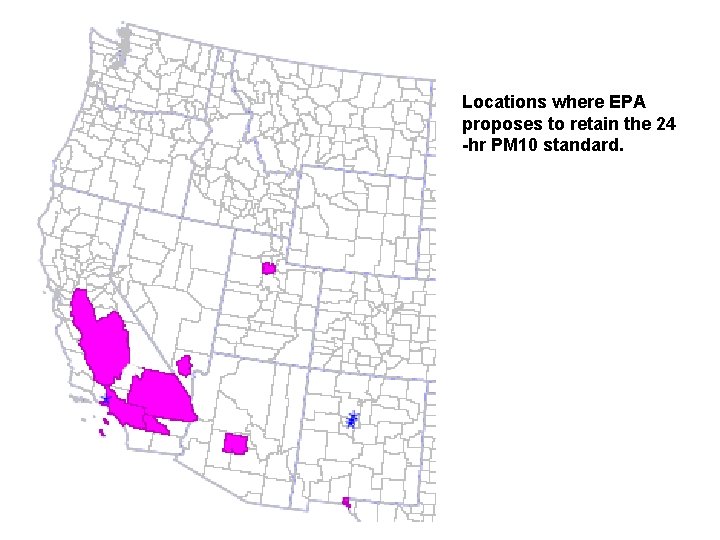
Locations where EPA proposes to retain the 24 -hr PM 10 standard.
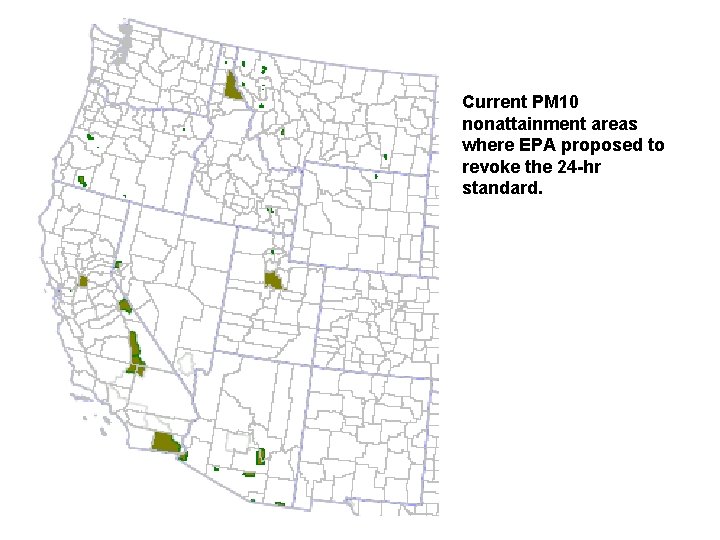
Current PM 10 nonattainment areas where EPA proposed to revoke the 24 -hr standard.
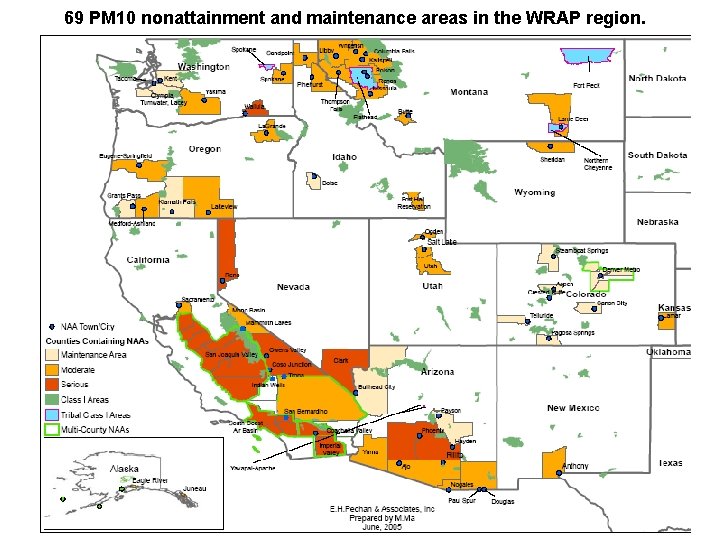
69 PM 10 nonattainment and maintenance areas in the WRAP region.
PM 10 • EPA taking comment on retaining 24 -hr standard in areas with population less than 100, 000 • Draft WRAP technical comments support elimination of 100, 000 population distinction
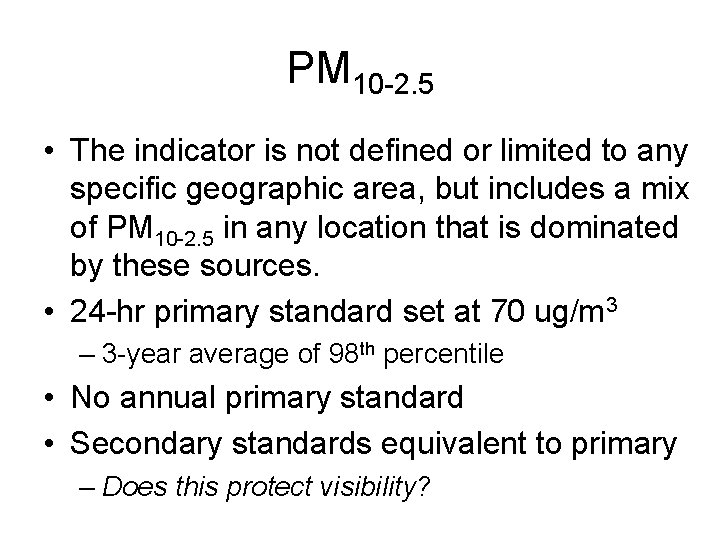
PM 10 -2. 5 • PM 10 -2. 5 defined as: – Any ambient mix of PM 10 -2. 5 that is dominated by resuspended dust from high-density traffic on paved roads and PM generated by industrial sources and construction sources. – This definition excludes any ambient mix of PM 10 -2. 5 that is dominated by rural windblown dust and soils and PM generated by agricultural and mining sources. – Agricultural sources, mining sources, and other similar sources of crustal material shall not be subject to control in meeting this standard.
PM 10 -2. 5 • The indicator is not defined or limited to any specific geographic area, but includes a mix of PM 10 -2. 5 in any location that is dominated by these sources. • 24 -hr primary standard set at 70 ug/m 3 – 3 -year average of 98 th percentile • No annual primary standard • Secondary standards equivalent to primary – Does this protect visibility?
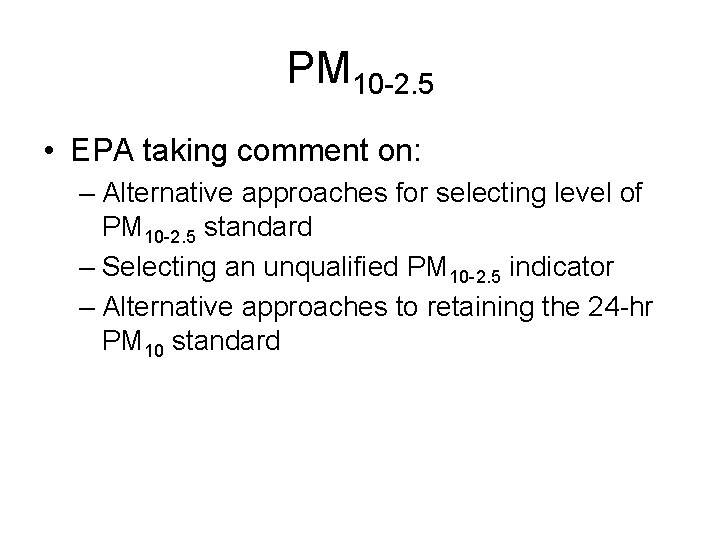
PM 10 -2. 5 • EPA taking comment on: – Alternative approaches for selecting level of PM 10 -2. 5 standard – Selecting an unqualified PM 10 -2. 5 indicator – Alternative approaches to retaining the 24 -hr PM 10 standard
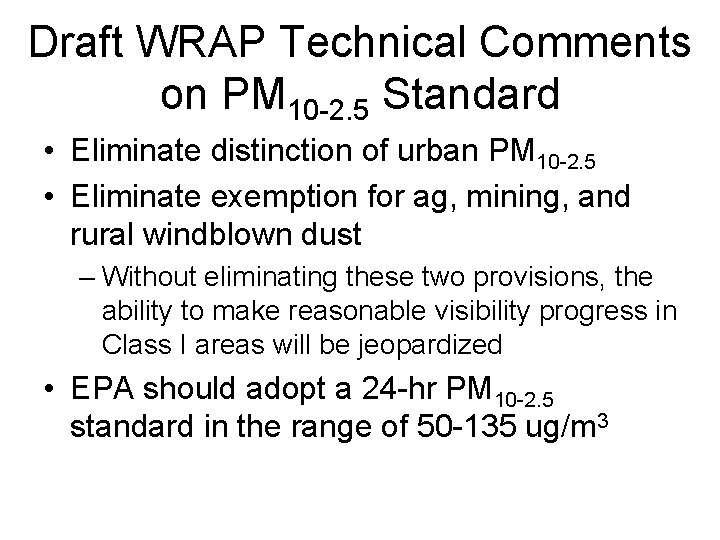
Draft WRAP Technical Comments on PM 10 -2. 5 Standard • Eliminate distinction of urban PM 10 -2. 5 • Eliminate exemption for ag, mining, and rural windblown dust – Without eliminating these two provisions, the ability to make reasonable visibility progress in Class I areas will be jeopardized • EPA should adopt a 24 -hr PM 10 -2. 5 standard in the range of 50 -135 ug/m 3
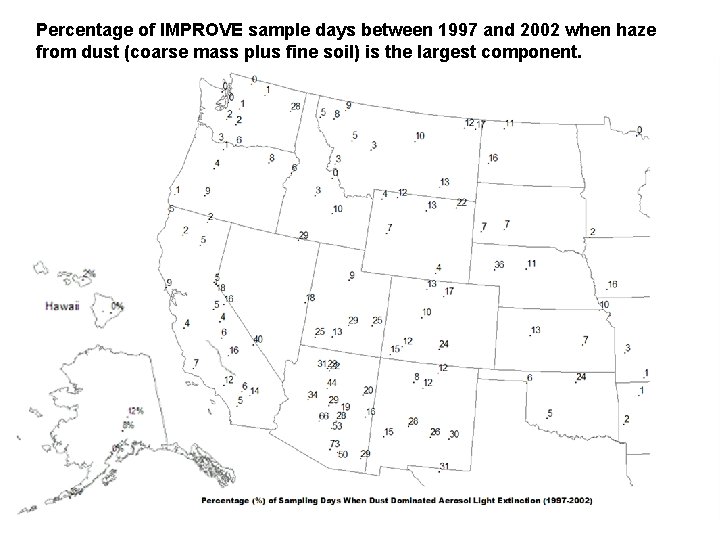
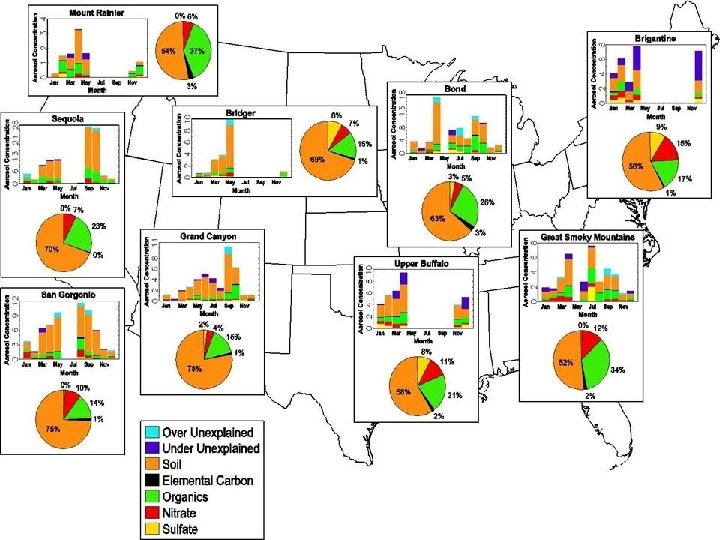
Percentage of IMPROVE sample days between 1997 and 2002 when haze from dust (coarse mass plus fine soil) is the largest component.
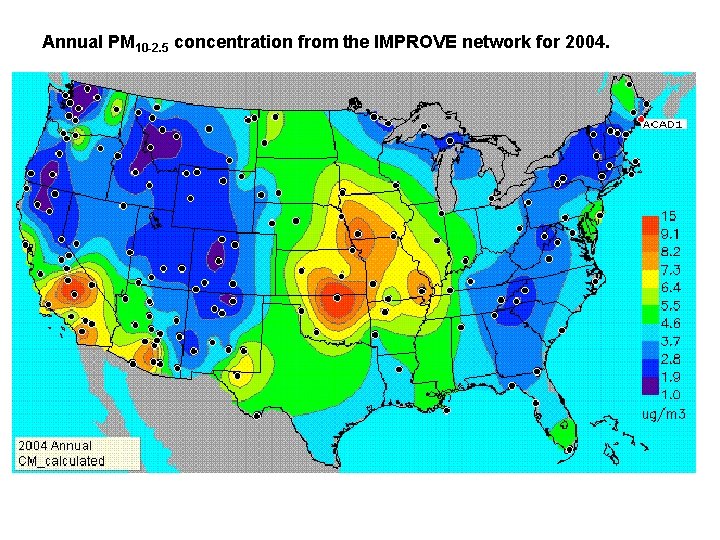
Annual PM 10 -2. 5 concentration from the IMPROVE network for 2004.
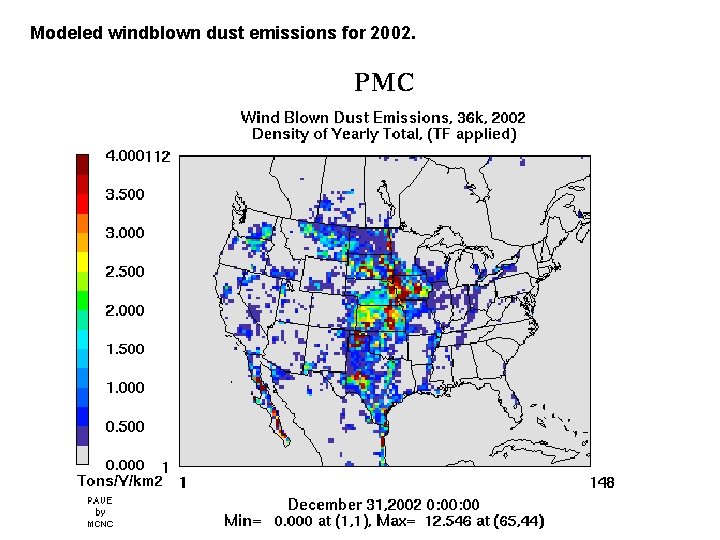
Modeled windblown dust emissions for 2002.
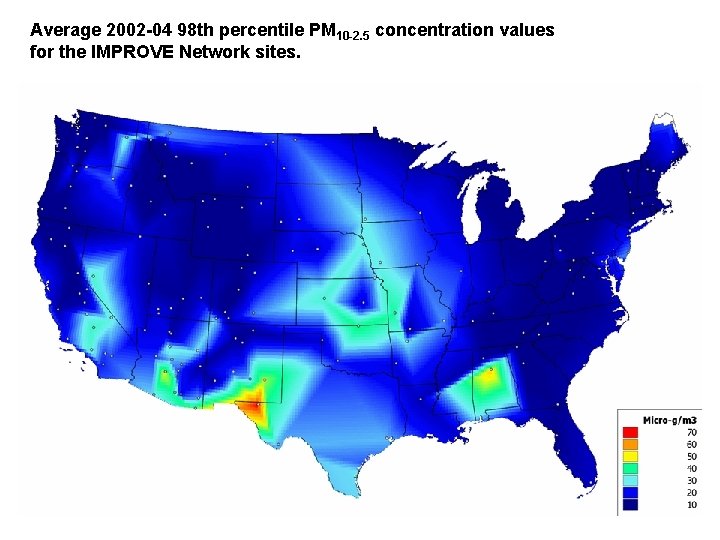
Average 2002 -04 98 th percentile PM 10 -2. 5 concentration values for the IMPROVE Network sites.
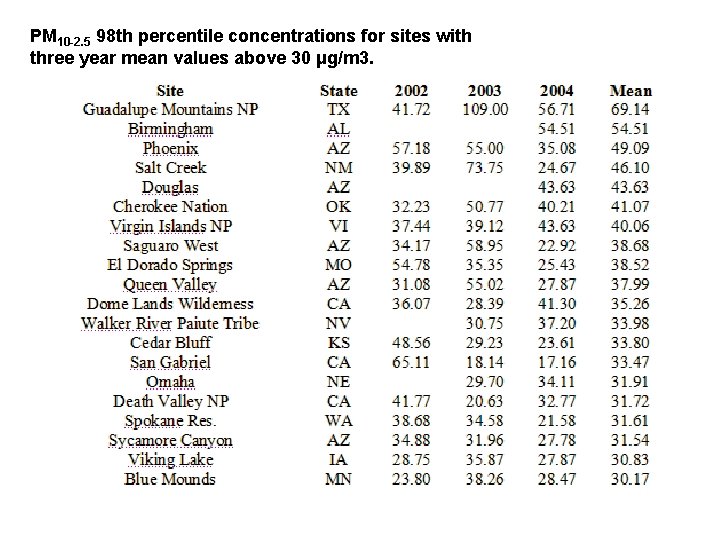
PM 10 -2. 5 98 th percentile concentrations for sites with three year mean values above 30 μg/m 3.
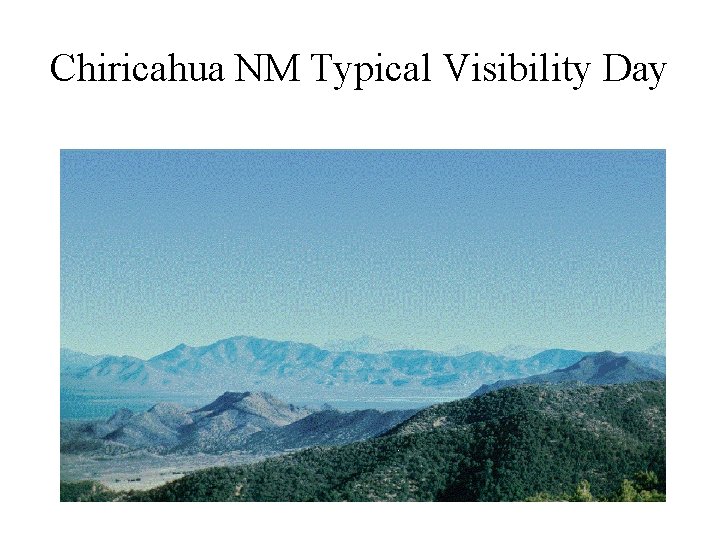
Chiricahua NM Typical Visibility Day
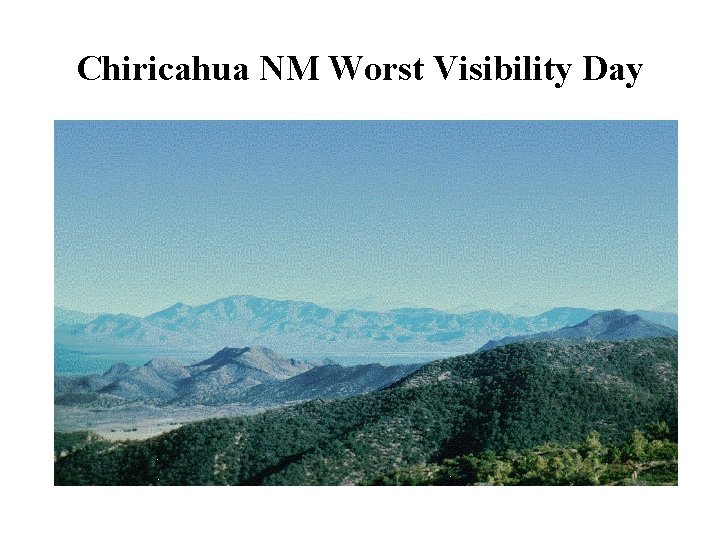
Chiricahua NM Worst Visibility Day
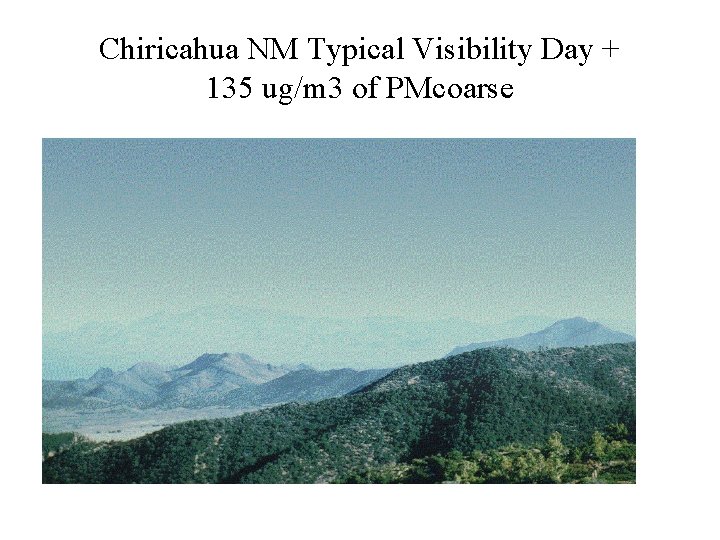
Chiricahua NM Typical Visibility Day + 135 ug/m 3 of PMcoarse
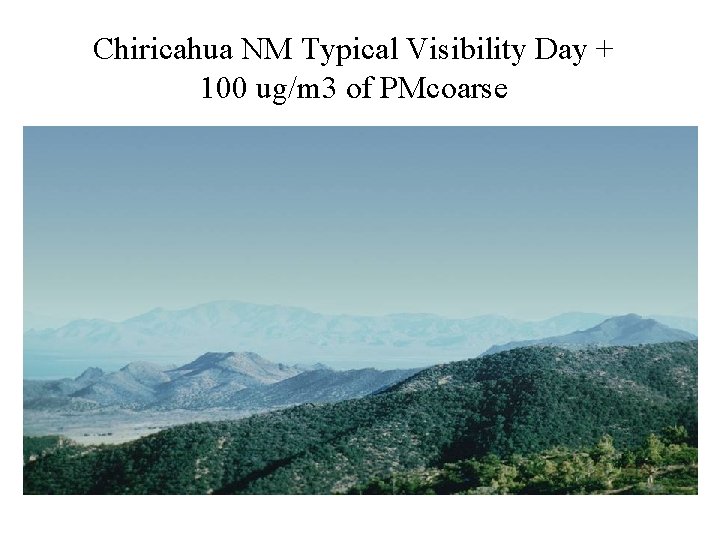
Chiricahua NM Typical Visibility Day + 100 ug/m 3 of PMcoarse
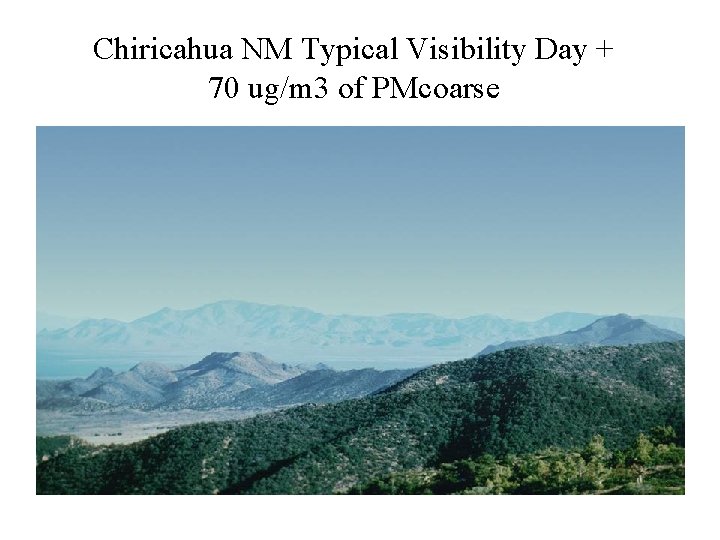
Chiricahua NM Typical Visibility Day + 70 ug/m 3 of PMcoarse
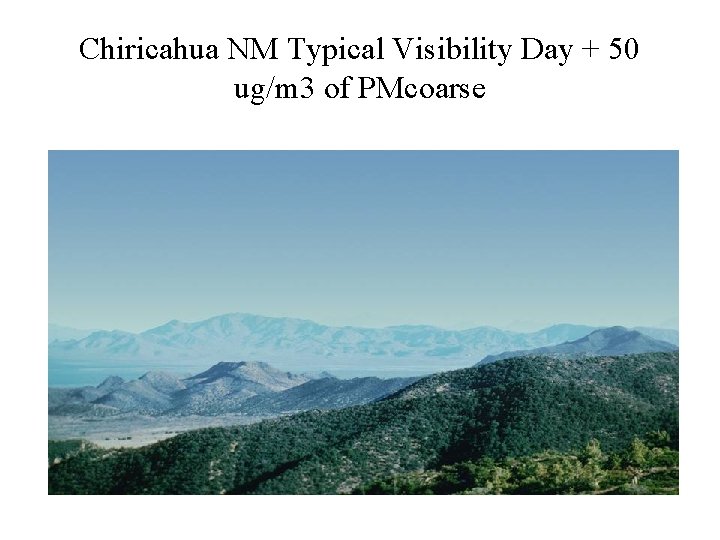
Chiricahua NM Typical Visibility Day + 50 ug/m 3 of PMcoarse
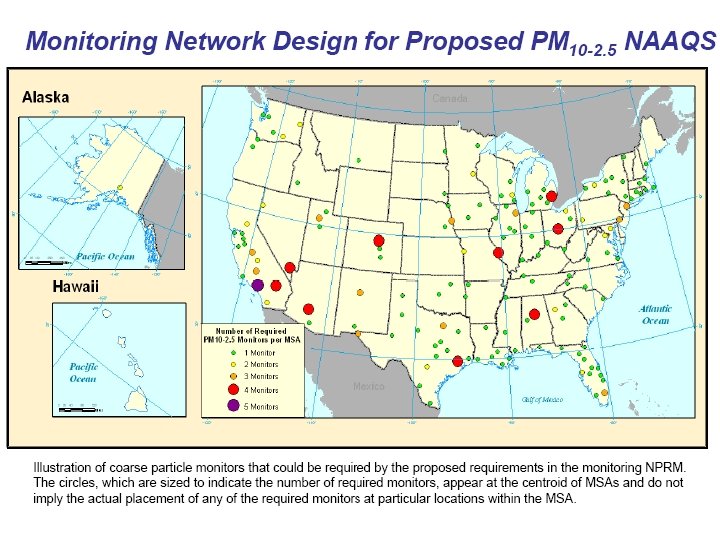
PM 10 -2. 5 Monitoring • Only required in MSAs > 100, 000 people – 0 -5 sites per MSA – 225 -250 sites across 150 MSAs – Emphasis on continuous mass conc. monitors • Additionally … – Non-required PM 10 -2. 5 concentration sites to assess urban/rural differences – 50 -100 speciation monitors at urban/rural sites
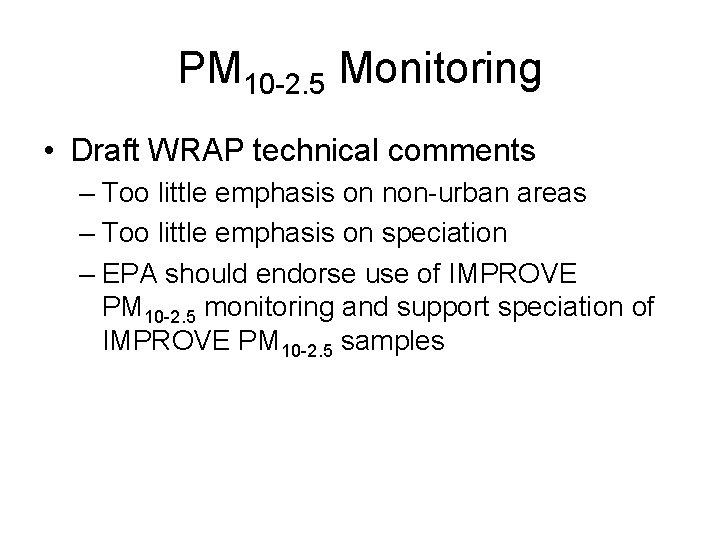
PM 10 -2. 5 Monitoring • Draft WRAP technical comments – Too little emphasis on non-urban areas – Too little emphasis on speciation – EPA should endorse use of IMPROVE PM 10 -2. 5 monitoring and support speciation of IMPROVE PM 10 -2. 5 samples