
Summary of 10 years of sediment toxicity monitoring




- Slides: 15
Summary of 10 years of sediment toxicity monitoring for the San Francisco Estuary Regional Monitoring Program Brian Anderson, Bryn Phillips, John Hunt, Patricia Nicely, Ron Tjeerdema University of California, Davis Bruce Thompson, Sarah Lowe, Jay Davis San Francisco Estuary Institute Karen Taberski California Regional Water Quality Control Board – San Francisco Bay Region
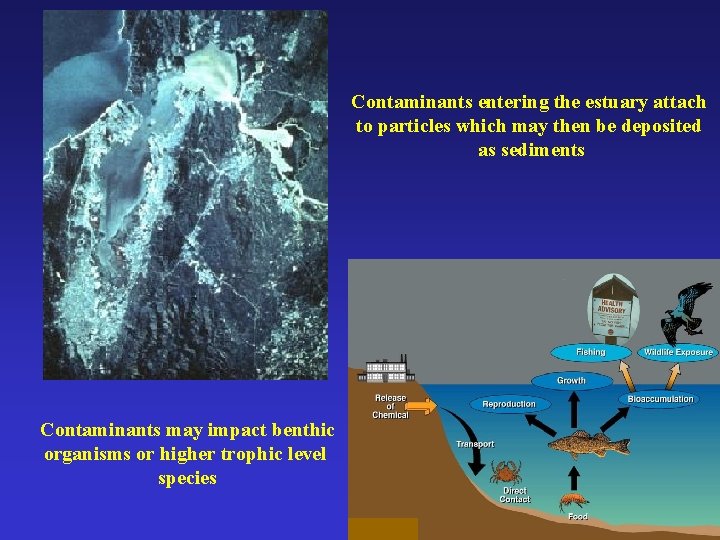
Contaminants entering the estuary attach to particles which may then be deposited as sediments Contaminants may impact benthic organisms or higher trophic level species
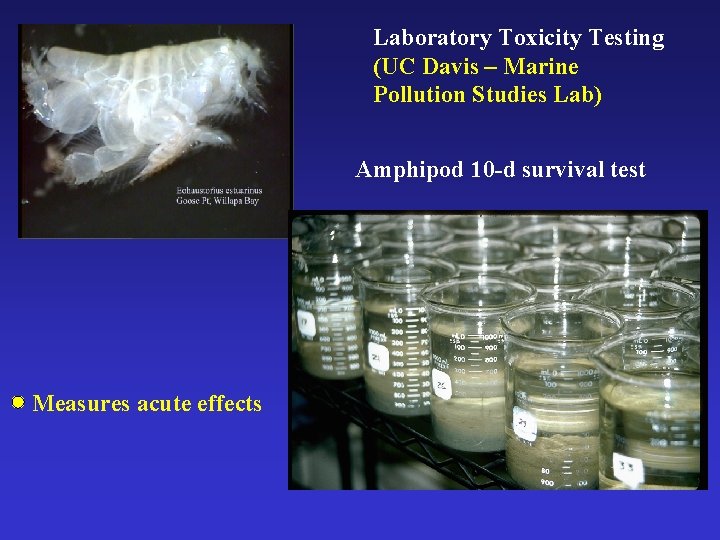
Laboratory Toxicity Testing (UC Davis – Marine Pollution Studies Lab) Amphipod 10 -d survival test Measures acute effects
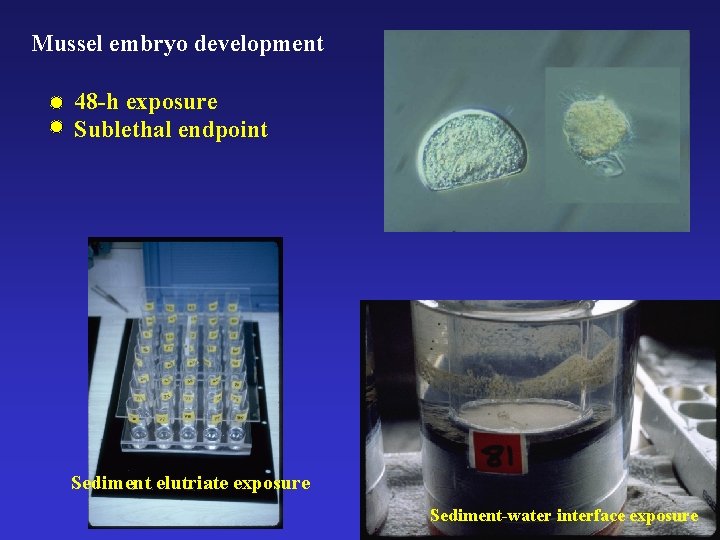
Mussel embryo development 48 -h exposure Sublethal endpoint Sediment elutriate exposure Sediment-water interface exposure
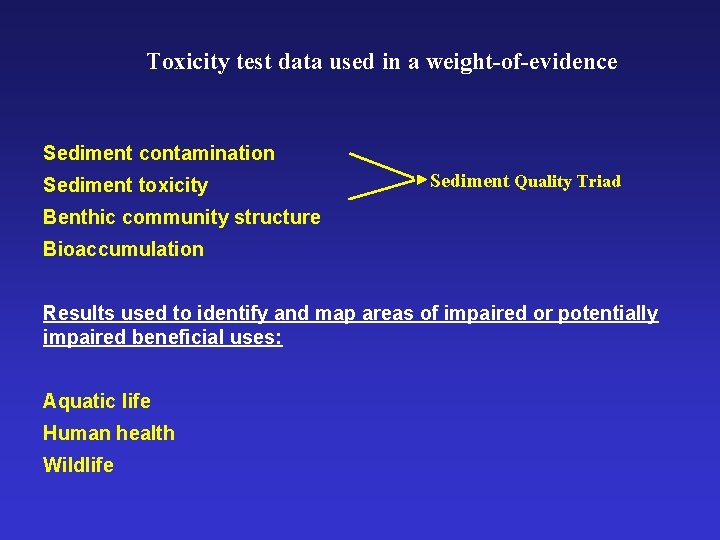
Toxicity test data used in a weight-of-evidence Sediment contamination Sediment toxicity Sediment Quality Triad Benthic community structure Bioaccumulation Results used to identify and map areas of impaired or potentially impaired beneficial uses: Aquatic life Human health Wildlife
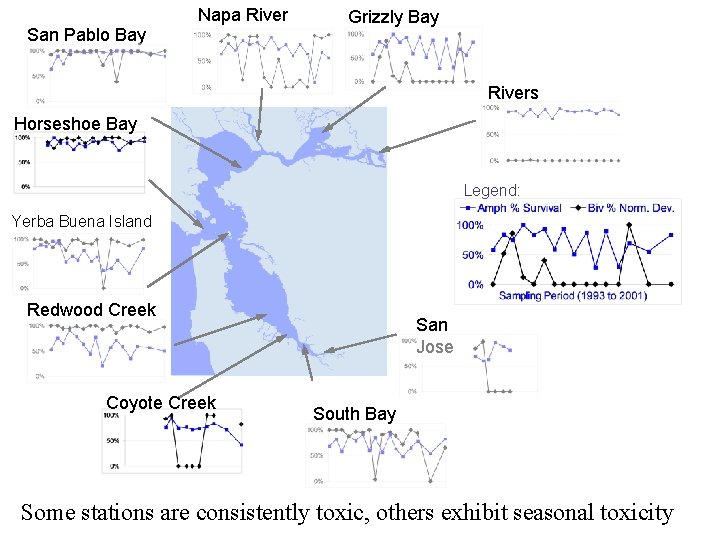
San Pablo Bay Napa River Grizzly Bay Rivers Horseshoe Bay Legend: Yerba Buena Island Redwood Creek Coyote Creek San Jose South Bay Some stations are consistently toxic, others exhibit seasonal toxicity
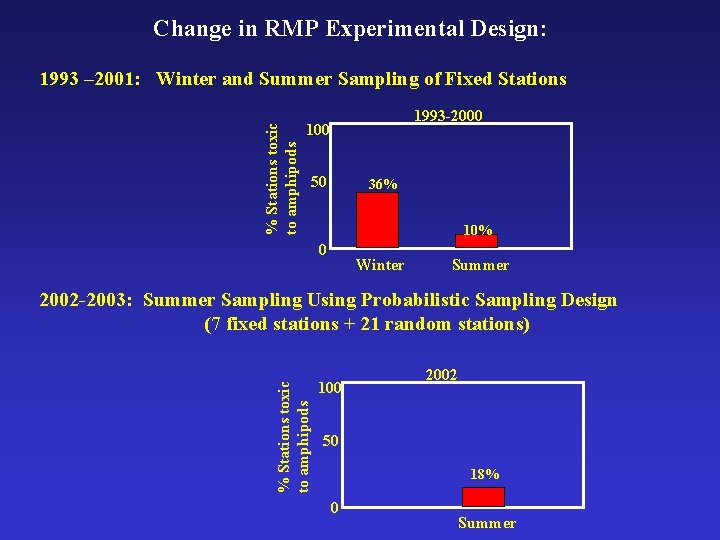
Change in RMP Experimental Design: % Stations toxic to amphipods 1993 – 2001: Winter and Summer Sampling of Fixed Stations 1993 -2000 100 50 36% 10% 0 Winter Summer % Stations toxic to amphipods 2002 -2003: Summer Sampling Using Probabilistic Sampling Design (7 fixed stations + 21 random stations) 100 2002 50 18% 0 Summer
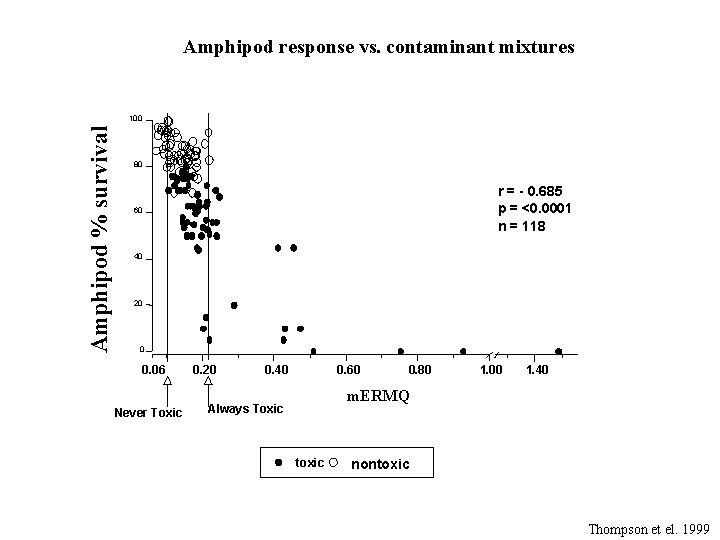
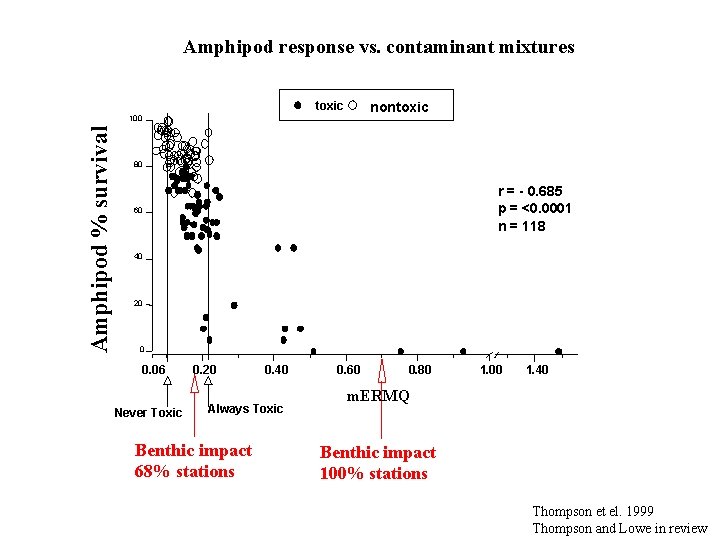
Amphipod response vs. contaminant mixtures Amphipod % survival 100 80 r = - 0. 685 p = <0. 0001 n = 118 60 40 20 0 0. 06 Never Toxic 0. 20 0. 40 0. 60 0. 80 1. 00 1. 40 m. ERMQ Always Toxic toxic nontoxic Thompson et el. 1999
Amphipod response vs. contaminant mixtures toxic nontoxic Amphipod % survival 100 80 r = - 0. 685 p = <0. 0001 n = 118 60 40 20 0 0. 06 Never Toxic 0. 20 0. 40 Always Toxic Benthic impact 68% stations 0. 60 0. 80 1. 00 1. 40 m. ERMQ Benthic impact 100% stations Thompson et el. 1999 Thompson and Lowe in review
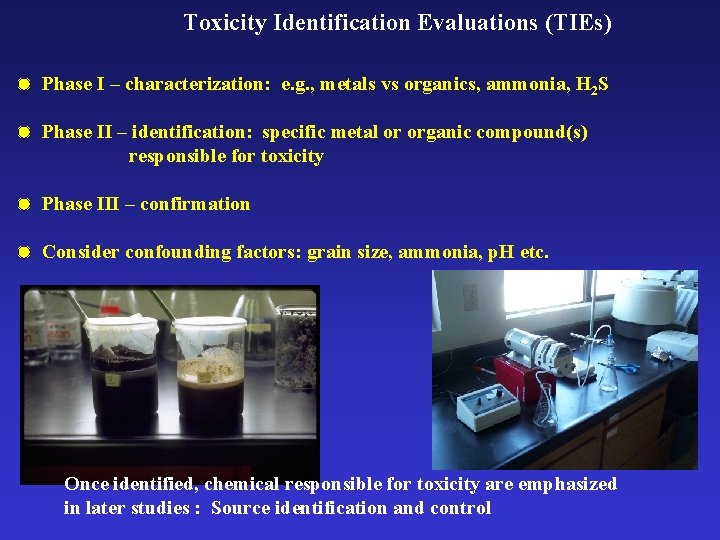
Toxicity Identification Evaluations (TIEs) Phase I – characterization: e. g. , metals vs organics, ammonia, H 2 S Phase II – identification: specific metal or organic compound(s) responsible for toxicity Phase III – confirmation Consider confounding factors: grain size, ammonia, p. H etc. Once identified, chemical responsible for toxicity are emphasized in later studies : Source identification and control
Mortality (%) Grizzly Bay Bivalve TIE w/ 25% Elutriate Phillips et al. in press
Mortality (%) Sediment-Water Interface TIE w/ EDTA Phillips et al. in press
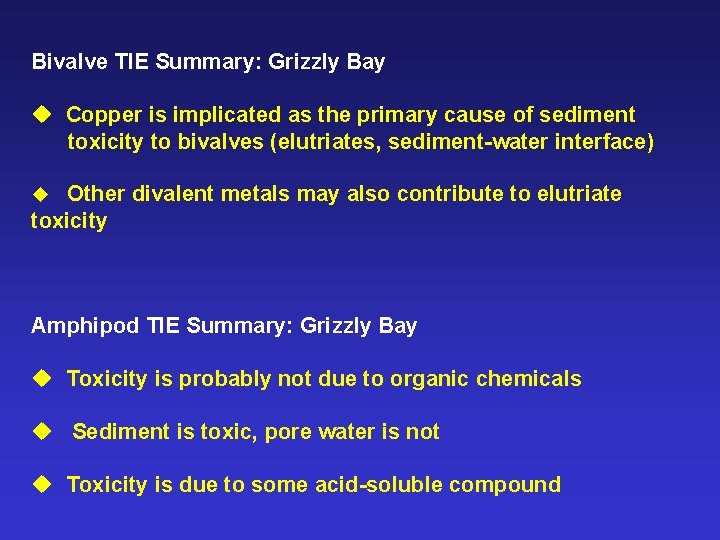
Bivalve TIE Summary: Grizzly Bay u Copper is implicated as the primary cause of sediment toxicity to bivalves (elutriates, sediment-water interface) Other divalent metals may also contribute to elutriate toxicity u Amphipod TIE Summary: Grizzly Bay u Toxicity is probably not due to organic chemicals u Sediment is toxic, pore water is not u Toxicity is due to some acid-soluble compound
North Bay Rivers Napa River Petaluma River Coyote Creek Redwood Creek Guadalupe River
Future Work u. Continued Status and Trends monitoring u. Application of TIEs at consistently toxic stations Winter samples Possible Special Studies u. Winter sampling at the base of key tributary streams u. Dose-response toxicity tests with resident and surrogate toxicity test species