
SUMMARY Native diseases are important and positive forces
- Slides: 33
SUMMARY • Native diseases are important and positive forces in native ecosystems by optimizing resources allocation • Disease triangle: host/pathogen/environment • Host resistance can be regulated by one or by multiple genes
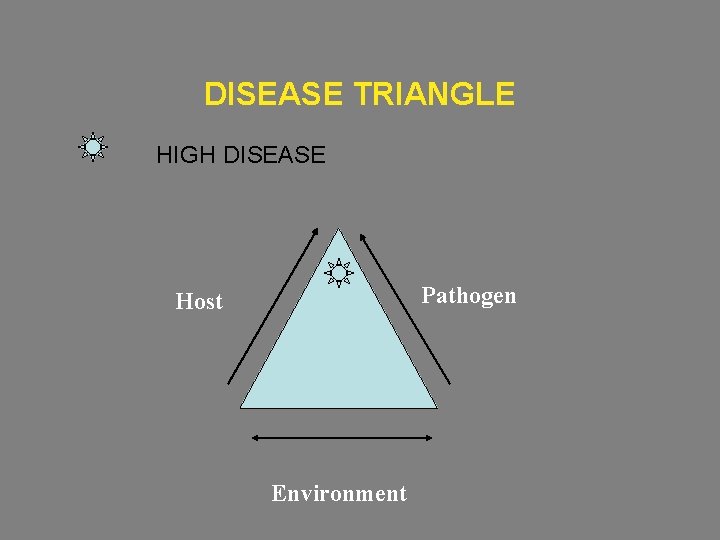
DISEASE TRIANGLE HIGH DISEASE Pathogen Host Environment
“Emergent diseases”: 1: host • New host-pathogen combinations: exotic hosts planted off site
Cypress canker by Seiridium cardinale • Pathogen was first described in California in the 20 s. Later it was described in Italy where it started a serous epidemic of Italian cypress • Belief that pathogen is native to California: is that true and why is it then causing a significant disease in our state?
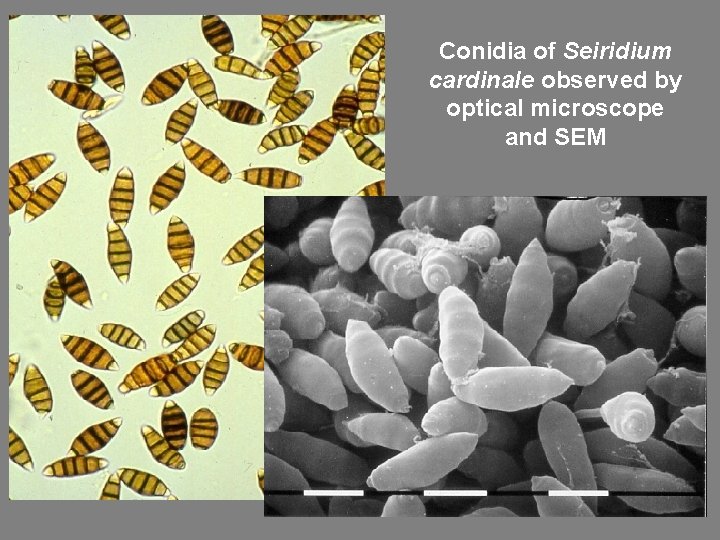
Conidia of Seiridium cardinale observed by optical microscope and SEM
Use of molecular genetics to resolve issue of origin of pathogen • Used a technique similar to the one used in human forensics • Native populations should comprise many different individuals genetically • Introduced populations should be genetically simpler because of bottleneck related to introduction events
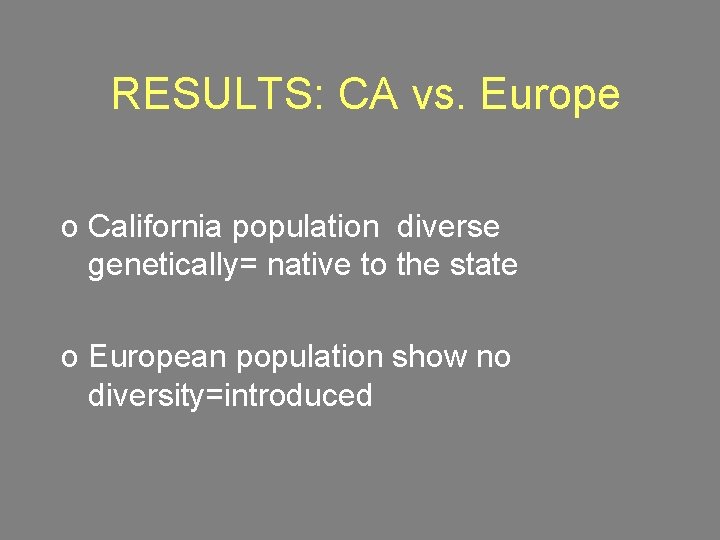
RESULTS: CA vs. Europe o California population diverse genetically= native to the state o European population show no diversity=introduced
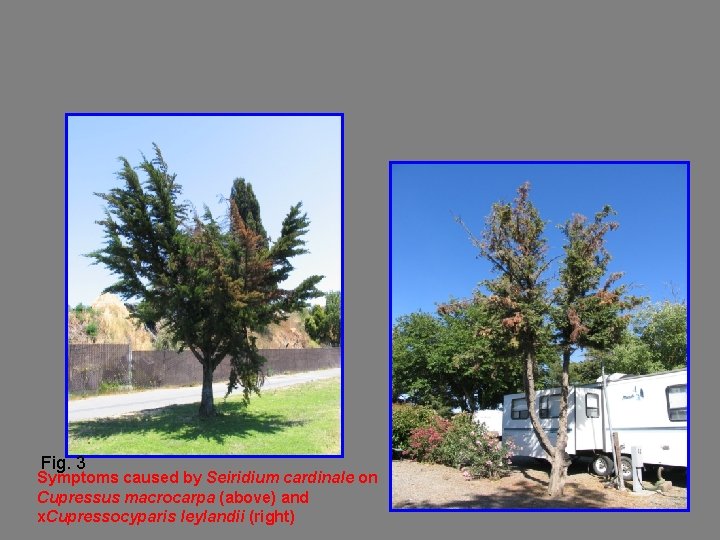
Fig. 3 Symptoms caused by Seiridium cardinale on Cupressus macrocarpa (above) and x. Cupressocyparis leylandii (right)
Why a disease in CA? • If pathogen is native to California, why is it causing such a serious disease? • We observed that disease incidence is variable with: – cypress species, – location,
Range of susceptibility • Leyland cypress, Italian, monterey are listed as most susceptible • Arizona and Mc. Knob are regarded as more resistant
Range of susceptibility • 90% of Leyland are heavily infected • 10% of monterey • LEYLAND CYPRESS IS AN ORNAMENTAL CROSS, NOT NATIVE
Range of susceptibility • Monterey is more susceptible in inland areas where it is NOT NATIVE: we believe that colder temperatures cause more wounds that lead to infection
CONCLUSIONS • Cypress canker is a serious disease in Europe because pathogen was introduced • Cypress canker is a serious disease in California because hosts were introduced either through planting off range (Monterey cypress) or because host is artificial creation (Leyland cypress); extinction of LEYLAND is most likely
“Emergent diseases”: 2: environmental changes • Forestry and intensive forest use: timber production tree felling and creation of stumps fire exclusion and increase in density oversimplified forest composition changes in forest structure
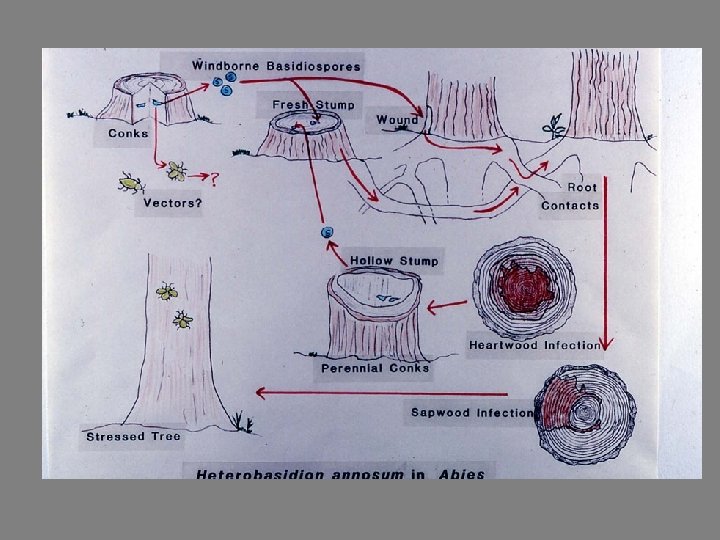
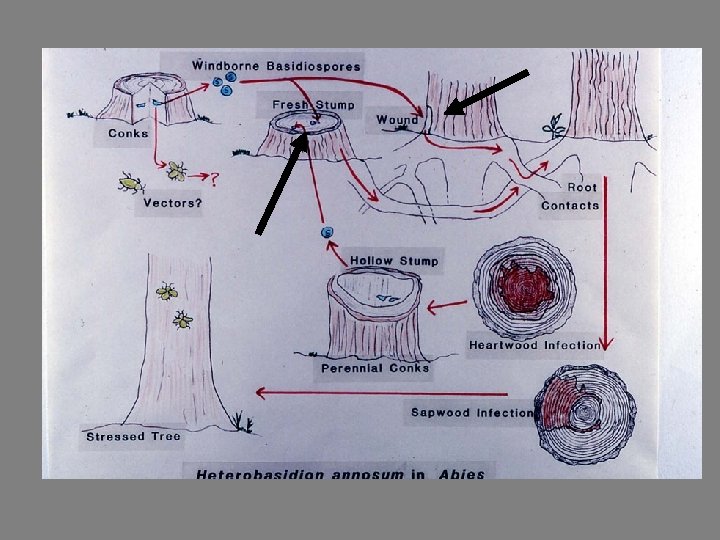
Heterobasidion root disease • Heterobasidion (a bracket or shelf mushroom) infects trees through wounds and stumps, then it spreads through the roots to neighboring trees • With tree felling, stumps and wounds are created, suddenly exponentially increasing infection levels
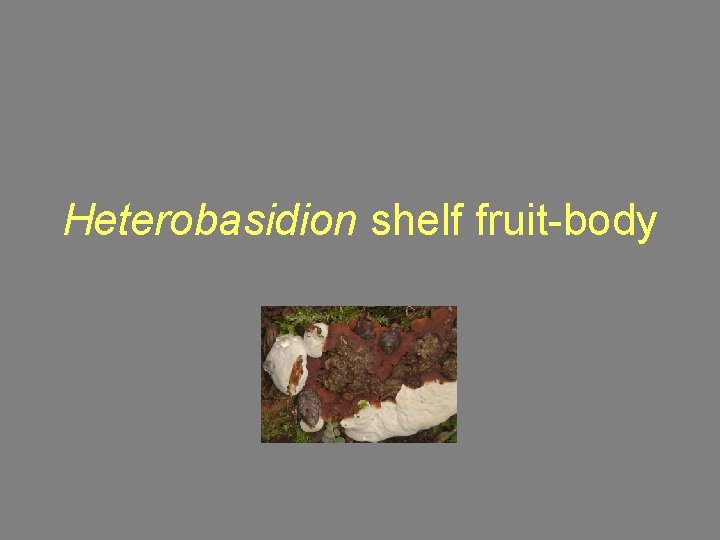
Heterobasidion shelf fruit-body
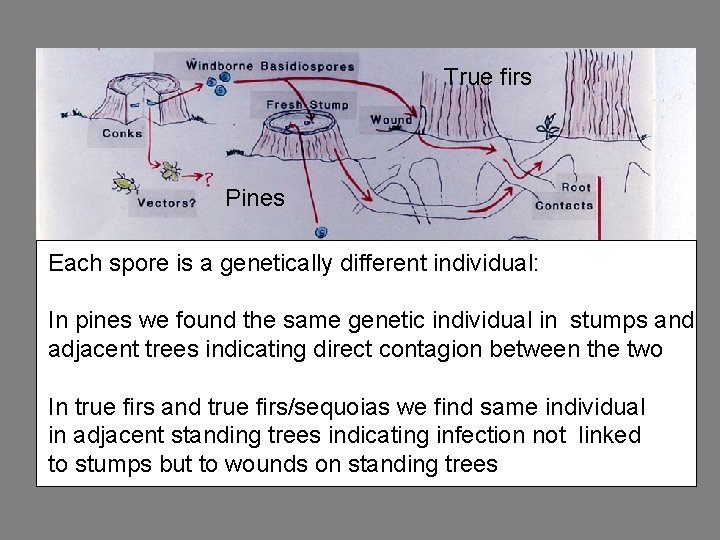
Use of molecular genetics: genetics • Differentiate Heterobasidion on fir/sequoias (H. occidentalis) from that on pine/junipers (H. irregularis) • Show that airborne meiospores are responsible for most infection of Heterobasidion • Show that in pines most infections start on stumps and that in true firs most infections on wounds
True firs Pines Each spore is a genetically different individual: In pines we found the same genetic individual in stumps and adjacent trees indicating direct contagion between the two In true firs and true firs/sequoias we find same individual in adjacent standing trees indicating infection not linked to stumps but to wounds on standing trees
CONCLUSIONS: • Logging activities increase Heterobasidion infection because of stump creation in pines and because of wounding in true firs sequoias • We have shown that in pine stumps H. irregularis and H. occidentalis can both be present and create a new hybrid entity • We have shown that in the past these hybridization events have lead to sharing of genes among these two species (Horizontal gene transfers)
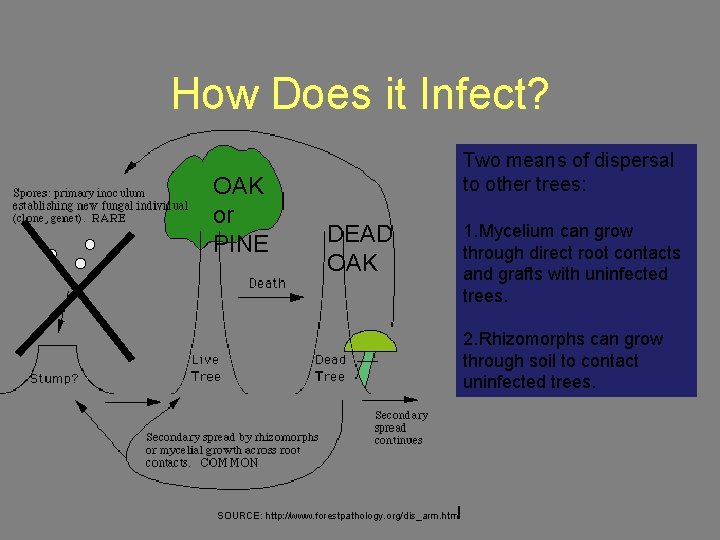
Armillaria root diseases • Armillaria, the honey mushroom, normally infects the roots of trees. It can be a saprobe and a pathogen and is common amongst oaks • If woodland composition shifts to pine/oak, pines become the target of attacks and gaps in canopy enlarge over time. Stress (e. g. flooding) exacerbates susceptibility
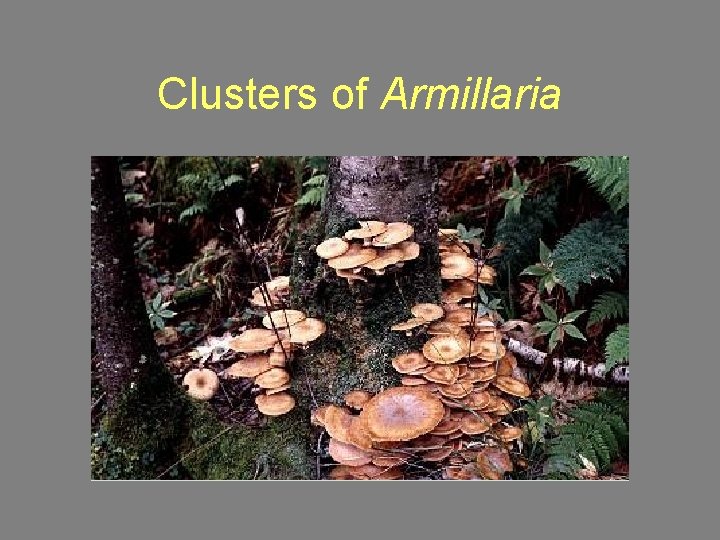
Clusters of Armillaria
How Does it Infect? OAK or PINE Two means of dispersal to other trees: 1. Mycelium can grow through direct root contacts and grafts with uninfected trees. DEAD OAK 2. Rhizomorphs can grow through soil to contact uninfected trees. l SOURCE: http: //www. forestpathology. org/dis_arm. htm
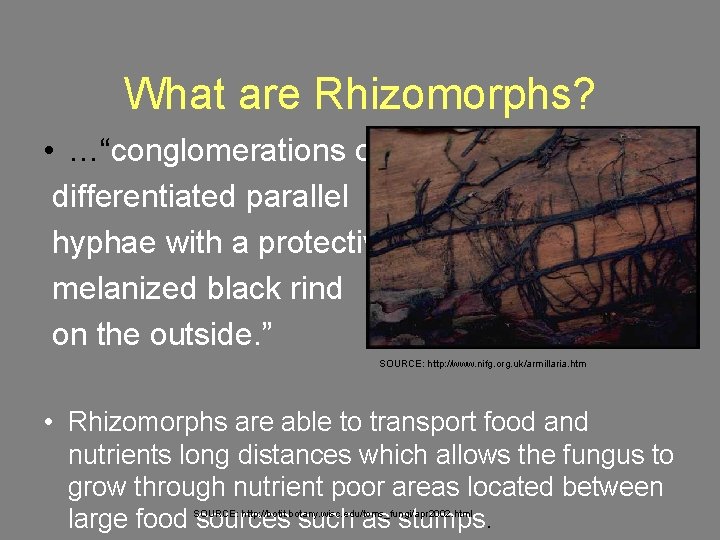
What are Rhizomorphs? • …“conglomerations of differentiated parallel hyphae with a protective melanized black rind on the outside. ” SOURCE: http: //www. nifg. org. uk/armillaria. htm • Rhizomorphs are able to transport food and nutrients long distances which allows the fungus to grow through nutrient poor areas located between large food sources such as stumps. SOURCE: http: //botit. botany. wisc. edu/toms_fungi/apr 2002. html
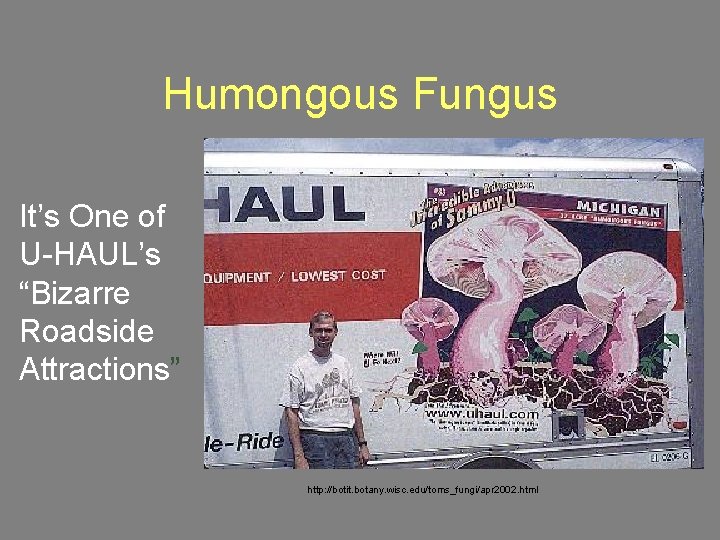
Humongous Fungus It’s One of U-HAUL’s “Bizarre Roadside Attractions” http: //botit. botany. wisc. edu/toms_fungi/apr 2002. html
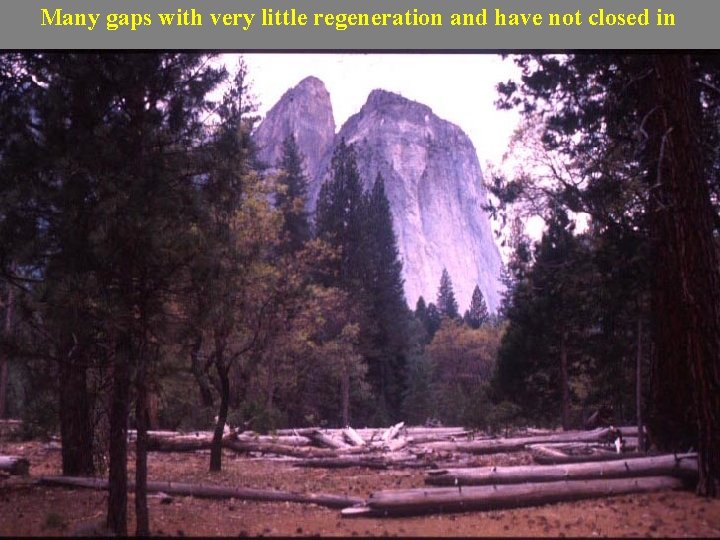
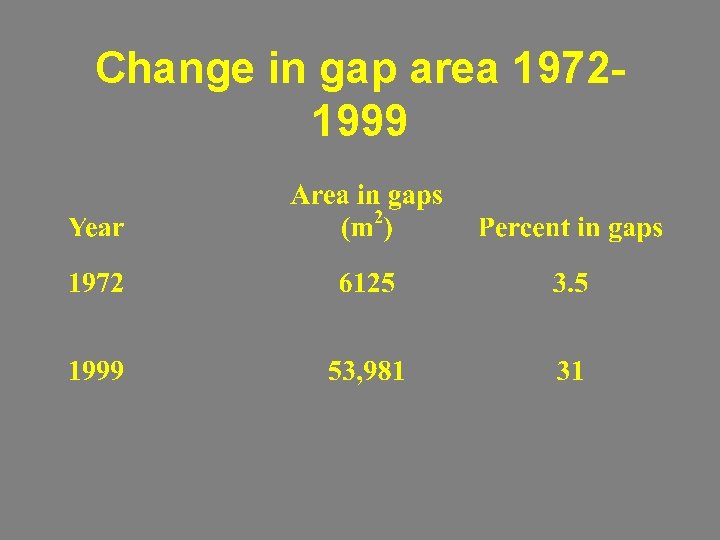
CONCLUSIONS Human activities shifting from oak woodlands to mixed oak-pine lead to large mortality gaps in pines around oaks if honey mushroom is present CHANGING SPECIES COMPOSITION LEADS TO SEVERE DISEASE
Many gaps with very little regeneration and have not closed in
Change in gap area 19721999
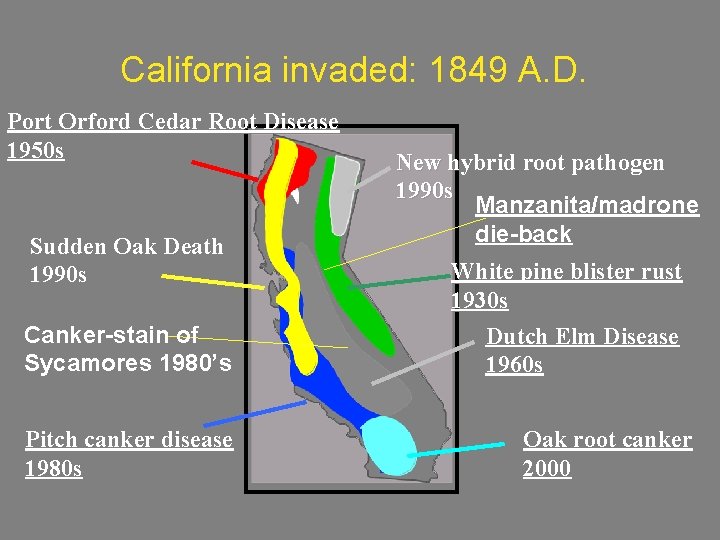
“Emergent diseases”: 3: exotic pathogens • 99% of times human responsible for their introduction
Like the conquistadores brought diseases that were lethal to those who had never been exposed to them, so do exotic diseases cause true devastation in plant communities because of lack of coevolution between hosts and microbes
California invaded: 1849 A. D. Port Orford Cedar Root Disease 1950 s Sudden Oak Death 1990 s Canker-stain of Sycamores 1980’s Pitch canker disease 1980 s New hybrid root pathogen 1990 s Manzanita/madrone die-back White pine blister rust 1930 s Dutch Elm Disease 1960 s Oak root canker 2000