
Summary 1 An International Collaboration 2 Codex Sinaiticus
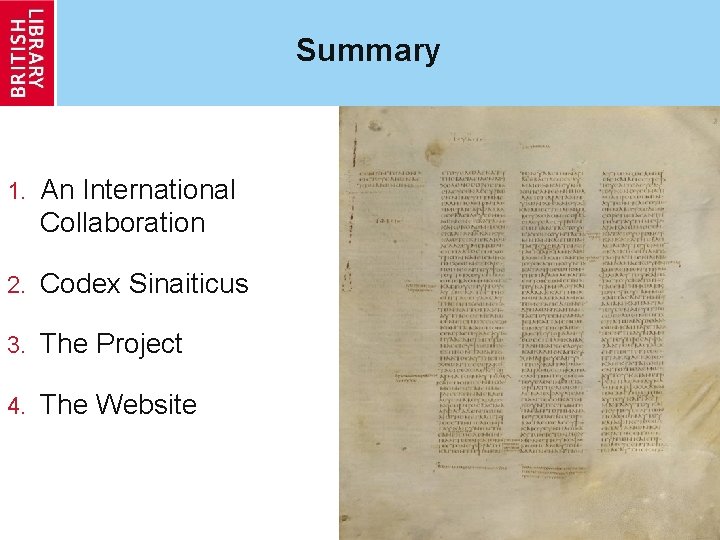
Summary 1. An International Collaboration 2. Codex Sinaiticus 3. The Project 4. The Website
The Codex Sinaiticus Project
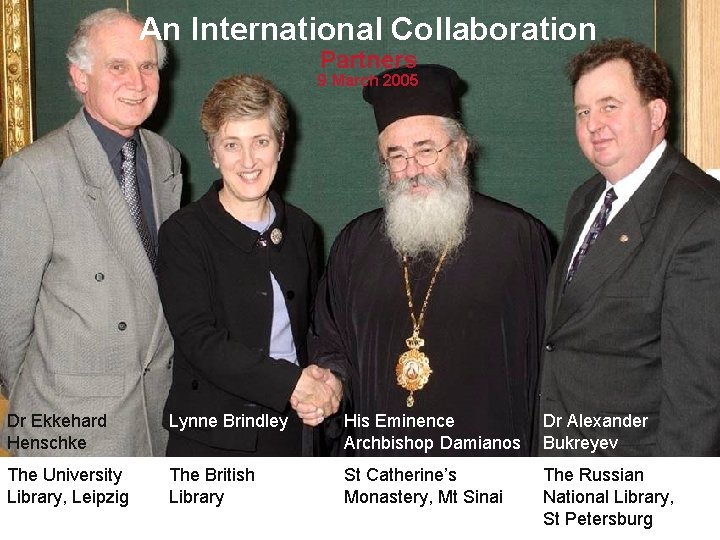
An International Collaboration Partners 9 March 2005 Dr Ekkehard Henschke Lynne Brindley His Eminence Archbishop Damianos Dr Alexander Bukreyev The University Library, Leipzig The British Library St Catherine’s Monastery, Mt Sinai The Russian National Library, St Petersburg
An International Collaboration Collaborating Institutions n Institute for Textual Scholarship and Electronic Editing, University of Birmingham n Institute for New Testament Textual Research, University of Münster n The Centre for Retrospective Digitization, Göttingen State and University Library n Society of Biblical Literature, Atlanta
An International Collaboration External Funders Approximately £ 1 million budget, with external funding from: n Stavros S. Niarchos Foundation n Arts and Humanities Research Council n Deutsche Forschungsgemeinschaft n Leventis Foundation n Mariposa Foundation n J. F. Costopoulos Foundation n Hellenic Foundation n American Friends of Saint Catherine's Monastery n American Trust for the British Library
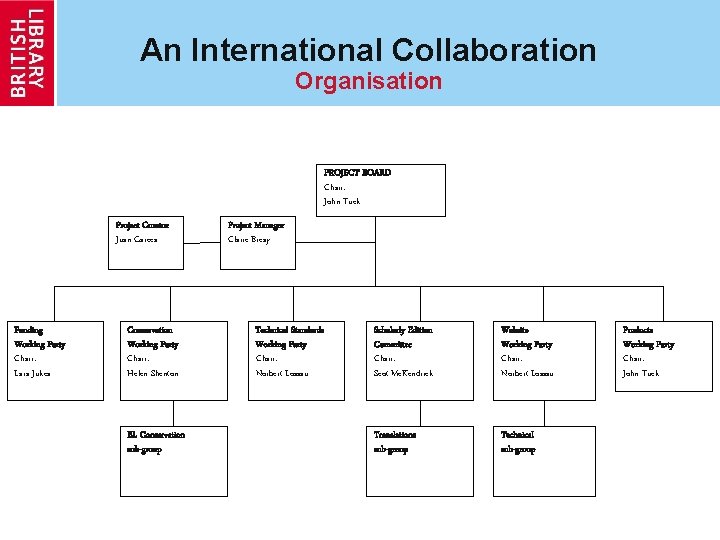
An International Collaboration Organisation PROJECT BOARD Chair: John Tuck Project Curator Juan Garcés Funding Working Party Chair: Lara Jukes Conservation Working Party Chair: Helen Shenton BL Conservation sub-group Project Manager Claire Breay Technical Standards Working Party Chair: Norbert Lossau Scholarly Edition Committee Chair: Scot Mc. Kendrick Website Working Party Chair: Norbert Lossau Translations sub-group Technical sub-group Products Working Party Chair: John Tuck
An International Collaboration Aims and Means n aims global access to a major MS treasure n its preservation for the future n understanding of its content and history n n means scholarship aided by modern technology n close collaboration between n n n curators conservators academics image specialists IT specialists
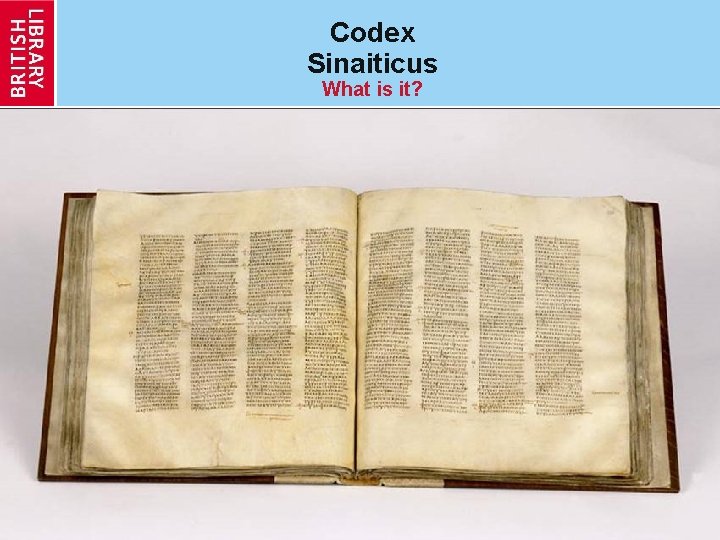
Codex Sinaiticus What is it?
Codex Sinaiticus Content and Significance n content part of the Old Testament in Greek (Septuagint), including apocrypha (2 Esdras, Tobit, Judith, 1 & 4 Maccabees, Wisdom, and Sirach) n whole New Testament n Epistle of Barnabas and the Shepherd by Hermas n n significance one of the oldest Bibles (mid-fourth century) n earliest complete New Testament n text – canon – book n

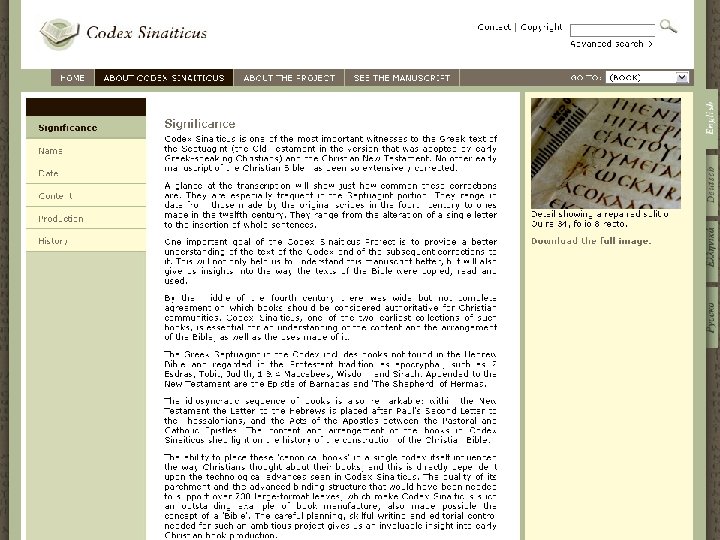
Codex Sinaiticus Significance: Text one of the most important witnesses to the Greek text of the Septuagint and the New Testament n primacy of position in the lists of consulted manuscripts (" "א or "01" for the New Testament) n n not only original base text, but many layers of revisions from 4 th to 12 th century n from alteration of one letter to the insertion of whole sentences n no other early manuscript of the Christian Bible has been so extensively corrected! n
Codex Sinaiticus Significance: Canon mid-4 th century: wide, yet neither complete nor universal, agreement over the books to be considered as authoritative for Christian communities n Codex Sinaiticus, being one of the earliest intact collections of such books, is essential for an understanding of the contents and the arrangement of the Bible, as well as the uses made of it n Septuagint in the Codex comprises books not included in the Hebrew Bible and regarded in the Protestant tradition as apocryphal, such as 2 Esdras, Tobit, Judith, 1 & 4 Maccabees, Wisdom, and Sirach n appended at the end of the New Testament are the apocryphal Epistle of Barnabas and the Shepherd of Hermas n n idiosyncratic sequence of books: n Hebrews is placed after 2 Thessalonians n Acts between the Pastoral and Catholic Epistles
Codex Sinaiticus Significance: Book n Christians preferred the codex over the roll n n n from our earliest evidence onwards in contrast to earlier and most contemporary practice particularly, albeit not exclusively, when copying sacred literature parchment was increasingly used as the writing support for literary texts instead of papyrus from the fourth century onwards n strikingly few traces remain of parchment codices produced before the Codex Sinaiticus n n Codex Sinaiticus is an outstanding example n n n quality of its parchment advanced binding structure insight into professional Christian book production n careful planning skilful writing editorial control
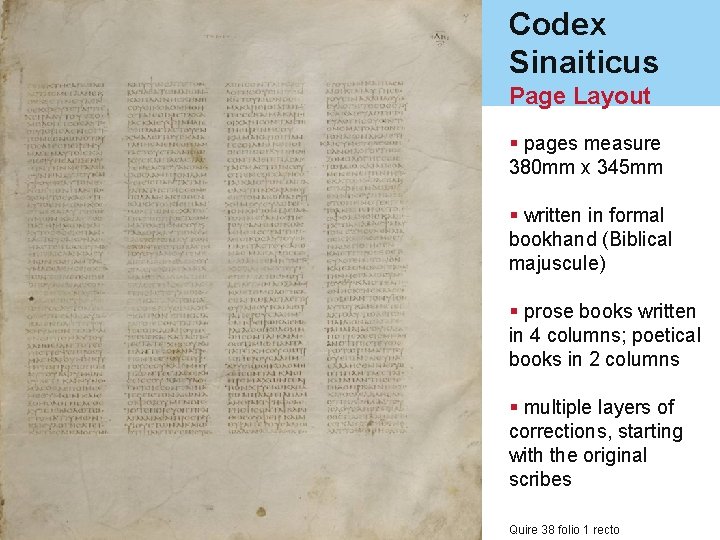
Codex Sinaiticus Page Layout § pages measure 380 mm x 345 mm § written in formal bookhand (Biblical majuscule) § prose books written in 4 columns; poetical books in 2 columns § multiple layers of corrections, starting with the original scribes Quire 38 folio 1 recto
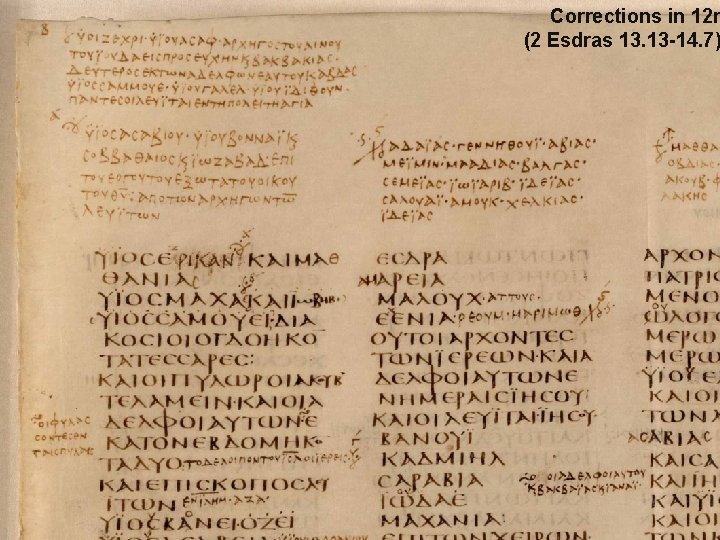
Corrections in 12 r (2 Esdras 13. 13 -14. 7)
Codex Sinaiticus What survives and where Just over 400 leaves extant (out of approx. over 730 original leaves), but now distributed between four places: n 347 leaves in the British Library n 12 leaves and 40 fragments in St Catherine's Monastery, Mt Sinai n 43 leaves in the Leipzig University Library n fragments of 5 (or 6? ) leaves in the National Library of Russia, St Petersburg

Codex Sinaiticus Modern History Mt Sinai Leipzig 1844 1859 (1869) Project 1933 St Petersburg London
Codex Sinaiticus Modern History Account of how the distributed situation came about is to be researched, agreed and disseminated research has been undertaken in at all four holding locations n report has been commissioned (draft) n agreed account will be published in project outputs n
The Project Timescale n initial discussions in late 2002 n partnership n project n main agreement signed March 2005 work started in 2005 strands of project to conclude in 2009
The Project
The Project Overview n History of Codex n Conservation n Digitisation n Edition n Dissemination
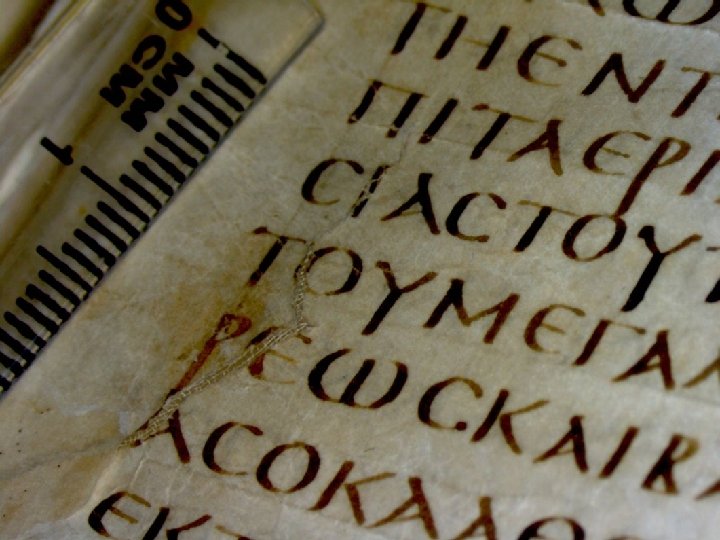
split, folio 1 recto
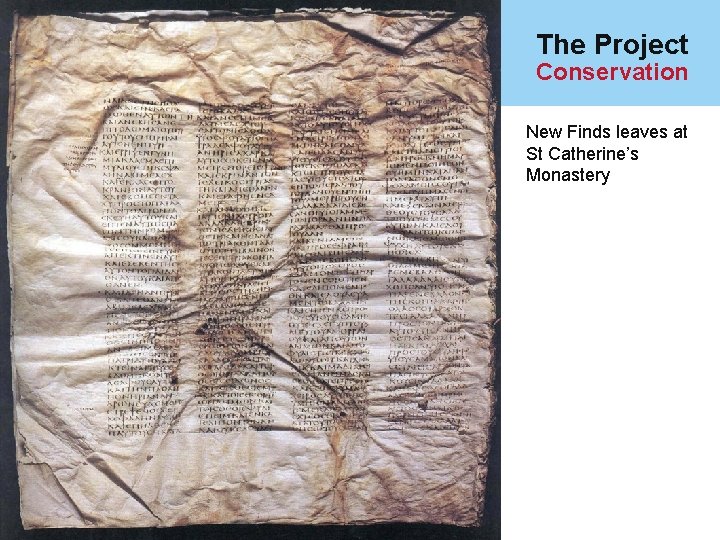
The Project Conservation New Finds leaves at St Catherine’s Monastery
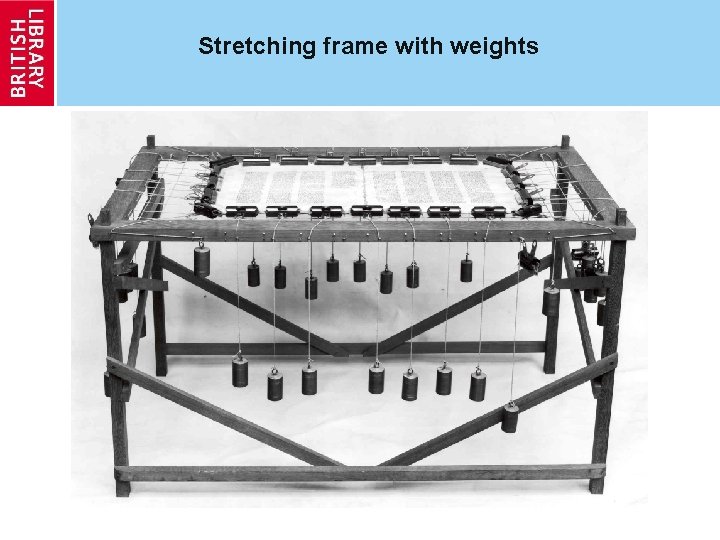
Stretching frame with weights
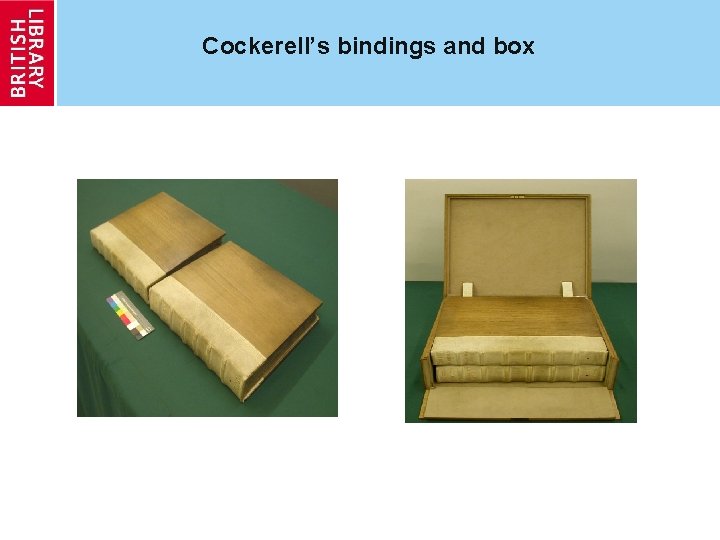
Cockerell’s bindings and box
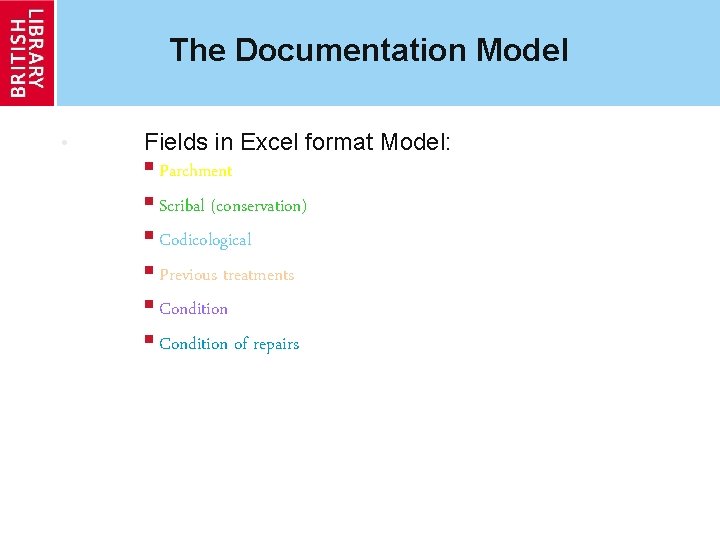
The Documentation Model • Fields in Excel format Model: § Parchment § Scribal (conservation) § Codicological § Previous treatments § Condition of repairs
The Project Conservation n collaboration n n initial assessment n n n physical condition of each leaf individual conservation requirements for stabilisation conservation work n n stabilise MS for digitisation preserve MS for the future detailed assessment n n n work to be undertaken in partnership with conservation specialists at each archival venue plan by Conservation working party dissemination n outcome documented findings included in overall scholarly interpretation documentation in English, German, Greek, and Russian
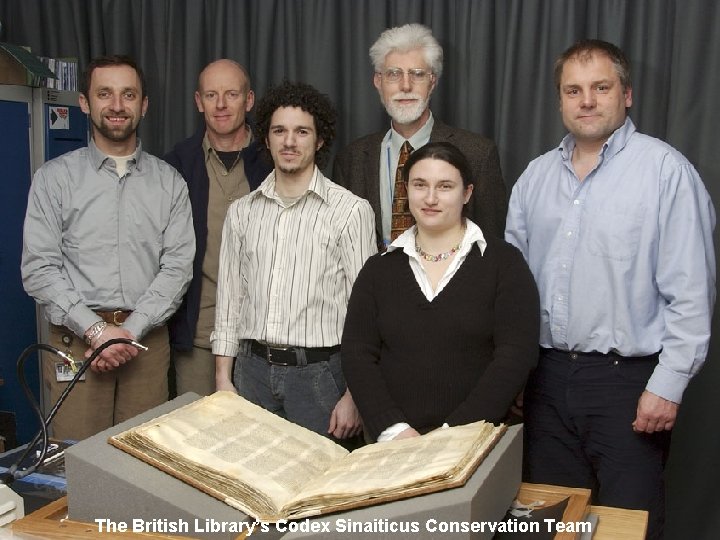
The British Library’s Codex Sinaiticus Conservation Team
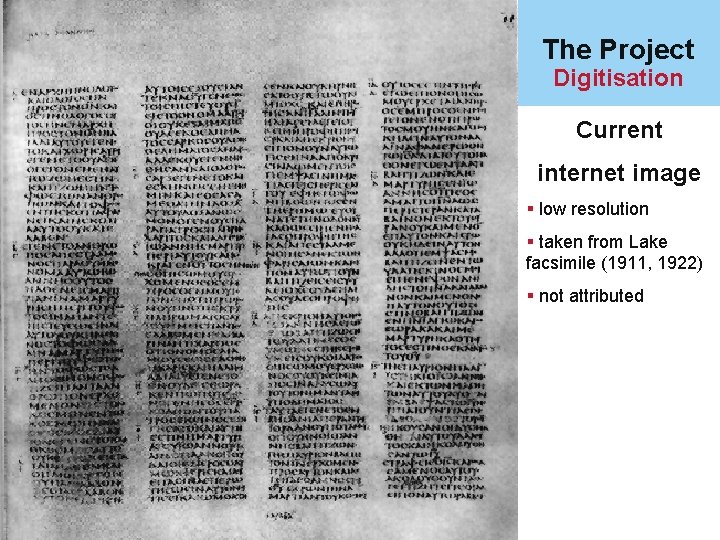
The Project Digitisation Current internet image § low resolution § taken from Lake facsimile (1911, 1922) § not attributed
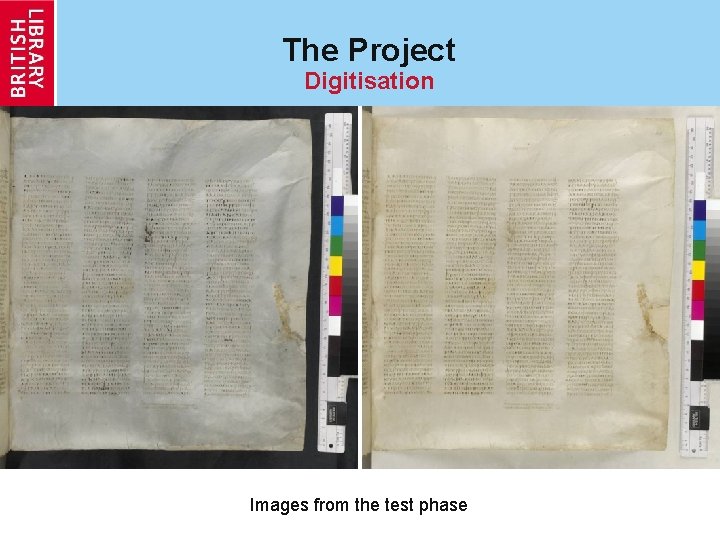
The Project Digitisation Images from the test phase
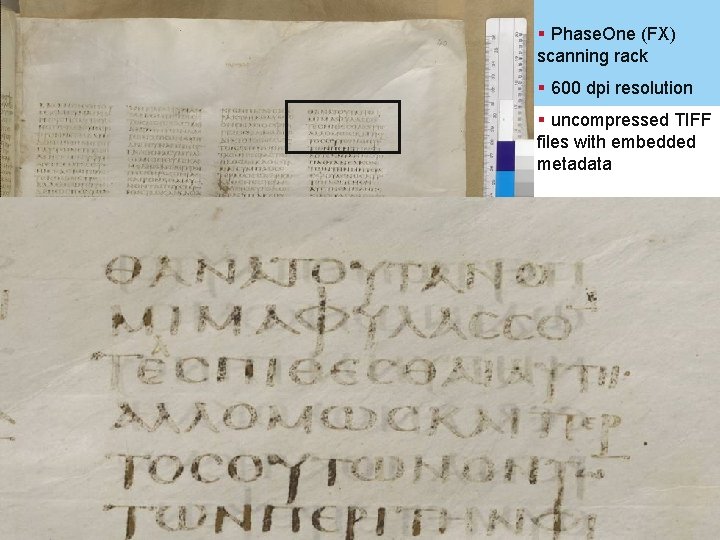
§ Phase. One (FX) scanning rack § 600 dpi resolution § uncompressed TIFF files with embedded metadata
The Project Digitisation n process undertaken at each venue undertaken after conservation informed by scholarly review of Lake facsimile employs optimal methods tested and established by the Technical Standards working party n minimal handling of MS n n n type of images created high-quality images of all leaves as surrogates for the original manuscript leaves n raking light images of selected parts n multi-spectral images of selected parts n n intended use of images n n work of project teams (conservation and scholarly) project outputs
The Project Edition n lead institutions Institute for Textual Scholarship and Electronic Editing (University of Birmingham) n Institute for New Testament Textual Research (University of Münster) n n key elements transcription - made from new images and capturing all layers of text and corrections n searchable text and text features n links to images – whole leaves and details n
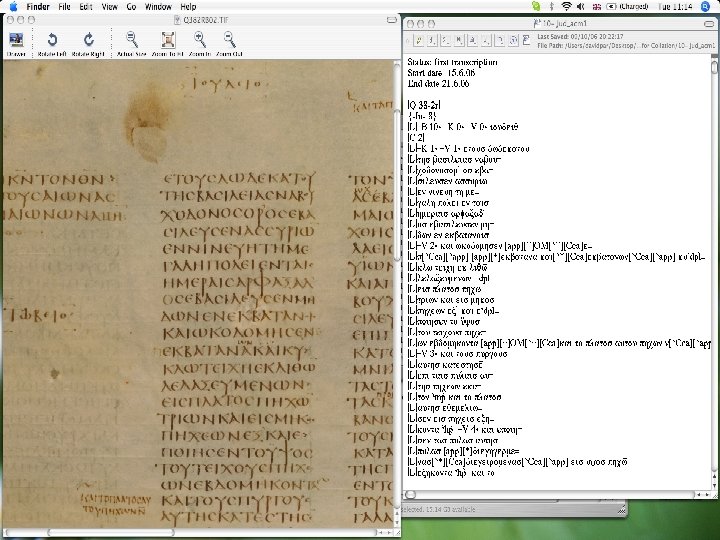
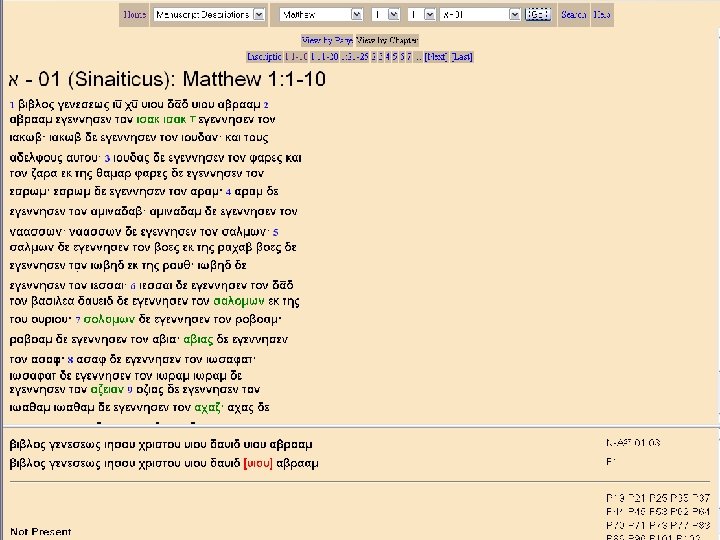
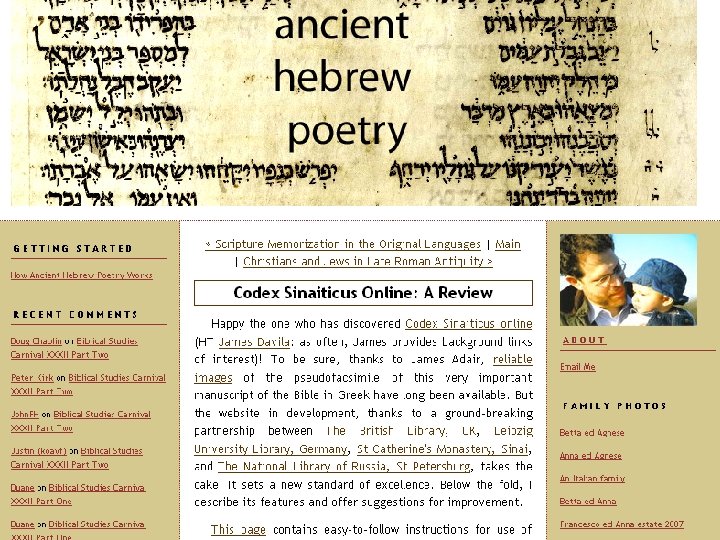
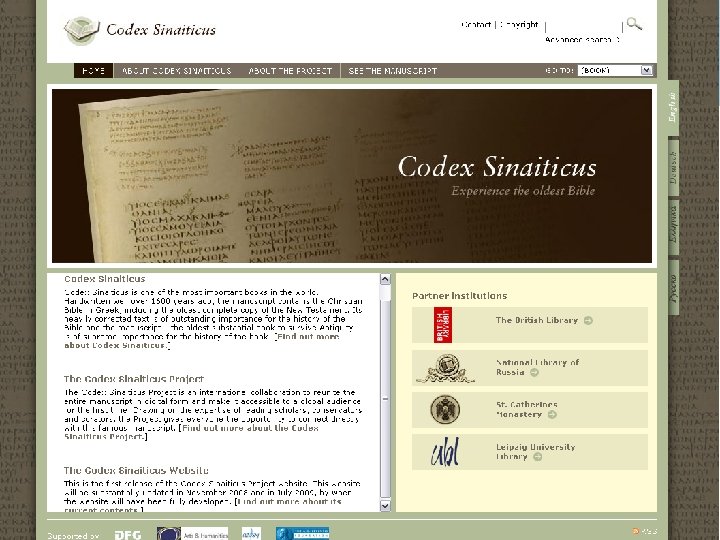
The Project Website n n n developed by the University Library, Leipzig tender awarded to ACS Solutions (3 -point concepts) soon hosted by the British Library (mirrored) free to view areas directed at different readers (from general to specialist readers), but accessible to all English introduction, documentation, and commentary, with targeted multilingual parts
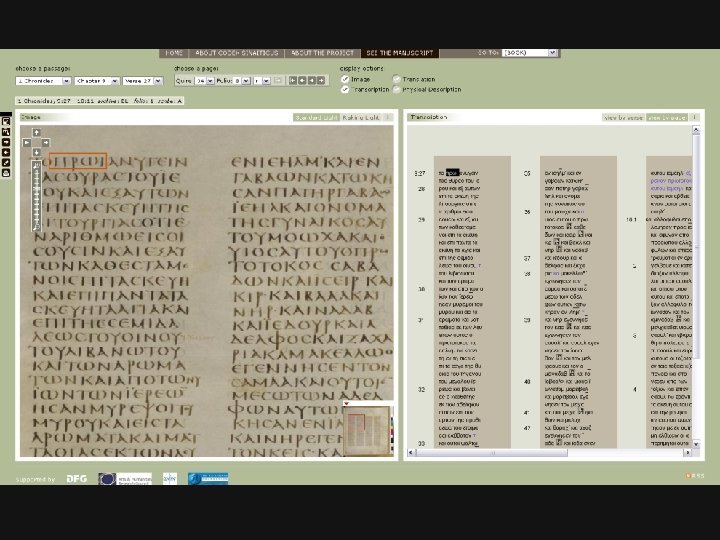
The Project Website Technical specifications: n n bring together a variety of datasets and integrate into a unified user interface n digital images of the leaves of Codex Sinaiticus n XML files for the transcription n Excel spreadsheets for the physical description n XML files for translations, etc. conform to technologies and standards supported by the British Library's IT infrastructure accessibility and long-term maintenance n no plug-ins n web standards such as HTML, CSS, Javascript and AJAX link image and text representations of the pages of Codex Sinaiticus in a way never before implemented in an online edition of a manuscript
- Slides: 42