
summarizing adjusting entries 1 Adjusting Entries Adjusting entries
- Slides: 40
summarizing adjusting entries 1
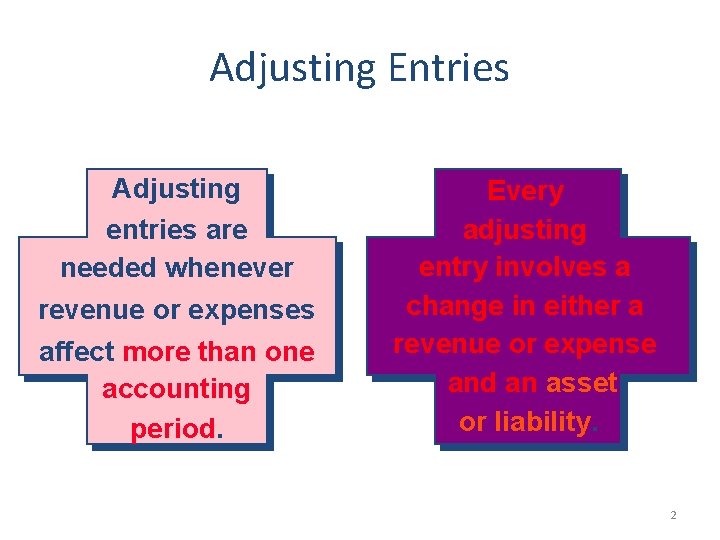
Adjusting Entries Adjusting entries are needed whenever revenue or expenses affect more than one accounting period. Every adjusting entry involves a change in either a revenue or expense and an asset or liability. 2
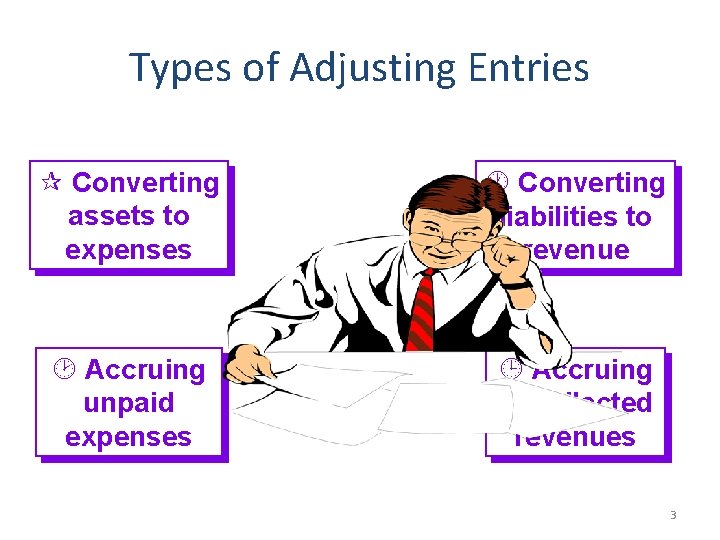
Types of Adjusting Entries ¶ Converting assets to expenses · Converting liabilities to revenue ¸ Accruing unpaid expenses ¹ Accruing uncollected revenues 3
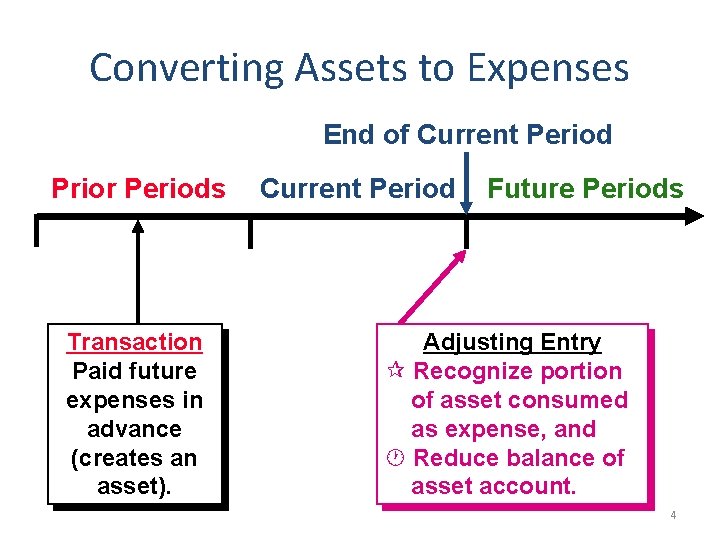
Converting Assets to Expenses End of Current Period Prior Periods Transaction Paid future expenses in advance (creates an asset). Current Period Future Periods Adjusting Entry ¶ Recognize portion of asset consumed as expense, and · Reduce balance of asset account. 4
Converting Assets to Expenses Examples Include: Depreciation Supplies Expiring Insurance Policies
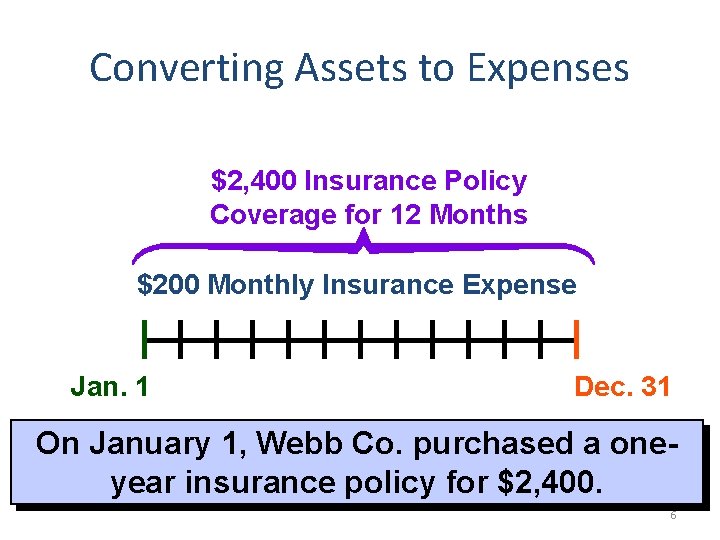
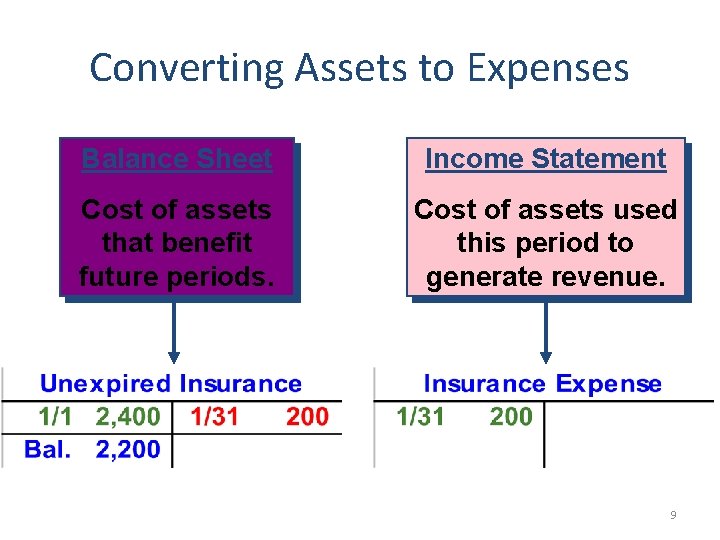
Converting Assets to Expenses $2, 400 Insurance Policy Coverage for 12 Months $200 Monthly Insurance Expense Jan. 1 Dec. 31 On January 1, Webb Co. purchased a oneyear insurance policy for $2, 400. 6
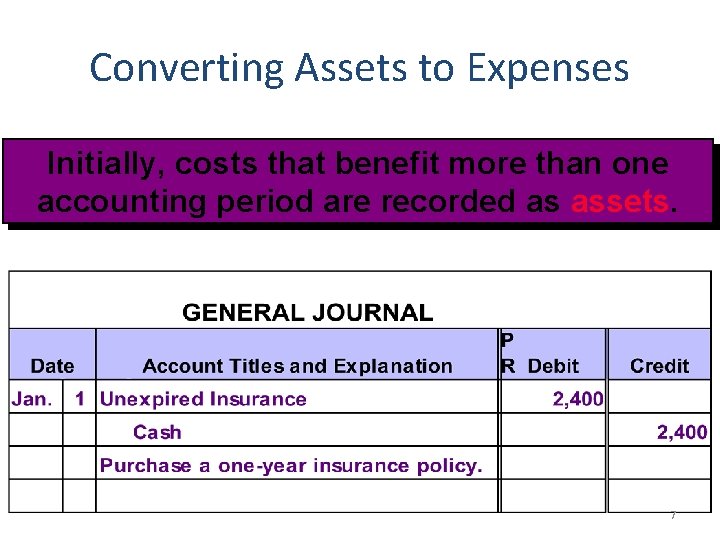
Converting Assets to Expenses Initially, costs that benefit more than one accounting period are recorded as assets. 7
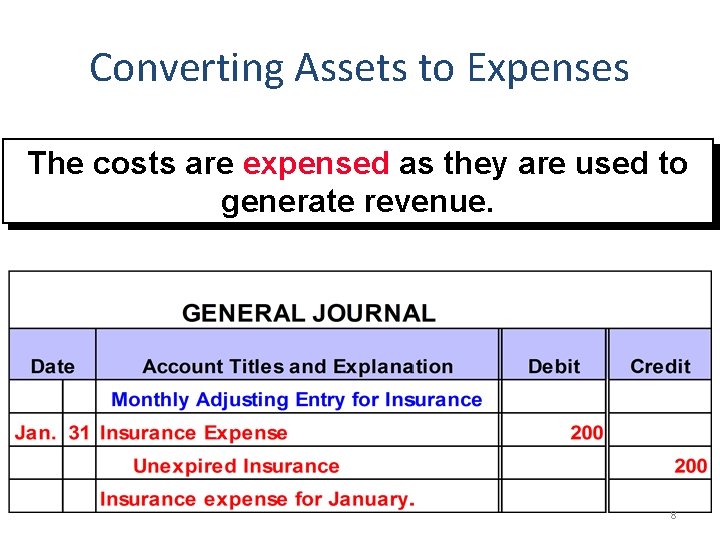
Converting Assets to Expenses The costs are expensed as they are used to generate revenue. 8
Converting Assets to Expenses Balance Sheet Income Statement Cost of assets that benefit future periods. Cost of assets used this period to generate revenue. 9
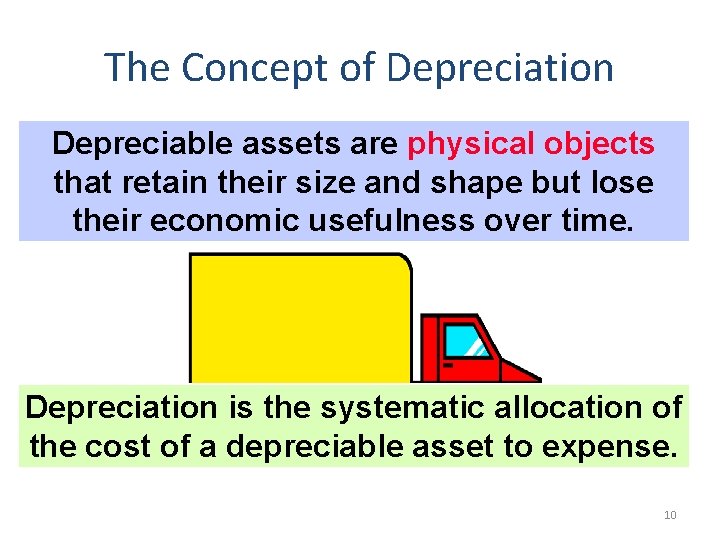
The Concept of Depreciation Depreciable assets are physical objects that retain their size and shape but lose their economic usefulness over time. Depreciation is the systematic allocation of the cost of a depreciable asset to expense. 10
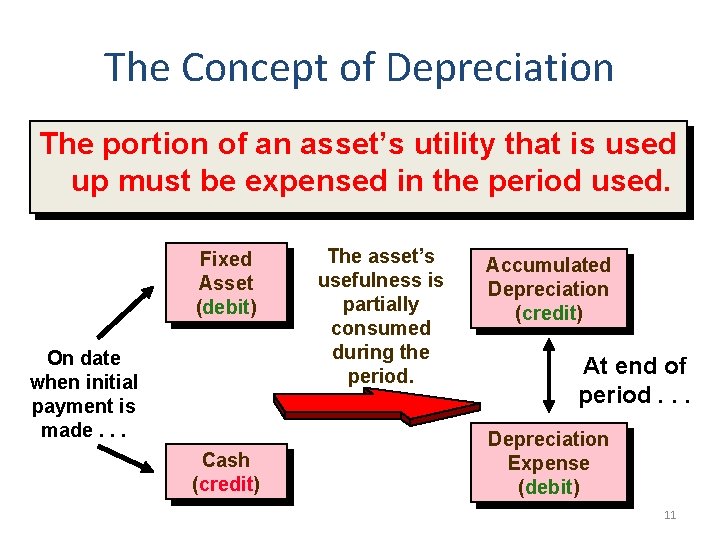
The Concept of Depreciation The portion of an asset’s utility that is used up must be expensed in the period used. Fixed Asset (debit) On date when initial payment is made. . . Cash (credit) The asset’s usefulness is partially consumed during the period. Accumulated Depreciation (credit) At end of period. . . Depreciation Expense (debit) 11
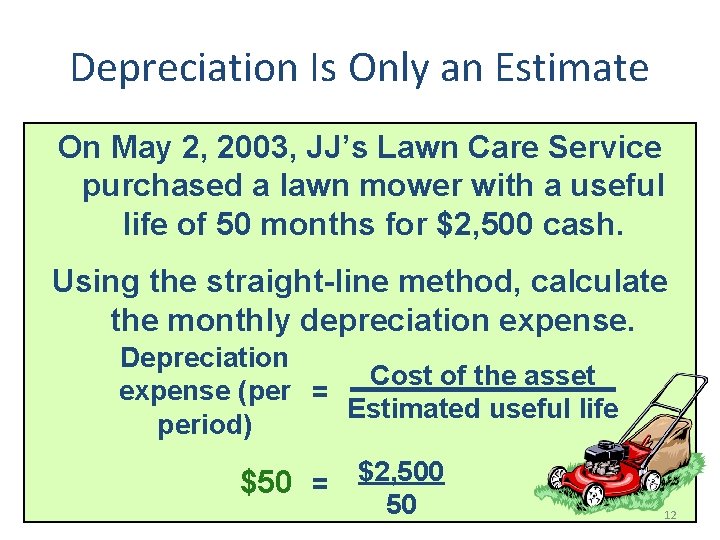
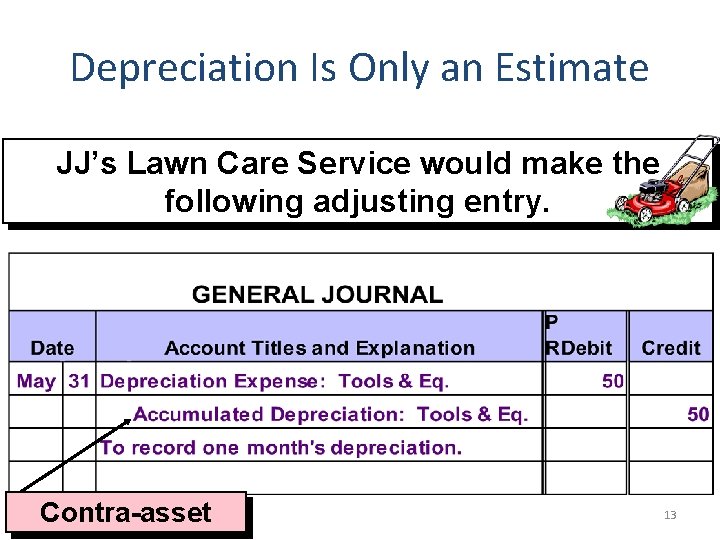
Depreciation Is Only an Estimate On May 2, 2003, JJ’s Lawn Care Service purchased a lawn mower with a useful life of 50 months for $2, 500 cash. Using the straight-line method, calculate the monthly depreciation expense. Depreciation Cost of the asset expense (per = Estimated useful life period) $50 = $2, 500 50 12
Depreciation Is Only an Estimate JJ’s Lawn Care Service would make the following adjusting entry. Contra-asset 13
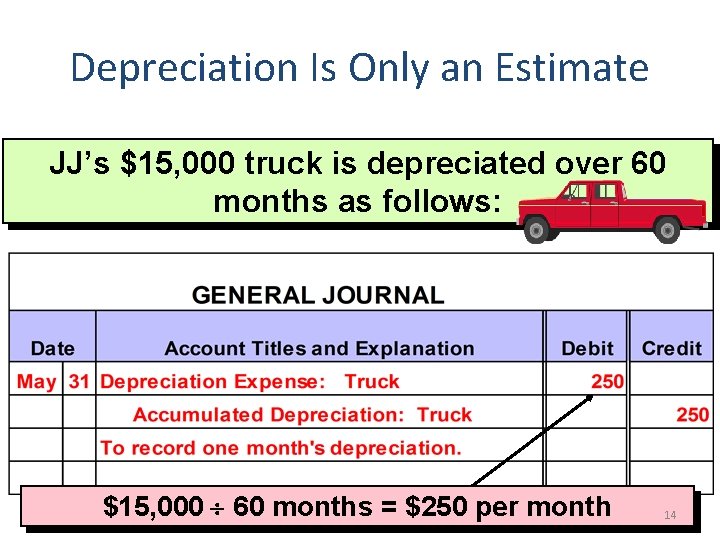
Depreciation Is Only an Estimate JJ’s $15, 000 truck is depreciated over 60 months as follows: $15, 000 60 months = $250 per month 14
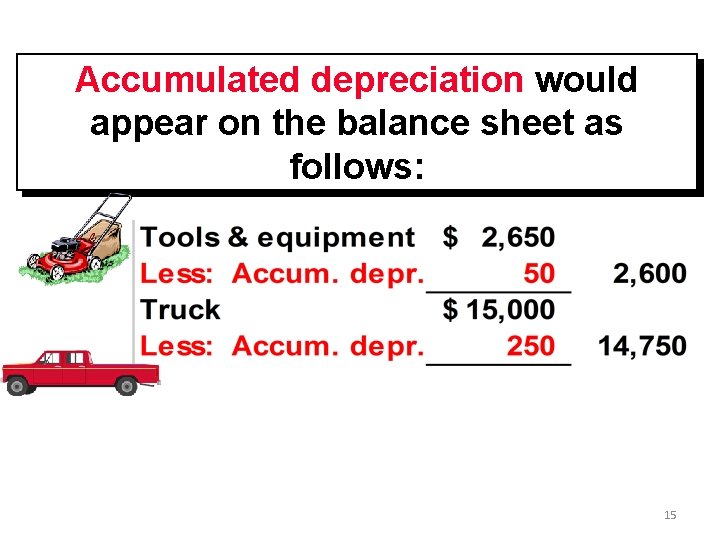
Accumulated depreciation would appear on the balance sheet as follows: 15
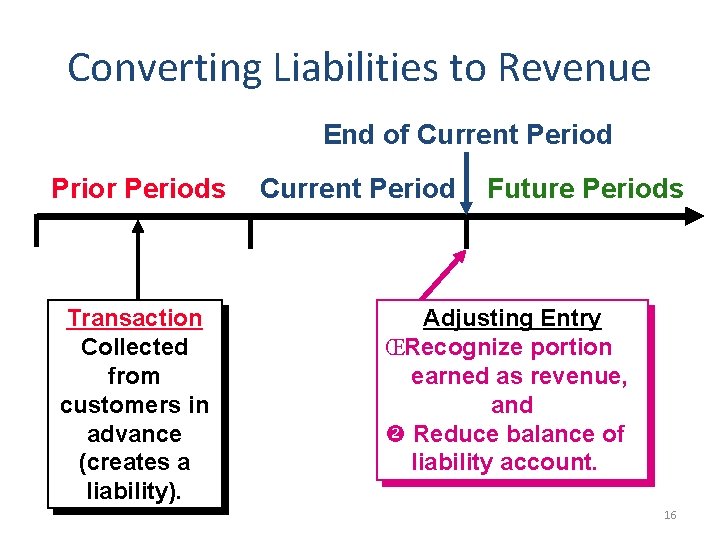
Converting Liabilities to Revenue End of Current Period Prior Periods Transaction Collected from customers in advance (creates a liability). Current Period Future Periods Adjusting Entry ŒRecognize portion earned as revenue, and Reduce balance of liability account. 16
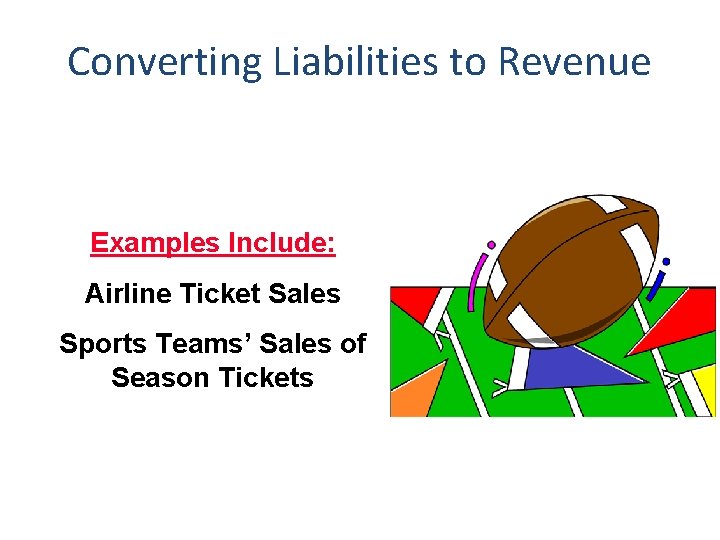
Converting Liabilities to Revenue Examples Include: Airline Ticket Sales Sports Teams’ Sales of Season Tickets
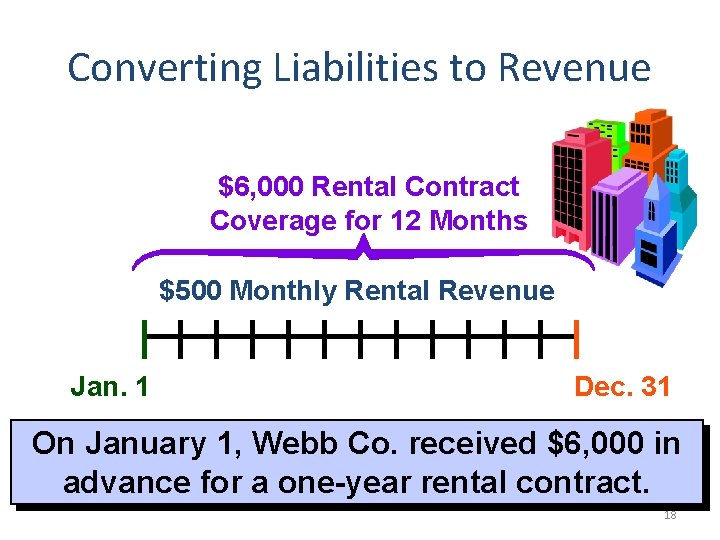
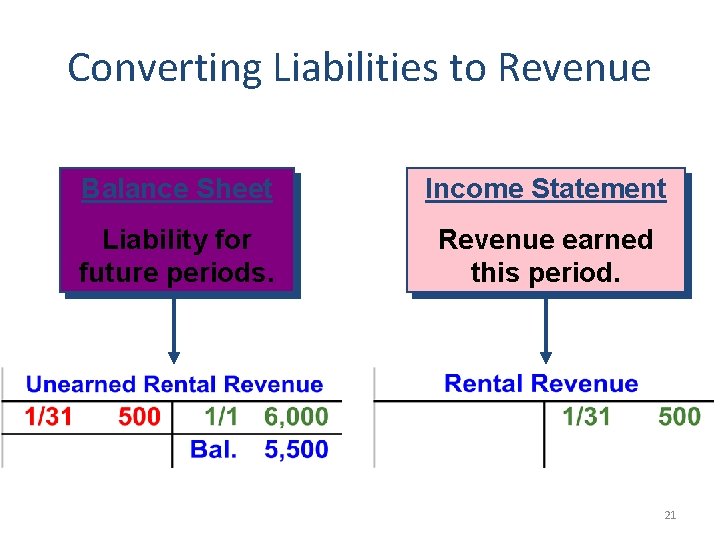
Converting Liabilities to Revenue $6, 000 Rental Contract Coverage for 12 Months $500 Monthly Rental Revenue Jan. 1 Dec. 31 On January 1, Webb Co. received $6, 000 in advance for a one-year rental contract. 18
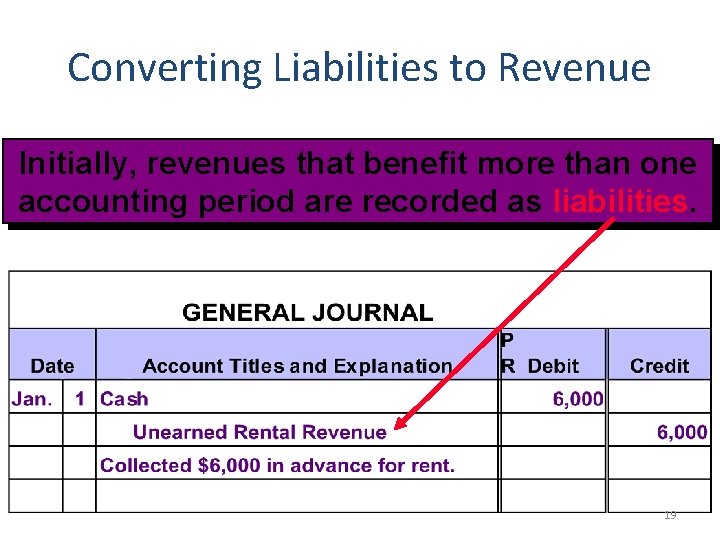
Converting Liabilities to Revenue Initially, revenues that benefit more than one accounting period are recorded as liabilities. 19
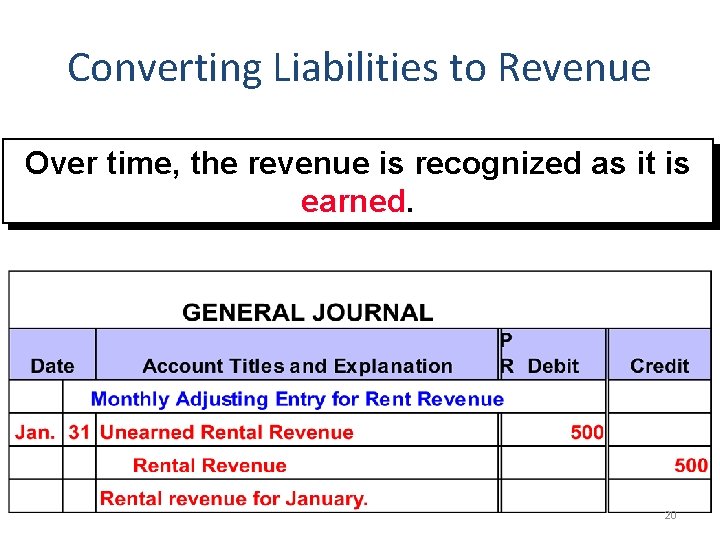
Converting Liabilities to Revenue Over time, the revenue is recognized as it is earned. 20
Converting Liabilities to Revenue Balance Sheet Income Statement Liability for future periods. Revenue earned this period. 21
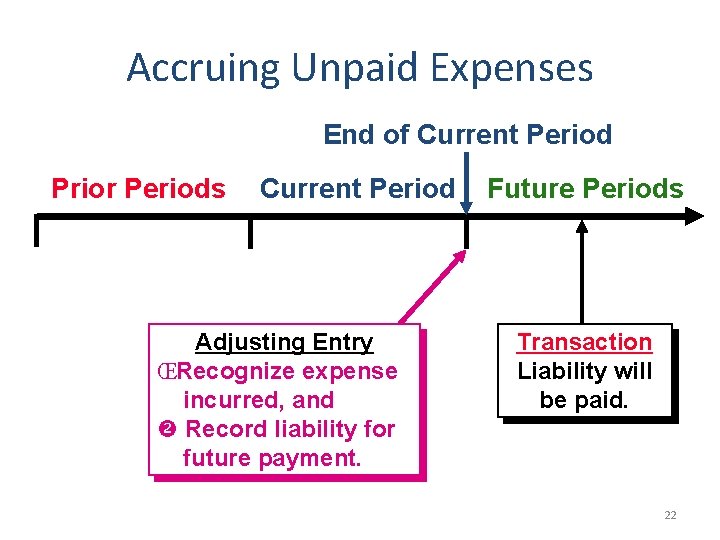
Accruing Unpaid Expenses End of Current Period Prior Periods Current Period Adjusting Entry ŒRecognize expense incurred, and Record liability for future payment. Future Periods Transaction Liability will be paid. 22
Accruing Unpaid Expenses Hey, when do we get paid? Examples Include: Interest Wages and Salaries Property Taxes
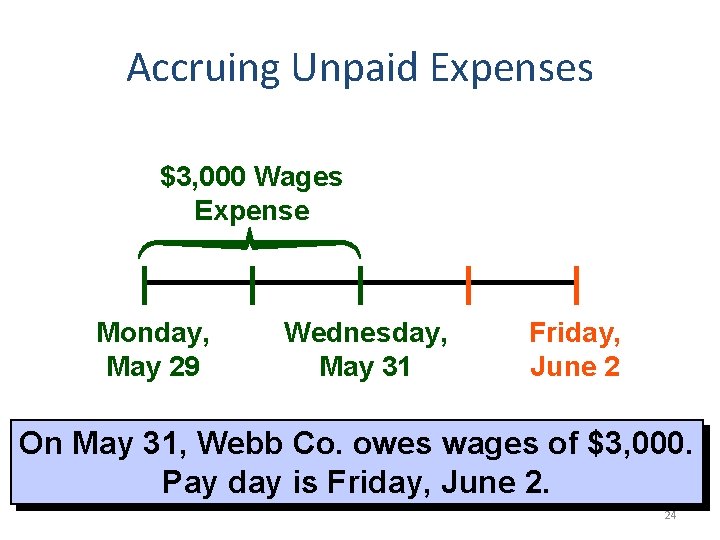
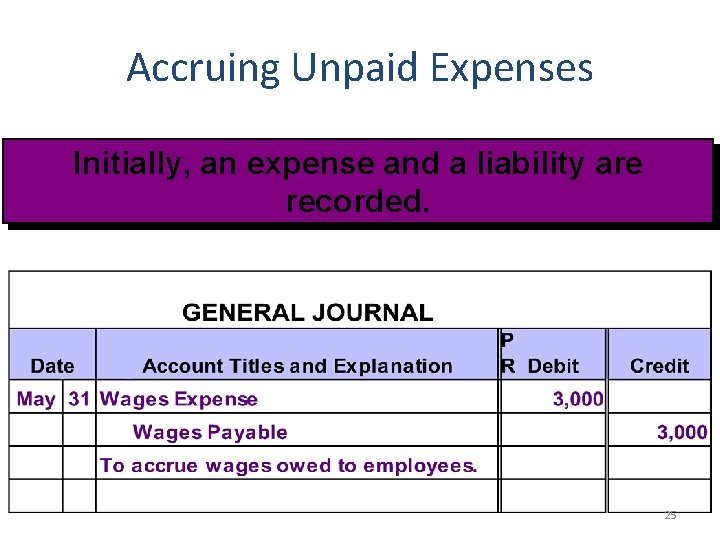
Accruing Unpaid Expenses $3, 000 Wages Expense Monday, May 29 Wednesday, May 31 Friday, June 2 On May 31, Webb Co. owes wages of $3, 000. Pay day is Friday, June 2. 24
Accruing Unpaid Expenses Initially, an expense and a liability are recorded. 25
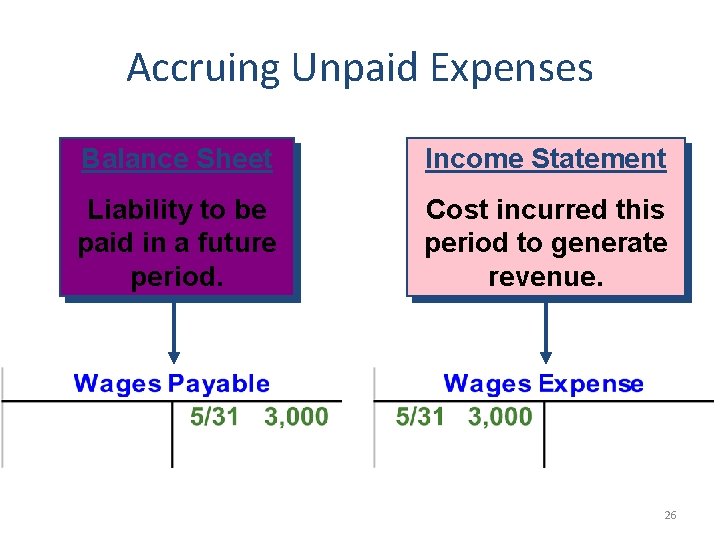
Accruing Unpaid Expenses Balance Sheet Income Statement Liability to be paid in a future period. Cost incurred this period to generate revenue. 26
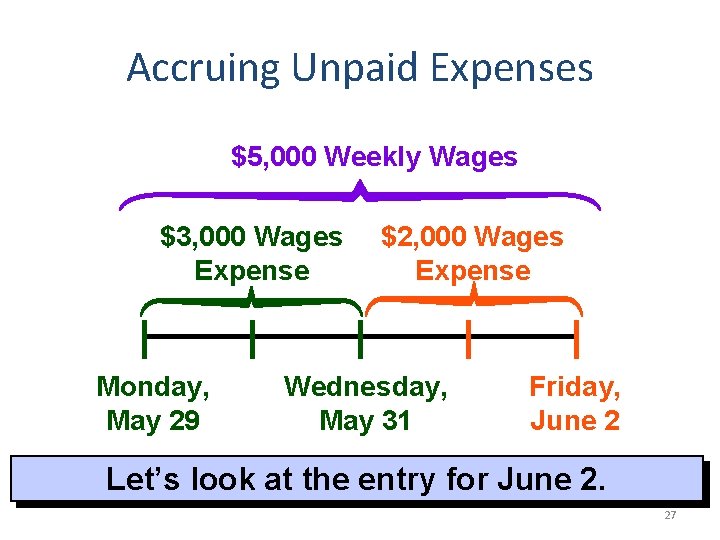
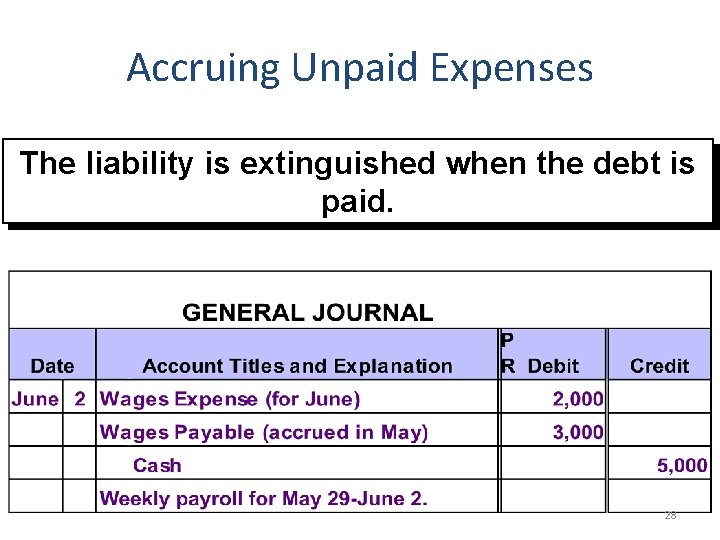
Accruing Unpaid Expenses $5, 000 Weekly Wages $3, 000 Wages Expense Monday, May 29 $2, 000 Wages Expense Wednesday, May 31 Friday, June 2 Let’s look at the entry for June 2. 27
Accruing Unpaid Expenses The liability is extinguished when the debt is paid. 28
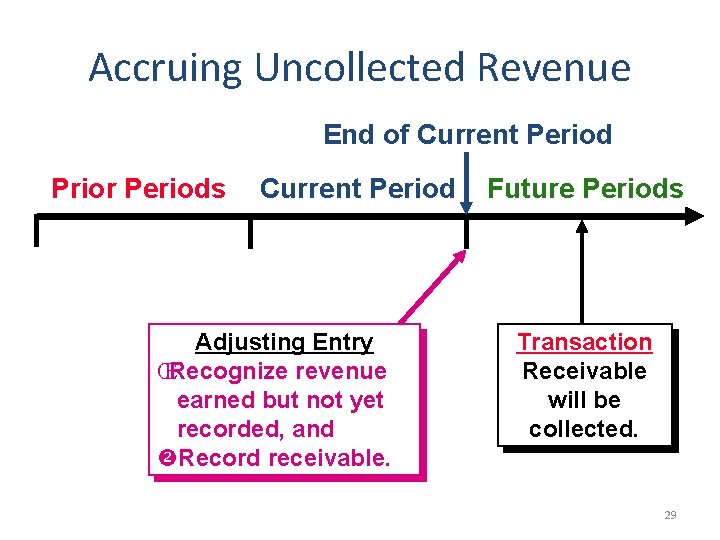
Accruing Uncollected Revenue End of Current Period Prior Periods Current Period Adjusting Entry ŒRecognize revenue earned but not yet recorded, and Record receivable. Future Periods Transaction Receivable will be collected. 29
Accruing Uncollected Revenue Examples Include: Interest Earned Work Completed But Not Yet Billed to Customer
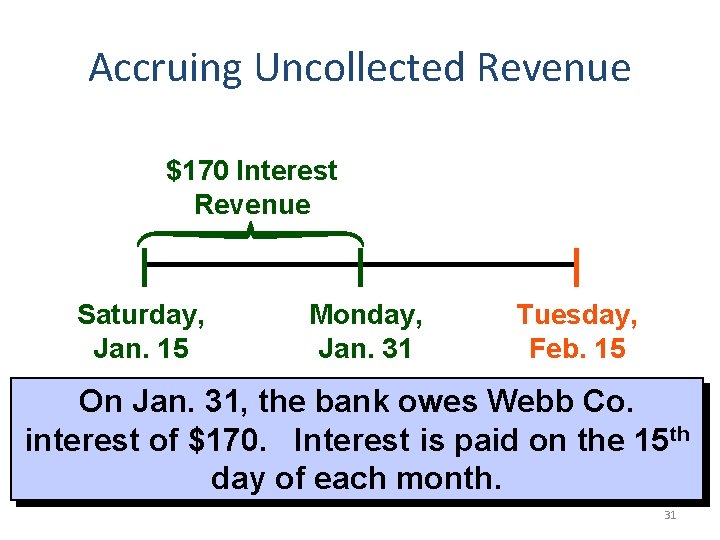
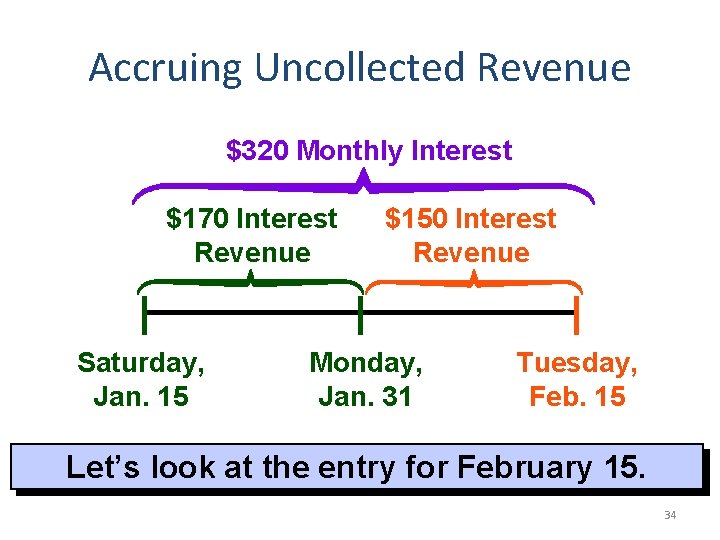
Accruing Uncollected Revenue $170 Interest Revenue Saturday, Jan. 15 Monday, Jan. 31 Tuesday, Feb. 15 On Jan. 31, the bank owes Webb Co. interest of $170. Interest is paid on the 15 th day of each month. 31
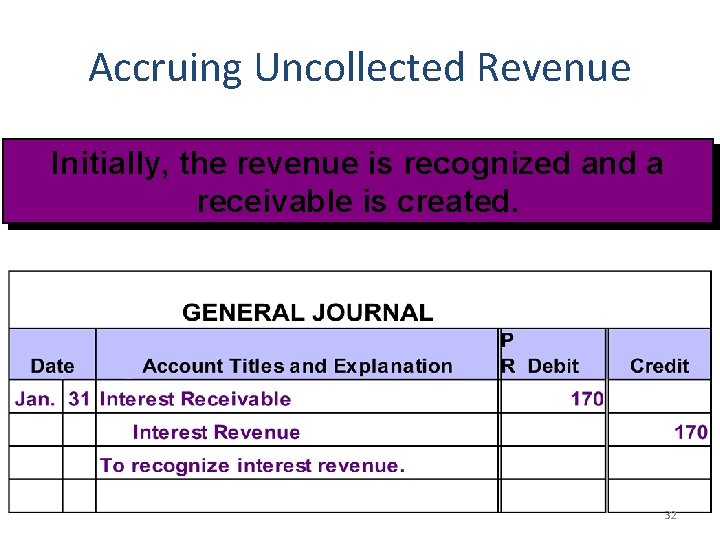
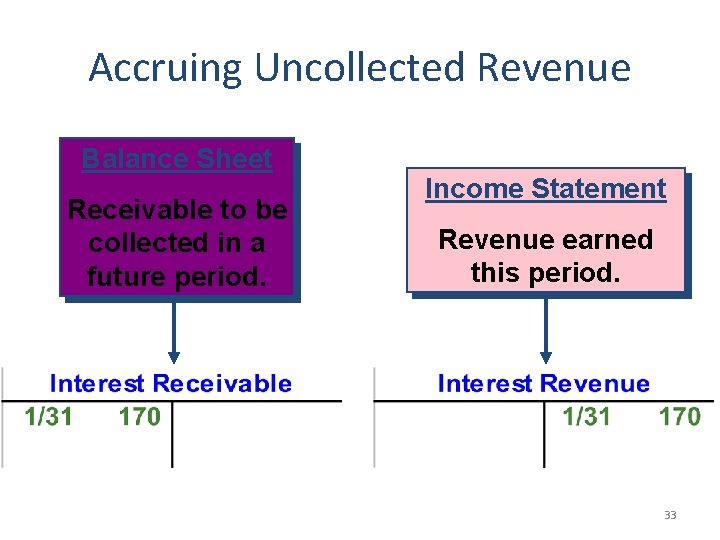
Accruing Uncollected Revenue Initially, the revenue is recognized and a receivable is created. 32
Accruing Uncollected Revenue Balance Sheet Receivable to be collected in a future period. Income Statement Revenue earned this period. 33
Accruing Uncollected Revenue $320 Monthly Interest $170 Interest Revenue Saturday, Jan. 15 $150 Interest Revenue Monday, Jan. 31 Tuesday, Feb. 15 Let’s look at the entry for February 15. 34
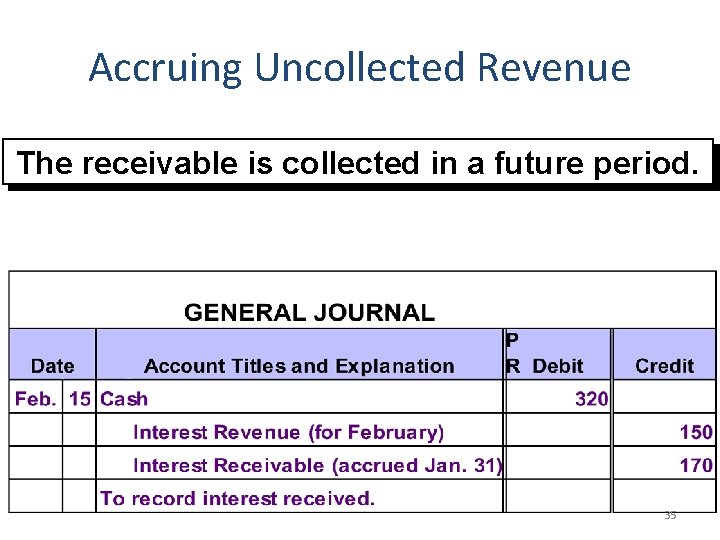
Accruing Uncollected Revenue The receivable is collected in a future period. 35
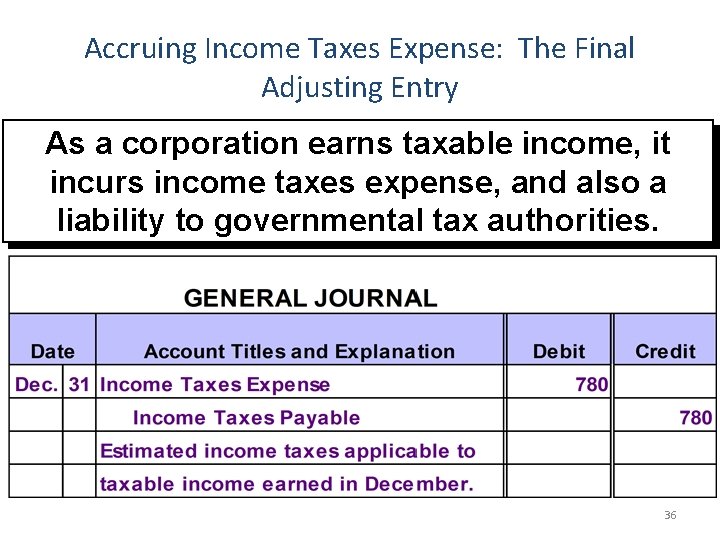
Accruing Income Taxes Expense: The Final Adjusting Entry As a corporation earns taxable income, it incurs income taxes expense, and also a liability to governmental tax authorities. 36
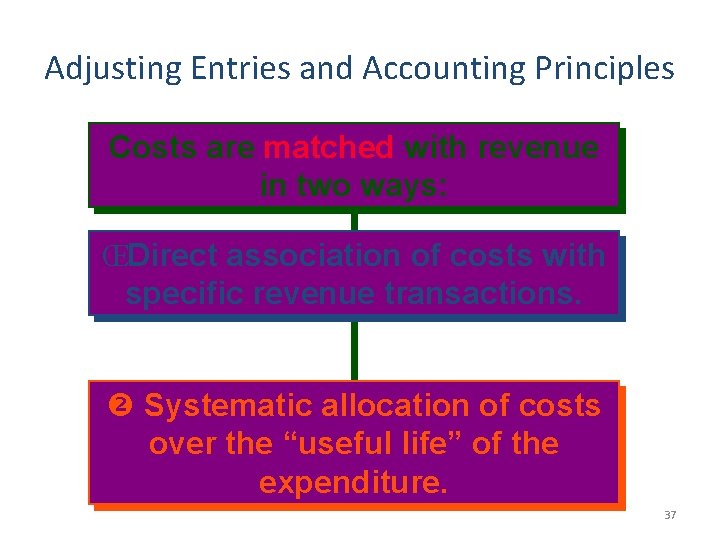
Adjusting Entries and Accounting Principles Costs are matched with revenue in two ways: ŒDirect association of costs with specific revenue transactions. Systematic allocation of costs over the “useful life” of the expenditure. 37
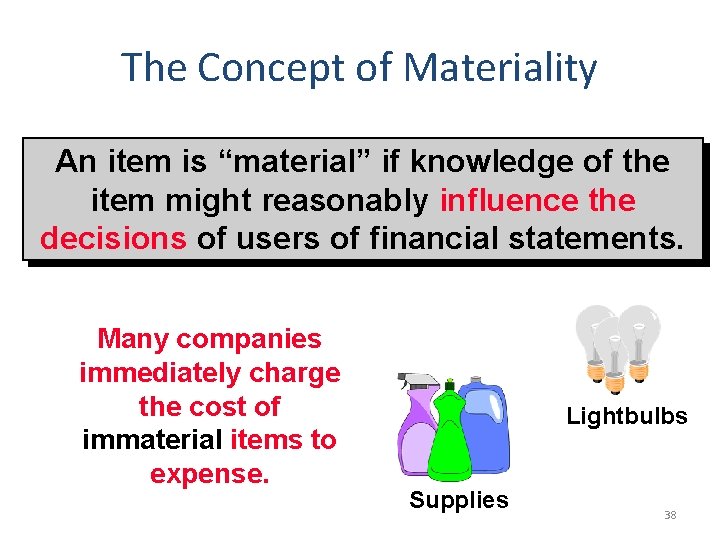
The Concept of Materiality An item is “material” if knowledge of the item might reasonably influence the decisions of users of financial statements. Many companies immediately charge the cost of immaterial items to expense. Lightbulbs Supplies 38
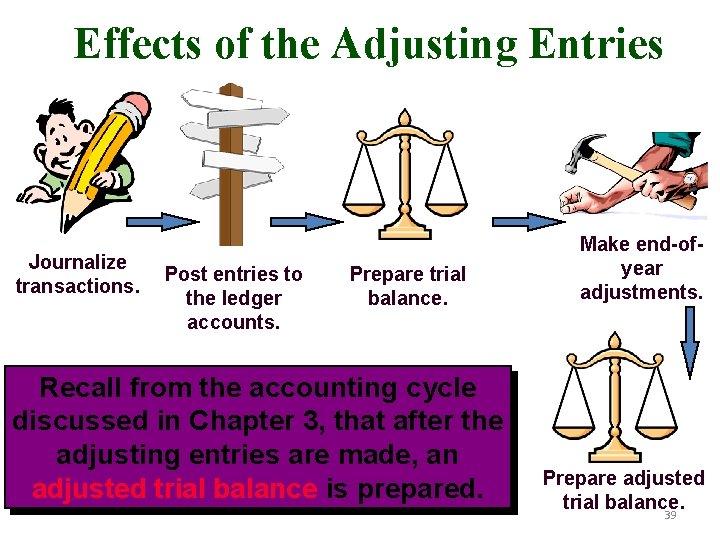
Effects of the Adjusting Entries Journalize transactions. Post entries to the ledger accounts. Prepare trial balance. Recall from the accounting cycle discussed in Chapter 3, that after the adjusting entries are made, an adjusted trial balance is prepared. Make end-ofyear adjustments. Prepare adjusted trial balance. 39
End of Chapter 4 40