
Sulci sulcus grooves on surface of cerebrum Gyri
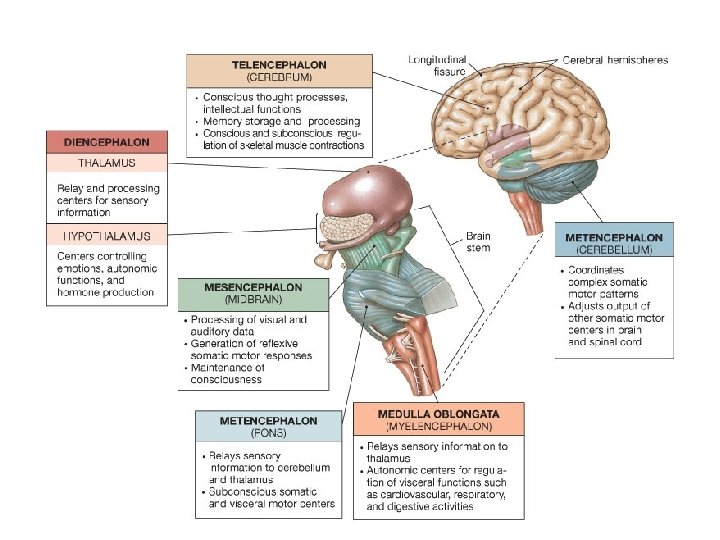
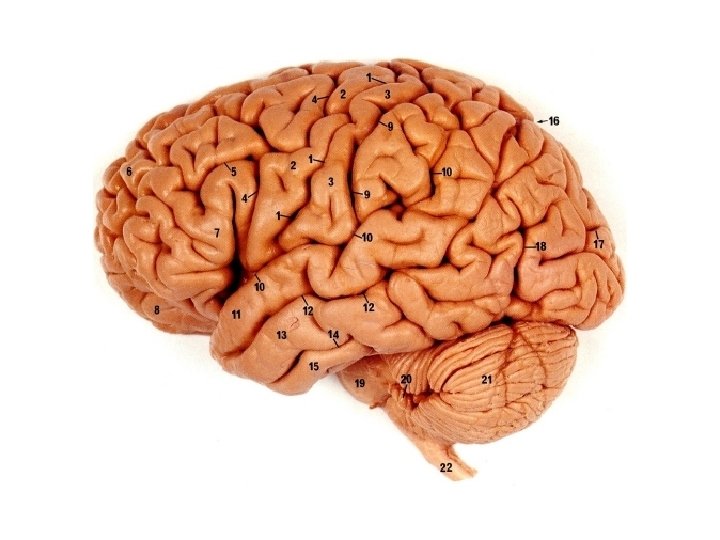

• Sulci (sulcus) – grooves on surface of cerebrum. • Gyri (gyrus) – fold of brain tissue between sulci. • Fissure - deep groove, separating hemispheres. Three kinds of cerebral functional area: 1) Sensory areas 2) Association areas 3) Motor areas

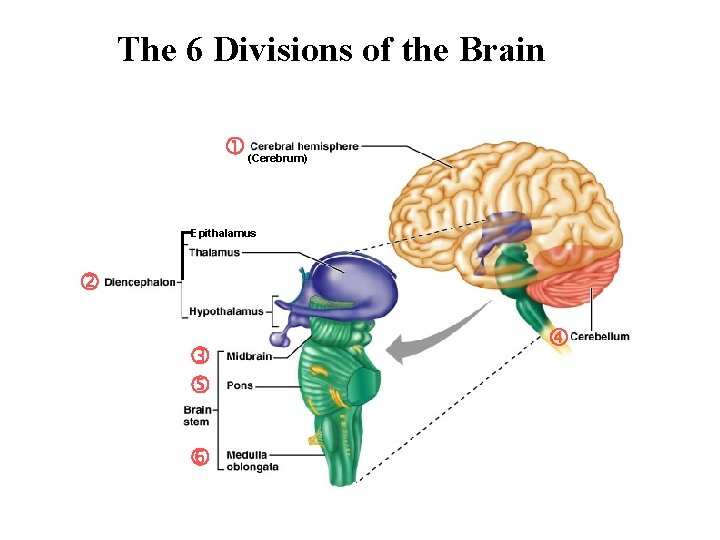
The 6 Divisions of the Brain (Cerebrum) Epithalamus
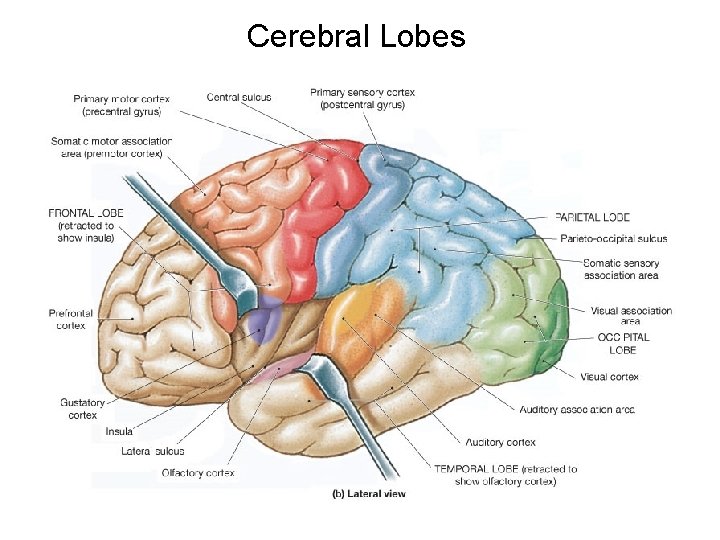
Cerebral Lobes
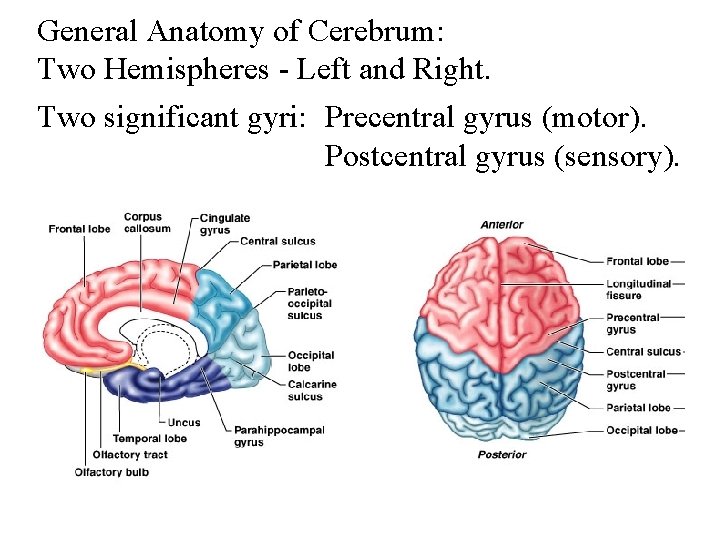
General Anatomy of Cerebrum: Two Hemispheres - Left and Right. Two significant gyri: Precentral gyrus (motor). Postcentral gyrus (sensory).

Cerebral Nuclei
Functions of the Cerebrum In General - our conscious mind, enables us to: Be aware of ourselves and sensations. Initiate and control voluntary movements. Communicate, remember, predict and understand. Cerebrum has 5 Lobes Frontal Lobe - memory, behavior, personality, movement. Parietal Lobe - somatic sensory perception. Temporal Lobe - auditory and olfactory perception. Occipital Lobe - visual perception. Insula Lobe - visceral perception.
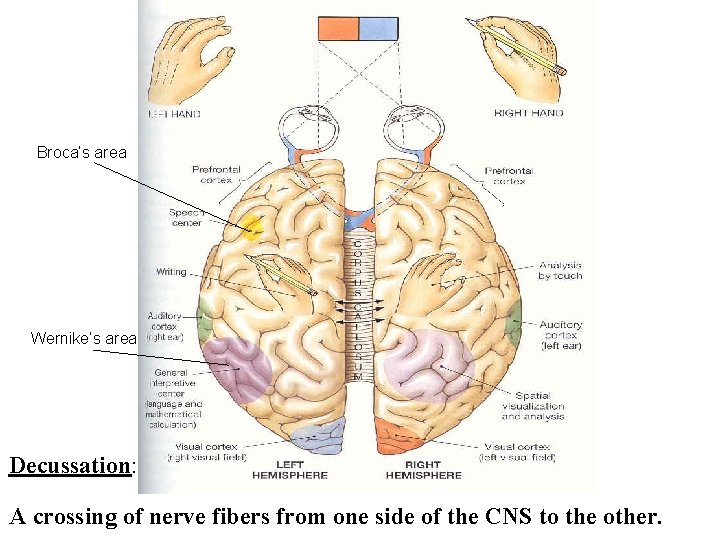
Broca’s area Wernike’s area Decussation: A crossing of nerve fibers from one side of the CNS to the other.
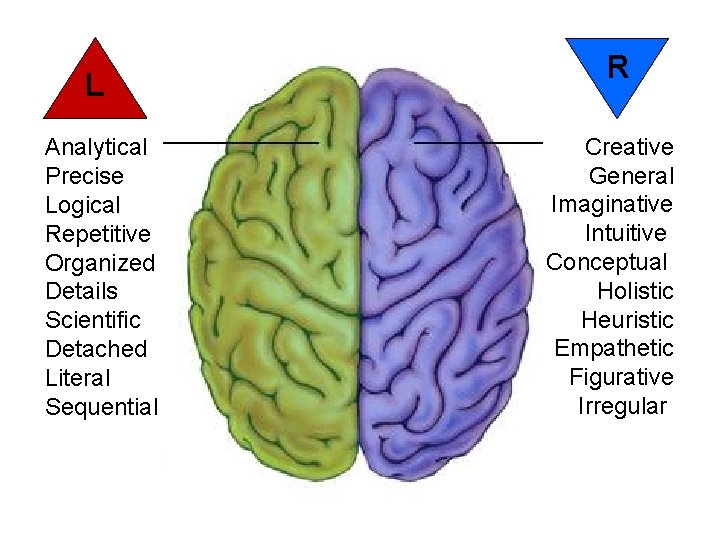
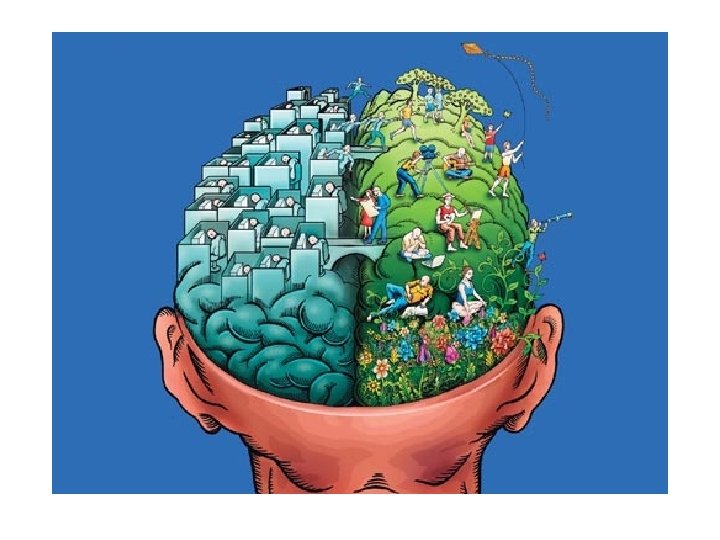
L Analytical Precise Logical Repetitive Organized Details Scientific Detached Literal Sequential R Creative General Imaginative Intuitive Conceptual Holistic Heuristic Empathetic Figurative Irregular
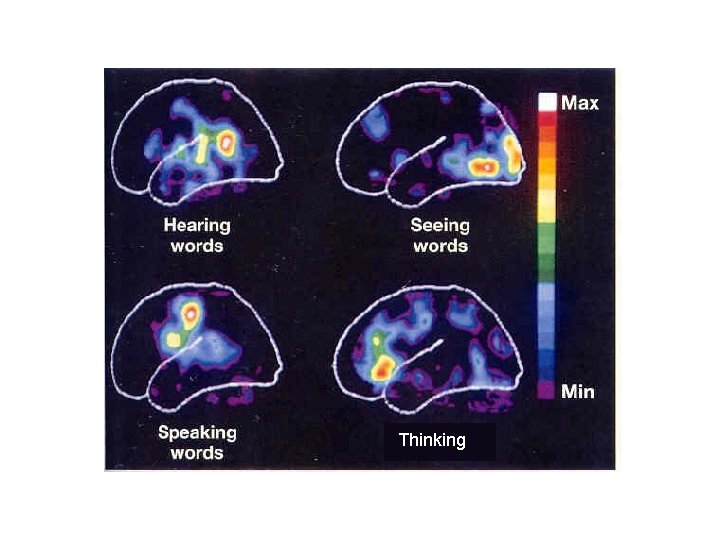
Thinking
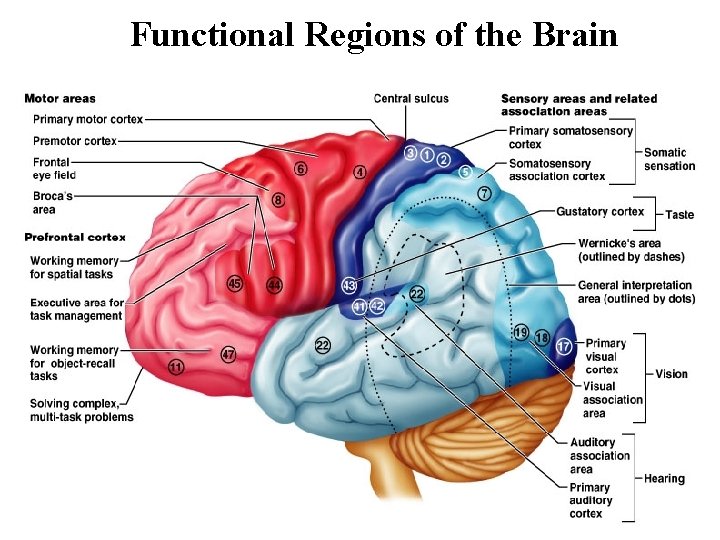
Functional Regions of the Brain
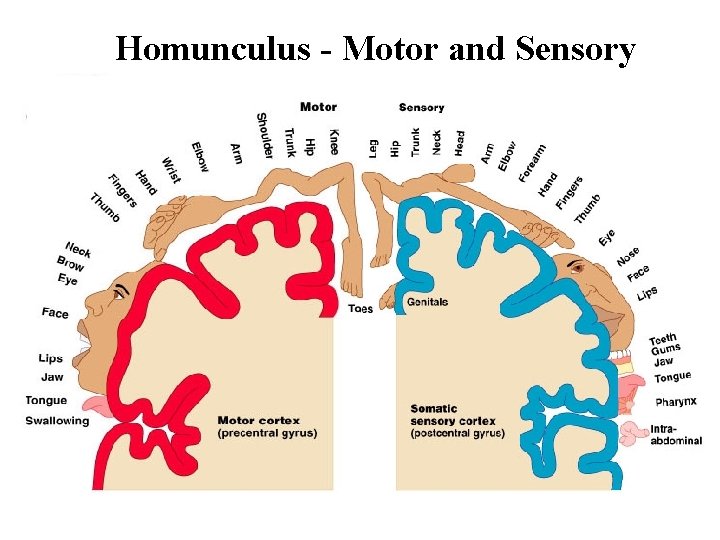
Homunculus - Motor and Sensory
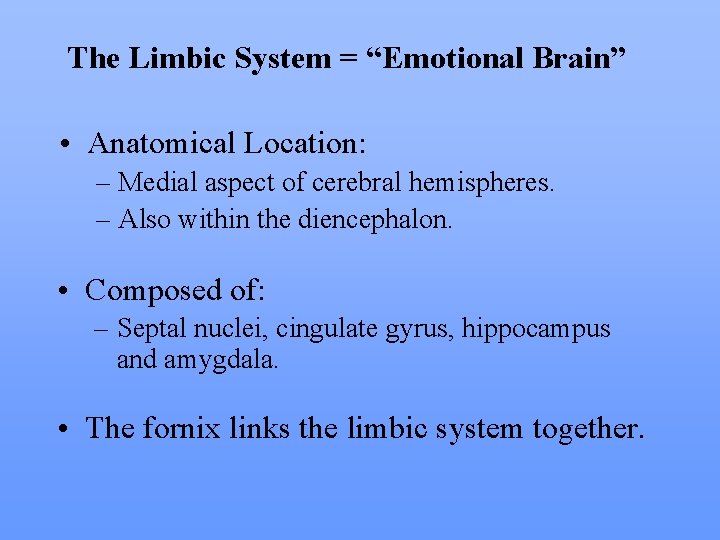
The Limbic System = “Emotional Brain” • Anatomical Location: – Medial aspect of cerebral hemispheres. – Also within the diencephalon. • Composed of: – Septal nuclei, cingulate gyrus, hippocampus and amygdala. • The fornix links the limbic system together.
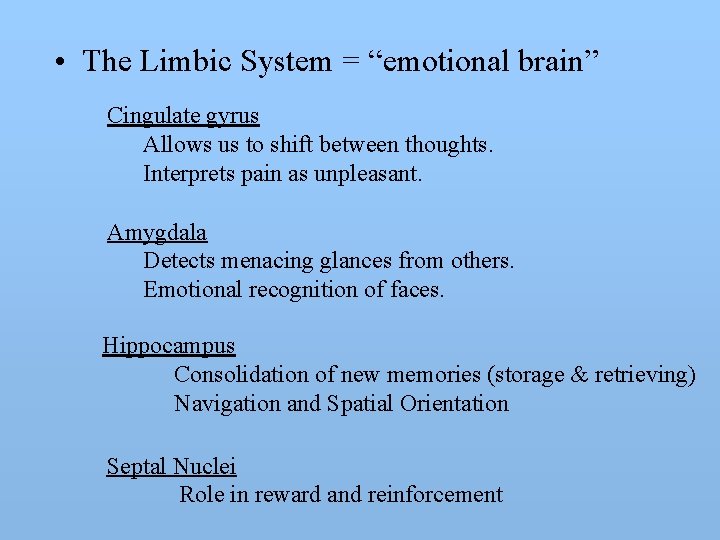
• The Limbic System = “emotional brain” Cingulate gyrus Allows us to shift between thoughts. Interprets pain as unpleasant. Amygdala Detects menacing glances from others. Emotional recognition of faces. Hippocampus Consolidation of new memories (storage & retrieving) Navigation and Spatial Orientation Septal Nuclei Role in reward and reinforcement
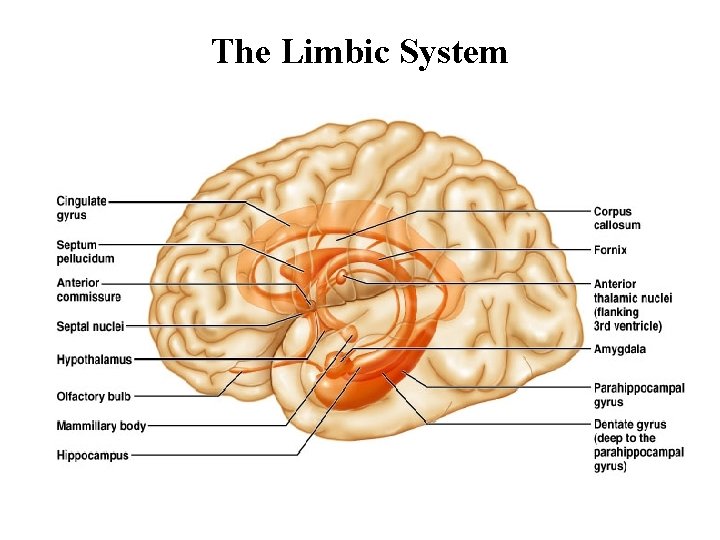
The Limbic System
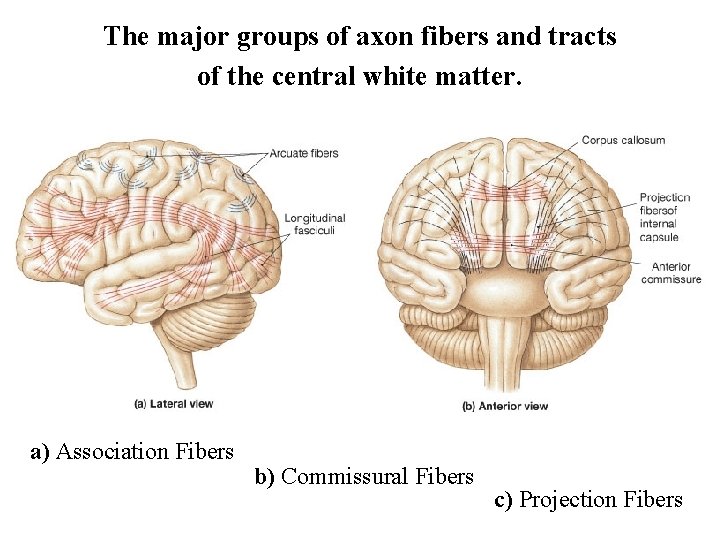
The major groups of axon fibers and tracts of the central white matter. a) Association Fibers b) Commissural Fibers c) Projection Fibers
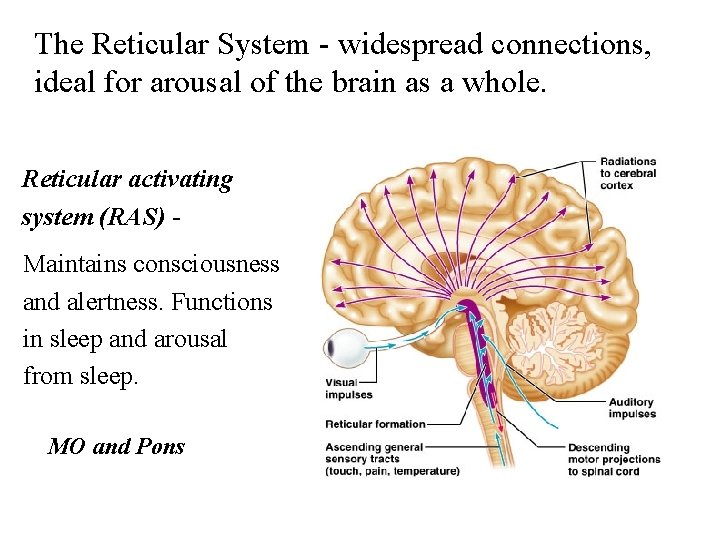
The Reticular System - widespread connections, ideal for arousal of the brain as a whole. Reticular activating system (RAS) Maintains consciousness and alertness. Functions in sleep and arousal from sleep. MO and Pons
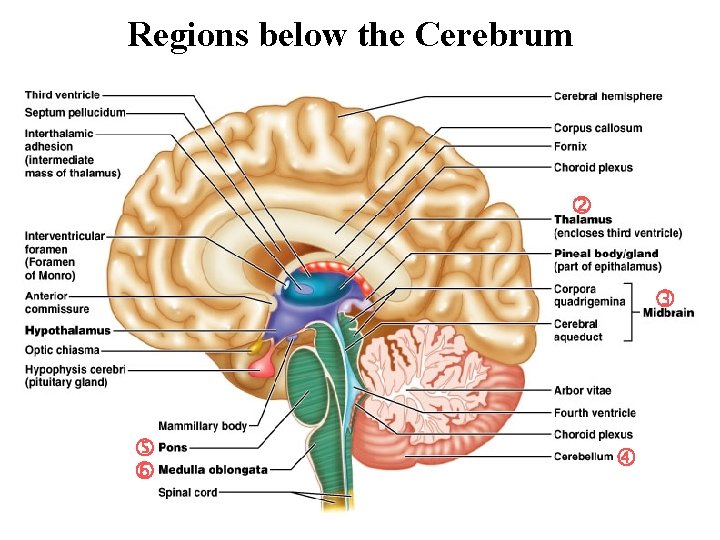
Regions below the Cerebrum
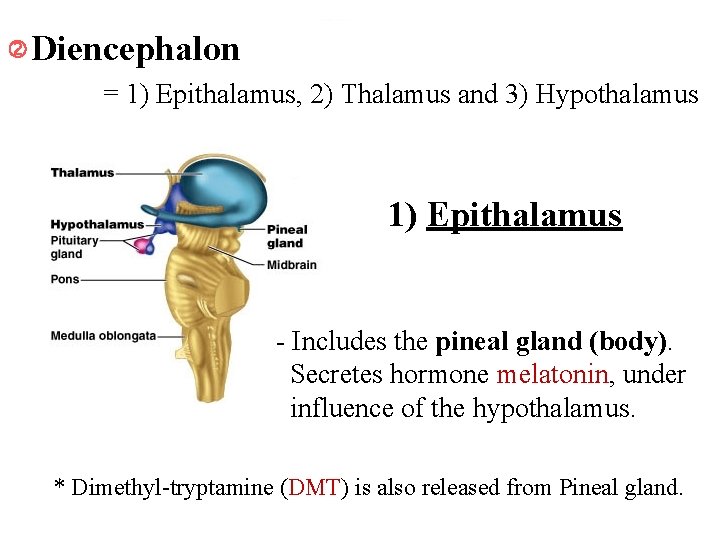
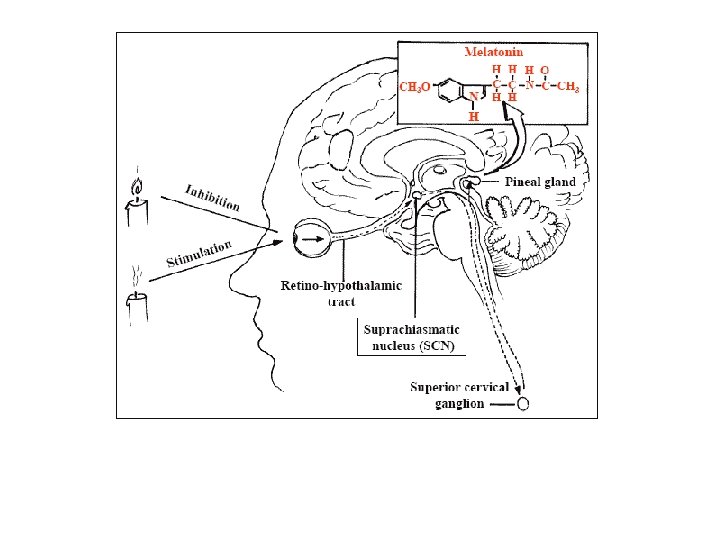
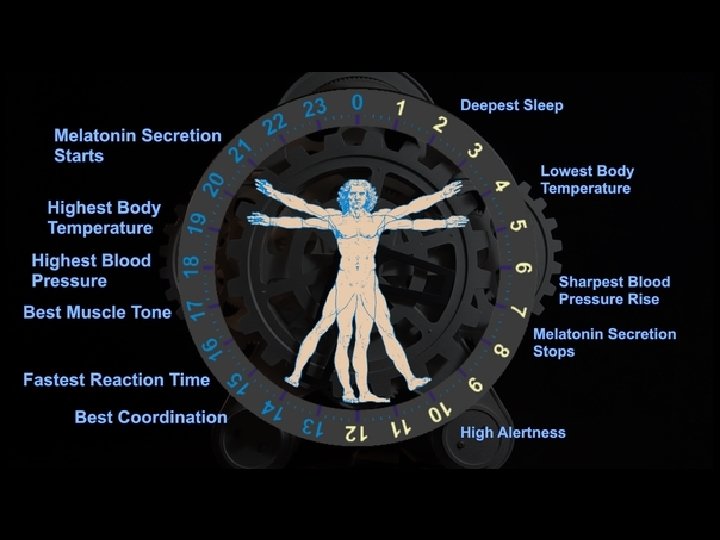
Diencephalon = 1) Epithalamus, 2) Thalamus and 3) Hypothalamus 1) Epithalamus - Includes the pineal gland (body). Secretes hormone melatonin, under influence of the hypothalamus. * Dimethyl-tryptamine (DMT) is also released from Pineal gland.
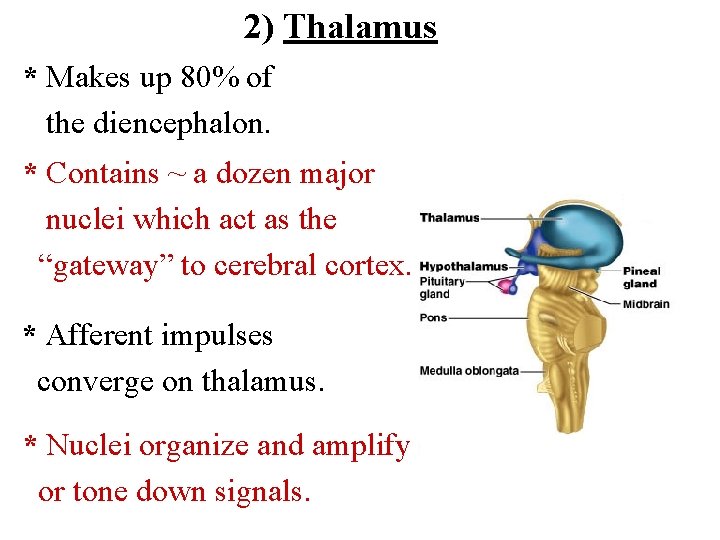
2) Thalamus * Makes up 80% of the diencephalon. * Contains ~ a dozen major nuclei which act as the “gateway” to cerebral cortex. * Afferent impulses converge on thalamus. * Nuclei organize and amplify or tone down signals.
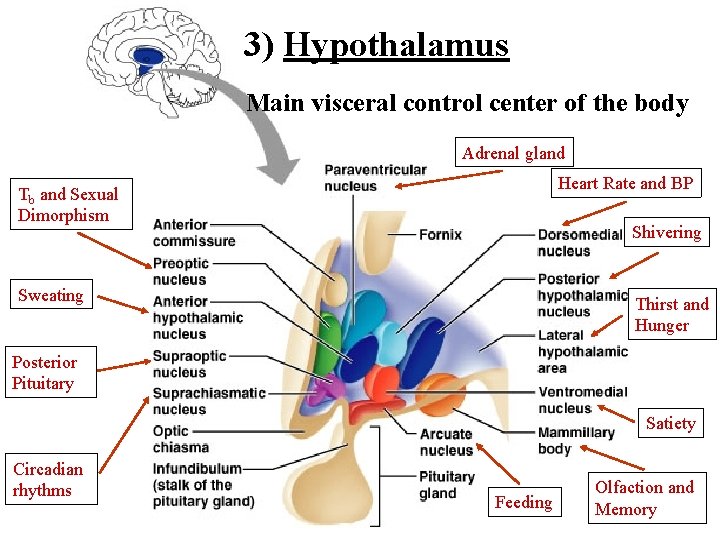
3) Hypothalamus Main visceral control center of the body Adrenal gland Heart Rate and BP Tb and Sexual Dimorphism Shivering Sweating Thirst and Hunger Posterior Pituitary Satiety Circadian rhythms Feeding Olfaction and Memory
Functions of the Hypothalamus: 1. Controls autonomic nervous system (ANS) 2. Control of the endocrine system 3. Regulation of body temperature (Tb) 4. Regulation of hunger and thirst sensations 5. Regulation of sleep-wake cycles Overall: Controls much of behavior via emotional responses (Limbic) and ANS - Formation of memory
- Slides: 27