
Sui Dynasty 581 618 C E Grand Canal

- Slides: 15
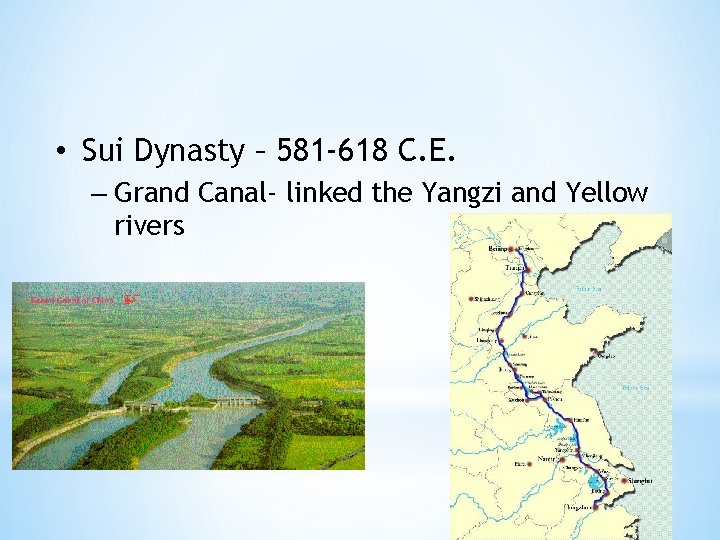
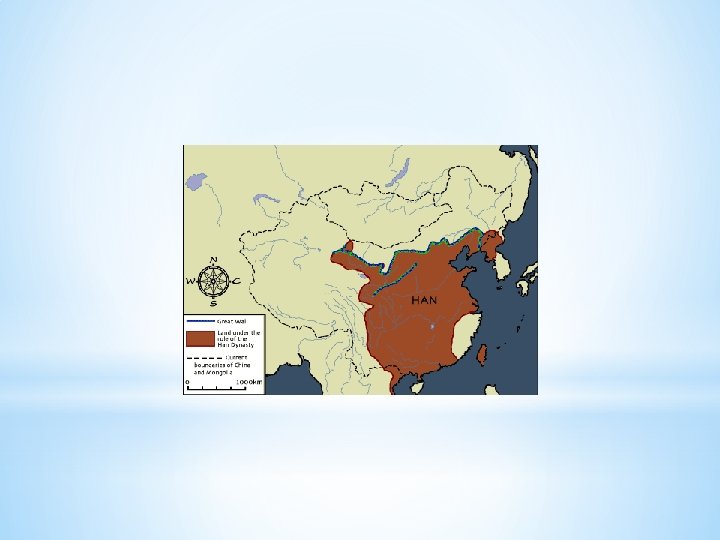
• Sui Dynasty – 581 -618 C. E. – Grand Canal- linked the Yangzi and Yellow rivers
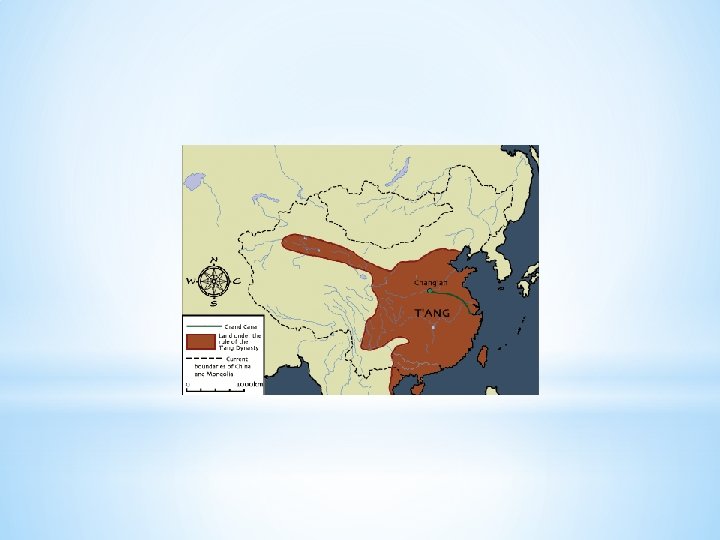
Tang Dynasty – 618 -907 C. E. – Continued policies of the Sui – Rise of Buddhism – Expanded trade and the empire’s borders – Block printing – compass – Rulers had some Turkish ethnicity and cultural practices – Tribute empire – Looked down on merchants (continuity in Chinese history)
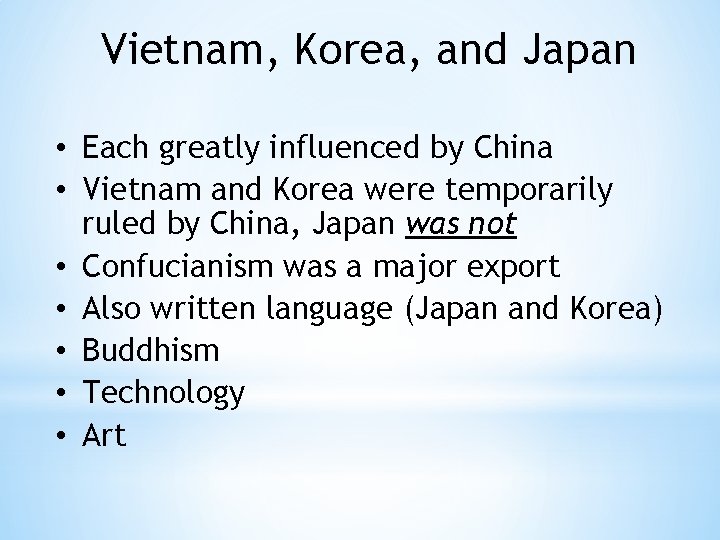
Vietnam, Korea, and Japan • Each greatly influenced by China • Vietnam and Korea were temporarily ruled by China, Japan was not • Confucianism was a major export • Also written language (Japan and Korea) • Buddhism • Technology • Art
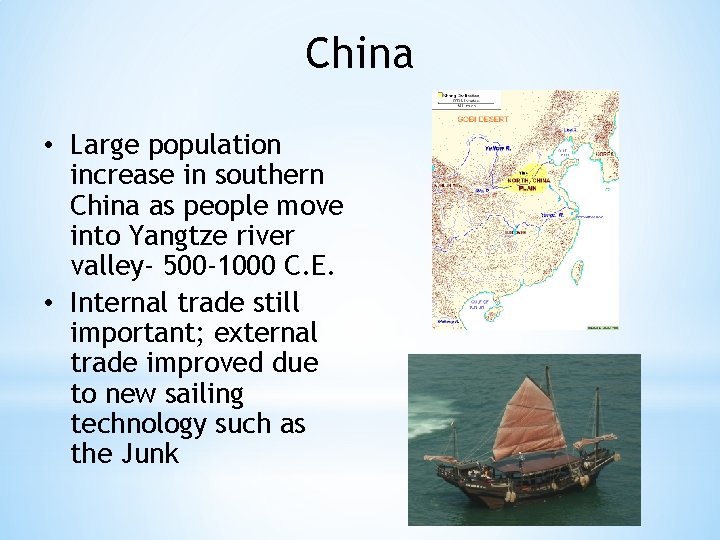
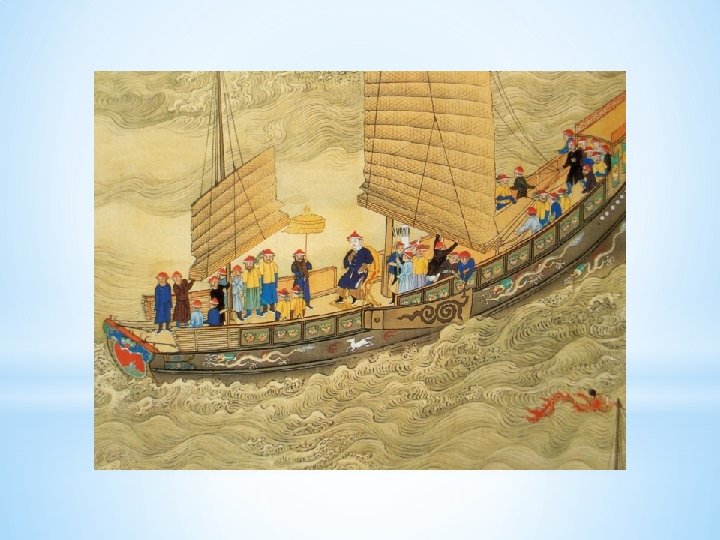
China • Large population increase in southern China as people move into Yangtze river valley- 500 -1000 C. E. • Internal trade still important; external trade improved due to new sailing technology such as the Junk
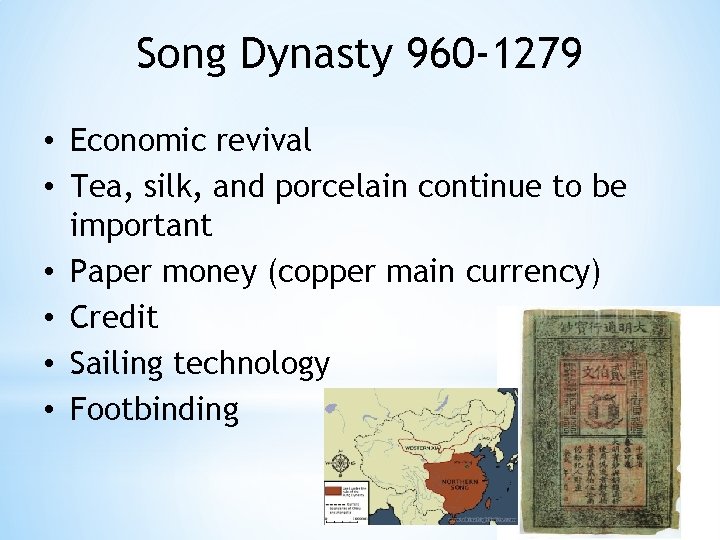
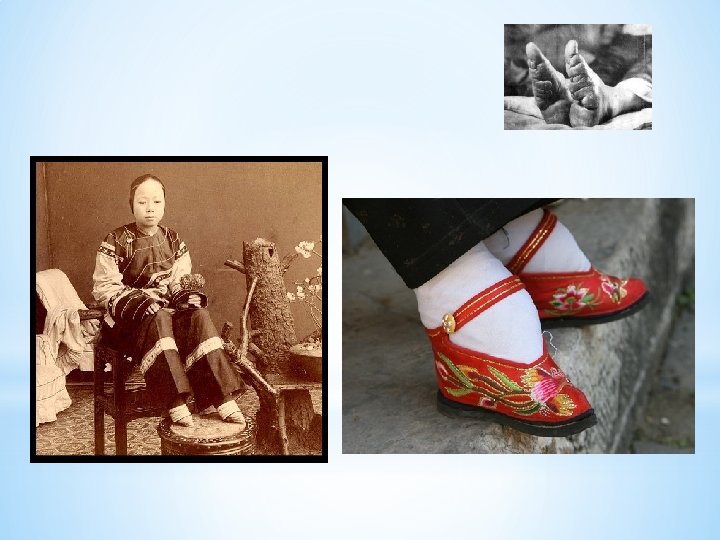
Song Dynasty 960 -1279 • Economic revival • Tea, silk, and porcelain continue to be important • Paper money (copper main currency) • Credit • Sailing technology • Footbinding
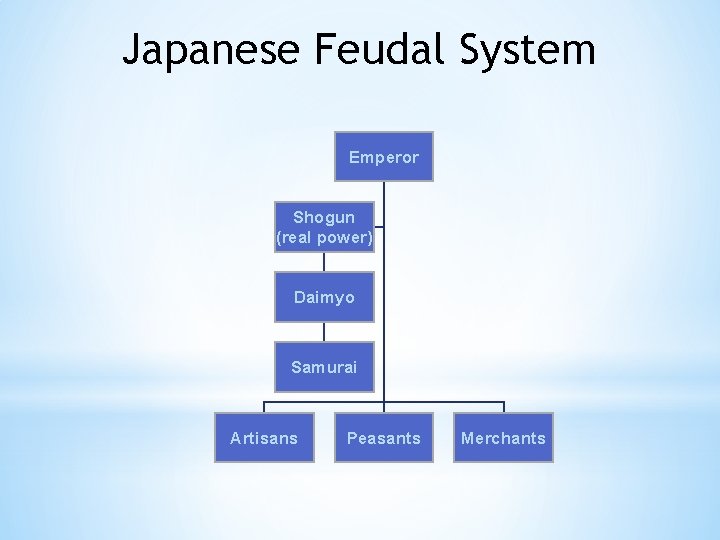
�Emperor – head of the Shinto religion- emperor descends from a continuous lineage (Yamato Clan) �Eventually becomes a figurehead �Fujiwara family- 794 -1185 �Kamakura Shogunate 1185 – 1338 -Japan becomes a decentralized feudal state -Resistance of Mongols helps unify Japan, and strengthens the power of the Samurai *
Japanese Feudal System Emperor Shogun (real power) Daimyo Samurai Artisans Peasants Merchants
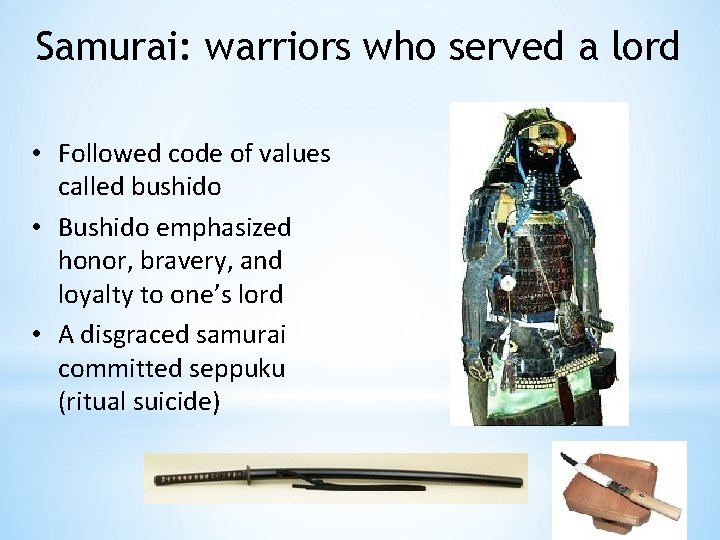
Samurai: warriors who served a lord • Followed code of values called bushido • Bushido emphasized honor, bravery, and loyalty to one’s lord • A disgraced samurai committed seppuku (ritual suicide)