
Sugar Smart Devon Ambassador Programmes Dr Clare Pettinger
Sugar Smart Devon Ambassador Programmes Dr Clare Pettinger (#Sugar. Smart. Plymouth campaign Manager; Food Plymouth)
Outline • Why we decided to take this approach? • Overview of training • Success of programme(s) ? • Resources for ambassadors • Support for ambassadors • Challenges
Why we decided to take this approach? • ‘Bottom-up’ /community engagement approaches (co-production) = more likely to succeed • Facilitating local ‘train the trainer’ style Sugar Smart ambassador programme seemed best approach to: • • Spread Sugar Smart word (in line with local campaign aims) Maintain consistent Sugar Smart messaging (evidence based) Align priorities for regional food networks Enable standardisation of evaluation framework • To cascade messages to as many individuals and communities as possible
Sugar Smart Ambassador Role • ‘Social movement’ to create healthier food environments • Actions to be taken are up to ambassadors themselves – use initiative and follow relevant interests • Any activity to promote Sugar Smart is useful, including running stalls, events, activities within your organisations/workplaces. • Meeting local campaign targets • (Actions made under the Sugar Smart branding must be in line with core campaign principles)
Overview of training • Working together to create a (standardised) Trainer Facilitator Handbook/toolkit • Agree on content (but consider need to tailor according to area/local campaign/specific setting needs) • Covering key concepts and insights • Sugar and Health (obesity; oral health; glycaemic load; current intakes; recommended intakes); sugar ‘hot spots’ (in specific setting); tips for cutting down sugar; local campaign targets; communicating messages; ambassador roles; possible activities • Interactive – sharing knowledge – experts by experience – coproduction
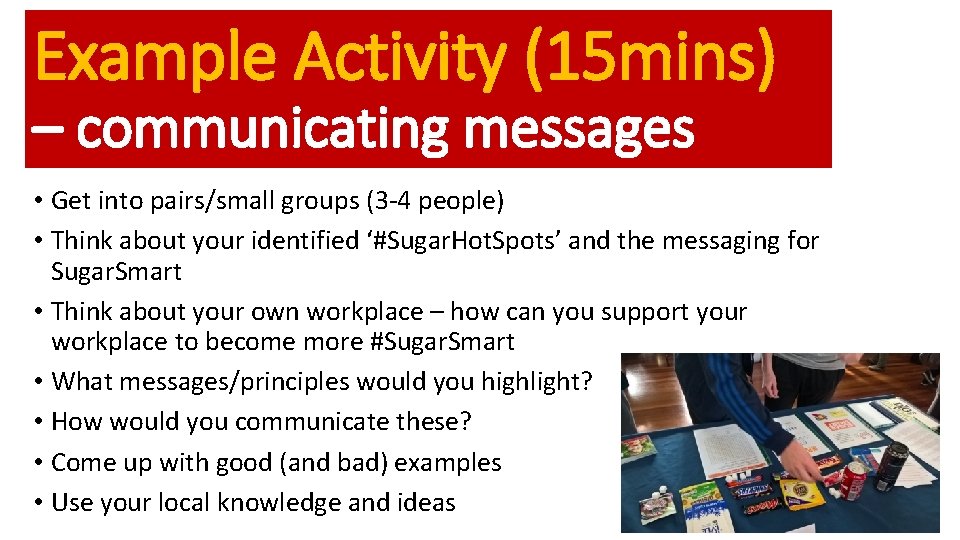
Example Activity (15 mins) – communicating messages • Get into pairs/small groups (3 -4 people) • Think about your identified ‘#Sugar. Hot. Spots’ and the messaging for Sugar. Smart • Think about your own workplace – how can you support your workplace to become more #Sugar. Smart • What messages/principles would you highlight? • How would you communicate these? • Come up with good (and bad) examples • Use your local knowledge and ideas
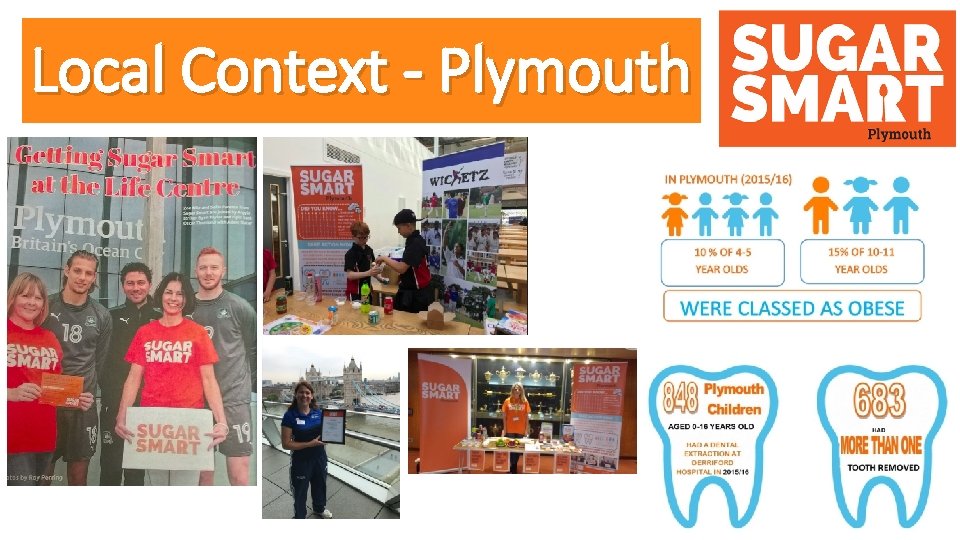
Local Context - Plymouth
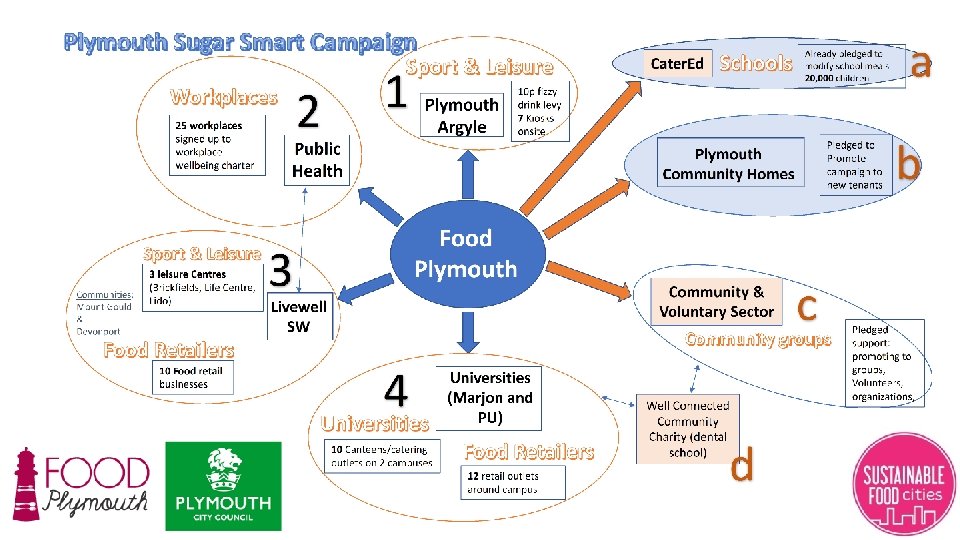
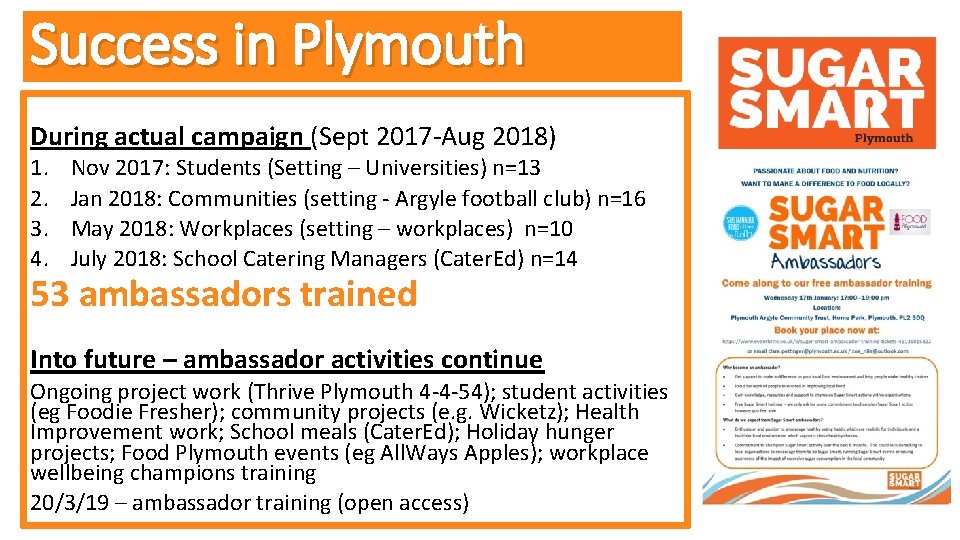
Success in Plymouth During actual campaign (Sept 2017 -Aug 2018) 1. 2. 3. 4. Nov 2017: Students (Setting – Universities) n=13 Jan 2018: Communities (setting - Argyle football club) n=16 May 2018: Workplaces (setting – workplaces) n=10 July 2018: School Catering Managers (Cater. Ed) n=14 53 ambassadors trained Into future – ambassador activities continue Ongoing project work (Thrive Plymouth 4 -4 -54); student activities (eg Foodie Fresher); community projects (e. g. Wicketz); Health Improvement work; School meals (Cater. Ed); Holiday hunger projects; Food Plymouth events (eg All. Ways Apples); workplace wellbeing champions training 20/3/19 – ambassador training (open access)
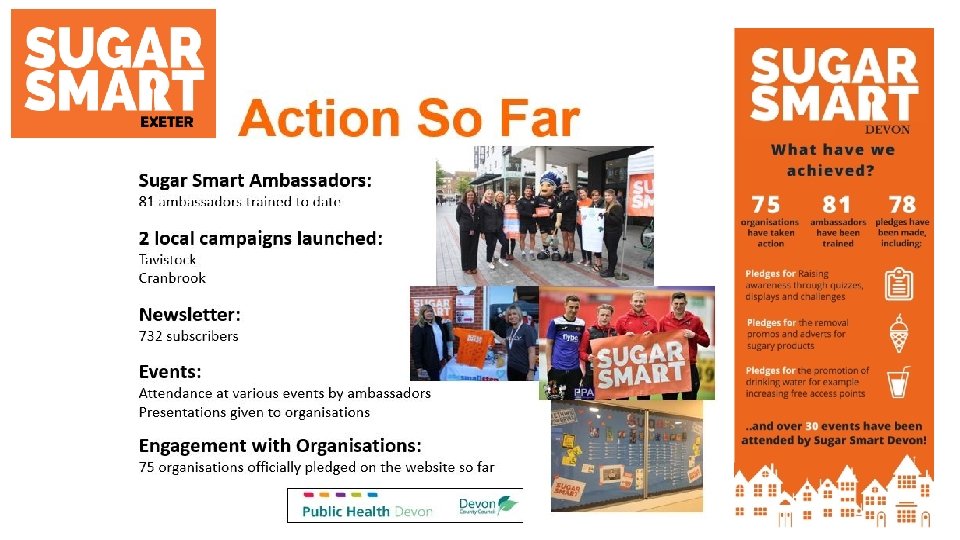
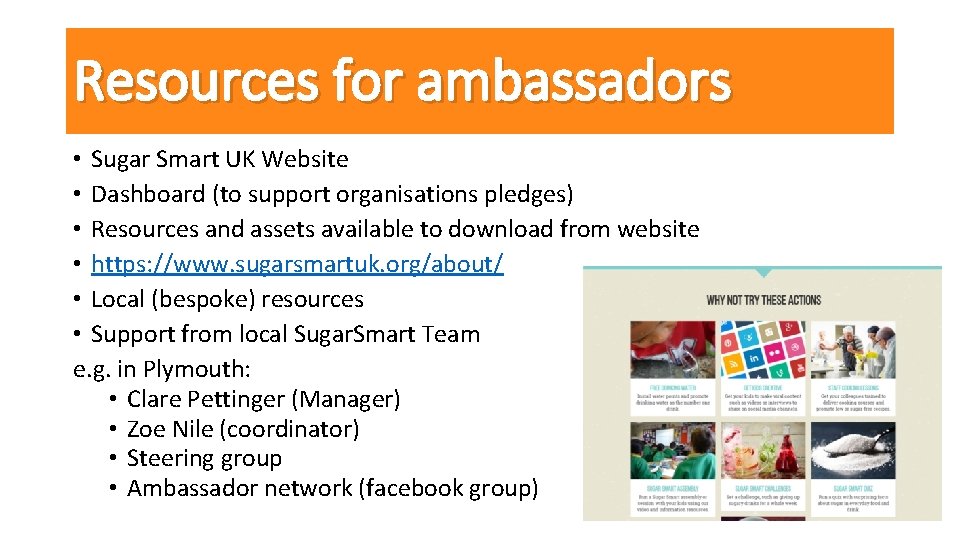
Resources for ambassadors • Sugar Smart UK Website • Dashboard (to support organisations pledges) • Resources and assets available to download from website • https: //www. sugarsmartuk. org/about/ • Local (bespoke) resources • Support from local Sugar. Smart Team e. g. in Plymouth: • Clare Pettinger (Manager) • Zoe Nile (coordinator) • Steering group • Ambassador network (facebook group)
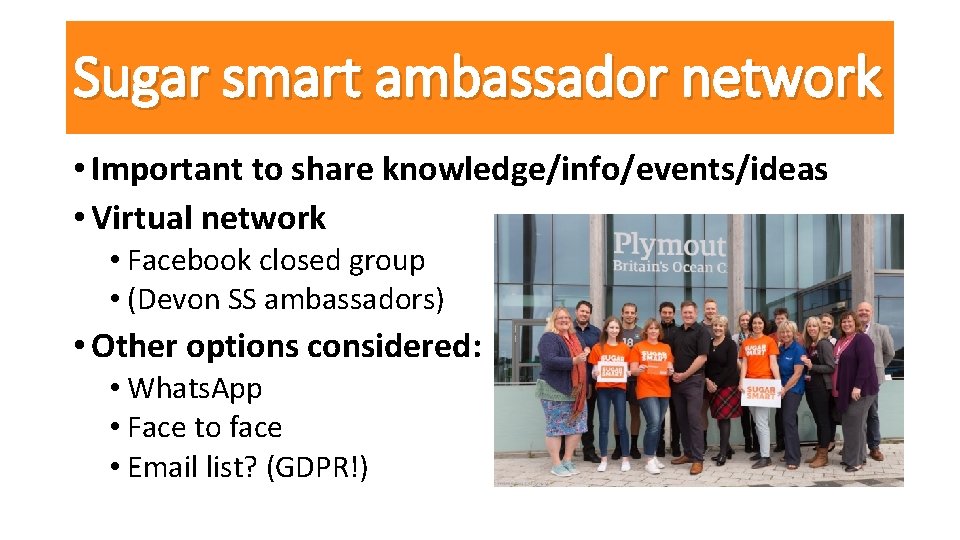
Sugar smart ambassador network • Important to share knowledge/info/events/ideas • Virtual network • Facebook closed group • (Devon SS ambassadors) • Other options considered: • Whats. App • Face to face • Email list? (GDPR!)
Challenges • Time (busy working schedules and shifts) • Varied expertise/background • Uncertainty of precise role and how to go about it • Lack of confidence (need to signpost when necessary) • Conflicting sugar and health information (media) • Sugar messages being confused - perception • “Sugar police”…? • Individual behaviour change focus • Confusion with other campaigns • Limited resources
Questions?
- Slides: 14