
Sugar Act of 1764 Purpose was to raise
- Slides: 13
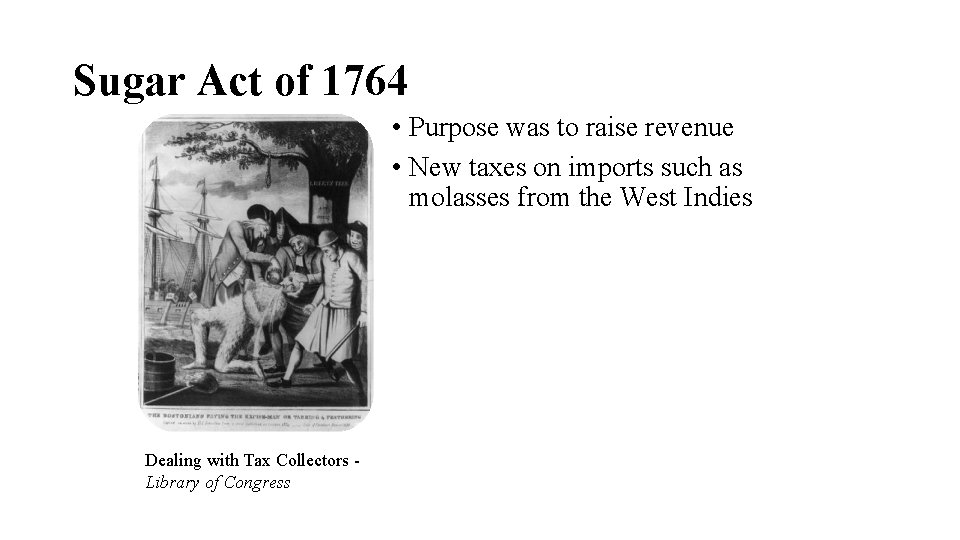
Sugar Act of 1764 • Purpose was to raise revenue • New taxes on imports such as molasses from the West Indies Dealing with Tax Collectors Library of Congress
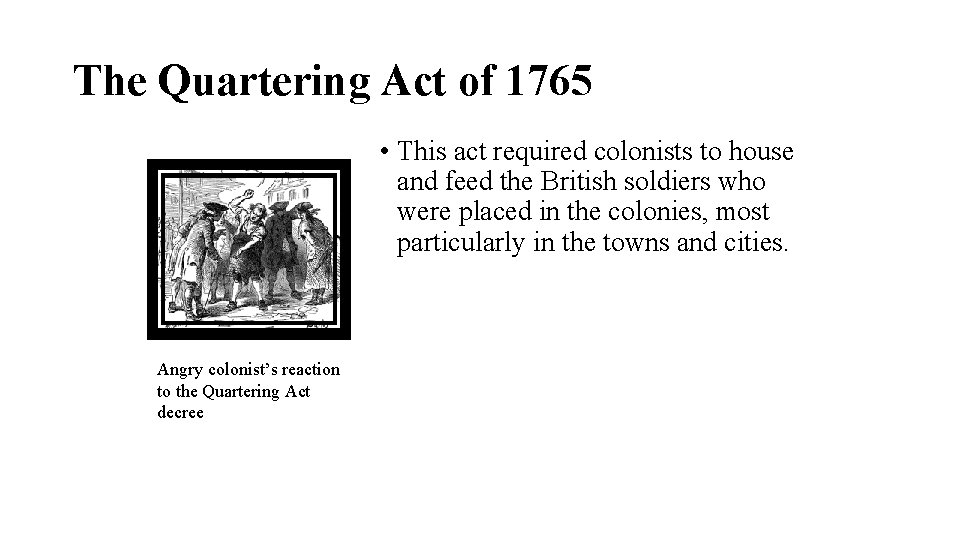
The Quartering Act of 1765 • This act required colonists to house and feed the British soldiers who were placed in the colonies, most particularly in the towns and cities. Angry colonist’s reaction to the Quartering Act decree
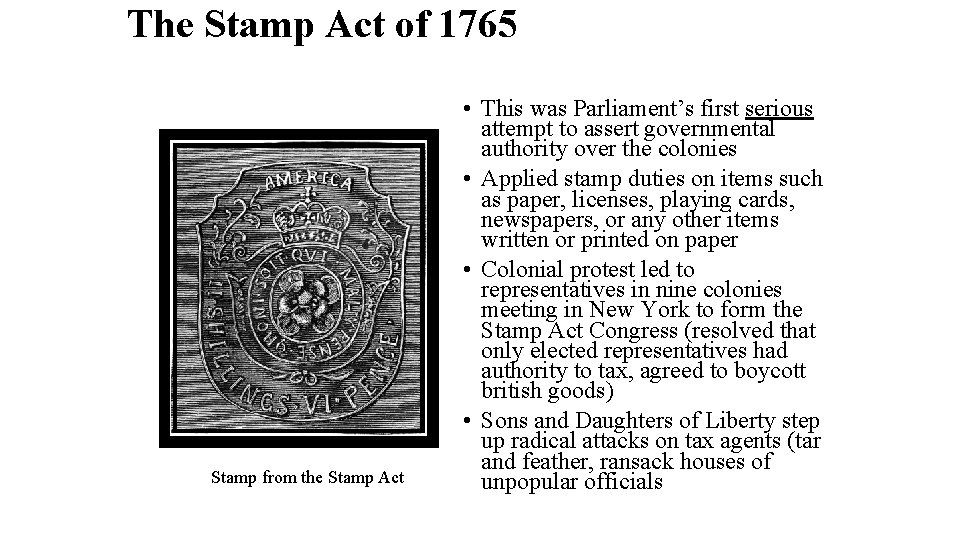
The Stamp Act of 1765 Stamp from the Stamp Act • This was Parliament’s first serious attempt to assert governmental authority over the colonies • Applied stamp duties on items such as paper, licenses, playing cards, newspapers, or any other items written or printed on paper • Colonial protest led to representatives in nine colonies meeting in New York to form the Stamp Act Congress (resolved that only elected representatives had authority to tax, agreed to boycott british goods) • Sons and Daughters of Liberty step up radical attacks on tax agents (tar and feather, ransack houses of unpopular officials
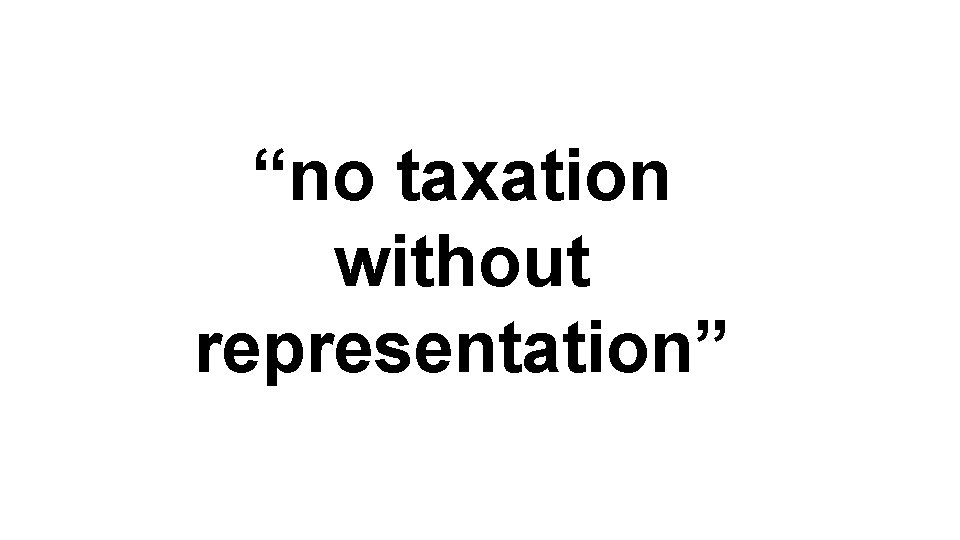
“no taxation without representation”
The Second Phase of the Crisis, 17671773 • Parliament voted to repeal the Stamp Act • Colonists rejoiced, but passed the Declaratory Act (1766) • This act asserted that Parliament had the right to tax and make laws for the colonies “in all cases whatsoever” • This would lead to renewed misunderstanding and conflict between American colonists and the British government
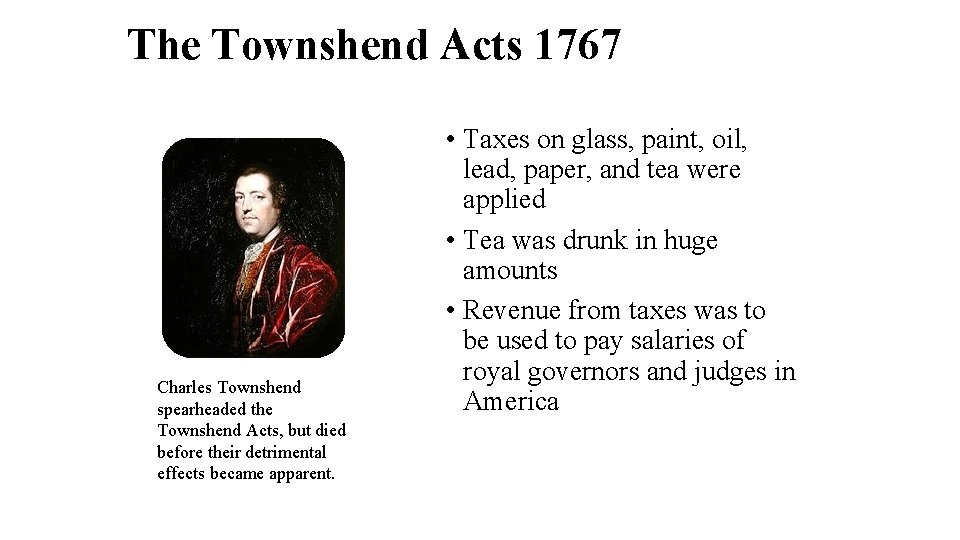
The Townshend Acts 1767 Charles Townshend spearheaded the Townshend Acts, but died before their detrimental effects became apparent. • Taxes on glass, paint, oil, lead, paper, and tea were applied • Tea was drunk in huge amounts • Revenue from taxes was to be used to pay salaries of royal governors and judges in America
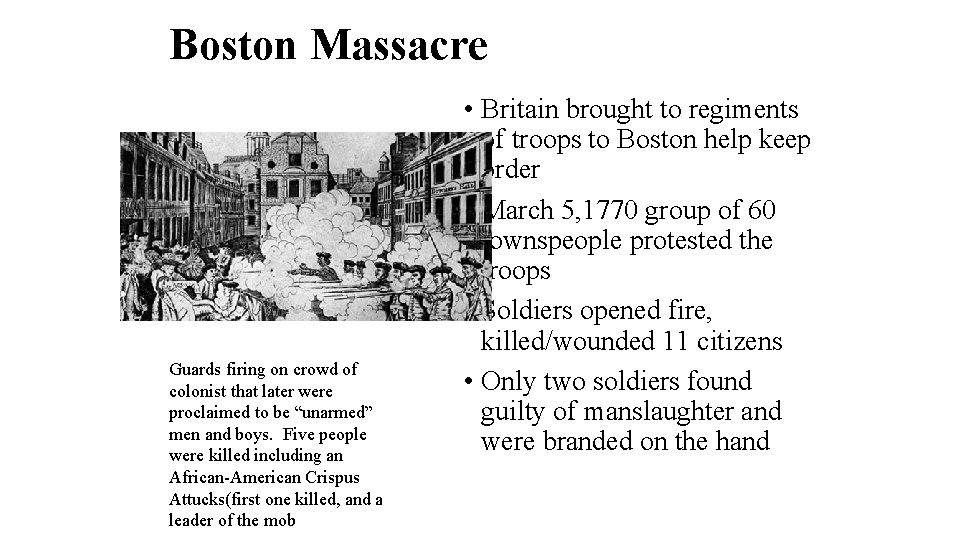
Boston Massacre Guards firing on crowd of colonist that later were proclaimed to be “unarmed” men and boys. Five people were killed including an African-American Crispus Attucks(first one killed, and a leader of the mob • Britain brought to regiments of troops to Boston help keep order • March 5, 1770 group of 60 townspeople protested the troops • Soldiers opened fire, killed/wounded 11 citizens • Only two soldiers found guilty of manslaughter and were branded on the hand
Renewal of Conflict • Samuel Adams and a few other Americans kept alive the view that British officials were conspiring against colonial liberties • Adams and others established Committees of Correspondence that would regularly exchange letters about suspicious or threatening British activities • Led to creation of intercolonial committees of correspondence where colonies exchanged ideas and information between each other
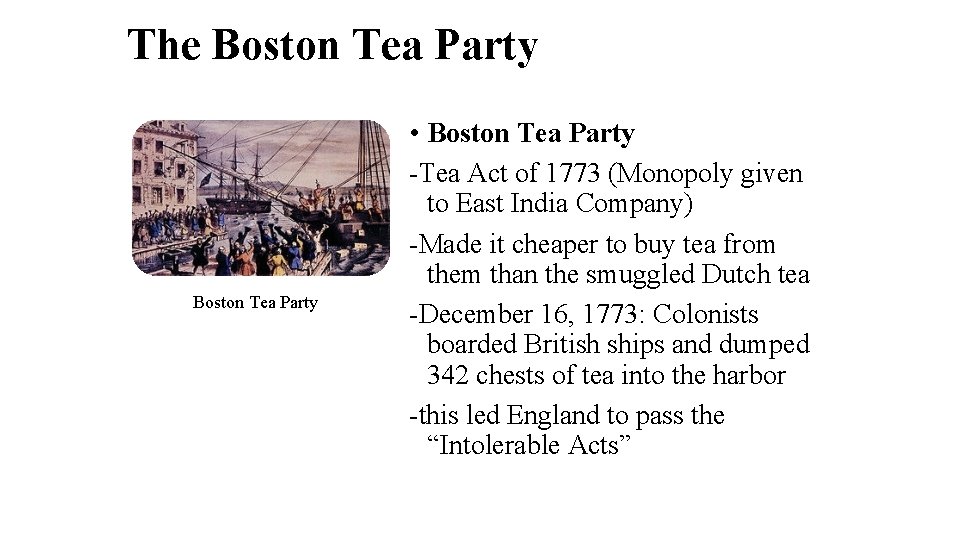
The Boston Tea Party • Boston Tea Party -Tea Act of 1773 (Monopoly given to East India Company) -Made it cheaper to buy tea from them than the smuggled Dutch tea -December 16, 1773: Colonists boarded British ships and dumped 342 chests of tea into the harbor -this led England to pass the “Intolerable Acts”
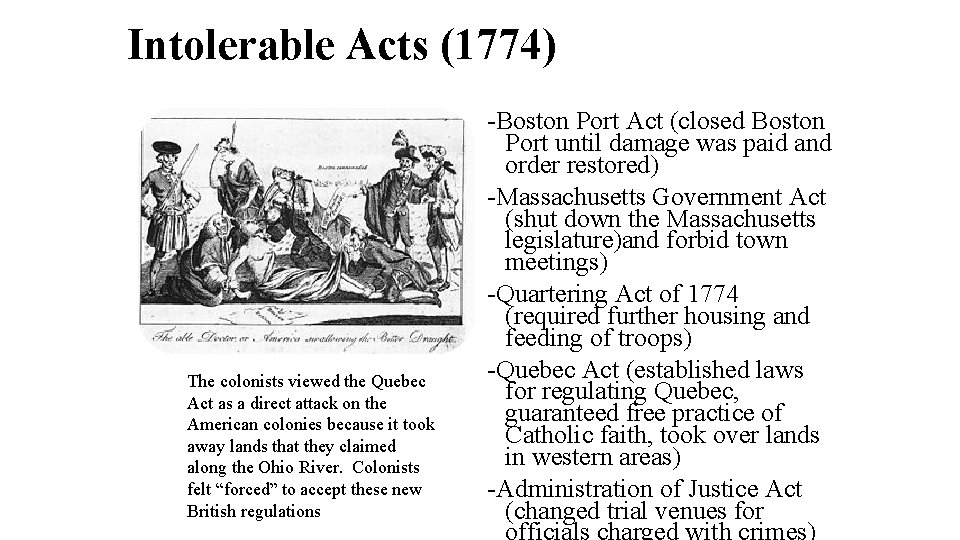
Intolerable Acts (1774) The colonists viewed the Quebec Act as a direct attack on the American colonies because it took away lands that they claimed along the Ohio River. Colonists felt “forced” to accept these new British regulations -Boston Port Act (closed Boston Port until damage was paid and order restored) -Massachusetts Government Act (shut down the Massachusetts legislature)and forbid town meetings) -Quartering Act of 1774 (required further housing and feeding of troops) -Quebec Act (established laws for regulating Quebec, guaranteed free practice of Catholic faith, took over lands in western areas) -Administration of Justice Act (changed trial venues for
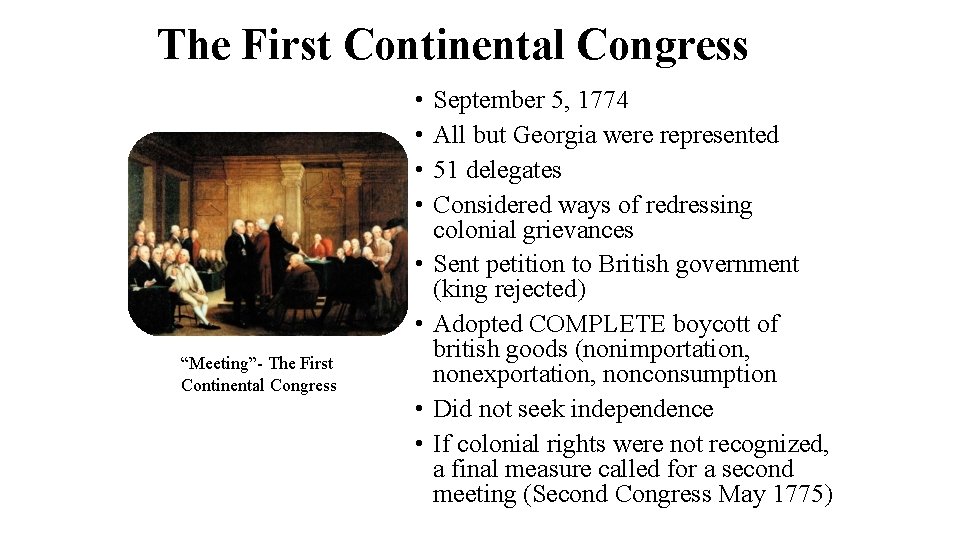
The First Continental Congress • • • “Meeting”- The First Continental Congress • • September 5, 1774 All but Georgia were represented 51 delegates Considered ways of redressing colonial grievances Sent petition to British government (king rejected) Adopted COMPLETE boycott of british goods (nonimportation, nonexportation, nonconsumption Did not seek independence If colonial rights were not recognized, a final measure called for a second meeting (Second Congress May 1775)
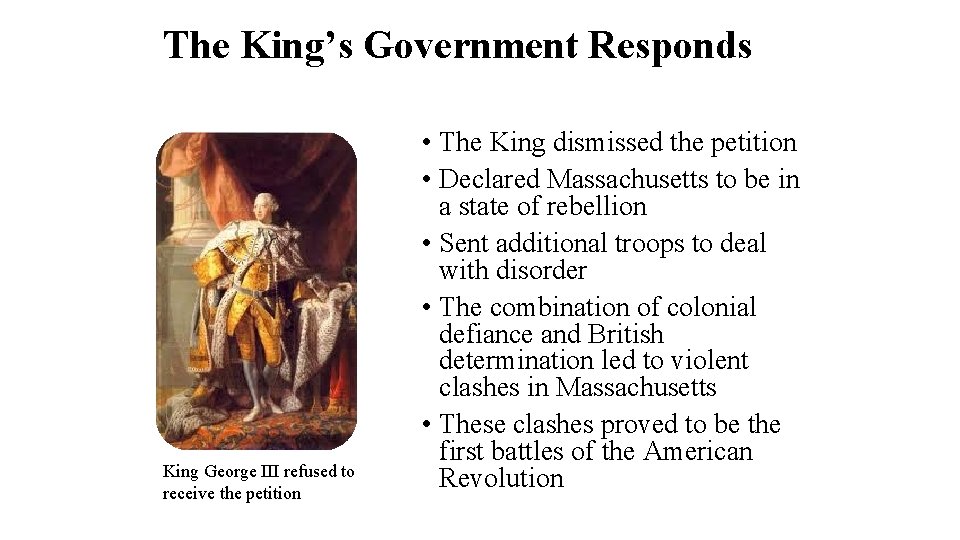
The King’s Government Responds King George III refused to receive the petition • The King dismissed the petition • Declared Massachusetts to be in a state of rebellion • Sent additional troops to deal with disorder • The combination of colonial defiance and British determination led to violent clashes in Massachusetts • These clashes proved to be the first battles of the American Revolution
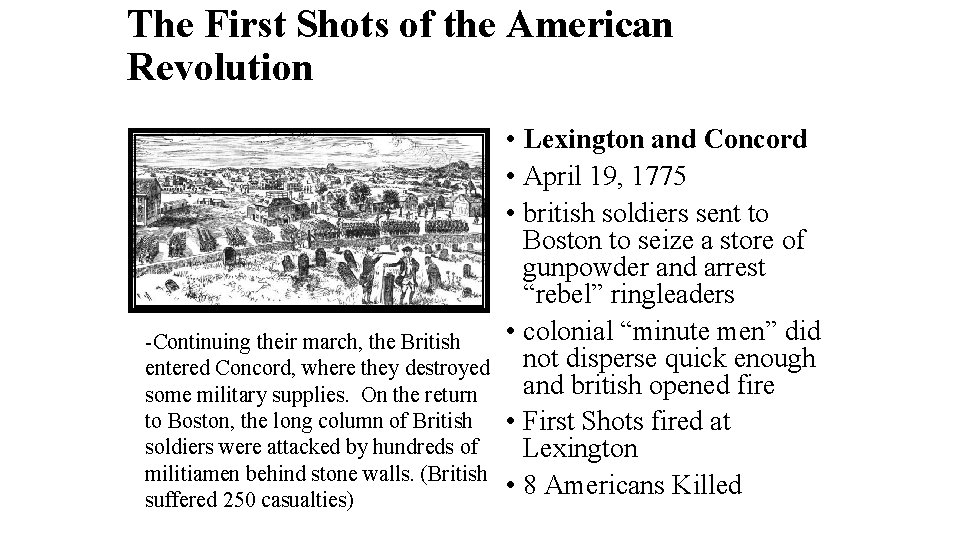
The First Shots of the American Revolution -Continuing their march, the British entered Concord, where they destroyed some military supplies. On the return to Boston, the long column of British soldiers were attacked by hundreds of militiamen behind stone walls. (British suffered 250 casualties) • Lexington and Concord • April 19, 1775 • british soldiers sent to Boston to seize a store of gunpowder and arrest “rebel” ringleaders • colonial “minute men” did not disperse quick enough and british opened fire • First Shots fired at Lexington • 8 Americans Killed