
Sudan Sudan Land of the blacks arabic Ancient
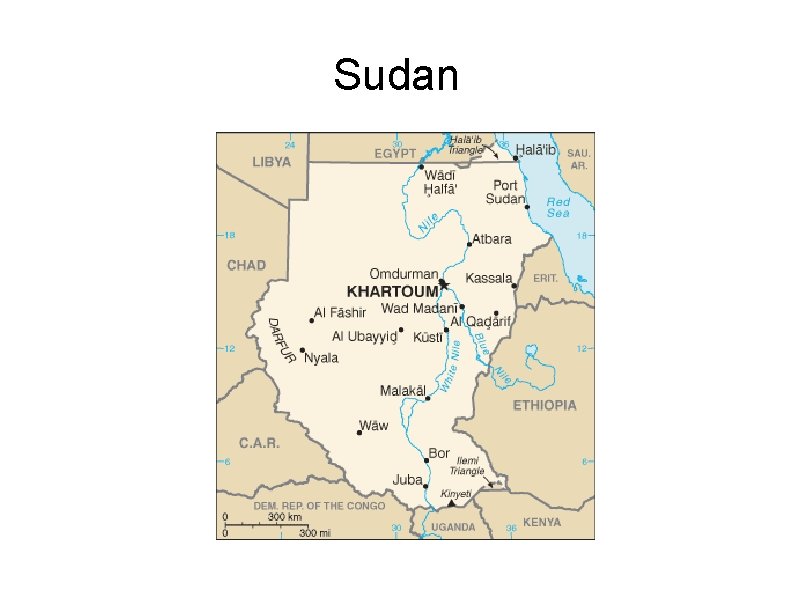
Sudan
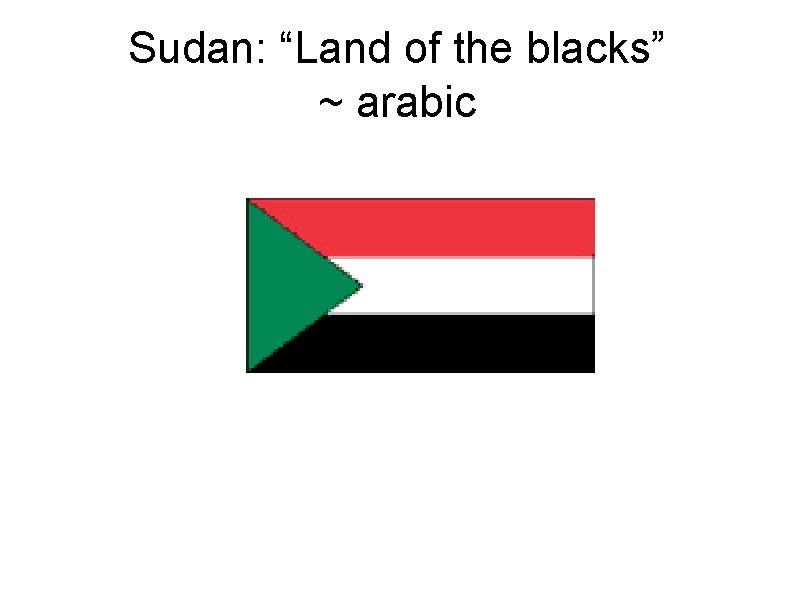
Sudan: “Land of the blacks” ~ arabic
Ancient History Prehistoric tools along the Nile date from 65, 000 BC (Early Khartoum) Region of Nubia Northern Sudan and Southern Egypt Along the banks of the Nile Homeland of Africa's earliest black culture. Trading route between Mediterranean & tropical Africa.
Nubia Nubian Civilization dates from 3, 100 BC. Artifacts Monuments Written accounts from Egypt and Rome Land of the bowmen Archaeology (much of Nubian land was submerged under the Aswan Dam and other large projects 1960 s- emergency excavation.
Key Periods in Sudan's History 1750 BC rise of the Kerma from scattered kingdoms – one of the oldest urban areas in Africa. 1500 BC conquered by Eygptians 1000 BC Egyptian empire shattered & rise of Kush Empire 200 BC Meroe capitol – Kushites turned towards south rather than north to Eygpt.
Sudan's History 500 AD Christians in Sudan Mid 14 th Century became Islamic and adopted arabic lanuage. 1821 Mohamed Ali Pasha, Ottoman Turkish ruler of Egypt, conquered Sudan 1881 Mahdi overthrew colonial Egyptian goverment 1898 British Lord Kitchener overthrew Mahdi Anglo-Egyptian colonial rule 1956 Independence
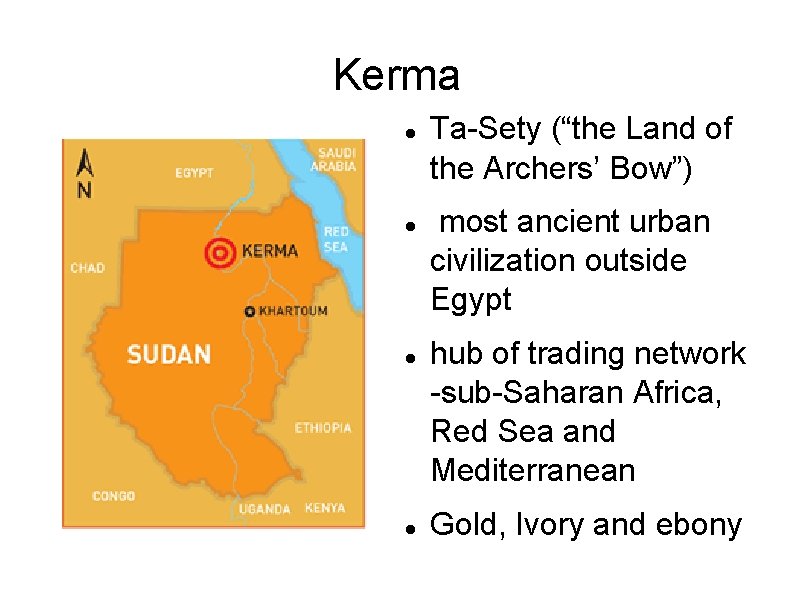
Kerma Ta-Sety (“the Land of the Archers’ Bow”) most ancient urban civilization outside Egypt hub of trading network -sub-Saharan Africa, Red Sea and Mediterranean Gold, Ivory and ebony
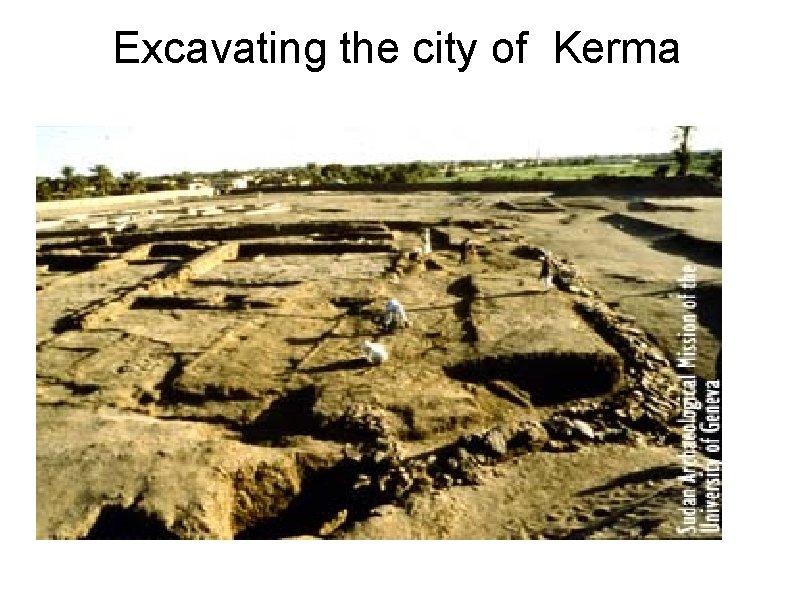
Excavating the city of Kerma
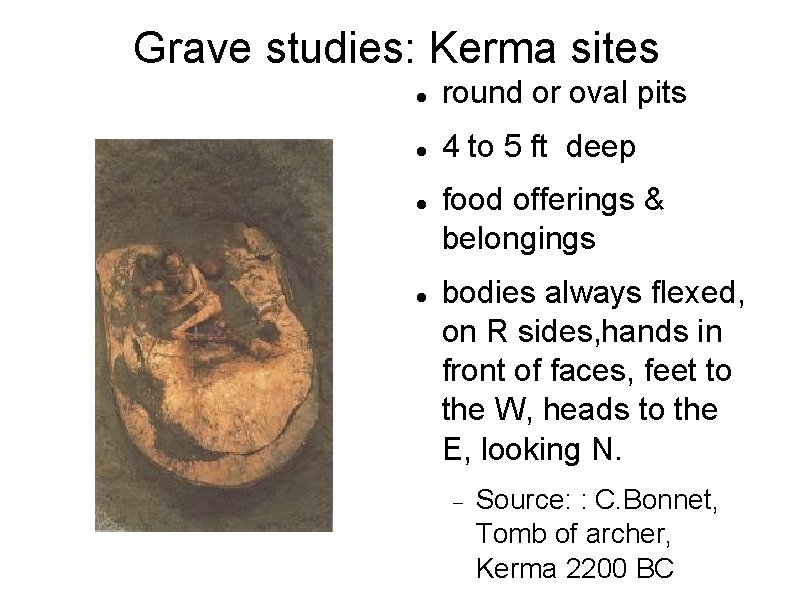
Grave studies: Kerma sites round or oval pits 4 to 5 ft deep food offerings & belongings bodies always flexed, on R sides, hands in front of faces, feet to the W, heads to the E, looking N. Source: : C. Bonnet, Tomb of archer, Kerma 2200 BC
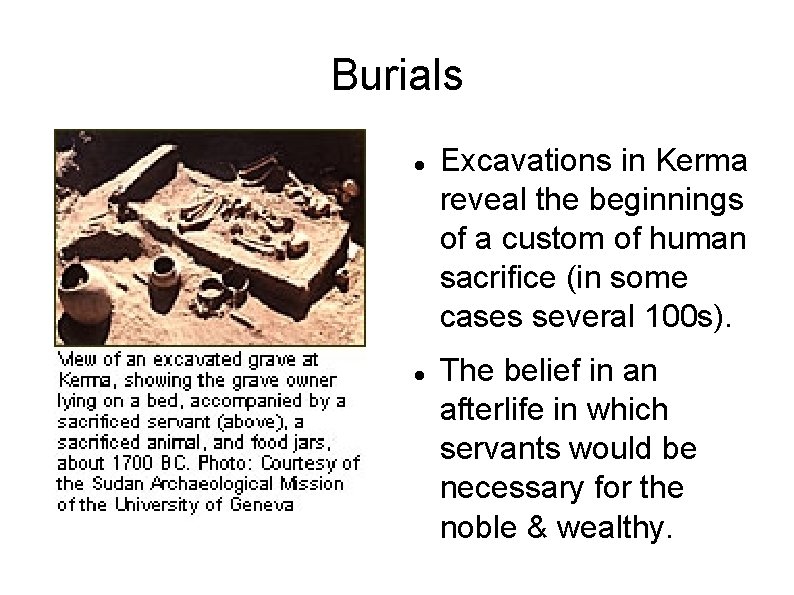
Burials Excavations in Kerma reveal the beginnings of a custom of human sacrifice (in some cases several 100 s). The belief in an afterlife in which servants would be necessary for the noble & wealthy.
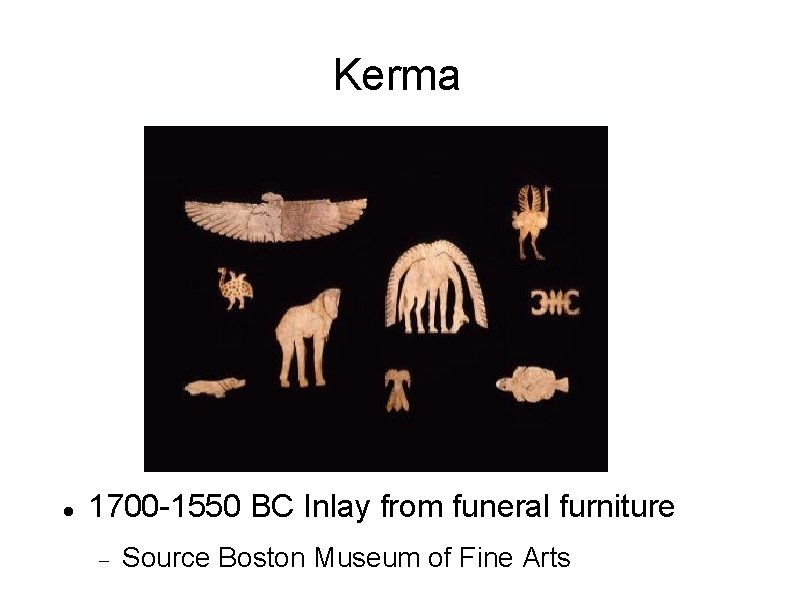
Kerma 1700 -1550 BC Inlay from funeral furniture Source Boston Museum of Fine Arts
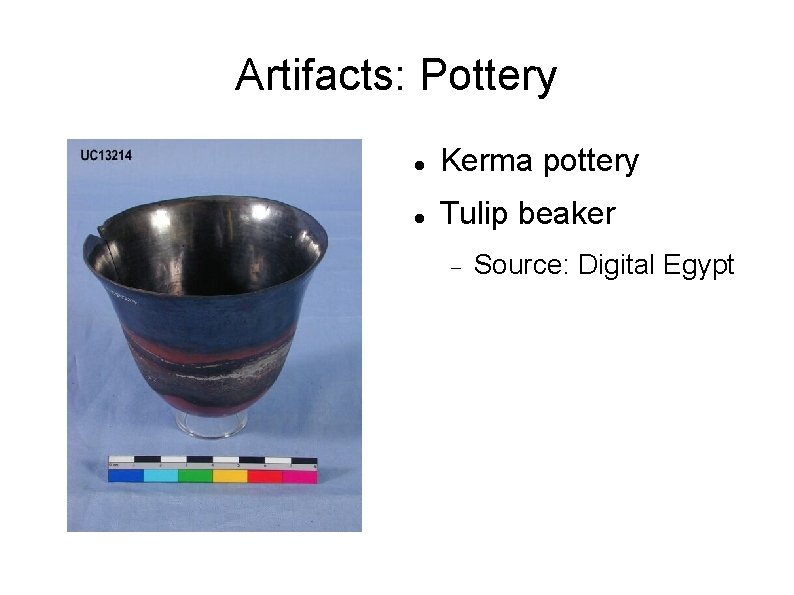
Artifacts: Pottery Kerma pottery Tulip beaker Source: Digital Egypt
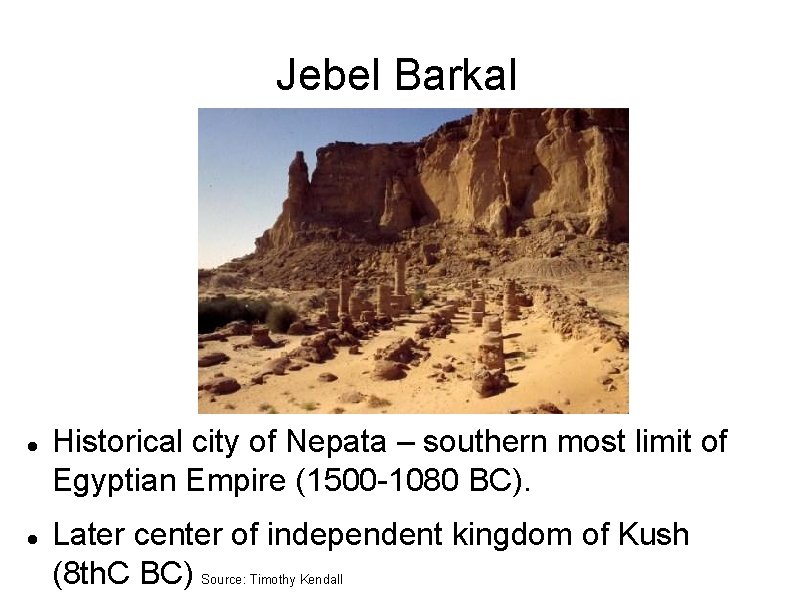
Jebel Barkal Historical city of Nepata – southern most limit of Egyptian Empire (1500 -1080 BC). Later center of independent kingdom of Kush (8 th. C BC) Source: Timothy Kendall
Jebel Barkal: World Heritage Site Ancients and Egyptians were intrigued by the unusual rock formations. Egptians thought it was the birthplace & home of their supreme diety, Amun – built a large temple here. Nubians' primary religious and coronation site in the eighth century B. C. At least 3 palaces, 17 temples and 9 pyramids
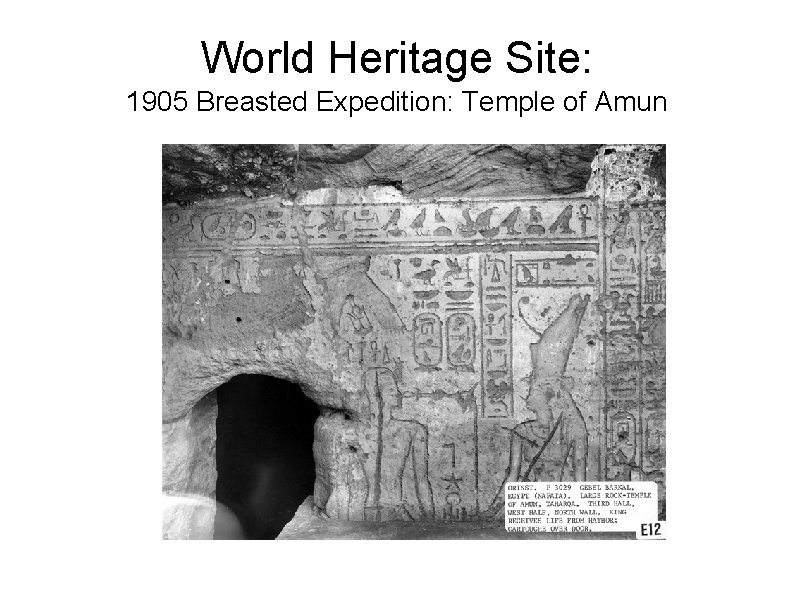
World Heritage Site: 1905 Breasted Expedition: Temple of Amun
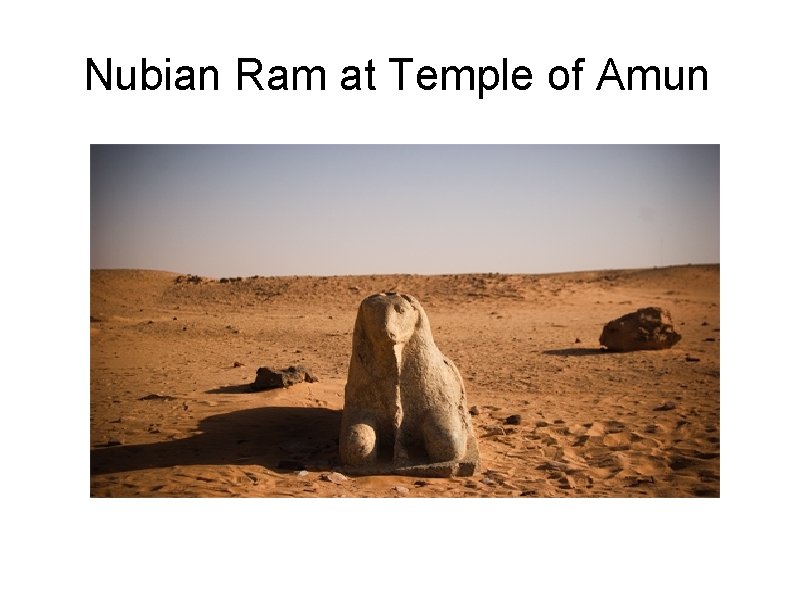
Nubian Ram at Temple of Amun
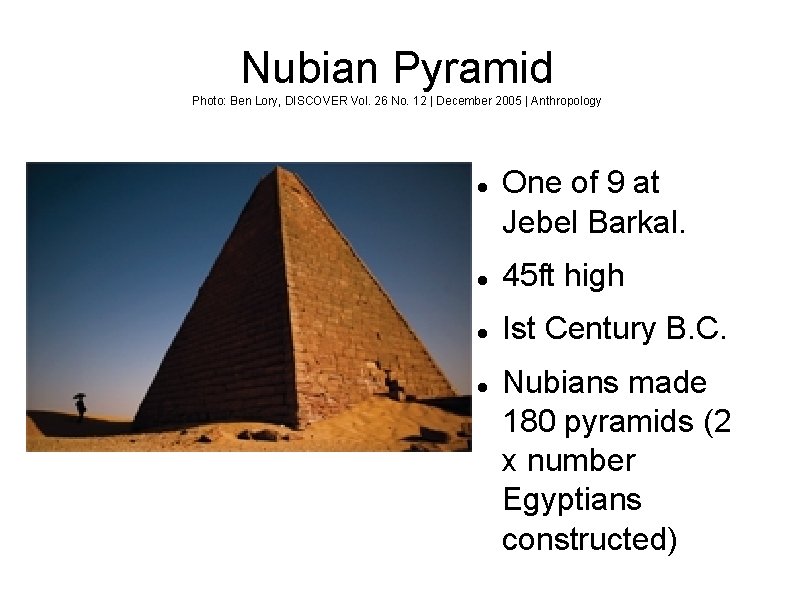
Nubian Pyramid Photo: Ben Lory, DISCOVER Vol. 26 No. 12 | December 2005 | Anthropology One of 9 at Jebel Barkal. 45 ft high Ist Century B. C. Nubians made 180 pyramids (2 x number Egyptians constructed)
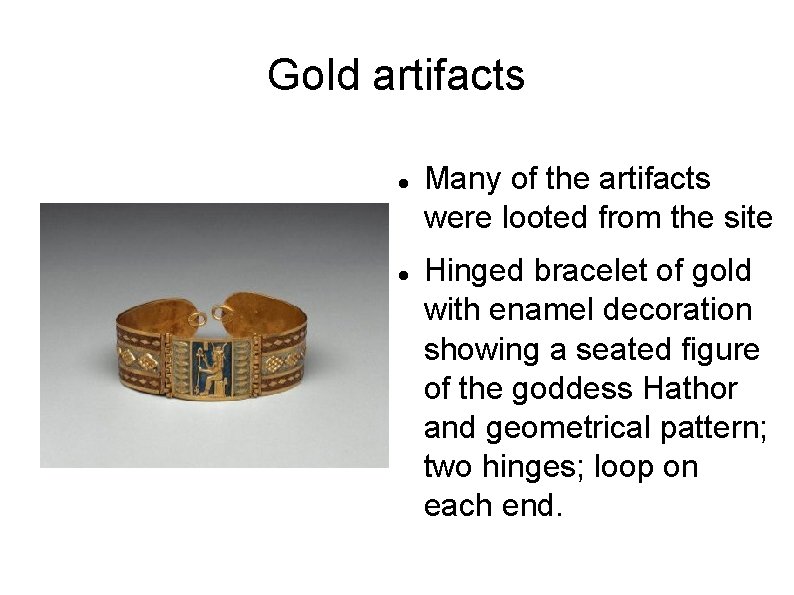
Gold artifacts Many of the artifacts were looted from the site Hinged bracelet of gold with enamel decoration showing a seated figure of the goddess Hathor and geometrical pattern; two hinges; loop on each end.
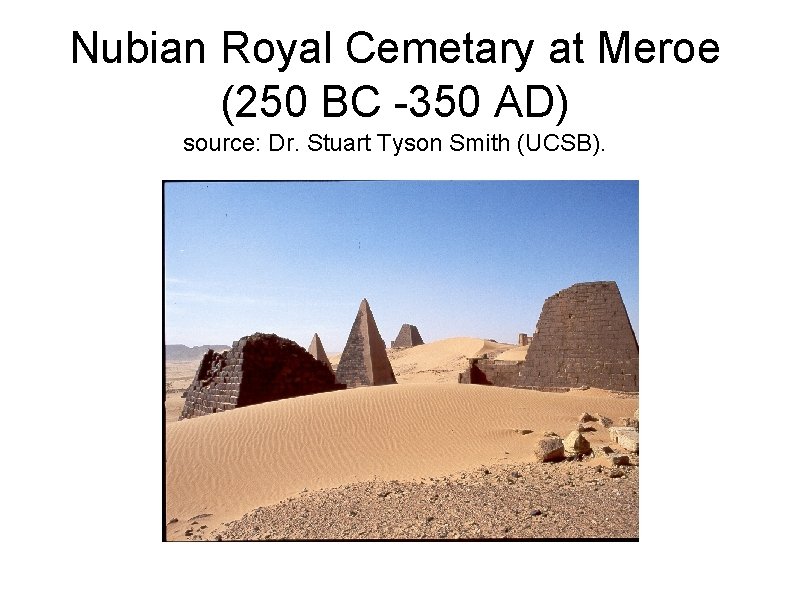
Nubian Royal Cemetary at Meroe (250 BC -350 AD) source: Dr. Stuart Tyson Smith (UCSB).
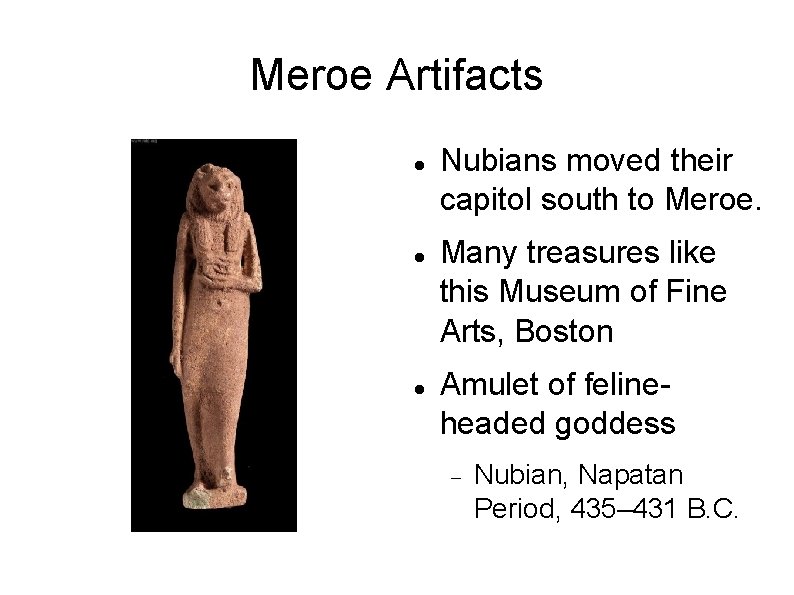
Meroe Artifacts Nubians moved their capitol south to Meroe. Many treasures like this Museum of Fine Arts, Boston Amulet of felineheaded goddess Nubian, Napatan Period, 435– 431 B. C.
Pharaonic tradition - stelae & pyramids centralized political system - employed artisans' skills, large work force. Good irrigation - high population density Ist C BC - hieroglyphs gave way to Meroitic script that adapted the Egyptian writing system to an indigenous, Nubian-related language. Succession - matriarchal royal family member deemed most worthy often became king. The queen mother's role was crucial. The crown appears to have passed from brother to brother (or sister) and only when no siblings remained from father to son.
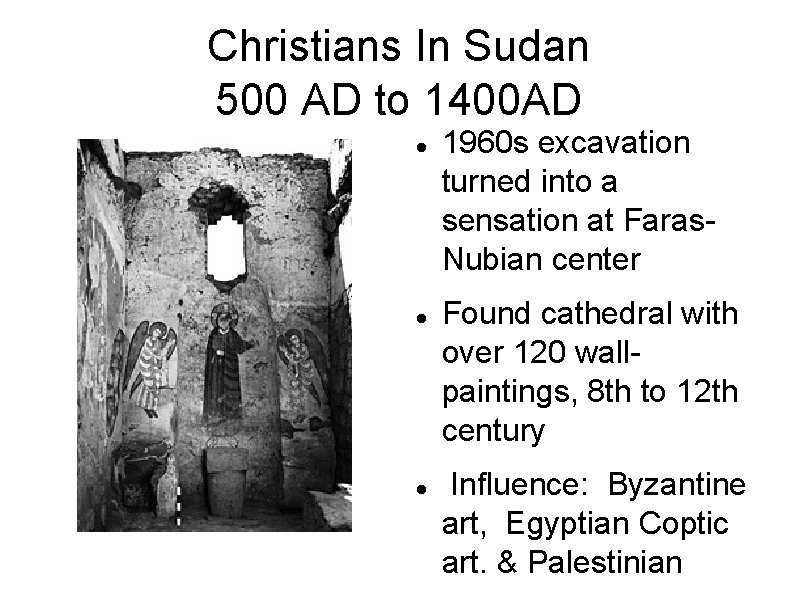
Christians In Sudan 500 AD to 1400 AD 1960 s excavation turned into a sensation at Faras. Nubian center Found cathedral with over 120 wallpaintings, 8 th to 12 th century Influence: Byzantine art, Egyptian Coptic art. & Palestinian
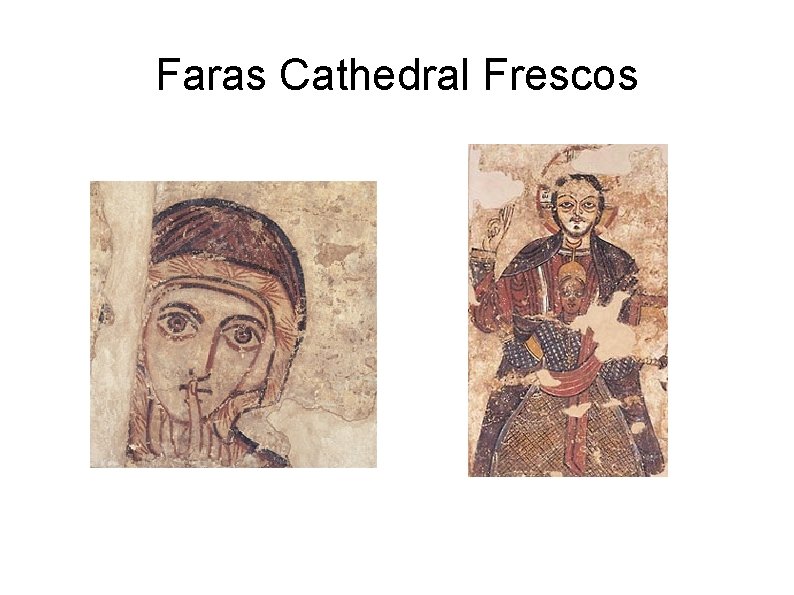
Faras Cathedral Frescos
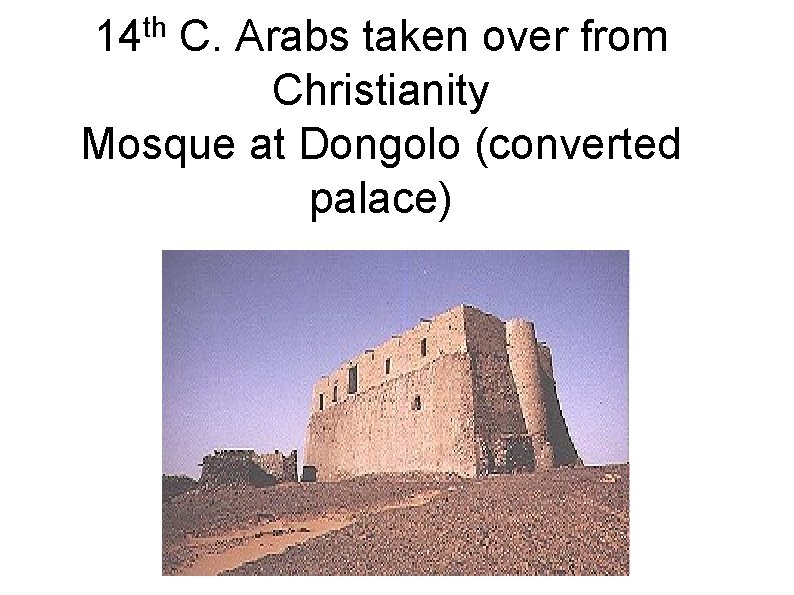
14 th C. Arabs taken over from Christianity Mosque at Dongolo (converted palace)
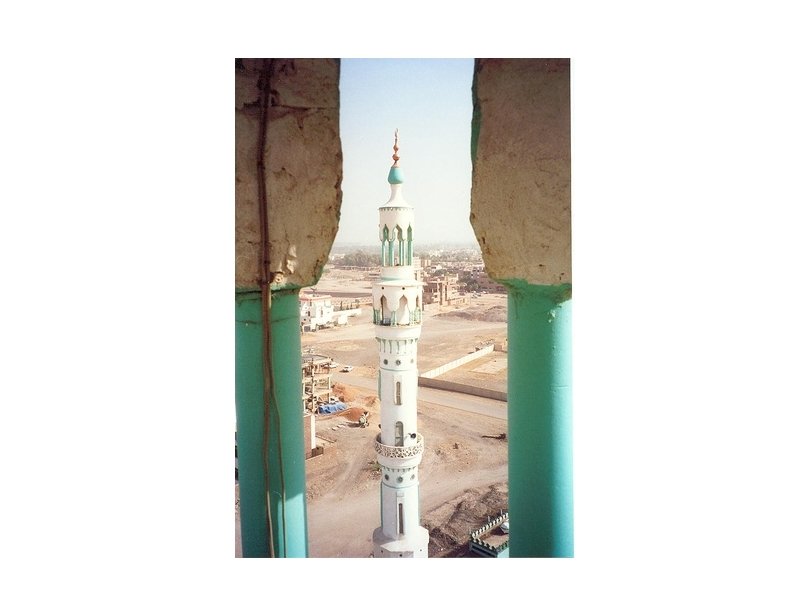
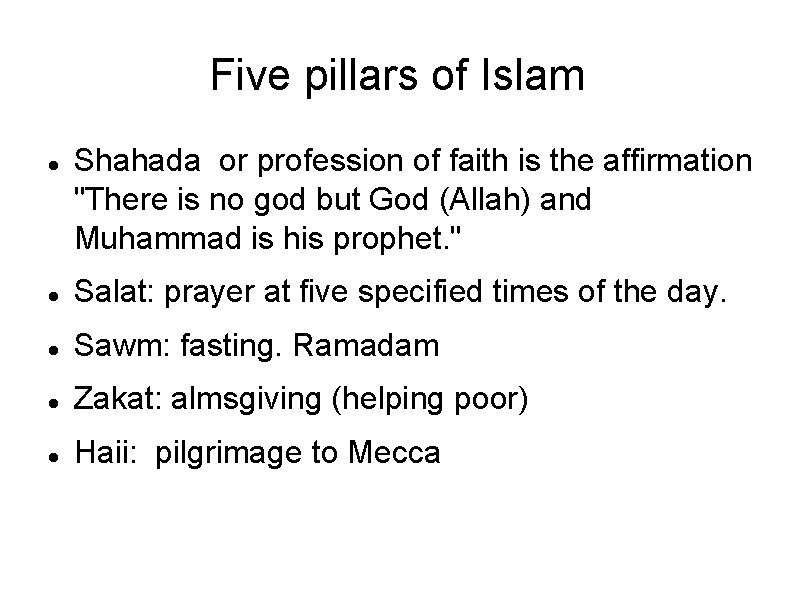
Five pillars of Islam Shahada or profession of faith is the affirmation "There is no god but God (Allah) and Muhammad is his prophet. " Salat: prayer at five specified times of the day. Sawm: fasting. Ramadam Zakat: almsgiving (helping poor) Haii: pilgrimage to Mecca

- Slides: 27