
Suckling Assessment in the Breastfed Neonate Kittie Frantz

Suckling Assessment in the Breastfed Neonate Kittie Frantz, RN, CPNP-PC Clinical Instructor in Pediatrics Keck School of Medicine at The University of Southern California frantz@usc. edu 1
Suckling Reflex • Suckling is described in infants under 4 months of age • Characterized by the tongue reaching over the lower alveolar ridge, cupping at the edge with a peristaltic wave back & up toward the pharynx 2

Anatomy of Suckling © 1980, 1990 Kittie Frantz 3
Ardran and Kemp - Bottle Ardran, Kemp (1958) A Cineradiographic Study of Breastfeeding. BMJ, 31(363). 4
Ardran & Kemp - Breast Ardran, Kemp (1958) A Cineradiographic Study of Breastfeeding. BMJ, 31(363). 5

Ardran & Kemp - Poor Suckle Ardran, Kemp (1958) A Cineradiographic Study of Breastfeeding. BMJ, 31(363). 6
Sucking • Seen in infants 4 -6 months of age • Tongue motion changes to up and down in preparation for chewing • We won’t look at that today 7

Suckling Phases The Rooting Reflex © Kittie Frantz. 8

The Purpose of Rooting © 2007, 2010 Smillie, Frantz, Makelin “Baby-led Breastfeeding: The Mother-baby Dance” licensed to Kittie Frantz by Geddes product ions, LLC 9

Suckling Phases Rooting Reflex is also on Lower Lip and Chin © Kittie Frantz 10

Suckling Phases Rooting Reflex Not as Responsive on the Upper Lip © Kittie Frantz 11

Suckling Phases The Anticipatory Phase of Suckle Elicited by Touching the Lower Lip and Chin © Kittie Frantz 12
Suckling Phases The Anticipatory Response • Jaw drops down • Tongue releases from roof of the mouth • Tongue tip curls at the edge • Head tilts back slightly © Kittie Frantz 13

Suckling Phases Simultaneous Inner Lip Stimulus © Kittie Frantz 14
Suckling Phases Simultaneous Inner Lip Stimulus • Touching the inner lips simultaneously with the breast or the pad of examiner’s thumb. This causes the tongue to reach out over the lower alveolar ridge and pull the pad of your glove inward • In breastfeeding, this would pull in the breast tissue © Kittie Frantz 15

Suckling Phases Digital Exam Feel Tongue Peristaltic Action © Kittie Frantz 16

Suckling Phases Peristaltic Action • Examiner can feel the wave of the tongue move up and backward • Tongue tip remains over the alveolar ridge © Kittie Frantz Geddes, D. et. al. ; Tongue movement and intra-oral vacuum in breastfeeding infants EARLYHUMAN DEVELOPMENT, 84: 411 -77, 2008. 17 Woolridge, M (2013) Ultrasound video analysis for understanding infant breastfeeding. 18 th Intl. conf. of Image Processing, Belgium

Suckling Phases The Swallow © 1980, 1990 Kittie Frantz 18
Suckling Phases The Swallow • The posterior tongue moves downward causing negative pressure • Milk released is swallowed © 1980, 1990 Kittie Frantz 19
Suckling reflex and the swallow • Tongue and jaw move forward again (rotary jaw action) • The suckle reflex & swallow reflex is a “chained” reflex. They act together. © 1980, 1990 Kittie Frantz 20

Watching the Sequence Delivery Self Attachment DVD © 1975 Righard, Frantz “ Delivery Self Attachment” licensed from Geddes Productions, LLC 21

© Kay Hoover What Not to Feel Mc. Bride, Suckling Disorders in Neurologically Impaired Infants, CLINICS OF PERINATOLOGY 14 (1), 1987 22
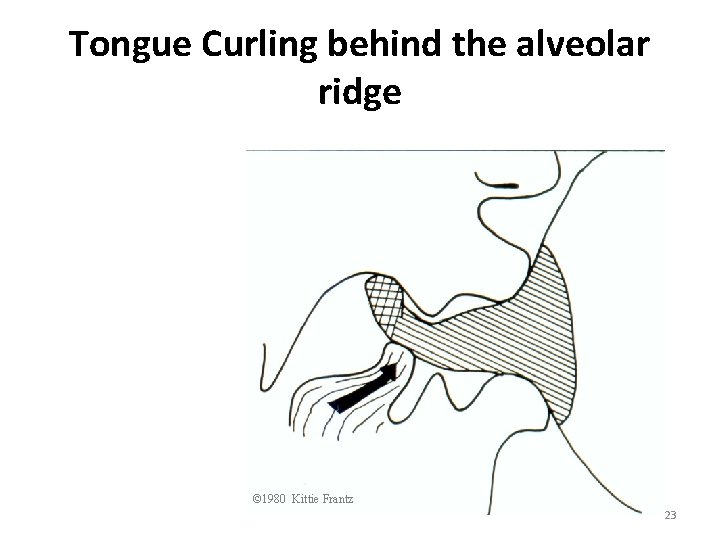
Tongue Curling behind the alveolar ridge © 1980 Kittie Frantz 23
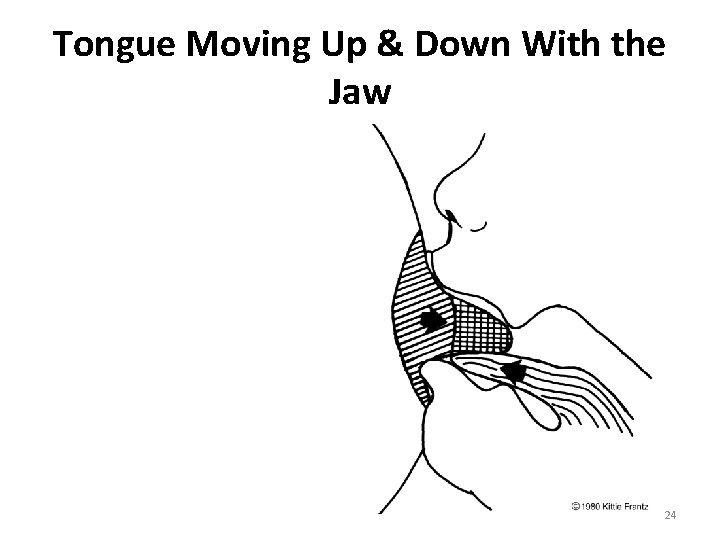
Tongue Moving Up & Down With the Jaw 24
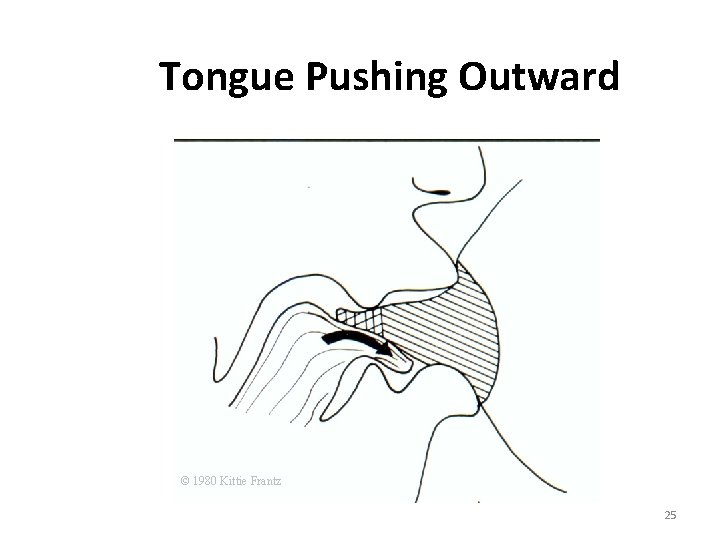
Tongue Pushing Outward © 1980 Kittie Frantz 25

Tongue Doing Nothing 26

Ankyloglossia © Kay Hoover Srinivasan, A. , et al (2006) Ankyloglossia in Breastfeeding Infants: The Effect of Frenotomy on Maternal Nipple Pain & Latch. 27 BREASTFEEDING MEDICINE, 1(4)
Finger Sweep Detection LAC+USC Medical Center • Sweep finger under the tongue • Frenulum felt midway causing motion obstruction needs evaluation • Frenulum insertion should be no more than 30% of ventral tongue surface 28
Gryboski Published • NORMAL FOR TERM NEWBORNS TO ORGANIZE THIS SUCKLING BY 5 DAYS POSTPARTUM • NORMAL FOR PRE-TERM NEWBORNS TO ORGANIZE THIS SUCKLING BY 7 DAYS POSTPARTUM • POORLY ORGANIZED NEWBORNS NEED FOLLOW-UP FOR WEIGHT Gryboski, Suck & Swallow: MAJOR PROBLEMS IN CLINICAL PEDIATRICS, vol 13, 1975 29
Assessment of Jaw Excursions at the Breast The Rotary Jaw © Kittie Frantz 30

Jaw Excursions: What Not to See – “Munching” © 2007, 2010 Smillie, Frantz, Makelin “Baby-led Breastfeeding: The Mother-baby Dance” licensed to Kittie Frantz by Geddes Productions, LLC 31
Assessment of Tongue Action at the Breast © Kittie Frantz 32
Assessing the swallows • You can hear the swallow as an “eh, eh” © LAC+USC Medical Center • Use the bell of the neonatal stethoscope to clearly differentiate the breathing and the swallows 33
Assessment of Swallowing at The Breast: Swallows Occasionally Until Milk Comes In © LAC+USC Medical Center 34
Assessment of Swallowing at the Breast: Swallows Every 1 – 3 Suckles after milk comes in © LAC+USC Medical Center 35
Great Swallows © 2007, 2010 Smillie, Frantz, Makelin “Baby-led Breastfeeding: The Mother-baby Dance” licensed to Kittie Frantz by Geddes Productions, LLC 36
Assessment of Swallowing What Not to Hear: Swallows Every 4 or More Sucks After Milk is in © LAC+USC Medical Center 37
Management of the Poor Suckle & Few Swallows at the Breast 38 ©Medela © Medela
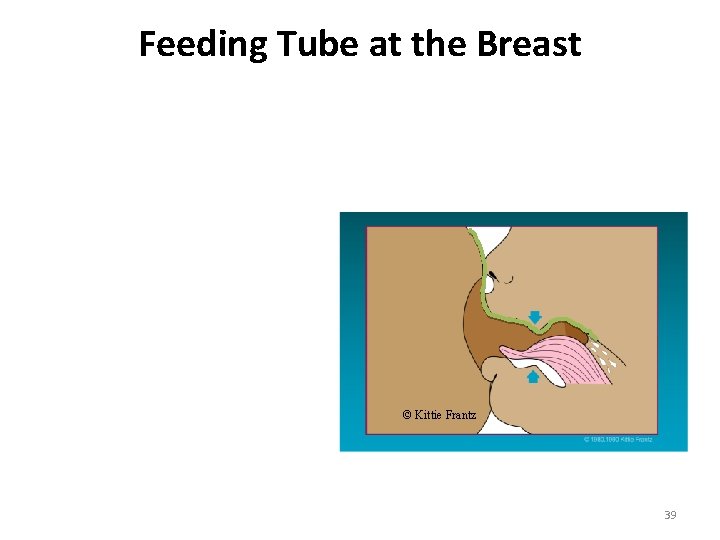
Feeding Tube at the Breast © Kittie Frantz 39

Feeding Tube Devices Medela. E Medela Hygeia Lact-Aid 40

Setting up the Supplemental Nursing System © 1996 Kittie Frantz “Supplemental Nursing System” licensed to Kittie Frantz by Geddes Productions, LLC 41
NIPPLE SHEILD FOR HYPOSENSITIVE MOUTH • Baby doesn’t feel the breast in the mouth & doesn’t respond to your thumb unless you move it around. • Nurses have to move the bottle to elicit a suckle. © Kay Hoover 42
Don’t Forget Weight Parameters Babies can tolerate a 12% weight loss No more than 12% in the first week Should be back to birth weight by 2 weeks Should gain 15 -30 grams a day from 2 weeks to three months • Weight gain after 3 months is 15 grams a day • • Nelson, TEXTBOOK OF PEDIATRICS 43

Breastfed babies gain weight differently than formula fed babies • Formula fed babies are overfed • We use the new WHO growth charts to reflect the growth of the breastfed infant • The old growth charts reflected overweight formula only fed Midwestern USA infants 44

BEST TEXTBOOOK FROM OT Wolf, L. & Glass, R. (1992) FEEDING & SWALLOWING DISORDERS IN INFANCY Therapy Skill Builders, Tucson, AZ 45

Questions? 46
- Slides: 46